• Home
  • INDEX

Joseph Joachim

~ biography and research

Joseph Joachim

Author Archives: Joachim

Joachim Committee Concerts, 1906

02 Thursday Jan 2014

Posted by Joachim in Concerts

≈ 2 Comments

© Robert W. Eshbach 2014


jj-initials1-e1395761217629

Spring Season

Autumn Season

Screen Shot 2014-01-02 at 5.31.32 PM

A series of concerts devoted entirely to the compositions of Johannes Brahms, and performed by the Joachim Quartet, assisted by Richard Mühlfeld and others. “The scheme, undertaken for the first time in this or any other country, will allow of the performance of the whole of Brahms’s Chamber Music Works written for more than two instruments, and, in addition, of two of the Violin Sonatas, the two Violoncello Sonatas, and the Two Sets of ‘Liebeslieder Waltzes.’” […] “The Bust of Johannes Brahms exhibited in the vestibule is a replica of that of the Brahms Monument at Meiningen, by Adolf Hildebrand.”

Venue Info: 1901: built as the Bechstein Hall; capacity: 550. 1916: everything auctioned off; 1917: reopened as the Wigmore Hall. Source: London Encyclopaedia

JJ Initials

Wednesday Afternoon, 21 November

Joachim Committee Concerts (autumn season): Concert no. 1

Queen’s Hall, London

Friday Evening, 23 November

Joachim Committee Concerts (autumn season): Concert no. 2

Bechstein Hall, Wigmore Street, W1, London

Monday Evening, 26 November

Joachim Committee Concerts (autumn season): Concert no. 3

Bechstein Hall, Wigmore Street, W1, London

Wednesday Afternoon, 28 November, 3 pm precisely

Joachim Committee Concerts (autumn season): Concert no. 4

Bechstein Hall, Wigmore Street, W1, London

• Johannes Brahms, Piano Trio no. 2 in C Major, op. 87

            Donald Francis Tovey, piano; Joseph Joachim, violin; Robert Hausmann, cello

            • Johannes Brahms, String Quartet no. 1 in C minor, op. 51, no. 1

            Joseph Joachim, violin 1; Carl Halir, violin 2; Karl Klingler, viola, Robert Hausmann, cello

            • Johannes Brahms, Piano Quartet no. 1 in G minor, op. 25

            Donald Francis Tovey, piano, Joseph Joachim, violin; Karl Klingler, viola; Robert Hausmann, cello

Monday Evening, 3 December

Joachim Committee Concerts (autumn season): Concert no. 5

Bechstein Hall, Wigmore Street, W1, London

Wednesday Afternoon, 5 December

Joachim Committee Concerts (autumn season): Concert no. 6

Queen’s Hall

Share this:

  • Share on X (Opens in new window) X
  • Share on Facebook (Opens in new window) Facebook
  • Email a link to a friend (Opens in new window) Email

Like this:

Like Loading...

Obituary: The Spectator

02 Thursday Jan 2014

Posted by Joachim in Obituaries

≈ Leave a comment

The Spectator, 24 August 1907, p. 255.

N. B.: Obituaries are posted for historical interest only, and should not be taken as sources of accurate biographical information.


jj-initials

JOSEPH JOACHIM

 WHATEVER her claim to consideration on the score of her native musical products, England has on the whole been singularly fortunate in her relations with the great foreign musicians. Sometimes, as in the case of Handel in the eighteenth and Manuel Garcia in the nineteenth century, this attachment led to a permanent residence. Sometimes, as in the case of Beethoven and Brahms, Schumann and Schubert, there has been cordial and intimate appreciation without personal contact; while Mendelssohn and the great artist whom we all deplore, without abating a jot of their patriotism, found a second home amongst us. The association of the two names is inevitable, for Mendelssohn was one of the first to recognise the genius of the young Hungarian and to commend him to his friends in England. The relationship thus auspiciously begun more than sixty years ago remained unbroken to the close of Dr. Joachim’s life. For half-a-century his name has been a household word among us wherever music is cared for. He was the pillar and glory of the Popular Concerts from their earliest days. His periodical appearances lent a special lustre to the Crystal Palace and Philharmonic Concerts and the great provincial Festivals, and of late years the visits of his quartet party have been an outstanding feature in our musical annals. Many musicians have been admired and idolised, but none have been so reverenced as Joseph Joachim. Honours were heaped upon him, but they never exceeded his deserts, and there was that in the man himself which happily kept vulgar flattery aloof. He was never called upon to wade through roses to the platform, or mobbed by fashionable maenads in St. James’s Hall. His native dignity and simplicity rendered such adulation impossible. It has been said of certain performers that to do themselves justice they needed artificial lights and a gaily bedizened and bediamonded audience. Joachim was entirely independent of the adventitious stimulants of an artificial environment. Or, to put it in another way, the only music that he cared to play did not require a spectacular setting to reinforce its appeal.

One has only to compare Joachim with most of the famous violinists of the past to realise how small a part of his greatness was that which was their chief title to eminence,— technical dexterity. It was not that he despised or neglected it, for no one was more thorough in his methods, but that at a very early stage of his career he abandoned the desire, if, indeed, he ever harboured it, to astonish rather than enlighten his hearers. His early successes—for he was famous at thirteen—did not beguile him into following the lucrative, but unsettling and feverish, career of the travelling virtuoso. From that danger he was saved by his own exalted ambition, by the advice of his master, the admirable Böhm, and by the parental interest taken in his progress by Mendelssohn, and subsequently Schumann, who not only hailed him as a great interpreter, but predicted for him a distinguished future as a composer. His early, intimate, and lifelong association with Brahms, again, was another potent determining influence on the exercise of his gifts. Indeed, in the whole history of instrumental music it would be impossible to find a more felicitous or better matched partnership. In the great majority of cases the executant falls below the requirements of the composer when they are contemporaries. But Brahms found in Joachim an interpreter endowed not merely with a splendid technical equipment, but with the highest intellectual and spiritual qualities as well; and this confidence in a kindred spirit assuredly lent wings to his inspiration. Indeed, where Brahms’s music for the solo violin or the string quartet was concerned, he always wrote with Joachim in his mind, while occasionally, as in the case of the Hungarian dances, there was actual collaboration between the two friends. This relationship only emphasises the contrast which has so often been noticed between great players and great singers. The latter, in nine cases out of ten, act as a drag on composers, and where they associate themselves with contemporary music, generally exhibit a fatal preference for the work of inferior musicians. There have been brilliant exceptions in the past — Schröder-Devrient and Pauline Viardot-Garcia and Stockhausen— and in the last twenty years the standard of excellence in the choice of songs by leading professionals has immensely improved. Still, the fact remains that singers as a rule are loth to undertake pioneer work, even when their reputations are securely established. On the other hand, the great players have, in the main, kept much more nearly abreast of the creative achievements of their time. Joachim’s services in this regard were perhaps most conspicuously shown in his connexion with Brahms, but can be happily illustrated by his relations with many other modern composers. The number of compositions dedicated to him is legion, but it may suffice to mention Schumann’s Fantasia for violin and orchestra, Liszt’s Hungarian Rhapsody in C sharp minor, Max Bruch’s First and Third Concertos, Dvorák’s Violin Concerto, Sir Charles Stanford’s Suite for violin and orchestra, and Sarasate’s First Book of Spanish Dances. The mention of Sarasate prompts one to add that the admiration was mutual, Joachim having always recognised the peculiar charm of the “fascinating Spanish violinist,” as he called him, and he repaid the compliment by dedicating to Sarasate his Variations for violin and orchestra. The proverb about two of a trade has often been painfully exemplified in the history of music, but it has found no support in the life of Joachim, who numbered amongst his intimate friends Ernst, Wieniawski, and Ferdinand David, as well as Liszt, von Bülow, and Rubinstein.

But Joachim’s loyal services to his contemporaries never interfered with his devotion to the great masters. His interest in the music of the past was not archaeological; it was governed by an unerring judgment which led him to consecrate his energies to the interpretation of the classic literature of the violin. He was the great hierophant of Bach and Beethoven, but his repertory was not confined to the music of Germany. No one had a livelier appreciation for the old Italian masters, from whom, handed down through Rode and Böhm, he derived the traditions on which his violin-teaching was based. The debt that the British public alone owe to Joachim as an educator of musical taste, as an elevating influence in art, is incalculable. The fame of the mere executant is, as a rule, short-lived; but the greatest music of the king of instruments will always remain inseparably associated in the minds of those who heard him with the tones of Joachim’s violin and the sight of his noble presence, — the very incarnation of strength, dignity, and simplicity. As a teacher no less than a player his influence was world-wide. He did not found a school, but he carried on and developed the best traditions of the great Franco-Italian school which originated with Corelli. The long list of his famous pupils is in itself a singular testimony to his greatness, while his modesty, his disinclination to thrust himself forward or claim a predominant position, could not be better illustrated than by the fact that, alone amongst violinists of the first rank, he devoted himself in the plenitude of his powers to quartet-playing, and as years passed on spent more and more time in this less remunerative and more self-effacing branch of his high calling. Few men of his eminence in art have inspired deeper affection than Joachim. He had known almost every one worth knowing in Germany and England during the last fifty years, and men of action as of thought yielded to the spell of his grave personal charm. Yet for all his sanity and seriousness he had a keen sense of humour, could enjoy a joke at his own expense, and used to tell with keen appreciation the story of the working man who accosted him at a railway station in the North of England where he was waiting late at night for his train, and, after some conversation, left him with the parting shot, “Paganini was the man.” It is good to think that the ties which bound him to this country were never relaxed, but rather grew closer with every succeeding visit, and it is a curious proof of his popularity that throughout the whole English musical world whenever the name “Joe” was mentioned, it stood for Joseph Joachim.

Share this:

  • Share on X (Opens in new window) X
  • Share on Facebook (Opens in new window) Facebook
  • Email a link to a friend (Opens in new window) Email

Like this:

Like Loading...

Hector Berlioz to Joseph Joachim, Brunswick, 4 April [1854]

02 Thursday Jan 2014

Posted by Joachim in Letters

≈ Leave a comment

© 2014 Robert W. Eshbach


jj-initials1

BERLIOZ, Hector (1803-1869). Autograph letter signed (‘H. Berlioz’) to Joseph Joachim, Deutsches Haus, Brunswick, 4 April [1854], confirming that they will be playing his overture Le Corsaire and the Banquet and Adagio from his symphony Roméo et Juliette; he asks Joachim to bring the German text for two other pieces.

One page, 4to (minor loss to right margin). Provenance: Stargardt, 28 October 1955, cat. 524, lot 342.


Screen Shot 2014-01-02 at 2.06.48 PM

Mon cher Joachim

Screen Shot 2014-01-02 at 2.07.39 PM

Oui, nous jouerons le Corsaire et deux autres morceaux (La Fête et l’adagio) de Romeo.

Si vous venez, soyez assez bon pour m’apporter les paroles allemandes de l’Absence et de La Captive que Mr Nieper avait eu la bonté de me promettre et que je ferai chanter à Dresde’.

Screen Shot 2014-01-02 at 2.17.45 PM

mille amitiés

votre tout dévoué

Screen Shot 2014-01-02 at 2.06.25 PM

H. Berlioz

Brunswick Deutsches Haus Mardi 4 avril


[Yes, we will play the Corsair and two other songs (La Fête and the adagio) from Romeo. / If you come, be kind enough to give me the German words of L’Absence and La Captive that Mr Nieper had the kindness to promise me and that I shall sing [perform] in Dresden.]


Apparently unpublished: not in the Correspondance Générale, ed. Citron (1983-2003), where its existence is however surmised.

Sold at Christie’s: Sale 5960, Valuable Manuscripts and Printed Books, 21 November 2012, London, King Street. £4,750, $7,548.

Share this:

  • Share on X (Opens in new window) X
  • Share on Facebook (Opens in new window) Facebook
  • Email a link to a friend (Opens in new window) Email

Like this:

Like Loading...

Image

Joseph Joachim by Reutlinger, Paris ca. 1850

02 Thursday Jan 2014

jj-initials1

Joseph Joachim by Reutlinger, Paris ca. 1850


JJReutlingerPS1Sepia copy


© 2014 Please acknowledge the source: Joseph Joachim — Biography and Research: http://www.josephjoachim.com

Share this:

  • Share on X (Opens in new window) X
  • Share on Facebook (Opens in new window) Facebook
  • Email a link to a friend (Opens in new window) Email

Like this:

Like Loading...

Posted by Joachim | Filed under Iconography

≈ Leave a comment

Image

Joseph Joachim by Schaarwächter, Berlin

02 Thursday Jan 2014

Schaarwächter copy

© 2014 Please acknowledge the source: Robert W. Eshbach, Joseph Joachim — Biography and Research: http://www.josephjoachim.com

Share this:

  • Share on X (Opens in new window) X
  • Share on Facebook (Opens in new window) Facebook
  • Email a link to a friend (Opens in new window) Email

Like this:

Like Loading...

Posted by Joachim | Filed under Iconography

≈ Leave a comment

Edward Normanton Bilbie: Joseph Joachim (1921)

01 Wednesday Jan 2014

Posted by Joachim in Reminiscences & Encomia

≈ Leave a comment

From: Edward Normanton Bilbie, Experiences of a Violinist at Home and Abroad, Ann Arbor: privately printed, 1921, pp. 26-27.

__________

jj-initials

JOSEPH JOACHIM

This great player and musician has had so much said about him that I shall speak mainly of his technique and a few points in style. In fame he stands beside the greatest players and his name will be carried down in history. He was famous from a child to the day he died. He was pre-eminently a player of the classics and a great quartette player. His style was so satisfying that when one heard him play a solo it seemed that his way must be the only way to play it. His bowing was remarkable, his left hand fine. His spiccato was so liquid, so delicate, or again it was so solid, so hammer-like. His trill, his scale runs, his broad, full tone, his various qualities of tone, his portamento, all were specially fine in comparison with the best players of his time, yet he never moved the common feelings but filled you with the full satisfaction of hearing

27

music played that seemed to speak to you. You lived in it for the time. He was so impersonal that though as a pupil trying to acquire the so-called “Joachim bowing” I would intend watching him, as soon as he began to play I practically never saw him again until he was through. He seemed absolutely without affectation and drew no attention to himself. He dressed shabbily at times. I have walked behind him on the street and noted his splendid build, the noble head. He was not tall but heavy without being corpulent. His interpretation of the three B’s and the rest of the classical writers could not be surpassed, but apart from all this his influence was of the greatest good in the musical world. He set an example to artists as much as to pupils and of his teaching I need say nothing. He was associated with Wagner and Liszt as a young man but pulled away from them. This was a good thing for it left him to do his great work as an exponent of the classics and Wagner did not need him. Strange to say, Joachim often played out of tune but one excused it in him. He was frequently nervous and I have often heard his bow tremble when first starting out on a solo but it soon would ring clear. In quartette he even scratched some at times, but what of it! He did not play the violin like a mincing dancing-master, but like a man full blooded, intellectual, human. In selecting his pupils from the crowds who went to him in all parts of the world, he considered their character as much as their talent. He was born at Kitsee, Hungary, in 1831, and died at Vienna [sic] at the age of 75, while on a concert tour [sic]. Like his boyhood’s friend, Mendelssohn, he was a Christian Jew. Although reputed to be poor at the time I studied in Berlin, he died worth $380,000. I did not study with Joachim — he had a long waiting list and I could not wait. I know a young man who studied in the Hoch Schule for five years and only got with Joachim four the last five months of his sojourn in Germany. I studied with a man so musically alluring that the thought of leaving him seemed unthinkable.

Share this:

  • Share on X (Opens in new window) X
  • Share on Facebook (Opens in new window) Facebook
  • Email a link to a friend (Opens in new window) Email

Like this:

Like Loading...

Andreas Moser: Joseph Joachim (The Century Library of Music, 1902)

01 Wednesday Jan 2014

Posted by Joachim in Uncategorized

≈ Leave a comment

There are a number of inaccuracies in Moser’s account here: for example, Joachim spent his youth in Buda-Pest, not Prague. This is an interesting short article, drawn largely from Moser’s authorized biography of Joseph Joachim.

__________

jj-initials

Click for PDFs:

Moser 1

Moser 2

Moser 3

Moser 4

Moser 5

Moser 6

Moser 7

Moser 8

Moser 9

Moser 10

Moser 11

Share this:

  • Share on X (Opens in new window) X
  • Share on Facebook (Opens in new window) Facebook
  • Email a link to a friend (Opens in new window) Email

Like this:

Like Loading...

Arthur Hartmann: Joachim’s Death

31 Tuesday Dec 2013

Posted by Joachim in Reminiscences & Encomia

≈ Leave a comment

Arthur Hartmann, Claude Debussy as I Knew Him and Other Writings by Arthur Hartmann, Samuel Hsu, Sidney Grolnic, and Mark Peters (eds.), Rochester: University of Rochester Press, 2003, pp. 210-211.

__________

jj-initials

Joachim’s Death

Deathbed

On the afternoon of 15 August 1907, I was in my home in Berlin giving an American girl a lesson. The sultriness was intense, and presently a terrific thunderstorm with rain broke over the earth. Terrified by it all, I commented to the young woman, “What a storm, eh? What a time for Joachim to die, just like Beethoven!” The lesson terminated and the storm died. I took my hat and went for a walk. Passing a small music store not far from my house, I glanced into the window and there saw the proprietor beckoning to me. Entering, I at once noticed his bloodshot eyes, his tear-stained face. “What is it? What’s the matter with you?” I asked with sudden concern. He choked, sobbingly, “But didn’t you hear? Joachim died this afternoon!” and leaning against the wall, he wept unrestrainedly.

I waited for several days, knowing that hundreds of people were streaming to his house to see the Grand Old Man before burial. And one day I, too, presented myself in Charlottenburg and asked the maid if I might enter. I found myself quite alone in the large rooms and heard the maid say, “There is a gentleman here who asks to see the Meister.” Presently a lady appeared and asked me, “Were you a pupil of my father?” “No, Madame,” I answered quietly, but also without adding any polite words of regretting not to have been. “Your name?” she asked curtly, and I gave it. She inclined her head and with her left hand invited me to advance. And finally I stood at the foot of the casket and gazed long at that calm face, those crooked and twisted fingers, those large tufts of hair protruding from the top of his nose and near his ears, and fervently I prayed: “O, great God Almighty, if only I could take up where he left off, and carry on!” The room was piled high with wreaths from Emperors, Kings, Academies, Artists, and Pupils. I approached closer, and leaning over him gazed at him long — long — all alone with the great, dead Joachim! Then I bowed to him and backed out of the room.

Share this:

  • Share on X (Opens in new window) X
  • Share on Facebook (Opens in new window) Facebook
  • Email a link to a friend (Opens in new window) Email

Like this:

Like Loading...

The Athenæum: Herr Joachim’s Degree (March 17, 1877)

31 Tuesday Dec 2013

Posted by Joachim in Concert Reviews & Criticism

≈ Leave a comment

The Athenæum, No. 2577 (March 17, 1877), pp. 361-362.

__________

jj-initials

HERR JOACHIM’S DEGREE

Cambridge, March 10, 1877

[…] The reasons which led to this degree being conferred on the German violinist are simple. Prof. Macfarren is an enthusiast in his art, and has always been anxious to raise the status of musicians. As it is not the custom for our Government to bestow crosses and orders on musical men, as is done in most continental countries, Prof. Macfarren suggested that honorary degrees should be awarded to Herr Brahms, Herr Joachim, Sir John Goss, and Mr. Arthur Sullivan, and the University authorities readily adopted the suggestion.

[…] There would be considerable difficulty in finding artistic reasons for making Herr Joachim honorary Mus. Doc., if we looked only at his compositions. They are few in number, although they are clever and scholarly; but signs of genius there are none. We know here his March and Trio in c, his Hungarian Concerto, and his Dances (associated with Brahms). He has also composed Overtures to ‘Hamlet’ and ‘Henry the Fourth,’ and to the ‘Demetrius’ of Schiller, [1] and he has written songs, but there is really nothing in them to distinguish him from other clever composers, masters of the grammar of their art, but who possess neither fancy nor imagination enough to impress us with their individuality. Why, then, Mus. Doc. of Cambridge? Because as an executant he occupies an exceptional position — it may be added an unparalleled one. There have been violinists who have surpassed him in the creation and in the execution of difficulties, but there has never been another artist who possessed, so to speak, such a creative faculty in the interpretation of great classical works. He has the essential elements of perfect intonation, of a magnificent tone, of acute sensibility, and of a

362

thorough command of the most intricate scales. His self-possession enables him to play without extravagance of action; he manages the gradations of sound, to the softest pianissimo, without any apparent effort. His intellectuality and poetic temperament, combined with his classical taste in the concertos of Bach, Beethoven, Mendelssohn, and Spohr, have developed points and effects from innermost passages which had escaped all previous executants. When it is added that his career has been consistent throughout, that he has always aimed at introducing music by the masterminds, never pandering to popular prejudices, always encouraging artists as well as amateurs to cultivate a sound school, and that for a series of years, during his visits to this country, he has not only gratified but instructed the general musical public, enough has been stated to justify the University officials in selecting an executant for the first time for a musical degree. And so thought, evidently, the large assemblage gathered in the Senate House, when the Vice-Chancellor, the Master of Clare, greeted the new doctor. Besides being supported by the presence of so many professors and conoisseurs from London, Herr Joachim had University feeling on his side; the undergraduates, ready as they were at whistling music-hall tunes, including the ‘Rogues’ March,’ after the passing of the Mus. Doc., M.A.s, and B.A.s — for there were several — cheered the German artist repeatedly; but their sense of the ridiculous was touched when the orator associated Herr and Madame Joachim with Orpheus and Eurydice, and they supplied at once an Offenbach air.

To turn to the evening concert. Herr Joachim’s MS. Elegaic Overture, in commemoration of Heinrich von Kleist, — the patriot, poet, and dramatist, who committed suicide with a Frau Vogel in 1811, — can boast of little that is suggestive in its subjects, which are dry and formal, ably and vigorously developed as they are. The composer conducted his own work, and did the same duty for the MS. Symphony of his friend, Herr Brahms. […] In addition to the two novelties, the Overture, ‘The Wood-Nymphs,’ Op. 20, by Sterndale Bennett, so genial and graceful, and full of charm; the ‘Song of Destiny’ (Schicksalslied), Op. 54, by Herr Brahms; and the Violin Concerto of Beethoven, Op. 61 (wondrously played by Herr Joachim), were ably conducted by Mr. C. Villiers Stanford, organist of Trinity.  […]


[1] The overture is actually to the ‘Demetrius’ of Herman Grimm.

Share this:

  • Share on X (Opens in new window) X
  • Share on Facebook (Opens in new window) Facebook
  • Email a link to a friend (Opens in new window) Email

Like this:

Like Loading...

Joseph and Amalie Joachim, 1873

23 Monday Dec 2013

Posted by Joachim in Iconography

≈ Leave a comment

Joseph and Amalie Joachim: Die Gartenlaube, vol. 38 (1873), p. 611


Die_Gartenlaube_(1873)_pic_611


© 2014 Please acknowledge the source: Joseph Joachim — Biography and Research: http://www.josephjoachim.com

Share this:

  • Share on X (Opens in new window) X
  • Share on Facebook (Opens in new window) Facebook
  • Email a link to a friend (Opens in new window) Email

Like this:

Like Loading...
← Older posts
Newer posts →

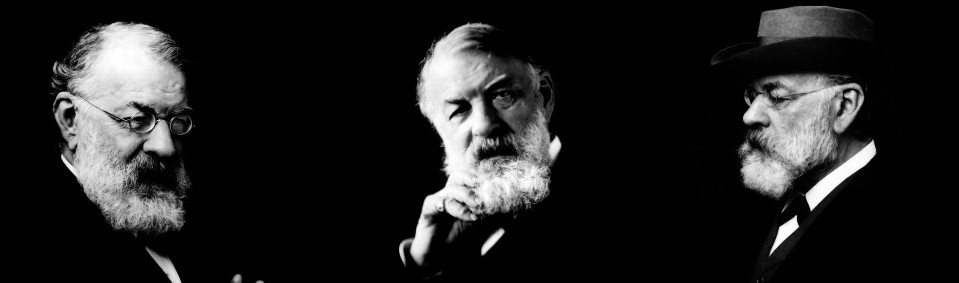
Photo collage © Mathias Brösicke — Dematon, Weimar

Archives

Categories

  • 1 Biographical Posts — RWE
  • 2 Articles and Essays — RWE
  • 3 Talks — RWE
  • Articles by Contributing Authors
  • Bibliography
  • Biographical Sketches
  • Books About Joseph Joachim
  • Brief Biography
  • Chronology
  • Concert Reviews & Criticism
  • Concerts
  • Contracts
  • Documents
  • Ephemera
  • Estate/Nachlass
  • Family
  • Iconography
  • Instruments
  • Joachim in Great Britain
  • Joachim Quartet
  • Letters
  • Links
  • Literature
  • Literature Review
  • Miscellaneous Articles
  • Obituaries
  • Pages
  • Queries
  • Recordings
  • Reminiscences & Encomia
  • Scores
  • Speeches and Utterances (Joachim)
  • Students
  • Uncategorized
  • Works
  • Writings (Joachim)

Pages

  • INDEX

Recent Comments

Joachim on Jakab Marastoni (Jacopo Antoni…
Joachim on Max Bruch: Gedenkworte für Jos…
Elena Breschkow on Max Bruch: Gedenkworte für Jos…
Bicskei Éva on Jakab Marastoni (Jacopo Antoni…
Bibliography | Josep… on Joachim’s Youth—Joachim…

Meta

  • Log in
  • Entries feed
  • Comments feed
  • WordPress.org

Email: Reshbach(at)unh.edu

Powered by WordPress.com.


Loading Comments...
 

    %d