• Home
  • INDEX

Joseph Joachim

~ biography and research

Joseph Joachim

Category Archives: Uncategorized

Joseph Joachim-Stiftung

04 Saturday Jul 2026

Posted by Joachim in Uncategorized

≈ Leave a comment

„Prof. Dr. Joachim hat aus Anlaß seines Künstler-Jubiläums…“ Signale für die musikalische Welt 49. Jahrgang, Nr. 19 (Februar 1891): 298.


Prof. Dr. Joachim hat aus Anlaß seines Künstler-Jubiläums eine „Josef Joachim-Stiftung“ durch Hergabe eines Capitals von 20,000 Mk. errichtet, welche nunmehr die gesetzlich vorgeschriebene landesherrliche Genehmigung gefunden hat. Ein aus drei Personen bestehendes Curatorium, zu welchem der Stifter als Vorsitzender gehört, verwaltet das Vermögen nach den für Mündelgelder bestehenden Grundsätzen. Die Zinsen des Stiftungsfonds sollen in je zwei aus einander folgenden Jahren zur Anschaffung von Streichinstrumenten (Geigen und Violoncelli) verwendet werden, welche als Prämien durch das Curatorium verliehen werden, in jedem dritten Jahre aber werden eine oder mehrere Prämien in baarem Gelde verliehen. Die Zuerkennung erfolgt alljährlich an des Stifters Geburtstag, 28. Juni; zur Bewerbung werden unbemittelte Schüler aller in Deutschland oder von Stadtgemeinden errichteten oder subventionirten musikalischen Bildungsanstalten zugelassen, wenn sie mindestens sechs Monate die Anstalt besucht haben.

English Translation

Professor Dr. Joachim has, on the occasion of his artistic jubilee, established a “Josef Joachim Foundation” by contributing capital of 20,000 marks, which has now received the landesherrliche approval required by law. A curatorium consisting of three persons, of which the founder serves as chairman, administers the assets according to the principles governing fiduciary funds. The interest on the foundation capital is, in each pair of successive years, to be used for the purchase of string instruments (violins and cellos), which are to be awarded as prizes by the curatorium; in every third year, however, one or more prizes are to be awarded in cash. The awards are made annually on the founder’s birthday, 28 June; eligible to apply are needy pupils of all musical training institutions in Germany that are established or subsidized by the state or by municipal authorities, provided they have attended the institution for at least six months.

„Joseph Joachim‑Stiftung.“ Signale für die musikalische Welt 58, no. 32 (14 April 1900): 507.


Joseph Joachim-Stiftung. Anläßlich des 50jährigen Künstlerjubiläums des Professors Dr. Joseph Joachim in Berlin ist bekanntlich eine Stiftung errichtet worden, deren Zweck ist: unbemittelten Schülern der in Deutschland vom Staat oder von Stadtgemeinden errichteten oder unterstützten musikalischen Bildungsanstalten ohne Unterschied des Alters, des Geschlechts, der Religion und der Staatsangehörigkeit Prämien in Gestalt von Streichinstrumenten (Geigen und Celli) oder in Geld zu gewähren. Bewerbungsfähig ist nur Derjenige, welcher mindestens ein halbes Jahr einer der genannten Anstalten angehört hat und, da es sich in diesem Jahre um Verleihung von Instrumenten handelt, seine Ausbildung als Geiger beziehungsweise Cellist erfahren hat. Geeignete Bewerber haben, wie Professor Joachim bekannt giebt, ihre Gesuche bis zum 1. Juni an das Curatorium, Berlin W., Potsdamerstraße 120, einzureichen, welches auch weitere Auskunft über die Bedingungen ertheilt.

English Translation

Joseph Joachim Foundation. On the occasion of the fiftieth anniversary of the artistic career of Professor Dr. Joseph Joachim in Berlin, a foundation has, as is well known, been established whose purpose is to grant awards, in the form of string instruments (violins and cellos) or in money, to needy pupils of musical training institutions in Germany that are founded or supported by the state or by municipal authorities, without distinction of age, sex, religion, or nationality.

Eligible to apply is only that person who has belonged for at least half a year to one of the institutions named and who, since in this year the awards take the form of instruments, has received his or her training as violinist or cellist. Suitable applicants are to submit their petitions, as Professor Joachim announces, by 1 June to the Curatorium, Berlin W., Potsdamerstraße 120, which also provides further information concerning the conditions.

„Zu Ehren des sechzigjährigen Künstlerjubiläums von Joseph Joachim.“ Signale für die musikalische Welt 57. Jahrgang, Nr. 31 (29. April 1899): 488.


Zu Ehren des sechzigjährigen Künstlerjubiläums von Joseph Joachim fand am 22. April in der Philharmonie in Berlin ein von Joachim’s Schülern veranstaltetes Festconcert statt. Es war eine imposante musikalische Huldigung, die dem gefeierten Meister dargebracht wurde. Der Streichkörper (Violinen, Bratschen und Violoncelli) des über zweihundert Personen starken Orchesters bestand ausschließlich aus früheren und jetzigen Schülern des Jubilars und Theilnehmern seiner Quartettstunden, während die Contrabässe und verdoppelten Blasinstrumente durch erste Kräfte der Königlichen Capelle in Berlin, des dortigen Philharmonischen Orchesters, der Meininger Hofcapelle, durch Lehrer und Schüler der Königlichen Hochschule in Berlin vertreten waren. Generalmusikdirector Fritz Steinbach aus Meiningen hatte die Leitung des Orchesters übernommen.

Das Programm, mit einer Fanfare für mittelalterliche Trompeten und Pauken vom Armee-Musikinspicienten Gustav Roßberg und einem von Hermann Grimm gedichteten, von der Hofschauspielerin Fräulein Rosa Poppe gesprochenen Prolog eröffnet, verzeichnete an Orchesterwerken die Ouvertüre zu „Euryanthe“ von Weber, zum „Sommernachtstraum“ von Mendelssohn und zu „Genoveva“ von Schumann, den letzten Satz aus Brahms’ Cmoll-Symphonie und Seb. Bach’s Gdur-Concert für Streichinstrumente. Ferner als Solovortrag Joachim’s Gmoll-Variationen für Violine, gespielt vom Concertmeister Petri aus Dresden. Am Schluß brachte Joachim selbst als nicht programmmäßige Nummer und gleichsam Ueberraschung für die Hörerschaft Beethoven’s Violinconcert zum Vortrag. Die ganze Aufführung nahm den glänzendsten Verlauf und bedeutete einen Ehrenabend im schönsten Sinne des Wortes für den Jubilar. Das reiche finanzielle Erträgniß des Concerts kam der „Joseph Joachim-Stiftung“ zu Gute.

English Translation

In honor of Joseph Joachim’s sixtieth artistic jubilee, a festive concert organized by Joachim’s pupils took place on 22 April in the Philharmonie in Berlin. It was an imposing musical homage paid to the celebrated master. The string section (violins, violas, and cellos) of the orchestra, which numbered over two hundred players, consisted exclusively of former and current pupils of the jubilarian and participants in his quartet classes, while the double basses and the doubled wind instruments were represented by leading players from the Royal Orchestra in Berlin, the local Philharmonic Orchestra, the Meiningen court orchestra, together with teachers and students of the Royal Hochschule in Berlin. General Music Director Fritz Steinbach of Meiningen had taken on the direction of the orchestra.

The program, opened by a fanfare for medieval trumpets and timpani by army music inspector Gustav Roßberg and by a prologue, written by Hermann Grimm and spoken by court actress Fräulein Rosa Poppe, listed as orchestral works the overture to Euryanthe by Weber, to A Midsummer Night’s Dream by Mendelssohn, and to Genoveva by Schumann, the final movement of Brahms’s Symphony in C minor, and Sebastian Bach’s Concerto in G major for string instruments. In addition, as solo item, Joachim’s Variations in G minor for violin, played by concertmaster Petri of Dresden. At the close, Joachim himself presented, as a non‑programmed item and as a sort of surprise for the audience, Beethoven’s violin concerto. The entire performance proceeded in the most brilliant fashion and constituted, in the finest sense of the word, a night of honor for the jubilarian. The substantial financial proceeds of the concert benefited the “Joseph Joachim Foundation.”

Share this:

  • Share on X (Opens in new window) X
  • Share on Facebook (Opens in new window) Facebook
  • Email a link to a friend (Opens in new window) Email

Like this:

Like Loading…

Ignaz Reich: Joachim Joseph (1856)

11 Thursday Jun 2026

Posted by Joachim in Biographical Sketches, Uncategorized

≈ Leave a comment

Ignaz Reich, “Joachim Joseph,” in Beth-El: Ehrentempel verdienter ungarischer Israeliten, vol. 1 (Pesth: Alois Bucsánszky, 1856), 61–67.


Ignaz (Eizig) Reich (1821-1887)

Ignaz Reich: Joachim Joseph

Joseph Joachim’s story is usually told from the vantage point of his later eminence: the revered Berlin teacher, the intimate of Brahms, the “Geigerkönig” whose authority shaped violin playing and musical interpretation across Europe. Yet within a generation of his debut, there were already attempts to capture his life in biographical form. Among these is Ignaz Reich’s “Joachim Joseph,” published in the first volume of Beth‑El: Ehrentempel verdienter ungarischer Israeliten (Pest, 1856), when Joachim was twenty-five. Reich’s book is a biographical “temple of honor” for notable Hungarian Jews, and his Joachim sketch stands as the earliest extended narrative of the violinist’s life. 

Unlike later German biographies, which tend to present Joachim primarily as a central figure in the canon of “German” music, Reich’s portrait anchors him explicitly in a Hungarian‑Jewish milieu. The narrative begins in Kittsee and Pest and lingers over domestic scenes: the boy listening outside the door while his sisters take lessons, his plea to be allowed to learn music as they do, the arrival of the first small violin and music stand. Although Reich misidentifies Joachim’s earliest teachers (his “Stiegnitz” is identified in Moser’s biography as “Stieglitz,”Gustav Ellinger is left out completely, and Joseph’s more advanced Budapest teacher was concertmaster Stanisław Serwaczyński, not Ladislaus Szervasinsky), he preserves an important memory of early instruction and family support in Pest that dovetails in broad outline with later, more fully documented accounts. 

Today’s more authoritative reconstructions of Joachim’s early years draw systematically on letters, reviews, and archival sources unavailable to Reich. What makes Reich’s much earlier sketch worth revisiting is not that it offers “new facts” beyond these, but that it shows how Joachim’s life was, already in the 1850s, being shaped into an exemplary narrative. Reich writes for a Jewish readership eager for models of Hungarian Jewish accomplishment. He emphasizes parental devotion, tireless discipline, and the boy’s modesty and moral soundness at least as much as his prodigious gifts. The text is closer in tone to a moralizing Lebensbild than to critical biography. 

At the center of the story stands Felix Mendelssohn Bartholdy. Reich presents a pivotal evening in Mendelssohn’s Leipzig home, where the eleven‑year‑old Joachim plays before a circle of “seasoned masters.” After the performance, Mendelssohn kisses the boy on the brow — the “Weihekuß” of art, evoking Beethoven’s famous “kiss of consecration” on young Liszt — and exclaims: “Just as that child there plays, so, I believe, I must once have played myself!” Around this portentious scene, Reich weaves genuinely documentary material: Mendelssohn’s famous letter of recommendation to Ignaz Moscheles, Joachim’s own highly interesting account of his daily Leipzig study routine, and the searing letter he wrote to his parents upon witnessing Mendelssohn’s death in November 1847. These inclusions, undoubtedly supplied by family members, give the sketch a documentary core even as the narrative as a whole tends toward hagiography. 

From a modern standpoint the Reich article is therefore both valuable and problematic. It is valuable because it preserves early family traditions and contemporary perceptions: the sense of Joachim as a Jewish‑Hungarian prodigy, the emphasis on his relationship to Mendelssohn, and the way his London successes could already be read as a source of communal pride. It is problematic because Reich’s chronology and some of his anecdotes are unreliable. Most conspicuously, he dates Joachim’s “first journey to England” to 1843, whereas contemporary press, programs, and correspondence firmly establish spring 1844 as the date of his first documented visit to London and Windsor; his description of events clearly corresponds to that 1844 trip. Similarly, the anecdote of the Viennese critic (in Moser’s biography revealed to be Joachim’s own teacher, Hellmesberger) who declares Joachim’s bowing hopeless and later repents reads like a stock cautionary tale, modeled — as Reich freely admits — on the familiar story about Rachel at the Théâtre Français. 

For these reasons, Reich’s “Joachim Joseph” is best approached not as a primary authority for dating and fact, but as a witness to the early myth‑making around Joachim. Where Reich can be checked against letters and reviews — above all in the case of the Moscheles and Leipzig family letters — his testimony is extremely useful. Where he stands alone, especially in precise dates or unnamed anecdotes, his assertions must be tested against later critical tradition. 

In presenting the text that follows, we therefore treat Reich’s narrative as a document of reception: a mid‑century attempt to place Joseph Joachim among the “deserving Israelites” of Hungary and to read his prodigious rise through the lenses of Jewish bourgeois virtue and Mendelssohnian patronage. Read alongside the contemporary scholarly literature and the surviving correspondence, this early sketch allows us to see not only what happened in Joachim’s youth, but how, already in 1856, his story was being told, idealized, and claimed. 

JOACHIM JOSEPH.
[English translation below]

Dieser in der Musikwelt so frühzeitig zur Anerkennung gelangte Violinvirtuose und Kompositeur wurde 1831 zu Kitsee, Wieselburger Komit., geboren. Einige Jahre später übersiedelten seine Eltern nach Pest, wo sich ihnen die Gelegenheit eröffnete, für eine zeitgemäße Erziehung ihres geliebten und wie sich bald ergab, reich-talentirten Kindes, nach besten Kräften zu sorgen. Kaum 5 Jahre alt, bekundete sich bereits in ihm die lebhafte Neigung zu jener süßen Beschäftigung, die seitdem seine stete und treueste Lebensgefährtin geworden — zur Musik. Als nämlich seine Schwestern den ersten Unterricht in dieser Kunst erhielten, lauschte er mit sichtbarem Eifer während der Lehr- und Widerholungsstunden derselben, den ihm holdklingenden Tönen, und man konnte leicht erkennen, wie bei dieser geringen Veranlassung die Phantasie des Kindes so wunderbar mächtig angeregt wurde. Eines Tages überraschte den zärtlichen Vater seine inständige Bitte: er möge auch ihm gleich den lieben Schwestern den Unterricht in der Musik angedeihen lassen. In Folge dessen war die Violine, der kleine Notenpult mit allem nöthigen Zugehör bald an Ort und Stelle und das wißbegierige Kind erhielt in Hr. Stiegniß seinen ersten Musiklehrer.

Die seltene Anlage J.’s erprobte sich rasch. Kaum waren 4 Wochen des Unterrichts vorüber, als sich bereits die frohe Hoffnung für die Zukunft des Kindes im Herzen der zärtlichen Eltern zu erschließen begann. Kein mögliches Opfer scheuend, das dem Zwecke seiner musikal. Ausbildung förderlich werden konnte, gelang es ihnen später Hr. Ladislaus Szervasinsky’s (Orchester-Direktors und Solospielers am Pester städt. Theater) treffliche Leitung für das Kind zu gewinnen. Unter diesem überaus kunstverständigen Meister mußten seine herrlichen Anlagen noch um so rascher und unzweideutiger zum Vorschein gelangen, da sich der Fleiß und Eifer des Zöglings in dem Maße, als er die ersten Schwierigkeiten seines Instrumentes zu überwinden vermochte, stets glänzender entwickelten. Oft sah man einen unverkennbaren Strahl der geistigen Befriedigung aus den feuerig hellen Augen des kleinen Geigers leuchten, wenn irgend eine gelungene Passage, eine etwas kühnere Bogenführung den Beifall des gewissenhaften Meisters erweckte, auf den er, voll inniger Anhänglichkeit, viel aufmerksamer noch, als auf die kalten stummen Notenzeichen zu schauen pflegte. — Nach Verlauf eines einjährigen Unterrichtes waren die Fortschritte des 6-jährigen Knaben bereits dahin gediehen, daß Szervasinsky


(Page 62)

kein Bedenken trug, ihn vor einem kunstsinnigen Publikum im adeligen Kasino Pests, Pechatseks Variationen spielen zu lassen. Der ungetheilte Beifall, der hier dem Kinde reichlich gezollt wurde, rechtfertigte auch das Vertrauen des wackern Meisters aufs Glänzendste. 1839, im Alter von 8 Jahren, kam er auf Szervasinsky’s eigenes Anrathen nach Wien, wo er im Hause Prof. Böhms die sorgfältigste, sowol leibliche als geistige Pflege genoß. Unter der unmittelbaren Aufsicht des unübertrefflichen Meisters lebte er volle 3 Jahre fast unausgesetzt seiner Violine, während er außerdem von dem gefeierten Regens Chori zu St. Stephan, Preyer, die klassische Unterweisung im Generalbaß erhielt. Während seines Aufenthaltes in Wien trat er nur bei wichtigen Gelegenheiten, etwa wenn es einem Wohlthätigkeitszwecke oder einer allgemeinen Zöglingsproduktion des Konservatoriums galt vor die Öffentlichkeit, wo ihm aber auch stets die rühmlichste Anerkennung zu Theil wurde. In der That brachten seine an und für sich ausgezeichneten Leistungen damals eine um so größere und überraschendere Wirkung hervor, je anspruchloser und unerwarteter sie zum Vorschein gelangten. Die „T. Z.“ vom 31sten Jän. 1842 leitet ihre kritische Besprechung über das 4-te Zöglingskonzert des Konservatoriums, mit folgenden vielbezeichnenden Worten ein:

„Die Palme des heutigen Abends ward und gebührte dem 10-jährigen Schüler des Hr. Prof. Böhm, Joachim, welcher Variationen von Ernst mit einer erstaunenswerthen Virtuosität spielt…“ „Hört man“ — heißt es weiter — „in dem Spiele des Knaben das wunderbare Cantabile mit dieser Innigkeit des Gefühles, das zarte Tonleiden, die Klage der Violine, diesen klingenden Schmerz…; so wird man an der Erscheinung irre und hält sich für das Spielwerk eines optischen Truges…“ „In diesem Knaben“ — so schließt diese, von höchster, unmittelbarer Ergriffenheit zeugende Besprechung — „in diesem Knaben sehen wir die reifste Frucht in der beginnenden Blüthenzeit; wir erblicken in ihm den fertigen, tieffühlenden Künstler.“

So bekundete sich frühzeitig dieses mächtige Talent vor den Augen Aller die es zu beobachten und zu bewundern Gelegenheit hatten. Und doch fehlte es auch damals an scheelsüchtigen Beurtheilern nicht, denen der allzukühne Aufschwung des Knaben nicht ganz geheuer vorkommen wollte. Merkwürdig bleibt es, daß sich unter manchen unbedeutenden Stimmen auch eine jetzt in der Musikwelt namhafte Persönlichkeit Wiens zu der voreiligen Prophezeihung veranlaßt sah, daß der junge J. eine überaus verfehlte Bogenführung besitze und daß er überhaupt nie etwas Tüchtiges zu leisten im Stande sein werde! Dieses Urtheil hat seitdem längst seine glänzendste Widerlegung gefunden. Mittlerweile hat sogar dieser ungünstige Kritiker dem


(Page 63)

zu höherer Meisterschaft gediehenen J. die ehrende Huldigung seiner innigsten Freundschaft, als Zeichen seiner vollsten Anerkennung liebreich zugewendet. *) Indes schritt J. rüstig und unbeirrt seinem Ziele zu. Während man sich in den Kunstsalonen Wiens recht gemüthlich über die wahren oder scheinbaren, mehr oder minder verheißenden Anlagen des Virtuosenkindes unterhielt, bildete sich dieses in aller Zurückgezogenheit unter den wachsamen Augen seiner trefflichen Lehrer immer selbstständiger und kräftiger heran, und wußte sich deren Beifall und Würdigung im vollsten Maße zu erwerben.

Gegen Ende des Jahres 1842, eilf [sic] Jahre alt, verließ er auf Anordnung seiner Verwandten Wien und ging nach Leipzig in der Absicht, das dortige Konservatorium zu besuchen. Hier fand er bald Gelegenheit im Hause Mendelssohn Bartholdy’s bei einem Feste, das dieser seinen Kunstfreunden zum Besten gab, und wo die himmlische Kost der Musik den irdischen Annehmlichkeiten mehr als vorwalten sollte mitzuwirken. Selten war ein Konzert für einen Künstler so ehrenreich und lohnend, als das harmlose, aber entzückend schöne Spiel J.’s an diesem Abend. In andächtiger Stille verharrten die bewährtesten Meister dem Knaben gegenüber. Seine kleine Violine führte lange allein das mächtige Wort. Und als sie endete, da schritt Mendelss. voll Rührung dem volllockigen Spieler zu, und mit einem Kusse, der die Weihe der Kunst auf seine Stirne drückte, rief er begeisterten Tones: „So wie dieses Kind da, bin ich selbst wol einst gewesen!“ Mehr bedurfte es nicht; die Zukunft J.’s war von da an gesichert. Fortan wurde Mendelss. sein treuester Be-

*) Unwillkührlich wird man hiebei an jenen wackern Künstler des Theater Français erinnern, der dem damals noch unbekannten Judenmädchen Rachel, bei einer Gelegenheit den gutgemeinten Rath ertheilte sie möge nach wie vor lieber ihre niedlichen Blumensträuschen winden und dem gesangsliebenden Publikum zum Kaufe anbieten; indem er treuherzig versichern könne, daß sie bei ihren schwachen Mitteln für das Schauspielen nie geeignet sein werde. Einige Jahre später befand sich, nach Dr. Verons Erzählung, derselbe Künstler hinter den Koulissen des Theater Français gerade an jenem Abend wo Rachel ihren ersten und glänzendsten Triumpf in „Phédre“ feierte. Kränze und Blumen fielen von allen Seiten des geräumigen Schauspielhauses so reichlich zu den Füßen der gefeierten Künstlerin, daß sie bequem ihre faltenreiche, weite Tunika damit füllen konnte. Und als sie so die Scene verlassen, da trat sie ihrem ehemaligen Unheilverkünder entgegen und bot ihm kniend diese kostbaren Blumen, die Zeugen ihres ersten Triumpfes, zum Kaufe an. Der ehrliche Künstler sichtlich gerührt, sagte indem er sie liebreich aufrichtete: Es freut mich mehr als irgend Jemanden kein Prophet gewesen zu sein.“


(Page 64) 

schützer, sein wärmster Freund; Haus und Herz des bewährten Meisters stand jetzt dem Kinde allzeit offen. — Vor Allem war es Mendelss., der sich dem Ansinnen, daß J. das Konservatorium besuche, widersetzte; indem er behauptete: er sei bereits dieser Anstalt längst entwachsen, und daß sich kaum ihm ebenbürtige Zöglinge daselbst finden würden. Dafür erhielt der Knabe auf weitere Veranlassung seines neuen Beschützers den Unterricht in den Bach’schen Kompositionen bei David und setzte bei Hauptmann den Generalbaß fort. Ausserdem hatte er sich Mendelssohns eigener Leitung zu erfreuen, dem er — wie er sich einst in dankbarer Rührung äußerte — die eigentliche Weihe der Kunst zu verdanken hatte.

1843 wagte J. schon seine erste Kunstreise nach London. Er ging dahin mit einflußreichen Empfehlungsschreiben versehen, besonders von Seiten seines nunmehrigen Lehrers und Freundes Mendelss. — die zur Folge hatten, daß ihm als 13-jährigem Jüngling die hohe Ehre zu Theil wurde, in einem glänzenden Hofkonzerte im Schlosse Windsor vor der Königin von England, dem Kaiser von Rußland, dem Könige von Sachsen, so wie vielen hohen und höchsten Staatsmännern: Welington, Russel u. s. w. zu spielen. Der ehrenreiche Beifall, den er hier erntete, wurde durch ein besonderes Zeichen der Anerkennung von Seiten der Königin bekundet, indem sie dem Künstler eine goldene Uhr nebst Kette, zum Andenken an diesen Tag, zustellen ließ.

Höchst bezeichnend und interressant ist das, bei dieser Gelegenheit von Mendelss. an seinem ehemaligen Lehrer Moscheles, gerichtete Schreiben, worin er seine Liebe für den 13-jährigen Knaben in der herzlichsten Weise an den Tag legt. Dieses Schreiben lautet:

„Lieber Freund! durch diese Zeilen stelle ich dir einen Knaben vor, der mir durch ³/₄ Jahre, wo ich ihn zum ersten Male kennen lernte, so recht ans Herz gewachsen, so wahrhaft lieb geworden, und für den ich eine Hochachtung fühle, wie nur für Wenige, mit denen ich in der letzten Zeit in Berührung stand. Es ist der 13-jähr. Joachim aus Pest in Ungarn, der die Absicht hat, seinem in London wohnenden Onkel einen Besuch abzustatten. Sein außerordentliches, wunderbares Talent in der Handhabung der Violine kann ich dir nicht genug beschreiben; Du mußt ihn selbst hören, um aus der Art und Weise, wie er alle möglichen jetzigen und früheren Solo’s spielt, wie er mit einer Leichtigkeit alles zu dechifriren im Stande ist, was auf Noten steht; wie er Musik hört und kennt — auf die herrlichsten Aussichten


(Page 65)

zuschließen, die der Kunst in ihm bevorstehen, und wodurch ich berechtigt bin ihn so hochzustellen, wie ich es wirklich thue.

Zugleich wirst du in ihm einen trefflichen, kerngesunden, wolerzogenen und durchaus braven und klugen Jungen finden, voll Verstand und Ehrlichkeit.

Sei ihm daher freundlich zugethan und nimm dich seiner in der großen Weltstadt London an. Stelle ihn denjenigen unserer Bekannten vor, die eine so herrliche Erscheinung zu würdigen wissen, und an denen er sich seinerseits erfreuen und heranbilden kann. Hiebei denke ich vorzüglich an unsern Freund Horsley. Auch bei Chelieis[Chorleys?] führe ihn, wenn möglich, ein. Überhaupt was du dem Knaben Gutes bezeigest, das leistest du mir. Auf baldiges, so Gott will, glückliches Wiedersehen.

„Mendelssohn.“

Diese wenigen Zeilen gestatten uns einen tiefen beseligenden Einblick in das überaus zarte und seltene Verhältniß der Freundschaft, das zwischen diesen Beiden obwaltete: zwischen dem vollendeten, ruhmbewährten Meister und seinem in edlem Nachelfer heranstrebenden Zögling. Eine Freundschaft, die uns aus jedem der warmen liebevollen Ausdrücke, aus jedem der herrlichen Worte, mit denen er seinen Joachim in die große Weltstadt begleitet — in den lichtvollsten Zügen entgegen glänzt. Moscheles bemühete sich dem Wunsche seines Freundes mit dem größtmöglichen Eifer zu entsprechen, indem er seinem theueren Schutzbefohlenen die besten Dienste leistete. Durch ihn kam J. mit sämmtlichen musikal. Berühmtheiten Londons in freundschaftliche Berührung. Zugleich lernte er hier Ernst, Sivori, Lablache und irren wir nicht, auch Schumann kennen, zu dem er bald in ein besonders zartes Verhältniß getreten. Nach einem 3-monatl., vom glänzendsten Erfolge gekrönten Aufenthalte in London, kehrte er als bereits namhafter Künstler nach seinem stillen Leipzig zurück, wo er sich so harmlosen Gemüthes seinen alten Studien wieder zuwendete, als ob nichts von Bedeutung mit ihm vorgegangen wäre. Daß die sehr überschwänglichen Lobeserhebungen der großen Weltstadt keinen beirrenden Einfluß auf J. übten, zeigt sich am besten aus einem Familienschreiben, das er kurz nach seiner Rückkunft aus London an seinen Vater richtete. Keine Spur von überspannter Einbildung oder nur von kindischer Selbstgefälligkeit verräth sich in diesen, voll gemüthlicher Einfalt geschriebenen Zeilen. Das gefühlvolle Kind berichtet unter Anderem seinem Vater:


(Page 66)

„Meine Lektionen bei Hr. Hauptmann haben bereits wieder ihren Anfang genommen. Auch mein deutscher Lehrer Hr. H[1]…, der gegenwärtig verhindert ist, glaubt bereits in 14 Tagen beginnen zu können. Ich hoffe im Laufe des Winters sowol in der Musik, als auch in andern Lehrgegenständen bedeutende Fortschritte zu machen. Ich stehe täglich (außer Sonntag) um 6 Uhr Morgens auf, wo ich bis zum Frühstücke Lateinische Klassiker oder sonst etwas Nützliches studire, worauf ich dann den ganzen Vormittag ausschließlich der Musik widme und zwar dem Violinspiele; der Komposizion und den nöthigen Übungen im Generalbaß. Um 2¹/₄ Uhr Nachmittags gehe ich wieder an die Arbeit und schreibe bis 4 Uhr; von da bis 6 Uhr spiele ich Klavier. Dann nach einem Spaziergange und Souper arbeite ich wieder bis 9 Uhr in der Musik. Zuweilen lerne ich auch Stellen aus unserem herrlichen Schiller auswendig, dabei komponire ich an einem Konzerte und spiele fleißig Fugen u. s. w.“

Ein ganzes Jahr verweilte er jetzt eifrigen Fleißes in seinem studiengeweihten Leipzig, ehe er ein zweites Mal in die Schranken der Öffentlichkeit trat; um von seinen weit gediehenen Fortschritten Rechenschaft abzulegen.

1844 ging er neuerdings nach London, wohin ihn die derzeitige Anwesenheit Mendelssohns bestimmt zu haben scheint. Er genoß diesmal wieder die seltene Auszeichnung, in einem philharmonischen Konzerte mitzuwirken, wo sonst statutenmäßig kein Künstler unter 20 Jahren zugelassen wurde. Über den herrlichen Erfolg dieses Konzertes vom 27-ten Mai 1844 lieferten die Weltblätter „Morning Post“, „Times“, „Chronicle“ u. s. w. die glänzendsten Berichte. *)

1847, 3 Jahre nach dem beispiellosen Triumpfe ging er nach Paris. Hier kündigte Heinrich Blanchard seine Kritik in den „Debats“ vorläufig in folgenden kurzen, aber vielsagenden Worten an: „Der Löwe der jetzigen Saison J. ergötzt uns durch sein gewaltiges, großartiges Spiel; durch die Fülle des Tones, den

*) In der „Times“ heißt es unter Anderem: „Joachim hat durch die ihm besonders eigenthümliche höhere Auffassung des Beethoven’schen Violinkonzerts ein so vollständiges einheitliches Ganze erzielt, daß er in dem großen Meisterwerke die vom Kompositeur beabsichtigte Wirkung vollkommen erreichte.“

„Morning Post“ schließt ihre höchst gediegene Kritik mit den Worten: „Alles beweist, daß sein Spiel der wahre Ausdruck dessen ist, was sein eigenes Herz empfindet, was Geist und Seele des Dichters ihn erfüllen; und gerade hierin ist es, worin er sich vor so vielen frühern Erscheinungen so glänzend auszeichnet.“ 


(Page 67) 

er mit Zaubermacht seinem Instrumente entlockt… Ich werde dieser Tage über den jungen großen Künstler sprechen. Vor der Hand sei es genug, daß in ihm das schönste Talent und der beste Karakter den herrlichsten Akkord bilden.“

Kurze Zeit darauf sah J. London zum 3-ten Male, ging von da ehrenhaften Rufen Folge leistend, nach Dublin, Manchester, Liverpool u. s. w. — was auch die längste Zeit seiner Abwesenheit von Leipzig war, wo er durch 7 aufeinanderfolgende Jahre der Kunst und der Wissenschaft oblag. Hieher zurückgekehrt, hatte er bald die ehrenvolle Genugthuung als Lehrer an jener Musikschule ernannt zu werden, wo er vor wenigen Jahren als bescheidener Schülereintreten sollte. 1847 übernahm er den Unterricht am Leipziger Konservatorium. Dieser Beweis der Anerkennung hätte gewiß den freudigsten Eindruck auf ihn hervorgebracht, wenn nicht fast zur selben Zeit ein trauriges Ereigniß eingetreten wäre, das auf seine Zukunft von entscheidendster Wirkung wurde. Am 5-ten Nov. 1847 langte von ihm folgender Brief nach Pest:

„Theure, liebe, gute Eltern! Bereiten Sie sich vor, etwas ganz unerhört Schreckliches und Trauriges von mir zu vernehmen. Der liebe Gott hat mich gestern zum ersten Male mit einem großen Unglück heimgesucht; all meine Freuden, all mein Hoffen, Alles, Alles ist seit gestern Abends 9 Uhr zerstört, Mendelssohn ist todt! Es liegt eine Welt von Schmerz in den drei Worten; leider sind sie nur allzuwahr. — Todt! todt! todt! — Es ist mir unmöglich an irgend etwas Anderes zu denken oder nur einen Ton Musik zu hören. Mendelssohn war schon lange unwohl, er wurde gestern vor 8 Tagen rezidiv und ein leichter Schlaganfall kam dazu; dennoch hatten wir die ganze Zeit die beste Hoffnung, bis sich der Anfall mit großer Heftigkeit vorgestern Mitwoch um 2 Uhr wiederholte und es immer bedenklicher wurde. Gestern Abend stellte sich ein Röcheln ein, und nach und nach schwanden die Kräfte, so daß er wenige Minuten nach 9 Uhr, ruhig wie es nur ein Engel thun kann, in eine schönere Welt hinüberschlummerte.“

„Der Gedanke an Sie und andere liebe Wesen in Pest, ist das einzige, was mich noch aufrichtet. Ich bin aber sehr, sehr unglücklich und werde wol nie wieder froh werden. Wie wohl mir ein Paar Zeilen von Ihnen thun würden, liebe Eltern, können Sie sich denken, und ich hoffe sehnlichst, daß Sie mir bald Ihre lieben Schriftzüge zeigen werden.“

„Ihr trostloser
Joseph.“ 

English Translation

JOSEPH JOACHIM

This violin virtuoso and composer, so early recognized in the musical world, was born in 1831 in Kittsee, in the county of Wieselburg. A few years later his parents moved to Pest, where they now had the opportunity, so far as they were able, to provide their beloved child—soon revealed to be richly gifted—with an education suited to the times. Barely five years old, he already showed a lively inclination for that sweet occupation which has since become his constant and most faithful companion in life: music. When his sisters began their first lessons in this art, he would listen with visible eagerness during their hours of instruction and practice to the tones that sounded so dear to him, and it was easy to see how, on this slightest of occasions, the child’s imagination was stirred in the most wonderfully powerful way. One day his tender father was surprised by his urgent plea that he, too, might be given lessons in music like his dear sisters. The result was that a violin and a little music stand with all the necessary accessories soon found their place in the home, and the inquisitive child received, in Herr Stiegniß, his first music teacher.

Joachim’s remarkable gifts quickly proved themselves. Scarcely four weeks of lessons had passed when the joyful hope for the child’s future began to dawn in the hearts of his devoted parents. Shrinking from no sacrifice that might further the purpose of his musical training, they later succeeded in securing for him the excellent guidance of Ladislaus Szervasinsky,1 conductor and solo violinist at the Pest municipal theatre. Under this highly expert master the boy’s splendid natural endowment had to emerge all the more rapidly and unmistakably, since his diligence and zeal developed ever more brilliantly as he succeeded in overcoming the first difficulties of his instrument. Often an unmistakable gleam of inward satisfaction would shine from the bright, fiery eyes of the little violinist when some well‑executed passage, or a somewhat bolder stroke of the bow, elicited the approval of his conscientious teacher, on whom, in his deep attachment, he tended to fix his gaze even more attentively than on the cold, mute notes on the page. After a year of instruction, the progress of the six‑year‑old boy had already reached the point at which Szervasinsky felt no hesitation in allowing him to appear before an appreciative public at the aristocratic casino in Pest, playing Pechatschek’s Variations. The unanimous applause so lavishly bestowed on the child there justified in the most brilliant way the good master’s confidence. In 1839, at the age of eight, he came—on Szervasinsky’s own recommendation—to Vienna, where he enjoyed in the home of Professor Böhm the most careful nurture, both physical and intellectual. Under the immediate supervision of this unsurpassed master, he devoted nearly three full years, almost without interruption, to his violin, while also receiving from the celebrated regens chori of St. Stephen’s, Preyer, a classical grounding in thoroughbass.

During his stay in Vienna he appeared in public only on important occasions, when it was a matter of a charitable purpose or a general concert of the conservatory’s pupils, and on such appearances he always received the most laudatory recognition. Indeed, his already distinguished achievements made all the greater and more striking an impression for being presented with such modesty and so little fanfare. The Theater‑Zeitung of 31 January 1842 begins its review of the fourth pupil concert of the conservatory with the following highly significant words:

“The palm of this evening was won, and rightly so, by Joachim, the ten‑year‑old pupil of Professor Böhm, who played variations by Ernst with astonishing virtuosity…”

“Listening,” it continues, “to the wondrous cantabile in this boy’s playing, to such depth of feeling, to the violin’s tender suffering and its plaint, to this sounding pain… one is almost tempted to mistrust one’s senses and to take the whole apparition for some optical illusion…”

“In this boy,” the review concludes—a response that bears witness to the most immediate and profound emotion—“in this boy we see the ripest fruit in the early blossom; in him we behold the finished, deeply feeling artist.”

Thus this powerful talent made itself known early on to all who had the opportunity to observe and admire it. And yet even then there was no lack of jealous judges for whom the boy’s all‑too‑bold ascent seemed not entirely above suspicion. It remains a curious fact that among a number of insignificant voices there was also a figure who has since become a prominent personality in the musical life of Vienna, and who at that time felt moved to the premature prophecy that young Joachim possessed a thoroughly faulty bow‑stroke and would never in general be capable of achieving anything of real worth. This verdict has long since found the most brilliant refutation. In the meantime that unfriendly critic has even offered to the now more highly perfected master Joachim the warm homage of his most heartfelt friendship as a token of his full recognition.

Joachim, however, pressed on sturdily and undeterred toward his goal. While people in Vienna’s musical salons were comfortably discussing the real or supposed, the more or less promising gifts of the child prodigy, he continued to develop, in the greatest seclusion and under the watchful eyes of his excellent teachers, ever more independently and forcefully, knowing how to win their fullest approval and esteem. Toward the end of 1842, at the age of eleven [sic], he left Vienna at the instruction of his relatives and went to Leipzig with the intention of attending the conservatory there. Before long he had an opportunity to take part, in Mendelssohn Bartholdy’s house, in a musical gathering that the master gave for his artistic friends and at which the heavenly nourishment of music was to prevail far more than earthly refreshments. Seldom has a concert been so honorable and so rewarding for any artist as was Joachim’s innocent yet enchanting performance that evening. The most seasoned masters sat in devout silence before the boy; his little violin held the commanding word for a long time. And when it fell silent, Mendelssohn, deeply moved, stepped up to the curly‑haired player and, with a kiss that set upon his brow the consecration of art, exclaimed with enthusiasm: “Just as that child there plays, so, I believe, I must once have played myself!”

No more was needed; Joachim’s future was assured from that moment on. From then on Mendelssohn became his most faithful protector and warmest friend; the master’s house and heart stood open to the boy at all times. It was above all Mendelssohn who opposed the proposal that Joachim enter the conservatory, insisting that he had already outgrown that institution and that scarcely any pupil of equal standing with him could be found there. Instead, at his new protector’s further recommendation, the boy received instruction in the compositions of Bach from David, and continued his studies in thoroughbass with Hauptmann. In addition, he had the good fortune to come under Mendelssohn’s own guidance, to whom, as he once confessed in grateful emotion, he owed “the true consecration to art.”

In 1843 Joachim already ventured his first artistic journey to London.2 He went there provided with influential letters of recommendation, especially from his teacher and friend Mendelssohn—letters that had the result that this thirteen‑year‑old youth received the high honor of performing at a splendid court concert at Windsor Castle before the Queen of England, the Emperor of Russia, the King of Saxony, and many leading statesmen—Wellington, Russell, and others. The distinguished applause he earned on this occasion was marked by a special sign of favor from the Queen, who sent the young artist a gold watch and chain as a memento of the day.

Extremely characteristic and interesting in this context is the letter Mendelssohn addressed, on this occasion, to his former teacher Moscheles, a letter in which he gives the warmest expression to his affection for the thirteen‑year‑old boy. It reads:

“Dear friend,
Through these lines I commend to you a boy who, in the three‑quarters of a year since I first came to know him, has grown so close to my heart, become so truly dear to me, and for whom I feel a respect as great as for scarcely anyone with whom I have come into contact in recent times. This is the thirteen‑year‑old Joachim from Pest in Hungary, who intends to pay a visit to his uncle living in London. His extraordinary, wondrous talent in handling the violin I cannot adequately describe to you; you must hear him yourself so that, from the manner in which he plays all manner of present‑day and earlier solos, from the ease with which he is able to decipher whatever is set before him in notes, from the way he hears and understands music, you may draw the happiest conclusions about what art may expect from him in the future, and see why I am justified in valuing him as highly as I do.

At the same time you will find in him an excellent, thoroughly sound, well‑brought‑up, and entirely honest and intelligent boy, full of understanding and integrity.

Be kindly disposed toward him, then, and take him under your wing in the great metropolis of London. Introduce him to those of our friends who can appreciate so splendid a phenomenon and from whom he, for his part, may derive joy and further formation. Here I am thinking especially of our friend Horsley. If possible, take him also to Chelieis [Chorley?]. In general, whatever kindness you show this boy you will be doing for me.

Until we meet again soon, if God wills it, in happiness.

Mendelssohn.”

These few lines grant us a deeply moving insight into the unusually delicate and rare relationship of friendship that prevailed between these two: between the accomplished, widely celebrated master and his pupil, striving in noble emulation. From every warm, affectionate expression, from every splendid word with which he accompanies “his” Joachim into the great world city, this friendship shines forth toward us in the brightest light. Moscheles made every effort to comply with his friend’s wishes as fully as possible, rendering the dear protégé the best of services. Through him Joachim came into friendly contact with all the leading musical figures in London. There, too, he met Ernst, Sivori, Lablache, and—if we are not mistaken—Schumann, with whom he soon entered into a particularly delicate relationship. After three months in London, a stay crowned with the most brilliant success, he returned, already a musician of name, to his quiet Leipzig, where he resumed his former studies with as unassuming a spirit as if nothing of consequence had happened to him.

That the lavish praise heaped upon him in the great metropolis exerted no unsettling influence on Joachim is shown most clearly by a family letter he wrote to his father shortly after his return from London. In these lines, full of unaffected simplicity, there is not the slightest trace of exaggerated self‑regard or even childish self‑satisfaction. The sensitive child reports to his father, among other things:

“My lessons with Herr Hauptmann have already begun again. My German teacher, Herr H…,3 who is at present prevented, also believes he will be able to start in a fortnight. I hope in the course of the winter to make considerable progress both in music and in my other studies. Every day (except Sunday) I get up at six in the morning and, until breakfast, study Latin classics or something else useful; then I devote the whole of the forenoon exclusively to music, namely to violin playing, to composition, and to the necessary exercises in thoroughbass. At a quarter past two in the afternoon I go back to my work and write until four; from then until six I play the piano. After a walk and supper, I work again, at music, until nine. From time to time I also learn passages from our magnificent Schiller by heart; besides that, I am composing a concerto and diligently practicing fugues, and so on.”

He now spent a full year of earnest industry in his study‑dedicated Leipzig before stepping a second time into the arena of public performance to give an account of the progress he had made. In 1844 he once more set out for London, doubtless prompted on this occasion by Mendelssohn’s presence there. Again he enjoyed the rare distinction of appearing in a Philharmonic concert, even though the society’s statutes normally admitted no artist under twenty years of age. On the splendid success of this concert of 27 May 1844 the London papers—Morning Post, Times, Chronicle, and others—provided the most glowing reports.

In 1847, three years after this unparalleled triumph, he traveled to Paris. There, Henri Blanchard announced his forthcoming review in the Débats in the following brief but telling words: “The lion of the present season, Joachim, delights us with his powerful, grandiose playing; with the fullness of tone that he draws as if by magic from his instrument… In him the finest talent and the best character form the noblest harmony.”

Shortly thereafter Joachim saw London for the third time, and from there, responding to honorable invitations, he went on to Dublin, Manchester, Liverpool, and other cities—this being also the longest interruption of his seven consecutive years devoted to art and scholarship in Leipzig. On his return he soon had the gratifying satisfaction of being appointed teacher at the very conservatory where only a few years earlier he had entered as a modest pupil. In 1847 he took up a post at the Leipzig Conservatory. This mark of recognition would surely have filled him with the deepest joy, had it not coincided with a sorrowful event that was to have the most decisive effect on his future.

On 5 November 1847 the following letter from him reached Pest:

“Dearest, beloved, good Parents,
Prepare yourselves to hear something utterly, unimaginably dreadful and sad from me. Yesterday the dear Lord visited me for the first time with a great misfortune; all my joys, all my hopes, everything, everything has been shattered since yesterday evening at nine o’clock: Mendelssohn is dead! There is a world of pain in those three words; alas, they are only too true. Dead! dead! dead! It is impossible for me to think of anything else or even to hear a single tone of music. Mendelssohn had long been unwell; a week ago yesterday he suffered a relapse, and a slight stroke was added to it; nevertheless throughout that time we entertained the best of hopes, until the seizure returned the day before yesterday, Wednesday, at two o’clock with great violence, and his condition became steadily more alarming. Yesterday evening a rattling in his breathing set in, and gradually his strength ebbed away so that, a few minutes after nine, he passed over, as peacefully as only an angel can, into a fairer world.

The thought of you and of other dear ones in Pest is the only thing that still sustains me. But I am very, very unhappy and feel that I shall never be truly happy again. You can imagine how much good a few lines from you would do me, dear Parents, and I long most fervently to see your dear handwriting again.

Your inconsolable
Joseph.”


Ignaz Reich (1821–1887) was a Hungarian Jewish writer, poet, teacher, and translator, born in Zsámbék and later active in Pest/Budapest. His work forms an important part of the mid-19th‑century Hungarian Jewish literary and educational renaissance. Trained first by his father, the communal notary, and then at the yeshiva in Grosswardein (Oradea, Romania) and the gymnasium in Arad, he combined traditional Jewish learning with a solid humanistic education and wide linguistic competence, eventually mastering Hungarian, German, French, Hebrew, Latin, and later English. From 1851 he taught for decades at the Pest Jewish communal school (and also at the state institute for the blind), where he was a pioneer in using Hungarian as the language of instruction in Hebrew grammar and in translating the Hebrew Bible for his pupils into Hungarian. A convinced and visibly demonstrative Hungarian patriot, known for always wearing the national costume, he sought to integrate Jews into the civic and cultural life of the country while fostering economic and social improvement through education. His major work, the multi-volume German‑language Beth‑El. Ehrentempel verdienter ungarischer Israeliten (Pest, from 1856), a biographical anthology of eminent Hungarian Jews, includes the earliest published biographical sketch of the young Joseph Joachim, evidently based on information from the Joachim family. Reich also edited the yearbook Beth Lechem, promoting agriculture, trade, and industry among the Jews of Hungary, translated liturgical texts (including the prayer book and the Haggadah) into Hungarian, and contributed essays and feuilletons to the Jewish press, making him a key intermediary figure between German‑Jewish Bildung and emerging Hungarian‑Jewish culture. 

Reich- Beth-El [on Joachim]Download
  1. Stanisław Serwaczyński. ↩︎
  2. This cannot be verified. See introduction. ↩︎
  3. Moser names him “Magister Hering.” ↩︎

Share this:

  • Share on X (Opens in new window) X
  • Share on Facebook (Opens in new window) Facebook
  • Email a link to a friend (Opens in new window) Email

Like this:

Like Loading…

Johann Heinrich Bonawitz: Meine Reise mit Joachim in Rußland (1882)

09 Tuesday Jun 2026

Posted by Joachim in Uncategorized

≈ Leave a comment

Bonawitz, Johann Heinrich. “Meine Reise mit Joachim in Rußland.” Wiener Signale: Wochenschrift für Theater und Musik 5, no. 3 (January 21, 1882); 5, no. 6 (February 11, 1882); 5, no. 7 (February 18, 1882).


Johann Heinrich Bonawitz (1839 – 1917)

Johann Heinrich Bonawitz’s “Meine Reise mit Joachim in Rußland” (1882) is a lively, often humorous report of a concert tour that took Joseph Joachim and the author through Germany and Austria-Hungary to the Russian Empire, with stops in Breslau, Krakau, Saint Petersburg, Moscow, Kiev, Odessa, and Lemberg. Alongside anecdotes about eccentric fellow-travellers, house porters watching for nihilist proclamations, and the perils of thawing Moscow streets, Bonawitz offers detailed, first-hand observations of Joachim’s programs, collaborators, and reception, as well as of operatic and institutional life in the major Russian musical centers. Read today, the article is not only an entertaining piece of travel writing, but also a valuable primary source for Joachim’s repertory and artistic prestige in the early 1880s, and for German perceptions of Slavic musical culture on the eve of Russia’s emergence as a self-conscious “third musical power” alongside Germany and Italy.

Musik.
Meine Reise mit Joachim in Rußland.
Von J. H. Bonawitz.

[English translation below]

I.

In der Weihnachtswoche trat ich, von London aus, die Reise nach Rußland an. In Kissingen angelangt, wo wir etwa eine halbe Stunde auf die Weiterfahrt warten mußten, ergözte ein, mitten im Wartesaal I. und II. Classe stehender Hahn im Korbe die anwesenden Passagiere durch sein unaufhörliches „Kikeriki“, und als der Conducteur das Zeichen zum Einsteigen gab, wollte die Eigenthümerin des seltsamen Passagieres (eine nach Berlin reisende Frau in den besten Jahren) durchaus ihren Liebling mit in’s Coupé nehmen. Doch mußte sie sich schließlich den Anordnungen des Eisenbahntyrannen fügen und den Vogel im Gepäckwagen unterbringen.

Die arme Frau that mir leid, denn sie hatte offenbar den Hahn lieb, und der garstige Conducteur sah vielleicht nur einen Rivalen in ihm, denn er half in der That alle Stationen ausrufen: Breda! Kikeriki! Benlo! Kikeriki! Goch! Kikeriki!

Eine junge mit uns reisende Engländerin schien sehr erbittert über die gestellte Zumuthung der Hahnfreundin, das arme harmlose Thier in unserem Coupé unterbringen zu wollen, denn sie raisonnirte, während sie auf einer stummen Claviatur klimperte, unaufhörlich, und wer weiß, ob nicht noch ein Kampf um den Hahn entstanden wäre, wenn ich nicht, um dem Streit ein Ende zu machen, folgendes Gespräch mit der clavierklimpernden Engländerin angeknüpft hätte.

„Sie scheinen die Kunst des Clavierspielens eifrig zu betreiben?“

„Ich bin Virtuosin und spiele viel öffentlich!“

„Darf ich mir die Frage erlauben, ob Sie auch in London concertiren?“

„Gewiß. Die „Foreigners“ jedoch nehmen uns die besten Engagements weg. Meine Landsleute, die Engländer, sind die größten Dummköpfe, die es gibt. Sie lassen nur solche gelten, die entweder „Herr“ oder „Signor“ „Madame“ oder „Mademoiselle“ vor ihre Namen setzen, oder doch wenigstens ihre Studien in Deutschland gemacht haben. Wir Engländer leisten ganz ebensoviel und vielleicht mehr als alle in den letzten Jahren zu uns nach England gekommenen „Foreigners“ — Of course, Joachim und Frau Schumann ausgenommen.“

„Of course,“ sagte ich und zog meinen Hut ab, als Zeichen meiner Bewunderung ihres Heldenmuthes, den von der ganzen Welt hochverehrten Künstlern ebenfalls ihre Anerkennung gezollt zu haben.

„Die meisten Uebrigen aber,“ fuhr sie fort, „sind nur mittelmäßige Talente, die kaum so viel leisten als wir.“

Nachdem sich meine englische Collegin noch, ihrer Ansicht entsprechend, über verschiedene meiner in London lebenden geachteten deutschen Collegen geäußert hatte, frug ich sie, ob ihr auch ein gewisser Bonawitz bekannt sei. Doch der gütige Leser erlasse mir die Schilderung der Hinrichtung meines Namens, die darauf erfolgte.

Ich wurde förmlich mit Keulen todtgeschlagen, und würde bitterlich zu weinen angefangen haben, wenn nicht der Hahn aus dem Gepäckswagen heraus unaufhörlich „kikerikit“ hätte. Da mir meine unbarmherzige Collegin im Laufe des Gespräches mitgetheilt, daß sie (um den Ansprüchen ihrer „dummen Landsleute“ zu genügen, die durchaus deutsch-musikalische Ausbildung verlangen) auf ein Jahr nach . . . . . gehe, nahm ich Veranlassung, ihr eine Einführungskarte an meinen dort lebenden Freund Prof. N. anzubieten, dem sie sich persönlich vorstellen wollte. Ich gab ihr jedoch meine Karte mit der Empfehlung an meinen Freund erst im Moment des Umsteigens. Ob sie wohl Gebrauch davon machen wird?!!

Gern hätte ich einen Abstecher nach Leipzig gemacht, um mich mit der nöthigen Weihe für die bevorstehende Tournée zu versehen, aber ich wollte doch die Unmenschlichkeit nicht zu weit treiben, denn es war mir unterwegs ein Hund anvertraut worden, den ich in Berlin abliefern mußte, und bei der bekannten Furcht der Sachsen vor wüthenden Hunden (die gar nicht einmal wüthend sind) wäre dies geradezu polizeiwidrig gewesen. Ich verzichtete daher aus Menschlichkeit, weil ich die guten Sachsen „nich ferchten machen wollte“, auf Blümchenkaffee und Weihe, und ging direct nach Berlin, wo ich gerade noch rechtzeitig eintraf, um einem Quartett-Abend der Herren Joachim, de Ahna, Wirth und Hausmann beiwohnen zu können. Das unvergleichliche Quartett entzückte mich mehr als je an jenem Abend, und namentlich unvergeßlich wird mir die Ausführung des Mozart’schen G-moll-Quintetts (mit Hinzuziehung einer zweiten Bratsche) bleiben. Man mag über Joachim als Solospieler urtheilen wie man will, als Quartettspieler steht er einzig und unerreicht da.

Nachdem ich noch einige angenehme Tage bei dem „Meister der Meister“ in Berlin verbracht, traten wir unsere Reise an. In Breslau fand am 2. Jänner das erste Concert statt. Meister Joachim und ich eröffneten dasselbe mit der Brahms’schen Sonate in G-dur, die ungemein gefiel. Dann folgten Violinsoli von Tartini, Viotti, Paganini und Schumann; ferner Claviersoli von Chopin, und die Frl. Rosa und Blanca Thiel (aus Breslau) sangen Duette von Carissimi, Händel, Schumann, Löwe und Hollstein.

Am 3. Jänner spielten wir in Krakau. Das Programm war folgendes: 1. Concert von Bruch (Joachim). 2. Nocturne und Polonaise von Chopin (Bonawitz). 3. Romanze F-dur von Beethoven, Sarabande und Tambourin von Leclair, ungarische Tänze von Brahms-Joachim (Joachim). 4. Introduction und Scherzo von Bonawitz (Bonawitz). 5. Concert von Mendelssohn (Joachim).

Nach dem Concert waren wir bei dem berühmten polnischen Schauspielerin Modrzejewska zum Souper eingeladen. Unter anderen Gästen war auch der polnische Componist Zelenski erschienen, der, gemeinschaftlich mit Joachim und einem tüchtigen Cellisten, ein interessantes Trio eigener Composition vorführte. Während des Mahles ließen wir die Polen leben, und sie uns, und nachdem wir uns Tags darauf noch die Hauptsehenswürdigkeit der ehemaligen polnischen Königsstadt, die Schloßkirche mit ihren Königsgrüften, angesehen, zogen wir gegen St. Petersburg.


II.

Am 15. Jänner (3. Jänner russischen Datums) fand unser erstes Concert in St. Petersburg statt. Dasselbe wurde unter Leopold Auer’s umsichtiger Leitung mit der „Sommernachtstraum“-Ouverture eröffnet. Hierauf folgte die Hauptnummer des Abends, das Beethoven- oder vielmehr das Beethoven-Joachim’sche Violinconcert, denn es spielt’s Joachim doch keiner nach. Zweite Hauptnummer war die Joachim gewidmete Schumann’sche Phantasie, die außer dem großen Geiger bekanntlich Niemand öffentlich zu spielen wagt, und die — troß aller Hochachtung für Schumann sei es gesagt — auch nur unter seinen Händen genießbar ist. Es folgten dann kleinere Piecen von Viotti, Joachim und Paganini, und zwischen den Solovorträgen Joachim’s spielte ich Claviersoli von Chopin, Schumann und Mendelssohn. Der Erfolg Joachim’s war, wie er selbst zugesteht, der größte eines Lebens.

Am darauf folgenden Abend gaben wir ein Concert in Wiborg (Finnland), in welchem die Brahms’sche Clavier-Violin-Sonate (G-dur) Hauptnummer des Programmes war. Da wir gleich nach dem Concerte nach St. Petersburg zurückkehrten, hatte ich — zwischen dem ersten und zweiten dortigen Auftreten — mehrfach Gelegenheit, mich mit den Musikverhältnissen der Hauptstadt Rußlands bekannt zu machen.

Petersburg besißt zwei kaiserliche Opern, eine russische und eine italienische. In der russischen Oper sind Chor und Orchester besser als bei den Italienern. Ueber die Solosänger vermag ich keinen Vergleich anzustellen, da ich nur einen Theil des Personales zu hören bekam. Was übrigens die „mise en scene“ anbelangt, so übertrifft die Petersburger italienische Oper Alles, was ich bis jetzt gesehen. Bei den Russen hörte ich die „Novgoroder“ von Napravnik, unter des Componisten Leitung, und bei den Italienern Massenet’s „Der König von Lahore“. Während mich Napravnik’s Oper ihrer slavischen Färbung wegen interessirte, konnte ich dem bombastischen, von Reminiscenzen strotzenden „König von Lahore“ nicht den geringsten Geschmack abgewinnen.

Die kaiserlich russische Musikgesellschaft, welche über das ganze Reich verzweigt ist, und (unter des Großfürsten Constantin’s Patronage) ihren Hauptsiz in St. Petersburg hat, veranstaltet (unter Davidoff’s Leitung, der zugleich Director des Conservatoriums ist) jährlich acht große Concerte. Leider gab es keine Gelegenheit, eines davon zu hören; auch das vielgerühmte Quartett: Auer, Pickel, Weickmann, Davidoff, pausirte gerade. Dagegen hatten wir Gelegenheit, einer Production des Kammermusik-Vereines beizuwohnen, welcher durch Albrecht, Hildebrand, Hille, Werschbilowitsch und Klimoff Quartette von Davidoff und Tschaikoffsky und ein Claviertrio von Napravnik zu Gehör brachte.

Das Conservatorium der k. russischen Musikgesellschaft hat Namen wie Auer, Brassin, Davidoff, Klimoff etc. unter seinen Professoren aufzuweisen, und soll jeder erste Professor den Rang eines „Oberst“ haben. Dabei sehen aber die Herren, etwa Brassin ausgenommen, nichts weniger als „militärisch“ aus.

Am 18./6. Jänner fand unser zweites und letztes Concert (für Kammermusik) in St. Petersburg statt. Joachim spielte mit Pickel, Weickmann, Hildebrand und Davidoff Mozart’s G-moll-Quintett und Beethoven’s C-dur-Quartett, Op. 59, und mit mir die Brahms’sche G-dur-Sonate. Der enthusiastische Beifall, der nach dem C-dur-Quartett losbrach, veranlaßte Joachim, außer der Chaconne noch verschiedene andere Sachen von Bach zuzugeben, und wäre es auf’s Publikum angekommen, so hätte er bis den anderen Tag gespielt. Die von mir benügten Concertflügel waren aus der 1818 gegründeten Fabrik des Herrn C. M. Schröder in St. Petersburg. Was Größe und Qualität des Tones anbetrifft, können diese Instrumente den vorzüglichsten der alten und neuen Welt an die Seite gestellt werden; ihre Spielart wird vielleicht nur von Erard übertroffen.

Zwei Stunden vor unserer Abreise von St. Petersburg nach Moskau hatten wir noch die Ehre, im Palaste der Großfürstin Katharina zu spielen. Ihre kaiserliche Hoheit die Frau Großfürstin, sowie die übrigen anwesenden Prinzen und Prinzessinnen des Hauses Romanoff schienen sich lebhaft für die Brahms’sche Sonate (die natürlich wieder auf dem Programm stand) zu interessiren.

Nach 19stündiger Fahrt langten wir am 20. Jänner in Moskau an, wo wir von dem Director des Conservatoriums, Herrn N. Hubert, in liebenswürdigster Weise empfangen wurden.


III.

Wer das Glück hat, Moskau in gefrorenem Zustand zu treffen, der wird von einigen asiatischen Stadttheilen — insbesondere vom Kremel — einen feenhaften Eindruck bekommen. Wehe aber, wenn Thauwetter eintritt! Geht man zu Fuß, so wadet man zolltief im Schmutz, und fährt man, so kehrt man bis über die Ohren besprißt nach Hause zurück, denn die Fahrzeuge sind alle offen und sehr niedrig. Man thut zu solchen Zeiten gut, einfach zu Hause zu bleiben, denn Moskau ist nur „gefroren“ genießbar. In der Nacht machen die vor jedem Haus sitzenden armen Hausmeister, die Acht zu geben verpflichtet sind, daß keine nihilistischen Proclamationen angeklebt werden, einen mitleiderregenden Eindruck. Was würden wohl die Wiener gnädigen Herren Hausmeister sagen, wenn man ihnen etwas Derartiges zumuthete?

Die Moskauer Musikverhältnisse sind denen von St. Petersburg sehr ähnlich. Die kaiserlich russische Musikgesellschaft gibt jährlich zehn große Concerte (gegenwärtig unter Hofcapellmeister Erdmannsdörfer’s Leitung), das damit verbundene Quartett: Hrimaly, Hill, Babuschka, Fitzenhagen, ebenso viele Kammermusik-Abende, und die kaiserlich russische Oper führt, wie in St. Petersburg, vorzugsweise nationale Opern auf. Die italienische Oper ist seit Kurzem eingegangen. Das Conservatoriumsgebäude (früher ein fürstliches Schloß) wurde der kais. russischen Musikgesellschaft von Herrn Nicolai Alexandrovitsch Alexcieff geschenkt. Nicolaus Rubinstein, der Gründer des Moskauer Conservatoriums, soll einmal in Gegenwart dieses hochherzigen Mannes die Hoffnung ausgesprochen haben, die Mittel zum Ankauf dieses schönen Gebäudes mit der Zeit zu erlangen, worauf Herr von Alexcieff, ohne sich lange zu besinnen, das Schloß, im Werthe von 150,000 Rubel, der kais. russischen Musikgesellschaft schenkte. Das Conservatorium wird, wie das St. Petersburger und das Warschauer, von der Regierung subventionirt, zählt über 400 Schüler und 50 Professoren, darunter Dr. Neitzel, Pabst, Fitzenhagen, Hrimaly, Hill und Albrecht.

In der russischen Oper hörte ich Tschaikovsky’s „Eugen Onegin“. Das Werk, welches sich, wie alle slavische Musik, vorzugsweise in Molltonarten bewegt, macht einen sehr edlen Eindruck. Es liegt in der Musik der Slaven ein großer Schaß begraben. Ersteht der Nation ein bahnbrechendes Genie, wie Bach oder Gluck, dann wird Rußland, neben Deutschland und Italien, die dritte musikalische Großmacht der Welt. An Talent fehlt es den Slaven ebensowenig als den Deutschen oder Italienern, an Gemüthstiefe und Innigkeit stehen sie vielleicht am höchsten, aber die „Schule“ fehlt noch, und deshalb macht ihre Musik (besonders die dramatische) häufig den Eindruck des Unfertigen, Unbeholfenen.

Eigene Concerte gab Joachim in Moskau nicht. Er war von der Musikgesellschaft für zwei Concerte mit Orchester und einen Kammermusikabend gewonnen worden. Im zweiten Concerte mit Orchester hatte auch ich die Ehre, mitzuwirken. Die Programme der beiden Orchesterconcerte enthielten die Violinconcerte von Brahms und Beethoven; Schumann’s C-dur-Symphonie, die Coriolan-Ouverture, eine Serenade von Tschaikovsky, Schubert’s Divertissement (von Erdmannsdörfer orchestrirt) und diverse Clavier- und Violin-Soli von Spohr, Leclair, Paganini, Viotti, Chopin u. s. w. Der Kammermusikabend fand, wie die Orchesterconcerte, im großen Adelssaale statt; Hauptnummern des Programmes waren die Quartette in A-dur und Cis-moll von Schumann und Beethoven. Zwischen dem zweiten und dritten Concert reisten wir nach Tula, wo wir am 25. Jänner spielten, kehrten aber noch in derselben Nacht nach Moskau zurück.

In einer Soirée des Violin-Professors Besekierski hörten wir, nach unserer Rückkehr von Tula, dessen 13jährigen Schüler Charles Gregorovitch. Er spielte das Bruch’sche G-moll-Concert und kleinere Piecen von Ernst. Joachim findet schon jetzt seine Technik „fabelhaft“ und glaubt, daß bei fortgeseztem Studium, das Höchste von ihm zu erwarten sei. — Ich brauche wohl nicht erst zu versichern, daß auch hier der Erfolg Joachim’s ein wahrhaft großartiger war. Er hätte, wenn er nicht ein abgesagter Feind aller Reclame wäre, mit demselben Recht wie einst Julius Cäsar die Worte: „Veni, vidi, vici!“ nach Hause berichten können. Nachdem wir uns noch das größte Wunder der Stadt Moskau, die zum Andenken an „1812“ gestiftete „Erlöserkirche“, die noch in diesem Jahre (zur Kaiserkrönung) eröffnet werden soll, und 120 Millionen Rubel gekostet hat, angesehen, reisten wir nach Orel, wo wir am 30. Jänner spielten.

Ueber Orel läßt sich in musikalischer Beziehung nicht viel mehr sagen, als daß das dortige Publikum sehr liebenswürdig ist, und selbst eine Schumann’sche Violin-Phantasie zu würdigen versteht. Kieff bietet schon mehr des musikalisch Interessanten. Es existirt dort ein kleines Conservatorium und eine russische Oper, welche 7 bis 8 Monate im Jahre spielt. Bemerkenswerth ist, daß in dieser von 150.000 Menschen bewohnten Zuckerfabriksstadt 30.000 Juden leben, wovon jedoch nur 3.000 Asylrecht haben. Was auswärtige Zeitungen über die in Kieff stattgehabten Judenverfolgungen berichteten, soll nicht übertrieben gewesen sein.

In den am 31. Jänner und 2. Februar stattgehabten Concerten spielten wir u. A. die Kreuzer-Sonate, die Chaconne von Bach, die Clavierphantasie, Op. 17, von Schumann, Violinconcerte von Spohr und Bruch etc. Herr Kaulfuß, der erste Claviermeister und Schüler von Carl Tausig, ist seit einer Reihe von Jahren in Kieff ansässig.

Odessa ist ohne Zweifel in musikalischer Beziehung die glücklichste Stadt der ganzen civilisirten Welt, denn die „Conservatoriumsseuche“ ist dort nie zum Ausbruch gekommen, obgleich so vortreffliche Künstler wie Feldau und Tedesco, denen es gewiß nicht an Macht und Einfluß gefehlt hätte, Conservatorien zu gründen, sich dort aushalten. Aber sie thut’s aus Humanität nicht, weil sie in Südrußland kein musikalisches Proletariat schaffen wollten. Die Hauptstadt Südrußlands hat aber keine Symphonie- und Kammermusik-Concerte, und das ist sehr zu bedauern. Warum ruft Herr Feldau, Odessas erste Autorität, nicht solche Concerte in’s Leben? Wir concertirten in Odessa am 5. und 6. Februar. Unsere Programme enthielten u. A. die Brahms’sche Clavier-Violin-Sonate, Schumann’s Clavier-Phantasie, Op. 17, Bach’s Chaconne für Violine, und Concerte von Bruch und Mendelssohn. Daß Joachim hier wie überall in Rußland förmlich auf den Händen getragen wurde, ist buchstäblich wahr.

Der Kunstsinn der Russen ist ein ganz außerordentlicher, und wäre dies gewiß höchst erfreulich, wenn nicht dabei ein fast allzustarker Autoritätsglaube verbunden wäre. Ich habe bei Slaven überhaupt die Wahrnehmung gemacht, daß sie berühmten Künstlern, selbst wenn ihnen deren Leistungen noch völlig unbekannt, die überschwenglichsten Sympathien entgegenbringen, während sie anderen ganz tüchtigen Menschen, die aber nicht das Glück haben, berühmt zu sein, nur geringe Beachtung schenken. Der Autoritätsglaube existirt zwar auch bei uns in Deutschland, aber doch nicht in dem Grade. Man findet bei uns immer noch Leute genug, die sich nicht von der Einbildung allein beherrschen lassen. Daher kommt es auch, daß hervorragende Musiker wie Clementi, Cherubini, Berlioz, Rubinstein und Saint-Saëns in Deutschland früher Anerkennung fanden, als bei ihren, vom Autoritätsglauben stärker beeinflußten Landsleuten. — Dieser Objectivität und Gerechtigkeitsliebe hat Deutschland gewiß mit zum Theil seine Superiorität in künstlerischen Dingen zu verdanken.

Mit Odessa war eigentlich unsere russische Tournée zu Ende, aber wir gaben auf der Heimreise noch ein Concert in Lemberg (am 8. Februar), von welchem ich, da die dortigen Musikverhältnisse gewiß jedem Leser dieser Blätter zur Genüge bekannt, nur das Programm anführen will. Wir spielten folgendes: 1. Concert von Bruch. 2. Phantasie, Op. 17, von Schumann. 3. Adagio von Viotti. 4. Variationen von Joachim. 5. Introduction und Scherzo von Bonawitz. 6. Ungarische Tänze von Brahms-Joachim.

Ich muß nun von den geehrten Lesern der „Wiener Signale“ für kurze Zeit Abschied nehmen. Nach London zurückgekehrt, werde ich meinen „amerikanischen“, „italienischen“ und „russischen“ Musikberichten bald einen „englischen“ folgen lassen. An Stoff dazu fehlt es, der dortigen höchst eigenthümlichen Musikverhältnisse wegen, keinesfalls. *)

*) Der geehrte Herr Verfasser, dessen Beiträge uns, und hoffentlich auch unseren Lesern jederzeit sehr willkommen sind, wird entschuldigen, wenn wir uns erlaubt haben, den Schlußpassus seines Aufsatzes wegzulassen. Es ist in demselben dem Eigenthümer der „Wiener Signale“ in Bezug auf das Arrangement der Tournée Joachim ein großes Compliment gemacht; der Eigenthümer der „Wiener Signale“ aber besitzt eingedenk des bekannten Sprichwortes vom Eigenlobe in dieser Beziehung eine vielleicht etwas weitgehende Empfindlichkeit.
Die Redaction.

J. H. Bonawitz – Meine Reise mit Joachim in Rußland
Reiseplan und Programme (nach den Wiener Signale‑Berichten, 1882)


Weihnachtswoche (Ende 1881)

  • London → Kissingen (Bad Kissingen) → Berlin

2. Jänner – Breslau (Wrocław)

  • Ort: Breslau
  • Programm:
    • Brahms: Sonate G‑dur für Clavier und Violine (Joachim, Bonawitz)
    • Tartini: Violinsolo (Joachim)
    • Viotti: Violinsolo (Joachim)
    • Paganini: Violinsolo (Joachim)
    • Schumann: Violinsolo (Joachim)
    • Chopin: Claviersoli (Bonawitz)
    • Duette von Carissimi, Händel, Schumann, Löwe, Hollstein (Frl. Rosa und Blanca Thiel, aus Breslau)

3. Jänner – Krakau (Kraków)

  • Ort: Krakau
  • Programm:
    1. Bruch: Violinkonzert (Joachim)
    2. Chopin: Nocturne und Polonaise (Bonawitz)
    3. Beethoven: Romanze F‑dur (Joachim)
      – Leclair: Sarabande und Tambourin (Joachim)
      – Ungarische Tänze von Brahms–Joachim (Joachim)
    4. Bonawitz: Introduction und Scherzo (Bonawitz)
    5. Mendelssohn: Violinkonzert (Joachim)

15. Jänner (3. Jänner russischen Datums) – St. Petersburg (Sankt-Peterburg)

  • Ort: St. Petersburg
  • Programm:
    • Mendelssohn: „Sommernachtstraum“-Ouverture (Orchester, Leitung: Leopold Auer)
    • Beethoven: Violinkonzert (Joachim)
    • Schumann: Phantasie (Joachim gewidmet) (Joachim)
    • Viotti: Stück für Violine (Joachim)
    • Joachim: Stück(e) für Violine (Joachim)
    • Paganini: Stück für Violine (Joachim)
    • Chopin: Claviersoli (Bonawitz)
    • Schumann: Claviersoli (Bonawitz)
    • Mendelssohn: Claviersoli (Bonawitz)

(Zwischen dem 15. und 18./6. Jänner) – Wiborg (Viipuri/Vyborg, Finnland)

  • Ort: Wiborg
  • Programm:
    • Brahms: Sonate G‑dur für Clavier und Violine (Joachim, Bonawitz)
    • (weitere Nummern nicht näher bezeichnet)

18./6. Jänner – St. Petersburg (zweites Concert, Kammermusik)

  • Ort: St. Petersburg
  • Programm:
    • Mozart: G‑moll‑Quintett (Joachim, Pickel, Weickmann, Hildebrand, Davidoff)
    • Beethoven: C‑dur‑Quartett, Op. 59 (Joachim, Pickel, Weickmann, Hildebrand)
    • Brahms: Sonate G‑dur für Clavier und Violine (Joachim, Bonawitz)
    • Zugaben: Bach: Chaconne und weitere Stücke (Joachim)

20. Jänner – Moskau (Moskva)

  • Ort: Moskau (Ankunft; mehrere Concerte mit der kaiserlich russischen Musikgesellschaft)**

Erstes und zweites Orchesterconcert der Musikgesellschaft (Daten nicht einzeln genannt)

  • Ort: Moskau, im Rahmen der Concerte der kaiserlich russischen Musikgesellschaft
  • Programm (Auswahl):
    • Violinkonzert von Brahms (Joachim)
    • Violinkonzert von Beethoven (Joachim)
    • Schumann: C‑dur‑Symphonie (Orchester)
    • Beethoven: „Coriolan“-Ouverture (Orchester)
    • Tschaikovsky: Serenade (Orchester)
    • Schubert: Divertissement (orchestriert von Erdmannsdörfer) (Orchester)
    • Clavier- und Violinsoli von Spohr, Leclair, Paganini, Viotti, Chopin u. s. w. (Joachim, Bonawitz)

Kammermusikabend der Musikgesellschaft (Datum nicht einzeln genannt)

  • Ort: Moskau, großer Adelssaal
  • Programm (Hauptnummern):
    • Schumann: Quartett A‑dur
    • Beethoven: Quartett Cis‑moll
    • (Zwischen- und Beiprogramm nicht näher bezeichnet)

25. Jänner – Tula (Tula)

  • Ort: Tula
  • Programm:
    • (Programm nicht im einzelnen angegeben; Konzert zwischen dem zweiten und dritten Moskauer Concert)

30. Jänner – Orel (Oryol)

  • Ort: Orel
  • Programm:
    • Schumann: Violin‑Phantasie (Joachim)
    • (weitere Stücke nicht im einzelnen angegeben)

31. Jänner und 2. Februar – Kieff (Kiev/Kyiv)

  • Ort: Kieff
  • Programme (Auswahl):
    • Beethoven: „Kreuzer‑Sonate“ (Joachim, Bonawitz)
    • Bach: Chaconne für Violine (Joachim)
    • Schumann: Clavier‑Phantasie, Op. 17 (Bonawitz)
    • Violinkonzerte von Spohr und Bruch (Joachim)
    • (weitere Nummern nicht im einzelnen bezeichnet)

5. und 6. Februar – Odessa (Odesa)

  • Ort: Odessa
  • Programme (Auswahl):
    • Brahms: Clavier‑Violin‑Sonate G‑dur (Joachim, Bonawitz)
    • Schumann: Clavier‑Phantasie, Op. 17 (Bonawitz)
    • Bach: Chaconne für Violine (Joachim)
    • Violinkonzerte von Bruch und Mendelssohn (Joachim)

8. Februar – Lemberg (Lviv)

  • Ort: Lemberg
  • Programm:
    1. Bruch: Violinkonzert (Joachim)
    2. Schumann: Phantasie, Op. 17 (Bonawitz)
    3. Viotti: Adagio (Joachim)
    4. Joachim: Variationen (Joachim)
    5. Bonawitz: Introduction und Scherzo (Bonawitz)
    6. Brahms–Joachim: Ungarische Tänze (Joachim)

Nach dem 8. Februar – Rückkehr nach London

  • Ort: London

Music.
My Journey with Joachim in Russia.
By J. H. Bonawitz.

I.

During the Christmas week I set out, from London, on the journey to Russia. On reaching Kissingen, where we had to wait about half an hour for the onward connection, a rooster in a basket standing in the middle of the waiting room for first and second class amused the passengers present with his incessant “cock‑a‑doodle‑doo,” and when the conductor gave the signal to board, the owner of this odd passenger (a lady in her prime, travelling to Berlin) was absolutely determined to take her darling with her into the compartment. In the end, however, she had to bow to the orders of this railway tyrant and have the bird stowed in the luggage van.

The poor woman made me feel sorry for her, for she was evidently fond of the rooster, and the nasty conductor perhaps saw only a rival in him, since he really did help to call out all the stations: “Breda! – Cock‑a‑doodle‑doo! – Benlo! – Cock‑a‑doodle‑doo! – Goch! – Cock‑a‑doodle‑doo!”

A young Englishwoman travelling with us seemed greatly incensed at the proposal of the rooster’s friend to house the poor harmless creature in our compartment, for she went on reasoning without ceasing—while tinkling away on a dumb keyboard—and who knows whether a fight over the rooster might not have broken out if I had not, in order to put an end to the quarrel, struck up the following conversation with the keyboard‑tinkling Englishwoman.

“You seem to be practising the art of piano playing quite diligently?”

“I am a virtuoso, and I play a great deal in public!”

“May I ask whether you also appear in concert in London?”

“Certainly. The ‘foreigners,’ however, take the best engagements away from us. My compatriots, the English, are the greatest fools that exist. They recognize only those who either put ‘Herr’ or ‘Signor,’ ‘Madame’ or ‘Mademoiselle’ in front of their names, or at least have done their studies in Germany. We English achieve just as much, and perhaps more, than all the ‘foreigners’ who have come to us in England in recent years—of course excepting Joachim and Madame Schumann.”

“Of course,” I said, raising my hat as a sign of my admiration for her heroism in according recognition even to artists who are held in the highest esteem throughout the world.

“Most of the others, though,” she continued, “are only mediocre talents, who can scarcely do as much as we can.”

After my English colleague had further expressed herself, in keeping with her opinion, about several of my respected German colleagues living in London, I asked her whether she was acquainted with a certain Bonawitz. But the kindly reader will spare me the depiction of the execution of my name that followed.

I was, as it were, beaten to death with clubs, and would have begun to weep bitterly if the rooster, from out of the luggage van, had not gone on crowing incessantly. Since, in the course of our conversation, my merciless colleague had confided to me that she was going for a year to . . . . . (in order to satisfy the demands of her “stupid compatriots,” who insist on a German musical training), I took the opportunity to offer her a letter of introduction to my friend Prof. N., who lives there, and whom she wished to visit in person. I gave her my card with the recommendation to my friend only at the moment of changing trains. Will she make use of it?!!

I would gladly have made a detour to Leipzig, in order to equip myself with the necessary consecration for the impending tour, but I did not want to carry inhumanity too far, for on the way I had been entrusted with a dog that I had to deliver in Berlin, and in view of the well‑known fear of the Saxons of rabid dogs (that in fact are not rabid at all), such a thing would have been downright contrary to police regulations. I therefore renounced, out of humanity, because I did not want to “make the good Saxons afraid,” both the flower‑coffee and the consecration, and went straight to Berlin, where I arrived just in time to be able to attend a quartet evening given by Messrs. Joachim, de Ahna, Wirth, and Hausmann. The incomparable quartet delighted me more than ever that evening, and in particular I shall never forget the performance of Mozart’s G minor Quintet (with the addition of a second viola). People may judge Joachim as a soloist as they will; as a quartet player he stands alone and unsurpassed.

After I had spent a few more pleasant days with the “master of masters” in Berlin, we set out on our journey. In Breslau the first concert took place on 2 January. Master Joachim and I opened it with the Brahms Sonata in G major, which pleased extremely. Then followed violin solos by Tartini, Viotti, Paganini, and Schumann; further, piano solos by Chopin, and Misses Rosa and Blanca Thiel (from Breslau) sang duets by Carissimi, Händel, Schumann, Löwe, and Hollstein.

On 3 January we played in Krakau. The program was as follows: 1. Concerto by Bruch (Joachim). 2. Nocturne and Polonaise by Chopin (Bonawitz). 3. Romance in F major by Beethoven, Sarabande and Tambourin by Leclair, Hungarian Dances by Brahms–Joachim (Joachim). 4. Introduction and Scherzo by Bonawitz (Bonawitz). 5. Concerto by Mendelssohn (Joachim).

After the concert we were invited to supper by the famous Polish actress Modrzejewska. Among the other guests was also the Polish composer Zelenski, who, together with Joachim and a capable cellist, performed an interesting trio of his own composition. During the meal we drank to the health of the Poles, and they to ours, and after we had viewed on the following day the chief sight of the former Polish royal city, the castle church with its royal tombs, we set off in the direction of St. Petersburg.

II.

On 15 January (3 January Russian style) our first concert in St. Petersburg took place. It was opened, under Leopold Auer’s careful direction, with the Midsummer Night’s Dream Overture. This was followed by the main number of the evening, the Beethoven—or rather Beethoven–Joachim—Violin Concerto, for no one indeed plays it after Joachim. The second main number was the Schumann Fantasy dedicated to Joachim, which, as is well known, no one but the great violinist ventures to play in public, and which—despite all respect for Schumann, be it said—is also only under his hands truly enjoyable. There then followed shorter pieces by Viotti, Joachim, and Paganini, and between Joachim’s solo appearances I played piano solos by Chopin, Schumann, and Mendelssohn. Joachim’s success was, as he himself admits, the greatest of his life.

On the following evening we gave a concert in Wiborg (Finland), in which the Brahms Sonata in G major for piano and violin was the chief number of the program. Since we returned to St. Petersburg immediately after the concert, I had—between the first and second appearances there—ample opportunity to acquaint myself with the musical conditions of the Russian capital.

Petersburg possesses two imperial opera houses, one Russian and one Italian. In the Russian opera the chorus and orchestra are better than with the Italians. As for the solo singers, I am unable to make a comparison, as I heard only part of their personnel. In respect of the mise en scène, however, the Italian opera in Petersburg surpasses everything I have seen up to now. At the Russian opera I heard The Novgorodians (Novgoroder) by Napravnik, conducted by the composer himself, and at the Italian opera Massenet’s Le Roi de Lahore (The King of Lahore). While Napravnik’s opera interested me because of its Slavonic coloring, I could not take the slightest pleasure in the bombastic King of Lahore, which teems with reminiscences.

The Imperial Russian Musical Society, which ramifies throughout the entire empire and, under the patronage of Grand Duke Constantine, has its main seat in St. Petersburg, presents, under Davidoff’s direction (he is also director of the Conservatory), eight large concerts every year. Unfortunately there was no opportunity to hear one of these; the much‑praised quartet Auer, Pickel, Weickmann, Davidoff was also just taking a break. We did, however, have the opportunity to attend a concert of the Chamber Music Society, at which Albrecht, Hildebrand, Hille, Werschbilowitsch, and Klimoff performed quartets by Davidoff and Tschaikovsky and a piano trio by Napravnik.

The Conservatory of the Imperial Russian Musical Society counts names such as Auer, Brassin, Davidoff, Klimoff, etc., among its professors, and each first professor is said to hold the rank of a “colonel.” The gentlemen, however—Brassin perhaps excepted—look anything but “military.”

On 18/6 January our second and last concert (a chamber music concert) took place in St. Petersburg. Joachim played, with Pickel, Weickmann, Hildebrand, and Davidoff, Mozart’s G minor Quintet and Beethoven’s C major Quartet, Op. 59, and with me the Brahms Sonata in G major. The enthusiastic applause that broke out after the C major Quartet induced Joachim, in addition to the Chaconne, to give various other pieces by Bach, and had it been up to the audience, he would have played until the next day. The concert grand pianos that I used came from the factory of Mr. C. M. Schröder in St. Petersburg, founded in 1818. As far as size and quality of tone are concerned, these instruments can be ranked alongside the finest of the Old and New Worlds; their touch is perhaps surpassed only by Erard’s.

Two hours before our departure from St. Petersburg for Moscow, we still had the honor of playing in the palace of Grand Duchess Katharina. Her Imperial Highness the Grand Duchess, as well as the other princes and princesses of the House of Romanoff who were present, appeared to take a lively interest in the Brahms Sonata (which, naturally, was again on the program).

After a journey of 19 hours we arrived on 20 January in Moscow, where we were received most kindly by the director of the Conservatory, Mr. N. Hubert.

III.

Anyone who has the good fortune to encounter Moscow in a frozen state will receive, from certain Asiatic parts of the city—above all from the Kremlin—a fairy‑tale impression. But woe if a thaw sets in! If one goes on foot, one wades ankle‑deep in mud, and if one drives, one returns home splashed up to the ears, for all the vehicles are open and very low. At such times one does well simply to stay at home, for Moscow is only enjoyable “frozen.” At night the poor house janitors sitting in front of every house, who are obliged to keep watch that no nihilist proclamations are pasted up, make a pitiable impression. What, one wonders, would the gracious gentlemen house janitors in Vienna say if something of this sort were demanded of them?

The musical conditions in Moscow are very similar to those in St. Petersburg. The Imperial Russian Musical Society gives ten large concerts each year (at present under the direction of Court Kapellmeister Erdmannsdörfer); the associated quartet—Hrimaly, Hill, Babuschka, Fitzenhagen—gives an equal number of chamber music evenings, and the Imperial Russian Opera, as in St. Petersburg, performs chiefly national operas. The Italian opera has recently ceased operations. The Conservatory building (formerly a princely palace) was given to the Imperial Russian Musical Society by Mr. Nicolai Alexandrovitsch Alexcieff. Nicolaus Rubinstein, the founder of the Moscow Conservatory, is said once, in the presence of this generous man, to have expressed the hope of someday acquiring the means to purchase this fine building, whereupon Mr. von Alexcieff, without much hesitation, donated the palace, valued at 150,000 rubles, to the Imperial Russian Musical Society. The Conservatory, like those in St. Petersburg and Warsaw, is subsidized by the government and has over 400 students and 50 professors, among them Dr. Neitzel, Pabst, Fitzenhagen, Hrimaly, Hill, and Albrecht.

At the Russian opera I heard Tschaikovsky’s Eugene Onegin. The work, which moves, like all Slavonic music, predominantly in minor keys, makes a very noble impression. A great treasure lies buried in the music of the Slavs. Should a path‑breaking genius arise for the nation, like Bach or Gluck, then Russia will, alongside Germany and Italy, become the third great musical power in the world. The Slavs are in no way lacking in talent as compared with Germans or Italians; in depth of feeling and inwardness they perhaps stand highest of all, but what they lack is “school,” and therefore their music (especially dramatic music) often gives an impression of something unfinished, awkward.

Joachim gave no separate concerts in Moscow. He had been engaged by the Musical Society for two concerts with orchestra and one chamber music evening. In the second orchestral concert I too had the honor of taking part. The programs of the two orchestral concerts contained the violin concertos of Brahms and Beethoven; Schumann’s Symphony in C major, the Coriolan Overture, a serenade by Tschaikovsky, Schubert’s Divertissement (orchestrated by Erdmannsdörfer), and various piano and violin solos by Spohr, Leclair, Paganini, Viotti, Chopin, etc. The chamber music evening took place, like the orchestral concerts, in the great Nobles’ Hall; the chief items of the program were the quartets in A major and C sharp minor by Schumann and Beethoven. Between the second and third concert we travelled to Tula, where we played on 25 January, but returned to Moscow again the same night.

At a soirée given by the violin professor Besekierski, after our return from Tula, we heard his thirteen‑year‑old pupil Charles Gregorovitch. He played Bruch’s G minor Concerto and shorter pieces by Ernst. Joachim already finds his technique “fabulous” and believes that, with continued study, the very highest is to be expected of him. I hardly need say that Joachim’s success here too was truly magnificent. Had he not been a sworn enemy of all publicity, he might, with the same right as Julius Caesar of old, have reported home in the words: Veni, vidi, vici! After we had also seen the greatest wonder of the city of Moscow, the “Church of the Redeemer,” founded in commemoration of “1812,” which is to be opened this year (for the coronation) and has cost 120 million rubles, we travelled on to Orel, where we played on 30 January.

Musically there is not much more to be said about Orel than that the audience there is very amiable and knows how to appreciate even a Schumann violin fantasy. Kieff already offers more that is of musical interest. There is a small conservatory and a Russian opera which plays seven to eight months of the year. Remarkable is the fact that in this sugar‑factory city of 150,000 inhabitants there live 30,000 Jews, of whom only 3,000 have the right of residence. What foreign newspapers reported about the persecutions of Jews that took place in Kieff is said not to have been exaggerated.

In the concerts that took place on 31 January and 2 February we played, among other works, the “Kreutzer” Sonata, the Chaconne by Bach, the Piano Fantasy Op. 17 by Schumann, violin concertos by Spohr and Bruch, etc. Mr. Kaulfuß, the leading piano teacher and pupil of Carl Tausig, has been settled in Kieff for a number of years.

In musical respects Odessa is without doubt the happiest city in the whole civilized world, for the “conservatory epidemic” has never broken out there, although such excellent artists as Feldau and Tedesco—who certainly would not have lacked the power and influence to found conservatories—reside there. But they refrain from doing so out of humanity, because they do not wish to create a musical proletariat in southern Russia. The capital of southern Russia, however, has no symphony and chamber music concerts, and that is very much to be regretted. Why does Mr. Feldau, Odessa’s first authority, not bring such concerts into being? We gave concerts in Odessa on 5 and 6 February. Our programs included, among other works, the Brahms Sonata for piano and violin, Schumann’s Piano Fantasy Op. 17, Bach’s Chaconne for violin, and concertos by Bruch and Mendelssohn. That Joachim was here, as everywhere in Russia, literally carried on the hands of the public is no mere figure of speech.

The artistic sense of the Russians is quite extraordinary, and this would certainly be most gratifying were it not combined with an almost excessive belief in authority. Among the Slavs in general I have noticed that they bestow the most exuberant sympathies on famous artists, even when they are still entirely unacquainted with their achievements, while paying only scant attention to other quite capable people who do not have the good fortune to be famous. Belief in authority exists with us in Germany as well, but not in the same degree. With us one still finds enough people who are not governed solely by imagination. It is for this reason also that outstanding musicians such as Clementi, Cherubini, Berlioz, Rubinstein, and Saint‑Saëns found recognition earlier in Germany than among their own compatriots, who are more strongly influenced by belief in authority. To this objectivity and love of justice Germany surely owes, at least in part, its superiority in artistic matters.

With Odessa our Russian tour was really at an end, but on the return journey we gave another concert in Lemberg (on 8 February), regarding which, since the musical conditions there are surely known well enough to every reader of these pages, I shall confine myself to giving the program. We played the following: 1. Concerto by Bruch. 2. Fantasy Op. 17 by Schumann. 3. Adagio by Viotti. 4. Variations by Joachim. 5. Introduction and Scherzo by Bonawitz. 6. Hungarian Dances by Brahms–Joachim.

I must now take leave of the esteemed readers of the Wiener Signale for a short time. Once back in London, I shall soon let an “English” report follow my “American,” “Italian,” and “Russian” musical reports. As to material, there will certainly be no lack, given the highly peculiar musical conditions there.

*) The esteemed author, whose contributions are at all times very welcome to us and, we trust, also to our readers, will forgive us if we have taken the liberty of omitting the concluding passage of his article. In it, a great compliment is paid to the proprietor of the Wiener Signale with regard to the arrangement of the Joachim tour; the proprietor of the Wiener Signale, however, mindful of the well‑known proverb about self‑praise, has in this respect perhaps an unduly delicate sensibility.
The Editors.


J. H. Bonawitz – My Journey with Joachim in Russia
Itinerary and programs (from the Wiener Signale reports, 1882)


Christmas week (late 1881)

  • London → Kissingen (Bad Kissingen) → Berlin

2 January – Breslau (Wrocław)

  • Place: Breslau
  • Program:
    • Brahms: Sonata in G major for piano and violin (Joachim, Bonawitz)
    • Tartini: violin solo (Joachim)
    • Viotti: violin solo (Joachim)
    • Paganini: violin solo (Joachim)
    • Schumann: violin solo (Joachim)
    • Chopin: piano solos (Bonawitz)
    • Duets by Carissimi, Händel, Schumann, Löwe, Hollstein (sung by Misses Rosa and Blanca Thiel, from Breslau)

3 January – Krakau (Kraków)

  • Place: Krakau
  • Program:
    1. Bruch: Violin Concerto (Joachim)
    2. Chopin: Nocturne and Polonaise (Bonawitz)
    3. Beethoven: Romance in F major (Joachim)
      – Leclair: Sarabande and Tambourin (Joachim)
      – Hungarian Dances by Brahms–Joachim (Joachim)
    4. Bonawitz: Introduction and Scherzo (Bonawitz)
    5. Mendelssohn: Violin Concerto (Joachim)

15 January (3 January Russian style) – St. Petersburg (Sankt-Peterburg)

  • Place: St. Petersburg
  • Program:
    • Mendelssohn: A Midsummer Night’s Dream Overture (orchestra, conducted by Leopold Auer)
    • Beethoven: Violin Concerto (Joachim)
    • Schumann: Fantasy (dedicated to Joachim) (Joachim)
    • Viotti: piece for violin (Joachim)
    • Joachim: piece(s) for violin (Joachim)
    • Paganini: piece for violin (Joachim)
    • Chopin: piano solos (Bonawitz)
    • Schumann: piano solos (Bonawitz)
    • Mendelssohn: piano solos (Bonawitz)

(Between 15 and 18/6 January) – Wiborg (Viipuri/Vyborg, Finland)

  • Place: Wiborg
  • Program:
    • Brahms: Sonata in G major for piano and violin (Joachim, Bonawitz)
    • (other items not specified in detail)

18/6 January – St. Petersburg (second concert, chamber music)

  • Place: St. Petersburg
  • Program:
    • Mozart: G minor String Quintet (Joachim, Pickel, Weickmann, Hildebrand, Davidoff)
    • Beethoven: String Quartet in C major, Op. 59 (Joachim, Pickel, Weickmann, Hildebrand)
    • Brahms: Sonata in G major for piano and violin (Joachim, Bonawitz)
    • Encores: Bach: Chaconne and further pieces (Joachim)

20 January – Moskau (Moscow)

  • Place: Moskau (arrival; several concerts with the Imperial Russian Musical Society)**

First and second orchestral concerts of the Society (dates not individually given)

  • Place: Moskau, within the concerts of the Imperial Russian Musical Society
  • Program (selection):
    • Violin Concerto by Brahms (Joachim)
    • Violin Concerto by Beethoven (Joachim)
    • Schumann: Symphony in C major (orchestra)
    • Beethoven: Coriolan Overture (orchestra)
    • Tschaikovsky: Serenade (orchestra)
    • Schubert: Divertissement (orchestrated by Erdmannsdörfer) (orchestra)
    • Piano and violin solos by Spohr, Leclair, Paganini, Viotti, Chopin, etc. (Joachim, Bonawitz)

Chamber music evening of the Society (date not individually given)

  • Place: Moskau, Great Nobles’ Hall
  • Program (main works):
    • Schumann: String Quartet in A major
    • Beethoven: String Quartet in C sharp minor
    • (further items not specified in detail)

25 January – Tula (Tula)

  • Place: Tula
  • Program:
    • (program not given in detail; concert between the second and third Moscow concerts)

30 January – Orel (Oryol)

  • Place: Orel
  • Program:
    • Schumann: Violin Fantasy (Joachim)
    • (further works not specified in detail)

31 January and 2 February – Kieff (Kiev/Kyiv)

  • Place: Kieff
  • Programs (selection):
    • Beethoven: “Kreutzer” Sonata (Joachim, Bonawitz)
    • Bach: Chaconne for violin (Joachim)
    • Schumann: Piano Fantasy, Op. 17 (Bonawitz)
    • Violin concertos by Spohr and Bruch (Joachim)
    • (other items not specified in detail)

5 and 6 February – Odessa (Odesa)

  • Place: Odessa
  • Programs (selection):
    • Brahms: Piano–Violin Sonata in G major (Joachim, Bonawitz)
    • Schumann: Piano Fantasy, Op. 17 (Bonawitz)
    • Bach: Chaconne for violin (Joachim)
    • Violin concertos by Bruch and Mendelssohn (Joachim)

8 February – Lemberg (Lviv)

  • Place: Lemberg
  • Program:
    1. Bruch: Violin Concerto (Joachim)
    2. Schumann: Fantasy, Op. 17 (Bonawitz)
    3. Viotti: Adagio (Joachim)
    4. Joachim: Variations (Joachim)
    5. Bonawitz: Introduction and Scherzo (Bonawitz)
    6. Brahms–Joachim: Hungarian Dances (Joachim)

After 8 February – Return to London
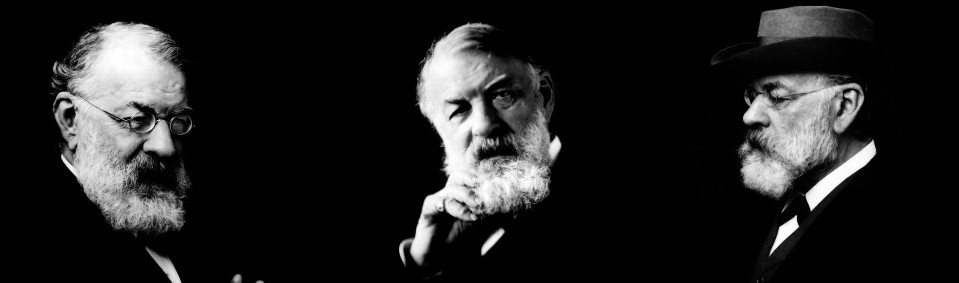
  • Place: London

Wiener Signale_1882Download

Share this:

  • Share on X (Opens in new window) X
  • Share on Facebook (Opens in new window) Facebook
  • Email a link to a friend (Opens in new window) Email

Like this:

Like Loading…

INDEX

02 Monday Feb 2026

Posted by Joachim in Uncategorized

≈ Leave a comment

JJ 1884

BRIEF BIOGRAPHY

Joseph Joachim

Pest

BIOGRAPHICAL POSTS

CHAPTER I: HUNGARY

Kittsee, 1831

Family

The Kitsee Kehilla

Digression: The Road to Jewish Emancipation

Of Rivers and Highways: The Perilous Journey into the Future 

Pesth

First Lessons 

The Flood

Debut

__________

CHAPTER II: VIENNA AND BÖHM

Vienna, 1839

Hauser and Hellmesberger

Study with Joseph Böhm

Conservatory Student

A Young Virtuoso

Summer Work in a Summer Playground 

Vienna Philharmonic Debut

Milanollos, and a Farewell to Vienna

__________

CHAPTER III: LEIPZIG AND MENDELSSOHN

Interlude — Leipzig

Leipzig and Mendelssohn

First Gewandhaus Concert. Pauline Viardot-Garcia

The Wittgensteins

Mendelssohn

Two Teachers: Hering and Hauptmann

Bildung

In the Court of Friedrich Wilhelm IV: A Work of Timeless Quality

Gewandhaus Debut

Growing Pains/Travel Plans

__________

CHAPTER IV: LONDON, 1844

London, 1844

Alsager

London Debut

A Prodigious Fellow

After the London Debut: Tharandt

CHAPTER V: LEIPZIG AGAIN

Return to Leipzig

Ferdinand David

1845

Schumann, Cristiani, and Lind 

Friends

Vienna Again — and Pest

Spohr

==skip==

Mendelssohn’s Death

==skip==

“A Very Agitated Evening”

==skip==

The Kaffeter

==skip==

The Call to Hanover

King George V of Hanover

The 31st Lower Rhine Music Festival

Baptism / Taufe

CHAPTER XIII: CLIFFS OF FALL

Cliffs of Fall

ARTICLES AND ESSAYS — RWE

Verehrter Freund! Liebes Kind! Liebster Jo! Mein einzig Licht. — Intimate letters in Brahms’s Freundeskreis Die Tonkunst, vol. 2, no. 2 (April, 2008), pp. 178-193.

Schumann as Mentor: Joseph Joachim’s “Blick auf Schumann Die Tonkunst, vol. 4, no. 3 (July, 2010), pp. 351-365.

Joachim’s Youth — Joachim’s Jewishness Musical Quarterly, Spring, 2012

Der Geigerkönig — Joseph Joachim as Performer Die Tonkunst, vol. 1, no. 3, (July, 2007), pp. 205-217.

Carl Reinecke, Joseph Joachim, and the Reinecke Violin Concerto, Op. 141

Reményi Before Brahms

The Joachim Quartet Concerts at the Berlin Singakademie- Mendelssohnian Geselligkeit in Wilhelmine Germany in: Brahms in the Home and the Concert Hall: Between Private and Public Performance, Katy Hamilton and Natasha Loges, eds., (Cambridge: Cambridge University Press, 2014), 22-42. 

Preface to Hamlet, op. 4

A Victorian Musician

‘For All are Born to the Ideal’ Joseph Joachim and Bettina von Arnim Music and Letters, vol. 101, no. 4, (November, 2020), pp. 713–742.  

Review: Katharina Uhde, “The Music of Joseph Joachim” Notes, vol. 77, no. 2 (December 2020), pp. 268–71.

Ives on Umpawaug Road Die Tonkunst, vol. 7, no. 1 (January, 2013), pp. 81-84.

Joachim in Weimar 1850-1851 in: Joseph Joachim. Identities/Identitäten, Katharina Uhde and Michael Uhde, eds., (Hildesheim, Zürich, New York: Ohms Verlag, 2023), 387-407.

Joseph Joachim and Bach’s Chaconne Nineteenth-Century Music Review, 2024, 1–31. https://doi.org/10.1017/S147940982400020X.

TALKS — RWE

Nutmegs, Chestnuts, and ‘The Last of a Classic School’: Repertoire and Reputation in Joseph Joachim’s British Career Presented at the Ninth Biennial Conference on Music in Nineteenth-Century Britain, Cardiff University, June 25, 2013

Reményi Before Brahms  Based on a paper given to the American Brahms Society Conference, Brahms in the New Century, Brook Center for Music Research, City University of New York, March 21, 2012.

ABS Handout for Reményi

ARTICLES BY CONTRIBUTING AUTHORS

James Buswell: Brahms Violin Concerto Op. 77. Commentary

Malcolm Tozer: Josef Joachim at Uppingham School

Malcolm Tozer: Joachim’s Illustrated Address From Uppingham School

BIOGRAPHICAL SKETCHES AND ENCYCLOPEDIA ENTRIES

Ignaz Reich: Joseph Joachim (1856) Ignaz Reich, Beth-El. Ehrentempel verdienter ungarischer Israeliten, (Pest: Alois Bucsánszky, 1856), 61–9.

An Early Biographical Sketch (1856) The South Australian Advertiser, (Adelaide, SA, Monday, October 31, 1859), 3.

Heinrich Ehrlich: Joseph und Amalie Joachim (1873) Der Salon für Literatur, Kunst und Gesellschaft, (ed. Julius Rodenberg), vol. 1 (Leipzig: A. H. Payne, 1873), 43-55.

Marian Millar: Joseph Joachim (1887) The Quarterly Review, vol. 3 (London: John Heywood, 1887), 178-182.

Paul David: Joseph Joachim (1894) Paul David, “Joseph Joachim,” A Dictionary of Music and Musicians (A.D. 1450-1889), Sir George Grove (ed.), (London and New York: Macmillan and Co. 1894), 34-35.

BOOKS ABOUT JOSEPH JOACHIM

Andreas Moser, Joseph Joachim: Ein Lebensbild, Berlin: B. Behr’s Verlag, 1898.

Andreas Moser, Joseph Joachim. A Biography (1831-1899), Lilla Durham, trans., London: Philip Wellby, 1901.

Andreas Moser, Joseph Joachim: A Portrait of his Life, Volume I (1831–1856) (trans. Eshbach)

J. A. Fuller Maitland, Joseph Joachim, London & New York: John Lane, 1905.

M[arion]. [Bruce] R[anken]., Some Points of Violin Playing and Musical Performance. Edinburgh: Privately Printed, 1939.

CONCERTS

Joseph Joachim’s Concerts

Opera Performances in Weimar During Joachim’s Tenure as Concertmaster

Early American Performances of Joachim’s “Hungarian” Concerto, op. 11

Joachim Committee Concerts, 1903

Joachim Committee Concerts, 1906

A Collection of Programs, 1881-1907

CONCERT REVIEWS & CRITICISM

Concert: Debut, Pesth, September, 1839 Der Humorist, vol. 3, no. 187 (September 19, 1839), p. 745.

Notice: Allgemeine Zeitung des Judenthums, Leipzig, December 21, 1839

Concert: Vienna, November 15, 1841 Allgemeine Wiener Musik-Zeitung, vol. 1, no. 139 (November 20, 1841), p. 582.

Concert: Vienna, January 27, 1842 Der Ungar. Zeitschriftliches Organ für magyarische Interessen (Pesth), vol. 1, no. 28 (February 4, 1842), p. 172.

Concert: Vienna, February 20, 1843 Der Wanderer in Gebiete der Kunst und Wissenschaft, Industrie und Gewerbe, Theater und Geselligkeit, vol. 30, no. 45 (Wednesday, 22 February, 1843), p. 179.

Concert: Vienna Philharmonic Debut, April 30, 1843 M. G. Saphir (ed.), Der Humorist, vol. 7, no. 87 (Wednesday, 3 May, 1843), p. 354.

Notice: Der Adler, Vienna, July 6, 1843

Der Humorist, Vienna, July 20, 1843

Concert: Leipzig Gewandhaus Debut, November 16, 1843 NZfM, Leipzig, Vol. 19, No. 47 (December 1, 1843), p. 188.

Concert: Leipzig Gewandhaus Debut, November 16, 1843 AMZ, Leipzig, vol. 45, no. 49 (December 6, 1843), p. 890

Concert: Leipzig, January 29, 1844, Gewandhaus

Der Ungar, Pesth, April 29, 1844 Der Ungar, vol. 3, no. 99 (Pesth, April 29, 1844), p. 392

Concert: London Philharmonic Debut, May, 1844 (Beethoven Concerto/Mendelssohn) The Morning Post, no 22,893 (May 28, 1844), p. 3.

Concert: London Philharmonic Debut, May, 1844 (Beethoven Concerto/Mendelssohn) The Times, London, Issue 18621 (May 28, 1844), p. 4.

Concert: London Philharmonic Debut, May, 1844 (Beethoven Concerto/Mendelssohn) The Musical World, vol. 19, no. 22 (May 30, 1844), pp. 180-181.

Concert: London Philharmonic Debut, May, 1844 (Beethoven Concerto/Mendelssohn) The Illustrated London News, vol. 4, no. 109 (June 1, 1844), p. 354.

Concert: London Philharmonic Debut, May, 1844 (Beethoven Concerto/Mendelssohn The Examiner, no. 1896 (June 1, 1844), p. 5.

Concert: London Philharmonic Debut, May, 1844 (Beethoven Concerto/Mendelssohn) Der Humorist, no. 137 (June 7, 1844) p. 548

Concert: London,  June 5, 1844, The Princess’s Concert Room

The Weekly Herald (New York), August 31, 1844: London Correspondence The Weekly Herald (New York), (August 31, 1844), p. 275.

Leipzig Performances, 1843-1845

Concert: Leipzig, January, 1845 AMZ, vol. 47, no. 4 (January, 1845), p. 61.

Concert: Dresden, November 10, 1845 AMZ, vol. 47, no. 47 (November 19, 1845), pp. 838-839.

Concert: December, 1845 Signale für die Musikalische Welt, vol. 3, no. 50 (December, 1845), p. 394.

Concert: Vienna, January 11, 1846, MusikvereinssaalM. G. Saphir (ed.), Der Humorist, vol. 10, no. 11 (Tuesday, January 13, 1846), pp. 42-43.

Concert: Vienna, January 11, 1846, MusikvereinssaalFerdinand Ritter von Seyfried (ed.), Der Wanderer im Gebiete der Kunst und Wissenschaft, Industrie und Gewerbe, Theater und Geselligkeit, vol. 33, no. 11 (January 13, 1846), p. 44.

Concert: Vienna, January 11, 1846, Musikvereinssaal Wiener Zeitschrift für Kunst, Literatur, Theater und Mode, vol. 31, no. 12 (January 16, 1846), p. 48

Concert: Vienna, January 11, 1846, MusikvereinssaalLudwig August Frankl (ed.), Sonntagsblätter, vol. 5, no. 3 (January 18, 1846), p. 59-60.

Concert: Vienna, February 28, 1846, MusikvereinssaalFerdinand Ritter von Seyfried (ed.), Der Wanderer im Gebiete der Kunst und Wissenschaft, Industrie und Gewerbe, Theater und Geselligkeit, vol. 33, no. 53 (March 3, 1846), pp. 211-212.

Concert: Vienna, February 28, 1846, MusikvereinssaalM. G. Saphir (ed.), Der Humorist, vol. 10, no. 53 (March 3, 1846), p. 215.

Concert: Vienna, February 28, 1846, MusikvereinssaalG. Ritter von Franck (ed.), Wiener Zeitschrift für Kunst, Literatur, Theater und Mode, vol. 31, no. 45 (March 3, 1846), p. 179.

Concert: Vienna, February 28, 1846, Musikvereinssaal Wiener Zuschauer. Zeitschrift für Gebildete, vol. 36 (March 4, 1846), pp. 285–286.

Concert: Vienna, February 28, 1846, MusikvereinssaalLudwig August Frankl (ed.), Sonntagsblätter, vol. 5, no. 10 (March 8, 1846), p. 236.

Concert: London, May 10, 1847 The Musical World, vol. 22, no. 20 (May 15, 1847), p. 313

Concert: Leipzig, Gewandhaus, October 19, 1848 Deutsche Allgemeine Zeitung, no. 296 (October 22, 1848), p. 3888

Bentley’s Miscellany, London, May, 1849

Revue et Gazette Musicale de Paris, Paris, January 27, 1850

Revue et Gazette Musicale de Paris, Paris, February 3, 1850

Concert: Paris, February 19, 1850 Illustrated London News, vol. 16, no. 414, (Saturday, February 23, 1850), p. 130.

Revue et Gazette Musicale de Paris, Paris, March 17, 1850

Joachim in Paris NZfM April 19, 1850 

Concert: Weimar, October 19, 1850 Weimarische Zeitung, no. 85 (October 23, 1850), p. 828.

Concert: London, May 31, 1852

Concert: London, June, 1852

Concert: London, Review: The Athenæum, July 3, 1852

Review: Op. 2: Drei Stücke für Violine und Klavier (The Athenæum) October 2, 1852

Concert: Berlin, February, 1853

Concert: Düsseldorf, May 17, 1853 Dwight’s Journal of Music, vol. 2, no. 11 (June 18, 1853), pp. 86-87.

Concert: Düsseldorf, May 17, 1853 Rheinische Musik-Zeitung, vol. 3, no. 154 (June 11, 1853), pp. 2128-2129.

Concert: Düsseldorf, May 17, 1853 Zeitung für Norddeutschland; Hannoversche Morgenzeitung, no. 1137, (Sunday, May 22, 1853).

Concert: Düsseldorf, May 17, 1853 Süddeutsche Musik-Zeitung, vol. 2, no. 24 (June 13, 1853), p. 95.

Concert: Düsseldorf, May 17, 1853 Wiener Zeitung, no. 125 (May 26, 1853), p. 478.

Göttingen im August (1853)  Rheinische Musik-Zeitung für Kunstfreunde und Künstler, vol. 4, no. 178 (September 14, 1853), pp. 1338-1339.

Niederrheinische Musik-Zeitung, Köln, October 15, 1853

Concert: Leipzig, Gewandhaus, March 23, 1854 (Hamlet Ov.)
Signale für die Musikalische Welt, vol. 12, no. 14 (March, 1854), pp. 113-14.

Concert: Berlin, Singakademie, December 1854—Concerts with Clara Schumann
Signale für die Musikalische Welt, vol. 12, no. 52 (December, 1854): 429-30.

Dwight’s Journal of Music — Joachim and Clara Schumann’s Singakademie Concerts in Berlin, 1855 Dwight’s Journal of Music, vol. 6, no. 25 (24 March 1855), pp. 196-197.

Alexander Wheelock Thayer on Joachim and Clara Schumann in the Berlin Singakademie, 1855 Dwight’s Journal of Music, vol. 8, no. 10 (8 December 1855), pp. 78-79 .

Review: Opp. 9 and 10, Hebrew Melodies and Variations on an Original Air (The Athenæum), January 5, 1856

Review: Violin Concerto No. 1 in One Movement, G Minor, op. 3 (Niederrheinische Musik-Zeitung) March 15, 1856

Concert: Vienna, February, 1861 (Leopold Alexander Zellner)

Concert: Vienna, March, 1861

Review: Op. 11: Concert in ungarischer Weise (Deutsche Musik-Zeitung) August 12 and 19, 1861

Concert: Berlin, Singakademie, December, 1865

Joachim in Moscow, 1872, Neue Zeitschrift für Musik, vol. 68, no. 13 (March 22, 1872), p. 136

Wilhelm von Lenz: Josef Joachim in Petersburg, Neue Berliner Musikzeitung, vol. 26, no. 30 (July 17, 1872) and vol. 26, no. 31 (July 24, 1872).

August Wilhelm Ambros: Review of Joachim’s Orchestration of Schubert’s Grand Duo, Op. posth. 140, D812 Wiener Zeitung, no. 260 (November 12, 1872), 1785

Concert: Leipzig, Gewandhaus, November 30, 1877, Dwight’s Journal

Joseph Joachim in Venice, January 1880

Joachim at the Società del Quartetto (Milan, 1880) Gazzetta Musicale di Milano, XXXV, January 18, 1880.

Joachim in Italy (1880) Neue Zeitschrift für Musik, 6 February 1880: 75.

Concert: Crystal Palace, March 5, 1888 (Brahms Concerto/Bach Double) Croydon Advertiser and East Surrey Reporter (Saturday, March 10, 1888), p. 7.

Joseph Joachim 60 Years’ Jubilee, Berlin, April 22, 1899 Das Magazin für Literatur, vol. 68, no. 18 (May 6, 1899), p. 425.

Joachim Jubilee: New York Times (May 7, 1899)

Joachim’s Jubilee: New-York Tribune (May 7, 1899)

The Musical Standard, May 24, 1902

Concert: Oxford, November 29, 1906 The Oxford Magazine, vol. 25, no. 8, (December 5, 1906), p. 135.

DOCUMENTS

Contracts:

Joachim’s Contract in Hanover, 1852

Miscellaneous Documents:

Amalie Schneeweiss Joachim Death Record

Joseph Joachim Death Record

Henrici Catalogue: Joachim’s Letters to Bettine

EPHEMERA

Joseph Joachim: Musical Autographs

Moritz Hauptmann: “J! – O! – Ach! – im Canon”

To Jean Joseph Bott

Joseph Joachim to Lidy Steche, Weimar, January 12, 1852

Playbill, “Hamlet” Premiere, Weimar, January 8, 1854

Moritz and Susette Hauptmann to Joseph Joachim, Leipzig, 1854

London, July 1865

Feierliche Enthüllung der Bach-Statue, Eisenach, September 28-29, 1884

A Collection of Programs, 1881-1907

Album Leaf: Romanze aus dem Concert in Ungarischer Weise, Berlin, 9 January, 1893

Album Leaf for Elisabeth Joachim, 1897

Album Leaf, Joseph Joachim and Fanny Davies, February 23, 1899

Royal Doulton Joseph Joachim Plate

Program: First English Performance of the Hamlet Overture, Op. 4 (1908)

Eichendorff Poem

ESTATE/NACHLASS

J. S. Bach Cantata BWV 5, “Wo soll ich fliehen hin?”

C. G. Boerner: Auction Catalog of Joachim’s Autograph and Manuscript Collection

Two Paganini Portraits from Joachim’s Estate

Ruprecht Kamlah: Joseph Joachims Guarneri-Geigen

FAMILY

Family Tree with Links

Amalie Joachim: Reminiscences of Childhood

The Estate of Henry Joachim

The Grave of Johannes Joachim

ICONOGRAPHY

Joseph Joachim: Early Daguerreotype ca. 1844

Joseph Joachim: Wilhelm Girtner, Berlin, January 13, 1845

Joseph Joachim: Carl Günther, Berlin prior to 1850

Joseph Joachim: Hansen, Copenhagen

Joseph Joachim: Hanfstaengl, Munich

Joseph Joachim: Reutlinger, Paris ca. 1850

Joseph Joachim: Julius Giere, Hannover

Joseph Joachim: Photo from Prince Albert’s Collection (ca. 1860)

The Monday Popular Concerts: The Illustrated London News, April 25, 1863

Joseph Joachim: H. Hering, London

Joseph Joachim: L. Haase & Comp., Berlin

Joseph Joachim: Julia Margaret Cameron, London, April, 1868

Joseph Joachim: Schaarwächter, Berlin

Joseph Joachim: H. Kuntzmann & Co. Berlin

Joseph Joachim: Loescher & Petsch (Berlin)

Joachim at 40 (1871)

Villa Joachim, Berlin

Joseph and Amalie Joachim, 1873

Joseph and Amalie Joachim (1873)

Joseph Joachim: Window & Grove, 1874 or Before

James Archer: Doctor Joseph Joachim (1876)

Villa Joachim, Aigen bei Salzburg

Joseph and Amalie Joachim: Emilie Bieber Hof-Photographin, Hamburg, 1877/78

Joseph Joachim, 1879

Joseph Joachim by Hanfstaengl Kunstverlag, Munich

Joseph Joachim by Hanfstaengl, Munich

Joseph Joachim in Venice, January 1880

Joseph Joachim: Negretti & Zambra, Crystal Palace

Joseph Joachim: E. Encke, 1884

JJ 1884

Joseph Joachim: Schaarwächter Berlin, 1884

Das Joachim’sche Streichquartett: Musikalisches Wochenblatt, 1884 Musikalisches Wochenblatt, Vol. 16, No. 1, (December 17, 1884), p. 9.

Herr Joachim, 1885 The Illustrated Sporting and Dramatic News (February 14, 1885), p. 536.

Monday Popular Concerts, London (1885)

Joseph Joachim: Mayer & Wilhelm, Stuttgart

Joseph Joachim

Joseph Joachim: Loescher & Petsch Berlin, 1887

Joseph Joachim: R. Seyler (Loescher & Petsch Berlin, 1887)

Leopold Löwenstam (1842–1898): “The Quartett” (1888)

Gustav Eilers: Joseph Joachim (1890)

Joachim, Reinecke and Piatti. Beethoven Feier in Bonn, 11-15 May 1890

Joachim Quartett. Beethoven Feier in Bonn, 11-15 May 1890

Joseph Joachim: The Musical Times, April 1, 1893

Joseph Joachim, 1894

Joseph Joachim: Barraud, 1894

The Joachim Quartet, 1896

Joseph Joachim: Guigoni & Bossi, Milano, 1897

Joseph Joachim and Nellie Melba, Guigoni & Bossi, Milano, 1897

Joseph Joachim: Gottheil & Sohn, Königsberg, 1898

The Joachim Quartet, Berlin, 1898

Joseph Joachim: Neue Photographische Gesellschaft, Berlin, 1899

Joseph Joachim Delivers the Festrede at the Unveiling of Hildebrandt’s Brahms-Denkmal in Meiningen, October 7, 1899

Carl Ernst Forberg: Joseph Joachim (1899)

Joseph Joachim: Atelier Victoria, Berlin, 1900

Joseph Joachim: E. Bieber Hofphotograph, Berlin & Hamburg, ca. 1900

Portrait of Joachim Reading Mail by the Fire

Joseph Joachim Playing Cards

H. Varges: Joseph Joachim Playing

Joseph Joachim: Reutlinger, Paris

Joseph Joachim: Lüpke, Berlin

Willy von Beckerath: Joseph Joachim (Munich, 1902)

Joseph Joachim and Donald Francis Tovey (Berlin, February 1902)

Felix Possart: The Joachim Quartet in the Singakademie zu Berlin (1903)

Portrait of Joseph Joachim. Inscribed ‘Joseph Joachim, London, Mar 9th, 1904’

Ferdinand Schmutzer: Joseph Joachim Playing, from Behind (ca. 1904)

Ferdinand Schmutzer: Portraits (1904)

Ferdinand Schmutzer: The Joachim Quartet (1904)

John Singer Sargent: Joseph Joachim (1904)

John Singer Sargent: Joseph Joachim (1904 Print)

Johanna Eilert: Joseph Joachim and his Grandson Hans

Ferdinand David: Brasch Atelier, Leipzig

Stradivari 1715 “Il Cremonese – ex-Joachim”

Eduard Jakob von Steinle: Joachim’s Hands

Joseph Joachim’s Hand

The house in which Joachim died, Berlin, Kurfürstendamm 217

Joseph Joachim’s Grave

Adolf von Hildebrand: Bust of Joseph Joachim

Joachim Poster Stamps (Germany, ca. 1910)

INSTRUMENTS

Ruprecht Kamlah: Joseph Joachims Guarneri-Geigen

The 1714 Joachim-Ma Stradivarius

JOACHIM IN GREAT BRITAIN

London, 1844

Alsager

London Debut

A Prodigious Fellow

A Victorian Musician

LETTERS

A Mis-dated Letter

Miscellaneous Unpublished Letters

Joseph Joachim’s Letters to Gisela von Arnim 1852-1859

Joseph Joachim Letters (Lübeck Catalog) Catalog of the Brahms-Institut an der Musikhochschule Lübeck

Joseph Joachim to Felix Mendelssohn/Hermann Wittgenstein to Mendelssohn, March, 1844 

Wilhelm Figdor to Julius and Fanny Joachim, December 2, 1844

Joseph Joachim to Heinrich Joachim, September 2, 1847

Joseph Joachim to his Parents, September 2, 1847

Joseph Joachim to his Parents, November 5, 1847

Joseph Joachim to Unknown, Pesth, May 12, 1848

Joseph Joachim to his Uncles (Wilhelm and Nathan Figdor), July 17, 1850

Joseph Joachim, presumably to Franz Liszt, Leipzig, September 30, 1850

Joseph Joachim to Hermann Härtel, February 15, 1852

Joseph Joachim to Franz Liszt, March 21, 1853

Franz Liszt to Joseph Joachim, mid-April, 1853

Robert Schumann to Joseph Joachim, April 17, 1853

Joseph Joachim to Franz Liszt, Düsseldorf, May 17, 1853

Joseph Joachim to Robert Schumann, June 2, 1853

Robert Schumann to Joseph Joachim, June 8, 1853

Joseph Joachim to Hermann Härtel, October 25, 1853

Joseph Joachim to Gisela von Arnim, November 27, 1853

Peter Cornelius to Bettina von Arnim, Weimar, February 7, 1854

Albert Dietrich to Joseph Joachim, Düsseldorf, February 28, 1854

A Letter to Wagner 6 April, 1854

Joseph Joachim to Gisela von Arnim, Hanover, mid-April 1854

Joseph Joachim to Woldemar Bargiel, November 17, 1855

Franz Liszt to Joseph Joachim, Weimar, July 10, 1856

Joseph Joachim to Ferdinand David, July 30, 1856

Joseph Joachim to Franz Liszt, Düsseldorf, August 2, 1856

Franz Liszt to Joseph Joachim, Weimar, August 7, 1856

Joseph Joachim’s Letter to his Parents after Schumann’s Death, August 12, 1856

Joseph Joachim to Franz Liszt, Göttingen, August 27, 1857

Richard Wagner to Joseph Joachim, March 17, 1858

Charles Dickens to Joseph Joachim, July 7, [1862]

Joseph Joachim to Niels Gade, ca. 1862

Amalie Schneeweiss to Joseph Joachim, Early February, 1863

The Irish People: Ernst and Joachim [1864]

Joseph Joachim to Mrs. Siemens, March 5, 1873

A Letter of Joseph Joachim on Editing the Chaconne of Bach, May 6, 1879

Joseph Joachim to Andreas Moser, August 5, 1898 (concerning the Schumann Violin Concerto)

Joseph Joachim Letters to Friedrich Hegar

Joseph Joachim Recommends Young Richard Burgin, October 4, 1902

LINKS

Links

F. A. E. — Sonata by Albert Dietrich, Robert Schumann, and Johannes Brahms (1853) 

A Collection of Programs

Katharina Uhde: Psychologische Musik, Joseph Joachim, and the Search for a New Music Aesthetic in the 1850s

Joseph Joachim Letters (Lübeck Catalog) Catalog of the Brahms-Institut an der Musikhochschule Lübeck

LITERATURE

Herman Grimm: Violinphantasie für J. J.

George du Maurier: Trilby, 1894

To Dr Joachim (poem)

LITERATURE REVIEW

Literature Review

MISCELLANEOUS ARTICLES

An Early Biographical Sketch (1856) The South Australian Advertiser, (Adelaide, SA, Monday, October 31, 1859), p. 3.

F. P. Laurencin: Josef Joachim und seine Stellung zum Musikleben der Gegenwart (1861) 

Das Joachim’sche Streichquartett: Musikalisches Wochenblatt, 1884

M. Charles: Joseph Joachim und sein Concert “in Ungarischer Weise” From: M. Charles, Zeitgenössische Tondichter. Studien und Skizzen, Leipzig: Serig’schen Buchhandlung, 1888, pp. 261-273.

Review: Adolph Kohut’s “Josef Joachim. Ein Lebens-und Künstlerbild.”

Joachim on the New Music, 1896

Bruno Riezler: Review of Andreas Moser, Joseph Joachim. Ein Lebensbild (1898)

William Henry Hadow: In a Hungarian Coffee-House (1899)

Donald Francis Tovey: From “Performance and Personality”

Donald Francis Tovey: “Joseph Joachim: Maker of Music”

Otto Gumprecht: Joseph Joachim, der König der Geiger

W. Langhans, Die Königliche Hochschule für Musik zu Berlin,Leipzig: E. W. Fritzsch, 1873

Wilhelm Joseph von Wasielewski: Joseph Joachim und die neue Berliner Schule Wilhelm Joseph von Wasielewski, Die Violine und ihre Meister (4th ed.). Leipzig: Breitkopf und Härtel, 1904, pp. 502-525.

Carl Flesch: “Was Bedeutet Uns Die Erinnerung An Joseph Joachim?” (1907)

Carl Flesch on Joseph Joachim 

August Spanuth: Joseph Joachim ein Phänomen (1907)

Hermann Kretzchmar: Joseph Joachim (1907)

Hans Joachim Moser: Joseph Joachim (1908) Sechsundneunzigstes Neujahrsblatt der Allgemeinen Musikgesellschaft in Zürich, Zürich & Leipzig: Hug & Co., 1908

Mrs. E. Cawood: Joachim and His School

Carl Reinecke: Personal Memories of Joseph Joachim Carl Reinecke, “Persönliche Erinnerungen an Joseph Joachim,” Deutsche Revue 34, no. 4 (1909): 91–95.

Philip Hale on Brahms’s Violin Concerto in D Major, op. 77 Program note by Philip Hale for the Boston Symphony Orchestra, 1916.

Ferdinand Pfohl: Joseph Joachim und Richard Wagner Die Musik, vol 20, no. 9 (June, 1928), pp. 645-652.

OBITUARIES

Obituary: Amalie Joachim Die Gartenalube (1899)

Obituary: Amalie Joachim Marburger Zeitung (1899)

Obituary: Leipziger Illustrierte Wochenschrift Der Leipziger Illustrierte Wochenschrift, Verlag: Lauer & Cie. Nr. 34, 2 Jahrg. Leipzig, 24 August 1907

Julius Korngold, Neue Freie Presse, Vienna (1907) Neue Freie Presse, no. 15439, (August 16, 1907), pp. 1-3.

Obituary: The Times (London) The Times, (August 16, 1907), p. 10.

Obituary: Pester Lloyd Pester Lloyd, no. 195 (August 16, 1907), pp. 3-4.

Obituary: Elsa Bienenfeld in Neues Wiener Journal  Neues Wiener Journal, vol. 15, no. 4962 (August 16, 1907), pp. 1-2.

Obituary: Mährisches Tagblatt  Mährisches Tagblatt, vol. 28, no. 185 (August 16, 1907), pp. 1-3.

Obituary: Berliner Tageblatt und Handels-Zeitung Berliner Tageblatt und Handels-Zeitung, vol. 36, no. 413 (August 16, 1907), pp. 2-3.

Obituary: Deutsche Tageszeitung  Deutsche Tageszeitung, Morgen-Ausgabe, vol. 14, no. 381 (16 August 16, 1907), pp.  2–3.

Obituary: New York Times New York Times (August 16, 1907) p. 7.

Obituary: New-York Daily Tribune New-York Daily Tribune (August 15, 1907) p. 7.

Obituary: Neuigkeits Welt-Blatt Neuigkeits Welt-Blatt, vol. 34, no. 187 (August 17, 1907), pp. 11-12.

Obituary: Czernowitzer Allgemeine Zeitung Czernowitzer Allgemeine Zeitung, no. 1097 (August 18, 1907), p. 3.

The Obsequies for Joseph Joachim (August 20, 1907) Berliner Tageblatt und Handels-Zeitung (August 20, 1907), p. 2.

Die Trauerfeier für Joseph Joachim (Berliner Tageblatt und Handels-Zeitung) Berliner Tageblatt und Handels-Zeitung (August 20, 1907), p. 2.

Obituary: Bach Jahrbuch Bach Jahrbuch, 4 (1907), pp. 1-2.

Obituary: Signale für die Musikalische Welt Signale für die Musikalische Welt, (August 21, 1907), pp. 865-866.

Obituary: The Spectator The Spectator, (August 24, 1907), p. 255.

Obituary: Rheinische Musik- u. Theater-Zeitung Rheinische Musik- u. Theater-Zeitung, vol. 8, no. 33/34 (August 24, 1907), pp. 413-414,

Obituary: Le Ménestrel Le Ménestrel, vol. 73, no. 34 (August 24, 1907), p. 267-268.

Obituary: Monthly Musical Record Monthly Musical Record, vol. 37, no. 441 (September 1, 1907) p. 193-194.

Obituary: Blätter für Haus- und Kirchenmusik Blätter für Haus- und Kirchenmusik, vol. 11, no. 12, (September 1, 1907), pp. 177-179.

Obituary: La Revue Musicale La Revue Musicale, vol. 7, nos. 18-19 (September 15-October 1, 1907), p. 457.

REMINISCENCES & ENCOMIA

Anecdotal

Joachim in Düsseldorf, 1855

Dwight’s Journal of Music — Joachim and Clara Schumann’s Singakademie Concerts in Berlin, 1855

Agathe von Siebold: Göttingen, Summer of 1857

Richard Wagner on Joseph Joachim (1870)

Otto Gumprecht: Joseph Joachim, der König der Geiger (1872)

J. E. Sandys: Oration at Cambridge University Upon the Awarding of the Mus. Doc. to Joseph Joachim, March 8, 1877

The Athenæum: Herr Joachim’s Degree (March 17, 1877)

John Ella: Mendelssohn and his Protégé (1878)

Jubilee Presentation Speech by Frederic Leighton, 1889

Luigi Arditti on Joseph Joachim (1896)

Sigmund Beel: A Reminiscence (1893)

Baroness von Zedlitz: A Chat With Dr. Joachim (1894)

Aus Schumanns letzten Tagen

H. R. Haweis on Joachim (1900)

Anne Thackeray Ritchie: Concerning Joseph Joachim (1901)

Edith Winn: Joseph Joachim (1901)

Karl Storck, Joseph Joachim: Eine Studie

Sir Frederick Pollock: Address to Joseph Joachim, May 16, 1904

Robert Bridges: “To Joseph Joachim” (1904)

Gustav von Diest: from “Aus dem Leben eines Glücklichen” (1904)

Arthur Hartmann: Joachim’s Death

Abschiedsworte des Präsidenten der Kg. Akademie der Künste Geh. Regierungsrat Prof. Dr. ing. Joh. Otzen (1907)

Paul Bekker: Joachim (1907)

Ludwig Wittgenstein: Josef Joachim (1907) Neue Freie Presse. Morgenblatt, no. 15441 (Sunday, August 18, 1907), p. 11.

Neue Musik-Zeitung, Memorial Articles (September 5, 1907)

Wilhelm Altmann: Joseph Joachim † (1907)

Charles V. Stanford: Joseph Joachim (1907)

Edith Sichel: Joseph Joachim. — A Remembrance (1907)

Carl Flesch: “Was Bedeutet Uns Die Erinnerung An Joseph Joachim?” (1907) 

Julius Korngold, Neue Freie Presse, Vienna (1907)

Lady Macfarren: “Recollections of Dr. Joachim” (1907)

Max Bruch: Gedenkworte für Joseph Joachim (1907)

Hermann Kretzschmar: Joseph Joachim (1907)

Walter Nithack-Stahn: Zum Gedächtnis Joseph Joachims

Andreas Moser: Gedächtnisrede anläßlich der Trauerfeier für Joseph Joachim, am 27. Oktober 1907

Dr. Siegfried Stern: Joseph Joachim (1908)

Julius Rodenberg: Zur Erinnerung an Joseph Joachim (1908)

William Allingham on Joachim Browning, and Carlyle

Pester Lloyd: Graf Géza Zichy’s Anecdote

Hans Sommer: Erinnerungen an Joseph Joachim und seine Beziehungen zu Braunschweig (1913) 

Isador Troostwyk: Reminiscences of the Great Joachim by One of His Pupils (1916)

E. Joseph Müller: Joseph Joachims Wirken im Lichte der Gegenwart (1917)

Edward Normanton Bilbie: Joseph Joachim (1921)

Esther Bright: from “The Ancient One” (1927)

“Joseph Joachim,” The Times, Saturday, June 27, 1931

Ernst Denhof: From “Joseph Joachim Centenary. Personal Recollections” (1931)

Alexander Siloti on Liszt and Joachim

Ernst Rudorff on Joachim and Liszt

Marion Bruce Ranken on Joachim and Wagner (1939)

To Dr Joachim (poem)

Ernst Rudorff on Joachim and Liszt

Hans Joachim Moser: “Erinnerungen an Joseph Joachim und eine Gedenkrede.”

SPEECHES AND UTTERANCES (JOACHIM)

Joachim on the New Music, 1896

Joseph Joachim on Stradivari’s Violins Edward John Payne, “Stradivari,” in: George Grove, A Dictionary of Music and Musicians, J. A. Fuller Maitland (ed.), vol. 3, New York: Macmillan, 1898, p. 733.

Joseph Joachim’s Memorial Speech at Robert and Clara Schumann’s Grave, Sunday, 20 May, 1906

STUDENTS

Joachim’s Students

Robert Imandt

UNCATEGORIZED

The Joachim Quartet (Berlin) Membership

Andreas Moser: Joseph Joachim (The Century Library of Music, 1902)

Georg V Hannover: Ideen und Betrachtungen über die Eigenschaften der Musik (1839)

Georg V Hannover: Musik und Gesang

An Joachim (1853)

Robert Bridges: To Joseph Joachim

WORKS

See: Katharina Uhde, The Music of Joseph Joachim, Woodbridge and Rochester: Boydell Press, 2018.

Works list (Protected)

Haidenröslein, for Soprano and Piano

Review: Op. 2: Drei Stücke für Violine und Klavier (The Athenæum), October 2, 1852

Joachim/Moser Violin School (Violinschule)

Review: Opp. 9 and 10, Hebrew Melodies and Variations on an Original Air (The Athenæum), January 5, 1856

(RECORDINGS)

About Joseph Joachim’s Recordings

Joachim: Bach Adagio in G Minor (1904)

Joachim: Brahms Hungarian Dance No. 1 in G Minor (1903)

Joachim: Brahms Hungarian Dance No. 2 in D Minor (1903)

Joachim: Romanze in C Major, Op. 20 (1903)

(SCORES)

Joseph Joachim, Lied: “Haidenröslein” (Score)

Joseph Joachim, “Im Herbst.” Lied after Ludwig Uhland (1849) (Holograph Score)

Joseph Joachim, Lied: “Du hast die Ros’ ans Herz gelegt (…)” (Holograph Score)

Joseph Joachim, Lied: “Herr, schicke, was du willst (…) (Mörike) (Holograph Score) 

Joseph Joachim, Lied: “O mich entzückt der Vögel Ruf zu lauschen (…)” (Herman Grimm) (Holograph Score)

Joseph Joachim, Andantino and Allegro scherzoso for Violin and Orchestra, op. 1 (Score)

Joseph Joachim, Drei Stücke, op. 2 (Score)

Joseph Joachim, Violin Concerto No. 1 in One Movement, G Minor, op. 3 (Score)

Liszt – Joachim Rhapsodie Hongroise for Violin and Piano (Score)

Joseph Joachim, Overture to Hamlet, op. 4 (Score)

Joseph Joachim, Drei Stücke, op. 5 (Score)

Joseph Joachim, Overture to Herman Grimm’s Demetrius, op. 6 (Four-Hand Holograph Arrangement, W. Bargiel, 1854

Joseph Joachim (arr. Johannes Brahms), Ouvertüre zu Shakespeare’s Heinrich IV, op. 7 (2 Pianos, Score)

Joseph Joachim, Ouvertüre zu einem Gozzi’schen Lustspiel, Op. 8

Joseph Joachim, Hebräische Melodien Nach Eindrücken der Byron’schen Gesänge, op. 9 (Score)

Joseph Joachim, Violin Concerto No. 2 in D Minor, op. 11 “In the Hungarian Manner” (Score)

Joseph Joachim, Elegische Ouvertüre, dem Andenken Heinrich von Kleists gewidmet, op. 13 (Score)

Joseph Joachim, Violin Concerto No. 3 in G Major (Score)

Joseph Joachim, Cadenzas to Beethoven’s Violin Concerto (Score)

Joseph Joachim, Cadenza to Pietro Nardini Violin Concerto in e minor

Joseph Joachim, Cadenza to G. B. Viotti Violin Concerto in E, Darmstadt, November 23, 1891

Joseph Joachim, Scottish Melody for Violin Solo

Joseph Joachim, Fantasies on Hungarian and “Irish” motives; Early Cadenza to Beethoven Violin Concerto, op. 61. ca. 1850

Joseph Joachim, Merlin’s Song: “Rain, Rain and Sun” (Score)

Robert Schumann, Fantasie for Violin and Orchestra, op. 131, Holograph

Joseph Joachim, Variations for Violin and Orchestra in E minor, WoO (Score)

WRITINGS (JOACHIM)

Joachim on Performing Mendelssohn’s Violin Concerto in E Minor, op. 64

Joachim Bronze

Share this:

  • Share on X (Opens in new window) X
  • Share on Facebook (Opens in new window) Facebook
  • Email a link to a friend (Opens in new window) Email

Like this:

Like Loading…

Carl Reinecke: Personal Memories of Joseph Joachim

03 Saturday Jan 2026

Posted by Joachim in Miscellaneous Articles, Uncategorized

≈ Leave a comment

Carl Reinecke, “Persönliche Erinnerungen an Joseph Joachim,” Deutsche Revue 34, no. 4 (1909): 91–95. 

English translation below (c) Robert Whitehouse Eshbach 2025


Persönliche Erinnerungen an Joseph Joachim
Von
Karl Reinecke


Am Abend des 16. November 1843 schritt ich den kurzen Weg von meiner Wohnung zum alten Gewandhause in Leipzig; es war für mich ein bedeutsamer Weg, denn an dieser altberühmten Stätte, wo von Mozart an fast jeder große Künstler gespielt und wo Mendelssohn sieben Jahre mit heiligem Eifer seines Amtes als Kapellmeister gewaltet hatte, sollte ich mich nun als berufener Künstler ausweisen. Ein Solistenzimmer gab es in diesen geheiligten, aber äußerlich so bescheidenen Räumen nicht, und bis ich an den Flügel gerufen wurde, hätte ich den Klängen der vorangehenden Nummern durch die Tür lauschen müssen, wenn es mir nicht gelungen wäre, mich in einem Winkelchen
92 
auf dem Podium zu verstecken. Eine Sinfonie von Haydn und eine Arie aus dessen „Schöpfung“ waren verrauscht, und nun trat ein zwölfjähriger Knabe im Jäckchen und mit umgeschlagenen Hemdkragen auf und trug die seinerzit berühmte Othellophantasie von Ernst mit vollendeter Virtuosität und mit knabenhafter Unbefangenheit vor. Es war Joseph Joachim, dem am Schlusse das sonst etwas reservierte Gewandhauspublikum stürmisch zujubelte. Ich hatte noch eine ganze Weile zu warten, bis ich mich an den Flügel setzen mußte, um Mendelssohns Serenade und Allegro giojoso zu spielen. Daß das Publikum meine Leistung zwar freundlich aufnahm, mir aber nicht in einer Weise zujubelte wie dem zwölfjährigen Wunderknaben, kränkte mich nicht, denn ich war verständig genug, um es als selbstverständlich zu erachten, daß das Publikum einen Knaben, der auf seiner Geige das ganze Feuerwerk eines brillanten Virtuosenstückes hatte aufblitzen lassen, enthusiastischer entließ als einen neunzehnjährigen befrackten Jüngling, der die liebenswürdige, aber keineswegs bravourmäßig ausgestattete Serenade von Mendelssohn vorgetragen hatte. Von diesem Tage an, da wir beide unser Debüt im Gewandhaussaale ablegten, bis zu Joachims Tode sind wir beide stets in treuer Freundschaft verbunden geblieben. Am Abend des 16. November 1843 hätte keiner von uns ahnen können, daß der eine bis an sein hohes Alter fast alljährlich ein jubelnd bewillkommter Gast im Gewandhause sein würde, der andere aber fünfunddreißig Jahre lang als Kapellmeister dieses Konzertinstituts fungieren und dreiundsechzig Jahre später bei der Feier von Mozarts hundertfünfzigstem Geburtstage ein Konzert dieses Meisters in den Pracht­räumen des neuen Gewandhauses spielen würde. 


Joachim war das siebente Kind jüdischer Eltern, die in einem kleinen Orte in der Nähe von Preßburg lebten. Ohne musikalisches Talent von Vater oder Mutter ererbt zu haben, zeigte sich ein solches dennoch sehr früh, und schon mit sieben Jahren trat der kleine Mann im Adelssaale in Pest als Geiger auf; infolgedessen hatte er das Glück, aufs Konservatorium in Wien gebracht zu werden, woselbst ihm der Vorzug zuteil ward, den Unterricht des berühmten Geigenmeisters Joseph Böhm zu genießen, der ihn zu dem machte, der als Dreizehnjähriger schon einen Mendelssohn imponieren konnte. Mit rührender Dankbarkeit hing er an seinem Lehrer und widmete ihm auch sein Opus 1 Andantino und Allegro scherzoso für Violine mit Orchester. Eine sehr schwierige, vierunddreißig Takte umfassende Kadenz zu diesem Werke schrieb er mir in mein Album mit der Unterschrift: „Meinem lieben hochgeschätzten Freunde C. Reinecke zur Erinnerung an Jos. Joachim.“ Wie die Schrift noch den Knaben verrät, so hatte er auch nach knabenhafter Weise vergessen, das Datum hinzuzufügen; es wird aus dem Jahre 1844 stammen, und zwischen diesem, seinem ersten und seinem letzten an mich gerichteten Schriftstück, dem Glückwunsch zu meinem achtzigsten Geburtstage, welchen er am 23. Juni 1904 namens der Königlichen Akademie der Künste an mich richtete, mögen wohl rund sechzig Jahre liegen. 


Ganz naturgemäß stak Joachim bei seinem Erscheinen in Leipzig noch ganz 
93 
im Banne der Virtuosität, aber durch den steten Umgang mit Mendelssohn, der den Knaben wie ein Vater liebte und förderte, ward er gar bald ins Heiligtum der Kunst eingeführt, und fortan verwendete er seine Virtuosität lediglich zur vollendeten Wiedergabe wahrhaftiger Kunstwerke der Geigenliteratur. Im Jahre 1853 spielte er auf dem Niederrheinischen Musikfeste zu Düsseldorf, und ich hatte zufällig das Glück, diesem seinem ersten Auftreten in den Rheinlanden beiwohnen zu können. Welch ein Andrer, Größerer war er inzwischen geworden. Einst Diener der Virtuosität, jetzt Priester der Kunst. Er spielte das Beethovensche Violinkonzert, das bis dahin unerreichte, welches von dem Augenblicke an, da Joachim es sich zu eigen gemacht hatte, erst in seiner ganzen Größe erkannt worden ist. Wie ein jugendlicher Held, vornehm, aber anspruchslos, erschien er auf dem Podium; kaum jedoch hatte er die ersten, gleichsam verklärten Anfangstakte des Solo gespielt, so sprang ihm infolge der tropischen Hitze, die in der Konzertsaale herrschte, die Quinte, doch rasch entschlossen nahm er dem Konzertmeister Theodor Pixis dessen Geige aus der Hand und spielte, als ob nichts vorgefallen wäre, den ganzen Satz auf der fremden Geige zu Ende. Es ist ein müßiges Beginnen, solch vollendetes Spiel mit Worten zu beschreiben. Aber noch heute, nach sechsundfünfzig Jahren, erinnere ich mich deutlich, daß ich nach diesem Vortrage mich in die einsamen Gänge des Hofgartens schlich, um ungestört den gehabten Kunstgenuß noch einmal in meinem Innern zu durchleben. — In demselben Jahre gab ich mit Joachim ein Konzert in Bremen, in welchem wir u. a. die Kreutzer‑Sonate von Beethoven und das reizvolle H‑Moll‑Rondo von Franz Schubert spielten. Als wir am andern Morgen allein im Eisenbahncoupé saßen, trieben wir allerlei musikalische Allotria, gaben uns Scharaden auf und improvisierten zweistimmige Kanons u. s. w., da sah ich plötzlich auf der Fußmatte etwas Goldiges blinken und rief: „Schau her, Joachim, da liegt ein Louis­d’or!“ Er war ebenso erstaunt über diesen Fund wie ich, ward aber ganz verblüfft, als wir nach und nach mehr von diesen angenehmen Goldstücken fanden. Da ging ihm plötzlich ein Licht auf: er hatte seinen Anteil an der Konzerteinnahme blank in seine Hosentasche gesteckt, und diese hatte ein Loch. — 


Joachim, welcher bis dahin nur vorübergehend und auf kurze Zeit feste Stellungen eingenommen hatte (so als Lehrer des Violinspiels am Konservatorium in Leipzig und als Konzertmeister in Weimar), nahm im Jahre 1853 die Berufung des Königs Georg V. von Hannover an, welcher ihn zu seinem Kammervirtuosen und zum Königlichen Konzertmeister ernannt hatte. In dieser Stellung verblieb er bis zum Jahre 1866. Im Jahre 1863, kurz nachdem er sich mit der trefflichen Sängerin Amalie Weiß vermählt hatte, lud er mich ein, in einem von ihm geleiteten Abonnementskonzert meine Ouvertüre zu Calderons „Dame Kobold“ zu dirigieren und bei dieser Gelegenheit sein Gast in seinem neuen Heim zu sein. Es ist mir eine liebe Erinnerung, Zeuge gewesen zu sein von dem jungen Glück dieses herrlichen Künstlerpaares. — Ein eigentümlicher Zufall ist es, daß die Zahl „3“ eine solche Rolle in meinen markantesten Begegnungen mit Joachim spielt: Unser erstes Begegnen war im Jahre 1843, zehn 
94 
Jahre später gab ich mit ihm das Konzert in Bremen, abermals nach zehn Jahren trat ich, wie soeben erzählt, in seinem Konzert als Komponist und Dirigent auf, und im Jahre 1873 spielten wir miteinander die H‑Moll‑Sonate von Joh. Seb. Bach in einem Konzerte in Leipzig, welches von den Freunden und Verehrern des Niederkomponisten Robert Franz veranstaltet wurde, um dem durch Ohren‑ und Hand­leiden schwer geprüften Künstler eine Ehrengabe überreichen zu können. Im Jahre 1883 hatte ich zum erstenmal die Freude, Joachim als Quartettspieler mit seinen trefflichen Genossen de Ahna, Wirth und Hausmann begrüßen zu können. Am 23. April fand diese Quartettsoiree im Saale des Gewandhauses vor einem erwartungsvoll gespannten Hörerkreise statt. Zwar hatte ich meinen Freund gar manches Mal schon als Quartettspieler bewundert, aber niemals als Haupt des von ihm in Berlin gebildeten Quartetts, einer Korona von Künstlern ersten Ranges, die sich nun bereits seit Jahren so ineinander eingelebt hatten, daß nirgends eine Schwäche, nirgends ein Hervordrängen des einzelnen zu entdecken war, und daß selbst die improvisierte Nuance, die sich irgendeiner gestattete, sofort von den übrigen erfaßt wurde, als wäre sie in den Proben vorbereitet worden. Mir war es mit Erfolg gelungen, diese illustre Vereinigung zu einem Besuche Leipzigs zu veranlassen, und ich hatte die Freude, daß das Leipziger Publikum den vollendeten Leistungen volles Verständnis entgegenbrachte. Man begegnet manchem großen Virtuosen, der da scheitert, wenn er Meisterwerke der Kammermusik zur Erscheinung bringen soll, weil ihm das Verständnis für diese edelste aller Kunstgattungen abgeht, aber Joachim, der in allen Sätteln gerechte Musiker von sicherstem Stilgefühl und feinstem Empfinden, wußte mit seinen Kunstgenossen ebenso hinreißend ein sonnig‑heiteres Quartett von Haydn wie das tiefsinnige der Beethoven’schen Muse zu interpretieren, ebenso wohl den romantischen Zauber in Schumanns oder Schuberts Schöpfungen zur Geltung zu bringen wie die schlichte Größe und deutsche Anmut eines Mozart. Und abermals zehn Jahre später traf ich mit Joachim am Rhein zu gemeinschaftlichem Musizieren zusammen. Am 2. Februar 1889 hatte die „Bonner Zeitung“ folgende kurze Notiz gebracht: „Das Haus Bonngasse Nr. 20 — Beethoven’s Geburtshaus — ist für den Preis von 57 000 Mark von dem jetzigen Besitzer an Herrn … hierselbst verkauft worden.“ Es hatten sich nämlich kurz zuvor kunstbegeisterte Männer von Bonn vereinigt, um dieses denkwürdige Haus, in dem der größte Sohn dieser Stadt das Licht der Welt erblickt hatte, zu erwerben und der Nachwelt als ein Denkmal pietätvoller Dankbarkeit zu erhalten. So entstand der Verein „Beethoven‑Haus“ zu Bonn. Um die nötigen Mittel zur Durchführung dieses Unternehmens zu beschaffen, entschloß man sich zur Veranstaltung periodisch wiederkehrender Kammermusikfeste großen Stiles mit muster­gültigen Aufführungen. Das erste dieser Feste fand deshalb im Jahre 1890 vom 11. bis 15. Mai statt. Joachim war zum Ehrenpräsidenten des Vereins ernannt worden, und sein Quartett war natürlich eine Hauptattraktion. Leider war de Ahna inzwischen von hinnen geschieden, jedoch durch 
95 
einen Schüler Joachims aufs beste ersetzt worden. Auf diesem Feste trug ich u. a. mit Joachim und Alfred Piatti Beethovens Trio Op. 70 Nr. 2 vor. Als wir drei später photographiert wurden, addierten wir unsre Lebensjahre und gewannen die stattliche Zahl von 193. Das zweite Fest ward im Jahre 1893 vom 10. bis 14. Mai gefeiert, und kam die Zahl „3“ wieder einmal zu ihrem Rechte, denn ich hatte wiederum mit Joachim ein großes Trio von Beethoven zu spielen. 


In Kürze sei schließlich noch der beiden Feiern gedacht, die bei der Enthüllung der Denkmäler für Mendelssohn in Leipzig und für Schumann in Zwickau stattfanden. Am 26. Mai 1892 ward das erzene Standbild Mendelssohns enthüllt und gipfelte die Feier in einem Festkonzerte im neuen Gewandhause, welches ich leitete und in dem Joachim das Mendelssohnsche Violinkonzert spielte, während wir beide uns am Vorabend bei einer mehr intimen Feier bei der Ausführung Mendelssohnscher Kammermusikwerke beteiligten. Die Enthüllung des Schumannmonumentes ward mit einem mehrtägigen Musikfeste gefeiert, und zwar Juni 1901. Joachim und ich, als die einzigen noch lebenden Künstler, die Schumann nahegestanden hatten, waren eingeladen, das Fest im Verein mit dem einheimischen Musikdirektor zu leiten und desgleichen uns als Ausführende daran zu beteiligen. Als Joachim unter meiner Führung des Orchesters die Geigenphantasie des Meisters vortrug und plötzlich vor übergroßer Rührung den Faden verlor, ward es auch mir weh ums Herz, und es war wohl zu verstehen, wenn wir uns nach Beendigung des Stückes in den Armen lagen, des so trübe dahingeschiedenen, von uns so geliebten Meisters gedenkend. Das war mein letztes Zusammensein mit Joachim. 


Nun ist auch er, der große Geigenmeister, heimgegangen. Die jüngere Generation, die ihn nur in seinen letzten Lebensjahren geigen hörte, behauptete, oft enttäuscht zu sein, weil sie wohl die Schwächen bemerkte, die durch die gealterten Glieder bedingt waren, nicht aber die Größe seines Stils und die einfache Schönheit seines Vortrages zu würdigen wußte. Man mag es bedauern, daß Verhältnisse ihn zwangen, noch bis kurz vor seinem Ende öffentlich aufzutreten; aber es fällt darum doch kein Blättchen aus dem immergrünen Lorbeer, der seine edle Stirn umwindet.


Personal Memories of Joseph Joachim
by Carl Reinecke


On the evening of 16 November 1843 I walked the short way from my lodgings to the old Gewandhaus in Leipzig; it was a significant path for me, for in that time‑honored place, where from Mozart onward almost every great artist had played and where Mendelssohn had, with sacred zeal, discharged the post of Kapellmeister for seven years, I was now to present myself as a fully fledged artist. There was no soloist’s room in those hallowed but outwardly so modest quarters, and until I was called to the piano I would have had to listen through the door to the sounds of the preceding numbers, had I not succeeded in hiding myself in a little corner on the platform. A symphony by Haydn and an aria from his “Creation” had died away, and now a twelve‑year‑old boy appeared in a little jacket and with turned‑down shirt collar and played Ernst’s then famous Othello Fantasy with consummate virtuosity and boyish self‑possession. It was Joseph Joachim, to whom, at the end, the otherwise somewhat reserved Gewandhaus audience gave stormy applause. I still had quite a while to wait before sitting down at the piano to play Mendelssohn’s Serenade and Allegro giojoso. That the audience received my performance kindly, but did not cheer me in the same way as the twelve‑year‑old child prodigy, did not hurt me, for I was sensible enough to regard it as self‑evident that the audience would greet with greater enthusiasm a boy who had made the entire fireworks of a brilliant virtuoso piece flash from his violin than a nineteen‑year‑old, properly tail‑coated youth who had played Mendelssohn’s amiable but by no means bravura‑like Serenade. From that day on, when we both made our debuts in the Gewandhaus hall, down to Joachim’s death we remained united in faithful friendship. On the evening of 16 November 1843 neither of us could have guessed that the one would, almost every year until his old age, be a joyfully welcomed guest in the Gewandhaus, while the other would serve for thirty‑five years as Kapellmeister of this concert institution and, sixty‑three years later, would conduct a concert of this master in the splendid rooms of the new Gewandhaus in celebration of Mozart’s one hundred and fiftieth birthday.


Joachim was the seventh child of Jewish parents who lived in a small town near Pressburg. Although he had inherited no musical talent from either father or mother, such a gift nevertheless revealed itself very early, and already at the age of seven the little fellow appeared as a violinist in the Adelskasino in Pest; in consequence he had the good fortune to be taken to the Conservatory in Vienna, where he had the privilege of receiving instruction from the famous violinist Joseph Böhm, who made him into someone who, already at thirteen, could impress a Mendelssohn. With touching gratitude, he clung to his teacher and dedicated to him his Opus 1, Andantino and Allegro scherzoso for violin and orchestra. He wrote a very difficult cadenza of thirty‑four bars to this work in my album with the inscription: “To my dear and highly esteemed friend C. Reinecke in memory of Jos. Joachim.” As the handwriting still reveals the boy, so he had also, in boyish fashion, forgotten to add the date; it must be from the year 1844, and between this, his first letter to me, and his last written communication to me, the congratulatory note on my eightieth birthday, which he addressed to me on 23 June 1904 in the name of the Royal Academy of Arts, there lie roughly sixty years.


Quite naturally, when Joachim made his appearance in Leipzig he was still entirely under the spell of virtuosity, but through his constant association with Mendelssohn, who loved and encouraged the boy like a father, he was soon introduced into the most sacred realm of art, and from then on he used his virtuosity solely for the perfect realization of genuinely artistic works of the violin literature. In 1853 he played at the Lower Rhine Music Festival in Düsseldorf, his first appearance in the Rhineland, which, quite by chance, I had the good fortune to be able to attend. What a different, greater man he had become in the meantime. Formerly a servant of virtuosity, now a priest of art. He played Beethoven’s violin concerto, that until then unsurpassed work which was first recognized in its full greatness from the moment Joachim made it his own. Like a youthful hero, noble yet unassuming, he appeared on the platform; but scarcely had he played the first, as it were transfigured, opening bars of the solo when, owing to the tropical heat that prevailed in the concert hall, the E string snapped; yet he quickly and resolutely took the concertmaster Theodor Pixis’s violin from his hand and, as if nothing had happened, played the entire movement to the end on the unfamiliar instrument. It is a futile undertaking to try to describe such perfect playing in words. But even today, fifty‑six years later, I remember clearly how, after this performance, I slipped into the solitary paths of the Hofgarten in order, undisturbed, to relive within myself the artistic enjoyment I had received. That same year I gave a concert with Joachim in Bremen, in which we played, among other things, Beethoven’s “Kreutzer” Sonata and Schubert’s delightful rondo in B minor. The next morning, when we were alone together in a railway compartment, we indulged in all kinds of musical horseplay, set each other charades and improvised two‑part canons and so on, when I suddenly saw something golden gleam on the floor‑mat and cried: “Look, Joachim, there lies a louis d’or!” He was as astonished at this find as I was, but became quite dismayed when we gradually discovered more of these pleasant gold pieces. Then suddenly a light dawned on him: he had put his share of the concert takings loose into his trouser pocket, and it had a hole.


Joachim, who until then had held only temporary and short‑term posts (for example as teacher of violin playing at the Conservatory in Leipzig and as concertmaster in Weimar), accepted in 1853 the appointment of King George V of Hanover, who had named him his chamber virtuoso and royal concertmaster. He remained in this position until 1866. In 1863, shortly after he had married the excellent singer Amalie Weiß, he invited me to conduct, in a subscription concert directed by him, my overture in C major to Calderon’s “Dame Kobold,” and on this occasion to be his guest in his new home. It is a dear memory for me to have been witness to the youthful happiness of this splendid artist couple. A peculiar coincidence is that the number “3” plays such a role in my most striking encounters with Joachim: our first meeting was in 1843; ten years later I gave the concert in Bremen with him; another ten years later, as just related, I appeared in his concert as composer and conductor, and in 1873 we played together Bach’s B minor sonata in a concert in Leipzig which was organized by the friends and admirers of the now‑deceased composer Robert Franz in order to present the artist, heavily afflicted with ear and hand ailments, with a token of honor. In 1883 I had for the first time the pleasure of welcoming Joachim as quartet player together with his excellent colleagues de Ahna, Wirth, and Hausmann. On 23 April this quartet soirée took place in the hall of the Gewandhaus before a circle of listeners tense with expectation. I had indeed admired my friend many a time as quartet player, but never as the head of the quartet he had formed in Berlin, a crown of artists of the first rank, who had grown so intimate with one another over the years that no weakness, no pushing of any individual was to be detected, and even the improvised nuance that any one of them permitted himself was immediately grasped by the others as if it had been prepared in rehearsal. I had succeeded in persuading this illustrious ensemble to visit Leipzig, and it gave me joy that the Leipzig public responded to their perfect performances with complete understanding. One meets many a great virtuoso who fails when he is called upon to present masterpieces of chamber music, because he lacks the understanding for this noblest of all art forms; but Joachim, a musician sure‑seated in every saddle, of the most reliable sense of style and the finest feeling, knew how, together with his artistic comrades, to interpret as irresistibly a sunny, cheerful quartet by Haydn as the profound creations of Beethoven’s muse, and equally to bring to life the romantic magic of Schumann’s or Schubert’s works and the simple greatness and German grace of a Mozart.


And yet another ten years later I met Joachim again on the Rhine for joint music‑making. On 2 February 1889 the Bonner Zeitung carried the following brief notice: “The house Bonngasse No. 20 — Beethoven’s birthplace — has been sold by its present owner to Mr. … of this city for the price of 57,000 marks.” Not long before, art‑loving men of Bonn had joined forces to acquire this memorable house, in which the greatest son of that city had first seen the light of the world, and to preserve it for posterity as a monument of reverent gratitude. Thus the “Beethoven‑Haus” association in Bonn came into being. To procure the necessary funds for carrying out this enterprise, it was decided to organize periodically recurring chamber‑music festivals on a large scale with exemplary performances. The first of these festivals therefore took place in 1890 from 11 to 15 May. Joachim had been appointed honorary president of the association, and his quartet was naturally one of the chief attractions. Unfortunately, de Ahna had meanwhile passed away, but he was admirably replaced by one of Joachim’s pupils. At this festival I played, among other things, Beethoven’s Trio Op. 70 No. 2 with Joachim and Alfred Piatti. When the three of us were later photographed, we added together our ages and arrived at the imposing sum of 193. The second festival was held in 1893 from 10 to 14 May, and once again the number “3” came into its own, for again I had to play a large Beethoven trio with Joachim.


Finally, mention should be made of the two celebrations at which the monuments to Mendelssohn in Leipzig and to Schumann in Zwickau were unveiled. On 26 May 1892 the bronze statue of Mendelssohn was revealed, and the celebration culminated in a gala concert in the new Gewandhaus, which I conducted and in which Joachim played Mendelssohn’s violin concerto, while on the previous evening we both had taken part in a more intimate gathering devoted to Mendelssohn’s chamber music. The unveiling of the Schumann monument was celebrated with a multi‑day music festival in June 1901. Joachim and I, as the only surviving artists who had been close to Schumann, were invited to direct the festival together with the local music director, and likewise to take part as performers. When Joachim, under my direction of the orchestra, performed the master’s violin fantasy and suddenly, from overwhelming emotion, lost the thread, it tore at my heart as well, and it was only natural that, at the end of the piece, we should fall into each other’s arms, thinking of the so sadly departed master whom we had loved so much. That was my last time together with Joachim.


Now he too, the great master of the violin, has gone home. The younger generation, who heard him play only in the last years of his life, often claimed to be disappointed, because they noticed the weaknesses due to his aging limbs but did not know how to appreciate the greatness of his style and the simple beauty of his delivery. One may regret that circumstances forced him to appear in public until shortly before his end; but not a single leaf falls on that account from the evergreen laurel that encircles his noble brow.


Share this:

  • Share on X (Opens in new window) X
  • Share on Facebook (Opens in new window) Facebook
  • Email a link to a friend (Opens in new window) Email

Like this:

Like Loading…

Carl Flesch on Joseph Joachim

02 Friday Jan 2026

Posted by Joachim in Miscellaneous Articles, Uncategorized

≈ Leave a comment

From: The Memoirs of Carl Flesch, trans. Hans Keller, ed. Hans Keller in collaboration with C. F. Flesch, foreword by Max Rostal (London: Rockliff Publishing Corporation, 1957), 30–38. 


In this memoir, Carl Flesch presents an assessment of Joseph Joachim’s character and art, portraying him as a towering yet deeply flawed figure whose greatest impact lay less in pure violinistic technique than in musical ethics, programming, and interpretive ideals. He admires Joachim’s quartet leadership, spiritual depth, nobility of musical outlook, and improvisatory intuition, while stressing his relatively early technical decline, cool tone, nervousness in solo roles, and problematic bowing concept that, in his view, produced many technically damaged, mediocre pupils rather than world‑class virtuosi. Flesch hails Joachim’s Concerto in the Hungarian Style and E‑minor Variations as works of genius that reveal an exceptional but under‑realized compositional talent, stifled by administrative and performing burdens, even as he praises Joachim’s cadenzas to concertos by Brahms, Beethoven, Mozart, and Viotti as unmatched models. Flesch faults Joachim as a teacher and institutional leader for allowing second‑rate staff such as Moser, Wirth, and Hausmann to shape the Hochschule, which, he argues, helped cede international primacy from the German school to Franco‑Belgian and Russian violin traditions. He also sketches Joachim’s weak conducting, conservative aesthetic stance, and complex moral and personal character—including hostility to Wagner, jealousy of rivals like Kreisler, and unhappy domestic life—before concluding that, despite these shortcomings, Joachim remains a landmark in the history of violin playing and a central figure in redefining the virtuoso as an ethical interpreter rather than a mere showman.

Carl Flesch on Joseph Joachim

Joseph Joachim was born in 1831 at Kittsee in the Hungarian county of Wieselburg, about thirty kilometres from my own birth-place; he was the son of poor Jewish traders. So far as the external circumstances of his life are concerned, Andreas Moser’s biography[1] offers us the most detailed information in every respect. It cannot be gainsaid, however, that Moser glorifies Joachim’s personality and art to the extent of utterly unobjective idolatry, whereas in reality, even this supreme figure showed certain unmistakable weaknesses.

In the course of his career, which spanned about sixty-six years, Joachim was active as a quartet leader,[2] soloist, composer, teacher, conductor, and as head of the newly-established department for musical execution—Hochschule für ausübende Tonkunst—at the Royal Academy of Arts in Berlin. I have here enumerated his activities in what I consider to be the order of their importance.

As a quartet player, he not only gave his best, but also conquered peaks never reached before or after. It was not the perfection of his execution to which he owed his lonely greatness, for Sarasate’s sensuous euphony, Wilhelmj’s powerful tone and Wieniawski’s fire were all superior to what Joachim had to offer in these respects; it was not beautiful sound as such that made his quartet playing a profound experience. Rather, it was the inner life of his performances, the nobility of his musical outlook and the imaginative freedom which marked his interpretations despite all due obedience to the written text. His playing was informed with an indefinable suggestive power to which every sensitive musician had to submit. In his last years, I sometimes heard him play out of tune, drily, and with insecure technique. Owing to the absence of any kind of vibrato, his tone had assumed a somewhat senile character, and his fingers had become gouty and stiff, so that semitones in the higher positions came critically close to whole tones. Nevertheless, one could not but be deeply impressed by his genius for shaping his phrases, by the somnambulistic certainty of his intuitions which always seemed to find the only true violinistic expression for the inner significance of the music. Unjustly, he used to be known as a ‘classical’ violinist in the slightly suspicious sense which the adjective had acquired in the course of time, and which always made one think of a kind of respectable dullness. In actual fact, he was a romantic through and through, uninhibited, even somewhat gipsy-like by nature, and he always retained these traits which, indeed, can still be heard in his Violin Concerto ‘in the Hungarian Style’, op. 11.

The Joachim Quartet, on the other hand, left a good deal to be desired as an ensemble. Robert Hausmann [1852–1909], the ’cellist, suffered from a variety of technical insufficiencies; and on the viola, Emanuel Wirth [1842–1923], known and feared as ‘the wrist player’ (der Handg’lenkler), was as dry as desert dust; while the otherwise outstanding violinist Karel Halíř [1859–1909] was not sufficiently flexible to adjust himself to Joachim’s tonal peculiarities. Altogether, the quartet consisted of a solo violin with three instruments accompanying—a style which is diametrically opposed to the aims of our own time’s quartet playing as first introduced by the Bohemian String Quartet. But then, the ‘regulars’ at these recitals only wanted to hear Joachim anyway; willy-nilly, the other players had to be accepted as part of the bargain. The leader’s personality would indeed have towered above even far greater instrumentalists than were his colleagues.

My opinion of Joachim as a soloist, on the other hand, can only be accepted with reservations: when I heard him for the first time, he had already reached the age of fifty-seven, whereas I was no older than thirteen! Nevertheless, the nobility of his cantilena, especially in the adagio of Spohr’s Second Violin Concerto and in the violin transcription of Schumann’s Gartemelodie, has remained an unforgettable experience for me. Like all great violinists, he had, in his earliest youth, concentrated on virtuoso tasks. In particular, he liked to play Heinrich Wilhelm Ernst’s ‘Othello’ Fantasy, which is almost completely forgotten nowadays, as well as that composer’s Violin Concerto in F sharp minor. But he soon turned to worthier tasks.

In the development of modern violin playing he has, as it were, intervened with his characteristic primacy of the spirit over technique; and in general musical history, he survives in the first place as a large-scale reformer of programme-making. We have to remember that this was the period of operatic fantasies, polonaises,[3] elegies, mazurkas and so forth, of the tyranny of the salon piece, if we want to appreciate his courage in expecting his audiences to sit through the Bach Chaconne, the Violin Concertos of Bach, Mozart and Beethoven, the Schumann Fantasy for violin and orchestra, and indeed even his own ‘Hungarian’ Concerto. He had to renounce all easy and cheap success, the acclaim of the broad masses. If, despite the enormous demands his programmes made on the average listener, Joachim’s stature was generally recognized from the outset of his career, this only proves that he had quickly succeeded in educating the public and raising its standards to his own. We owe it above all to him that the virtuoso for virtuosity’s sake came to be relegated to an inferior position, that the music itself was promoted to the first place. Stimulated by Joachim, Hans von Bülow, too, began to reshape his piano programmes in a similar way. Thus the primacy of the musical over the virtuoso element was established on a firm basis which, ever since, has proved unshakeable. Thanks to the high ethical ideals of Joachim’s art, the virtuoso developed, within a mere thirty years, from his early nineteenth-century position of an entertainer to that of an artist who wished to be primarily regarded as a mediator between the work and the listener.

As a violinist per se, we remember Joachim as a supremely outstanding figure although—owing to his over-numerous commitments in all possible spheres—he showed an unmistakable technical deterioration at a relatively early stage. We certainly believe the historians who tell us that in his early days he towered above all his rivals. But on the other hand we know that, for instance, the unjustly forgotten Ferdinand Laub [1832–75], of whom Joachim used to say that he played the ‘Hungarian’ Concerto better than the composer himself, was at least technically his equal; that Wilhelmj later surpassed him in both beauty of sound and racy virtuosity; and that the smooth technique, sweet tone and pure intonation of the Sarasate of the ’eighties ousted Joachim, purely as a violinist, from his leading position, though we must not forget that he more than compensated for his technical defects by his unique spiritual and musical superiority.

His tone as such could be described as rather cool; it needed inspiration from within before it stirred the listener, and was thus extremely dependent on his own mood. The outstandingly brilliant features of his technical equipment were an incredibly racy mordent, a pithily rhythmic ‘Spohr staccato’ (as distinct from the extremely rapid and stiff ‘Wieniawski staccato’)[4] and extremely subtly differentiated ordinary and thrown spiccatos, which he very originally described as ‘rain’ and ‘hail’ respectively. Judging from the difficulties of his ‘Hungarian’ Concerto, moreover, his general double-stopping technique must also have been equal to the greatest demands in earlier years.

Joachim seems to have been prevented from regular practice by his travels, his quartet playing, teaching, administrative duties and social obligations. As a result, he showed from his fiftieth year onwards a high degree of nervousness when he had to cope with solo tasks, so that for example he very seldom achieved his full powers in the first movement of the Beethoven Violin Concerto; only in the second movement did the greatness of his personality and skill fully manifest itself. As he grew older, moreover, his memory became strikingly unreliable, often forcing him to interrupt his performance. From his sixtieth year, therefore, he devoted himself almost exclusively to quartet playing and, despite his rather disturbing mechanical inhibitions, led the field there until his death, with a capacity for musical empathy that amounted to genius.

Finally, his bowing technique requires detailed discussion, not only because it came to determine the development of the German violin school from the middle of the nineteenth century, but also because it provides a transition to an appreciation of his activities as a teacher. Joachim played with the then usual lowered upper arm, which necessarily involved a right-angle relationship between the hand and the forearm at the nut. The bow was held by the fingertips, the index finger touched the stick at the line of the top joint, while the little finger remained on the stick even at the point, all this as a result of the unsatisfactory pronation of the forearm at the upper half of the bow. The change of bow at the nut was accomplished with stiff fingers by means of a combined movement, very difficult to describe, consisting of a horizontal jerk of the wrist and a slightly rotating movement of the forearm. In my opinion Joachim’s bowing was a purely personal affair, an intuitive motional translation of a thoroughly individual expressive need. The error started only when his followers and pupils attempted, on the basis of this personal and even physiologically defective style, to found a school whose principles claimed universal validity. Emanuel Wirth [1842–1923][5] and his colleagues made the purely horizontal wrist movement the key to bowing technique altogether. Since, however, this movement had nowise been provided for by nature, and hence was unnatural in the true sense of the word, it was not surprising that the majority of the students thus maltreated contracted arm troubles and, as violinists, became cripples for life. Of the smaller proportion of pupils who succeeded in surviving this torture, the majority turned into the type of Joachim pupil of mediocre quality well known in orchestras and conservatoires, while a minimal number of especially talented fiddlers succeeded in casting off the strait jacket into which they had been thrust, and developed to a higher stage. But in the forty years of his activity, Joachim never trained a single violinist who achieved world fame, though during the years when he was its director, the Berlin Hochschule formed a centre at which the world’s strongest talents assembled, providing him with the best possible material. People like Halíř, Hess, Petri,[6] Eldering, Klingler, Berber, Gregorowitsch, Wietrovecz, Wittenberg, Havemann etc. were mostly talents of the first rank, who did not achieve full development only because from the beginning their technique had been thrust into a false path by this tragical wrist mania. Joachim himself is really innocent, for he never made any pretensions to be a teacher of basic principles. He was the ideal type of a training teacher, the playing teacher par excellence who influenced by his example, which, however, he was unable to analyse and explain purely rationally. Only those whose technical training was firmly established could profit by his teaching. His performances were distinguished by a poetic quality which, once one had experienced it, accompanied one all one’s life. Marsick and Hubay, for instance, were thus affected; and I, too, have been unable all my life to free myself from the memory of his interpretation of certain works. But here again lay the danger of a repression of the pupil’s individuality if, that is, he remained too long exposed to Joachim’s seductive influence. As teachers, towering individualities usually are vampires who suck out their pupils’ personality.

All in all Joachim achieved no very beneficial effects as a teacher. Possibly he could have made up for his lack of a pure teaching talent by enlisting outstanding preparatory teachers, who could have supplied him with pupils technically perfected and thus ready for his specific spiritual and musical influence. But as the head of an institution he seems to have been too easily swayed by the advice of others. There can be no other explanation for the circumstance that around 1900 such teachers as Hess, Petri, Eldering and Wendling were all employed in smaller institutes somewhere in Germany, while the education of the young generation in Berlin was entrusted to Wirth, Moser, Markees, and Exner. As a result, in the last seventy years the Franco-Belgian and the Russian schools have achieved an indubitable superiority over the German in world opinion.[7] A similar state of affairs seems to have obtained in the other teaching departments: instead of Julius Klengel and Hugo Becker, Robert Hausmann[8] was in charge of the ’cello class, while the training of singing pupils was entrusted to Frau Schulzen-Asten, though there was a Julius Stockhausen available. And the teachers of composition, Heinrich von Herzogenberg [1843–1900], Friedrich Kiel [1821–85], and Ernst F. K. Rudorff [1840–1916], took care to ensure that no draught from the new-German school should blow into the fusty atmosphere of epigonic mediocrity.

As a composer, too, Joachim was an exceptional talent. It is hardly astonishing that in view of his Concerto in the Hungarian Style, which is a work of genius, Brahms regarded him as more gifted than himself. This work marks a climax in our literature; it is the most outstanding creation that a violinist has ever written for his own instrument. The E minor Variations for violin and orchestra, too, though several degrees more conventional, still occupy an exceptional place in violin literature. But his activities in the concert hall and Hochschule soon crippled Joachim’s creative urge—to Brahms’s profound disappointment. Joachim the composer seems to us like a meteor whose magnitude we can only divine from the brilliant trail of the ‘Hungarian’ Concerto and the Variations.

If many consider Joachim too time-bound as a composer, we all must profoundly admire his cadenzas. That for the first movement of the Brahms Concerto is a masterpiece of which Brahms himself might have been proud, a paraphrase of the themes which has no equal in the relevant literature. The cadenzas for the Beethoven, Mozart and Viotti Concertos can likewise be regarded as models of their kind. Joachim’s editions, on the other hand, are open to criticism. At times he left far too many fingerings and bowings to discretion, as in the case of the Corelli and Beethoven Sonatas, which are hardly distinguishable from the original text. On the other hand, in the Violinschule bearing his name and in the Bach Sonatas he succumbed all too easily to the influence of his collaborator Andreas Moser; many of the fingerings and bowings bear the stamp of a personality theoretically well-versed, but practically inexperienced and reactionary; for Moser was really one of the weakest violinists who emerged from the Joachim school, and he hardly got a chance to acquaint himself personally with the pitfalls of playing in public. The unbiassed observer must therefore find that while we owe to Joachim epoch-making changes in the ethical and musical aspects of virtuosodom, he has not advanced its purely technical side. This latter task was reserved for others, for Jakob Dont [1815–88], Henry Schradieck [1846–1918], Émile Sauret [1852–1920], Otakar Ševčík [1852–1934], and perhaps also for myself.

Conducting was decidedly the weakest of Joachim’s musical talents. Like his friend Brahms, he was far too unshowy to express his personality by way of the baton.

In regard to his intellectual and moral character, too, Joachim was an exception among contemporary violinists, as his correspondence shows—notwithstanding his obstinate rejection of Wagner, his susceptibility to the influence of his inferiors and a somewhat jealous attitude towards other artists and schools.

Fritz Kreisler, for instance, had a sensational success when he made his début in Berlin in 1898. His name was on all lips. It was felt that with him a new era was beginning in the history of violin playing. Now one of Kreisler’s friends, a pupil of Joachim, invited him to visit Joachim’s class. Joachim received Kreisler with icy politeness, without indicating by a single word that he knew who the visitor was. As there was no accompanist present Kreisler offered to undertake this function, and carried it through with the phenomenal verve which had always distinguished his piano playing. At the end of the lesson Joachim took leave of the great violinist with the classic sentence: ‘You certainly are a ready pianist.’

Joachim was not happy in his marriage. He thought he had grounds for doubting the legitimacy of his youngest daughter. The divorce proceedings which he instituted were decided against him, since his wife, the famous singer Amalie Joachim, declared her fidelity to him on oath. Brahms never forgave him the public handling of this affair. When far advanced in his sixties Joachim fell passionately in love with the singer Melba; he even wanted to marry her. But Melba, according to reliable contemporary reports, did not take him seriously.

Joachim went on giving public performances until shortly before his death, at the age of seventy-six. He was, and will always remain, one of the greatest figures, a landmark in the history of our art.


[1] Joseph Joachim: Ein Lebensbild, Berlin, 1898. Completed edition (2 vols.), 1907-10. English translation by L. Durham (1901).

[2] Also, together with Ferdinand David, as orchestral leader at the Leipzig Gewandhaus.

[3] In his History of Viennese Concert Life, Hanslick writes of this era that there was hardly a concert programme without one of Joseph Mayseder’s [1789-1863] popular Polonaises.

[4] In his Art of Violin Playing (Vol. I, p. 69), Flesch observes that ‘neither Joachim nor Sarasate were masters of a normal staccato’, whose ‘importance with regard to technique as a whole should not be exaggerated’.

[5] Viola player in the Joachim Quartet, where he succeeded Edward Rappoldi in 1877, the year when, also at Joachim’s request, he became professor for violin at the Berlin Hochschule. 

[6] Henri Wilhelm, the father of Egon.

[7] This was written in the early ’thirties.

[8] From 1879 until Joachim’s death in 1907 he was a member of the Joachim Quartet (see p. 31).

Share this:

  • Share on X (Opens in new window) X
  • Share on Facebook (Opens in new window) Facebook
  • Email a link to a friend (Opens in new window) Email

Like this:

Like Loading…

Joseph Joachim: Negretti & Zambra, Crystal Palace

31 Wednesday Dec 2025

Posted by Joachim in Iconography, Uncategorized

≈ Leave a comment

© 2026 Please acknowledge the source: Joseph Joachim — Biography and Research: http://www.josephjoachim.com


Joseph Joachim: Negretti & Zambra, Crystal Palace

Share this:

  • Share on X (Opens in new window) X
  • Share on Facebook (Opens in new window) Facebook
  • Email a link to a friend (Opens in new window) Email

Like this:

Like Loading…

Joseph Joachim’s Grave

20 Thursday Mar 2025

Posted by Joachim in Uncategorized

≈ Leave a comment

Kaiser-Wilhelm-Gedächtnis-Friedhof 
Berlin-Charlottenburg, Germany

Grave: D-G2 Gitter (Ehrengrab)
Amalie Joachim (1839-1899) and Joseph Joachim (1831-1907)

Share this:

  • Share on X (Opens in new window) X
  • Share on Facebook (Opens in new window) Facebook
  • Email a link to a friend (Opens in new window) Email

Like this:

Like Loading…

Alice Buckton: To Dr Joseph Joachim

27 Friday Sep 2024

Posted by Joachim in Literature, Reminiscences & Encomia, Uncategorized

≈ Leave a comment

To Dr Joseph Joachim

Not for thine art, not for thy heaven-taught hand
Waking again into the breathing present
With tremulous bow the passion of the Past,
Stealing with mild and subtle melody
The speechless speech of soul-dissolving sound;
Not for thy gift, O great Enchanter, but
For that which makes thy gift a sacrament
To all dim hearts, and yearning hearts, and strong.
The Freeborn impulse and the child-like soul
Towards all Beauty and all form and thought:
For this we love thee — and would learn of thee
The inner worship of a listening heart
Seizing in darkest and most saddest themes
The eternal self endowing Harmonies.

— Found amongst Joachim’s uncatalogued papers in the Newberry Library, Chicago.

Poem by Alice Buckton.


“Das Sonnett von Miss Buckton muß ich liegen lassen haben; sei so gut es gelegentlich mitzuschicken. Vergiß es nicht, denn ich schätze es sehr.”
[“I must have left Miss Buckton’s sonnet lying about; be good enough to send it along when you can. Don’t forget it, for I value it very highly.”]

— (Joachim to his brother Heinrich, Berlin, den 19ten August 1889. Brahms-Institut Lübeck Signatur: Joa : B1 : 540 Inv.-Nr.: 1991.2.89.15)

Letter by Gertrude Joachim recounting a visit by Joseph Joachim to family at Haslemere
August, 1889
University of Edinburgh Library Heritage Collections ADO-2017-0024

Uncle Joe’s visit to Haslemere — Aug. 89

J. J. spent a few days with us in Haslemere (August — 89) which will not easily be forgotten.

He had just been to Glasgow where they had made him Dr of L. L. D. & was on his way back to Berlin. I had never known his true self so well before; it was delightful to have him with us as he was then, all unworried by the usual rush of affairs; (wh: come upon him always during his London visit) and simply rejoicing in Nature — It was then that we learnt his true greatness; he took, as always, a vivid intelligent interest in everything — from the wonders of science (which Mr. Buckton laid before him) to the simple games of bowles & crocquet with the children. He admired every flower — each rose — “But, I say! do just look at this one. what a beauty!” But with the thought that rain was threatening & would spoil it, “better pick it” says he, & takes it in to mother. He is also interested in the sweet-pea hedge, pulls off the pods – to help the flowering & goes to feed the donkey with them —

Walking through the fields he would stand still for a moment to feel the wind (blowing boisterously enough) & breathe it in. “Ah! that’s what I like!” and then he must go up to every gate to see the view on the other side. When we get home he teaches Nina (who is not well) a new game of patience — then takes out his “new English fiddle” (just presented on his jubilee) 1 and plays — anything you like! So we have concertos & sonatas etc. etc. The double Bach concerto with Harold & Haydn trios with mother and me.

It was at this time that Alice Buckton sent him the charming little poem, which he found at breakfast one morning & which gave him real pleasure. In it she touches the secret of his greatness; it is, as she says “the listening soul” which has given him such power over the hearts of his fellow-men.

G. Joachim

Gertrude Joachim was the daughter of Joseph’s brother Henry [Heinrich] (*1825 Kittsee — †1897 London) and Ellen Margaret (Smart) Joachim (*ca. 1844 — †1925). Gertrude married Francis Albert Rollo Russell, the son of British Prime Minister John Russell, and uncle of the philosopher Bertrand Russell.  Gertrude’s brother, Harold Henry Joachim (1868-1938), Wykeham Professor of Logic at Oxford University until his retirement in 1935, married Joseph’s youngest daughter Elizabeth (1881-1968). Harold was a talented amateur violinist and an eminent intellectual, educated at Harrow School and Balliol College, Oxford. In his distinguished academic career, he lectured on moral philosophy and logic at St. Andrews University and later at Oxford. Shortly after his death, his student, T. S. Eliot, wrote: ‘to his criticism of my papers I owe an appreciation of the fact that good writing is impossible without clear and distinct ideas’ [letter in The Times, August 4, 1938].

  1. London, 16 April 1889. In honor of the 50th anniversary of Joachim’s concert debut, his friends and admirers presented him with a 1715 Stradivari, “Il Cremonese.” ↩︎

Share this:

  • Share on X (Opens in new window) X
  • Share on Facebook (Opens in new window) Facebook
  • Email a link to a friend (Opens in new window) Email

Like this:

Like Loading…

Ives on Umpawaug Road

14 Saturday Sep 2024

Posted by Joachim in Uncategorized

≈ Leave a comment


Ives on Umpawaug Road
Robert W. Eshbach

Published in Die Tonkunst, vol. 7, no. 1 (January, 2013), pp. 81-84. © Robert W. Eshbach

To read or download, click the button below.

Ives-on-Umpawaug-RoadDownload

Share this:

  • Share on X (Opens in new window) X
  • Share on Facebook (Opens in new window) Facebook
  • Email a link to a friend (Opens in new window) Email

Like this:

Like Loading…
← Older posts

Photo collage © Mathias Brösicke — Dematon, Weimar

Archives

Categories

  • 1 Biographical Posts — RWE
  • 2 Articles and Essays — RWE
  • 3 Talks — RWE
  • Articles by Contributing Authors
  • Bibliography
  • Biographical Sketches
  • Books About Joseph Joachim
  • Brief Biography
  • Chronology
  • Concert Reviews & Criticism
  • Concerts
  • Contracts
  • Documents
  • Ephemera
  • Estate/Nachlass
  • Family
  • Iconography
  • Instruments
  • Joachim in Great Britain
  • Joachim Quartet
  • Letters
  • Links
  • Literature
  • Literature Review
  • Miscellaneous Articles
  • Obituaries
  • Pages
  • Queries
  • Recordings
  • Reminiscences & Encomia
  • Scores
  • Speeches and Utterances (Joachim)
  • Students
  • Uncategorized
  • Works
  • Writings (Joachim)

Pages

  • INDEX

Recent Comments

Joachim on The Kittsee Kehilla
Johann Heinrich Bona… on Concerts: Vienna, January, 188…
Johann Heinrich Bona… on Joachim at the Società del Qua…
Johann Heinrich Bona… on Joachim in Italy (1880)
Concert: Düsseldorf,… on The 31st Lower Rhine Music Fes…

Meta

  • Log in
  • Entries feed
  • Comments feed
  • WordPress.org

Email: Reshbach(at)unh.edu

Powered by WordPress.com.

Loading Comments...

    %d