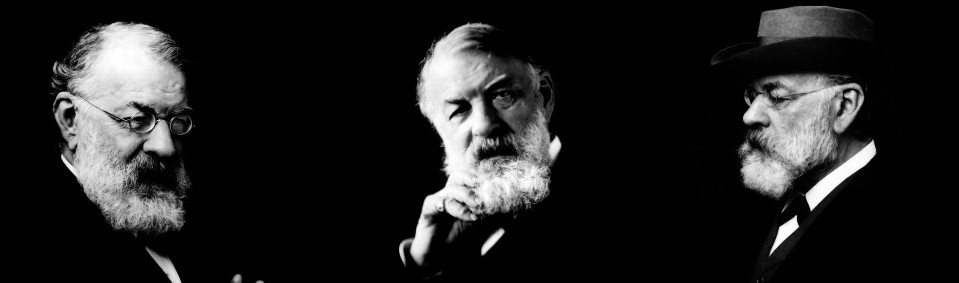

From: The Memoirs of Carl Flesch, trans. Hans Keller, ed. Hans Keller in collaboration with C. F. Flesch, foreword by Max Rostal (London: Rockliff Publishing Corporation, 1957), 30–38.
In this memoir, Carl Flesch presents an assessment of Joseph Joachim’s character and art, portraying him as a towering yet deeply flawed figure whose greatest impact lay less in pure violinistic technique than in musical ethics, programming, and interpretive ideals. He admires Joachim’s quartet leadership, spiritual depth, nobility of musical outlook, and improvisatory intuition, while stressing his relatively early technical decline, cool tone, nervousness in solo roles, and problematic bowing concept that, in his view, produced many technically damaged, mediocre pupils rather than world‑class virtuosi. Flesch hails Joachim’s Concerto in the Hungarian Style and E‑minor Variations as works of genius that reveal an exceptional but under‑realized compositional talent, stifled by administrative and performing burdens, even as he praises Joachim’s cadenzas to concertos by Brahms, Beethoven, Mozart, and Viotti as unmatched models. Flesch faults Joachim as a teacher and institutional leader for allowing second‑rate staff such as Moser, Wirth, and Hausmann to shape the Hochschule, which, he argues, helped cede international primacy from the German school to Franco‑Belgian and Russian violin traditions. He also sketches Joachim’s weak conducting, conservative aesthetic stance, and complex moral and personal character—including hostility to Wagner, jealousy of rivals like Kreisler, and unhappy domestic life—before concluding that, despite these shortcomings, Joachim remains a landmark in the history of violin playing and a central figure in redefining the virtuoso as an ethical interpreter rather than a mere showman.

Carl Flesch on Joseph Joachim
Joseph Joachim was born in 1831 at Kittsee in the Hungarian county of Wieselburg, about thirty kilometres from my own birth-place; he was the son of poor Jewish traders. So far as the external circumstances of his life are concerned, Andreas Moser’s biography[1] offers us the most detailed information in every respect. It cannot be gainsaid, however, that Moser glorifies Joachim’s personality and art to the extent of utterly unobjective idolatry, whereas in reality, even this supreme figure showed certain unmistakable weaknesses.
In the course of his career, which spanned about sixty-six years, Joachim was active as a quartet leader,[2] soloist, composer, teacher, conductor, and as head of the newly-established department for musical execution—Hochschule für ausübende Tonkunst—at the Royal Academy of Arts in Berlin. I have here enumerated his activities in what I consider to be the order of their importance.
As a quartet player, he not only gave his best, but also conquered peaks never reached before or after. It was not the perfection of his execution to which he owed his lonely greatness, for Sarasate’s sensuous euphony, Wilhelmj’s powerful tone and Wieniawski’s fire were all superior to what Joachim had to offer in these respects; it was not beautiful sound as such that made his quartet playing a profound experience. Rather, it was the inner life of his performances, the nobility of his musical outlook and the imaginative freedom which marked his interpretations despite all due obedience to the written text. His playing was informed with an indefinable suggestive power to which every sensitive musician had to submit. In his last years, I sometimes heard him play out of tune, drily, and with insecure technique. Owing to the absence of any kind of vibrato, his tone had assumed a somewhat senile character, and his fingers had become gouty and stiff, so that semitones in the higher positions came critically close to whole tones. Nevertheless, one could not but be deeply impressed by his genius for shaping his phrases, by the somnambulistic certainty of his intuitions which always seemed to find the only true violinistic expression for the inner significance of the music. Unjustly, he used to be known as a ‘classical’ violinist in the slightly suspicious sense which the adjective had acquired in the course of time, and which always made one think of a kind of respectable dullness. In actual fact, he was a romantic through and through, uninhibited, even somewhat gipsy-like by nature, and he always retained these traits which, indeed, can still be heard in his Violin Concerto ‘in the Hungarian Style’, op. 11.
The Joachim Quartet, on the other hand, left a good deal to be desired as an ensemble. Robert Hausmann [1852–1909], the ’cellist, suffered from a variety of technical insufficiencies; and on the viola, Emanuel Wirth [1842–1923], known and feared as ‘the wrist player’ (der Handg’lenkler), was as dry as desert dust; while the otherwise outstanding violinist Karel Halíř [1859–1909] was not sufficiently flexible to adjust himself to Joachim’s tonal peculiarities. Altogether, the quartet consisted of a solo violin with three instruments accompanying—a style which is diametrically opposed to the aims of our own time’s quartet playing as first introduced by the Bohemian String Quartet. But then, the ‘regulars’ at these recitals only wanted to hear Joachim anyway; willy-nilly, the other players had to be accepted as part of the bargain. The leader’s personality would indeed have towered above even far greater instrumentalists than were his colleagues.
My opinion of Joachim as a soloist, on the other hand, can only be accepted with reservations: when I heard him for the first time, he had already reached the age of fifty-seven, whereas I was no older than thirteen! Nevertheless, the nobility of his cantilena, especially in the adagio of Spohr’s Second Violin Concerto and in the violin transcription of Schumann’s Gartemelodie, has remained an unforgettable experience for me. Like all great violinists, he had, in his earliest youth, concentrated on virtuoso tasks. In particular, he liked to play Heinrich Wilhelm Ernst’s ‘Othello’ Fantasy, which is almost completely forgotten nowadays, as well as that composer’s Violin Concerto in F sharp minor. But he soon turned to worthier tasks.
In the development of modern violin playing he has, as it were, intervened with his characteristic primacy of the spirit over technique; and in general musical history, he survives in the first place as a large-scale reformer of programme-making. We have to remember that this was the period of operatic fantasies, polonaises,[3] elegies, mazurkas and so forth, of the tyranny of the salon piece, if we want to appreciate his courage in expecting his audiences to sit through the Bach Chaconne, the Violin Concertos of Bach, Mozart and Beethoven, the Schumann Fantasy for violin and orchestra, and indeed even his own ‘Hungarian’ Concerto. He had to renounce all easy and cheap success, the acclaim of the broad masses. If, despite the enormous demands his programmes made on the average listener, Joachim’s stature was generally recognized from the outset of his career, this only proves that he had quickly succeeded in educating the public and raising its standards to his own. We owe it above all to him that the virtuoso for virtuosity’s sake came to be relegated to an inferior position, that the music itself was promoted to the first place. Stimulated by Joachim, Hans von Bülow, too, began to reshape his piano programmes in a similar way. Thus the primacy of the musical over the virtuoso element was established on a firm basis which, ever since, has proved unshakeable. Thanks to the high ethical ideals of Joachim’s art, the virtuoso developed, within a mere thirty years, from his early nineteenth-century position of an entertainer to that of an artist who wished to be primarily regarded as a mediator between the work and the listener.
As a violinist per se, we remember Joachim as a supremely outstanding figure although—owing to his over-numerous commitments in all possible spheres—he showed an unmistakable technical deterioration at a relatively early stage. We certainly believe the historians who tell us that in his early days he towered above all his rivals. But on the other hand we know that, for instance, the unjustly forgotten Ferdinand Laub [1832–75], of whom Joachim used to say that he played the ‘Hungarian’ Concerto better than the composer himself, was at least technically his equal; that Wilhelmj later surpassed him in both beauty of sound and racy virtuosity; and that the smooth technique, sweet tone and pure intonation of the Sarasate of the ’eighties ousted Joachim, purely as a violinist, from his leading position, though we must not forget that he more than compensated for his technical defects by his unique spiritual and musical superiority.
His tone as such could be described as rather cool; it needed inspiration from within before it stirred the listener, and was thus extremely dependent on his own mood. The outstandingly brilliant features of his technical equipment were an incredibly racy mordent, a pithily rhythmic ‘Spohr staccato’ (as distinct from the extremely rapid and stiff ‘Wieniawski staccato’)[4] and extremely subtly differentiated ordinary and thrown spiccatos, which he very originally described as ‘rain’ and ‘hail’ respectively. Judging from the difficulties of his ‘Hungarian’ Concerto, moreover, his general double-stopping technique must also have been equal to the greatest demands in earlier years.
Joachim seems to have been prevented from regular practice by his travels, his quartet playing, teaching, administrative duties and social obligations. As a result, he showed from his fiftieth year onwards a high degree of nervousness when he had to cope with solo tasks, so that for example he very seldom achieved his full powers in the first movement of the Beethoven Violin Concerto; only in the second movement did the greatness of his personality and skill fully manifest itself. As he grew older, moreover, his memory became strikingly unreliable, often forcing him to interrupt his performance. From his sixtieth year, therefore, he devoted himself almost exclusively to quartet playing and, despite his rather disturbing mechanical inhibitions, led the field there until his death, with a capacity for musical empathy that amounted to genius.
Finally, his bowing technique requires detailed discussion, not only because it came to determine the development of the German violin school from the middle of the nineteenth century, but also because it provides a transition to an appreciation of his activities as a teacher. Joachim played with the then usual lowered upper arm, which necessarily involved a right-angle relationship between the hand and the forearm at the nut. The bow was held by the fingertips, the index finger touched the stick at the line of the top joint, while the little finger remained on the stick even at the point, all this as a result of the unsatisfactory pronation of the forearm at the upper half of the bow. The change of bow at the nut was accomplished with stiff fingers by means of a combined movement, very difficult to describe, consisting of a horizontal jerk of the wrist and a slightly rotating movement of the forearm. In my opinion Joachim’s bowing was a purely personal affair, an intuitive motional translation of a thoroughly individual expressive need. The error started only when his followers and pupils attempted, on the basis of this personal and even physiologically defective style, to found a school whose principles claimed universal validity. Emanuel Wirth [1842–1923][5] and his colleagues made the purely horizontal wrist movement the key to bowing technique altogether. Since, however, this movement had nowise been provided for by nature, and hence was unnatural in the true sense of the word, it was not surprising that the majority of the students thus maltreated contracted arm troubles and, as violinists, became cripples for life. Of the smaller proportion of pupils who succeeded in surviving this torture, the majority turned into the type of Joachim pupil of mediocre quality well known in orchestras and conservatoires, while a minimal number of especially talented fiddlers succeeded in casting off the strait jacket into which they had been thrust, and developed to a higher stage. But in the forty years of his activity, Joachim never trained a single violinist who achieved world fame, though during the years when he was its director, the Berlin Hochschule formed a centre at which the world’s strongest talents assembled, providing him with the best possible material. People like Halíř, Hess, Petri,[6] Eldering, Klingler, Berber, Gregorowitsch, Wietrovecz, Wittenberg, Havemann etc. were mostly talents of the first rank, who did not achieve full development only because from the beginning their technique had been thrust into a false path by this tragical wrist mania. Joachim himself is really innocent, for he never made any pretensions to be a teacher of basic principles. He was the ideal type of a training teacher, the playing teacher par excellence who influenced by his example, which, however, he was unable to analyse and explain purely rationally. Only those whose technical training was firmly established could profit by his teaching. His performances were distinguished by a poetic quality which, once one had experienced it, accompanied one all one’s life. Marsick and Hubay, for instance, were thus affected; and I, too, have been unable all my life to free myself from the memory of his interpretation of certain works. But here again lay the danger of a repression of the pupil’s individuality if, that is, he remained too long exposed to Joachim’s seductive influence. As teachers, towering individualities usually are vampires who suck out their pupils’ personality.
All in all Joachim achieved no very beneficial effects as a teacher. Possibly he could have made up for his lack of a pure teaching talent by enlisting outstanding preparatory teachers, who could have supplied him with pupils technically perfected and thus ready for his specific spiritual and musical influence. But as the head of an institution he seems to have been too easily swayed by the advice of others. There can be no other explanation for the circumstance that around 1900 such teachers as Hess, Petri, Eldering and Wendling were all employed in smaller institutes somewhere in Germany, while the education of the young generation in Berlin was entrusted to Wirth, Moser, Markees, and Exner. As a result, in the last seventy years the Franco-Belgian and the Russian schools have achieved an indubitable superiority over the German in world opinion.[7] A similar state of affairs seems to have obtained in the other teaching departments: instead of Julius Klengel and Hugo Becker, Robert Hausmann[8] was in charge of the ’cello class, while the training of singing pupils was entrusted to Frau Schulzen-Asten, though there was a Julius Stockhausen available. And the teachers of composition, Heinrich von Herzogenberg [1843–1900], Friedrich Kiel [1821–85], and Ernst F. K. Rudorff [1840–1916], took care to ensure that no draught from the new-German school should blow into the fusty atmosphere of epigonic mediocrity.
As a composer, too, Joachim was an exceptional talent. It is hardly astonishing that in view of his Concerto in the Hungarian Style, which is a work of genius, Brahms regarded him as more gifted than himself. This work marks a climax in our literature; it is the most outstanding creation that a violinist has ever written for his own instrument. The E minor Variations for violin and orchestra, too, though several degrees more conventional, still occupy an exceptional place in violin literature. But his activities in the concert hall and Hochschule soon crippled Joachim’s creative urge—to Brahms’s profound disappointment. Joachim the composer seems to us like a meteor whose magnitude we can only divine from the brilliant trail of the ‘Hungarian’ Concerto and the Variations.
If many consider Joachim too time-bound as a composer, we all must profoundly admire his cadenzas. That for the first movement of the Brahms Concerto is a masterpiece of which Brahms himself might have been proud, a paraphrase of the themes which has no equal in the relevant literature. The cadenzas for the Beethoven, Mozart and Viotti Concertos can likewise be regarded as models of their kind. Joachim’s editions, on the other hand, are open to criticism. At times he left far too many fingerings and bowings to discretion, as in the case of the Corelli and Beethoven Sonatas, which are hardly distinguishable from the original text. On the other hand, in the Violinschule bearing his name and in the Bach Sonatas he succumbed all too easily to the influence of his collaborator Andreas Moser; many of the fingerings and bowings bear the stamp of a personality theoretically well-versed, but practically inexperienced and reactionary; for Moser was really one of the weakest violinists who emerged from the Joachim school, and he hardly got a chance to acquaint himself personally with the pitfalls of playing in public. The unbiassed observer must therefore find that while we owe to Joachim epoch-making changes in the ethical and musical aspects of virtuosodom, he has not advanced its purely technical side. This latter task was reserved for others, for Jakob Dont [1815–88], Henry Schradieck [1846–1918], Émile Sauret [1852–1920], Otakar Ševčík [1852–1934], and perhaps also for myself.
Conducting was decidedly the weakest of Joachim’s musical talents. Like his friend Brahms, he was far too unshowy to express his personality by way of the baton.
In regard to his intellectual and moral character, too, Joachim was an exception among contemporary violinists, as his correspondence shows—notwithstanding his obstinate rejection of Wagner, his susceptibility to the influence of his inferiors and a somewhat jealous attitude towards other artists and schools.
Fritz Kreisler, for instance, had a sensational success when he made his début in Berlin in 1898. His name was on all lips. It was felt that with him a new era was beginning in the history of violin playing. Now one of Kreisler’s friends, a pupil of Joachim, invited him to visit Joachim’s class. Joachim received Kreisler with icy politeness, without indicating by a single word that he knew who the visitor was. As there was no accompanist present Kreisler offered to undertake this function, and carried it through with the phenomenal verve which had always distinguished his piano playing. At the end of the lesson Joachim took leave of the great violinist with the classic sentence: ‘You certainly are a ready pianist.’
Joachim was not happy in his marriage. He thought he had grounds for doubting the legitimacy of his youngest daughter. The divorce proceedings which he instituted were decided against him, since his wife, the famous singer Amalie Joachim, declared her fidelity to him on oath. Brahms never forgave him the public handling of this affair. When far advanced in his sixties Joachim fell passionately in love with the singer Melba; he even wanted to marry her. But Melba, according to reliable contemporary reports, did not take him seriously.
Joachim went on giving public performances until shortly before his death, at the age of seventy-six. He was, and will always remain, one of the greatest figures, a landmark in the history of our art.
[1] Joseph Joachim: Ein Lebensbild, Berlin, 1898. Completed edition (2 vols.), 1907-10. English translation by L. Durham (1901).
[2] Also, together with Ferdinand David, as orchestral leader at the Leipzig Gewandhaus.
[3] In his History of Viennese Concert Life, Hanslick writes of this era that there was hardly a concert programme without one of Joseph Mayseder’s [1789-1863] popular Polonaises.
[4] In his Art of Violin Playing (Vol. I, p. 69), Flesch observes that ‘neither Joachim nor Sarasate were masters of a normal staccato’, whose ‘importance with regard to technique as a whole should not be exaggerated’.
[5] Viola player in the Joachim Quartet, where he succeeded Edward Rappoldi in 1877, the year when, also at Joachim’s request, he became professor for violin at the Berlin Hochschule.
[6] Henri Wilhelm, the father of Egon.
[7] This was written in the early ’thirties.
[8] From 1879 until Joachim’s death in 1907 he was a member of the Joachim Quartet (see p. 31).