“Josef Joachim, Mus. Doc., Cantab.” The Musical Times and Singing Class Circular 18, no. 410 (April 1, 1877): 170–72.

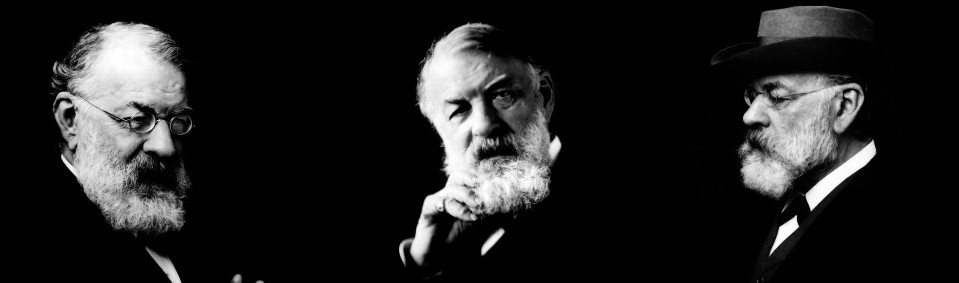
Doctor Joseph Joachim (1831–1907)
Violinist, Conductor, Composer and Teacher
James Archer (1823–1904)
Guildhall Art Gallery

JOSEF JOACHIM, MUS. DOC., CANTAB.
(FROM OUR SPECIAL CORRESPONDENT.)
Pursuing the large and liberal policy adopted since Dr. Macfarren has occupied the Cambridge Chair of Music, the Senate opened up the prospect of a great day on the Cam when it invited Herr Brahms and Professor Joachim to accept the degree of Mus. Doc. Very naturally, the distinction thus offered, seeing that it involved no test of fitness, has been styled “honorary.” In strict truth, however, the University has no power to confer an honorary musical degree. It may, by “special grace,” dispense with an examination, but the step it confers in this manner is precisely the same as though no departure from the ordinary course had happened. So much it is necessary to state in order that a popular error may be set right, and notwithstanding that the difference between honorary and ordinary never troubled the head of any fanatico per la musica who looked forward to seeing the two illustrious Hungarians shake hands with and receive the congratulations of an English Vice Chancellor in full Congregation. Unhappily, Herr Brahms could not, or at all events did not, make it convenient to leave home, even for such an object. Various reasons have been assigned in explanation, but I am not sure that it is needful to discuss them. Had Herr Brahms come he would have been very welcome, and even as it was we had a representative of the best part of him in the form of the orchestral work which, after so long, brings him, for the first time, into direct comparison with the great masters of symphonic composition. It would therefore be ungracious to grumble, especially as Herr Brahms may have thought, with a good deal of justice, that his country and himself were well represented by Professor Joachim, the distinguished Hungarian who has done more than any other for Brahms in England by persevering through evil report into the good which he knew must ultimately follow.
The interest excited in musical circles by the ceremony of admitting Herr Joachim to his degree could not easily have been greater; for, not only did professors and critics in large numbers hasten to Cambridge on the 8th ult., but also a little crowd of amateurs who, at the Popular Concerts and elsewhere, had learned to entertain for the graduate-elect a feeling of strong personal friendship. No ordinary gathering took place, therefore, on the floor of the Senate House at the appointed time. Men of all shades of opinion met in perfect amity; the lion of Wagnerism sitting down with the lamb of orthodoxy, or vice versa, as the reader pleases, as though the one had never shown a disposition to make a meal of the other.
Orpheus with his lute made trees,
And the mountain tops that freeze,
Bow themselves when he did sing;
and Joachim with his fiddle yearly performs upon us a kindred marvel. Among the divers folk who came to honour him were Sir Julius Benedict, Signor Garcia, Signor Randegger, Herr Manns, Dr. Hueffer, Mr. George Grove, Mr. E. Dannreuther, Mr. J. W. Davison, Mr. Gadsby, Signor Piatti, Mr. W. E. Holmes, Mr. Henry Holmes, and Mr. Dorrell, cum multis aliis, whom to mention would take up more space than can be spared. Enough that their appearance was a flattering demonstration, which must have gratified Herr Joachim not less than the ceremony they had come to see. That ceremony, by-the-way, is not an imposing one, and appears less so from the fact that the undergraduates, who assert liberty of speech in the galleries, regard it as decidedly comic. They whistled popular melodies, made pertinent inquiries of conspicuous people on the floor, cheered their favourites, chaffed the officials, and generally behaved themselves as though the whole affair had been got up for the amusement of an idle hour. But the young fellows meant no harm. It is their way when they can have their way; and if anybody unused to such irreverence felt annoyed, all was surely forgiven as the appearance of Herr Joachim in the scarlet robe and white hood of his new degree evoked enthusiastic applause. The business of introduction to the Vice Chancellor might have been better managed than by permitting Herr Joachim to advance to the dais before taking his place with the Public Orator at the lower end of the Hall. As it was, the new graduate retraced his steps, and standing in front of the Vice Chancellor, though separated from him by the whole length of the benches on either hand, waited while Mr. Sandys held forth upon his worth in approved University Latin.1 Mr. Sandys is new to his post as Orator, and, though there was nothing to find fault with in his formal speech, he appeared ill at ease. Noting this, the sympathetic men above flung down a few coppers by way of encouragement. Then everybody laughed, and Mr. Sandys, brightening up, got safely to the end of his task. Though brief, the oration was comprehensive, and touched upon everything that fairly came within its scope. It referred to Herr Joachim as Orpheus, regretting that he had come without Eurydice—who, by the way, was not a contralto singer; it spoke of the new graduate as the friend of three Cambridge professors—Walmisley, Bennett, and Macfarren; it paid a graceful compliment to Herr Brahms, making a cautious allusion to the Symphony sent over as his representative; and it ended, amid loud applause, by presenting Joseph Joachim to the robed dignitary who, enthroned on the centre of the dais, gravely listened, while everybody else laughed at the humour of the gallery. The Public Orator then conducted Herr Joachim to the Vice Chancellor, who, rising from his seat, shook him warmly by the hand, amid renewed and general cheering. With this the special ceremony ended, and after some gentlemen, about whom nobody seemed to care, had received degrees, the Congregation broke up, the undergraduates taking the opportunity as it did so of groaning with much vigour at some obnoxious person—no doubt a proctor.
Cambridge is a hospitable University, and the London visitors found no reason to complain that the time between the Congregation and the Concert hung heavily on their hands. Nearly every College had its batch of guests, and the dons’ tables in the old halls were graced by strangers in unwonted numbers. As may readily be credited, the forthcoming performance was a general topic of conversation; not without reason, even apart from Herr Joachim and the novelties in the programme, seeing that it was the 150th Concert of the C. U. Musical Society, of which Mr. C. Villiers Stanford, B.A. (Trinity) is now the Conductor. The Society has no mean history. Springing, in 1844, out of the St. Peter’s Musical Society, it has always laboured with a high artistic purpose, and shown a commendable liberality of taste. In its early years it produced a large number of symphonies and overtures, as well as Mendelssohn’s “Antigone,” “Œdipus,” and “Lauda Sion,” “Ruins of Athens,” the Choral Fantasia, portions of “Tannhäuser,” Schumann’s Pianoforte Concerto (first time in England), “Samson,” “Alexander’s Feast,” and other works of equal value and interest. Since 1872, when ladies were admitted as members, the Society has brought out Bach’s Cantata, “My Spirit was in heaviness,” Bennett’s “Woman of Samaria,” Brahms’s “Requiem,” and the third part of Schumann’s “Faust,” thus asserting an increase of the peculiar spirit which has always animated its counsels. No unworthy association, therefore, had the honour of being connected with the ceremony of the day; and of presenting the new Doctor’s Overture and Brahms’s representative Symphony.
The handsome and commodious Town Hall was, of course, well filled on an occasion so auspicious. Indeed the audience could boast of a very special character, for not only were the leading people of University and town present, but, besides the London critics and professors, a still greater number of metropolitan amateurs than attended the ceremony of the afternoon put in an appearance. The new works had, therefore, the honour and advantage of trial by a competent jury; and the hero of the day came upon the platform to meet—we will not say friends, because all men are his friends—a gathering of those who had learned to appreciate, in some degree, the length and breadth of his enormous talent. Neither money nor labour had been spared in getting ready for the concert. A capital London orchestra, with Mr. A. Burnett as leader, came down expressly, and the high average of merit shown throughout both by vocalists and instrumentalists was most creditable—sufficient, indeed, to shame not a few more pretentious doings in the metropolis. The programme may speak for itself.
PART I.
Overture… … “The Wood Nymphs”… … … … Bennett.
Concerto for Violin and Orchestra … … … … Beethoven.
A Song of Destiny … … … … … … Brahms.
Violin Solo … … … … … … … J. S. Bach.
Elegiac Overture in Commemoration of Kleist (MS.) … Joachim.
PART II.
Symphony in C minor (MS.) … … … … … Brahms.
I need not dwell upon the known works in this scheme longer than is necessary to say that they were well performed. In the very difficult “Song of Destiny” the Society’s chorus was fairly on its mettle, and passed a trying ordeal with great success. Mr. Stanford, having good material to work upon, had obviously worked upon it well—so well that the University, on the strength of this performance alone, may be proud of its musical representatives. The orchestra gave but trifling cause for complaint, while, in Beethoven’s Concerto and Bach’s Solo, Herr Joachim was heard to rare perfection. The welcome he received will not soon be forgotten by those who witnessed it. Applause, better described as frantic than enthusiastic, shook the Hall, and became so contagious that even the idlers in the street took it up, sending back answering “hurrahs.” But it is time to speak of Herr Joachim’s Overture, a work which commemorates a poet of high genius but most unhappy fortunes, a patriot whose ardent hopes Fate took a pleasure in crushing, and a man whom rarest intellectual gifts could not guard against despair and self-sought death. The music which a sympathetic master has laid, like an immortelle, upon Kleist’s grave, is thoroughly en rapport with its inspiring cause. Masterly in point of subject and treatment, it is penetrated by a tenderness of sentiment and a dignity of purpose that at once predispose the hearer in its favour, because such qualities are at once felt. The Overture would well repay careful examination, which, however, must be reserved till its full score is available. Meanwhile let the opinion stand on record that, in his Cambridge composition, Herr Joachim has once more shown himself to be a creative musician of no mean order, and an artist who, in the loftiest region of his art, strives for the highest ends with the purest means. Conducted by its author, the work had an excellent performance and was much applauded. With regard to Brahms’s Symphony, I shall say little, beyond an expression of opinion that it is worthy to rank among classic things. So great a work ought not to be judged with authority and definiteness, after a single hearing under exciting circumstances; and as it is announced for production in London on more than one occasion, there is everything to gain by the exercise of patience. Enough now that the Cambridge Symphony of the German master made an extraordinary sensation, and sent the audience away with a consciousness that they had just heard for the first time music which the world will not soon let die.
See also: J. E. Sandys: Oration at Cambridge University Upon the Awarding of the Mus. Doc. to Joseph Joachim, March 8, 1877
The Athenaeum: Herr Joachim’s Degree (March 17, 1877) https://josephjoachim.com/2013/12/31/the-atheneaeum-no-2577-march-17-1877-pp-361-362/