• Home
  • INDEX

Joseph Joachim

~ biography and research

Joseph Joachim

Monthly Archives: June 2013

The Flood

16 Sunday Jun 2013

Posted by Joachim in 1 Biographical Posts — RWE

≈ Leave a comment


Previous Post in Series: First Lessons

__________

The Flood

 Flood Scan Clean

The Flood in Pest

             In January of 1838, winter hit hard. Snow fell relentlessly in southern Europe and the ice froze three feet thick on the Danube. In Pest, even the main streets were impassable, and the work of digging out was never quite completed before the snows flew again. The city was cut off from the outside world. Mail deliveries ceased. Twelve-foot drifts lay against the rammed-earth and timber walls of Theresienstadt’s cob houses, and the dampness penetrated and softened their adobe bricks. In the midst of such ominous and crystalline silence, the river began to rise—20 feet by the 6th of January—filling cellars and undermining foundations in the sandy soil of low-lying Pest. A 6-foot-high manure and sand embankment was built along the riverfront, and residents operated pumps day and night in a vain attempt to control the water level. The authorities passed word that, in the event of a sudden rise in the water, bells, shots and drum-tattoos would warn the citizenry to escape to higher ground.

After ten days, the flood receded somewhat, but 14-foot levels persisted through February. In March, an upstream snowmelt swelled the waters; the thaw created large floes and ice dams as far north as Vienna, and inundated the puszta from Esztergom to the mouth of the Dráva River. By the morning of March 13th, the Danube at Pest stood at 23 feet, 3 inches above normal. During the day, tens of thousands gathered along the levee to watch the enormous chunks of drift-ice moving down-river. Pandemonium broke out as a portion of the levee ruptured, and was quickly, frantically rebuilt.

North of the city, a large ice barrier had formed at Margaret Island, creating an obstruction of gigantic proportions. That evening, the ice-dam began to give way, releasing a foaming torrent of water. Around 9:00, the bells began to toll and shots were fired. Carrying torches, anxious residents made their way through the damp streets in search of safety. The embankments were breached, and the rapidly rising Danube engulfed the city. The Waitznergasse with its elegant shops, the theater, the town hall, thousands of homes — all were awash in up to 7 feet of icy, yellow-brown water. The flood entered the sewers with such force that they blew apart, eroding the surrounding sandy soil, and causing tremors that toppled buildings throughout the city. [i]

Wednesday, the 14th of March, dawned dreary and raw, exposing the disaster. “What a spectacle revealed itself to us today!” wrote eyewitness Anton Benkert. “Horror was painted on every face; people roamed dumbly in the parts of the city that were still dry, in order to view the unspeakable. —The most beautiful streets, where the happy crowds used to promenade, where the industrious merchants and businessmen had their shops and offices, resembled a turbid lake. —The sight of it was heartrending; every one of those who had escaped had a relative, friend or acquaintance who had already been struck by the hard fate of knowing that a large part of his belongings, or perhaps all that he owned had been destroyed by the waves. It was heartbreaking to watch the honest, good merchant look upon the grave of his property. All the warehouses on the Danube, all of the cellars in the Waitzner-, Schlangen-, Bruck- und Dorotheer-streets contained enormous treasures in wares ruined by the waters that swirled around them. No one knew how great was his loss, for resisting the waves was impossible to contemplate, and every attempt to enter a shop or cellar was in vain. Many a glance was raised to heaven, in the hope that perhaps all was not lost.” [ii]

Things stood even worse in the crescent of outlying districts. Theresienstadt, Leopoldstadt and Franzstadt were swallowed up. Soaked and cold, the residents sought higher ground, or found refuge on rooftops. “Many a wife without her husband, many a mother without children, many children without parents, all in uncertainty as to whether they shall see them again, or whether they were buried in the waves,” Benkert observed—and the waters continued to rise. As the unbaked bricks of the cob houses disintegrated, the dwellings continued to collapse. From a window of her palace high on the hill in Buda, the Archduchess-Palatine “looked down upon the suffering city, seeing whole ranges of buildings sink and disappear in the watery waste about them. She felt her brain reel and her heart sicken, as the vague feeling grew upon her that the whole town would be ere long swept away….” [iii] Night fell.

OLYMPUS DIGITAL CAMERA

High Water Mark

Thursday morning, the waters stood at 26 ½ feet and rising. The weather was foggy and overcast. Food was running out, and clean drinking water was nowhere to be found. While profiteers charged as much as a hundred Gulden to ferry individuals across the river to Buda’s high ground, exhausted rescuers searched the city in boats, rafts, washtubs, vats, and odd, makeshift craft cobbled together from loose boards — whatever could be made to float—bringing food and succor to victims. A number of elderly people congregated in a tent in the Jewish market, reciting Psalms. [iv] “The Israelite community was particularly active,” wrote Benkert, “and distributed hundreds of loaves among the poor. —Bread, bread, O it was manna from Heaven—how many were happy just to have bread!” [v]

szenateripiac

During the day, rumors and panic gripped the city as some of the larger buildings began to fall. “Houses and buildings which had survived the first shock, seemed to have been preserved only to add to the horrors of that day,” wrote Julia Pardoe; “many of them fell and perished from roof to base….” [vi] “Miss Pardoe,” as the popular English observer was known to her readers, tells of a merchant, formerly prosperous, who, seeing the ruins of his home, “started from his seeming reverie, and laughed, and shouted, and clapped his hands in wild and savage glee! … the maniac merchant gambolled, and mowed, and mocked the lashing waters that had beggared him—nor knew amid his frenzy, that he was making merry over the ruins of his own reason!” [vii]

Budapest_Überschwemmungsszenen_1838_ubs_G_0208_II_01

At around 8:00 in the evening, the bells began to toll once more. By 10:00, the water crested at just over 29 feet, 4 inches. In the darkness, from the safety of crowded churches, barracks and other high-lying buildings, huddled refugees heard the distant cries of victims, perched on rooftops or trapped in crumbling buildings, as soldiers and volunteers combed the city by torchlight. “Humanity celebrated the greatest triumph of brotherly love in this night of horror,” Benkert later recalled. “What affliction and suffering this night shrouded with its black wings.”

 Buda Castle

The Palatine’s Palace, Buda

            Friday the 16th was a day of growing resignation to hardship and loss. The exodus from Pest began in earnest. Provisions began to arrive from outlying areas. In Buda, the nobility struggled to provide food and shelter for the victims, and the Palatine opened his palace. All available public buildings were opened to the needy, and as many as twenty thousand found refuge in the Invalid Hospital and the Ludovicia. The latter institution, originally intended for a Hungarian military academy, was reportedly filled with “filth, squalor and misery” by “the half-naked, half-famished crowd mingled together in its vast chambers and corridors.” [viii] Thousands remained there until May.

Holló_Wesselényi

Baron Miklós Wesselényi

In Pest, Prince Stephen distributed bread from a boat, and Count Szécheny plied the waters in his steamboat—“so to say, the dove with the olive branch, whose signals rang out like calls of hope” [ix]—braving the frigid, swift waters, dodging ice, roofs, beams and a other floating debris, ferrying refugees to Buda, and carrying food and supplies on the return trips. “In the course of the day the water subsided very considerably,” wrote Julia Pardoe, “and it was a curious spectacle to see the number of rafts, boats, and even doors and shutters filled with people, which were traversing the city streets in search of missing relatives or friends, and even trusting themselves on the treacherous Danube in order to escape to the heights of Buda. […] thus many a raft was launched upon the still angry river which could not bear its owner to the shore of promise.” Among their rescuers was Baron Wesselényi, “powerful as a Hercules, and bold and strong […]” who “put out in his boat alone; and spurning alike danger and fatigue, spent entire days upon the Danube, cheating the choking waters of their prey….” [x] Courageous women did their part. A woman of fortune, a certain Madame Laszlo, fed and clothed a hundred and fifty survivors for several weeks. Baron Jósef Eötvös later recalled: “[…] amid the ruin and the dismay which made men’s hearts stand still, I heard a voice that brought comfort to every spirit—‘Come to me, ye who mourn,’ it said, ‘and I will shelter you—come to me, ye who hunger, and I will nourish you.’ […] It was the voice of Madame Laszlo!” Julia Pardoe observed: “good deeds require no blazonry—they are graven on the hearts which they have saved from bursting.” [xi]

By the 18th, nearly the entire city lay muddied and exposed, free of water. In the days that followed, the toll in lives and goods would gradually be revealed. The entire commercial sector of the city was wiped out. The shops replete with fabrics, flowers, carpets, silks and satins, bronzes and books; the warehouses full of fruit, tobacco, oil, soda, and wool were all destroyed. Even where goods had been carefully stowed, objects had been lifted and tossed by the muddy water, and crumbling walls had completed the work of destruction. “Only he who knows the Pest square, and has an idea of what quantities of these goods are traded here every year, can appreciate the extent of the damage to the spoiled goods” Benkert lamented. [xii] The disaster could not have hit at a worse time. March 19th, St. Joseph’s Day, was to have been the start of the spring fair, and all the store-rooms were filled to capacity.

Residences were equally hard-hit. In the outlying districts, Franzstadt, Josephsstadt and Theresienstadt, entire rows of houses had been carried away, and a chaotic mess of debris hindered rescuers. Ropes and ladders still hung from the windows of broken buildings, where occupants had escaped to uncertain fates. Whole neighborhoods were unrecognizable. Buildings and walls continued to fall, making passage treacherous. Residents groped amidst the muck for whatever possessions they could salvage. “Nothing encourages hope more surely than a renewal of order,” wrote Julia Pardoe. In the face of such chaos, martial law was declared, and looting was made punishable by death.

Schwindt Árvíz 28.273 Terézváros r. st

Theresienstadt After the Flood

In Theresienstadt, where the Joachims lived, 811 buildings had fallen down—another 404 were gravely damaged. Only 166 stood fast. In Josephsstadt, the numbers were similar. In the entire city, only a quarter of the nearly 4,600 buildings escaped unscathed. About 150-200 people perished in the flood. Fifty thousand were made homeless. [xiii]
index.php

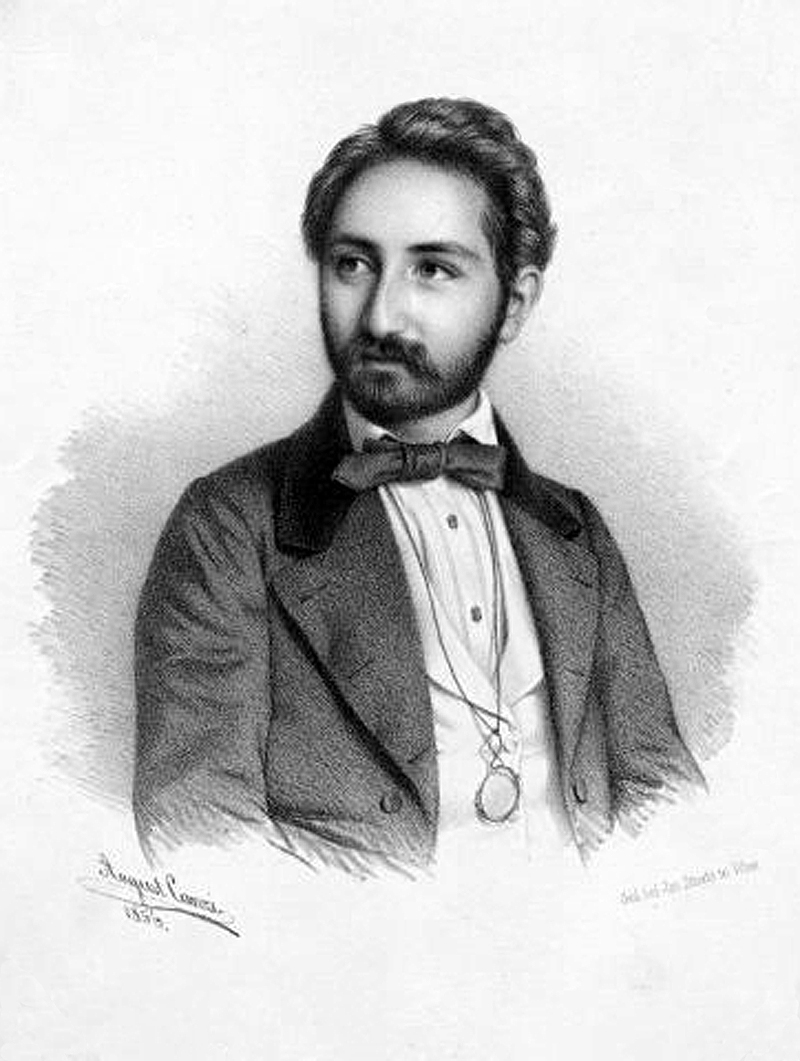
Edmund Singer

The flood is nowhere mentioned in the Joachim literature. This must be an intentional omission, as the flood’s consequences — for Julius’s business at the very least — must have been severe. We know from Edmund Singer’s [1] memoirs, however, that the Joachim family lived through the event, and escaped across the river to Buda: “My father left his house in a large dough-trough together with his family. We were lucky enough to reach the higher-situated marketplace, where we had to spend the night in the open. Among the occurrences that I recall from those days is that the residents of the building across from ours had to be lowered from the windows in large clothesbaskets, because the entrance to the house was under water. At that time, hundreds of Gulden were paid in individual cases for barges, which is understandable, since staying in the houses was a really dangerous matter due to the threat of collapse. Sure enough, the building across from ours fell down over night. After the exceedingly unpleasant night spent in the marketplace, a large barge was rented and the journey across the Danube to Buda undertaken, which was not un-perilous, due to the numerous ice drifts; so that we breathed a sigh of relief when we were finally able to land, half frozen, in Buda. There a happy accident led to the two befriended Joachim and Singer families finding lodging in the same building, and the two boys, Joseph and Edmund, who were almost the same age, could be taught the difficult art of reading, writing and arithmetic by the same tutor.” [xiv]

It seems probable that the heavy losses associated with the flood encouraged Julius and Fanny to consider an alternative career for their young son, and predisposed them to consider for him the life of a musician. The violin, both passport and calling card, is nothing if not portable, and a musician does not need to lay up goods in trade.

In the shared sacrifice of disaster, many of Pest’s residents recognized their common humanity. After the flood, Jewish silversmith Herman Löwy gave a silver chalice to the Lutheran pastor Mihály Láng, in gratitude for the refuge that the parish had provided Jews in time of need. Joseph Bach, the first preacher of the Orczy House synagogue (whose strong walls had withstood the flood), solicited aid from as far away as Leipzig for the city’s poor and afflicted, and, most remarkably, a number of burghers from Buda, formerly hostile to Jewish immigration, submitted a petition to the government asking that Jews should henceforth be free to settle and buy property there. Several years later, in the Diet of 1839/40, Pest deputy Simon Dubraviczky, proposed that “the Jewish religion should be among the accepted ones;” that “those of Jewish faith should be granted civil rights,” and that “like other non-nobles, they should not only be allowed to buy property but, if they prove to stand in the service of country and king, they should also be eligible to receive a title of nobility.” In 1840, the National Assembly passed Law 29, officially permitting all Hungarian Jews to settle the royal free cities. [xv]

 Cafe Florian

Café Florian, Venice [xvi]

             News of the flood reached all the corners of Europe. Franz Liszt first read about it over a cup of coffee at the Café Florian near the campanile in Venice’s St. Mark’s Square. He later claimed that the calamity in Hungary reawakened his feelings for his childhood home, dormant after sixteen years of living abroad. “I was badly shaken by that disaster,” he wrote, “…and the surge of emotions revealed to me the meaning of the word ‘homeland.’ I was suddenly transported back to the past, and in my heart I found the treasury of memories from my childhood intact. A magnificent landscape appeared before my eyes: it was the Danube flowing over the reefs! It was the broad plain where tame herds freely grazed! It was Hungary, the powerful, fertile land that has brought forth so many noble sons! It was my homeland. And I exclaimed in patriotic zeal that I, too, belonged to this old and powerful race. I, too, am a son of this original, untamed nation which will surely see the dawn of better days….” [xvii]

Liszt:Ueberschwemmung

Notice of a concert by Franz Liszt for the benefit of the flood victims.

    The disaster offered Liszt an opportunity to make a long-premeditated return to Vienna, his first since his youthful sojourn there fifteen years earlier (1821-1823), with the object of giving a benefit concert for the flood victims. [2] Liszt left Venice for Vienna on April 7th, arriving late on the evening of the 10th. [3] While there, he gave a series of ten concerts, the first of which, April 18th, was devoted to the aid of the flood’s victims. According to Liszt himself, it was the success of these concerts that finally decided him on his career as a virtuoso, and that led him to embark on his unparalleled Glanzperiode, from 1838 to 1847, the period of his greatest public triumphs, during which he traveled from Lisbon to Constantinople, from Gibraltar to St. Petersburg, performing from memory more than a thousand concerts, comprising virtually the entire piano repertory, before retiring from the stage at the age of thirty-five.

© Robert W. Eshbach, 2013.


Next Post in Series: Debut  


[1] Ödön (Edmund) Singer (b. 14 October 1830, Totis, Hungary — d. 1912), Joachim’s friend and exact contemporary, likewise studied violin with Böhm and composition with Preyer in Vienna.

[2] Alan Walker claims that, while in Vienna, Liszt hastily arranged a series of eight benefit concerts, raising the enormous sum of 24,000 gulden for the victims of the flood. This account has been convincingly challenged by Christopher Gibbs. Q. v. Christopher H. Gibbs, “Just Two Words. Enormous Success:” Liszt’s 1838 Vienna Concerts, in Gibbs/LISZT, p. 181. After his wildly successful visit to Vienna, he decided not to proceed to Hungary. “What’s the point?” he wrote to his mistress, the Countess d’Agoult, “You are my homeland, my heaven, and my sole repose.” [Gibbs/LISZT, p. 187]

[3] While in Vienna, Liszt stayed in the hotel Zur Stadt Frankfurt, the same hotel as the eighteen-year-old pianist Clara Wieck and her father Friedrich. Their acquaintance there was the beginning, both of their friendship and of their rivalry. While there, Clara introduced Liszt to her friend Robert Schumann’s Carnaval and Fantasiestücke; Liszt dedicated to her his recently composed Etudes d’exécution transcendante d’apres Paganini.


[i] Witthauer/ALBUM, pp. viii-ix.

[ii] Benkert/WUTH, p. 13-14.

[iii] Pardoe/MAGYAR II, p. 8.

[iv] Frojimovics/BUDAPEST, p. 59.

[v] Benkert/WUTH, p. 19.

[vi] Pardoe/MAGYAR II, p. 10.

[vii] Pardoe/MAGYAR II, p. 13.

[viii] Pardoe/MAGYAR II, p. 24.

[ix] Benkert/WUTH, p. 27.

[x] Pardoe/MAGYAR II, pp. 19-20.

[xi] Pardoe/MAGYAR II, pp. 38-39.

[xii] Benkert/WUTH, p. 29.

[xiii] http://anno.onb.ac.at/cgi-content/anno?apm=0&aid=wrz&datum=18380402&seite=3&zoom=1

[xiv] Edmund Singer, “Aus meiner Künstlerlaufbahn,” Neue Musik-Zeitung (Stuttgart), Vol. 32, No. 1, (1911), p. 8.

[xv] Frojimovics/BUDAPEST, p. 59.

[xvi] Leipzig Illustrierte Zeitung, Vol. 4, No. 100 (May 31, 1845): 348.

[xvii] Quoted in Walker/LISZT I, pp. 253-255.

Share this:

  • Share on X (Opens in new window) X
  • Share on Facebook (Opens in new window) Facebook
  • Email a link to a friend (Opens in new window) Email

Like this:

Like Loading...

First Lessons

16 Sunday Jun 2013

Posted by Joachim in 1 Biographical Posts — RWE

≈ Leave a comment

Previous Post in Series: Pesth

__________

First Lessons

            “Music did not take an important place in the Joachim family,” writes Andreas Moser; “they were fond of hearing it, but showed no deep interest in it.” [i] Joseph’s older sister Regina reputedly had a pleasant voice, and like many young women of her time, she studied singing. Young “Pepi” was fascinated by the guitar that she used to accompany her songs, and is said to have spent untold hours exploring its many possibilities. [ii] Joachim later told Britain’s Lord Redesdale that, when he was bout four years old, his father went to town one day to attend a fair, and brought home a “little sixpenny toy fiddle” as a “fairing” for his son. “Little Joseph seized upon it eagerly,” writes Redesdale. “It became his constant companion, he contrived to coax a tune out of it, and his destiny was fixed.” [iii]

Joseph’s first musical impressions were his sister’s songs and the dances of local gypsies and street musicians. His early attempts to reproduce them on violin were encouraged and guided by a family friend, a medical student and amateur violinist named Stieglitz. [1] After a mere four weeks, impressed by the child’s unusual gift for music [2] and aware of his own limitations as a teacher, Stieglitz encouraged the Joachims to find him a proper instructor.

Joachim’s obituary in the Pester Lloyd asserts as a little-known fact that Joseph received his first formal violin lessons from Gustav Ellinger (1811-1898), [3] a first violinist, and later concertmaster, with Pest’s German Theater. Reportedly, Pepi took his lessons together with another student, Karl M., who subsequently became a noted writer. When Ellinger repeatedly criticized Joseph, comparing him unfavorably to his companion, the Joachims took their son to another teacher: the concertmaster and conductor of the opera in Pest, Stanisław Serwaczyński. Joseph was then “barely five years old.” [iv]

hp_scanDS_45171242246

Stanisław Serwaczyński

Stanisław Serwaczyński [4] was a first-rate performer, esteemed for his soulful interpretations, his robust tone and his flawless intonation. A native of Lublin, in Austrian West Galicia (currently Poland), Serwaczyński had received his first music lessons from his father, the director of the Lublin cathedral choir. He subsequently studied violin with a certain Count Guadagni, an experienced violinist, and an officer in the Kaiser-Hussaren. Before becoming concertmaster in Pest, Serwaczyński toured extensively as a soloist, and his concerts in Italy in 1832 evoked comparisons with Paganini. For a time, he was employed as concertmaster under the renowned violinist and conductor Karol Lipinski in the Ukranian city of Lvóv. In 1832 he served for a season as first violinist and soloist at the Kärntnertor Theater in Vienna before departing for Pest.

Serwaczyński’s depth of emotion, combined with his love of dramatic contrast, his sensational staccato and command of every variety of accent made him an extraordinarily characterful player. At the same time, he has been described as “full of emotional sincerity and without a shadow of showmanship.” [v] He had known and performed with Frédéric Chopin, and descriptions of his playing evoke Chopin’s spirit. “Through the tender manner of his playing, Polish melodies acquired a wistfully affecting caste,” wrote a contemporary critic. In such music, his performances were “full of feeling, mellifluous, indeed, nearly melancholy, according fully with the character of the Polish people.” [vi]

Serwaczyński was a serious teacher, au courant with the latest in violin pedagogy. At the end of his career, he could count two of the greatest violinists of the century among his students — Joseph Joachim and Henryk Wieniawski — though each studied with him only briefly. If Serwaczyński’s style was characteristic of both the Eastern European and contemporary French schools of violin playing, his pedagogical methods were primarily French. In the 1830’s, the Paris Conservatoire was barely forty years old, yet its influence throughout Europe had been immense. The Conservatoire was the first modern music school, and its curriculum, disseminated by its own publishing firm, Le magasin de Musique à l’usage des fêtes nationales, soon found its way to far-flung regions of Europe. Thus, in the capital of Hungarian culture, six-year-old Joseph Joachim received, through Serwaczyński’s good graces, a thorough grounding in the modern French Méthode de violon, the work of Viotti’s successors, Rode, Baillot and Kreutzer. Violin lessons would soon come to dominate Pepi’s education. Nevertheless, Julius and Fanny saw to the general education of their son as well, sending him to the public Volksschule.


Stanisław Serwaczyński Biography from Polish Wikipedia
In 1799-1805 he was a student at the Faculty School in Lublin. He was taught violin by his father, the Kapellmeister of Gwadegni in Kock and Bratislava, and piano by Jan Barcicki. For three years he was a pupil of Count Quandangi. In 1810 he went to Lviv, where he was a member of the theater orchestra and later its concertmaster. In 1832 he became concertmaster of the theater orchestra in Vienna, and from 1833 to 1838 conducted the Budapest Opera orchestra. After returning to Poland, he again settled in Lviv, but frequented and gave concerts in Lublin. He trained many violinists, including Henryk Wieniawski. In 1847 he returned to Lublin, where he was an inspirer of the city’s musical life. He organized popular musical evenings. In June 1859, at the urging of his daughters, he moved to Lviv. On November 7 he gave his last concert there, and died on November 30. He was buried in Lychakiv cemetery
In 1820 he was a member of the freemason lodge Freedom Regained.

Serwaczyński’s grave
Lychakiv Cemetery, Lviv

© Robert W. Eshbach, 2013.


Next Post in Series: The Flood  


[1] Or Stiegnitz (see: Reich/BETH EL, p. 61).

[2] Joachim had perfect pitch. Charles Hallé wrote about this in his autobiography: “This faculty has proved to have one drawback: viz. that the pitch of that period, a good half-tone lower than the present one, has remained so impressed on my brain, that when I now hear a piece of music for the first time, it seems to me in a higher key than it really is written in; I hear it in C when it is in B, and have to translate it, so to say. My friend Joachim shares this peculiarity with me, and it is now and then very perplexing.” [Halle/AUTOBIOGRAPHY, p. 27]

[3] Though Stanisław Serwaczyński is generally credited with being Joachim’s first teacher, this little-known—or unknown—“fact,” rings true. Ellinger was the first teacher of two other distinguished violinists, both of them Joachim’s friends and contemporaries: Edmund (Ödön) Singer (1830-1912) and Jakob Grün (1837-1916). “Pepi” Joachim and “Mundi” Singer were boyhood friends. Edmund Singer was born on October 14, 1830 in Totis, Hungary. He studied in Pest with Ellinger and David Ridley-Kohné (who also taught Leopold Auer), and in Vienna with Joseph Böhm. At age 13 he went to Paris for several years, after which he returned to Pest, where he was appointed concertmaster of the German Theatre orchestra. Singer made a brilliant Leipzig Gewandhaus début in December, 1851, playing Lipinski’s popular Military Concerto. In 1854, he succeeded Laub (who had succeeded Joachim) as concertmaster of the Weimar Hofkapelle under Liszt. In 1861, he became professor of violin in Stuttgart, where he also founded a highly regarded series of quartet concerts. He died on January 23, 1912. Singer was the editor of many standard works for violin, still available in the Schirmer edition. He played a Maggini violin that he had acquired from his former teacher, Ridley-Kohné.

Edmund Singer

[4] Stanisław Serwaczyński (b. 1791, Lublin—d. 1859, Lwów).


[i] Moser/JOACHIM 1901, pp. 2-3.

[ii] Gumprecht/CHARAKTERBILDER, p. 261; MT/JOACHIM, p. 225.

[iii] Redesdale/MEMORIES, p. 659. This story, also found in Moser, is related by Lord Redesdale, in a somewhat inaccurate way as regards place: i.e. in Kittsee. By then, the family had moved to Pesth. The story of the toy fiddle is also found in Gumprecht: [Gumprecht/CHARAKTERBILDER, p. 261]. In each source, it probably stems from Joachim himself.

[iv] MT/JOACHIM, p. 225.

[v] GROVES article.

[vi] Article: Serwaczyński, in Wurzbach/LEXIKON, Vol: Seidl  Sina, p. 155.

Edmund Singer

Share this:

  • Share on X (Opens in new window) X
  • Share on Facebook (Opens in new window) Facebook
  • Email a link to a friend (Opens in new window) Email

Like this:

Like Loading...

The Kittsee Kehilla

16 Sunday Jun 2013

Posted by Joachim in 1 Biographical Posts — RWE

≈ 1 Comment


Previous Post in Series: Family

__________

JJ Initials

The Kittsee Kehilla

To the south of the present-day Joseph Joachim Platz, a three-minute walk up a slight rise, past a row of old one-story dwellings, beside a garage and paved lot, stands a block of new buildings. No vestige remains there of the ancient building that once inhabited this site: a superannuated nunnery, consigned to Kittsee’ Jewish community of for its use as a synagogue. In 1927, Otto Abeles described the building as “well preserved […] with its bizarre bay window and the age-old bucket-well among the peasant houses, like a romantic piece of the middle-ages that one had forgotten to clear away […]. ” [i]

Synagogue 

View of the old Synagogue (center) — Kittsee, ca. 1930 [ii]

 HPIM4420

The present-day site of the Kittsee Synagogue

In addition to the small Schul, accessed through a side door, it contained a number of apartments. Within this humble structure, torn down after the Second World War, the Jews of Kittsee lived, worked and worshiped as an autonomous, interdependent orthodox community (Kehilla).

The Kittsee Kehilla was one of the culturally prominent Sheva Kehillot, the “Seven Communities” of Deutschkreutz, Eisenstadt, Frauenkirchen, Kittsee, Kobersdorf, Lackenbach and Mattersburg, [1] that arose in the late 17th century, and stood under the protectorate of the powerful Esterházy family. The Esterházy dynasty’s rise under Count Nikolaus [Miklós] (1583-1645) and his son, Prince Paul [Pál] (1635-1713) was marked by the acquisition of vast tracts of land in Hungary, and cemented by a steadfast loyalty to the Habsburg Emperor. Though small Jewish communities existed in Burgenland since early times, [2] the modern inhabitants of the Sheva Kehillot were refugees, driven out of Vienna by Emperor Leopold I in the early 1670s. [iii] Prince Paul accepted the outcasts into his lands and granted them his protection. [3] Though he undoubtedly did so for economic reasons, or perhaps to curry favor with the Emperor, the Prince was nevertheless known for his exceptionally indulgent treatment of the Jews in his lands, many of whom accepted his protection in hopes of eventual repatriation to Vienna.

The Sheva Kehillot were among the wealthiest of the Hungarian Jewish communities, and their members were among the best educated of Hungary’s Jews. [4] Many were traders, who enjoyed considerably more privileges than the ghetto Jews of nearby Pressburg. As merchants, they travelled freely throughout the region, maintaining close contact with Vienna’s resurgent Jewish population, as well as with the large numbers of their co-religionists in Pressburg and Pest. In the early 1820’s Joachim’s maternal grandparents, Isaac and Anna Figdor, left Kittsee and settled in the Viennese Vorstadt of Leopoldstadt, the district along the Danube canal that was home to most of Vienna’s Jewish population. [5] That the Figdors, as Jews, were permitted to live in Vienna at that time, before the loosening of residential restrictions in 1848, is an indication of special status, and suggests affluence. [6]

Though the “Israelites” of Kittsee had lived under Esterházy protection since the late 17th century, they did not possess their synagogue, or even their own homes. Prior to 1867, Hungarian Jews were forbidden to own real property or to claim the rights of Hungarian citizenship. In the eyes of the law, they remained a corpus separatum; ethnically, religiously, politically and culturally they existed largely as a people apart—a nation without a country — tenants without permanent status, their presence tolerated in proportion to their ability to make themselves useful. Like most European Jews, they were subject to comprehensive and meticulous restrictions on their numbers, practice of profession and other aspects of their daily lives. The rights and restrictions under which they lived were spelled out in “letters of protection” (Schutzbriefe), which had to be renewed at regular intervals, or upon the death of the ruler or a change of regime. [7]

Despite such restrictions, the members of the Kehilla were granted an exceptional degree of religious and civil autonomy in exchange for upholding the terms of their contract with the sovereign. As a community of faith, the Kehilla had control over religious observance and education. As a civil authority, it was responsible for the collection of taxes and protection fees as well as the maintenance of law and order. Many functions of the Kehilla, such as care for the sick, relief of the poor, and burial of the dead were both religious and civil in nature. In the Sheva Kehillot, community members were subject to the judgments of their own rabbinical courts, which settled cases according to halakah, the traditional Jewish law. If a Jew were to sue a Christian, however, he would be required to enter his complaint in a Christian court. Two-thirds of levied fines would revert to the Prince.

In an era marked by religious reform and the awakening of political emancipation, most Hungarian Jews espoused a conservative faith, largely resistant to the doctrinal innovations and social aspirations of the predominantly northern-German Jewish Enlightenment (Haskalah). [iv] In Pressburg, a stone’s throw from Kittsee, Rabbi Moshe ben Samuel Schreiber, known as the Chatam Sofer (1762-1839), fought vigorously against Enlightenment rationalism, assimilation, and religious reform. The leading halachic authority of his time, Rabbi Sofer is remembered today as one of the founders of Haredi Judaism, the most theologically conservative form of Orthodox Judaism [8]. The maxim for which he is best known, Hadash assur min ha-Torah (חדש אסור מן התורה), was a mishnaic text that he construed to mean: “innovation is forbidden by the Torah.” His general attitude toward reform and emancipation seems well encapsulated in Hans Tietze’s phrase: “Emancipating the Jews while sacrificing that which is Jewish — suicide out of fear of death.” [v] As Rabbi of Pressburg and founder of the large and active Pressburg Yeshiva (Talmudic seminary), Sofer exercised authority over the entire region, including many of the Sheva Kehillot, which persisted as strongly traditional communities until their dissolution in 1938.

This “instinct of self-preservation,” wrote David Philipson in his book on the Jewish reform movement, would eventually lead “the orthodox rabbis of Pressburg to prevail upon the Jewish community of that city to issue a petition calling upon the Jews of Hungary to refuse the gift of emancipation if offered to them; they characterized the desire of the Jews for civil emancipation as sinful and as inconsistent with Israel’s hopes for the future. […] In their view the Jews were a nation, exiled from their land; the countries of their sojourn were simply temporary dwelling-places; they were living under their own legislation. To become merged in the body politic of the land meant the surrender of all their hopes for the future restoration of Israel to the land of Palestine. They made no distinction between the political and religious elements in Judaism; they were in the land, but not of it; among the people, but not of them — nor did they wish to be. In no country, possibly, was the opposition to reforms of any kind more bitter and constant than in Hungary, and nowhere did the rabbis of the old school present more solid ranks to the onslaughts of the modern spirit.” [vi]

One of Leopold Kompert’s 1848 tales from the Pressburg ghetto evokes the dark, dream-like mysticism still current among Hungarian Jewry at the time of Joachim’s birth:

The Called One

            In the night, the dead arise and betake themselves to the synagogue to pray. They take the Torah out of the Ark, unroll it, and begin to read the weekly parshah. It is a silent, praying community. Not a sound is heard, and when one who is called to the Torah moves through the throngs, no step is audible. The eternal lamp, which burns before the “holy Ark,” gives forth its light. Only when one in the ghetto must die is his name called aloud, that he might advance to the Torah. In the early morning, the doors must be struck three times with the key, in order that the dead community knows that the living wish to enter to pray. Once, Rabbi Moscheh Hahn (may his memory be praised!) had been visiting his friend, the Rabbi, until deep in the night, since the two had not been able to settle an important Talmudic question. As he passed the synagogue, he heard his name being called to the Torah. At first, he was frightened. Then he said quietly: already?? and walked silently home and said to his wife: “Selde, send for the Kabbronim [9]; I am going to die.” She laughed, disbelievingly. “But you are fit and healthy,” she said. “Schick nur,” he said despondently —  “just send.” But she persisted in her disbelief. The next day he could no longer rise. Then, it was clear she had to send for the gravediggers. On the third day, they buried him in the “good place.” [vii]

For the relatively enlightened, cosmopolitan Jews of Kittsee, the cognitive dissonance between the personal freedoms, economic privileges and modern lifestyle that they enjoyed and the rigid, mystical conservatism emanating from the Pressburg Yeshiva, meant that those who later achieved prominence in the larger world of European culture often felt a weaker attachment to their faith than other Hungarian Jews. “During the second half of the nineteenth century,” writes Henri F. Ellenberger in his history of dynamic psychiatry, “the attitude and mentality of the Austrian Jews largely depended upon the group to which their parents or grandparents belonged before the emancipation.” It made a significant difference, for example, whether one’s parents “carried with them the resentment accumulated by the Jews of Galicia and south Russia,” or whether they “came from the comparatively privileged community of Kittsee.”

Across the river from Kittsee, the Pressburg ghetto was still locked at night. [viii] Nevertheless, Ellenberger claims that Burgenland’s Jews, who enjoyed generally good relations with the Christian population, “did not have the feeling of belonging to a persecuted minority.” [ix] Many, like Joachim and the psychologist Alfred Adler (whose father was born in Kittsee in 1835), eventually converted to Protestantism. Ellenberger observes: “Men of that background could keep their religion […], but when they lost their faith, the Jewish tradition no longer held any meaning for them. Not being sentimentally attached, they could easily shift to Protestantism or Catholicism without having the feeling of betraying their ancestors or being disloyal to their fellow Jews.” [x] This was not quite the case with Joachim, however. Like so many assimilated Jews in the nineteenth-century, his relationship to his Jewish heritage remained complex and ambivalent. Despite his mid-life conversion to Lutheranism, Joachim retained a life-long identification with what he called his “Stammesgenossen,” (“those who shared his lineage”), and he informed his parents of his conversion with a distinctly guilty conscience — and only after they had already read of it in the newspapers.

In many ways, it is difficult to imagine a more improbable or incongruous birthplace for an iconic representative of the nineteenth-century Prussian musical establishment than what the residents of the Sheva Kehillot referred to as the schäbige K’hilles — the “shabby Kehillas.” [xi] Before Jews were permitted to participate fully in European cultural life, the Sheva Kehillot produced great Talmudic scholars, skilled tradesmen and successful merchants, but few, if any, artists. Though the Esterházy lands had produced great musicians like Haydn and Liszt, Esterházy Jews had few opportunities to encounter classical music, and fewer still to study it. The experience of Joachim’s near-exact contemporary, the once-celebrated composer Karl [Károly] Goldmark (1830-1915), provides a case in point. For Goldmark, a life in music came as an almost miraculous stroke of fortune. Growing up in Kittsee’s affiliate Kehilla Deutschkreutz, he experienced a Huckleberry Finn youth, playing in the fields all day, and never attending a day of school. Though his father was a cantor, he claimed that, as a boy, he had “never heard music in the true sense of the word.” He was approaching his teens when:

  One beautiful, sunny day, I went out, lay on my back in the grass, stared into the blue sky and let the warm sun shine on my face. It was Sunday morning. A solemn stillness surrounded me — only bees and beetles droned — high in the air, the larks warbled their sweet melodies. Then, at once, the church bells sounded in the distance, and when they were silent, the powerful organ thundered forth. It grew soft, and four voices joined in triadic harmony to sing the holy mass. A euphonious stream of soft harmonies flooded over me. These immaterial, sweet tones, idealized by distance as they wafted in from afar — how deeply did they penetrate my musically responsive, youthful heart! [10] I had never heard anything like it, since we were never permitted to enter the church, and lived far from it. For the first time, I heard and felt the shattering power of harmony, indeed, of music. In my ignorance, I could not account for what I heard — but I had tears in my eyes, and even today I shudder when I think of this first, so powerful musical impression. My fate, my future was decided in this instant, and my life’s calling determined — I was a musician, and — strangely enough — through the Catholic Church. [xii]

Goldmark’s experience demonstrates how haphazard, and how discriminatory, the transmission of knowledge and culture was in those times, and what a radical change was brought about by the establishment of free and open cultural institutions. The nineteenth-century cultural project — the creation of public institutions of high art and learning — was intended to provide broad access to life-enhancing experiences that had previously been available only to the few, primarily through the agency of church and court. In the early nineteenth century, the breakdown of estate societies and the rise of capitalism brought on a great wave of public-spirited activity, as successful and forward-looking citizens co-operated and vied in the creation of schools, libraries, concert halls, museums, choral societies, lecture-associations, sporting clubs, hospitals, parks, and great public works of all kinds. Many of these new cultural associations were liberally subscribed by newly emancipated Jews. Haydn and Liszt grew up with access to cultural institutions that were in principle closed to young Goldmark, Joachim and others whose names we will never know. In the pre-March years of the nineteenth century, the relaxation of laws restricting residence, profession and association released the long-repressed talents and ambitions of this segregated and ostracized people. The gradual lifting of oppressive legal restrictions coincided with the growth of industrialization and improved transportation, providing Jews with previously unattainable opportunities. Within decades, Jews comprised one of the most dynamic segments of society, fueling the engine of capitalism, and entering into the heart of European cultural life. Many progressed from being a marginalized, rural population of merchants, peddlers and artisans to an upwardly mobile urban class of wholesalers, industrialists, financiers — and musicians. Within a generation, western Hungary gave birth to a host of eminent Jewish violinists, among them Heinrich Wilhelm Ernst, Miska Hauser, Edmund Singer, Ludwig Straus, Adolph Pollitzer, Eduard Reményi, Karl Goldmark and Joseph Joachim. [11]

Joachim’s relatives, who had lived in comparative freedom and prosperity, were among the earliest of Hungarian Jews to escape the bounds, physical and spiritual, of ghetto and Kehilla. Jews had traditionally obtained their legal rights, including their right of residence, through membership in the community. That membership had never been a matter of choice, but a requisite of law. With the loosening of legal restrictions in the Royal Free Cities, new opportunities — new ways of living — began to present themselves to the adventurous and forward-looking. In 1833, his business flourishing and his family growing, Julius Joachim joined the rising numbers of Kittsee Jews who were leaving the Kehilla in search of an improved quality of life elsewhere. He relocated his family to Pest. [12]

© Robert W. Eshbach, 2013.


Next Post in Series: Digression: The Road to Jewish Emancipation


[1] Hungarian: Német-Keresztur, Kismarton, Boldogasszony, Köpcsény, Kábold, Lakompak and Nagy Marton, respectively. Before 1924, Mattersburg was called Mattersdorf. Principal among these closely cooperating communities was Eisenstadt (Kismarton).

[2] Jewish populations were first mentioned in Eisenstadt in 1373, Mattersdorf (Mattersburg) in 1453, Lackenbach in 1496, Kobersdorf in 1526, Deutschkreutz in 1560, and Kittsee in 1659, shortly before Leopold’s April 24, 1671 expulsion order. Among the Viennese refugees was the Austerlitz family, the ancestors of Fred Astaire. [Zalmon/WEG]

[3] The Kittsee community received its privilege on January 1, 1692. [Zalmon/WEG]

[4] A contemporary account claims that Kittsee was “where one finds the richest Jews together with a few wholesalers.” [Johann v. Csaplovics (ed.), Topographisch-statistisches Archiv des Königreichs Ungern, Vol. 2, Vienna: Anton Doll, 1821, p. 201.] The Hungarian Jewish Lexicon (1929) describes the Kittsee Kehilla as “prestigious” (tekintélyes).

Hermine Wittgenstein writes: “Of the ancestors of the Figdor family, who lived in Kittsee in Hungary, I also know that several of them appear as subscribers to a historical work in the Hebrew language; in other words, that intellectual interests were indeed indigenous to the family.” [Hermine Wittgenstein, Familienerinnerungen, unpublished typescript, p. 4.]

[5] Joseph’s maternal grandparents were Isaac [Israel, Isak] Figdor [Avigdor, Vigdor, Victor] (*1768 — †1850), k.k. priv. Großhändler [Imperial and Royal Wholesaler], and Anna Jafé-Schlesinger Figdor (*1770 — †April 12, 1833). Isaac and Anna had ten children: Regine, Karoline, Ferdinand, Fanny, Michael, Nathan, Bernhard, Wilhelm, Eduard, and Samuel. [E. Randol Schoenberg, GENI website: http://www.geni.com/people/Isak-Figdor/6000000008300436213?through=6000000007800493942 accessed 2/14/2011.] Israel, David and Nattan Vigdor were enrolled in Kittsee in the 1801 census as the sons of Jakob Vigdor. Hungarian census records from 1808 show Isaak Victor living in Kittsee with his wife, 4 sons, 3 daughters and a servant. In 1817 Isak Victor was living in Kittsee with his wife and four sons. In the same census he is described as “a merchant together with Nathan Victor, David Victor and Mendl Strasser.” [JewishGen Hungary Database, accessed June, 2007] Mendel [Emanuel] Strasser was the husband of Isak’s sister, Pessel Figdor Strasser. Isak Figdor appears for the first time on the list of Vienna’s Jewish families in 1823. This list was not published every year. [Pribam/URKUNDEN II, p. 419.]

[6] In 1842, there were only 46 “tolerated” Jewish merchants in Vienna. [Friedrich Koch, Der wohlunterrichtete Fremden=Führer in der kaiserl. königl. Haupt= und Residenzstadt Wien und ihren nahen Umgebungen, Vienna: Singer & Goering, 1842, p. 290.] Isaac Figdor’s father, Jakob, a magistrate in the Kittsee community, resided in Vienna as early as 1793. Isaac’s mother, Regine Sinzheimer, was the granddaughter of Isaac Sinzheim (c. 1692-1734), who in turn was the brother of the famous Löb [Loew] Sinzheim, the principal court Jew in Vienna and, in 1730, the chief creditor of the Habsburgs. Between the years 1703 and 1739, Sinzheim lent the Austrian government more than 10,000,000 florins. Löb Sinzheim died without issue, and bequeathed his estate to his brother Abraham. [E. Randol Schoenberg; Hungarian Jewish Lexicon (1929) entry: Figdor-Kittseer, http://mek.oszk.hu/04000/04093/pdf/f.pdf; Max Grunwald, Samuel Oppenheimer und sein Kreis, Vienna: W. Braumüller, 1913, p. 168, p. 211.] In 1830, Isaac Figdor & Söhne, Großhändler, donated the large sum of 150 florins to aid the victims of the flood in Vienna. [Sartori/GEFAHR, p. 98.] In 1839, “Philipp Strasser, und Adolph Heksch, Kaufleute in Pesth, durch ihre Bevollmächtigten I. Figdor und Söhne, Grosshändler in Wien (Leopoldstadt, Nro. 537)” were granted a patent “for the invention of a method of washing all kinds of sheep wool, using a harmless agent, such that it acquires not only a clean, bright white appearance, but also a mild softness which considerably increases the value of the wool….” [Jahrbücher des kaiserlichen königlichen polytechnischen Institutesin Wien, Johann Joseph Prechtl (ed.), Vienna: Carl Gerold, 1839, p. 416.] Figdor wool was given the Prize Medal (first place) at the 1851 British Exhibition as “the finest and most legitimate specimen in the whole Exibitition […] whilst opinions were unanimous as to the superior character of the wools, generally, from Austrian Silesia and Hungary.” [Exhibition of the Works of Industry of All Nations, 1851. Reports by the Juries… etc., London: William Clowes & Sons, 1851, p. 158.]

[7] In a typical Schutzbrief of 1800, the Hochfürstlich Esterházy Schutzjuden of the affiliate Mattersdorf Kehilla were allowed all manner of commerce within the Esterházy domain, as well as the practice of medicine, and trades such as cobbler, tailor, furrier, goldsmith and barber—the numbers of each being strictly limited. Their activities were regulated in detail. Jews could make brandy and exact duties and tolls. They were not, however, allowed to operate taverns. The Jewish butcher was not permitted to slaughter cows for Christians, but was allowed to slaughter smaller livestock for both Christians and Jews. Jews had to obtain the Prince’s permission to marry. Marriage taxes were pro-rated according to ability to pay (in 1800 it cost a “rich” Jew 10 Reichsthaler, a “middle” Jew 5 and a “poor” Jew 3).

[8] Haredi, or Charedi, is derived from “Harada” (fear), and is used in the sense of “God-fearing.”

[9] Undertakers. The Kabbronim say last prayers and see to the washing, clothing and burying of the dead.

[10] An essentially untranslatable phrase: “wie tief senkten sie sich in das der Musik entgegenblühende Kinderherz!

[11] All but Hauser eventually studied under Joseph Böhm in Vienna.

[12] The revolutionary year 1848 brought an end to Schutzjudenschaft in the Sheva Kehillot, and led to a time of near-full civil rights for Jews. Political and social freedom, as well as economic opportunity, hastened the dissolution of the Kittsee community and its way of life as its members sought opportunity in nearby cities. At the time of Joachim’s birth, the Kittsee Kehilla was already seeing the onset of a long decline in numbers, from 789 in 1821 to 625 in 1842, to around 100 at the turn of the 20th century. In 1934 there were 62 Jews left in Kittsee. On April 15, 1938 the community ceased to exist. Elderly residents of Kittsee recount with horror the night the Jewish population of the region was rounded up and locked in a cellar. From there, they were deported in the middle of the night to Audorf on the Danube, where they were put on a rat-infested barge without sanitary facilities. The barge was towed to Hungary, where it was anchored. Seventy people spent the entire summer on the barge before obtaining permission to disembark and emigrate. None of Kittsee’s Jews ever returned.


[i] Reiss/GEMEINDEN, p. 110.

[ii] http://www.ojm.at/gemeinden/kittsee/bild01/ accessed 12/6/2006.

[iii] Reiss/GEMEINDEN, p. 11.

[iv] Shoshana Duizend-Jensen, Jüdische Gemeinden, Vereine, Stiftungen und Fonds: “Arisierung” und Restitution, Oldenbourg Wissenschaftsverlag, 2004, p. 162.

[v] Tietze/JUDEN, p. 149.

[vi] David Philipson, The Reform Movement in Judaism, New York: The Macmillan Company, 1907, p. 380.

[vii] Kompert/GHETTO, pp. 263-264 [Author’s translation.] Apocryphal or not, a similar story is told about the death of the famously triskaidekaphobic Arnold Schoenberg, who died on Friday the 13th, 1951.

[viii] Borchard —

[ix] Ellenberger/DISCOVERY, p. 573.

[x] Ellenberger/DISCOVERY, p. 572.

[xi] Zalmon/WEG.

[xii] Goldmark/ERINNERUNGEN, pp. 15-16.

Share this:

  • Share on X (Opens in new window) X
  • Share on Facebook (Opens in new window) Facebook
  • Email a link to a friend (Opens in new window) Email

Like this:

Like Loading...

Family

16 Sunday Jun 2013

Posted by Joachim in 1 Biographical Posts — RWE

≈ Leave a comment


Previous Post in Series: Kittsee, 1831

__________

JJ Initials

Family

The Joachim family is said to have been happy. Joseph’s mother, Fanny (Franziska) Figdor Joachim, was the daughter of a prominent Kittsee wool wholesaler, then residing in Vienna. Joseph’s father, Julius Friedrich Joachim, born 20 miles to the south in the town of Frauenkirchen (Boldogasszony), on the eastern edge of the shallow, sprawling Lake Neusiedl, was also a wool merchant. Julius was a hard-working, serious and somewhat reserved father. His few surviving letters show him to be thoughtful and literate, a practical man concerned with his business and his family’s welfare. Fanny, we are told on Joachim’s own authority, was a “loving and tender mother, whose simplicity of character was an important factor in the harmony of the family circle.” 1

The fair-haired, blue-eyed Joseph — after the local fashion called “Pepi” — was the Joachims’ seventh child. Nineteen years separated him from his eldest sibling, Friedrich 2 As an infant, he survived troubled times. Beginning in July of 1831, the region was struck by the European cholera pandemic. Pressburg was placed under quarantine, and most travel in the region was halted until November. By year’s end, more than a thousand fell ill in Pressburg and its surrounds. Nearly 400 died. 3

Joseph was a delicate, anxious child, who held himself aloof from his brothers’ wild games. 4 Nevertheless, the Joachim children were an amicable company; despite the distances that would come to separate them, they would remain on intimate terms for life. In later years, Joseph grew particularly close to his older brother Heinrich, who entered the family wool trade, and, as “Henry” Joachim, settled in London. There, in 1863, Henry married the “kind and amiable” Ellen Margaret Smart, a member of one of Britain’s most prominent musical families. 5

Another of Joseph’s siblings, Johanna, married Lajos György Arányi (1812-1877), a prominent physician and university professor in Pest who, in 1844, founded one of the world’s first institutes of pathology. Their son, Taksony Arányi de Hunyadvar (1858-1930), was Budapest’s Superintendant of Police, and the father of the distinguished violinists Adila (Arányi) Fachiri (1886-1962) and Jelly d’Arányi (1893-1966). Both were violin students Joachim’s protégé, of the eminent Jenö Hubay. Adila could also claim to be a student of her great-uncle “Jo,” having taken some lessons with him shortly before his death.

The Joachims’ home was one of the largest, most attractive houses in Kittsee. By local standards, the Joachims were evidently well to do. 6 In the 1830’s the Hungarian wool business was flourishing. Since the late 18th-century, England had imported wool from Spain to feed the insatiable maw of her ever-expanding mills. Austrian and Hungarian merchants were quick to set up an effective competition with their Spanish rivals, however, and by the second quarter of the 19th-century they were providing fully two thirds of England’s wool imports. 7

Since there were no banks in Hungary at the time, prominent merchants like the Figdors also served as bankers, lending money and extending credit to producers. In pre-capitalist, agrarian Hungary, this practice was greeted with widespread misapprehension and resentment. “In Hungary,” wrote John Paget in 1835, “the greater part of the trade is carried on by means of Jews, who, from their command of ready money in a country where that commodity is scarce, enjoy peculiar facilities. The Jew early in spring makes his tour round the country, and bargains beforehand with the gentry for their wool, their wine, their corn, or whatever other produce they may have to dispose of. The temptation of a part, or sometimes the whole, of the cash down, to men who are ever ready to anticipate their incomes, generally assures the Jew an advantageous bargain.” 8 “We cannot feel astonished,” Paget continued, in a statement characteristic of the time, “at the sentiment of hatred and contempt with which the Hungarian, whether noble or peasant regards the Jew who fawns on him, submits to his insults, and panders to his vices, that he may the more securely make him his prey; but we cannot help feeling how richly the Christian has deserved this at the Hebrew’s hands; for, by depriving him of the right of citizenship, of the power of enjoying landed property, and even of the feeling of personal security, he has prevented his taking an interest in the welfare of the state he lives in, has obliged him to retain the fruits of his industry in a portable and easily convertible form, has forced, him, in short, to be a money-lender whose greatest profit springs from the misery of his neighbours,  a merciless oppression, and indeed a merciless retribution.” 9 The literature of the time is rife with anti-Semitic remarks concerning “Jewish nature.” So, for example, this 1832 reference to the Jews of Pressburg, Kittsee and neighboring communities: “Impatient with every heavy labor and every hard task, the Jew would rather go hungry and roam about in the dubious hope of momentary gain than to earn his bread by the sweat of his brow. 10 Erratic of mind and ambition, rambling, wily, cunning, villainous and servile, he would sooner tolerate all insults and all misery than steady and hard work.” 11 Contrary to such commonly voiced stereotypes, an account by the prominent and respected Baron Frigyes Podmaniczky (1824-1907) 12 places a certain Figdor, likely Joseph’s grandfather, in a very different light: “While my father was still alive, Figdor was the wholesaler who regularly bought wool from us, and took upon himself the role of the house banker. In later times, I had the opportunity to come to know him better, and I can say this: he was the most honorable and decent man that I have ever known.” 13

Podmaniczky_Frigyes1

Baron Frigyes Podmaniczky 14

© Robert W. Eshbach, 2013.


Next Post in Series: The Kittsee Kehilla


  1. Moser/JOACHIM 1901, p. 2. ↩︎
  2. The siblings were: 1. Friedrich (*ca. 1812 Kittsee — †1882 Vienna), m. Regine Just (*1825 Brno — †1883 Vienna); 2. M. Josephine (Pessel) (*1816 — †1883) m. Otto Naftali Rosenthal Thali Ronay (*1810 — †after 1866); 3. Julie (*1821 Kittsee — †1901 Vienna) m. Joseph Singer (*ca. 1818 — †1870); 4. Heinrich (*1825 Kittsee — †1897 London) m. Ellen Margaret Smart (*ca. 1844 — †1925), 5. Regina (*ca. 1827 Kittsee — †1862 Pest) m. William Östereicher (*ca. 1817), and later Wilhelm Joachim, (*ca. 1812 — †1858); 6. Johanna (*1829 Kittsee — †1883) m. Lajos György Arányi (*1812 — †1877), and later Dr. Johann W. Rechnitz (*ca. 1812); and 7. Joseph  (*1831 Kittsee — †1907 Berlin) m. Amalie Marie Schneeweiss (*1839 — †1899). An 1898 interview with Joachim [Musical Times, April 1, 1898, p. 225] claims that Joachim was “the youngest of seven children.” In his authorized biography, however, Moser claims that Joseph was “the seventh of Julius and Fanny Joachim’s eight children.” The name and fate of the eighth and last sibling is unknown. ↩︎
  3. Presburg und Seine Umgebung, Presburg: Wigand, 1865, pp. 65 ff. ↩︎
  4. Moser/NEUJAHRSBLATT, p. 5. ↩︎
  5. On their wedding certificate, Henry listed his father’s profession as “gentleman.” Henry and Ellen’ son, Harold Henry Joachim (1868-1938), Wykeham Professor of Logic at Oxford University until his retirement in 1935, eventually married Joseph’s youngest daughter Elizabeth (1881-1968). A leading Spinoza scholar, Harold Henry Joachim is remembered today for his A Study of the Ethics of Spinoza (1901), The Nature of Truth(1906), and for his translations of Aristotle’s De lineis insecabilibus and De generatione et corruptione. Harold Joachim was a talented amateur violinist and an eminent intellectual, educated at Harrow School and Balliol College, Oxford. In his distinguished academic career, he lectured on moral philosophy and logic at St. Andrews University and later Oxford. Shortly after his death, his student, T. S. Eliot, wrote: ‘to his criticism of my papers I owe an appreciation of the fact that good writing is impossible without clear and distinct ideas’ [letter in The Times, August 4, 1938]. Henry and Ellen Joachim’s daughter Gertrude married Francis Albert Rollo Russell, the son of British Prime Minister John Russell, and uncle of the philosopher Bertrand Russell. ↩︎
  6. According to the Hungarian census of 1821 (Köptseny, page 201), the Joachim household (household 40) employed a servant. Hungarian census records for 1830/31 (Köpcseny, page 249, record 73) list Julius Joachim (household 73) as having a wife, 3 sons (18 yrs. or younger) and 4 daughters (18 yrs. or younger). In the 1848 census, household 73, presumably the house currently at #7 Joseph Joachim Platz, was occupied by Henrik Figdor, 54, and his wife Juli, 50 (film # 719825) [JewishGen Hungary Database, http:// www.jewishgen.org/databases/Hungary/, accessed November 4, 2010.]. ↩︎
  7. The Esterházy family maintained substantial flocks in Kittsee. Adam Liszt, the pianist’s father, was local to the area, and had lived as a child in Kittsee (several of Adam Liszt’s siblings were born there, including a brother named Franz). At the time of Franz Liszt’s birth, Adam was employed as intendant of the Esterházy sheepfolds (Ovium Rationista Principis Esterházy) in nearby Raiding. [Ludwig Ritter von Heufler, Österreich und Seine Kronländer, Vienna: Leopold Grund, 1854, p. 53; Walker/LISZT I, p. 55; Zaluski/LISZT, p. 15.] ↩︎
  8. Paget/HUNGARY I p. 132. ↩︎
  9. Paget/HUNGARY I, p. 135. ↩︎
  10. In these and numerous similar expressions, we hear a precursor of Wagner’s slanderous, anti-capitalist rants against Jewish musicians, as being both controlling of the professional network, and at the same time being themselves incapable of authentic production — a viewpoint concisely summed up by his disciple Hans von Bülow in an 1854 letter to Liszt, in which he referred to the powers-that-be at the Leipzig Gewandhaus as “bâtards de mercantilisme et de judaisme musical.” [Letter of Hans von Bülow to Franz Liszt, Hanover, 9 January 1854; original in Goethe- und Schiller-Archiv, Klassik Stiftung Weimar.] Wagner’s screed, Judaism in Music (1850), had a particularly noxious consequence, in that it applied such widely-voiced and apparently non-controversial bromides to the realm of creative endeavor. The Jew, it seems, was incapable of heavy-lifting, even when it came to the hard work of musical composition. “From that turning-point in our social evolution where Money, with less and less disguise, was raised to the virtual patent of nobility,” wrote Wagner, “the Jews — to whom money-making without actual labor, i.e. Usury, had been left as their only trade — the Jews not merely could no longer be denied the diploma of a new society that needed nothing but gold, but they brought it with them in their pockets.” In his article, Wagner portrayed Jews as facile imitators, incapable of authentic, productive creativity. For him, Jews were mere dealers in musical wares, trading in goods that others had created. In the end, he claimed, even Mendelssohn “lost all formalproductive-facility,” and “was obliged quite openly to snatch at every formal detail that had served as characteristic token of the individuality of this or that forerunner whom he chose for his model.” [Richard Wagner, Das Judenthum in der Musik, 1850] Joachim was clearly pained by Wagner’s attack, and by its implication that Jews qua Jews could not function as authentic creators. We have Wagner’s own word for it that Joachim, then a young composer in his twenties, “in presenting Bülow with one of his compositions for perusal… asked him whether I might possibly find anything “Jewish” in it.” Whether Joachim asked this sincerely or sarcastically cannot be known. Wagner took it as a sincere question. [Wagner/LIFE, pp. 500-502.] ↩︎
  11. Pál Magda, Neueste statistisch-geographische Beschreibung des Königreichs Ungarn, Croatien, Slavonien und der ungarischen Militär-Grenze, Leipzig: Weygand’sche Buchhandlung, 1832, pp. 51-52n. ↩︎
  12. Baron Frigyes Podmaniczky (*1824 — †1907) was a leading Hungarian magnate. In 1884, he was the first intendant of the newly-built Budapest Opera House — a building of such stunning beauty that it made the Austrian Emperor envious. Podmaniczky’s Budapest palace is currently the Azerbaijani embassy. ↩︎
  13. Frigyes Podmaniczky, Memoiren Eines Alten Kavaliers: Eine Auswahl aus den Tagebuchfragmente 1824-1844, Ferenc Tibor Tóth (ed.), unpub. p. 133. ↩︎
  14. Public Domain, Wikimedia Commons. ↩︎

Share this:

  • Share on X (Opens in new window) X
  • Share on Facebook (Opens in new window) Facebook
  • Email a link to a friend (Opens in new window) Email

Like this:

Like Loading...

Links

15 Saturday Jun 2013

Posted by Joachim in Links

≈ Leave a comment

LINKS

jj-initials1

Amalie Joachim

MUGI profile

Archives

Leo Baeck Institute Center for Jewish History

Brahms-Institut an der Musikhochschule Lübeck

Staats- und Universitätsbibliothek Hamburg

Articles

Clive Brown, “Joseph Joachim as Editor”

David Schoenbaum, “Another Ovation for Joachim (Who?),” New York Times, August 12, 2007.

Peter Sheppard Skaerved, “Dickens and Joachim, A ‘Freak’ on the Violin

Biographies

J. A. Fuller Maitland, Joseph Joachim, London & New York: John Lane, 1905.

Andreas Moser, Joseph Joachim. Ein Lebensbild, Berlin: B. Behr’s Verlag (E. Bock), 1898.

Andreas Moser, Joseph Joachim, a Biography (1831-1899), Lilla Durham (tr.), London: Philip Wellby, 1901.

Andreas Moser, Joseph Joachim. Ein Lebensbild. Berlin: B. Behr’s Verlag, 1904

Blogs

Sanna Pederson’s Blog, Chamber Music in Berlin, 1870-1910, is an original, creative, and informative look at many of Joachim’s most important achievements. Her website on the Joachim String Quartet is an indispensable source of fascinating and valuable information.

Dissertations

Katharina Bozena Croissant Uhde, Psychologische Musik, Joseph Joachim, and the Search for a New Music Aesthetic in the 1850s, PhD diss., Duke University, 2014.

Iconography

Julia Margaret Cameron: Herr Joachim, 1868 (Metropolitan Museum of Art)

Julia Margaret Cameron: Herr Joseph Joachim, 1868

Julia Margaret Cameron, Joseph Joachim, 1868

George Frederick Watts (1817-1904): A Lamplight Study: Herr Joachim, 1868 (Art Institute of Chicago)

Ephemera

A collection of Programs, 1881-1907

Letters

Print:

Johannes Joachim and Andreas Moser, Briefe von und an Joseph Joachim, (vol. 1, 1842-1857), Berlin: J. Bard, 1911.

Johannes Joachim and Andreas Moser, Briefe von und an Joseph Joachim, (vol. 2, 1858-1868), Berlin: J. Bard, 1912.

Johannes Joachim and Andreas Moser, Briefe von und an Joseph Joachim, (vol. 3, 1869-1907), Berlin: J. Bard, 1913.

Nora Bickley (ed.), Letters from and to Joseph Joachim, London: Macmillan, 1914.

Archives:

Catalog of the Brahms-Institut an der Musikhochschule Lübeck

Letters to Joseph Joachim (Kalliope Listing of Joachim’s Briefnachlass)

Letters from Joseph Joachim (Kalliope Listing of Joachim’s Briefnachlass)

Works

Joseph Joachim and Andreas Moser, Violinschule, N. Simrock, 1905

IMSLP Collection

Includes:

    1. Andantino und Allegro Scherzoso, Op. 1
    2. Drei Stücke, Op. 2: Romanze, Fantasiestück, Eine Frühlingsfantasie
    3. Violin Concerto in G minor, Op. 3
    4. Hamlet Overture, Op. 4
    5. Overture to Henry IV, Op. 7
    6. Hebräische Melodien, Op. 9
    7. Variationen über ein eigenes Thema, Op. 10
    8. Violin Concerto No. 2, Op. 11
    9. Elegaic Overture ‘In Memoriam Heinrich von Kleist,’ Op. 13
    10. Merlin’s Song (Tennyson, 1880)
    11. Romance for Violin and Piano
    12. Schottische Melodie
    13. Violin Concerto No. 3

Share this:

  • Share on X (Opens in new window) X
  • Share on Facebook (Opens in new window) Facebook
  • Email a link to a friend (Opens in new window) Email

Like this:

Like Loading...

Pesth

15 Saturday Jun 2013

Posted by Joachim in 1 Biographical Posts — RWE

≈ Leave a comment


Previous Post in Series: Of Rivers and Highways: The Perilous Journey into the Future 

__________

JJ Initials

Pesth

miratur molem Aeneas, magalia quondam,
miratur portas strepitumque et strata viarum. [1]

                        — Virgil, Aeneid Book I

 Buda Pesth

Buda and Pest from the South [i]

            The contrast between the two shores, linked together by a bridge of boats upwards of twelve hundred feet in length, is peculiarly striking; on one side Imperial Buda, the original and ancient capital, spreads stern and still, clasping the dark heights with houses and convents, clothing their sides with habitations, and cresting them with lordly palaces and bristling fortresses: while right and left along the river bank stretch its long faubourgs, where you may distinguish at intervals an old Turkish tower, a remnant of the times when the Moslem held sway in the chief city of the Magyars, or a stately monastery, upon whose spire the cross now glitters in the sunlight, unprofaned by the vicinity of the crescent.

            There is a strange stillness about Buda; a sort of calm regality; and you ever find your thoughts flung back upon the past as you climb its abrupt acclivities, or wander among its giant-looking houses. But you have only to repass the bridge, and the present, the active, ambitious, energetic present is at once before you. Tall, handsome, Italian-seeming terraces face the river, from which they are only separated by a wide quay, the line occasionally broken by a noble portico, a stately frieze, or the towers of a church; all is so fresh, so bright, and so indicative of growing prosperity, that you feel at once that Pesth, though now regarded as a garish intruder on the metropolitan pretensions of time-hallowed Buda, will one day become the capital of a country which is even now like a giant slowly awakening from a deep death-sleep; and that while Ofen [Buda] remains a monument of warfare and subjugation, rife with memories of strife and struggle, and of the days when Hungary was unconscious of her moral strength, Pesth will grow into splendour, and her quays and warehouses be heaped with the riches of this teeming land. [ii]

                                                                                    Julia Pardoe, 1840

            That was the way Miss Pardoe described the twin cities in 1840. Considerably less charming, yet somehow vulgarly evocative, was the German writer “Spiritus Asper’s” over-the-top description of Pest, published in 1833, the year of the Joachim’s arrival: “If the damsel Europe can, not infelicitously, be compared with a female body, and the various countries be made to pass as acceptable images of her limbs, why should my imagination not be permitted to picture Pest as an attractively adorned maiden in a reclining position with her feet bent backward, while one arm extends toward her head, and the left (as in the Medici Venus) modestly attempts to cover the front part of her body down as far as the hip. The graceful countenance (the New Town) observes itself in the clear mirror of the Danube, and the splendid, symmetrically arranged masses of the casino and theater, outstanding by virtue of their surprisingly pleasing forms, may be regarded as the maiden’s breasts. We may just as appropriately describe the crooked, angular alleys of the Old Town as her bowels, hence, the lower half of the body, and this simile gains strength through the circumstance that the waterfront that makes up the outer end of the Old Town on the left bank of the Danube mostly consists of the foul-smelling dwellings of tanners.[2] The backside of the body is made up by Theresienstadt, where the hosts of rag dealers from the tribe of David nest in great numbers.” [iii]

Having journeyed a hundred miles through wasteland, forest and vineyard, beside the ancient baths, Gül Baba’s tomb and other picturesque reminders of Hungary’s Turkish past, the Joachims took up residence in the maiden’s backside, at the edge of Pest’s Jewish quarter Theresienstadt (Terézváros), [3] happily up-wind from the stinking butt-end of town. It had been 50 years since Joseph II’s Toleranzpatent had opened the door for the first Jews to settle in Pest and the other royal free cities. The door would have slammed shut again a mere seven years later, with the Emperor’s deathbed renunciation of his decrees, had not the Hungarian Diet passed legislation preventing royal free cities from carrying out their intended indiscriminate expulsion of Jews. That statute (Law 38 of 1791) nevertheless allowed the eviction any Jew who had not been a lawful resident before January 1, 1790. Though unenforced, the act was technically still in effect when the Joachims settled in Theresienstadt. It remained on the books until 1840, when the National Assembly passed Law 29, permitting all indigenous and naturalized Hungarian Jews to settle in the royal free cities. [iv]

Despite this legal ban on immigration, the Jewish population of Pest swelled from 114 in 1787 to approximately 8,000 in 1840, the most rapid rate of increase in Europe. [4] When the Joachims arrived, there were 1,356 Jewish families in Pest — a total Jewish population of 6,983. [v] Of these, only 530 families enjoyed “tolerated” status or were Commoranten (“Sojourners” — i.e. Jews who had the right of temporary residence). [vi] Put another way, nearly two-thirds of these residents were illegal aliens whose status the government found it expedient to ignore, partly because they were engaged in what the ruling nobility considered economically beneficial or otherwise vital activities, and partly because the local authorities lacked the resources to enforce the law. [vii] During their first years in Pest, “Productenhändler” (merchant) Joachim and his family were apparently among the city’s illicit inhabitants. Julius may have benefitted from the fact that his father-in-law, Isaac Figdor, who enjoyed a rare and coveted “tolerated” status in Vienna, also had temporary residential privileges in Pest. [viii] It also seems likely that Julius had family of his own in Pest: Isac Joachim, born in Frauenkirchen (Boldogasszony), and almost certainly a relative—possibly Julius’s father or brother—had been living there since 1817. [ix]

Legal or not, the temptation to relocate to Pest may have been too great for an ambitious wool merchant to resist. The “youthfully blossoming queen of domestic commerce and gateway to the Orient” [x] was a major center of the European wool trade. Wool was one of Hungary’s principal articles of commerce and a major source of capital for the Hungarian economy, primarily because it was one of the few export commodities that the Austrian government did not tax. [5] Due to improved farming methods and the introduction of Spanish merino sheep to the region, Hungarian wool was of exceptional quality and highly prized by English woolen manufacturers. [6] Each year, nearly 9 million pounds of wool were offered for sale at the spring trade fair in Pest, most of it bought by German merchants for resale in England. [xi] This trade in wool was largely carried on by strategically networked Jewish families, many of whom, like the Figdors, had relatives placed in each of the wool-trading capitals of Europe.

Proximity to this enormous source of material wealth helped to make Pest the fastest-growing city in Europe. “Situated nearly in the centre of one of the richest countries in the world, on the banks of a river which traverses more than half of Europe, surrounded by a population requiring a supply of almost every article of luxury from abroad, chosen by fashion as the metropolis, with a good climate, and capable of unlimited extent on every side,” wrote John Paget ungrammatically, “it requires but little sagacity to foresee a brilliant future for Buda-Pest.” [xii]

 Ofen:Pesthps

Buda and Pest, ca. 1840

            Visitors to Pest were captivated by the city’s bright appearance, its bustle, and its forward-looking optimism. Pest’s pretty houses reminded Viennese writer and salonière Caroline Pichler of Vienna’s Leopoldstadt and of the many dainty villages that surrounded the Imperial capital. Strolling the city streets, she was charmed by the fresh breath of life that permeated the town: the cheerful, friendly faces of its inhabitants, the brisk activity of its newly awakening industry, and the busy throngs of workers that milled about, engaged in new construction. [xiii]

Pest’s rapidly constructed houses were mostly built of an insubstantial, unburnt brick, a kind of adobe, manufactured using the fine local Flugsand (“fly-sand”). Though this sand was plentiful and cheap, it was also a nuisance. During the warm months, huge heaps of it blew in from the city’s treeless surroundings, hissing through the streets, seeping into houses through cracks in window frames and door sills, choking and blinding their inhabitants and leaving a thin abrasive coating over clothing, floors and furniture. “Pest must be close to heaven,” one wit claimed. “Like the gods, we live among the clouds.”

 Alt R. Magyar király szálló 17.368 M 810

Rudolf von Alt: The Coffee-house König von Ungarn

[xiv]

            Like Paris and Vienna, Pest was noted for its ubiquitous coffee houses, where, amid billows of Turkish tobacco smoke, patrons could find cups of strong Turkish coffee, abundant newspapers, billiards, free heat and endless glasses of water to provide entertainment or refuge for an hour or a day. Each had his favorite Stammlokal—among the best known were the gleaming marble Kemnitzer; the Kaffeequelle, known for its prompt service; zum schwarzen Adler, the student hangout; das weiße Schiff, the most popular coffeehouse, with the widest selection of newspapers  (the wireless internet of the day); the König von Ungarn, home to the theatre crowd; zu den sieben Kurfürsten whose bel étage served in the absence of a suitable alternative as a concert venue for local musical academies, concerts by visiting virtuosi and occasional dramatic readings; the Kaffeehaus zur Krone where the Greek merchants met; and Bartels Kaffeehaus, jocularly known as the “Jewish exchange.” “Although [Széchenyi’s] newly-built Casino provides the Pesters with the service of an exchange,” wrote “Spiritus Asper,” “nevertheless the coffee houses are to be regarded as the actual places in which the success of a trade fair is determined, for here the most important trade agreements and transactions take place.” [xv] In the evening, the shimmer of countless lamps was reflected in mirrors, marble walls and polished table tops, as the citizens of Pest gathered in their favored locales — over coffee or a traditional meal of Rindsuppe mit Griesnockerl, Heißabgesottener Karpfen, Paprikahendl, and Gurkensalat — to discuss the news of the Diet, haggle over the price of potash, catch up on the Potpourri aus Paris or the Pêle-mêle aus London, or to gossip about the fate of such scandalous low-lifes as Arthur Lowell, the man from Boston who reportedly married ten wives of six colors: white, black, brown, red, nutmeg and mulatto.

Orczy-Haus_Budapest

orczy-hc3a1z

Orczy House

Jewish life in Pest centered on the Orczy House, a massive structure with three large courtyards, occupying an entire block beside the Jewish Market (Zsidók piacra). [7] Constructed and reconstructed over the course of the 18th century by the philo-Semitic Orczy family, it functioned as a kind of “metropolitan stetl,” a welcoming point and refuge within the larger city. Among the buildings in old Pest, this “Jewish caravansary” was the second in size only to the Károly Barracks, encompassing 142 rooms with kitchens and 37 vaulted storerooms for the adjacent market place. Orczy House was said to offer everything that a traditional Jew may ever have required in life: two synagogues (one Orthodox and one Neolog), ritual baths, a ritual slaughterer, several restaurants, numerous shops, a Jewish bookstore and a bank. [xvi]

klc3b6sz-gy-orczyhc3a1z-1890-06562110

Pest, Street Scene

To the northeast of Orczy House lay the rapidly expanding and poorly regulated Theresienstadt district, consisting almost entirely of three- and four-story buildings, with apartments above, and shops on the ground floor. With very few exceptions, the residents of Theresienstadt were the families of Jewish merchants, among whom there were, roughly speaking, three classes. At the top of the pyramid were the Großhändler, or wholesalers, a number of whom amassed considerable fortunes, and whose appearance and lifestyle did not differ noticeably from that of the city’s Christian population. [xvii] At the bottom were the Trödelvolk (hawkers and peddlers), the “rag dealers from the tribe of David” whom a writer for the Hungarian Miscellany described as crowding the area near Orczy House, swarming together like bees, trafficking amongst themselves, or fixing themselves upon any passer-by who appeared likely to trade with them. [xviii]

A third class of traders were the Händler and Sensale (retailers and brokers), who, lacking the means of the Großhändler, were nevertheless able to carve out a substantial living for themselves as middlemen. Available sources suggest that Julius Joachim was occupied at the upper end of this middle level, and that he was able to provide his family with a comfortable living. Many, including Joseph Joachim himself, attest that Julius traded in wool — he is, however, enrolled in the 1837 census (incongruously) as a grain merchant. By 1845, he was enrolled as a retailer with an annual income of 160 forints: toward the lower end of what a wholesaler might expect to earn, but well above the typical income for a Jewish retailer, which was between 30 and 90 forints per year. [xix]

Pesth Fair

[xx]

The Fair at Pest

             Joseph spent his first years in the company of merchants, not musicians. We can imagine him as a child in the marketplace, amongst the traders and shopkeepers, amidst the victuals and wares, listening to the Babel of languages and observing all the diversity of custom and costume that life in Pest had to offer.

Pest’s most impressive market events were the trade fairs that were held four times a year in Pest: on St. Joseph’s Day (March 19), Medardus (June 8), St. John’s Day (August 29) and on St. Leopold’s Day (November 15). [xxi] On those occasions, the entire city teemed for a long fortnight with Slovaks and Magyars, Germans and Greeks, Turks, Gypsies and Jews, who, from stores and open air booths, boats and wagons, offered up hats and shoes, leather and linens, pottery, woodenware, iron and glass, large heaps of tallow, flax, hemp, wool, grain, and, for two or three kreutzers each, refreshing watermelons in season. Flocks of sheep and herds of cattle, numbering in the tens of thousands, were gathered for sale on the outskirts of town, as were horses, broken and unbroken, 30 or 40 to a corral. [xxii] More than 14,000 wagons and 8,000 ships are said to have been employed in conveying goods to and from the fairs. [xxiii]

Though Pest was a thriving center of commerce, it was not yet a musical capital. All Western musical activity had ceased under the rule of the Turks (1541-1686), and it was only in the late 18th century that Buda-Pest began to establish a modest reputation for itself as a provincial outpost on the southeastern edge of the German Kulturbereich. During the Classical era, the most important performances took place in Buda: stagings of French operas by Grétry, Monsigny and Dalayrac, and early performances of Mozart’s Abduction from the Seraglio, Magic Flute, Marriage of Figaro and Don Giovanni. The first instrumental soloist of stature to appear there was Joseph Haydn’s concertmaster, Luigi Tomasini, who made the journey from Eisenstadt in 1789. Both Haydn and Beethoven visited Buda in 1800 — Haydn for a performance at the royal castle of The Creation; Beethoven to accompany a horn player called Giovanni Punto, whose real name was Wenzel Stich. “Who is this Bethover?” asked the critic for the Ofener und Pester Theatertaschenbuch. “The history of German music is not acquainted with such a name. Punto of course is very well known.” [xxiv]

HPIM0324

[xxv]

Buda from Pest, Showing the Palatine’s Castle and the Pontoon Bridge

            Beethoven returned in February, 1812 for the opening of the Municipal Theatre (Városi Színház) in Pest, having written incidental music for Kotzebue’s dramatic prologue and epilogue on subjects from Hungarian history — King Stephen and The Ruins of Athens — with which the new house was to be inaugurated. [8] The Pest Opera, with its excellent orchestra (mostly Bohemians), fine soloists and mediocre chorus, continued to present a series of contemporary opera productions, including works by Weber, Rossini, Auber, Bellini, Donizetti, Meyerbeer and Marschner, until the Municipal Theatre burned in 1847. Among the noteworthy performances was one in the year of the Joachims’ arrival: an imaginative production of Der Freischütz, using live trees, the local cavalry and a real waterfall. It turned out poorly when the imported forest interfered with scene changes, and the clatter of hooves and splashing of water overpowered the singers. No matter: it sold out the house.

Regular concert seasons did not begin in Pest until 1834, when Sechényi’s National Casino began hosting a series of chamber concerts. Early orchestral and concerto performances date from this period as well. The founder of the Hungarian opera, Ferenc Erkel, gave an early performance of Chopin’s E minor concerto in November of 1835. The English violinist Antonio James Oury, accompanied by Erkel, performed a concerto by de Bériot that same year. [xxvi] Most concerts in Pesth were given by local musicians; the difficulty and danger of travel conspired to keep Pest off the tour for traveling virtuosi. “Before the revolution of 1848, the policy of Austria was to shut [Hungary] off from all communication with the rest of Europe,” wrote D. T. Ansted in 1862. “All the usual passport and police regulations, troublesome enough in any case, were doubled when Hungary was the point to be reached; and few travellers cared to undergo the certain trouble for a very uncertain return of instruction and amusement.” [xxvii] It was only in the late thirties that a trickle of foreign artists, including the 17-year old Henri Vieuxtemps in 1837 and Ole Bull in 1839, began to take advantage of steamboat travel to début in Pest. Still, travel was arduous. [9] As Ansted reported: “Very uncomfortable steamers conveyed the determined voyager down the Danube to Pesth, and he must trust to the far-famed Peasant’s Post to gallop back to Vienna in an open cart as well as he could, taking some forty hours for the journey. […] The roads were impassable in wet weather, and enveloped in clouds of choking dust in dry seasons. Inns were places in which dirt and discomfort were the only things that could reasonably be expected. […] Bad speed, bad accommodation, bad food, very uncertain progress, and very certain delays, combined to limit the passenger traffic to a very small amount.” [xxviii] Traveling musicians evidently expected less in the way of luxury than English gentlemen. By the mid-forties, conditions had improved to the point that Pesth became a tour destination for such established artists as Molique, Ernst, Thalberg, David, Berlioz and Liszt. [xxix]

© Robert W. Eshbach, 2013.


Next Post in Series: First Lessons


[1] Aeneas marvels at the enormous buildings, once mere huts, 
and at the gates and tumult and paved streets.

[2] The stench and contagion associated with tanneries may be imagined, as the tanning process then in use involved soaking, kneading and pounding hides in vats of urine and excrement.

[3] [Borchard/STIMME, p. 76.] Theresienstadt/Terézváros is not to be confused with the Theresienstadt/Terezín in the Czech Republic, the site of the Nazi concentration camp.

[4] In the same period, the total population of Pest increased from just under 30,000 to more than 70,000. The Jewish population of Budapest continued to grow apace. By 1920, there were more than 200,000 Jews in the city—nearly a quarter of the population of the place that Vienna’s mayor, Karl Lueger, famously called “Judapest.”

[5] Austrian taxes on Hungarian exports were punitive, arising out of a conflict between the government in Vienna and the Hungarian nobles, who refused to give up their personal tax-exempt status.

[6] The original breed of Hungarian sheep was the Zackelschaf, Ovis strepsiceros, with long, upright spiral horns and shaggy, coarse wool. In the early 19th century, the improvement of breeding stock was a major concern of the Hungarian nobility on their feudal demesnes. The Esterházy flocks alone numbered more than 50,000 head. Until the early 18th century, the export of merino sheep from Spain had been a crime punishable by death. In the later 18th and early 19th centuries, Spanish sheep were sought after for breeding stock throughout Europe, and particularly in the German lands, because of the fine quality and great quantity of their wool.

[7] The building was on the corner of the Landstrasse (today Károly körút) and the König von Engellandgasse (Angliai Király utca).

[8] In the latter play, the Athenian goddess Minerva awakens after two millennia to find Athens in ruins under the heel of the Turks. After being assaulted by the hideous music of the dervishes, Minerva finds herself magically transported to Budapest, where she is delighted to find that Athenian culture is alive and well under the benevolent reign of Emperor Franz. Beethoven liked Kotzebue’s efforts so well that he subsequently asked the poet to provide him with a libretto for an opera.

Richard Bright described the new theatre in some detail: “The whole theatre is somewhat in the form of the longitudinal section of an egg, about one-third at the smaller end being cut off for the stage. The proscenium is wider than in almost any of the continental theatres. In front it is 56 ½ feet wide, and 51 feet high; and diminishes in height to 42 feet. The width of the area forming the stage, and set apart for scenery, is 93 feet, decreasing to 74, and its depth, with the proscenium, 90 feet; but the great saloon, built for redoutes and assemblies, is capable of being thrown into the stage, and then the whole is 228 feet deep. The pit, at its widest part, a few feet from the stage, is 60 feet, and its depth is 45 feet, of which a part is overhung by the lowest row of boxes. The boxes and gallery form four tiers, each of which projects a little less than the one below it, and becomes somewhat more curved, so that they all terminate at the same distance from the proscenium, which renders some of the upper-boxes near the stage excessively contracted. The whole house is lined with thin boarding, with a view of increasing the sound, and as little drapery is employed as possible. The ceilings are not arched, but the corners gently rounded off. The boxes are divided like those of the Opera-House in London; but the partitions are very thin. The ornaments are graceful, chiefly in white and gold. The principal light is derived from the stage, though the other parts of the house are by no means dark.” [Bright/TRAVELS, pp. 210-211.] The theatre had a capacity of 3,200.

[9] Bull wrote to his wife (Pressburg, April 17, 1839): “Instead of arriving at five o’clock we did not reach this place until eight; the driver got asleep on his seat and fell down under the carriage wheels; the horses ran against a post, breaking the carriage, and finally got away, giving us a good deal of trouble to catch them.” On Sunday, April 21, he wrote: “I arrived in Pesth yesterday evening: it seems that I was impatiently looked for. I waited a day and a half in Comorn for the steamer to Pesth, visiting the wonderful fortifications there.” [Sarah C. T. Bull and Alpheus B. Crosby, Ole Bull: a Memoir, Boston: Houghton, Mifflin & Co., 1882, pp. 112-113.]

[10] Or Stiegnitz (see: Reich/BETH EL, p. 61).

[11] Joachim had perfect pitch. Charles Hallé wrote about this in his autobiography: “This faculty has proved to have one drawback: viz. that the pitch of that period, a good half-tone lower than the present one, has remained so impressed on my brain, that when I now hear a piece of music for the first time, it seems to me in a higher key than it really is written in; I hear it in C when it is in B, and have to translate it, so to say. My friend Joachim shares this peculiarity with me, and it is now and then very perplexing.” [Halle/AUTOBIOGRAPHY, p. 27]

[12] Though Stanisław Serwaczyński is generally credited with being Joachim’s first teacher, this little-known—or unknown—“fact,” rings true. Ellinger was the first teacher of two other distinguished violinists, both of them Joachim’s friends and contemporaries: Edmund (Ödön) Singer (1830-1912) and Jakob Grün (1837-1916). “Pepi” Joachim and “Mundi” Singer were boyhood friends. Edmund Singer was born on October 14, 1830 in Totis, Hungary. He studied in Pest with Ellinger and David Ridley-Kohné (who also taught Leopold Auer), and in Vienna with Joseph Böhm. At age 13 he went to Paris for several years, after which he returned to Pest, where he was appointed concertmaster of the German Theatre orchestra. Singer made a brilliant Leipzig Gewandhaus début in December, 1851, playing Lipinski’s popular Military Concerto. In 1854, he succeeded Laub (who had succeeded Joachim) as concertmaster of the Weimar Hofkapelle under Liszt. In 1861, he became professor of violin in Stuttgart, where he also founded a highly regarded series of quartet concerts. He died on January 23, 1912. Singer was the editor of many standard works for violin, still available in the Schirmer edition. He played a Maggini violin that he had acquired from his former teacher, Ridley-Kohné.


[i] Author’s collection.

[ii] Pardoe/MAGYAR II, pp. 40-42.

[iii] Asper/PANORAMA, pp. xi-xii.

[iv] Lupovitch/WALLS, p. 41.

[v] Data from Peter I. Hidas, http://www3.sympatico.ca/thidas/Hungarian-history/Jews.html, Accessed April 19, 2006.

[vi] The Jewish Encyclopedia gives the number of Jewish families as 1,346. http://www.jewishencyclopedia.com/view.jsp?artid=1561&letter=B, accessed 6/17/2007.

[vii] See: Lupovitch/WALLS, passim.

[viii] Deduction der Fremden, weder tolirirt noch commorirten Israeliten, welche aber Schwiegersöhne derselben sind, City Archives, Budapest, cited in Borchard/STIMME, p. 76.

[ix] http://www3.sympatico.ca/thidas/Hungarian-history/Jews.html, accessed 4/5/2006.

[x] Benkert/WUTH, p. 1.

[xi] Paget/HUNGARY, p. 534.

[xii] Paget/HUNGARY, pp. 253-254.

[xiii] Witthauer/ALBUM, p. 33. http://books.google.com/books?id=u55UAAAAcAAJ&printsec=frontcover&dq=witthauer+album&hl=en&sa=X&ei=u_S9Uf6sGcbr0gGbMw&ved=0CC4Q6wEwAA#v=onepage&q=witthauer%20album&f=false

[xiv] http://www.btmfk.iif.hu/seengerkepek.html

[xv] Asper/PANORAMA, p. 45.

[xvi] Asper/PANORAMA, p. 198n; Frojimovics/BUDAPEST, p. 71ff.

[xvii] Asper/PANORAMA, p. 145 ff.

[xviii] Bright/TRAVELS, p. 223. http://books.google.com/books?id=7XJBAAAAcAAJ&printsec=frontcover&dq=bright+travels&hl=en&sa=X&ei=W7a9UY-yMMWu0AGcooC4Cw&ved=0CDwQ6AEwAg#v=onepage&q=bright%20travels&f=false

[xix] Data from Peter I. Hidas, http://www3.sympatico.ca/thidas/Hungarian-history/Jews.html, accessed April 19, 2009. This website contains some speculation about family relations that is not correct.

[xx] Author’s collection.

[xxi] Frojimovics/BUDAPEST, p. 68.

[xxii] Bright/TRAVELS, p. 217 ff.

[xxiii] The Penny Cyclopœdua of the Society for the Diffusion of Useful Knowledge, vol. 18 London: C. Knight, 1840, p. 15.

[xxiv] Thayer/BEETHOVEN, p. 256.

[xxv] Author’s collection.

[xxvi] Dezső Legány, The Coming of French and Belgian Music to Budapest and Liszt’s Role, Studia Musicologica Academiae Scientiarum Hungaricae, T. 26, Fasc. 1/2. (1995), p. 39-40.

[xxvii] Ansted/HUNGARY, p. 18.

[xxviii] Ansted/HUNGARY, pp. 19-20.

[xxix] Dezső Legány: Budapest, Grove Music Online ed. L. Macy, http://www.grovemusic.com.libproxy.unh.edu/shared/views/article.html?section=music.04250.3#music.04250.3 accessed 10/29/2007. See also: Dezső Legány, The Coming of French and Belgian Music to Budapest and Liszt’s Role, Studia Musicologica Academiae Scientiarum Hungaricae, T. 26, Fasc. 1/2. (1995): 39-46.

Share this:

  • Share on X (Opens in new window) X
  • Share on Facebook (Opens in new window) Facebook
  • Email a link to a friend (Opens in new window) Email

Like this:

Like Loading...

Of Rivers and Highways: The Perilous Journey into the Future

15 Saturday Jun 2013

Posted by Joachim in 1 Biographical Posts — RWE

≈ Leave a comment


Previous Post in Series: Digression: The Road to Jewish Emancipation

__________

Of Rivers and Highways: The Perilous Journey into the Future

Pressburg, Hungary, ca. 1835

             The cries of the captain in foreign English, “Back her!” “Ease her!” “Let her go!” warned us that we were already off; and, almost before we could look round, we were in the middle of the Danube:  — another moment, and Presburg was running away from us:  — yet another, and nothing but the castle could be seen, peering over the thick woods which come down to the water’s edge on either side. For many miles no object of interest meets the traveller’s expectant eye: the country all round is flat and sandy, sometimes wooded, sometimes spread out in rich meadows, looking everywhere as if it had at one period formed the bed of the river itself, which, even now, frequently changes its course. The immense arms, which the Danube in this part sends off at every half-mile or less, are many of them wider than the parent stream itself, if that term can be applied to any part of it; for it is often uncertain which course the steersman should prefer, the height of the water, and the appearance of the stream, guiding him in his choice. This, and a very undulating course, are the natural effects of the flatness of its bed; and it is to remedy these defects that the commissioners for the regulation of the Danube direct their chief efforts. [i]

                                                                                    John Paget, 1835

There were no steam railroads on the European continent in 1833, when the Joachim family left their Kittsee home to settle a hundred miles away in Pest. [1] English-style trains were introduced to Belgium in 1835, and to Germany a few years thereafter; the first Hungarian rail connection, between Buda and Vác, would not open until 1846. From Vienna to Pest, the chuffing of steam engines was first heard upon the waters. When Englishman John Paget made his voyage down the Danube on a vessel of the Kaiserliche-Königliche-Österreichische-privilegirte-Donau-Dampfschiffahrts-Gesellschaft , [2] its skipper sizing up the shifting currents in an effort to avoid grounding on the untamed river’s numerous sand bars, Hungarian industry and commerce were still in their infancy. Steamships, built in Trieste, using 60 horsepower English engines manufactured by the Birmingham firm of Boulton & Watt, had been plying the river for a mere four years. Julius and Fanny, having packed up their Lares et Penates and set off with young children in tow, doubtless travelled by land. We can imagine them in “the kind of travelling equipage common to the middle and lower classes in Hungary” that John Paget encountered so frequently on his journey in 1835. “It is a low four-wheeled waggon, exceedingly light, sometimes furnished with a seat hung on leathern springs, at others stuffed only with a heap of straw, on which the master sits with an air of considerable dignity, and always smoking. The hinder part of the waggon is commonly filled with hay for provender on the journey. The number of these waggons with two or four horses, which one meets in a day’s drive is really astonishing. Every peasant seems to possess one.” [ii] With hay for provender in the rear of the vehicle, young Joseph no doubt rode comfortably amid the fuel.

The land through which they traveled, under Habsburg rule since the defeat of the Turks, was still a feudal state, with power resting jointly in the hands of the Imperial Austrian government and a small caste of wealthy estate owners who paid no taxes, and spent much of their time abroad in Vienna and other fashionable locales. Early nineteenth-century Hungary was poor, virtually without infrastructure, industry, or trade — a puzzle of secluded villages and feudal demesnes — a hodgepodge of cultures, ethnicities and languages. “Let no one be induced to figure to his imagination a scene of rural delight,” Dr. Richard Bright wrote of this landscape in 1818. “The plain is unenlivened by trees, unintersected by hedges, and thinly inhabited by human beings; — a waste of arable land, badly cultivated, and yielding imperfect crops to proprietors who are scarcely conscious of the extent of territory they possess. [iii] “The mixture of languages in Hungary itself is so great, that scarcely one third of the inhabitants speak the Hungarian,” wrote Bright; “and thus, every one who hopes to travel beyond the village in which he was born, is compelled to learn some other language or dialect. Hence probably it is that Latin has been retained as a common medium of communication. All the older writings are in this language, and, at the present moment, Hungary presents in miniature the picture of the whole continent of Europe, before each country, to the great benefit of works of imagination, and to the unspeakable advantage of national spirit and improvement, adopted its own language, as best suited to convey its own associations and feelings.” [iv] Imagine a land in which even the beggars speak “tolerable Latin,” and respond to a handout with a warm “do gratias, Illustrissime!” [v]

The road to Pest was poorly maintained by the corvée labor of the local serfs — referred to, even in official chancery documents, as the misera plebs contribuens  (“miserable tax-paying plebeians”) — who were often little better than slaves. “It is for some branch of the families of Esterhazy or Palfy, known to them only by name, that the Sclavonian peasants who inhabit these regions are employed,” Bright observed. “Their appearance bespeaks no fostering care from the superior. […] It is easy to perceive, that all stimulus to invention, all incitement to extraordinary exertion, is wanting. No one peasant has proceded in the arts of life and civilization a step farther than his neighbour. When you have seen one you have seen all.” [vi]

Throughout Hungary, only nobles, about five percent of the population, were permitted to own land. Peasants were assigned a portion of land, called a session, which they were allowed to cultivate, in exchange for the payment of tithes and taxes, and their corvée, the compulsory labor that was due their lord. “The landlord looks on … [the serf] as a tool necessary to cultivate his lands and as a chattel which he inherited from his parents, or purchased, or acquired as a reward,” wrote the liberal intellectual Gergely Berzeviczy. [vii] “…it often appeared to us that they spoke of them, and to them, as though they belonged to a different class of creation from themselves…” wrote Paget. [viii] The peasants responded to insult by working to rule, insolently sending the feeblest members of their families, their weakest draft animals and worst tools to satisfy the letter of their obligations. [ix] “The compulsory labour of the peasant, setting aside its tyranny and injustice, becomes a perfect blot on the landscape,” observed another English traveler, Miss Julia Pardoe. “Every individual flings down upon the road the portion of rubbish, (for it is often nothing better), which he is forced to contribute; […] and thus the line of the road generally resembles a piece of rude patch-work, without method or continuity.” [x]

 Vac

[xi]

Vác on the Danube, looking southward toward Pest

In the foreground is a pair of Zackelschäfe, (Ovis strepsiceros), the native Eastern European Sheep. The vehicle is the traditional light wicker wagon, ubiquitous throughout Hungary in the 1830s.

Feudal entail, tithes and corvée would remain in force in Hungary until the 1848 revolution, after which many peasants became freehold proprietors of their own land. By that time, however, the condition of the Hungarian serfs had sunk to such a low point that a mere 40 percent of the peasant population had any land left to work. [xii]

If the roads bore witness to the harsh and dreary realities of everyday peasant existence, English-style steamships on the Danube were harbingers of coming times. Steam navigation on the Danube was a pet project of Hungary’s early, visionary leader in the movement toward modernity and national independence, a bright-eyed, energetic Anglophile nobleman named István Széchenyi, who was just then earning his wings as the “Greatest Hungarian.” [3] The scion of a distinguished family of magnates [4] and priests, Széchenyi sought to raise his country out of its feudal backwardness through a mixture of Romantic literary conceit, shrewd understanding of human nature, political savvy, enlightened ideals and modern industrial and commercial thinking. After a 17-year service in the Austrian cavalry, he spent his newfound leisure time in travel abroad, particularly in England, where he came to understand the nature and importance of Western constitutional government, economic thought and technological innovation. [5] He returned to his native land determined to improve its standard of living, and to liberate it from its subservience to a conservative, repressive Austrian monarchy that was all too happy to prevent its Hungarian subjects from discovering a cohesive voice and purpose. “Totus mundus stultisat, et relictis antiquis suis legibus constitutiones imaginarias quaerit” wrote the gaunt-faced Emperor Francis I in 1820 — “The whole world is idiotic and, having abandoned its ancient laws, is yearning for imaginary constitutions.” [xiii] Széchenyi, by contrast, wrote: “I cannot, like many of my countrymen, please myself with contemplating what is past. I must look forward. It troubles me but little to know what we once were; but it is of vital interest to me to know what with time we might, and what we probably shall become. The past is beyond our control; the future is still within our grasp. Away, then, with fruitless reminiscences! It is time that we bestir ourselves, and open a more glorious future to our fatherland. Many contend that Hungary has been; I love to think she yet will be.” [xiv]

SzechenyiIstvan1

István Széchenyi

Széchenyi pursued his mission in a brilliant and at times seemingly innocuous way, initiating a series of projects aimed at building the Hungarian infrastructure, increasing the use of capital and credit, [6] improving livestock, promoting trade, endorsing the use of the Magyar language and encouraging dialogue among the ruling nobles while at the same time limiting their exclusive tax-exempt status. At a time when fewer than half of the Hungarian people spoke Magyar (Széchenyi himself spoke it only poorly), and debates among the nobility in the rarely-convened Diet were conducted in Latin, Széchenyi shocked his peers by addressing the upper house in the vernacular — a language that the nobility typically used only when speaking with servants or peasants. To promote the use of the Hungarian language, he donated a year’s income toward the founding of a National Academy (1825). The next year, Széchenyi, who revered Benjamin Franklin, took part in founding the first Hungarian fire insurance company. [xv] At the same time, he introduced horse racing and English racehorses to Buda-Pest and Pressburg. His alleged reason for doing so — to improve the breeding-stock of Hungarian horses (a subject of great interest among the country’s nobles) — veiled a deeper motive: to foster solidarity and dialogue among the magnates, by providing them a motive and pretext for gathering.

On St. Stephen’s day, 1827, Széchenyi inaugurated the National Casino (Nemzeti Casino) in Pest, as a venue for social gathering, entertainment and discussion of public issues. A nineteenth-century German or Hungarian “casino” was not a gambling house, but the equivalent of a London club. Though the Nemzeti Casino was also called the Adelskasino (the casino of the nobility), the club was in principle also open to a limited class of non-nobles who could afford to pay the rather steep dues. [7] The casino movement caught on quickly: by 1833, there were 23 in Hungary, closely watched by Metternich and his secret police as liberal, and potentially subversive, organizations.

Széchenyi was among the first to recognize the potential economic benefits of steam navigation on the Danube. Having seen steamboats at work in England, he hired English engineers to study the practicality of steam travel on the Danube, with the goal of establishing regular steamship service between Vienna and Constantinople. Budapest — as Széchenyi called the sister cities, perhaps for the first time — would naturally be centrally positioned on this line. In 1830, he joined with some of the leading Viennese banking firms to form a company that was granted exclusive steam navigation rights on all rivers within the Austrian dominions for 15 years. [xvi] In the year of Joseph Joachim’s birth, the steam vessel Francis I made its first journey from Vienna to Semlin (Zemun, Serbia), with stops in Raab (Gyor) and Pest.

Throughout Hungary, it was becoming apparent that life would presently be transformed by powerful, invisible engines of change: the scientific and technical advances of the Industrial Revolution, the spread of capitalism, and the continuing political and philosophical repercussions of the Atlantic Revolutionary Era. “Almost all of Europe is surprised by the intellectual revival that Hungary has undergone in the last decade or so,” wrote J. G. Elsner in 1840. “Many go so far as to say that the country has slumbered for a few centuries and is suddenly awakening, aroused as by a miracle.” [xvii] With the opening of the Danube to steam travel, it must have been clear to Julius that the future of Hungarian commerce would not be found on the plains surrounding Kittsee or in the narrow streets of Pressburg, but in the markets and quays of Pest. At the same time, he recognized that his children’s brightest prospects could not unfold in closed communities beside rural byways, but only in the progressive mainstream of contemporary European culture. And so, Julius and Fanny ventured forth — at the relatively advanced age of 43 — on a hopeful, yet uncertain new life course, negotiating the swift currents and testing the shifting sands of a new way of life whose torrents and diversions, like those of the Danube, could be treacherous, and might well lead to a sorry end.

Pesth Castle

Pesth and Ofen (Buda)

© Robert W. Eshbach, 2013.


Next Post in Series: Pesth 


[1] The line from Linz to Budweis, opened in August, 1832, was a horse-drawn railroad.

[2] Imperial-Royal Austrian Privileged Danube Steamboat Transport Company, a company that gave birth to the longest word in the German language:

Donaudampfschiffahrtselektrizitätenhauptbetriebswerkbauunterbeamtengesellschaft.

[3] For an outstanding study of this remarkable man see: George Barany, Stephen Széchenyi and the Awakening of Hungarian Nationalism, 1791-1841, Princeton: Princeton University Press, 1968.

[4] Magnates, belonging to a few dozen prominent families, were members of the upper house of parliament, roughly the equivalent of English lords.

[5] Széchenyi’s extensive reading included a complete course of Western classics, from Goethe, Tasso, Byron, Alfieri, Shakespeare, Burke, Voltaire, Montaigne, Herder and Rousseau to Franklin, Bentham and Adam Smith. He was strongly influenced by Benjamin Franklin (in moments of depression, he contemplated moving to the United States), as well as by Mme. de Staël’s notion of comparing the porgress of a nation to the growth of an individual, and her belief in the possibility of both. Herder’s prophesy of the demise of the Magyar (in Ideen zur Philosophie der Geschichte der Menschheit) was a burr under the saddle for Széchenyi and others of his generation, and a strong stimulus to Magyar nationalism. [Barany/SZÉCHENYI, p. 62; 19.]

[6] Among Széchenyi’s most controversial acts was the publication, in Hungarian, of Hitel (Credit, 1830), the first of three books in which he chided his fellow magnates for their reactionary ways, and laid out a comprehensive program for reform. Széchenyi called for an end to the nobles’ monopoly on land ownership, for the establishment of commercial credit through laws aiding in the collection of debts and the enforcement of contracts (there were no Hungarian banks in early 19th century), and for the raising of capital for investment in public works: roads, mills, mines, and schools. Though he was soundly pilloried for criticizing his peers, his persistence and vision ultimately carried the day.

[7] Among its 175 founding members were Széchenyi’s close friend Baron Miklós Wesselényi (1796-1850), a leader in liberal politics, and the “Hungarian Aesop,” poet and fabulist András Fáy (1786-1864), a founder of the Hungarian National Theatre. In June 1829, Széchenyi proposed to admit merchants and favored the admission of Jews. The latter idea was voted down by the shareholders, 50-6. [Barany/SZÉCHENYI, p. 171.]


[i] Paget/HUNGARY I, pp. 186-187.

[ii] Paget/HUNGARY I, pp. 54-55.

[iii] Bright/TRAVELS, p. 98.

[iv] Bright/TRAVELS, p. 213.

[v] Paget/HUNGARY I, p. 97.

[vi] Bright/TRAVELS, p. 98.

[vii] Kiraly/NEO-SERFDOM, p. 277.

[viii] Paget/HUNGARY I, p. 15.

[ix] Kiraly/NEO-SERFDOM, p. 278.

[x] Pardoe/MAGYAR I, p. 58.

[xi] Bright/TRAVELS, opp. p. 193.

[xii] Kiraly/NEO-SERFDOM, p. 275.

[xiii] Quoted in Barany/SZÉCHENY, p. 106.

[xiv] Paget/HUNGARY (1839) I, p. 228.

[xv] Barany/SZÉCHENY, p. 173.

[xvi] Barany/SZÉCHENY, p. 246.

[xvii] Elsner/UNGARN I,  p. iii.

Share this:

  • Share on X (Opens in new window) X
  • Share on Facebook (Opens in new window) Facebook
  • Email a link to a friend (Opens in new window) Email

Like this:

Like Loading...

Robert Bridges: To Joseph Joachim

Featured

Posted by Joachim in Uncategorized

≈ Leave a comment

could not be unframed in S.E.

To Joseph Joachim

Screen Shot 2014-11-28 at 2.55.47 PM

elov’d of all to whom that Muse is dear
Who hid her spirit of rapture from the Greek,
Whereby our art excelleth the antique,
Perfecting formal beauty to the ear;
Thou that hast been in England many a year
The interpreter who left us nought to seek,
Making Beethoven’s inmost passion speak,
Bringing the soul of great Sebastian near.
Their music liveth ever, and ’tis just
That thou, good Joachim, so high thy skill,
Rank (as thou shalt upon the heavenly hill)
Laurel’d with them, for thy ennobling trust
Remember’d when thy loving hand is still
And every ear that heard thee stopt with dust.

Robert Bridges, May 2, 1904
First published in the Times, May 17, 1904, p. 11

Portrait of Joseph Joachim (1904)
John Singer Sargent
American, 1856-1925
Oil on canvas. 87.6 x 73.0 (34 1/2 x 28 3/4 in.).
Gift of Mr. and Mrs. Frank P. Wood 1928 901
©Art Gallery of Ontario, Toronto


JJ Conf.

Share this:

  • Share on X (Opens in new window) X
  • Share on Facebook (Opens in new window) Facebook
  • Email a link to a friend (Opens in new window) Email

Like this:

Like Loading...

Book I — Pepi

14 Friday Jun 2013

Posted by Joachim in 1 Biographical Posts — RWE

≈ Leave a comment


CHAPTER I — HUNGARY

JJ Initials

Kittsee, 1831

 temptanda via est, qua me quoque possim
tollere humo victorque virum volitare per ora [1]

                                    Virgil, Georgics Book III

 PresburgGrayscale600x600 copy

Pressburg, Hungary

ca. 1839 [i]

As far as the eye can reach into Hungary, extends a vast wooded plain, through which the gigantic Danube spreads itself wild and uncontrolled. Sometimes dividing into several branches, nearly as wide as the parent stream, it forms large islands of several miles in extent; then collecting its scattered forces, it moves forward in one vast mass of irresistible power, till division again impairs its strength. [ii]

                                                                                     John Paget, 1835

Joseph Joachim’s birthplace lies on a sunny, fertile alluvial plain in the Austrian province of Burgenland, in a landscape reminiscent of the American mid-west. Close at hand, the Danube forms a majestic thoroughfare from Vienna to Budapest as it pursues its tortuous, 1,776-mile passage from the Black Forest to the Black Sea. On the far side of the river, five miles as the crow flies, or a scant eight-minute’s journey on the “weasel train,” stands the Slovakian city of Bratislava — the former Hungarian capital city of Pressburg, where from the year 1536 the Hungarian kings were crowned and the diets met — its large, square fortress commanding a rocky eminence where the eastward-flowing Mississippi of Central Europe wends its course to the south-southeast.

On the Austrian side of the river, along the road to the nearby Haydn-town of Eisenstadt, long, low hills rise in the west, while to the east the land is flat. There, great fields of corn, grain and sunflowers stretch to the horizon. This is the breadbasket of Austria. It is fruit and wine country as well, planted with 30,000 apricot trees, and long sun-drenched rows of Welschriesling, Sauvignon Blanc, Neuburger and Blaufränkisch vines. Acres of brilliant yellow rapeseed blanket the earth, sown to slake contemporary Austria’s growing demand for bio-diesel fuel. On a June day, gentle breezes ply the fields, and animate the whispering legions of sleek, trefoil windmills that pierce the vast, placid sky. It is an idyllic scene, beautiful and serene. Yet, if one could stand, like Housman on Wenlock Edge, and imagine the progress of this landscape from Roman times to the present, it would tell a tale of troubled weather. The tree of man was never quiet. The name Burgenland (“land of castles”) hints at a turbulent past. [2]

Until 1921, this region belonged to Hungary, and Joachim is considered to be Hungarian. From earliest times, the plains of Hungary have been swept by successive waves of invasion and immigration, and the resident population bears the impress of many cultures, from ancient Celts and Romans to modern Magyars, Slovaks, Germans, Roma, Turks and Jews. Joachim’s native village, the little German-speaking town of Kittsee (Hung.: Köpcsény), is located at what was once an important trans-Danubian ford, along the ancient Amber Road that originated on the Baltic coast and stretched from St. Petersburg to Venice, and from there along the Silk Road to Asia. Baltic amber found in the tomb of Tutankhamun and North Sea gems sent as an offering to the temple of Apollo at Delphi likely passed through Kittsee. In the 1830s, Kittsee was a thriving market town, and a stopping-place along the coach route from Vienna to Buda and Pest. In those days, many of Kittsee’s residents were immigrant Swabians, who, like expatriate Germans elsewhere, retained the accents and customs of their native land. Living side-by-side with them was a community of some 800 Austrian Jews who, for a century and a half, had been permitted to settle in this country crossroads and call it home.

HPIM4408

Esterházy Schloss, Kittsee

Today, Kittsee is a quiet village, where a visitor can linger in the street at mid-day and overhear the crowing of a rooster or the lowing of cattle; where the snarl of a motorcycle or the rumble of a passing car are only occasional jarring intrusions upon the peaceful rural soundscape. At the outskirts of the town, an elegant Baroque Schloss, or manor house, gives evidence that Kittsee once belonged to the immense Esterházy land holdings in western Hungary. In the town center, the main road divides to encompass a large open area encircled by modest one- and two-story dwellings and shops. There, on a grassy island, stands a Pestsäule, or plague column, dated 1727, a prayer in stone to Saints Rochus and Sebastian, the Madonna and the Holy Trinity, commemorating Kittsee’s deliverance from the Black Death. In the town, nearly all evidence of the once-thriving Jewish community is gone.

Several blocks from the town center, around a corner, down a lane called Am Schanzl (“by the little entrenchment”), looms the imposing brick and stone ruin of the former Wasserburg, or moated castle, a 12th-Century Hungarian border defense against Austrian invasion. Today, the fortress is guarded by tall columnar poplars and fenced in against intruders, its windowless walls and caved-in floors home to a myriad of swallows.

Wasserburg Kittsee

The Wasserburg, Kittsee

On the far side of the Burg lies the Jewish cemetery — the “good place” — a sky-blue Star of David emblazoned above its stucco, iron and chain-link gate. Vine-covered stone and brick walls shaded by a dense chestnut wood enclose the small raised yard, where neglected stones protrude above the wall’s crest, or hide in the tall brown grass, like ships partially visible in a fog. Singer, Mauthner, Figdor…  A funeral in this small cemetery was movingly portrayed in Otto Abeles’s 1927 article, Intermezzo in Kitsee. [iii]

HPIM4381

HPIM4378

HPIM4372

HPIM4374

HPIM4392

HPIM4397

Jewish cemetery, Kittsee

Between the cemetery and the main road, near the town center, a small square bears the name Joseph Joachim Platz, after Kittsee’s most famous native son. The house at No. 7, a large, square, two-story dwelling, fourteen meters from side to side, bears a plaque placed on the centennial of Joseph Joachim’s birth.

HPIM4317

Joachim House

Joseph Joachim’s Birthplace, 7 Joseph Joachim Platz, Kittsee

HPIM4353

Joseph Joachim’s Birthplace, 7 Joseph Joachim Platz, Kittsee

JJ House Kittsee 2

Memorial tablet, 7 Joseph Joachim Platz, Kittsee

JJPlaqueSmall

In diesem Hause erblickte am 28 Juni 1831 der Geigenkünstler
Joseph Joachim
Direktor der Staatlichen Akademischen Hochschule für Musik in Berlin
(1869-1907)
das Licht der Welt
Burgenländische Landesregierung im Verein mit
Gesangverein “Liedertafel” Kittsee und
Ortsbevölkerung von Kittsee
1931 [3]

This German tablet replaced a Hungarian plaque, commissioned two decades earlier and melted down after Kittsee became Austrian. The 1911 plaque was a more elegant affair, a bronze bas-relief depicting a bearded, garlanded, middle-aged Joachim József, his face thrust forward in intimate proximity to a sensuous, violin-playing muse.

HPIM0107

Kittsee Bürgermeister Johann Werner unveiling the Hungarian plaque, July, 1911 [iv]

Whether cast in bronze, or carved in stone, the facts of Joachim’s birth have proven difficult to establish with certainty. Joachim himself was unsure of his birth date. For the first 23 years of his life, he believed he had been born in July — either the 15th or the 24th. [4] Joachim’s boyhood friend Edmund (Ödön) Singer (b. 14 October 1831, Totis, Hungary — d. 1912) also calls into question the year of Joachim’s birth. “All reference books gave 1831 as Joachim’s birth year, as well as the birth-year of my humble self. […] Joachim himself asked me one day: ‘How does it happen that we are always mentioned as having been born in the same year?  I am at least a year older than you!’ — I, myself, finally established my glorious birth-year after many years, while Joachim tacitly allowed the wrong date to persist.”[5] Though June 28, 1831 — a beautiful early summer day that ended ominously, with a thunderstorm toward midnight [v] — is emblazoned on his birthplace and engraved on his tombstone, no records have yet surfaced to verify the date of Joachim’s birth.

94841829

A more recent picture of the Joachim house (2013)

© Robert W. Eshbach, 2013.


Next Post in Series: Family


[1] I, too, must find a way to rise from earth,
And fly victorious on the mouths of men.

[2] The name Burgenland is modern, dating from around 1920.

[3] “In this house, on June 28, 1831, the violin artist Joseph Joachim, Director of the State Academic High School for Music in Berlin (1869-1907) first saw the light of the world. Regional Government of Burgenland, in conjunction with the Choral Union “Liedertafel” Kittsee and the citizens of the town of Kittsee, 1931.”

[4] Carl Ferdinand Becker, for example, in his Die Tonkünstler des Neunzehnten Jahrhunderts, (Leipzig, 1849, p. 82), gives Joachim’s birthdate as July 15, 1831. Joachim was living in Leipzig at the time, and was, undoubtedly, the source of this information.

[5] “Alle Nachschlagewerke gaben das Jahr 1831 als das Geburtsjahr sowohl Joachims wie meiner Wenigkeit an. Obwohl das nicht richtig ist, läßt es sich doch wohl erklären. Am 10. April 1840 trat ich zum ersten Male öffentlich in einem Konzerte auf. Ich war damals noch nicht zehn, aber auch nicht mehr neun Jahre alt, und so setzte man einfach bei den betreffenden Stücken auf das Programm ‘gespielt von dem neunjährigen Edmund Singer’. Wahrscheinlich ist es Joachim ebenso oder doch ähnlich ergangen. Joachim selbst fragte mich eines Tages: ‘Wie kommt es, daß wir überall als im gleichen Jahre geboren angeführt werden? Ich bin doch mindestens ein Jahr älter als du!’ — Ich selbst habe nach vielen Jahren endlich mein glorreiches Geburtsjahr festgestellt, während Joachim das falsche Datum ruhig weiter gehen ließ.” Edmund Singer, “Aus meiner Künstlerlaufbahn,” Neue Musik-Zeitung (Stuttgart), Vol. 32, No. 1, (1911), p. 8.


[i] Bartlett illustration in Pardoe/MAGYAR II, opp. p. 59. Author’s collection.

[ii] Paget/HUNGARY, p. 5.

[iii] Reiss/GEMEINDEN, p. 109 ff.

[iv] Photograph courtesy Dr. Felix Schneeweis, Ethnographisches Museum Schloss Kittsee.

[v] Presburg und Seine Umgebung, Presburg: Wigand, 1865, pp. 65 ff.; Wiener Zeitung, (June 30, 1831), p. 838.

Share this:

  • Share on X (Opens in new window) X
  • Share on Facebook (Opens in new window) Facebook
  • Email a link to a friend (Opens in new window) Email

Like this:

Like Loading...

After the London Debut: Tharandt

14 Friday Jun 2013

Posted by Joachim in 1 Biographical Posts — RWE

≈ Leave a comment

© Robert W. Eshbach, 2013.

Previous Post in Series: A Prodigious Fellow


JJ Initials

After the London Debut 

Back in Leipzig, the Wittgensteins, under prodding from Joseph’s parents, were intent upon capitalizing on his English successes. On June 17, Ferdinand David wrote to Mendelssohn “It has pleased me greatly that Joachim has made such a good impression. If Heaven gives him stamina and health, he shall become a really brilliant musician. But his relatives should be somewhat less careful and reasonable. It seems to me somewhat excessive the way they worry about what may be best for him now, and though one has said to them a hundred times that they should let him quietly continue his studies, they apparently still would rather hear that he should be sent, the sooner the better, to Paris [1] and all over the world.” [i] 

Screen Shot 2014-05-19 at 8.47.02 AM

Boating in Tharandt, ca. 1840

To help him recuperate from his London sojourn, Fanny took Joseph and her children the village of Tharandt, eight and a half miles southwest of Dresden. A tiny, 13th-century Saxon settlement, Tharandt clings to the precipitous winding banks of a swift-flowing wooded stream, the Wilde Weißeritz. With its cool forest air and its clear spring-water baths, it was an ideal recreational destination for the dog days of summer. Today, it looks much as it did then: simple, yet elegant houses line its main street, and steep walks lead to an ancient, ruined castle, abandoned since the 16th century, that, together with the Mountain Church of the Holy Cross, forms a historic and picturesque gateway to the world’s first botanical forest — the former Royal Saxon Forest Academy, established by Heinrich Cotta in 1811.

A half-century before Joseph’s visit, Tharandt had been the refuge of such literary giants as Friedrich Schiller and Heinrich von Kleist. Now, it would provide a peaceful, pleasant environment in which a 13-year-old boy might grow in sympathy and self-confidence, make new friends, stretch his muscles and improve his vision.


Joseph Joachim to his parents [ii]

Tharandt, [Tuesday] 8 August [1844] [2]

…We have bad weather here, and I think that we will soon return to Leipzig where I will again begin my studies with the same masters, and from where I will write to you about how I divide up my time. I use my time here as well as possible, although I spend many hours in the garden. Dear Fanny has bought me a crossbow that gives me a lot of pleasure, and which I often shoot with boys of my age. I am not the worst shot among them; it also exercises my eyes a lot. [3] We also have a large pond here on which I often go boating, for I can row pretty well; naturally I never go alone, but always with company, so nothing can happen to me. — Last week I was with dear Fanny and a French family in Freiberg, the famous Saxon silver mines, about two stations from here. [4] I observed everything in the greatest detail; the silver in its rawest condition, its separation from other ores, and much more besides. Only I pity the poor miners who have to spend their lives in these deep, unhealthy and dark shafts, many of them 1500 feet deep. — Today I received a letter from dear Heinrich and from dear Uncle Bernhard, [5] who are well. Heinrich writes that I have received a pin from the Philharmonic Society, which he will send to me as soon as possible… 


00951u

Boating in Tharandt, ca. 1890 [iii]

Tharandt Today

Tharandt today


Next Post in Series: Return to Leipzig


[1] “In those days France dominated all Europe, musically speaking, and particularly in Eastern Europe,” wrote Leopold Auer of his youth in the 1850’s. “Paris was the dream-vision that floated before the eyes of every young artist who yearned for recognition.” [Auer/VIOLIN, p. 14.]

[2] Joachim/BRIEFE I, p. 1. Moser and Johannes Joachim date this letter 1843, but the year is clearly wrong. In August 1843, Joseph was en route to Leipzig, and would hardly have had time for the leisurely activities mentioned here. All evidence points, instead, to 1844. In her letter of June 5, 1844, Fanny Wittgenstein writes to Joseph’s parents that “I will go to the countryside near Dresden with the children; there [Joseph] should fully recuperate and then he will return dilligently to work.” In the letter to his parents, Joseph mentions recommencing his studies with the same masters, as well as receiving letters from his brother and uncle in London and being promised a pin from the Philharmonic society. He mentions bad weather: the summer of 1844 was unusually rainy throughout Europe. He further says that he will write from Leipzig about how he will divide up his time — something he did in a subsequent letter, a month later.

[3] Joseph had an in-turning eye.

[4] This may mean coach stations. While the 120 km. Leipzig-Dresden railway line had been open since April of 1839, the Dresden-Tharandt railway was not completed until June 1855; the Tharandt-Freiberg section was inaugurated in August 1862.

[5] Joseph’s older brother Heinrich and Uncle Bernhard Figdor tended the London office of the family wool wholesale business.


[i] [David an Mendelssohn, 17 Juni 1844; Julius Eckhardt, Ferdinand David an die Familie Mendelssohn-Bartholdy, Leipzig, 1888, p. 216. [my translation].

[ii] Joachim/BRIEFE I, pp. 1-2. http://archive.org/details/briefevonundjose01joac

[iii] http://memory.loc.gov/master/pnp/ppmsca/00900/00951u.tif accessed 10/13/2006.

Share this:

  • Share on X (Opens in new window) X
  • Share on Facebook (Opens in new window) Facebook
  • Email a link to a friend (Opens in new window) Email

Like this:

Like Loading...
← Older posts
Newer posts →

Photo collage © Mathias Brösicke — Dematon, Weimar

Archives

Categories

  • 1 Biographical Posts — RWE
  • 2 Articles and Essays — RWE
  • 3 Talks — RWE
  • Articles by Contributing Authors
  • Bibliography
  • Biographical Sketches
  • Books About Joseph Joachim
  • Brief Biography
  • Chronology
  • Concert Reviews & Criticism
  • Concerts
  • Contracts
  • Documents
  • Ephemera
  • Estate/Nachlass
  • Family
  • Iconography
  • Instruments
  • Joachim in Great Britain
  • Joachim Quartet
  • Letters
  • Links
  • Literature
  • Literature Review
  • Miscellaneous Articles
  • Obituaries
  • Pages
  • Queries
  • Recordings
  • Reminiscences & Encomia
  • Scores
  • Speeches and Utterances (Joachim)
  • Students
  • Uncategorized
  • Works
  • Writings (Joachim)

Pages

  • INDEX

Recent Comments

Joachim on Jakab Marastoni (Jacopo Antoni…
Joachim on Max Bruch: Gedenkworte für Jos…
Elena Breschkow on Max Bruch: Gedenkworte für Jos…
Bicskei Éva on Jakab Marastoni (Jacopo Antoni…
Bibliography | Josep… on Joachim’s Youth—Joachim…

Meta

  • Log in
  • Entries feed
  • Comments feed
  • WordPress.org

Email: Reshbach(at)unh.edu

Powered by WordPress.com.


Loading Comments...
 

    %d