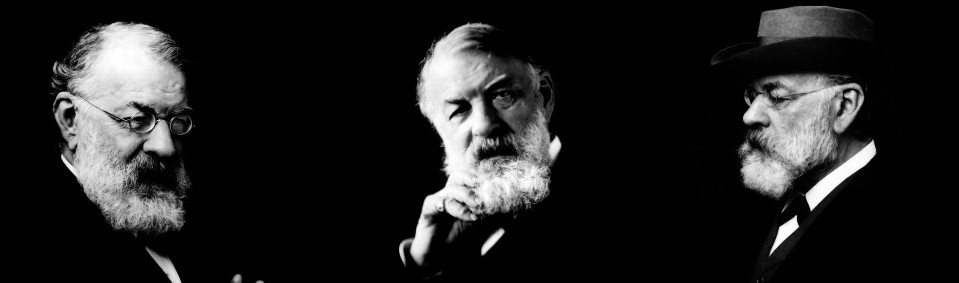
Eshbach, Robert Whitehouse. “Joseph Joachim and Bach’s Chaconne.” Nineteenth-Century Music Review, 2024, 1–31. https://doi.org/10.1017/S147940982400020X.
© Robert W. Eshbach

Click link for the article:
Joseph Joachim and Bach’s Chaconne
PDF:
12 Thursday Dec 2024
Posted in 2 Articles and Essays — RWE
Eshbach, Robert Whitehouse. “Joseph Joachim and Bach’s Chaconne.” Nineteenth-Century Music Review, 2024, 1–31. https://doi.org/10.1017/S147940982400020X.
© Robert W. Eshbach

Click link for the article:
Joseph Joachim and Bach’s Chaconne
PDF:
22 Friday Nov 2024
Posted in 2 Articles and Essays — RWE
Robert Eshbach, “Joachim in Weimar 1850-1851,” in Joseph Joachim. Identities/Identitäten, ed. Katharina Uhde and Michael Uhde (Hildesheim, Zürich, New York: Ohms Verlag, 2023), 387-407

[Click above for full article]
09 Sunday Jun 2024
Posted in 2 Articles and Essays — RWE
Eshbach, Robert W. Review of The Music of Joseph Joachim, by Katharina Uhde. Notes 77, no. 2 (December 2020): 268-71.

25 Thursday Apr 2024
Posted in 2 Articles and Essays — RWE

Ives on Umpawaug Road
Robert W. Eshbach
Published in Die Tonkunst, vol. 7, no. 1 (January, 2013), pp. 81-84. © Robert W. Eshbach
Click here to read or download: Ives-on-Umpawaug-Road
24 Wednesday Apr 2024
Posted in 2 Articles and Essays — RWE

Schumann as Mentor: Joseph Joachim’s “Blick auf Schumann”
Published in Die Tonkunst, vol. 4, no. 3 (July, 2010), pp. 351-365. © Robert W. Eshbach
Click below to read or download
16 Wednesday Aug 2023
Posted in 2 Articles and Essays — RWE
‘For All are Born to the Ideal’: Joseph Joachim and Bettina von Arnim
Music and Letters, Volume 101, Issue 4, November 2020, Pages 713–742.

Music & Letters: ‘For All are Born to the Ideal’
[click link]
Obwohl Joseph Joachim im Milieu des deutschen romantischen Salons aufgewachsen ist, haben seine Biographen den entscheidenden Einfluss von Frauen auf seine künstlerische Entwicklung weitgehend ignoriert. Dies ist ein bedeutendes Versäumnis, wie Katharina Uhdes jüngste und kommende Publikationen zu Joachims Kompositionen zeigen. In seiner von Andreas Moser verfassten Autobiographie Joseph Joachim, Ein Lebensbild, deren frühe Ausgabe noch zu seinen Lebzeiten erschien, bemühte sich Joachim, sich so darzustellen, wie er später gepriesen werden sollte: als evangelischer christlicher Deutscher, der von einer Reihe ikonischer männlicher Vaterfiguren — darunter Joseph Böhm, Mendelssohn, Schumann und Liszt — gefördert wurde, als würdiger, prinzipientreuer Verfechter klassischer Traditionen und als Torwächter des preußischen Musikestablishments. Letztendlich hat ihm diese Selbstdarstellung jedoch sehr geschadet, da sie unter anderem eine warmherzige, sympathische ungarisch-jüdische Natur, eine romantische, virtuose Jugend, eine frühe, bedeutende Berufung als Komponist und eine umfangreiche und bedeutende britische Karriere verbarg. […]
Although Joseph Joachim came of age in the milieu of the German Romantic salon, his biographers have largely ignored the critical influence of women on his artistic development. This is a significant omission, as Katharina Uhde’s recent and forthcoming publications concerning Joachim’s compositions reveal. In his veiled autobiography, Joseph Joachim, Ein Lebensbild, written by Andreas Moser, the early edition of which appeared while he was yet alive, Joachim was at pains to present himself as he would eventually come to be eulogized: as an Evangelical Christian German, mentored by a series of iconic male father figures—including Joseph Böhm, Mendelssohn, Schumann, and Liszt—a worthy, principled upholder of Classical traditions, and a gatekeeper of the Prussian musical establishment. In the end, this self-portrayal has done him much harm, however, concealing inter alia a warmly sympathetic Hungarian-Jewish nature, a romantic, virtuoso youth, an early, significant vocation as a composer, and an extensive and important British career. […]
20 Friday May 2016
Posted in 2 Articles and Essays — RWE
© 2016 Robert W. Eshbach

Joachim’s “Hungarian” Concerto, op. 11 — a Note

Joseph Joachim
(b. Kittsee, 28 June 1831 — d. Berlin, 15 August 1907)
Violin Concerto No. 2 in D Minor “in the Hungarian Manner,” op. 11
Dedication: Johannes Brahms
Composed: Hanover, Summer 1857
Premiere in MS (first version): London, May 2, 1859
Premiere: Hanover, March 24, 1860; published: Breitkopf und Härtel, 1861
Joseph Joachim’s Concerto in D Minor, op. 11 “in ungarischer Weise” has long been considered one of the composer’s finest works, easily overshadowing several of his other compositions in the Hungarian style: an early fantasy on Hungarian themes (ca. 1850), and a Rhapsodie Hongrois for violin and piano (1853, written together with Franz Liszt). It is a substantial work that enjoyed great popularity during Joachim’s lifetime, though he himself ceased performing it in his later years, due to its exceptional length and difficulty. Indeed, it was said that Joachim was not the work’s best interpreter, that distinction belonging to Wilhelmj or Laub, or later to Flesch, who played it with great sentiment and Gypsy-like abandon. Joachim’s early Hungarian pieces were typical virtuoso products; the “Hungarian” concerto, on the other hand, is a symphonic work of grand design and elaborate execution — a rare and important link between the classic works of Mozart, Beethoven, and Mendelssohn, and the late 19th-century concerti of Bruch, Lalo, Goldmark, Brahms, Tchaikovsky, Dvorak and Saint-Saens.
The years leading up to and during the composition of the concerto were a time of crisis for symphonic composition of all sorts, when the symphony itself was in eclipse. As Carl Dahlhaus has noted, the rigorous post-Beethoven requirements for writing music in ‘grand form’ had become inhibiting; for a generation, this led to an absence of “any work of distinction that represented absolute rather than programmatic music.” By mid-century the symphony per se had become moribund: in the “progressive” aesthetic of the New German School, compositions in traditional forms were derided as dry, academic and outmoded. In his essay Oper und Drama, Wagner famously — and prematurely — sounded the symphony’s death-knell.
Under these circumstances, the concerto offered traditionally-minded composers a genre of “absolute music” that allowed considerably more individuality and freedom of expression — more latitude for innovation in form — than the symphony, while stopping short of employing extra-musical programs. A prime example of this is Max Bruch’s Violin Concerto No. 1 in G minor, op. 26 (1866). The first movement of Bruch’s concerto is unusual by any standard: a free introduction (Bruch uses the Wagnerian term Vorspiel) to the central slow movement that is the real raison d’être of the piece. Bruch had compunctions about whether a work so unorthodox in form could properly fit the genre, but was reassured by Joachim:
“Finally, as to your ‘doubt,’ I am happy to say that I find the title Concerto to be in any case justified — the last two movements are too greatly and too regularly developed for the name ‘Phantasie.’ The individual constituents are quite lovely in their relationship with one another, and yet sufficiently contrasting; that is the main thing. Furthermore, Spohr also called his Gesangs-Scene ‘Concerto!’” [1]
It is precisely this freedom — this ability to break free of the shadow of Beethoven and “grand form” while resting on the authority of accepted models — that appealed to composers of a conservative bent and allowed the symphonic violin concerto, as a genre of absolute music, to retain its creative interest and maintain a provisional hold on the public at a time when the symphony was viewed as outmoded. As Joachim mentioned in his letter, Spohr (1816) provided an early example of unconventional form — a concerto cast as an operatic scena. Mendelssohn’s concerto (1845), which influenced subsequent composers as late as Sibelius, is replete with formal innovations (the lack of opening tutti in the first movement, as well as the centrally-placed cadenza leading to the unusual recapitulation, etc.).
Equally important, the concerto offered composers the freedom to explore certain more lyrical or characteristic moods — moods that were congenial to the era, but that lay outside the aesthetic norms of the symphony, or were problematic if subjected to the formal processes that the symphony required. A few characteristic symphonies, full of “local color” such as Goldmark’s Ländliche Hochzeit (1876), enjoyed a period of popularity, but stood apart from the rigid expectations of the genre, and eventually dropped from favor. On the other hand, characteristic concerti such as Lalo’s Symphonie Espagnole or Bruch’s Schottische Fantasie, or Wieniawski’s Concerto no. 2 in D Minor, with its Finale à la Zingara, continue to be staples of the violinist’s repertoire. Joachim’s Concerto “in ungarischer Weise,” is a significant example of these “characteristic” concerti. Though early, it was considered by Carl Flesch to be a high point of the genre: “the most outstanding creation that a violinist has ever written for his own instrument.” Written during the same years as Wieniawski’s, it is also in D Minor, and also ends with a Finale à la Zingara — a wild Gypsy moto perpetuo introducing an extended, virtuosic rondo. With his op. 11, Joachim goes well beyond Wieniawski, however, taking the traditional three movement concerto form and extending and freely recasting it into a broad symphonic portrait of his native Hungary, at once personal and idealized — a full forty-five minutes of the greatest virtuosity placed at the service of the most evocative poetry.
The Style Hongrois — the Hungarian style — has a long history in Classical music going back to Haydn, if not before. Its characteristic moods and gestures were adapted by 19th-century composers as dissimilar as Liszt and Brahms, who reveled in the freedom, nostalgic melancholy, and passionate abandon native to the style. Joachim was, of course, Hungarian by birth, though like Liszt, he was taken from his native soil at an early age. He spoke little Hungarian, and he regarded the whole of Magyar culture with a wistful, romantic gaze. The Hungary of Joachim’s birth was still a land untouched by progress. Under Habsburg rule since the defeat of the Turks, it was poor, virtually without infrastructure, industry, banking or trade — a puzzle of secluded villages and feudal demesnes. From earliest times, the plains of Hungary had been swept by successive waves of invasion and immigration, and the resident population bore the impress of many cultures, from ancient Celts and Romans to modern Magyars, Slovaks, Germans, Roma, Turks, and Jews. Scarcely a third of the population spoke Hungarian — the common language of the upper classes was Latin. In this confusion of ethnicities, Joachim made no distinction between “Hungarian” and Gypsy vernacular music. Like other classically-trained musicians, he associated the undifferentiated “Hungarian” style with an exotic, uninhibited, and proudly semi-civilized folk. This is apparent in a November 1854 letter from Joachim, at that time concertmaster in Hanover, to his countryman Liszt: “I was in the homeland,” he writes. “To me, the heavens appeared more musical there than in Hanover. […] The Danube by Pest is beautiful, and the Gypsies still play enthusiastically. The sound goes from heart to heart — that you know. There is more rhythm and soul in their bows than in all north German orchestra players (“Kapellisten”) combined, the Hanover musicians not excepted.” [2] Writing a half-century later, William Henry Hadow could still describe Hungarian café musicians as “rhapsodists of musical art, drawing for inspiration upon the rich store of national ballad, and trusting for method to a free tradition, or an impulse of the moment. […] The whole character of their music is direct, natural, spontaneous, giving voice to a feeling that speaks because it cannot keep silence.” It is this directness, this spontaneity, this rhythm and soul, that Joachim sought to capture in his concerto. Joachim dedicated the work to Brahms, and gave its first performance in Hanover in 1860. He published it the next year, and performed it during his historic 1861 return to Vienna. At that first hearing, the renowned Viennese critic Eduard Hanslick was reluctant to offer a settled opinion of the piece, though he wrote admiringly of it. Hearing Laub play it three years later, he pronounced it unequivocally a “tone poem full of mind and spirit, of energy and tenderness [that] secures Joachim an extraordinary place amongst modern composers.” [3]
[1] “Auf Ihre ‘Zweifel’ freue ich mich Ihnen schließlich zu sagen, daß ich den Titel Concert jedenfalls gerechtfertigt finde — für den Namen ‘Phantasie’ sind namentlich die beiden letzten Sätze zu sehr und regelmäßig ausgebaut. Die einzelnen Bestandtheile sind in ihrem Verhältnisse zu einander sehr schön und doch contrastirend genug; das ist die Hauptsache. Spohr nennt übrigens auch seine Gesangs-Scene ‘Concert’”!
[2] “Ich war in der Heimath; der Himmel ist mir dort musikalischer vorgekommen, als der Hannover’sche. […] Die Donau bei Pesth ist schön, und die Zigeuner spielen noch enthusiastisch, von Herz zu Herz geht der Klang, das weißt Du, Es ist mehr Rhythmus und Seele in ihren Bogen, als in allen norddeutschen Kapellisten zusammengenommen; die Hannover’schen nicht ausgenommen.”
[3] “Diese Tondichtung voll Geist und Gemüth, voll Energie und Zartheit sichert Joachim einen hervorragenden Platz unter den modernen Componisten.”
23 Saturday Jan 2016
© Robert W. Eshbach 2016

A Victorian Musician
Robert W. Eshbach

Joseph Joachim
Oil Portrait by John Singer Sargent
Art Gallery of Ontario, Toronto
Therefore I summon age
To grant youth’s heritage
—Robert Browning, Rabbi Ben Ezra
n the evening of May 16, 1904, a brilliant and distinguished audience gathered at Queen’s Hall, London, to celebrate the “Diamond Jubilee,” the sixtieth anniversary, of Joseph Joachim’s English début. Outside on Langham Place, a crush of nearly 2,500 admirers in gala attire emerged from their carriages, or arrived on foot from after-dinner strolls down Regent Street, jostling to enter the ornate, high-ceilinged auditorium, home to the “Proms” concerts, then under the direction of the popular, 35-year-old conductor, Henry J. Wood. Among the evening’s subscribers were more than six hundred eminences from the arts, literature and politics.
In the three-score years since the Monday in May 1844 when the chubby little Hungarian boy had given his historic début in London’s Hanover Square Rooms, Joachim had been the unrivaled favorite of the British public. “From early childhood Joachim never appeared on a platform without exciting, not only the admiration, but the personal love of his audience,” observed his friend Florence May. “His successes were their delight. They rejoiced to see him, to applaud him, recall him, shout at him. The scenes familiar to the memory of three generations of London concert-goers were samples of the everyday incidents of his life in all countries and towns where he appeared. Why? It is impossible altogether to explain such phenomena, even by the word “genius.” Joachim followed his destiny. His career was unparalleled in the history of musical executive art.” [i]
The Jubilee was the brainchild of Joachim’s friend Edward Speyer, a remarkable, indestructible old man, a prodigious collector of musical manuscripts and a musical connoisseur, familiar with all the most important musicians of the age. Speyer had grown up among musicians. His violinist father had known Weber, Ernst, Spohr and Mozart’s eldest son, Carl. [1] As a boy, he had met Mendelssohn in his father’s music room. “Don’t forget, child, that you have just seen a great man; that was Mendelssohn!” his father exhorted him. As an old man, he still remembered.
Speyer had first heard Joachim in Frankfurt in 1856. It was in England, however, that their 45-year friendship flourished, beginning in the early ‘sixties, during Joachim’s annual visits to London to play in the Saturday and Monday Popular Concerts at St. James’s Hall. In recent years, Speyer had helped to promote Joachim’s concerts in England. For several years, beginning in 1901, he had been the organizer of the “Joachim Quartet Concerts” in London, an annual series of six musical evenings that Joachim gave with his Berlin colleagues Carl Halir, Emmanuel Wirth and Robert Hausmann. [2]
“Whilst the Joachim Quartet Concerts were following their brilliantly successful course, it occurred to me one day that in 1904 an event unique in the history of music would occur,” Speyer recalled. “Sixty years previously, on May 27th, 1844, Joachim, then a boy of twelve, made his first appearance in England, playing Beethoven’s Violin Concerto under Mendelssohn at a concert of the Philharmonic Society. I formed a small committee of friends to make this anniversary the occasion of a worthy public celebration. One of them, Sir Alexander Kennedy, travelled to Berlin to inform Joachim of our plan. After some hesitation, mainly on account of his age, he finally agreed. He asked that works of his beloved friends Mendelssohn, Schumann and Brahms should be included in the programme.” [ii] The date was secured, and Prime Minister Arthur Balfour, a passionate music lover known for his annual “Joachim parties,” was enlisted to chair the event.
Queen’s Hall, London
For Britons, there had been really only one previous “Diamond Jubilee” — that of the Queen. On June 22, 1897, the entire British Empire had celebrated 60 years of Victoria’s rule. From Hyderabad to Hong Kong, from Rangoon to Regent’s Park, the day had been marked by celebrations and feasts, fireworks, choral concerts, electrical illuminations and prisoner releases. In London, a service of thanksgiving had been held at St. Paul’s Cathedral, “the parish church of the Empire,” with a host of crowned heads and eleven Colonial Prime Ministers in attendance. In deference to her aging Majesty’s difficulty in negotiating steps, the ceremony was held outside. [iii] The morning had dawned dark and overcast, but by eleven o’clock the sun appeared — “Queen’s weather,” they called it. Cheering crowds lined six miles of streets that had been “splendidly decorated with flowers, garlands of bay, arches and Venetian masts from which fluttered countless blue and scarlet pennants.” [iv] There they waited in hopes of catching a glimpse of the Monarch, as she rode in her open landau along a circuitous route from Buckingham Palace to the church, accompanied by pealing bells and booming cannon. “No one, ever, I believe, has met with such an ovation as was given to me,” Victoria noted in her diary. “The crowds were quite indescribable, and their enthusiasm truly marvellous and deeply touching. The cheering was quite deafening, and every face seemed to be filled with real joy.” [v]
St. Paul’s Cathedral, ca. 1900
It was a notable tribute, then, that Joachim should be fêted with a “Jubilee.” Who but the “Violin King” could stand comparison, without a touch of irony, with a queen who created her own weather? Joachim’s British career spanned and defined an era. Victoria died on January 22, 1901, after a reign of 63 years and seven months. When Joachim died in August of 1907, he had been before the British public for 63 years and three. [3]

To help “make this anniversary the occasion of a worthy public celebration,” Speyer’s organizing committee decided to commission Joachim’s portrait, and to present it to him at the event. Speyer elected to approach the great, irascible Italian-born American painter John Singer Sargent, who, the year before, had been personally chosen by Theodore Roosevelt as “the one artist who should paint the portrait of an American President.” [4] “On learning the object of my errand,” said Speyer, “he looked much disturbed and exclaimed almost ferociously: ‘Good heavens, I am sick of portrait painting. I have just returned from Italy, where I buried myself for six weeks to escape the cursed business, and now you have come and ask me to do another one, and that too when I have a large number of old commissions still awaiting me here!’ He finally quieted down, however, and remarked: ‘Well, if it’s Joachim, I must do it.” I suggested a three-quarter portrait, but he insisted that he could do better with a kit-cat. [5]” [vi]
Speyer’s “committee of friends” included the preternaturally gifted young pianist and musicologist Donald Francis Tovey. Tovey had known Joachim since he was a boy, and had become a special protégé of Joachim’s late years. Tovey’s guardian and mentor, Miss Sophia Weisse, [6] had introduced them. She later recalled how, when Tovey was seven years old, Joachim would “strum out” fugue themes from Bach’s Well-tempered Clavier on her sitting-room table at Eton, and have Donald identify them by rhythm. “When Donald was twelve he played a violin sonata of his own with Joachim,” she wrote, “and I remember how carefully and tenderly dear Jo played it.” [vii] That same year, a meeting between Joachim and Tovey’s father helped secure parental approval for the boy’s chosen career: “My father was for a long time convinced that no musician but a Church organist could have any social status at all. He was enlightened by a visit to Eton of Joachim, whose ambassadorial presence, perfect command of English and obviously profound general culture completely changed his ideas of what a musician might be. He never forgot how when Joachim was told of my progress in Latin and Euclid he asked, ‘And does he know it gründlich? (thoroughly)’” [viii] Joachim and Tovey gave their first public concert together in March of 1894, in the Albert Institute at Windsor, just before 18-year-old Donald “went up to Balliol” to further his studies. [ix] Now, a decade later, Joachim seldom gave recitals in England with anyone else. The Manchester Guardian reported: “The combination of this young and interesting musician with an older and so well-founded an artist was in its essence extremely pathetic [touching]. One travelled back in memory to the days when Joachim himself was consorting with the great musicians of his day, himself a lad praised and encouraged, and one felt how beautifully he had read the lesson of his youth in returning the example to a young man of the present generation who is, we are certain, destined to be worthy of his beginning.” [x] Joachim admired Tovey unreservedly, and was astonished by his almost freakish abilities. “After an hour with Donald, I feel as if my head were on fire,” he said. “I have never seen his equal for knowledge and memory.” [7] And elsewhere, he declared: “Of all the musicians of the younger generation that I know, Tovey is assuredly the one that would most have interested Brahms.” [xi]
Several weeks prior to the Jubilee celebration, a musical party was held for the Joachim Quartet in the elegant music room of Miss Weisse’s Northlands School at Englefield Green near Windsor. Among the attendees was Poet Laureate Robert Bridges, who captured the sentiments of the hour in a sonnet: [8]
To Joseph Joachim

elov’d of all to whom that Muse is dear
Who hid her spirit of rapture from the Greek,
Whereby our art excelleth the antique,
Perfecting formal beauty to the ear;
Thou that hast been in England many a year
The interpreter who left us nought to seek,
Making Beethoven’s inmost passion speak,
Bringing the soul of great Sebastian near.
Their music liveth ever, and ’tis just
That thou, good Joachim, so high thy skill,
Rank (as thou shalt upon the heavenly hill)
Laurel’d with them, for thy ennobling trust
Remember’d when thy loving hand is still
And every ear that heard thee stopt with dust.
Robert Bridges, May 2, 1904. [xii]
The poem seemed appropriate for the Queen’s Hall gala, and Bridges granted his permission to print it in the program. When Tovey wrote to thank him on behalf of the committee, Bridges replied: “I knew nothing of the Jubilee. I was merely prompted to write because there seemed an opportunity, when I met him among his friends, of my expressing my lifelong admiration and gratitude. […] I wish the sonnet was better, but it contains what, or some of what, I wished to say.” [xiii]
Joachim spent the weekend before the Queen’s Hall fête in Woking, at the residence of Gerald Balfour, the Prime Minister’s brother and the President of the Board of Trade. Among the other guests were the Prime Minister and his wife, Liberal MP John Morley and Donald Tovey. For Joachim and Tovey, it was a weekend of music making. On the morning of the event, Joachim and Morley rode to London together. “Joachim told Morley with much emotion how proud and happy he felt at the idea of the Prime Minister presiding at his Jubilee,” Speyer relates. “Morley replied: ‘Don’t you be so sure of that, my friend. I am going to attack the Government to-night in the House on a subject which will undoubtedly lead to a long debate, during which the Prime Minister may have to remain in his place.’” Joachim, crestfallen, went on to rehearse for the evening’s concert.

As he entered his seventies, Joachim’s best performing years were behind him. He hadn’t his accustomed energy, and his arthritic fingers no longer automatically obeyed the letter of his desires. “I am happy if I can still play chamber music to my satisfaction,” he told Speyer; “I am reluctant to think about solo playing in the long term.” [xiv] As his technique began to decline and his execution failed to live up to his eminence, Joachim’s detractors found him an easy mark. George Bernard Shaw’s classic barb has stuck in the mind of posterity as effectively as any jibe ever penned by Mark Twain: “Joachim scraped away frantically, making a sound after which an attempt to grate a nutmeg effectively on a boot sole would have been as the strain of an Aeolian harp. The notes which were musical enough to have any discernable pitch were mostly out of tune. It was horrible – damnable! Had he been an unknown player, . . . he would not have escaped with his life.” Shaw notwithstanding, the wisdom of experience and the inspiration of occasion could still be counted upon to elicit a memorable performance from the veteran violinist. Care had to be taken, though — this was not an occasion on which one could afford to have a bad night. After the morning rehearsal, Speyer urged his friend to get some rest. Returning home, however, Joachim found a note from Queen Alexandra, Edward’s queen, asking him to go to Buckingham Palace to “do some music for her.” The Queen had mistaken the day of the celebration, and was unaware of the inconvenience she was causing. It was a Royal command, nevertheless, and Joachim felt unable to refuse.[xv]
That afternoon, as Joachim was “doing music” for the Queen, the Prime Minister adroitly deflected Morley’s challenge, and adjourned the debate in time to arrive at Queen’s Hall before the overture.
Queen’s Hall, London
Dedicated with a children’s party in 1893, Queen’s Hall [9] was famed equally for its perfect acoustics and its short leg-room (“it appeared to be the understanding that legs were to be left in the cloakroom” sniped the Musical Times on one occasion) [xvi]. To E. M. Forster, it was “the dreariest music-room in London.” [xvii] No wonder: it was said that “the predominant colour” of the cavernous space “was that of the belly of a London mouse,” and that the hall’s architect, T. E. Knightley, kept a string of dead mice in his paint shop “to make sure that this was no idle boast.” [xviii] Be that as it may, with its large capacity, its curved splays at the orchestra end for the diffusion of sound and its free-standing wooden walls (“as the body of a violin — resonant”), Queen’s Hall was the place to go in London for orchestral music or political speech, and the most appropriate place for friends and admirers to honor the reigning musician of the day: Dr. Joachim, the “Violin King,” the “Last of a Classic School.”

Sir Henry Wood conducting the Queen’s Hall Orchestra
The Jubilee festivities began with a performance of the Hebrides Overture — Mendelssohn’s great “train oil, sea gulls and salted cod” evocation of the voyage he made in 1829 with his friend Klingemann to Fingal’s Cave on the island of Staffa off the west coast of Scotland. At the conclusion of the piece — a final, tempestuous episode, followed by a single flute reminiscence punctuated by a few quiet string pizzicati — a storm of applause greeted the great violinist, “the entire audience rising and cheering vociferously” [xix] as he made his way to the stage, accompanied by Prime Minister Balfour and Sir Hubert Parry. [10] “When Balfour and Parry led me on to the platform I was terribly anxious,” Joachim said afterward. “I was thinking of the speech I had to make.” But Balfour made him laugh, and prevailed upon him, over his earnest objections, to sit. Sir Hubert then read from an illuminated address, which Balfour afterwards presented to him, written for the occasion by Sir Frederick Pollock: [11]
“At a time known only by hearsay to most of us, you first brought before an English audience the promise of that performance which has been eminent among two generations of men… It was under the auspices of Mendelssohn that you played Beethoven’s Violin Concerto at the Philharmonic Society’s concert of May 27th, 1844. No combination could have been more prophetic of your career, though neither its duration in time nor the singular quality of its achievement was then within any probable foresight.
At that day the fine arts, and music among them, languished in this country. It was not understood that the function of art is to be not merely the recreation of a privileged class, but an integral element of national life. We have now learnt to know and to do better. Opportunities of becoming acquainted with the music of the great masters have been multiplied tenfold, and the general competence of both execution and criticism has been raised beyond comparison. This great and salutary change which we have witnessed in the course of the last generation is largely due to your exertions. Learning from Mendelssohn and Schumann, and working with Brahms in the comradeship of life-long friends, you have devoted your whole energies, as executant and as composer, to continuing the tradition and maintaining the ideal of classic music.
We now hold it fitting that the sixtieth anniversary of your first appearance here should not pass without a special greeting. The welcome we offer you is alike for the artist who commands every power of the trained hand, and for the musician whose consummate knowledge and profound reverence for his art have uniformly guided his execution in the path of the sincerest interpretation. Your first thoughts as a performer have ever been for the composer and not for yourself. In no hour have you yielded to the temptation of mere personal display, and the weight of your precepts in one of the greatest musical schools of Europe [12] is augmented by the absolute fidelity with which your example illustrates them….” [xx]
The next to speak was Prime Minister Balfour, who was to present Sargent’s portrait. Balfour spoke touchingly of Joachim as a friend, both to himself and to the nation. “I think that the great and beneficent influence which you have had on British music is due not merely to those high artistic qualities of which the Address gives a worthy description, but also to that human affection which it is your peculiar and supreme gift to elicit, and which so many of us have enjoyed through longer years than I care now to enumerate. For it is as the friend as much as the musician, as the musician as much as the friend, that we now desire to pay all the honour which it is within our power to give you; and, as some simple memorial, some permanent monument of this memorable night, I now beg to present you on behalf of this assembly with a portrait which will, I hope, serve to remind you of the many friends whom… you have in England, and will keep in England…” [xxi] “Joachim, rising amidst tumultuous cheers which were long continued, acknowledged the compliment in a speech of faultless English,” recalled Speyer. “He said he was sure that the object of the audience was not only to show sympathy towards himself but to honour the great composers with whom it had been his happy lot to be connected. It was a great joy to him to think that Mendelssohn was not only an artistic father to him, but was the means of bringing him to this country, which for many years had been his second home. The gift of oratory was not in him, but he would try to give his hearers pleasure by playing the piece he had first performed with Mendelssohn in this country. If he did not do justice to the work he hoped that his hearers would be indulgent, for he could not help feeling emotion on such an occasion as this.” [xxii]
Joseph Joachim and Franz von Vecsey
Following the presentation of the portrait, the 11-year-old Hungarian violin prodigy Franz von Vecsey appeared onstage with a huge crown-shaped wreath of flowers. Vecsey had studied with Joachim’s former pupil Jenö Hubay, and then with Joachim himself. “I am seventy-two years of age, yet never in my life have I heard the like; never believed it possible,” Joachim had said of Vecsey’s playing. Only days earlier, Vecsey had given his own English début, in St. James’s Hall. In a few months, he would make his first Queen’s hall appearance, playing concerti by Mendelssohn and Paganini with the London Symphony Orchestra. [xxiii]
A Queen’s Hall Concert
In planning the Jubilee program, both Joachim and Speyer had been aware that, with speeches, presentations and performances, the evening promised to be long and emotionally taxing. Nevertheless, Speyer insisted, “in order to invest this Jubilee celebration with its truest significance it was really indispensable that he should play the Beethoven Violin Concerto, and thus recall the memorable event of sixty years ago.” Joachim protested, “declaring that he had persistently abstained from playing such large works in public of late years in consideration of his advanced age, and pleading that the emotional strain on him might prevent his acquitting himself of the task.” Speyer then proposed that the second number on the program be listed simply as: “Solo Violin … Dr. Joachim.” That way, if he felt unable to do justice to the concerto, he could perform one of Beethoven’s Romances instead. To this, Joachim agreed. [xxiv] In the event, Joachim played the concerto, the piece that, together with Bach’s magisterial Chaconne, stood at the heart of his repertoire and reputation. Henry Wood recalled: “…someone went into the artists’ room and brought Joachim’s fiddlecase which he opened amid tremendous applause and enthusiasm. I began the introduction to Beethoven’s violin concerto and Joachim gave a memorable performance of it with his own cadenza. This was followed by his arrangement of Schumann’s Abendlied for violin and orchestra. The musical part of the programme closed with Joachim conducting his own overture to Shakespeare’s King Henry IV (written in 1885) and also Brahms Academic Festival Overture.” [xxv]

Fêtes and funerals, recommendations and reviews, reveal a certain kind of truth, which is seldom fully objective. Rites and references tell as much about the deep wishes and normative values of the celebrators as about the virtues and accomplishments of the celebrated. For the Jubilee audience, Joachim was more than a great violinist. Now nearly 73 years of age, he had transcended his virtuoso youth to become an elder statesman of sorts, recognized in England not only as “the last of a classic school,” the iconic representative of “absolute” German instrumental music, but as classical music’s equivalent to the great Victorian literary sages — men [13] like Thomas Carlyle, Matthew Arnold, Ralph Waldo Emerson, John Ruskin and Alfred Lord Tennyson — the great intuitive thinkers who gave elegant voice to the moral concerns of the era in such traditional forms as essay, novel, epic, lyric and drama. Like them, Joachim was recognized for his dignity, intellect and high-mindedness. “Of all violinists, Joachim… was the noblest of all in his aims, aspirations and ideals,” wrote W. W. Cobbett. “The litteræ scriptæ which remain testify to this, his published letters addressed to leading musicians telling in almost every line of his determination to live for his art as for a religion, to place artistic before commercial considerations and to familiarise his audiences with the music of the greater masters. The great technical difficulty of his own works, which he played so magnificently, is a measure of his powers as an executant. Yet it was not as virtuoso that he elected to make his appeal to musicians, and he was only faintly interested in music which, in his estimation, did not belong to the loftiest regions of his art.… His influence extends far beyond the admiration that he aroused among his contemporaries as an executant and has left a permanent mark on the development of music and musical taste in this country.” [xxvi]
His art had great aspirations. Like the Victorian literary sages, he sought to “express notions about the world, man’s situation in it, and how he should live.” [xxvii] At the same time, the appeal of the sage’s art — Joachim’s art — lay not so much in the realm of the objective as in the imaginative: in its capacity to expand horizons — to discover the extraordinary in the common — to open minds to a quality of experience to which they had previously been deaf and blind. And as with those sages, Joachim had been — continues to be — accused of a certain maddeningly conservative dogmatism. This characteristic, however, is the distinctive stance and attitude of the Victorian sage — as Emerson expressed it: “to believe your own thought, to believe that what is true for you in your private heart is true for all men, — that is genius.” [xxviii]
One does not read the Victorians for the rigor of their logic or for solutions to modern dilemmas, but for the breadth, depth and sincerity of their concerns. For modern minds, used to more rigorous rational grounding and a greater consistency, Victorian attitudes can throw up barriers to understanding and appreciation. If this is true in literature, it is even more so in an art as ephemeral and prone to fashion as music. As early as 1930, Carl Flesch alluded to this difficulty when he wrote: “It is not surprising that Joachim’s musical and technical advantages are no longer entirely comprehensible to the youth of our day on the basis of mere description, for the very essence of Joachim’s playing eludes description, in as much as it was not purely technical, but lay in an indefinable charm, an immediacy of feeling which caused a work played by him to be haloed with immortality in the listener’s recollection. What our time fails to understand is not so much Joachim’s violin playing as Joachim’s spirit.” [14]
The cardinal virtues of a Victorian Englishman might be said to be sincerity, modesty and a capacity for friendship. Strike those words from a Victorian’s vocabulary, and he would have found little to praise in his fellow man. Among the great, as their contemporaries recognized the great, those virtues were not mere social niceties, but capacities of character, essential to the pursuit of truth, and the living of an engaged life.
The era named for a great queen was an era that celebrated Great Men. “The History of the world is but the Biography of great men,” [15] claimed Thomas Carlyle in his influential disquisition On Heroes, Hero-Worship and the Heroic in History. In his series of six lectures, first published in 1841, Carlyle explores the hero as divinity, prophet, poet, priest, man of letters and king, articulating his vision of the Great Man — the “great soul, open to the Divine Significance of Life” — as the primary motive force in history. For Carlyle, the man who can bend the course of history is the man of sincerity — earnest, honest, great-hearted — who wrestles “with the truth of things.” “The great Fact of Existence is great to him,” he wrote. “Fly as he will, he cannot get out of the awful presence of this Reality.” “Such a man is what we call an original man; he comes to us at first-hand. A messenger he, sent from the Infinite Unknown with tidings to us. We may call him Poet, Prophet, God; — in one way or other, we all feel that the words he utters are as no other man’s words.” For Carlyle, steeped in German idealism, “a deep, great, genuine sincerity” was the true test of worth in a man. “Not the sincerity that calls itself sincere… a shallow braggart conscious sincerity; oftenest self-conceit mainly. The Great Man’s sincerity is of the kind he cannot speak of, is not conscious of,” he wrote. “Nay, I suppose he is conscious rather of insincerity; for what man can walk accurately by the law of truth for one day?”
Joachim was raised in the traditions of German idealism that Carlyle so cogently interpreted to the English people. It must have rankled him therefore, though he joked about it later, to find that the redoubtable father of the Great Man Theory, with all his admiration for prophets, poets and priests had little respect for men of his profession. Joachim and Carlyle were introduced one day by a friend of Thackeray, who, having another engagement, left them alone together. Carlyle, about to take his morning “constitutional,” asked Joachim to join him:
During a very long walk in Hyde Park the Chelsea sage talked incessantly about Germany — the kings of Prussia, Moltke, Bismarck, the war, &c. At last Joachim thought that he ought to say something, so he innocently asked his irascible companion: ‘Do you know Sterndale Bennett?’ ‘No,’ replied Carlyle — (pause) — ‘I don’t care generally for musicians. They are an empty, windbaggy sort of people.’ ‘This was not very complimentary to me,’ Dr. Joachim laughingly said. [xxix]
Had he known Joachim better, Carlyle might have recognized in him the very ideals that he attributes to his chosen Heroes of history. The great, sincere questions of Joachim’s life were the self-same quandaries that Carlyle ascribes to Mahomet: “What am I? What is this unfathomable Thing I live in, which men name Universe? What is Life; what is Death? What am I to believe? What am I to do?” — to which the hero as musician might have added two poignant, vexed questions of his own: “What is Friendship?” and “What is Love?”
Sir Henry Wood
Joachim’s dignified presence among the Great and the Good of his time had an immeasurable, positive influence on the level of respect with which the art of music came to be regarded in England. His natural air of authority, as a man and a performer, instantly and everywhere commanded admiration. Church of England clergyman Hugh Reginald Haweis wrote of the forty-year-old: “M. Joachim is the greatest living violinist; no man is so nearly to the execution of music what Beethoven was to its composition. There is something massive, complete and unerring about M. Joachim that lifts him out of the list of great players, and places him on a pedestal apart. Other men have their specialities; he has none. Others rise above or fall below themselves; he is always himself, neither less nor more. He wields the sceptre of his bow with the easy royalty of one born to reign; he plays Beethoven’s concerto with the rapt infallible power of a seer delivering his oracle, and he takes his seat at a quartet very much like Apollo entering his chariot to drive the horses of the sun.” [xxxi]
“Joachim was always conscious of his dignity,” wrote Henry Wood, and as a member of a younger generation he probably meant it as a criticism. [xxx] One might say better that Joachim was always conscious of representing the dignity of his art in his person. (One of his favorite sayings was a quote from Schiller: “The dignity of man is given into your hand. Preserve it! It sinks with you, and with you it shall arise.”) Those who are among the first generation to labor for the recognition of a people or a principle often see things in this way — their decorum is an instrument of their struggle. Joachim’s dignity was hard won. It was not who he was born, but who he became — the skills he acquired and the values he embraced — that led him into the highest circles of culture and politics, and that determined his importance as a man and moral leader — that led to his public recognition as a Great Man.
Sargent’s kit-cat is a dignified affair. It is the classic image of a man of judgment: arms folded, the right hand protruding, the head erect, sober, distinguished, self-assured, the imperious glance turned toward the viewer — and yet the gaze is covered, inward, retrospective. Too inward for a statesman, surely — this is not a man of action like Roosevelt, hand on hip, assertive. A scholar, perhaps, or a philosopher — in any case, there is also no hint here of the virtuoso: the windbaggy sort who craves and courts approval and applause by means of his astonishing technique, his gobsmacking prowess. Though his arms may often enough have cradled a violin, they rest now upon his chest. There is no instrument, no score to indicate the practical musician, or to suggest the showman. What Sargent shows us instead is a sage, a man of mind and spirit, a mature guardian of timeless wisdom, a man of “deep, great, genuine sincerity.”
Joachim’s British friends included Tennyson, Browning, Thackeray, Dickens, Eliot, Landseer, Leighton, Alma-Tadema, Millais, Watts, Darwin, Gladstone, Jowett, Parry, Stanford and Grove.[xxxiv] In personal memoirs, we read of the countless small ways that Joachim interacted with the significant minds of his time, introducing them to great music — speaking to them, from personal acquaintance, of the great composers — ministering to their joys and sorrows, and sowing the seeds of understanding and acceptance for the art that he loved. These vignettes, as much as the numberless reviews of his appearances at public occasions, show the man, and give insight into the way in which he conceived his life’s work.
Rising above periods of intense personal and artistic struggle, Joachim became one of the most recognized and admired men of his time. Cambridge University bestowed doctoral degrees on him and Brahms on the same day, March 8, 1877 (Brahms did not attend).[18] The University of Glasgow awarded him an LLD in 1887, and Oxford University followed suit the following year. Never had a performing musician been so honored. In an age and a place that believed in the notion of edification through art, Joachim showed that the practicing musician, as well as the composer, the poet or the painter, could unite and embody the qualities of genius and character, and that Euterpe and Polyhymnia could take their rightful place among their sister muses “not merely as the recreation of a privileged class, but as an integral element of national life.”
Writing on the centennial of Joachim’s birth, A. H. Fox-Strangways, the founder and editor of Music and Letters, articulated what, among his English contemporaries, had come to be a widely held, sympathetic judgement of the man and the artist:
“This generation never really heard him, for his power over the bow began to fail at the end of the century. That power he took great pains to achieve, and violinists can tell us something about it and its effect upon the ears of those who heard it. But no man can explain the inexplicable — how it is that the human spirit can transmute itself into sound and speak direct to other human spirits. And it was this quality in his playing, this intimate voice whispering from mind to mind that made him different from all players we have ever heard, because that mind held so much.
It held reverence. Wherever the soul of goodness lay in man or work he loved to discover it to others. He gave all their due; the great men first, but others in their order. He filled himself with the passionate immensity of Beethoven and the lyrical steadfastness of Bach, and so became aware before anyone else of the security of purpose that lay deep in the nature of Brahms. Many talk of the three B.’s: he lived them, by making them vital. He showed us by his method of approach how far we often are from being fit company for the great.” [xxxv]

Joseph Joachim
Etching by Ferdinand Schmutzer

Notes
[1] “The two frequently played Mozart’s Violin Sonatas together,” he recalls in his memoirs. “Carl Mozart on such occasions used his father’s clavier, under which a pair of Mozart’s neat little slippers had found a permanent home. He showed my father a number of interesting documents, amongst which was a series of letters written by Mozart in Mannheim in 1777 to his cousin in Augsburg, a young girl about his own age. These letters are full of an overflowing spirit of boyish freakishness and whimsicality, and Carl Mozart declared he was going to destroy them on account of frequent passages of a somewhat equivocal nature which in the eyes of the world might reflect unfavourably on Mozart. My father’s urgent pleading induced Carl to let him take copies of them before their destruction, but only on condition that he would never publish them. I remember showing the copies to Brahms one day and his going off into fits of laughter over them.” [Speyer/LIFE, pp. 2-3].
[2] For many years, Joachim had led a second, “English” Joachim quartet at the “Pops” concerts in London. Members of that quartet included Louis Ries, 2nd violin, Ludwig Strauss, viola, and Alfredo Piatti, ‘cello.
[3] Like Mendelssohn before him, Joachim made England a second home. In his youth, he visited his uncle, Bernhard Figdor in Tulse Hill, near London, and in later years stayed with his brother Heinrich in London. Heinrich, a successful wool merchant, lived with his wife and children. Following his début with the London Philharmonic in 1844, Joachim returned to London in 1847, 1849, 1852, 1858, 1859, and 1862. After that, his annual six-week journey to England was looked upon as a matter of course.
[4] “Sargent found the President’s strong will daunting from the start. The choice of a suitable place to paint, where the lighting was good, tried Roosevelt’s patience. No room on the first floor agreed with the artist. When they began climbing the staircase, Roosevelt told Sargent he did not think the artist knew what he wanted. Sargent replied that he did not think Roosevelt knew what was involved in posing for a portrait. Roosevelt, who had just reached the landing, swung around, placing his hand on the newel and said, ‘Don’t I!’” This is the pose that Sargent adopted for his painting. The painting is the official White House Portrait. [see: National Portrait Gallery, http://www.npg.si.edu/exh/roosevelt/whtr.htm, from which this quote is taken.]
[5] The name derives from the 18th-century Kit-Cat Club in London, whose members included writers William Congreve, Jonathan Swift, Joseph Addison, Richard Steele and a number of prominent Whig politicians. A kit-cat is a portrait of less than half-length, 36 x 28 inches, showing head and shoulders, and usually one hand, following the format of Sir Godfrey Kneller’s (Gottfried von Kniller, 1646-1723) series of 42 portraits of Kit-Cat members (National Portrait Gallery, London). Sargent’s portrait is 87.6 x 73.0 cm. (34 1/2 x 28 3/4 in.). It currently hangs in the Art Gallery of Ontario, Toronto.
[6] Miss Weisse (as she was known), was the founder of the Northlands School, a boarding school for “young ladies” in a large house surrounded by gardens at Englefield Green near Windsor. “The school had a wide reputation, and no wonder,” wrote Speyer, “for Miss Weisse was a woman of strong character and great intelligence. Despite her other numerous activities and responsibilities, her care of Donald was the absorbing aim and interest of her existence. When he returned after his four years at Balliol, she made Northlands a centre of intellectual and artistic life. She built a large concert-room in which frequent performances of music and lectures on other subjects were given. Here Donald could display his gifts as pianist and composer with other prominent artists. For a number of years Joachim and his Quartet were habitual visitors. On several occasions London orchestras were engaged so that Donald might gain experience as a conductor. As a result, Northlands in course of time became a centre of intellectual and artistic activity….” [Speyer/LIFE, pp.168-169.]
[7] Speyer/LIFE, p. 167. As examples of Tovey’s memory, Speyer recalled how Tovey played the eight movements of Mozart’s Serenade for Thirteen Wind Instruments straight through on the piano, without notes, having only seen the score “once or twice,” and on a series of evenings at Speyer’s Ridgehurst home, played, without preparation, “the whole of Beethoven’s Pianoforte Sonatas in chronological order, without a note of printed music before him.”
[8] Bridges was not the only British poet to catch Joachim in verse. In his 1884 occasional poem, The Founder of the Feast, later worked up into a sonnet, the music-loving Robert Browning writes:
Sense has received the utmost Nature grants,
My cup was filled with rapture to the brim,
When, night by night — ah, memory, how it haunts! —
Music was poured by perfect ministrants,
By Hallé, Schumann, Piatti, Joachim.
And George Eliot, in her poem Stradivarius, speaks of “Joachim
Who holds the strain afresh incorporate
By inward hearing and notation strict
Of nerve and muscle…”
Some have seen Joachim in the figure of Eliot’s Klesmer in Daniel Deronda: “a felicitous combination of the German, the Sclave, and the Semite, with grand features, brown hair floating in artistic fashion, and brown eyes in spectacles. His English had little foreignness except its fluency; and his alarming cleverness was made less formidable just then by a certain softening air of silliness which will sometimes befall even Genius in the desire of being agreeable to Beauty;” and elsewhere: “as versatile and fascinating as a young Ulysses on a sufficient acquaintance — one whom nature seemed to have first made generously and then to have added music as a dominant power using all the abundant rest, and, as in Mendelssohn, finding expression for itself not only in the highest finish of execution, but in that fervour of creative work and theoretic belief which pierces the whole future of a life with the fight of congruous, devoted purpose.”
[9] The old Queen’s Hall was destroyed by an incendiary bomb during the night of May 10-11, 1941. With it, as with so much and so many, passed an era.
[10] Joachim’s friend, Charles Hubert Hastings Parry (1848-1918) was a noted English composer and teacher. In 1904, he was director of the Royal College of Music and professor of music at Oxford University. He is well known today as the composer of the hymn Jerusalem (text by Blake).
[11] Noted English jurist Sir Frederick Pollock was a friend of Speyer’s and a member of the Joachim Concerts Committee, which organized and sponsored the performances of the Joachim Quartet in England.
[12] The Hochschule für ausübende Tonkunst in Berlin (currently the Universität der Künste), of which Joachim was the founding director.
[13] Mostly men: John Holloway, in his 1953 book The Victorian Sage: Studies in Argument, also lists George Eliot among his “sages,” and Thaïs E. Morgan, in her 1990 study Victorian Sages and Cultural Discourse: Renegotiating Gender and Power, tackles the question “Can a woman’s writing be sage writing?” with reference to a host of female “sages.”
[14] Carl Flesch, The Art of Violin Playing, New York: Carl Fischer, 1930, pp. 74-75.
[15] Perhaps the one place where the Great Man [Person] Theory retains a sense of validity is in the arts. The arts are a specifically created world, in which the artist plays the god-like role of creator. A musical style is not the creation of nature, or an anonymous collection of musicians, but of a handful of brilliant minds who understand how to draw the implications of their material in an original and cogent way. We are interested in Classical music because of Haydn, Mozart and Beethoven, not because of the subterranean churnings of Schroeter, Hoffmeister and Dussek. We are interested in Joachim, not for how he typified his age, but for how he transformed it.
[16] The son of violinist Ferdinand David, Paul David (b. Aug. 4, 1840) was head of music at Uppingham School since 1865, the first person to hold such a post in England. Uppingham School’s “new” concert room was dedicated on May 23, 1905, with a performance by Joseph Joachim of Beethoven’s violin concerto. [The Musical Times, Vol. 47, No. 761 (July 1, 1906), pp. 449-457.]
[17] Alluded to in Mendelssohn’s letter to Klingemann, above.
[18] “Men of all shades of opinion met in perfect amity; the lion of Wagnerism sitting down with the lamb of orthodoxy, or vice versa… as though the one had never shown a disposition to make a meal of the other” — a full description of the event can be found in The Musical Times, Vol. 18, No. 410 (April 1, 1877), pp. 170-172.
[i] May/BRAHMS, pp. 210-211.
[ii] Speyer/LIFE, p. 186.
[iii] http://www.royal.gov.uk/output/page929.asp, accessed 2/5/2007.
[iv] Mary H. Krout, A Looker-On in London, New York: Dodd, Mead, & Company, p. 304.
[v] Elizabeth Hammerton and David Cannadine, Conflict and Concensus on a Ceremonial Occasion: The Diamond Jubilee in Cambridge in 1897, The Historical Journal, Vol. 24, No. 1 (March, 1981), pp. 111-112, passim.
[vi] Speyer/LIFE, p. 191.
[vii] Grierson/TOVEY, p. 12.
[viii] Grierson/TOVEY, pp. 4-5.
[ix] Grierson/TOVEY, p. 31.
[x] Grierson/TOVEY, p. 95.
[xi] Grierson/TOVEY, p. 96.
[xii] Joachim/CENTENARY, p. 9.
[xiii] Grierson/TOVEY, p. 110.
[xiv] Joachim/BRIEFE III, p. 502.
[xv] Speyer/LIFE, pp. 188-189.
[xvi] The Musical Times, Vol. 54, No. 847 (September 1, 1913), p. 585.
[xvii] E[dward]. M[organ]. Forster, Howard’s End, Boston: Bedford Books, 1997, p. 44.
[xviii] The Musical Times, Vol. 85, No. 1218 (August, 1944), pp. 247-248.
[xix] The Musical Times, Vol. 45, No. 736 (June 1, 1904), p. 376.
[xx] Pollock/GRANDSON, pp. 127-128.
[xxi] The Musical Times, Vol. 45, No. 736 (June 1, 1904), p. 377.
[xxii] Speyer/LIFE, pp. 190-191.
[xxiii] Elkin/QUEEN’S, p. 30.
[xxiv] Speyer/LIFE, p. 188
[xxv] Wood/LIFE, p. 184.
[xxvi] Joachim/CENTENARY, p. 6.
[xxvii] Holloway/SAGE, p. 1.
[xxviii] Ralph Waldo Emerson essay: Self-Reliance.
[xxix] The Musical Times, Vol. 48, No. 775 (Sept. 1 1907), p. 577.
[xxx] Wood/LIFE, p. 184.
[xxxi] Rev. H. R. Haweis, Music and Morals, London: Longmans, Green & Co., 1900, p. 504.
[xxxii] Speyer/LIFE, pp. 182-183.
[xxxiii] Charles Dickens, The Letters of Charles Dickens, Graham Storey (ed.), Oxford: Oxford University Press, 1999, p. 103
[xxxiv] Stanford/MEMORIES, pp. 130-131.
[xxxv] Fox-Strangways/MUSIC, pp. 73-76.
17 Wednesday Jun 2015
Posted in 2 Articles and Essays — RWE
Joseph Joachim
(b. Kittsee, 28 June 1831 — d. Berlin, 15 August 1907)
Ouvertüre zu Shakespeares “Hamlet” d-moll, op. 4
Den Mitgliedern der Weimarer Hofkapelle gewidmet
(Hannover, 1853)
Joseph Joachim
(b. Kittsee, 28 June 1831 — d. Berlin, 15 August 1907)
Ouverture to Shakespeares “Hamlet” in D minor, op. 4
Dedicated to the members of the Weimar Hofkapelle
(Hanover, 1853)
Preface
oseph Joachim is remembered today primarily as a great violinist, and as a close friend and collaborator of Johannes Brahms. If he is less well-known as a composer, it is perhaps his own fault: with the exception of a few occasional pieces, he produced very few compositions after mid-life. The products of his early maturity are significant works, however, well-suited to the concert hall, and worthy of revival. Amongst them, Hamlet is one of the best, and has found a place in the repertoire of great orchestras. It was a work of personal significance to Joachim — a quasi-autobiographical example of what he later called “psychological music.” It was also, so to say, his musical calling card— the work with which he introduced himself as a composer to Liszt and Schumann, who praised it, and to Brahms, who admired it enough to make a four-hand piano arrangement of it.
Joachim began work on Hamlet in Weimar in the summer of 1852, near the end of his two-year sojourn there as Grand-ducal Concertmaster under Franz Liszt. Mendelssohn’s former protégé had been one of the first musicians that Liszt gathered there at mid-century, determined to re-invigorate Weimar’s reputation as the “Athens on the Ilm.” The prestigious seat of German letters, the home of Goethe, Schiller, Herder, and Wieland, may well have seemed a promising arena for an artist like Liszt, in whom “renewal of the art of music through its more intimate union with poetry” had become an article of faith, and the touchstone of all things modern. One of Liszt’s first performances there was the premiere of Wagner’s Lohengrin, a performance that Joachim attended, and that helped convince the young virtuoso and aspiring composer to accept Liszt’s offer of employment. In the ensuing years, Joachim would form cordial friendships with the musicians of the Weimar Hofkapelle, to whom Hamlet is dedicated. He would also be drawn briefly into Liszt’s intimate circle at the time when the composer was inventing the Symphonic Poem. Joachim’s Hamlet is an early and significant example of this “New German” tendency in music. It is no mere imitation of Liszt’s style, however — indeed, it precedes most of Liszts compositions in that genre. In it, we hear an authentic and original voice.
In the end, Joachim’s time in Weimar proved disappointing. Between periods of intense activity, Liszt was often away, attending to his ailing companion Princess Carolyne zu Sayn-Wittgenstein. Lonely and bored during Liszt’s absences, Joachim and Hans von Bülow filled their time with practicing, taking long walks in the Ilm Park, and teaching each other Spanish. After two years, Joachim left Weimar to become Royal Concertmaster in Hanover.
Joachim’s chronic loneliness was only made worse by his move to Hanover. As Julius Rodenberg later recalled: “He was the concert director, and, although favored by the court and admired by the public, he lived a quiet, secluded life. We regarded him with considerable awe as one who had a mission. He spoke little in those days; ‘Music is his language.’”[1]
Joachim completed his Hamlet Overture during his first months in Hanover (the score is dated “Hanover, 16 March, 1853” and initialed “f.a.e,” for “frei aber einsam,” — free but lonely), and he sent it to Liszt as “a token of my gratitude and devotion.”[2] Referring to his new position under Heinrich Marschner, he wrote: “I was very much alone. The contrast between the atmosphere that, through your activity, is ceaselessly filled with new sounds, and an air that has been made utterly tone-rigid by the rule of a phlegmatic northerner from the Restoration time is too barbaric! Wherever I looked, no one who shared my aspirations; no one except the Phalanx of like-minded friends in Weimar. […] I turned to Hamlet; the motives of an overture that I had already ‘wanted’ to write in Weimar came back to me […].”[3]
On April 7th, Joachim sent another, rough draft of Hamlet to Woldemar Bargiel, saying: “I need hardly justify myself to you over my choice of a hero for my musical essay. Hamlet is generally regarded as too introspective. But this introspection is merely a refuge from the constant tumult of his mind. The feelings which drive him to it, the strong and constant need for action, the sombre grief because this great longing for the realization of his inner life must wither impotently when opposed to external circumstances, these feelings must have tormented every human heart; they are universal, therefore they must be musical.”[4] For Joachim, this struggle to reconcile the inner life with outward circumstance would become a driving obsession. In the ensuing years, Polonius’ words to Laertes, “to thine own self be true,” and Hamlet’s words, “I know not seems… I have that within which passeth show,” would become for him a personal quest, and an unspoken artistic creed.
Liszt was quick to recognize the Hamlet overture as a kind of self-portrait, calling it a “remarkable work, which, among other merits, has that of bearing a strong resemblance to you as I know you and love you.” “’To be or not to be; that is the question,’” he wrote. “You resolve this great question with an emphatic affirmative, by a serious and beautiful work, greatly conceived and broadly developed, which categorically proves its right to exist.”[5] Nevertheless, when Liszt read the work with the Weimar Hofkapelle in late May, it met with a cool reception. “My overture appealed to just a few people there,” Joachim wrote to Woldemar Bargiel. “They said it sounded as if I had roared a fearsome ‘stay ten paces away from me.’ I liked that!”[6]
Liszt continued to think highly of Joachim’s overture, though, calling it noble and vigorous, and he often discussed it with his composition students. Five years later, Liszt would write his own Hamlet, a symphonic poem, dedicated to Princess Carolyne.
Encouraged by Liszt’s approbation, Joachim sent the score to Robert Schumann, with an appeal for criticism. “I hesitate to send it to you,” he wrote, “as this is the first time that you see one of my works.”[7] Schumann sent a long and detailed letter in return, elaborating his impressions. “As I read it, it seemed as though the scene gradually grew before my eyes and Ophelia and Hamlet actually stood forth,” he wrote. “There are very impressive passages in it, and the whole is presented in the clear and noble form which befits such a great subject. […] Music should, in the first place, appeal to the sympathies, and when I say that your work has appealed to mine you may believe me.”[8] Schumann’s interest in the work continued, even after his institutionalization in Endenich.
Hamlet made a strong impression on other contemporaries as well. In July, Albert Dietrich wrote to Bargiel: “[Joachim’s] entire being is impressed with the stamp of supreme artistry. Nevertheless, my respect and enthusiasm for him grew immensely when I came to know the Hamlet overture; the work has moved me deeply; the entire tragedy sounds forth from it in the most striking manner. The main motive of the allegro is remarkably characteristic — so indecisive, mysterious — like Hamlet; the interval of the minor third, distinctive of the entire overture, is of marvelous effect, etc.”[9]
Berlioz, and Joachim’s new-found friend Brahms, also admired the work, and thought that it marked Joachim as a composer of great promise. Nevertheless, the first public performance, with the already mentally ill Schumann as the thoroughly inadequate conductor, was a disaster. As Joachim wrote to his brother Heinrich: “There was nothing good to report about the performance of my Hamlet overture: the orchestra was bad; moreover, Schumann is an excellent, poetic man, and a great musician, but unfortunately no equally-great conductor — the work was not criticized, because it was simply not heard.[10]
Hamlet failed in Leipzig as well, under Joachim’s own direction, but for a different reason — a “progressive work,” it failed to appeal to the Leipzigers’ conservative taste. The Süddeutsche Musik-Zeitung opined that the overture “again provided clear evidence of what eccentric creations the new school produces.”[11] The performance was hissed.
Joachim revised the overture repeatedly and extensively following its initial performances (including another reading by the Cologne orchestra under Ferdinand Hiller), mostly to make the instrumentation more transparent. “I so often allowed a host of orchestral instruments to sound along with the melody,” he wrote to Gisela von Arnim, “yes, if only they were all sensitive souls! — but the musicians blow and bow the notes so coarsely — and what in my mind was a sigh or a joyful Ach! was a crass horn tone — a screechy fiddle bow noise — why are there so many workmen, only!!”[12]
Joachim performed Hamlet sporadically during his lifetime, and within intimate circles it was heard in Brahms’s four-hand arrangement. Though the parts were published by Breitkopf & Härtel in 1854, the score did not appear until 1908 — the year after Joachim’s death. Performance standards have risen enormously in the last century and a half, and the “progressive” music of the Weimar circle no longer provokes hisses in the concert hall. In recent years, Joachim’s Hamlet has found its audience: it has been performed and recorded often, and has taken its rightful place in the orchestral repertoire.
© 2015 Robert Whitehouse Eshbach
[1] “Er war Concertdirector und lebte, wiewohl vom Hofe bevorzugt und vom Publicum bewundert, ein stilles, zurückgezogenes Leben. Wir betrachteten ihn mit einiger Scheu, wie Einen, der eine Mission hat. Er sprach nicht viel damals; ‘Musik ist seine Sprache.’”
[2] “ein Zeichen meiner Dankbarkeit und Ergebenheit.”
[3] “[…] ich war sehr allein. Der Kontrast, aus der Atmosphäre hinaus, die durch Ihr Wirken rastlos mit neuen Klängen erfüllt wird, in eine Luft, die ganz tonstarr geworden ist von dem Walten eines nordischen Phlegmatikers aus der Restaurations-Zeit, ist zu barbarisch! Wohin ich auch blickte, keiner, der dasselbe anstrebte wie ich; keiner statt der Phalanx gleichgesinnter Freunde in Weimar. […] Ich griff da zum Hamlet; die Motive zu einer Ouverture, die ich schon in Weimar hatte schreiben ‘wollen’, fielen mir wieder bei […].”
[4] “Über die Wahl des Helden zu meinem musikalischen Versuch brauche ich mich wohl kaum bei Ihnen zu rechtfertigen. Hamlet wird gewöhnlich ein unmusikalischer Stoff genannt; die Leute halten sich daran, daß Hamlet viel reflektirt. Dies Reflektiren ist ja aber nur die nothwendige Flucht vor der Unruhe, die sein Inneres beständig durchwühlt. Was ihn da hintreibt, der ewige mächtige Thatendrang, die tiefe Trauer darüber, daß diese herrliche Sehnsucht nach Verwirklichung des innersten Lebens an äußeren Verhältnissen, an geistig Nichtigem machtlos verbluten muß, hat wohl jedes Menschen Brust durchzogen, ist allgemein menschliches Gefühl, also auch musikalisch.”
[5] “’To be or not to be; that is thé question’ […] Vous résolves cette grande question d’une manière très affirmative, par une œuvre sérieuse et belle, grandement conçue et largement développée, et qui prouve catégoriquement son droit d’être.”
[6] “Meine Ouvertüre hat dort nur wenigen Leuten zugesagt. […] Man meinte, sie klänge, als ob ich den Leuten ein fürchterliches: “Bleibt mir 10 Schritt vom Leib” zubrüllte. Das war mir lieb! — ”
[7] “…ich zage bei der Übersendung, denn es ist das erstemal, dass Sie von mir ein Werk zu Gesicht bekommen.”
[8] “Es war mir beim Lesen, als erhellte sich von Seite zu Seite die Scene, und Ophelia und Hamlet träten in leibhaftiger Gestalt hervor. Es sind ganz ergreifende Stellen darin, und das Ganze in so klarer und großartiger Form hingestellt, wie es einer so hohen Aufgabe gemäß ist. […] Sympathisch vor Allem muß die Musik wirken, und wenn ich das von Ihrer auf mich die sagen kann, so mögen Sie das glauben.”
[9] “[…] seiner ganzen Erscheinung ist der Stempel höchster Künstlerschaft aufgeprägt. Meine Verehrung u. Begeisterung für ihn steigerte sich aber noch gewaltig, als ich die Hamletouverture [op. 4] kennen gelernt; das Werk hat mich tief ergriffen; das ganze Trauerspiel klingt auf das Frappanteste daraus hervor. Merkwürdig characteristisch ist das Hauptmotiv des Allegro — so unentschieden, mysteriös — wie Hamlet; von wunderbarer Wirkung das der ganzen Ouverture eigene Intervall der verminderten Terz etc.”
[10] “Von der Aufführung meiner Hamlet-Ouvertüre war nichts Gutes zu berichten: das Orchester war schlecht, zudem ist Schumann ein ausgezeichneter, dichterischer Mann, und großer Musiker, aber leider kein ebenso guter Dirigent — das Werk wurde nicht beurtheilt, weil eben nicht gehört.”
[11] “ […] wieder einen recht deutlichen Beweis lieferte, welch verschrobene Schöpungen die neue Schule zu Tage fördert […].”
[12] “Ich ließ so oft neben der Melodie eine Menge Instrumente des Orchesters mitschwingen — ja wären das lauter fein empfindende Seelen! — aber so blasen und streichen die Musici roh die Noten — und was in mir ein Seufzer oder ein freudig Ach! war, wird ein plumper Hornton — ein kreischender Fiedelbogenlaut — Warum giebts nur so viele Handwerker!!”
10 Monday Nov 2014
Posted in 2 Articles and Essays — RWE
Carl Reinecke, Joseph Joachim and the Reinecke Violin Concerto, op. 141
Robert W. Eshbach
arl Reinecke’s violin concerto in G minor, op. 141 is the Sleeping Beauty among nineteenth-century violin concerti. Written for Joseph Joachim, who performed it only once, in a Leipzig Gewandhaus concert under Reinecke’s direction on 21 December 1876, it slept thereafter undisturbed until violinist Ingolf Turban recorded it with the Berner Symphonie-Orchester in September of 2004. [1] Reinecke’s concerto is a work of considerable inherent quality that never entered the repertory, and therefore had no impact on the future history of the genre. It nevertheless occupies a noteworthy niche in the evolutionary history of the Romantic violin concerto.
Reinecke composed two violin concerti. The first was conceived in Barmen in the year 1857, and was premiered under Reinecke’s baton by Franz Seiss. It was repeated in altered form by Ferdinand David in Leipzig, on 3 October 1858, and thereafter put aside. [2] It was never published. Reinecke himself described the work as his “totgeborenes Kind” (“stillborn child”). He had originally wanted Joachim to give its Leipzig performance, but Joachim, who had also recently received the revisions of Brahms’s D minor piano concerto, found Reinecke’s work uninspired by comparison. On 3 January 1858 he wrote to Clara Schumann: “Reinecke hat ein Violin-Concert geschickt — so gewöhnlich, so manchmal sogar ungeschickt klingend, wie ich’s von einem so routinirten Componisten nie erwartet hätte.” [3] Joachim, who never played a work that he did not believe in, refused Reinecke’s invitation.
With the Violin Concerto op. 141, the matter stood otherwise. Reinecke’s G minor concerto, which carries the dedication “Seinem Freunde Joseph Joachim,” belongs to a distinguished tradition of “Freundschaftskonzerte” that includes, among others the concerti of Beethoven, Mendelssohn and Brahms. Like the other concerti in this tradition, Reinecke’s work seems to embody many of the characteristics of its dedicatee’s violin playing, as well as his general attitude toward art. A critic for Signale für die musikalische Welt mentions that Joachim took up the work “mit ersichtlicher Liebe und Hingebung.” [4] Nevertheless, Joachim’s performance at the premiere fell below his usual standard. The reviewer for the Musikalisches Wochenblatt wrote: “Die diesmalige Ausführung des Werkes war eine nur mittelmässige; weder der Solist, noch das begleitende Orchester wussten ihren Vortrag von mancherlei Unsauberkeiten, als da sind: theilweise ziemlich unreine Intonation, schlaffe Rhythmik etc., hinreichend frei zu halten. Den befriedigendsten Eindruck hinterliess als Composition, wie auch hinsichtlich der praktischen Ausführung, der zweite (langsame) Satz des Concertes.” [5]
Reinecke’s concerto never won a place in Joachim’s concert repertoire; it is likely that it was crowded out by the appearance, the following year, of Brahms’s Violin Concerto in D major, op. 77. Though it was published by Breitkopf und Härtel in October 1877, no other violinist seems to have taken it up, perhaps out of deference to its prominent dedicatee. When Joachim and Reinecke next performed together, Joachim played Spohr’s E minor concerto (likely no. 7, op. 38, a favorite of Joachim’s), and the second movement of Joachim’s own Hungarian Concerto, op. 11. [6]
*
* *

Program: Stadtgeschichtliches Museum Leipzig
Carl Reinecke and Joseph Joachim met for the first time in 1843. Reinecke was nineteen years old, and Joachim twelve, when they made their Leipzig debuts on the same 16 November Gewandhaus program. In his memoir, Erlebnisse und Bekenntnisse, Reinecke recalled the event:
“[…] da trat ein zwölfjähriger Knabe im Jäckchen und mit umgeschlagenem Hemdkragen auf und trug die seinerzeit berühmte Othellophantasie von Ernst mit vollendeter Virtuosität und mit knabenhafter Unbefangenheit vor. Es war Joseph Joachim, dem am Schlusse das sonst etwas reservierte Gewandhauspublikum stürmisch zujubelte. […] Daß das Publikum meine Leistung zwar freundlich aufnahm, mir aber nicht in gleicher Weise zujauchzte wie dem zwölfjährigen Wunderknaben, kränkte mich nicht, denn ich war verständig genug, um es für selbstverständlich zu halten, daß das Publikum einen Knaben, der auf seiner Geige das ganze Feuerwerk eines brillanten Virtuosenstückes hatte aufblitzen lassen, enthusiastischer belohnte als einen neunzehnjährigen befrackten Jüngling, der die liebenswürdige, aber keineswegs bravourmäßig ausgestattete Serenade von Mendelssohn vorgetragen hatte.” [7]
In the immediately ensuing years, Reinecke and Joachim had ample opportunity to form a close musical and personal relationship. Reinecke remained in Leipzig until 1846, returning briefly in 1848. Joachim lived in Leipzig until October 1850, after which he settled in Weimar as concertmaster under Franz Liszt. During their Leipzig years, the two young musicians performed together frequently, in both private and public settings, often in partnership with Gewandhaus colleagues Ferdinand David, Moritz Klengel, Niels Gade, Andreas Grabau, and Franz Carl Wittmann.
Though primarily a pianist, Reinecke was also an accomplished violinist. “Meine Violinstudien,“ he wrote, “mußte ich zunächst nach der Schule von Rode, Kreutzer und Baillot, später nach der von Spohr betreiben. Ich brachte es schließlich bis zu dem ersten Konzert von de Bériot und dem jetzt vergessenen in Es-Dur von Spohr. Mein größter Stolz als Geiger bleibt aber, daß ich einst der Witwe Felix Mendelssohns im Verein mit David, Joachim und Rietz einige Quartette von ihrem dahingeschiedenen Gatten vorgespielt hatte.“ [8]
Active composers both, Reinecke and Joachim belonged to the circle of Mendelssohn and Schumann. They shared many musical opinions, among them a strong antipathy toward virtuosity for its own sake. [9] This bias is evident in Reinecke’s late assessment of Joachim’s musical career:
“Ganz naturgemäß stak Joachim bei seinem Erscheinen in Leipzig noch ganz im Banne der Virtuosität, aber durch den steten Umgang mit Mendelssohn, der den Knaben wie ein Vater liebte und förderte, ward er gar bald ins Heiligtum der Kunst eingeführt, und fortan verwertete er sein künstlerisches Können lediglich zur vollendeten Wiedergabe wahrhafter Kunstwerke der Geigenliteratur.” [10]
In 1853, Reinecke was among the auditors in Düsseldorf when Joachim played Beethoven’s violin concerto under Schumann’s leadership at the thirty-first Niederrheinisches Musikfest. “Welch ein andrer, größerer war er inzwischen geworden,” Reinecke recalled. “Einst Gefolgsmann der Virtuosität, jetzt Priester der Kunst. […] Es ist ein müßiges Beginnen, so ein vollendetes Spiel mit Worten zu beschreiben. Aber noch heute, nach sechsundfünfzig Jahren, erinnere ich mich deutlich, daß ich nach diesem Vortrage mich in die einsamsten Gänge des Hofgartens schlich, um ungestört dieses künstlerische Ereignis noch einmal in meinem Innern zu durchleben.” [11]
Like others in the Mendelssohn/Schumann circle, Reinecke and Joachim shared a predilection for Classical composers and their compositions — for Bach, Mozart and Beethoven in particular. Reinecke went so far as to occupy himself with Joachim’s repertoire, preparing a piano reduction for an edition of Beethoven’s violin concerto, and arranging Bach’s Chaconne and a few other movements from Bach’s violin Sonatas and Partitas for piano solo. But Reinecke’s special love was Mozart: his advocacy for Mozart’s piano concerti was expressed in his 1891 book, Zur Wiederbelebung der Mozart’schen Clavierconzerte. Today, this advocacy may seem an innocuous enough undertaking, but in those days of musical party-spirit, it evoked considerable derision from the ranks of the Fortschrittspartei — and not in Germany alone. In the New York Evening Post, for example, we read:
“Carl Reinecke, late conductor of the Gewandhaus concerts at Leipsic, has written a brochure in which he pleads for the restoration of the Mozart concertos to our concert halls. In his conservative blindness he cannot see that those works are hopelessly antiquated. Reinecke has written more than 200 works, of which probably a dozen will survive him a decade or two. The works of conservative and reactionary composers (like Reinecke and Brahms) never live long, for genius means progress in an inflexible line of evolution.” [12]
Strongly influenced by Hegelian philosophy, the advocates of the neudeutsche Schule argued the cause of “progress” in the arts. For them, Mozart’s works represented, in the buzzword of the day, “einen überwundenen Standpunkt.” [13] Reinecke and Joachim, on the other hand, viewed the musical classics sub specie aeternitatis — that is to say, “from the standpoint of eternity,” as timeless expressions of spiritual truth. This is the sense of Joachim’s lines, jotted as a dedication in a book of Brahms lieder that Joachim gave to Agathe (Siebold) Schütte in the Autumn of 1894:
Nur das Bedeutungslose fährt dahin.
Was einmal tief lebendig ist und war
Das hat Kraft zu sein für immerdar. [14]
The two friends went so far as to share a mutual interest in the works of Spohr, though a less fashionable composer could hardly be found. In an undated letter, Joachim writes:
Lieber Reinecke!
Es hat mir leid gethan, Deinen Spohr-Erinnerungsabend nicht mitmachen zu können, da ich wirklich eine große Verehrung für ihn hege, und glaube er wird jetzt unterschätzt. Auch seine Zeit wird wohl wieder kommen, d. h. man wird sich unbefangener manches Herrlichen erfreuen, das er aus echtester Empfindung gesungen als jetzt möglich ist, wo starke Aufregungen und Geistreichelei an der Tagesordnung sind. [15]
Today, one might be tempted to apply Joachim’s words concerning Spohr to Reinecke and his violin concerto. Already in 1858, this seems to have been Eduard Hanslick’s view:
“Reinecke ist eine ungemein liebenswürdige künstlerische Natur. […] Mit der Technik der musikalischen Composition vollständig vertraut, würde er so gut wie mancher Andere die imponirenden Grimassen falscher Genialität ziehen, und sich damit zu einer gewissen Größe hinauflügen können. Daß er es verschmäht, und nur bedacht ist, dasjenige in reiner Form zu geben, was ihm die Natur echt verlieh, macht uns diesen Mann in dieser Zeit aufrichtig wert.” [16]
*
* *
This Classical, anti-virtuosic, orientation placed Reinecke and Joachim on one side of a significant aesthetic divide. It is customary today to separate violin concerti into two categories: virtuoso concerti and “symphonic” concerti. [17] Nineteenth-century virtuoso concerti include, for example, the works of Paganini, Ernst, Lipinski, Maurer, Wieniawski, Vieuxtemps, et alia, in which the technical and soloistic element predominates and is set in high relief against the tutti. To the other category belong concerti of Spohr, Mendelssohn, Bruch, Brahms, Dvorák and Chaikovsky: works in which the symphonic element plays a pervasive role, and in which the solo violin holds more-or-less constant dialogue with the tutti. Virtuoso concerti have much in common with operatic virtuosity and the art of embellishment. The symphonic style originates in the Classical works of Haydn, Mozart and Beethoven, and, as the term implies, shares a common history and aesthetic with the symphony itself.
Indeed, the history of the 19th century symphonic violin concerto closely reflects the troubled progress of the symphony during the same period. It is well-known that the generation that followed Beethoven had significant issues with the perpetuation of the symphonic form. Carl Dahlhaus famously wrote:
“Die symphonie, die durch Beethoven aus einer Gattung, die eine unbefangene Massenproduktion zuließ, zur “großen Form” geworden war […] geriet um die Mitte des 19. Jahrhunderts in eine Krise, als deren sichtbares Zeichen die Tatsache erscheint, daß nach Schumanns Dritter Symphonie (1850), die chronologisch seine letzte ist, fast zwei Jahrzehnte lang kein Werk von Rang geschrieben wurde, das die absolute, nicht durch ein Programm bestimmte Musik repräsentiert. […] Um so auffälliger — und für Historiker, die in der Geschichte einer Gattung nach ungebrochener Kontinuität suchen, geradezu irritierend — ist die Tatsache, daß in den siebziger und achtziger Jahren mit den Werken von Bruckner und Brahms, Čajkovskij und Borodin, Dvořák und Franck die symphonie in ein ‘zweites Zeitalter’ eintrat, dessen Hinterlassenschaft heute, ein Jahrhundert später, immer noch einen großen Teil des Konzertrepertoires beherrscht.” [18]
Dahlhaus’s formulation was the subject of considerable discussion at the 1989 Internationales Musikwissenschaftliches Colloquium in Bonn, “Probleme der Symphonischen Tradition im 19. Jahrhundert.” [19] The history of the symphonic violin concerto may perhaps shed light on this discussion: first, because the composers who wrote them were by and large the same as those who cultivated the symphony, and second, because the symphonic violin concerto, while a related form of “serious” orchestral music, offered those composers a congenial alternative to the symphony — an alternative that allowed more lattitude for innovation in form and expression than the symphony, which by mid-century had become moribund, through its pretentions, its formal and aesthetic limitations, and the intimidating influence of Beethoven. The violin concerto therefore allowed the creation of at least a few symphonic “Werke von Rang” during the fallow decades of the symphony that Dahlhaus references.
The prime example of this is Max Bruch’s Violin Concerto No. 1 in G minor, op. 26 (1866), which likely served as an inspiration for Reinecke’s concerto in the same key. The first movement of Bruch’s concerto is unusual by any standard: a free introduction (Bruch uses the Wagnerian term Vorspiel) to the central slow movement that is the real raison d’être of the piece. Bruch had compunctions about whether a work in so unorthodox a form could properly fit the genre, but was reassured by Joachim:
“Auf Ihre ‘Zweifel’ freue ich mich Ihnen schließlich zu sagen, daß ich den Titel Concert jedenfalls gerechtfertigt finde — für den Namen ‘Phantasie’ sind namentlich die beiden letzten Sätze zu sehr und regelmäßig ausgebaut. Die einzelnen Bestandtheile sind in ihrem Verhältnisse zu einander sehr schön und doch contrastirend genug; das ist die Hauptsache. Spohr nennt übrigens auch seine Gesangs-Scene ‘Concert’”! [20]
It is precisely this freedom — this ability to break free of the shadow of Beethoven and “großer Form” while resting on the authority of accepted models — that appealed to composers of a conservative bent and allowed the symphonic violin concerto, as a form of absolute music, to maintain a provisional hold on the public at a time when the symphony itself was in eclipse. As Joachim mentioned in his letter, Spohr provided an early example of unconventional form — a concerto in the form of an operatic scena. Mendelssohn’s concerto (1845), which influenced subsequent composers as late as Sibelius, is replete with formal innovations (the lack of opening tutti, the centrally-placed cadenza in the first movement, the unusual recapitulation in the first movement, etc.). Equally important, later composers also felt freer in the violin concerto to explore certain more lyrical or characteristic moods — moods that were congenial to the era, but that lay outside the aesthetic norms of the symphony, or were problematic if subjected to the formal processes expected in the symphony post-Beethoven. Thus, while characteristic symphonic works such as Goldmark’s Ländliche Hochzeit Symphony (1876) once enjoyed a protracted period of popularity, they are no longer frequently performed. Similarly conceived concerti such as Lalo’s Symphonie Espagnole or Bruch’s Schottische Fantasie, on the other hand, continue to be staples of the violinist’s repertoire.
Symphonic Violin Concerti in the 19th Century
1806 Beethoven Concerto in D major, op. 61 (Joachim)
1816 Spohr Concerto no. 8 in modo di scene cantante, op. 47 (Joachim)
1834 Berlioz Harold en Italie (performed by Joachim under Berlioz)
1844 Mendelssohn Concerto in E minor, op 64 (Joachim, 2nd performance)
1853 Schumann Concerto in D minor WoO 23 (withheld) (dedicated to Joachim)
1853 Schumann Fantasie op. 131 (dedicated to Joachim)
1857 Hiller Concerto in a A major, op. 152 (dedicated to Joachim)
1861 Joachim Concerto no. 2 in D minor, op. 11 Hungarian (Joachim)
1867 Bruch Concerto no. 1 in G minor, op. 26 (dedicated to Joachim)
1874 Lalo Symphonie Espagnole (written for Sarasate)
1875 Joachim Concerto no. 3 in G major, WoO (Joachim)
1876 Reinecke Concerto in G minor, op. 141 (dedicated to Joachim)
1877 Damrosch Concerto in D minor WoO (dedicated to Joachim)
1877 Dvořák Romanze in F minor, op. 11 (dedicated to Ondříček)
1877 Goldmark Concerto in A minor, op. 28 (Lauterbach)
1878 Brahms Concerto in D major, op. 77 (dedicated to Joachim)
1878 Bruch Concerto no. 2 in D minor, op. 44 (dedicated to Sarasate)
1878 Chaikovsky Concerto in D major, op. 35 (dedicated to Brodsky/ Auer/ Halíř)
1879 Dvořák Concerto in A minor, op. 53 (B. 108) (dedicated to Joachim/ Ondříček)
1880 Bruch Schottische Fantasie, op. 46 (dedicated to Sarasate)
1880 Niels Gade Concerto in D minor, op. 56 (dedicated to Joachim)
1880 Saint-Saëns Concerto in B minor, op. 61 (dedicated to Sarasate)
[Names in parentheses indicate that the works were either written by, dedicated to, premiered by, or predominantly championed by those players.]
The foregoing table demonstrates the dominance that Joachim had over the whole genre of symphonic violin concerti in the 19th century, approached only, from the 1870s onward, by Pablo de Sarasate. Even Beethoven’s concerto would have sunk into obscurity, had not the young Joachim revived and championed it. Joachim learned Mendelssohn’s concerto from its composer — he was the second violinist to play it, contemporaneous with David. He also played Harold in Italy under the composer’s baton, whereas Paganini, who commissioned the work from Berlioz, never played it, claiming the viola part was lacking in virtuosity, and insufficiently prominent. The works of Schumann and Spohr likewise belonged to Joachim’s repertoire. It is telling that Joachim never played the concerti of Ernst, Wieniawski or Vieuxtemps, although he was friendly with their creators, and valued them highly both as violinists and as men. Though he was a great virtuoso, Joachim eschewed violinistic fireworks. More than any other 19th century violinist, he was responsible for promoting the violin concerto as a “serious” form — in the sense of the Leipziger res severa — that, in its expressive possibilities, could stand comparison with the symphony.
Reinecke’s concerto reflects his sympathy with Joachim’s project: he worked within the traditions of the symphonic concerto, anticipating and advancing the revival of the genre. Viewing this table, one might argue that Reinecke’s concerto, far from being “reactionary,” was a harbinger, not only of a zweites Zeitalter of symphonic violin concerti, but of a goldenes Zeitalter. The subsequent four years alone saw the appearance of the canonical concerti of Goldmark, Brahms, Tchaikovsky, Dvořák, Bruch (Schottische Fantasie), and Saint-Saëns.
The third movement of the work will serve briefly as an example of Reinecke’s poetic, anti-virtuosic conception, expressed with the innovative freedom of form that is characteristic of the 19th-century symphonic violin concerto, generally. The entire concerto is strongly reminiscent in tonality, mood, and theme of Bruch’s popular Concerto no. 1 in G minor, and, like the Bruch, it seems to glory in its elegiac slow movement as its real reason for being.
Instead of following that movement with the customary light, brilliant rondo finale, Reinecke has given us an expressive movement of a lyrical, cantabile, character — a series of developing variations, closely related to, and at times recapitulating, the theme of the slow movement. Of it, a contemporary critic wrote that “der Finalsatz viel zu weitschichtig angelegt und mit zu wenig Rücksicht auf klar übersichtliche Gliederung seiner Theile ausgeführt ist.” [21] This seems a mis-hearing of the work, however, for the movement can be understood as a rather traditional sonata-rondo form (or what might better be described with James Hepokoski’s term: a “sonata-rondo deformation”), as this analytical diagram shows:
A short transition, such as one finds in Beethoven or Mendelsson, introduces the movement. The main theme, a broad amabile, demonstrates the double stop technique for which Joachim was famous in his time. It is difficult to play, but not virtuosic in character. The recursive nature of the theme creates a somewhat too-static impression at the start of a movement that is conceived in a similarly recursive form. The “A” theme alternates with a contrasting, arpeggiated, “B” theme, the character of which is strongly reminiscent of Schumann. The “C” group can be heard as a variation or development of the “A” theme — further contributing to the recursive nature of the movement.
An interesting feature of the movement is the presence of two dramatic, symmetrically placed D major scales that function as audible orientation points within the overall structure. Symmetric, as well, are two short, rather brilliant developments: one in double stops, and the other in triplets. The most interesting feature of the movement, however, is the threefold return of the main theme from the second movement — each time varied and ornamented — first in E, then in F, and finally in the tonic G major. These tonally progressive “reminiscences,” which function as interruptions (or “deformations”) of the Rondo, emphasize the familial relationship between the last movement “A” and “C” themes, and the main theme “X” of the lyrical slow movement. Thus, the entire third movement can be understood as a continuation, or development, of the second movement. The deformation of the standard sonata-rondo form through lyrical reminiscences serves an expressive purpose that carries the piece far from mechanical, “empty,” virtuosity into the world of Schumannesque poetry.
According to Joseph von Wasielewski, Reinecke’s Violin Concerto deserves, “in musikalisch künstlerischer Hinsicht unstreitig ein hervorragender Platz in der Geigenliteratur, wenn auch die Principalstimme nicht mit bestechender Brillanz ausgestattet ist. Reinecke hat es sich offenbar angelegen sein lassen, mehr die solide Seite als die virtuosenmäßige Bravour des Geigenspieles hervorzukehren.” Wasielewski hints at the work’s fatal weakness — as well as, potentially, its most ingratiating attribute — when he continues: “Wer das Werk von diesem Gesichtspunkt aus betrachtet wird seine Freude daran haben.” [22] In any case, Reinecke’s violin concerto is an attractive work that despite, or perhaps even because of, its previous neglect would provide a welcome alternative in the violinist’s repertoire to Bruch’s all-too-frequently performed masterpiece. It also provides a valuable insight into the musical friendship between two important 19th-century performer/composers and their relationship to aesthetic trends in European symphonic music at a critical point in its development.
© Robert W. Eshbach, 2014
[1] Recorded at the Grosser Saal, Kultur-Casino Bern, Johannes Moesus, conductor, 09/23/2004 and 09/24/2004; released 04/24/2007 on the CPO label, no. 777 105-2, ISBN 761203710522.
[2] Reinecke: “David hatte das Werk übrigens eigenmächtig in solcher Weise zugestutzt, daß ich förmlich erschrak, als ich die Partitur später zurückerhielt. Es war eine Schwäche von David, daß er alles für seine, vielleicht etwas eigenseitige Technik umarbeitete und sich auch anderweitige Eingriffe in die Komposition anderer erlaubte.” Carl Reinecke, Erlebnisse und Bekenntnisse, Doris Mundus (ed.), Leipzig 2005, p. 102.
A review of the October 3 concert appeared in the Wiener Zeitung, October 14, 1858: “Aus dem am 3. d. M. stattgefundenen ersten unserer ‘großen Konzerte’ nenne ich als besonders bemerkenswerth die Solovorträge unseres Konzertmeisters Ferdinand David. Derselbe führte uns ein neues noch im Manuskript vorliegendes Violinkonzert von dem talentvollen jungen Tonsetzer Karl Reinecke und den bekannten Tartinischen Teufelstriller vor, das Erstere eine in der That anmuthende Novität von solider Arbeit.”
[3] Johannes Joachim and Andreas Moser (eds.), Briefe von und an Joseph Joachim (2/3), Berlin 1912, pp. 1-2.
[4] Signale für die musikalische Welt, vol. 35, no. 3 (January 1877) p. 35.
[5] Musikalisches Wochenblatt, vol. 8, no. 2 (5 January 1877), p. 21.
[6] Kiel, 24 June 1878. Vide: Signale für die musikalische Welt, vol. 36, no. 43 (September 1878), p. 681.
[7] — Reinecke, Erlebnisse und Bekenntnisse, p. 260.
[8] — ibid., p. 25.
[9] Though this bias, on Joachim’s part, may have been as much an image as a reality. His wife, Amalie, claimed in a letter: “Unparteiische Richter welche genug von Violine verstünden müßten ihm auch als Techniker die erste Stelle zuweisen. Ich habe oft genug ihn, seine Art einzelne Stellen zu spielen mit der Art Sarasate’s u. Anderer vergleichen können u. stets gefunden, daß er alles größer, kühner u. feuriger vorträgt — auch ‘Virtuosenstückchen’ kühner u. eleganter spielt, als die andern, wenn er dies freilich nur für sich allein in seinem Studierzimmer vollbringt — weil er öffentlich sich nur als Priester des Allerschönsten u. Höchsten zeigen will.” [Beatrix Borchard, Stimme und Geige: Amalie und Joseph Joachim, Biographie und Interpretationsgeschichte, Wien 2005, p. 502.]
[10] — Reinecke, op. cit., p. 261.
[11] — ibid., pp. 261-262.
[12] Public Opinion, vol. 20, no. 16 (16 April 1896), p. 500.
[13] Hans von Bülow, for example, never performed a Mozart concerto in public. [Hans-Joachim Hinrichsen, Musikalische Interpretation Hans von Bülow, Stuttgart 1999, p. 24.]
[14] Emil Michelmann, Agathe von Siebold: Johannes Brahms’ Jugendliebe, Göttingen 1929, p. 318.
[15] Unpublished letter, private collection.
[16] Eduard Hanslick. Sämtliche Schriften. Historisch-kritische Ausgabe, Dietmar Strauß (ed.), Band I, 4: Aufsätze und Rezensionen 1857-1858, Wien 2002, pp. 359-360.
[17] I use this term in a somewhat freer manner than is customary.
[18] Carl Dahlhaus, Die Musik des 19. Jahrhunderts, in: Neues Handbuch der Musikwissenschaft, C. Dahlhaus (ed.), vol. 6, Wiesbaden 1980, p. 220.
[19] Vide Kongreßbericht: Probleme der Symphonischen Tradition im 19. Jahrhundert, Siegfried Kross (ed.), Tutzing 1990.
[20] — Joachim and Moser (eds.), Briefe von und an Joseph Joachim (2/3), p. 393.
[21] Musikalisches Wochenblatt, vol. 8, no. 2 (5 January 1877), p. 21.
[22] Wilhelm Joseph von Wasielewski, Carl Reinecke. Sein Leben, Wirken und Schaffen, Leipzig n.d., p.85.