• Home
  • INDEX

Joseph Joachim

~ biography and research

Joseph Joachim

Category Archives: Uncategorized

Concert: London Philharmonic Debut, May, 1844 (Beethoven Concerto/Mendelssohn)

22 Tuesday Jan 2019

Posted by Joachim in Uncategorized

≈ Leave a comment

Der Humorist, No. 137 (June 7, 1844), p. 548.


Musikalisches.

(Joseph Joachim) ist noch immer der musikalische Löwe in London. Sein Spiel hat die frostige Seele John Bull’s aufgethaut, und die Bewunderung für ihn wird desto größer, je mehr er gehört wird. Unlängst spielte er in einem Philharmonic=Concert Beethoven’s herrliches Violin=Concert, zu welchem er sich selbst Kadenzen komponierte, in denen sich ein so feiner Geschmack und so viel frische Fantasie bekundete, daß Mendelssohn beim Anblicke der Komposition Freudentränen vergoß. Diese Kadenzen sind so im Geiste und des Charakters des Concertes selbst gehalten, daß man die für einen integrirenden Theil desselben hält. Die “Morning Post” bemerkt dabei, daß moderne Fantasien=Macher von Joachim lernen können, sich den Ideen der Meister anzuschmiegen. Der “Morning herald” sagt Folgendes über des jungen Joachim’s, welches Jedermann mit Bewunderung erfüllt, das Beethoven‘sche Concert, vor welchem selbst die hochgespieltesten Künstler zurückfahren, wurde, so viel wir wissen, hier bloß von Mori, Blagrove und Eliasson, und zwar nicht mit vollständigem Erfolge exekutirt. Wir thun nicht zuviel, wenn wir sagen, daß Joachim sie alle Drei hierin übertraf, ja, selbst den Erstgenannten von ihnen, so groß und bewundernswert dieser auch war. Daß ein Knabe von 13 oder 14 Jahren mit viel Fertigkeit spielt, ist gegenwärtig keine so besondere Merkwürdigkeit; daß sich aber in dieser Fertigkeit eine seltene Vollkommenheit sowohl des Vortrages, als auch der Intonation offenbart, daß der Ton sich ebenso durch Reinheit als durch Fülle und Schönheit, daß die ausgedehntesten Distanzen, selbst in den schwierigsten Gängen mit unfehlbarer Präcision ausgeführt werden, daß zu dem Allen sich ausgezeichnetes Gefühl und tiefes Verständniß der erhabensten und idealsten Musik gesellt, daß diese Vorzüge alle bei einem Kinde vereinigt sein sollen, das ist’s was Einen ganz aus der Fassung bringt. Die Erscheinung des Jungen im Orchester, mit seinem lächelnden und klugen Angesichts, mit auf die Schulter zurückgeschlagenen Kragen, die Taschen wahrscheinlich noch mit Spielkugeln und Peitschenschnüren voll gestopft, ist gewiss ein Anblick, welcher die Greifköpfe stutzen macht. Da steht er, seine Violine mit der Leichtigkeit und Zuversicht eines Paganini greifend, die Leitung der Philharmonic=Professoren übernehmend, und ihnen ihre Zeichen gebend, als wäre das Ganze bloß ein Spaß — bloß ein kindischer Zeitvertreib. An Joachim‘s Leistungen kann jeder Maßstab angelegt werden. Sein Styl ist rein und ungeziert, seine Ausführung vollendet, sein Geschmack künstlerisch und gediegen. Die Leistung wurde mit Entzücken aufgenommen, die sogar das Orchester theilte; es waren gewiß wenige anwesend, welche nicht bekennen mußten, daß dies die außerordentlichste Erscheinung frühgereiften Talentes sei, welche ihnen noch vorgekommen ist. Die Wirkung wurde durch die gediegensten Mittel hervorgebracht: es war ein schönes, gediegenes Spiel — die Ausführung eines Meisters, das Verständnis eines Musikers! Jäckchen und Höschen wurden ganz vergessen! —


Humorist Masthead June 7 1844.jpg

Humorist London Concert June 7 1844.jpg


This story was most likely “planted” by Joachim’s family with clippings sent from London. 

Share this:

  • Share on X (Opens in new window) X
  • Share on Facebook (Opens in new window) Facebook
  • Email a link to a friend (Opens in new window) Email

Like this:

Like Loading...

The house in which Joachim died, Berlin, Kurfürstendamm 28, corner Fasanenstraße

02 Wednesday Jan 2019

Posted by Joachim in Uncategorized

≈ Leave a comment

The house in which Joachim died
Berlin, Kurfürstendamm 28

Death house (The Sphere, 24 August 1907).png

Image: The Sphere, London (24 August, 1907) p. 176

The house today

Share this:

  • Share on X (Opens in new window) X
  • Share on Facebook (Opens in new window) Facebook
  • Email a link to a friend (Opens in new window) Email

Like this:

Like Loading...

Abschiedsworte des Präsidenten der Kgl. Akademie der Künste Geh. Regierungsrat Prof. Dr. ing. Joh. Otzen (1907)

01 Tuesday Jan 2019

Posted by Joachim in Uncategorized

≈ Leave a comment

Johannes Otzen

Abschiedsworte des Präsidenten der Kgl. Akademie der Künste
Geh. Regierungsrat Prof. Dr. ing. Joh. Otzen

Hochgeehrte Trauerversammlung!

Wir stehen hier im Angesichte eines Ereignisses, das, so sehr es den Grenzen menschlichen Daseins entsprechen mag, uns dennoch aufs tiefste erschüttert — der grosse Meister Joseph Joachim ist tot.

Diese Kunde ist in den Trauertagen der letzten Woche durch die ganze Kulturwelt geflogen, und wohl an jeder Stelle, an der seine gottbegnadigte Geige geklungen, wird sie das Gefühl eines unersetzlichen Verlustes auslösen.

Es hat ja vor ihm und neben ihm grosse Geiger gegeben. Die meisten sind vergessen; und bei den nicht ganz Vergessenen ist es fast immer nur ein grosses Virtuosentum gewesen, das ihren Namen der Nachwelt erhalten hat.

Wie anders hier.

Hochverehrte Trauer-Versammlung! Sie werden es mir nachfühlen, dass ich in diesm Augenblicke wünschen muss, ich wäre ein Musiker — oder aber ein solcher, der zu des Meisters Füssen gesessen und seines Geistes voll ist, stände an meiner Stelle.

Ich kann und ich darf nicht wagen, die unsterblichen künstlerischen verdienste des grossen Meisters auch nur zu berühren, die ich kaum zu ahnen, nicht zu verstehen, und noch weniger zu schildern vermag

Diese Tat, die volle Würdigung des künstlerischen Wesens und Wirkens von Joseph Joachim, muss zunächst einer Trauerfeier der Musik vorbehalten bleiben und wird in ihrer vollen Lösung wohl erst späteren Geschlechtern zufallen.

Was ich aber darf und was ich kann, das ist, in dieser feierlichen Abschiedsstunde des schönen Menschentums unsers Verblichenen zu gedenken und insbesondere sein Verhältnis zu uns, den Mitgliedern der Akademie, in Liebe und Wehmut zu zeigen.

Ihnen Allen, hochverehrte Mitglieder dieser Versammlung, die voll Ehrfurcht vor der Majestät solches Toten hier erschienen sind, wird es, auch wenn Sie den Musiker Joachim in erster Reihe verehren, doch schwer werden, diesen von dem Menschen Joachim zu trennen.

Wie oft und wie schmerzlich vermissen wir bei hoher Künstlerschaft dasjenige, was erst wahre Grösse verleiht: die harmonische Durchdringung des Künstlers mit dem Menschen.

Aber, daher auch das Sieghafte solcher Erscheinung. Es ist, als wenn die Menschheit aus dieser erst ihr wahres Ziel und ihren wahren Wert erkennt — aber auch die bedrückende Gewissheit, dass eine solche Harmonie nur von den ganz Auserwählten und Lieblingen der Götter zu erreichen ist.

Ein solcher Liebling war unser Joseph Joachim und dabei von einer Bescheidenheit, Güte und wahrer Menschenliebe erfüllt, die ihn Jedem unversgesslich machte, der auch nur vorübergehend je das Glück seiner Bekanntschaft genossen hat.

Gewohnt, auf den Höhen des Lebens zu wandeln mit den Grössten unserer Erde und ihren erlauchtesten Geistern zu verkehren, — selbst ein Fürst unter Fürsten, war er dennoch gegen Alle, die ihm nahe traten, und mochten sie noch so arm, so einfach und bescheiden in ihrer Lebensstellung sein, von unerschöplichem Wohlwollen.

Gegen die Genossen seiner Kunst und seiner Arbeit, gegen die trauernden Reste des weltberühmten Joachim’schen Quartetts; die betäubt von dem sie betroffenen Schlage an dieser Bahre stehen — von gleichbleibender Liebenswürdigkeit und voll Hingabe an die gemeinsame künstlerische Aufgabe.

Gegen die Akademie, deren Mitglied er seit 1874 und deren Vize-Präsident er seit 7 Jahren gewesen ist —, von treuer Pflichterfüllung und herzlicher Kollegialität erfüllt.

So wird er denn auch nicht am wenigsten von uns — so lange ein Zeuge seines Wesens unter uns lebt, mehr wie schmerzlich vermisst werden.

Sein edles Aeussere, das wunderbare Organ seiner wie Musik klingenden lieben Stimme, wird uns fehlen und niemals ersetzt werden.

Aber sind wir bildenden Künstler auch diesen ästhetischen Eindrücken mehr preisgeben, wie andere Menschen, — wir werden darüber nie vergessen, dass die Schönheit und edle Würde des Aeusseren im lieben Meister Joachim nur das Spiegelbild seiner edlen Seele waren.

Alles zusammen ein Gemälde von ergreifender Einfachheit, Schönheit und Kraft.

Auch wir legen unsern heissen Dank zu den Füssen dieses Sarges nieder und rufen dem teuren Entschlafenen in Wehmut, Ehrfurcht und Liebe zu:

Lebe wohl! grosser Meister und lieber Freund, lebe wohl! Möge dein Beispiel und dein Wesen, zu dem wir verehrend aufschauen, befruchtend und veredlend wirken auf alle kommenden Geschlechter, dass sie in Kunst und Leben dir nachstrebend das grosse Ziel des harmonischen Menschentums erkennen und erreichen.

Das walte Gott!


2018-07-09 16.39.11 copy.jpg

2018-07-09 16.39.28.jpg

Share this:

  • Share on X (Opens in new window) X
  • Share on Facebook (Opens in new window) Facebook
  • Email a link to a friend (Opens in new window) Email

Like this:

Like Loading...

Hans von Bülow

22 Monday Oct 2018

Posted by Joachim in Uncategorized

≈ Leave a comment

 Document2 copy

Hans von Bülow, 1855 [i]

            In early June, 1851, Hans von Bülow arrived in Weimar to begin his studies with Liszt. [ii] At twenty, Baron Hans Guido von Bülow (1830-1894) was already a brilliant and accomplished musician and person of deep culture. Neither his precocious talent for music, nor his taste for the musical avant-garde were fully understood or appreciated by his family, however, and it would take all of Liszt’s tactful personal involvement and moral support, as well as his musical and professional mentorship, to pave the way for Bülow to become one of the 19th century’s greatest pianists and conductors. The von Bülows were a noble family that traced their heritage to the 12th century. Hans’s grandfather, Ernst Heinrich Adolf von Bülow, was a major in Napoleon’s army (Saxony fought on the side of the French). His father, (Carl) Eduard von Bülow, was a writer. Beginning in 1828, Eduard had published numerous works, including stories and novellas, and an abundant array of translations and editions of standard authors. His knowledge of French, English and Italian literature was immense. Eduard von Bülow was a friend and colleague of the canonic Romantic writer Ludwig Tieck, with whom he edited Novalis’s works. In 1851, at the time that Hans made his way to Weimar, he published Tieck’s Die Sommernacht. Ein dramatisches Fragment.

Hans’s mother, Franziska Elisabeth Stoll von Bülow, also came from old nobility. She grew up in the house of her sister Henriette, who was twelve years older, and married to Leipzig Geheimkammerrat, Stadthauptmann Christian Gottlob Frege, one of the patricians of Leipzig society. [1] Franziska was musically gifted, and thoroughly au fait with the excellences of gesellige Bildung. The Frege houshold was a center of Leipzig geselligkeit, and through their acquaintances Franziska and Henriette learned to converse, not only in French and Italian, but in Russian and Polish as well. Goethe and Herder were among the Frege’s guests; the Mendelssohns, Schumanns and Niels Gade were close family friends.

Document3 copy
The Frege house
Katharinenstraße 11, Leipzig
[iii]

            Von Bülow’s parents did not have a happy marriage. Eduard lacked a steady job, and his income was sporadic and insufficient for family needs. His liberal romantic views and irregular habits did not sit well with his conservative wife. The couple divorced in 1849, when Hans was nineteen. Shortly thereafter, Eduard married Countess Louise Bülow von Dennewitz, a woman of means, and he started a second family with her in Switzerland.

Hans grew up in Dresden, a sickly, nervous child, who suffered from numerous life-threatening brain inflammations. It was after his recovery from the fifth such inflammation that his musical talent first began to show itself. His mother took him to a local ‘cellist named Hänsel, from whom he received his first instruction in music. He began piano lessons shortly thereafter. The precocious child entertained himself during his illnesses by deciphering scores in bed. From his second decade, he often heard such luminaries as Felix Mendelssohn and Clara Schumann. Clara would occasionally accompany his cousin’s wife, Livia Frege, a well-known singer and an intimate friend of the Mendelssohns and Schumanns. The family’s relations with Tieck, with Dresden’s Theaterintendant von Lüttichau, and with Dresden Concertmaster Karl Lipinski (who lived in the same building as the Bülows) helped to make Hans an avid theatergoer and opera lover. At the age of 12, already a knowledgeable and perceptive critic, he witnessed the premiere of Wagner’s Rienzi, performed by Joseph Tichatschek and Wilhelmine Schröder-Devrient. By his own account, that triumphant performance made him a “Wagnerianer.” For the rest of his life, Wagner would remain his musical idol, despite the appalling treatment he would eventually receive at Wagner’s hands.

It was about this time that the Bülows became acquainted with Liszt, though the story that the young boy was roused from his sleep, at Liszt’s insistence, to hear the master play is doubtless apocryphal. Hans’s musical interests quickly became consuming. At age fourteen, he went to live in Leipzig, where he was able to study music theory with Hauptmann and piano with Louis Plaidy, both of the Leipzig Conservatory. In 1845-1846, he studied piano with Friedrich Wieck, the father and teacher of Clara Schumann. Wieck was a strict and pedantic teacher, toward whom Bülow remained cool, despite the oft-cited flattering letter he wrote to his former teacher some years later: “I have never forgotten. . . what I owe you, most honored master. You were the one who first taught my ear to hear, who impressed upon my hand rules and regulations, logical order; led my talent upward out of the twilight of the unconscious to the bright light of consciousness…”[iv] He was later to be embarrassed by this letter, which had been written in response to a note that Wieck had scribbled after a concert: “Highly honored master, My esteem for you, Master of Masters, for the present in writing — in person later this month in Berlin…” By the time this exchange occurred in 1863, Bülow’s relations with Clara, Joachim and Brahms had become strained, and, taking Wieck’s note for irony, he responded with wary and unwarranted politeness. A more reserved and honest comment is contained in Bülow’s letter to Wieck from 1846: “I have more and more insight into the excellence of your teaching, and try to follow your instructions.”

In 1846, Bülow heard Wagner conduct an unforgettable performance of Beethoven’s ninth symphony, and made up his mind to meet his idol. Their first meeting occurred on July 29, while Wagner was vacationing. Wagner wrote in Hans’s Stammbuch:

If within you there smolders a genuine, pure warmth for art,
then surely the beautiful flame will be kindled for you;
but it is knowledge that nurtures and purifies
this warmth into a powerful blaze. [v]

            Later that year, Bülow and his mother moved to Stuttgart, where Hans began a friendship with the young composer Joseph Joachim Raff, who was at that time working on his opera Alfred, and supporting himself by writing music criticism. On January 1, 1848, Bülow gave his first public concert, performing Raff’s fantasy on themes from Friedrich Wilhelm Kücken’s (1810-1882) opera Der Prätendent. Violinist and composer Bernhard Molique (1802-1869), another of Bülow’s acquaintances, observed: “Even then, as a grammar-school boy, Hans von Bülow had an extremely intelligent appearance and lively features: a dark-complexioned face, fine, impeccable manners, chivalrous and noble in the fullest sense of the word. He often made music with my older sister Karoline; when he spoke with my father and explained to him this or that about music, one could read in his face his rapid comprehension, lightning-quick understanding and varying feelings. . . . When Bülow sat at the piano, one observed that a young master commanded the instrument. His fiery, noble delivery, his powerful and yet so wonderfully delicate and finely nuanced piano playing was, for my sister especially, a joy. He, for whom his mother planned a diplomatic career, was actually already a musician with his entire soul.” [vi]

Bülow spent the turbulent years of 1848-1849 as a university student in Leipzig, living with his Aunt and Uncle Frege. There, the eighteen-year-old was forced to endure his family’s pronounced disdain for both the music and the politics of his hero, Wagner. In the conservative atmosphere of Leipzig patrician society he developed a disgust for “the stubbornness and laziness toward the new, which people do not immediately understand and therefore despise.” [vii] When Tannhäuser was given in Dresden, he wrote to his mother: “I was seized by a strong feeling of bliss and pain. What would I have given to have been there! I would have walked there. . . I thank you, God, that I am not like. . . the Pharisees; that I am capable of grasping the full sacredness and holiness of the music that brings this work before the inner eye, and to understand the mission of the apostle Wagner. Therefore, I do not despise Wagner’s enemies when I am seized by a personal prejudice against them, but I pity them, that they are incapable of raising themselves out of the dust!” [viii] Despise or pity, he chafed against the restrictions of his home environment, and longed for the much-vaunted freedom of a proper university student.

Bülow would eventually become one of Liszt’s most beloved students. He married Liszt’s daughter, Cosima. Alexander Siloti would later write:

The name of Bülow is irresistibly linked with that of Tausig in my memory. These two were Liszt’s most beloved pupils. When he spoke of them his face became so radiant, and his voice so charged with emotion, that one felt at once the depth and power of his love for them. There were only two portraits standing on Liszt’s writing-table, one of the Gräfin Wittgenstein and one of Bülow; from these two he has never parted, even when travelling. He invariably spoke of Bülow as ‘dear Hans.’ Once while I was there Bülow came to Weimar. . . and Liszt was all excitement and happiness at the thought of seeing his ‘dear Hans’ fully three days before he arrived. He used to say that Bülow’s noble, chivalrous character should be a model for all artists. Liszt’s Danse Macabre was dedicated to Bülow with these words: ‘To the high-souled herald of our Art.’ (dem hochherzigen Progonen unserer Kunst). I cannot read the title ‘high-souled’ without emotion. In these two words there lies such boundless esteem for the artist and the man, and in uttering them Liszt raised Bülow nearer to his own inaccessible height. [ix]

Document4 copy

Hans von Bülow
[x]

Upon his arrival in Weimar, Bülow stayed at a Gasthof in town, until, encouraged by his friend Raff (by then working as Liszt’s assistant), he took up lodgings in the Altenburg. “There, on the third floor of the adjoining building, I have four beautiful rooms at my disposal,” he wrote to his father, “I make do, however, with two — actually only with one — in which a grand piano that is adequate for practicing stands next to my bed.”[xi] There he practiced eight to ten hours a day, with a break at mid-day for a walk and lunch at the Hotel Erbprinz (“one must do that, for in Weimar one must be seen in respectable society, and meet with musicians, singers, etc.”), and another walk into town for dinner at 9. “At 10:30 I am mostly back home,” he wrote, “and I improvise on the piano in the moonlight or cloudy sky — it makes no difference. Since there is only one copy of the house key, it is necessary for me to climb over a broken-down wall to get into the courtyard, and then to scramble through a sash window that can be opened from the outside in order to get into the house.” [xii] It was Liszt’s intention to groom him for a virtuoso career, and he did his best to seek acceptance into “the school of the école de Weimar” as Liszt had expressed it in both German and French. “I have for now relinquished my autonomy, and allow myself to be ‘Weimarized;’ of course I still retain enough of my ‘ego’ to be able to judge the results of the experiments that I allow to be conducted on my person.” [xiii]

Princess Caroline’s illness had kept Liszt was away from Weimar for most of the year, and by the end of summer his return was eagerly awaited. Bülow occupied himself at the piano, and, guided by Raff, made his first attempts at “that which until today had seemed almost to be a thing of complete impossibility, namely to write a proper piece for piano.” No one could help him better than Raff, he wrote, “who in his piano compositions has heard and grasped all the characteristic effects and tricks that Liszt has invented, and made very practical use of them. . . ” [xiv]

Bülow had first met Joachim at the Frege house in Leipzig in June of 1845. [xv] Now, little more than a week after his arrival, he joined Joachim and Bernhard Cossmann [2] for a private performance, on Liszt’s good piano, of an “intractably difficult” trio by Raff (“that even Liszt had had to take exceptional pains over”). [3] “I have never had two such exceptional partners in my life,” Bülow wrote. [xvi] “Joachim, who earlier in Leipzig had always behaved somewhat distantly toward me, here treats me quite pleasantly— in short, it does me a lot of good, finally to be among my peers, who, insofar as I deserve it, also value me. I can’t tell you how this eternal realization that I am undervalued has embittered and ultimately enervated me.” [xvii] Four days later, Bülow wrote to his mother: “I have found a congenial friend in Concertmaster Joachim.” [xviii]

In August, when heat made the noon walk oppressive, Joachim and Bülow studied Spanish. “The country and nation interest me,” Bülow wrote, “and I shall probably soon also have an opportunity to go there; furthermore, the language seems easy to me, and I want to continue to cultivate my facility in languages. After Spanish we want to learn Italian; we give ourselves at most a quarter-year for each.” [xix] Bülow, Raff and Joachim became constant companions. In the evening, the three friends would go for a walk to work up an appetite for dinner. For Bülow, language study, meals and walks provided the only diversion from his composing and practicing. “Other than Raff and Joachim, with whom I often make music, I have no companionship at all.” [xx]


[1] Frege was the godfather of Otto von Bismarck.

[2] Bernhard Cossmann (1822-1910) was a great German-Jewish violoncellist. Mendelssohn brought Cossmann to the Leipzig Gewandhaus in the year of his death (1847). Beginning in August 1850, Cossmann was principal in the Weimar orchestra under Liszt, and Joachim’s frequent chamber music partner.

[3] Among the auditors were writer and women’s rights activist Fanny Lewald (1811-1889) and her future husband, writer and critic Adolf Stahr (1805-1876).

[i] In vol. II of Briefe.

[ii] Bülow/BRIEFE I, p. 329.

[iii] Reimann/BÜLOW, p. 44.

[iv] Bülow/BRIEFE I, p. 554.

[v] Reimann/BÜLOW, p. 127.

[vi] Reimann/BÜLOW, pp. 139-140.

[vii] Reimann/BÜLOW, p. 172.

[viii] Bülow/BRIEFE I, p. 123.

[ix] Siloti/LISZT, pp. 67-68.

[x] From Reimann/BÜLOW

[xi] Bülow/BRIEFE I, p. 329.

[xii] Bülow/BRIEFE I, p. 332.

[xiii] Bülow/BRIEFE I, p. 331.

[xiv] Bülow/BRIEFE I, p. 350.

[xv] Reimann/BÜLOW, p. 120.

[xvi] Bülow/BRIEFE I, p. 330.

[xvii] Bülow/BRIEFE I, p. 333.

[xviii] Bülow/BRIEFE I, p. 338.

[xix] Bülow/BRIEFE I, p. 351.

[xx] Bülow/BRIEFE I, p. 351-352.

Share this:

  • Share on X (Opens in new window) X
  • Share on Facebook (Opens in new window) Facebook
  • Email a link to a friend (Opens in new window) Email

Like this:

Like Loading...

Concert: Leipzig, Gewandhaus, October 19, 1848

15 Wednesday Aug 2018

Posted by Joachim in Concert Reviews & Criticism, Uncategorized

≈ Leave a comment

Deutsche Allgemeine Zeitung, No. 296 (22 October 1848) p. 3888


Beethoven’s Violinconcert, welches Hr. Joseph Joachim, seit kurzem Mitglied unseres Orchesters, spielte, hörten wir von dem genannten Künstler in dem Zeitraum von drei Jahren zum dritten Male. Es ist das ein Uebermaß, und Referent tadelt darum die Wahl, sowie er es Armuth des Repertoire nennen würde, wenn ein Pianofortespieler in so kurzem Zeitraum drei Mal an demselben Orte dasselbe Beethoven’sche Pianoforteconcert spielen wollte. Auch mit der Ausführung glaubte Referent diesmal weniger zufrieden sein zu müssen. So sehr er das Talent und die Leistungen des in Rede stehenden Künstlers schätzt, es wollte ihm scheinen, als ob der Vortrag diesmal weniger glücklich gewesen wäre; vorzüglich war derselbe nur im Adagio und den Cadenzen.

Share this:

  • Share on X (Opens in new window) X
  • Share on Facebook (Opens in new window) Facebook
  • Email a link to a friend (Opens in new window) Email

Like this:

Like Loading...

Review: Op. 11: Concert in ungarischer Weise (Deutsche Musik-Zeitung) August 12 and 19, 1861

15 Sunday Jul 2018

Posted by Joachim in Concert Reviews & Criticism, Uncategorized

≈ Leave a comment

Review: Op. 11: Concert in ungarischer Weise
Deutsche Musik-Zeitung, vol. 11, nos. 32 and 33
August 12 and 19, 1861


Review_Op. 11_Concert in ungarischer Weise

Share this:

  • Share on X (Opens in new window) X
  • Share on Facebook (Opens in new window) Facebook
  • Email a link to a friend (Opens in new window) Email

Like this:

Like Loading...

Esther Bright: from “The Ancient One” (1927)

29 Thursday Jun 2017

Posted by Joachim in Uncategorized

≈ Leave a comment

From: Esther Bright, The Ancient One: To the Young Folks at Home, London: The Theosophical Publishing House, 1927, pp. 46-59.


TE_Bright

Esther Bright


JOACHIM

I HAVE always loved music. I began to play the fiddle as a small child. My brother played the ‘cello. He was very musical. We loved our instruments, and would get up at 5.30 every morning, enjoy a cup of tea in the kitchen with old Ann, and then work from 6 to 7.30 or 8; real, steady work, we thought it. We made friends with the young organist of a neighbouring village church, who was a fine pianist, and helped us much. We met often, and performed the trios of Beethoven, Mendelssohn, Schubert and Haydn in quite a creditable fashion for young children. We gave concerts every Sunday evening to our parents, and charged them each 6d. entry. Sometimes we had refreshments in the interval of the concert. It was all very delightful. We also played in village concerts, and were applauded by the natives, and felt we were musicians.

My mother said to me one day: “I am going to take you to hear the greatest violinist in the world — Joachim.” So, in the Free Trade Hall, at a Hallé Concert, I was brought first under the influence of the greatest of musicians, not only of a great violinist. To-day we have fine fiddlers who are not musicians, many of them. . . . Joachim! What memories that name calls up !

It is over forty years since the first night when I listened entranced to his music, yet it seems like yesterday. He stood so quiet and still, was so big, simple, dignified, humble. He thought of himself as the interpreter of a master’s idea. Music was his religion. In later years I grew to know him well and love him, but I always remember that night in the old Free Trade Hall when as a child I listened to his music for the first time and felt that I had found, or refound, a friend who was very near to me. The wild, wonderful Hungarian dances — I remember the G minor especially — the warmth, the depth, the bigness of the tone, the pathos, the humour, the tenderness, were a revelation, and I made up my mind then that I would get to him and learn from him!

A year or two later I went to Italy with my parents, and kneeling down in the great cathedral at Milan, I prayed a very earnest, simple prayer: “God, let me go to Joachim and learn from him.” The prayer was answered in later years.

When I was eighteen years of age I went to Berlin and studied in the Hochschule, of which Joachim was Head. I got through the exam, when others, who played far better than I, failed. I did not realise how little I knew, and so was not afraid. I took no accompanist with me, and played the first movement of Tartini’s “Trille du Diable.” The room was full of, to me, old spectacled professors, sitting round a table with pencils and paper in front of them; but to me they were non-existent. Joachim was there; and my thought of him was so holy and other-worldly, so ideal and beautiful, that I played without fear and as well as I could. I think they were rather amused at the English girl with a big pigtail down her back, who had brought no music and no accompanist. At any rate, Joachim came up to me afterwards in a very friendly, delightful way, shook hands, and said he would come and call on my parents next day. I was in heaven!

He came to our hotel, as promised, and said to my father : “She played very bravely.” Dear old Jo! he could not say anything else, for I know now how

47

little I knew then and how badly I played. Anyway, I got in. My parents settled me in a funny kmd of lodging house — 100 marks a month for everything — in Potsdamer Street, just opposite the Hochschule. I had a very lively time there for some months. The landlady was not a lovable person; she scolded her little boy, beat her servants, who were continually running away, and sang the most rollicking songs very late at night. Altogether, she was a very lively person, though most polite to me, for I was “the rich English girl” who paid 100 marks a month, all found!

A little Spanish friend of mine paid only 60 marks for a tiny room, board and lodging. She had failed in the examination, though a better player than I. But I got rather badly starved there, for I was a vegetarian and could not touch the dreadful variety of cooked and raw Wurst which everybody else enJoyed. A professor who frequently dined at our table boasted of drinking thirty bottles of beer a day. I was a very frank and fearless young person, and I told him what I thought of him in plain language, and, curiously enough, he seemed to respect me for it.

There were two other girls in the house besides myself studying the fiddle. We were a very merry trio, but all bent on work. One day a young student came to enquire for a room. The landlady, Frau Lieutenant L., showed him the room next to mine, and every word they spoke was audible to me. “I want perfect quiet,” said the young man; “I’m working for an exam.” “Certainly, absolute quiet you shall have,” said she; “not a sound will you hear. You can study in peace.” This was too much;  I rushed to my fiddle case, got out my fiddle,

49

and began playing scales as loudly as I could! Then I listened. Dead silence in the next room. What excuse she made, I do not know, but he engaged the room.

We had many funny experiences in that house. I moved out and got into pleasanter quarters later.

I stayed at the Hochschule for something over two years. A happy, happy time. The joy of life was strong, love of music filled every hour of the day. Joachim put me to study under Professor Kruse, that splendid teacher and grand musician. “I think you will be comfortable with him,” was the remark he made.

I was immensely interested and inspired by the long hours spent in that classroom, for we were ten or twelve pupils, and we all listened to each other’s lessons, thereby learning much. I was a duffer at technique, but during my stay in Berlin I lived deeply in music. Kruse got the best out of his pupils, and put his best into them. I remember the beauty he opened up for us in the study of the Tartini sonatas, Bach and Handel. He gave his pupils a good grounding. I attended Joachim’s quartette lessons, and his class also, for the sake of learning all I could. It was wonderfully interesting, but he could not teach, actually teach, as Kruse could. He would lean back in his chair, take up his fiddle now and then and play a passage for his pupils, his big hands holding the fiddle so quietly, so lightly — wonderful hands, soft, flexible, tender. “So, so! I can do it. Why can’t you?” he said once to an unhappy young man called Venus.

One boy I remember, Popelka, who had a terrible facility on the fiddle, terrible, because he could play anything through at sight, but never got any better.

50

He relied on this and never practiced at all. Once he brought a concerto in to Joachim and told him how many hours he had practiced on it, and found, turning the second page, that the copy had not even been cut. Joachim’s face! . . . and the look he gave the unfortunate lad! He just leaned back in his chair, sighing heavily, and let the boy play.

He took me into his class after my second year at the Hochschule — not that I deserved it. I was about the only pupil who was not going in for music professionally. He had from the first been very kind to me, and I loved with devotion and reverence, both man and musician. He introduced me to his girls, and I went sometimes to his lovely home near the Tiergarten. One most painful experience I had with him, which gave me the keenest suffering. My lesson was at 9.30, but I usually sat listening to the boy who came before me at 9. One day, I was feeling very nervous, and thought I would go into an empty room to play over my concerto once more before my lesson. At about 9.20, the door suddenly was thrown violently open and Joachim appeared on the threshold in a state of heated indignation. “Wo sind Sie denn? It suche Sie überall.” “I have been running over the whole school looking for you!” The boy who took his lesson before me had not turned up, so Joachim was waiting for me.

I was rushed into his classroom. He sat in his chair. I, unfortunate and most unhappy girl, stood in front of him and listened — it seemed to me for half an hour; it may have been five minutes — while he denounced me! “I do not give my lessons by the yard!” he kept saying when I tried to explain that my actual hour was 9.30. It was no good, so I just stood quiet and very icy and cold in

51

my heart, bearing the avalanche which swept over me. At last he grew quiet “Na, na, kommen Sie nur.” And I was expected to play after that! I suppose I did play, somehow or other. He was then very soft and gentle, and at the end of the lesson, perhaps realising my inwardly prostrate condition, though I tried to appear calm and dignified, asked me to come to lunch the next day. I left the classroom. Enough for the day!

That was the only time Joachim ever ill-used me. It was very distinctly ill-usage, and I think he realized it. Next day, I went to lunch at his house, and he showed his remorse by presenting me with a cadenza he had composed specially for me to the Nardini Sonata I was studying with him! It was copied out in his own handwriting. I was touched and surprised and grateful, but the suffering of that half hour lasted a long while. I have the cadenza framed. He had signed it “From Joseph Joachim,” and put my name on it.

JOACHIM, DE AHNA, WIRTH AND HAUSMANN

The Joachim Quartett was a delight. We pupils were always allowed to attend the last rehearsal. I gained a true idea of what quartette playing could be. The rehearsal was a wonderful feast of glorious sound — we heard Beethoven, Brahms, Schumann, Schubert, Haydn, Mozart, Cherubini and many others. Joachim lived in each old master. From the tragic greatness or humour of Beethoven, the mysticism of Brahms, he could turn to the joyous simplicity of Haydn and Mozart.

52

I realised music deeply. It has been a path to me, all my life, to a higher world. It is indeed an interpreter of Divine Ideas, for it expresses what no words can convey; a harmony is brought into our rough life here, a message which each can accept and interpret in his own way. And Joachim, with his great ideal, his childlike simplicity, his deep, pure love of art, was the messenger.

I saw him much in later years. He came to London every spring, and was always a good friend to me. Occasionally he had to make a speech in public — a thing he dreaded and hated. He said to me once: “I am nearly as nervous as you used to be when I taught you!” His golden jubilee was a great event in the old St. James’s Hall. Fifty years since he had appeared as a small boy in London — “a small, fat boy!” so Piatti described him, much to the amusement of Joachim himself and the great audience. He told us how on that occasion he had played the Beethoven Concerto — a little fellow of eleven years of age! — and all the world of music has read how that child played Beethoven’s masterpiece on that occasion. Now, at this golden jubilee, he played it again to us, a younger generation. It was a wonderful evening. Such love and veneration were showered on him. “The ugly man with the beautiful face,” he has been called. He was happy in the love of his many friends; “Uncle Jo,” or “the Uncle,” he was to us.

He could always enjoy a joke against himself. On one occasion he, Hallé and Piatti were giving a concert of chamber music in St. James’s Hall. They began with a Beethoven Trio, but before it was over an old fellow in the front row of the stalls yawned loudly and went out. An hour and a half afterwards

53

he returned to his seat. The musicians had just seated themselves for another Trio, and they heard the weary old gentleman in the stalls say distinctly: “What! Are those three old bogies still at it!” It was not encouraging. […]

54

*   *   *   *   *

The following description of a journey to Weimar with Joachim, to a Bach celebration, is taken from my diary. He had invited me to accompany him.

55

“WEIMAR, BERLIN,
“April 5th

“Joachim called for me at my Pension, 146, Kant Street, Berlin, this morning at 7.30 with his son Paul and we drove to the station together. He bought papers and we settled ourselves comfortably down in opposite corners. First we spoke about Goethe and Schiller. ‘Jo’ said how modest Schiller was, and how splendid was the friendship between the two. After a bit, he went to sleep, and lay back with his grand old lion-like head against the cushion, as simply as a child. I look at him with delight. He pleases me immensely. Simple, unassuming, unaffected, childlike, easily ruffled but easily set right again, with very kindly, noble instincts and a desire to help others. I love being with him. . . . Then he wakes up. ‘Are you warm?’ he says. ‘Are you hungry?’ and takes an apple out of his pocket and some bread-and-butter and gives them to me.

“Then we read and talk. He lived in Weimar from 1849-52. I tell him I am interested in the beginnings of the ‘Hochschule,’ at which he gives me one of his beaming looks and tells me ‘I began it in 1859 [sic. It was 1869]; there were 12 boys, violin and piano. I sent for Rudorff and for Schulze. Then the wind instruments came on. There was some disagreement about Rudorff. The minister was displeased with him, Rudorff, for wanting “Urlaub” or something, and told me to dismiss him. I said in that case I would go too! I was engaged by the old King, the old Wilhelm; he was always good to me. He was then in Versailles. I wrote to him, telling him what the minister was trying to do with Rudorff. The old Wilhelm wrote back to me at once: “If they

56

dismiss Rudorff, I will call him back again!” and he gave me (Joachim) more power and more responsibility in the School. It was a blow for the minister.’ He told me of an interesting new boy pupil whom he had got. Wirth wanted him, but he did not wish this and so kept the boy entirely to himself. He thinks he will be good.

“He gave me the names of two good German books. He showed me where his boys had been to school. Years ago he was introduced to Carlyle, and after some conversation he asked him if he knew Sterndale Bennett. ‘No,” said Carlyle, ‘I don’t care for musicians; they are all empty wind-baggy kind of people!’

“At Weimar we were met by his two grandchildren, dear girls of 6 and 8, and drive to this hotel (Hotel Erbprinz) and get lunch with the old composer, Lassen. Joachim goes to his room to have 40 winks, and tells me to go for a walk in the Park, and asks Frau —— to show me round. Sun and hail-storms greet us in the Park. It is charming, undulating and full of trees. The Ilm flows tranquilly through the green meadows. See the place where Goethe bathed every day, his well of clear water and his ‘Gartenhaus’ (most interesting and absolutely simple and tiny), his bed-chamber, ‘Arbeitszimmer,’ ‘Empfangszimmer,’  and kitchen! The old garden full of stone seats and tables. I could see the young Goethe working and thinking, joking and laughing. He must have been a very charming personality, capable of falling in love with a young girl at the age of 75! God understands such feelings, if men and women laugh. Also we saw the one-roomed wooden hut which Goethe had made for Karl August. There the most

57

serious matters were discussed for the people’s good, and also the maddest pranks were played.

“The rehearsal in the church was fine — A minor concerto, Bach.

“Back to the Hotel, and I gave Joachim and Frau von —— coffee in my bedroom. Then we drove to the church at 5.30 for the concert. J. J. played finely. The Bach Aria he also gave us. Drove with him back to a big dinner — 50 or 60 people — in Hotel. Speeches. He had to answer. He does hate it! He looks so terribly mournful before speaking, and so happy after! I say good-bye as he and his children set off at 9.30 for Jena, where I am to join them to-morrow.

“‘Be sure you lock your bedroom door at night,’ he said.

“April 6th,

“A most interesting day in Weimar; visited Goethe and Schiller house and Archives. I went back a century in thought.

“Joined Joachim in Jena and had a delightful journey with him to Berlin. Knowing him is one of the greatest pleasures of my life. I am sure he likes me. Grand old Jo! Bless you.

“He spoke of the Hungarian concerto: ‘I can’t play it in public now, I am too weak,’ holding up his old hands; ‘but I must say, although I wrote it, there is a great deal of feeling in that piece, and even now, when I play it, I feel it very much,’ and he lifted up his head and seemed lost in a memory. I took my courage in my hands and said: ‘Will you play it for me sometime in private?’ I told him how I loved it, so full of passion and longing and yet resignation. ‘I was longing to go home to Hungary

58

at that time,’ he said, ‘but could not get leave, and so I wrote it.’ I told him I was glad he had not got leave! at which he smiled. He told me many interesting things about the Emperor, and how much he liked him. Altogether we had a most delightful journey, sitting opposite each other at the little table, drinking coffee. The Uncle said: ‘The time has gone very quickly!’ I asked him if I might treat him to tea, but he said, ‘No, I will treat you.‘ He drove me home and got out and helped me, and his old face shone like the sun as he said: ‘Good-bye. I will communicate with you.'”

*   *   *   *   *

Joachim was amused by simple little things. I remember once, in St. James’s Hall, after he had left the platform on the occasion of a “Saturday Pop,” two ladies jumped down from the orchestra seats and fought for a hair or two he had torn off his bow during the concert. I told him afterwards, and he roared out: “Nein, nein!” in protestation at such foolish hero-worship. Once for fun, later on, he gave me some of his old strings in an envelope, with “Joseph Joachim, Saiten vom Konzert Stradivarius” written on the cover. He wrote me many charming, friendly letters. I always like to remember that he understood and valued my love for him, for he said to a mutual friend in his last illness, speaking of me, “Sie hat ein goldenes Herz” — she has a heart of gold.

Dear old Jo, you still live in our hearts, and never will a time come when you will be forgotten. . . . I went to Berlin to be near him at the end, but he was too weak; I might not go into his room. And afterwards, he lay in peace, the big, soft, tender

59

hands crossed over his breast, his face calm and quiet. . . . The music he loved must surely be around him now.

Joachim! Master Musician!


Esther Bright (1868 – 1957) was a pioneer in Co-Freemasonry in Britain in 1902 and a helper and close friend of Annie Besant. She was born on February 19, 1868, daughter of Rt. Hon. Jacob Bright, British member of Parliament and Ursula M. Bright. A member of the Theosophical Society, she was an active worker for many humanitarian movements.

Share this:

  • Share on X (Opens in new window) X
  • Share on Facebook (Opens in new window) Facebook
  • Email a link to a friend (Opens in new window) Email

Like this:

Like Loading...

Herman Grimm: Poem on the 60th Anniversary of Joachim’s Début

14 Sunday May 2017

Posted by Joachim in Ephemera, Uncategorized

≈ 1 Comment

Herman Grimm: Poem on the 60th Anniversary of Joachim’s Début


Joseph Joachim
Zur Erinnerung an den 17. März 1839

Vor sechzig Jahren, als es Frühling war,
Da stand ein Kind in lichtem Lockenhaar,
Vielhundert Augen sah es auf sich blicken,
Sie schienen Mut ihm freundlich zuzunicken;
Die kleine Geige nahm es unter’s Kinn,
Den Bogen setzt’ es auf die Saiten hin:
An diesem Abend klang zum erstmal
Dein Saitenspiel im weiterdrängten Saal.

Und jene Jahre sind Dir dann gekommen,
Wo Mendelssohn Dich an die Hand genommen,
Als Hauptmann’s treue Lehre Dich geleitet,
Als Deine Schritte Schumann’s Gang begleitet:
Zur Sonne war’s ein freier, hoher Flug,
Der damals ihn und Klara aufwärts trug,
Und fast wie Sage ist es schon zu lesen,
Wie ihre Schüler Du und Brahms gewesen.

Und als Du dann Dein eignes Reich gegründet,
Mit wie viel Freunden warst Du da verbündet!
Als Bülow Dich, Dich Liszt in Weimar fand,
Und Andre, tief im Herzen Dir verwandt.
Und in dem jugendlichen Weimar klang
Wie in den alten Tagen des Gesangs,
Und in das Brunnenrauschen mischt’ sich wieder
Nachts das Getön der Saiten und der Lieder.

Ein ferner Traum ist das. Doch Du strebst da —
Die Welt blieb jung und Deinem Herzen nah —
Ein Kind, wie es vor sechzig Jahren stand,
Und Kraft und Anmuth führen Deine Hand:
Nur leise, wenn der Beifall Dich umrauscht,
Klingt noch der Ton mit, dem Du einst gelauscht,
Die Stimme derer, die vor langen Jahren
Dir Beifall riefen als sie mit Dir waren.

Doch nicht zu diesen wende Deinen Blick
Erinnerungsvoll in’s Dämmerlicht zurück,
Auch die vergiß , die Dir mit tausend Händen
Von Tag zu Tag den Dank im Sturme senden:
Du selbst sollst heute Deines Beifalls Zeichen
Hier Deinen Schülern, Deinen Freunden reichen,
Die Dir zu Ehren jetzt ihr Loblied singen:
Dem Meister, dessen Lehre sie empfingen.

Was Lehre geben kann, Du lehrst es sie:
Beethoven’s überird’sche Melodie,
Schumann, qualvoll entzückt sein Herz zerreißend,
Bach, klar und still das Höchste uns verheißend,
Und Mozart’s himmlisch heitres Tongedränge,
Als ob das Lied der ew’gen Freude klänge,
Und all’ die Andern, die in lichten Scharen
Einst ihre Schüler, ihre Meister waren.

Du lehrtest sie’s! Und nun sind Alle nah,
Als Schüler sitzen sie noch einmal da:
Was sie gelernt, sie möchten’s gern Dir zeigen,
Als Schüler wollen sie noch einmal geigen,
Was Weber’s letzte Kräfte einst gesungen,
Als er mit hartem Schicksal hart gerungen,
Das Jubellied, das wie der Frühlingswind
Emporrauscht — Setzt die Bogen an! — Beginnt!

(Ouvertüre zur Euryanthe.)

Herman Grimm.
(4. April 1899.)

EPSON MFP image

EPSON MFP image

EPSON MFP image

EPSON MFP image

Beryl Gardiner’s Copy via her daughter Miss Olive B. Lanyon
(Private Collection)
Thanks to James Church for the images


Joseph Joachim to Herman Grimm

[Berlin] 21. April [1899]

Lieber Herman.

Nicht genug kann ich Dir’s danken, daß Du mir Deinen Prolog schon gestern gönntest; denn morgen hätte ich wohl Freude, aber nicht den rechten Genuß davon gehabt. Du hast so schlicht und doch tief empfunden über meine Erlebnisse gesprochen, in so schöner Harmonie unsere großen Meister anklingen lassen, selbst ein Meister der Poesie, daß es mich stets liebevoll daran denken lassen wird. Ich wollte Dir gestern mündlich meine Freude über Dein freundschaftliches Thun aussprechen, leider fand ich Dich nicht, und heute dürfte es mir um dieselbe Zeit ebenso gehen. Du hast hoffentlich mein Blumensträußchen erhalten, das ich von Damen aus dem Schul-Chor erhalten, die mich gerade zuvor reizend angesungen hatten.

Das Orchester soll überwältigend klingen; die vielen lieben alten Gesichter wieder zu begrüßen tut mir wohl! Lasse mir sagen, wie es Gustchen geht, die nun zu meinem Kummer nichts hören wird.

In treuer Dankbarkeit

Dein

Joachim

[Joachim/BRIEFE III, pp. 493-494]

Share this:

  • Share on X (Opens in new window) X
  • Share on Facebook (Opens in new window) Facebook
  • Email a link to a friend (Opens in new window) Email

Like this:

Like Loading...

Joseph Joachim to his Uncles (Wilhelm and Nathan Figdor), July 17, 1850

08 Sunday Jan 2017

Posted by Joachim in Uncategorized

≈ Leave a comment

© Robert W. Eshbach 2017


Joseph Joachim to his Uncles (Wilhelm and Nathan Figdor), July 17, 1850
Facsimile of letter in the Brahmshaus, Baden-Baden.

In the Summer of 1850, Joachim acquired a fine Stradivarius violin with the help of his mother’s brothers Wilhelm and Nathan Figdor. In this letter, he thanks them for their assistance. On August 4th, Joachim wrote to his brother Heinrich: “The matter at hand is the, for me, supremely momentous acquisition of a violin of the first rank […] The violin that I have chosen for myself (perhaps the best Stradivari that I know in Germany) belongs to a wealthy private individual who has actually, although he prizes it above everything, decided to part with it as a favor to me, and to let me have it at the price that he paid for it (300 Louis d’or). 

“Die Sache von der es sich handelt, ist die für mich höchst folgenreiche Anschaffung einer Violine ersten Ranges. […] Die Violine, die ich mir aber erkoren habe (vielleicht die beste Stradivari die ich in Deutschland kenne) gehört einem reichen Privatmann, der sich auch wirklich, obwohl die Geige ihm über alles gieng mir zu Liebe entschlossen hat, sich dann zu trennen, und zu dem Preise, den er dafür gegeben hatte (300 Louis d’or) sie mir zu lassen.”

[Unpublished letter in the collection of the Brahms Institut an der Musikhochschule Lübeck Signatur.: Joa : B1 : 20 / Inv-Nr.: 1991.2.50.3 / Kasten I]

The Joachim-Ma Stradivari, acquired by Joseph Joachim around the time of his 19th birthday, in the summer of 1850.


jj-initials1-e1395761217629

Joseph Joachim to his Uncles (Wilhelm and Nathan Figdor)
[English translation below (c) Robert Whitehouse Eshbach]

Leipzig am 17ten Juli 1850

Theure Oncles!

Als die liebe Fanny mir die schöne Botschaft
hinterbrachte, daß Sie mir zu einer Violine ersten
Ranges verhelfen wollten, war meine freudige Aufre-
gung und die Ungeduld meinen Lieblingswunsch bald
erfüllt zu sehen so groß, daß ich sofort nach Bremen
reiste, wo ich eine herrliche Stradivari wußte, und diesem
Umstand bitte ich es zuzuschreiben, wenn ich nicht gleich
wie ich wohl gesollt hätte, Ihnen ausdrückte, wie hoch ich
Euer  so großmütiges Opfer dankbar zu schätzen weiß.
Ich bin nun wirklich so glücklich ein Instrument mein zu
nennen, welches zu den vorzüglichsten in Europa gehört,
und das mir stets als Ideal eines schönen tones vor-
geschwebt hat. Meine Freude darüber ist unbe-

2

schreiblich; vor allen dingen ist es mir aber wahres
und inniges Herzensbedürfniß, Ihnen, meine theueren
Oncles, von denen ich schon so vieles Liebe und Gute erfah-
ren habe, auch für diese Bereitwilligkeit, mir
die Künstlerbahn zu verschönern und erleichtern, meinen
tiefgefühlten Dank zu sagen. Die herrlichen Klänge
meiner Violine werden mir täglich von Ihrer Her-
zensgüte singen, und so lange meine Ohren hören
und mein Herz empfinden kann werde ich nicht auf-
hören mit Verehrung und Liebe zu sein

Ihr dankbarer

Joseph Joachim


Joseph Joachim to his Uncles (Wilhelm and Nathan Figdor)

Leipzig, July 17, 1850

Dear Uncles!

When dear Fanny (1) brought me the wonderful news that you wished to help me acquire a first-class violin, my joyful excitement and my impatience to see my dearest wish quickly fulfilled was so great that I went immediately to Bremen, where I knew there was a magnificent Stradivari, and I hope you will attribute to this the fact that I did not immediately express to you, as I should have, how gratefully and highly I know how to prize your magnanimous offer. I am now so truly lucky to call an instrument mine that is one of the most exquisite in Europe, and that has always represented for me the ideal of a beautiful tone. My joy over it is indescribable; it is above all my true and heartfelt desire to express my deeply-felt thanks to you, my dear Uncles, from whom I have already received so much that is dear and good, for your willingness once again to make my artistic career easier and more beautiful. The magnificent sounds of my violin will sing to me daily of the goodness of your hearts, and, as long as my ears hear and my heart can feel, I shall not cease from being, with respect and love

your thankful

Joseph Joachim

(1) Joachim’s cousin and guardian, Fanny Wittgenstein.

Share this:

  • Share on X (Opens in new window) X
  • Share on Facebook (Opens in new window) Facebook
  • Email a link to a friend (Opens in new window) Email

Like this:

Like Loading...

W. Langhans: Die Königliche Hochschule für Musik zu Berlin

05 Thursday Jan 2017

Posted by Joachim in Miscellaneous Articles, Uncategorized

≈ Leave a comment

W. Langhans, Die Königliche Hochschule für Musik zu Berlin, Leipzig: E. W. Fritzsch, 1873.


jj-initials1-e1395761217629

langhans

W. Langhans, Die Königliche Hochschule für Musik zu Berlin, Leipzig: E. W. Fritzsch, 1873.

Share this:

  • Share on X (Opens in new window) X
  • Share on Facebook (Opens in new window) Facebook
  • Email a link to a friend (Opens in new window) Email

Like this:

Like Loading...
← Older posts
Newer posts →

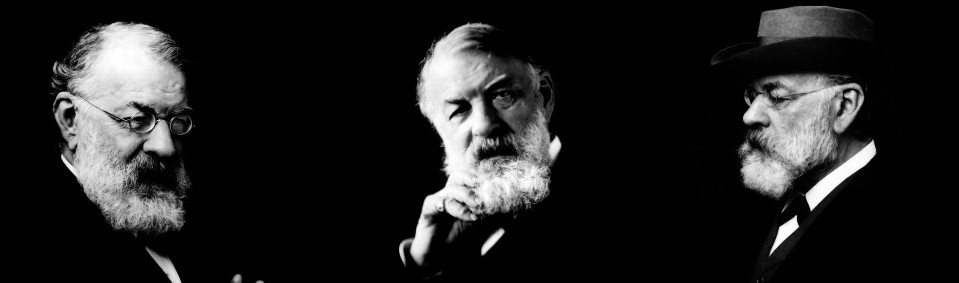
Photo collage © Mathias Brösicke — Dematon, Weimar

Archives

Categories

  • 1 Biographical Posts — RWE
  • 2 Articles and Essays — RWE
  • 3 Talks — RWE
  • Articles by Contributing Authors
  • Bibliography
  • Biographical Sketches
  • Books About Joseph Joachim
  • Brief Biography
  • Chronology
  • Concert Reviews & Criticism
  • Concerts
  • Contracts
  • Documents
  • Ephemera
  • Estate/Nachlass
  • Family
  • Iconography
  • Instruments
  • Joachim in Great Britain
  • Joachim Quartet
  • Letters
  • Links
  • Literature
  • Literature Review
  • Miscellaneous Articles
  • Obituaries
  • Pages
  • Queries
  • Recordings
  • Reminiscences & Encomia
  • Scores
  • Speeches and Utterances (Joachim)
  • Students
  • Uncategorized
  • Works
  • Writings (Joachim)

Pages

  • INDEX

Recent Comments

Joachim on Jakab Marastoni (Jacopo Antoni…
Joachim on Max Bruch: Gedenkworte für Jos…
Elena Breschkow on Max Bruch: Gedenkworte für Jos…
Bicskei Éva on Jakab Marastoni (Jacopo Antoni…
Bibliography | Josep… on Joachim’s Youth—Joachim…

Meta

  • Log in
  • Entries feed
  • Comments feed
  • WordPress.org

Email: Reshbach(at)unh.edu

Powered by WordPress.com.


Loading Comments...
 

    %d