• Home
  • INDEX

Joseph Joachim

~ biography and research

Joseph Joachim

Category Archives: Uncategorized

A Question

05 Monday Dec 2016

Posted by Joachim in Uncategorized

≈ 1 Comment

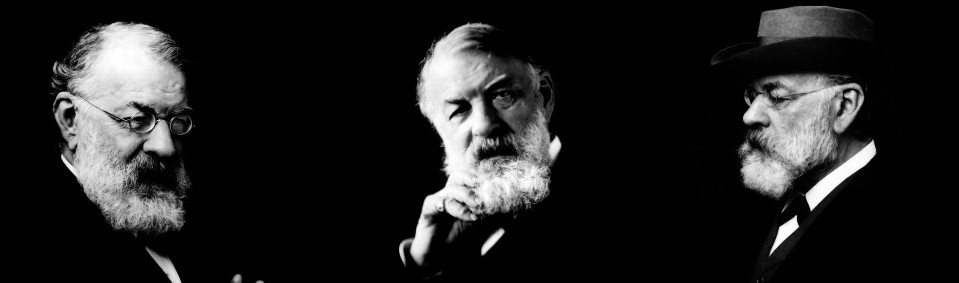
Can anyone identify the quartet in this picture? The picture is presumed to have been taken in Berlin.

Please email: reshbach (a.t) unh (dot) edu

[Susan Spier came up with the Spiering Quartet — Theodore Spiering was Joachim’s pupil in Berlin, and founder of a quartet that bore his name. I think this is a good match. Comments welcome!]

photo-copy

Share this:

  • Share on X (Opens in new window) X
  • Share on Facebook (Opens in new window) Facebook
  • Email a link to a friend (Opens in new window) Email

Like this:

Like Loading...

Concert: Paris, February 19, 1850

07 Sunday Aug 2016

Posted by Joachim in Concert Reviews & Criticism, Uncategorized

≈ Leave a comment

Illustrated London News, vol. 16, no. 414, Saturday, February 23, 1850, p. 130.


jj-initials1-e1395761217629

FOREIGN MUSICAL NEWS
(From our own Correspondent.)

PARIS. Wednesday

On Tuesday last, two grand concerts were given in Paris, at the Salle Sainte Cecile, being the first meeting of the new Philharmonic Society, and in the Conservatoire salle for the débût of Mdme. Sontag. The Philharmonic band consisted of 100 players and 105 chorus singers, the whole conducted by Berlioz: there were eight pieces in the programme, beginning with Beethoven’s first “Leonora” overture; then followed the two first parts of “Faust,” by Berlioz, Roger and Levasseur singing the solos. Joachim next played the “Otello” fantasia of Ernst. Viardot sang the grand scene with chorus from Gluck’s “Iphigenia en Tauride,” and Mdlle. Dobré the solo of the first scene of Gluck’s “Echo et Narcisse.” Demonic was next in rotation for a violoncello solo, and Roger followed in an air from Mehul’s “Joseph;” and the scheme ended with the scene of the “Benediction des Poignards,” from Meyerbeer’s “Huguenots.” —

Screenshot 2016-08-07 18.24.43

Share this:

  • Share on X (Opens in new window) X
  • Share on Facebook (Opens in new window) Facebook
  • Email a link to a friend (Opens in new window) Email

Like this:

Like Loading...

Ernst Denhof: From “Joseph Joachim Centenary. Personal Recollections” (1931)

08 Sunday May 2016

Posted by Joachim in Reminiscences & Encomia, Uncategorized

≈ Leave a comment

The Scotsman, (June 27, 1931), p. 18


59517ebaeb8ed614a1ef24398c4df307_w936_h524_cp_qu.80


Ernst Denhof: From “Joseph Joachim Centenary. Personal Recollections” (1931)

[…]

A Tribute to the Master

The Joachim Quartet played again in my concerts the following year (1904.) In London great preparations had been made to celebrate the 60th anniversary of Joachim’s first appearance at a Philharmonic concert in London in May 1844. (Mr Fuller Maitland in “Masters of German Music” states that Joachim first appeared at a benefit concert for the librettist, Alfred Bunn, on March 18 of that year.) During all those years he had been a frequent visitor to Edinburgh, being connected with the Philosophical Institution, of which he was made an honorary member in 1889, and was, of course, very well known. When the date was fixed for the appearance of the Quartet, a committee was formed, with Professor Niecks as chairman, for the purpose of making a suitable gesture in the Scottish Capital. Dr Joachim was to be presented with an illuminated address, and a silver laurel wreath. More than 200 invitations were issued in musical circles for the afternoon of the day of the concert, in the large hall of the N.B. Station Hotel. Professor Niecks welcomed the four artists on behalf of those present, and in presenting the address containing some 150 signatures, paid warm tribute to Dr Joachim’s great qualities as an artist and as a man. My wife then presented the laurel wreath. Dr Joachim expressed his thanks in a few words, alluding to his visits to Edinburgh, and “his great appreciation of this address from the capital of a country which had given to the world many warm strains of music in immortal melodies which would live in the heart of the musical world long after more elaborate works had ceased to find an echo.”

An Interesting Incident

That evening the Quartet again played two string quartets by Beethoven (Op. 18, No. 1, F. major, and Op. 131, C sharp minor) and I played with Dr Joachim alone the Sonata, Op. 96, G major, and in this connection there was a small incident which may not be devoid of interest to amateurs and professionals alike. As is well known, the principal subject in the first movement of this work begins on the third beat with a short trill, for which Beethoven marked no final turn. As, however, he generally wrote very exactly, especially in his later works, to which this sonata belongs, it is evident that he did not want a final turn. Both ways, with and without final turn, have their advocates, and as the passage is repeated 27 times, it is necessary that both players be agreed upon the point beforehand. In my experience the majority of professionals play it without — as I did myself. Indeed, at the start of the rehearsal, also Dr Joachim said, “Of course, without the final turn,” and so the rehearsal proceeded normally. To my great surprise, however, at the end of the development before the re-entrance of the theme where the trill occurs four times, without the notes e, d, b, which follow in other instances, Dr Joachim interrupted, and after a moment’s thought, remarked, “I almost think a final turn should be made at this place!” It would be risky to attribute this opinion to the result of deep thought or a passing whim. I had played the sonata several times before, also with Lady Hallé, but always, logically, without the final turn throughout. I can only imagine that Dr Joachim took the view that at the place in question as the trill is only fragmentary and a kind of introduction to the full theme, it would indeed be better with the final turn. Nevertheless, I am not convinced that Dr Joachim always played it with the note of complement. The fact remains that Beethoven did not mark it in any instance.

The “Human Heart”

Despite the occasion and the great success of the afternoon reception, the concert in the evening was not so well attended as previously. The ways of the public are sometimes incalculable, and it was extremely painful to me to have to present Dr Joachim with a hall only two-thirds filled. The incident, however, afforded me a glimpse of “the man” Joachim, to whom Professor Niecks had referred and of proving that he, like Liszt and Brahms, had not only genius, but a human heart. When I handed him his cheque after the concert he declined to accept the agreed sum, saying in a friendly way, “No, you cannot possibly cover expenses for this concert; we do not want you to lose, and so we have decided to meet you by accepting a smaller fee,” and in naming the sum he went so far as to say that he would be content with less still but for their own expenses. As it was they made a considerable reduction, and I make a point of mentioning the fact because in the many years of my association with artists it was the first time that any of them, realising the position, though I had not betrayed it, had offered to accept less than our arrangement, of their own accord. True, many of them treated me as a colleague in the making of terms, knowing my enterprise to be purely artistic, but once an agreement had been reached, it was strictly adhered to.

After this concert I was Dr Joachim’s guest at dinner, at which were also Halir, Wirth, and Hausmann; also Professor Niecks, whom Joachim and I both knew intimately. “En petit commité,” we passed a most pleasant evening, separating only after midnight. It was Dr Joachim’s last evening in Edinburgh. He left the next morning never to return. Three years later, on August 15, 1907, the musical world was shocked with the announcement of his death, and the loss of one of the greatest violinists that ever lived.


Full Article: The Scotsman June 27, 1931

Share this:

  • Share on X (Opens in new window) X
  • Share on Facebook (Opens in new window) Facebook
  • Email a link to a friend (Opens in new window) Email

Like this:

Like Loading...

Joseph Joachim and Donald Francis Tovey (Berlin, February 1902)

26 Tuesday Apr 2016

Posted by Joachim in Iconography, Uncategorized

≈ Leave a comment

Joseph Joachim and Donald Francis Tovey (Berlin, February 1902)

jjtovey


Photograph by Johanna “Tine” Eilert,
personal assistant to Amalie, and then Joseph, Joachim

In a letter to Sophie Weisse, Tovey writes: “Fräulein Eilert took a photograph of me and the Great Man on Friday. The Great Man began by telling me I was on no account to laugh, & then he said ‘Er grinst!’ every ten seconds till the camera was ready, so of course my only salvation was in looking very bloodthirsty at the last moment. The Great Man complains that he has come out like the Ameer of Afghanistan; but I believe really both of us are very good. But for my own ferocious glare the Great Man alone is responsible.”[1]

Photo compliments of Frau Margarete Stock.


[1] Michael Tilmouth (ed.), Donald Francis Tovey. The Classics of Music, Oxford: Oxford University Press, 2001, p. 257.

Share this:

  • Share on X (Opens in new window) X
  • Share on Facebook (Opens in new window) Facebook
  • Email a link to a friend (Opens in new window) Email

Like this:

Like Loading...

Joseph Joachim to Amalie Joachim, Paris, November 25, 1866

20 Wednesday Apr 2016

Posted by Joachim in Letters, Uncategorized

≈ Leave a comment


Joseph Joachim to Amalie Joachim

[Paris] Sonntag, 11 Uhr [November 25, 1866] [to Hamburg]

Liebe Uzzi

Nur ein paar Worte, denn da ich um 1 Uhr im Cirque Nap: [Napoléon] spiele (worauf ich mich übrigens freue), so darf ich meine Hand nicht ermüden. Morgen erfährst Du dann, wie’s gegangen hat, und schicke ich Dir dann das Programm, wie heute das vom vorigen Sonntag (wo ich nicht spielte) und vom Athenée, vorgestern. Dieses ist sehr langweilig — die Leute, welche es unternehmen, verstehen gar nichts von Kunst und haben nicht einmal savoir faire, die Annoncen sind ungenügend, sie stoßen die Leute aus Dummheit vor den Kopf, die sie gewinnen sollten — kurzum sie benehmen sich wie reiche, nach Jerusalem zuständige Geldprotzen. Ich habe Herrn Bischofsheim & Co. keinen Besuch gemacht, u. werde es auch nicht. Ein Glück, daß ich mich in die Sache nicht einließ, die Geschichte zu dirigiren. Montag führen sie die Jahreszeiten auf. — Du mußt mir bald wieder ausführlich schreiben, schicke auch ein paar Zeilen von Miss Black über Hermann.

Wie lange bleibst du in Hamburg? Apropos, hast du die Leckerly [1], und das Recept für die zu Haus gemachten Brunsli [2] gekriegt? Danke Frau Riggenb[ach [3]]: gelegentlich dafür; es sind so gute Menschen. Ferner, hat [Otto] Brinkmann dir die Hypothekenpapiere gegeben?

Nach Berlin wollen wir zusammengehen; ich wünsche nicht daß du vorher hinfährst. Gelt, liebes Kind? Es paßt sich so. Ich sehe nicht ein, wieso du (da du noch nie in Berlin aufgetreten) das Concert von Bär füllen helfen sollst. Wenn er meint, daß die Leute vielleicht aus neugierde hingehen, die mich näher kennen, so finde ich sogar die Spekulation nicht ganz zart. Ich will ihm dieser Tage selbst einmal schreiben; sage ihm positiv du könntest nicht wieder von den Kindern fort. Ich kann nicht aufhören, wenn ich bei Dir bin, muß aber, Liebes! Morgen ziehe ich zu Bernhard, Avenue Montaigne. [Frigyes] Szarvady’s [4] grüßen herzlich, auch Stockhausens, wie ich, Dein Joerl


Incomplete in Joachim/BRIEFE II, p. 412:

Screenshot 2016-04-20 15.42.25 copy


Letter in Library of Congress [Purchase 1992]
Item: 200153945
Title: Correspondence of Joseph Joachim

Style: "march19"

Style: "march19"

Style: "march19"

Style: "march19"


[1] http://www.foodandwine.com/recipes/leckerli

[2] http://www.saveur.com/article/Recipes/Basler-Brunsli-Chocolate-Almond-Spice-Cookies

[3] Margareta Riggenbach

[4] http://kalliope.staatsbibliothek-berlin.de/de/eac?eac.id=117391522

Share this:

  • Share on X (Opens in new window) X
  • Share on Facebook (Opens in new window) Facebook
  • Email a link to a friend (Opens in new window) Email

Like this:

Like Loading...

The Irish People: Ernst and Joachim (1864)

05 Tuesday Apr 2016

Posted by Joachim in Letters, Uncategorized

≈ Leave a comment

Tags

Ernst, London

The Irish People (Dublin, Ireland), June 11, 1864, p. 12.


Ernst

Heinrich Wilhelm Ernst (with Wieniawski and Joachim, center)

ERNST AND JOACHIM.— The following touching letter has been written by a great artiste, Joseph Joachim, to another great artiste, Heinrich Ernst, on the occasion of the latter’s concert, which is to take place in June, in London, and in which, unfortunately, the state of Ernst’s health will not make it possible for him to play his own compositions. The fact is in every respect worthy of notice:— “Dear and honoured friend, — However sorry I am that, after you were beginning to get better, your patience should be again subjected to so hard a trial, the confidence expressed by your physician affords me consolation. I certainly had hoped, from the account my brother has from time to time given me of you, that on the occasion of our meeting again this spring, I should have once more enjoyed the pleasure of hearing the magnificent tones of your violin. Providence decrees otherwise. I am not destined, dear master, to hear you, and thus to me, thanks to your confidence, is intrusted the noble task of making the musical world of London acquainted with your newest creation. I need scarcely say with what deep love I shall devote myself to the service of your muse. Command me as you will, and let me soon know on what day your concert is to take place. I am exceedingly anxious to see your etudes, though I am really afraid of your fingering [in allusion, we presume, to the uncommon grasp of Herr Ernst’s left hand.], but what comes from your pen I will at all events practise, even though I may not succeed in doing justice.— Your truly devoted friend, JOSEPH JOACHIM.”


Screenshot 2016-04-05 19.24.20


Ernst’s reply (Joachim/BRIEFE II, pp. 337-338)

Screenshot 2016-04-05 19.39.39Screenshot 2016-04-05 19.40.08

Share this:

  • Share on X (Opens in new window) X
  • Share on Facebook (Opens in new window) Facebook
  • Email a link to a friend (Opens in new window) Email

Like this:

Like Loading...

William Henry Hadow: In a Hungarian Coffee-House (1899)

13 Wednesday Jan 2016

Posted by Joachim in Miscellaneous Articles, Uncategorized

≈ Leave a comment

William Henry Hadow: “In a Hungarian Coffee-House,” The Musical Gazette, (December, 1899), pp. 10-13.


jj-initials1-e1395761217629

800px-William_Henry_Haddow

William Henry Hadow


IN A HUNGARIAN COFFEE-HOUSE

ALONG, low, irregular room, the walls painted a dull green, the vaulted ceiling rudely frescoed with skies and flying birds. On either hand are ranged the little white tables, which one never sees except in a coffee-house; each surrounded by a circle of guests, each bearing an appropriate array of glasses and a match-box with an economic receptacle for cigar ends. The whole place is full of men: officers from the garrison, employes of commerce or the law, casual visitors on a voyage of discovery: there must be over a hundred in all, and the only woman among them is Madame, dark-haired, buxom, and affable, directing her noiseless army of waiters from the counter.

To the Hungarian middle-class the coffee house is generally the centre of social life. Men use it for making appointments, for paying calls, for all the commonplace of daily intercourse: and the abundant evening’s leisure is spent pleasantly enough in talk that alternates with the click of the billiard balls, and the rustle of innumerable journals. Tonight, however, there is better entertainment than the most artistic cannon or the most eloquent denunciation of British policy: and talk itself is hushed, as the musicians at the far end of the room take up their instruments and prepare to begin. A few more rapid orders are given, a few silent figures flit across with beer or slivovitz or tumblers of strange coloured “grog,” and then everyone turns comfortably in his chair and settles himself to listen.

The band consists of some eight or nine performers: a few violins, a ‘cello, a doublebass, a clarinet, and, of course, the cimbal. Its leader, — here as always, a violin player, — stands in the middle: the rest sit watching him, ready to follow every change of tone or tempo that he may choose to prescribe. Now and again, one catches a short sharp word of command, some injunction as to speed or expression, but for the most part a look is amply sufficient, and the players pass from phrase to phrase, and even from melody to melody, as though they were improvising in concert. They are, indeed, the Rhapsodists of musical art, drawing for inspiration upon the rich store of national ballad, and trusting for method to a free tradition, or an impulse of the moment. Very few of them can read; none of them play from note; the whole character of their music is direct, natural, spontaneous, giving voice to a feeling that speaks because it cannot keep silence. They start very softly, so softly that one can hardly catch the opening sounds, and then of a sudden the music swells and rises with a passionate intensity that strikes to the heart like a cry of pain. It is some ballad of past suffering and oppression, some echo of “old unhappy far-off things,” so expressive, so poignant, that in a moment the tragedy has become intimate and personal. There is no stranger experience than to hear one of these preludes for the first time. The effect is totally unlike that of other music: there is little sense of metre, little even of rhythm ; the long wailing notes have become words, the quivering scale-passages have become gesture, and one can no more appraise or criticise than one can think of style when some orator at white-heat of revolution is calling men to the barricades. Here is some thing which never stops to consider whether it is artistic, which pays no heed to our aesthetic canons and laws, a pure outburst of emotion as irrepressible as a river in flood. Even our cold Western natures are stirred almost beyond control, and it is easy to imagine what answer would rise to the appeal when the time is big with crisis and men’s hearts are burning with the memory of wrong.

The prelude ends on a throbbing minor cadence, and the music passes into a plaintive, caressing melody, sad, like so many Hungarian tunes, but without despair, without defiance, crying not for vengeance but for redress. The form is of the simplest; a plain melodic stanza, free of ornament, perfect in curve and shape, and strongly marked by two characteristic features of Magyar idiom, the sharpened intervals of the scale, and the graceful rhythmic figure that flutters and poises through every bar.

There is an astonishing charm about these folk-songs: something strange and exotic in the phrase, yet something beneath the phrase which touches us on the side of our common humanity. No other nation could express itself precisely in this manner, for every land has its own language in music as it has its own language in speech, but the joys and sorrows of mankind are much the same, and they have usually found their simplest utterance in national melody. And so in hearing the tunes of another people we gain a double pleasure — a pleasure which is only lost if the language be too remote for our comprehension. Fully to enjoy Hungarian music demands no doubt a sympathy which can pass a little beyond our western limits — we must prepare ourselves for a new phrase and for idioms that are not our own — but, that once conceded, there is no national art in Europe which has more power to move and to delight.

Again, the music draws to an end, leaving us soothed and quieted after the storm of passion from which it emerged. The leader stands for a moment with his bow on the strings; his forces turn to him in ready expectation; there is a hasty word of direction, a look of intelligence, and off they plunge into a wild dance-measure that whirls and eddies in a very rapture of unrestraint. The hammers skim across the cimbal like swallows over a stream, the violins are racing the wind, faster and faster they fly, faster again and faster yet, until one grows breathless and exhausted by the bare effort of listening. Surely no one, even in Hungary, can dance to a tune like this; no muse of the many-twinkling feet could press so unruly a following into her service. And yet if it were not for the sheer physical impossibility, the call is simply irresistible; a bright vivid melody with a flicker of semiquavers across the cadence, clear and strong in accent, entrancing in rhythm, a melody to quicken the pulse and set the blood leaping in the veins. One has no time to wonder at the dash and brilliance of the playing, at the precision of attack, at the tone that never loses its quality; one is conscious only of swift movement and tingling nerves, until at last the music flashes to its close, there are three triumphant chords, and all is over.

After a short pause for recovery, one of our party who has a little Hungarian, goes up and asks permission to inspect the cimbal. A courteous gesture invites us to follow him and in another moment we are all examining the queer trapezoid-shaped box, with its strings of steel wire twisted in and out like basket-work, and its padded hammer notched in the shaft to fit the performer’s finger. They say that it is an easy instrument to learn, but this seems hardly credible; the strings look bewilderingly alike, and the higher octaves are tuned to a scale that has no name and no classification. In any case it must take a good deal of sedulous practice to attain the dexterity of those swift runs and arpeggios. Struck lightly the strings have something of a pianoforte quality; a harder blow brings out a resonant metallic clang which is admirably suited for filling a chord, and giving it body and substance. It is for this reason that the cimbal has allotted to it the lion’s share of the accompaniment. The clarinet and half the violins play in unison with the leader, the second violins add such harmonies as lie within their compass, and all the rest is an arrangement of “Basso e Cembalo” like that of the old Italian concerti.

The chief defect of the cimbal is the heavy strain which renders the strings constantly liable to slip and flatten. In this matter it is as bad as the lute, “which,” says Matheson, “if a man possessed it for eighty years he would have spent sixty in tuning.” And though enterprising makers have enriched the instrument with borrowed luxuries — pedals, dampers — I have even seen one with the indignity of a key-board — yet nothing has yet been invented which can obviate its characteristic fault. A single performance is sufficient to set it out of pitch, and then the music must needs stop while the player wrests the pins and taps gently on the offending notes and gradually coaxes the strings back into compliance. Yet after all the defect has something human about it: a scene of a quarrel and reconciliation, a moment of bad temper passing away into fresh sympathy and agreement. These men look upon their box of wires with a feeling as personal as that of a violinist for his Stradivarius, and a relation so close is lightly purchased at the cost of a few vagaries.

Our curiosity satisfied, we turn back and find the waiter hovering by our table, evidently anxious to converse with the strangers. His first question: “Are we German or Hungarian?” is a little startling, and we notice a look of suspicion on the part of our friend who has been endeavouring with modest success to act as interpreter. We answer that we are English, and the statement, passed audibly through the room, at once draws upon us an embarrassing amount of attention. Even Madame leaves her calculations for the moment to bend a look of enquiry on the remote foreigners, and we find ourselves surrounded by something like an audience as the waiter again returns to the charge. “England we suppose is a very long way off from here?” “Yes.” — Though our conjecture of twelve hundred miles is received with polite incredulity. — “And what language, now, is habitually spoken in England? Hungarian?” Another look of suspicion, but there is no trace of irony in the tone. “Not Hungarian? German then?” “Not that either?” “Indeed, only English?” And it is evident that we have sunk a little in his estimation. On this question of language the oddest views seem to prevail. I remember an old country curé who once sat next me at Budapest and informed me that Englishmen spoke a dialect of French — a dialect, he added, which he found some difficulty in understanding. Yet it may be rejoined that we are little better. We have grown out of our forefathers’ belief that all Continental nations would understand English if you spoke it loud enough; but we should be hard put to it if we were asked to enumerate the languages of Hungary and still more if we were required to tell them apart.

Our profession of nationality has aroused the interest of the band. The cimbal is once more in tune, the violins are lifted from the table where they have been lying among cigars and glasses of Pilsener, and, with a friendly nod to our interpreter, the leader marshals his force and begins afresh. Our feelings may be imagined when, in place of another rhapsody, we hear Yankee Doodle, followed by a couple of music-hall songs, that have floated on some ill wind to Ronacher;[1] and thence, through the streets of Vienna, into Hungary itself. The worst is that the musicians are evidently conscious of offering us a special pleasure, they turn furtive glances in our direction, they watch for our expression of acknowledgment and

delight. Nothing is further from their thoughts than the idea that we should prefer Hungarian poetry to English doggrel; and they heroically do violence to their own principles in order to give us an appropriate welcome. It may be stated at once that the whole fault of this lies with foreign tourists. For a decade past they have been overrunning the country and demanding that the bands should play not only German and English music, which is a crime, but bad German and English music, which is an enormity. For the Hungarian melodies and the Hungarian musicians have grown up together; they are part of the same stock; they are of one family and one kindred. The quick, eager, nervous playing is absolutely unsuited to German thought or bluff English manhood: it is wedded to a style of its own from which no divorce should be sanctioned. And when it is added that the Hungarian music is magnificent, while the foreign music comes at best from the ball-room and at worst from the off-scourings of the streets, it will be seen that a heavy responsibility rests with visitors who are not only denationalising the art, but vulgarising it in the process.

Yet the process goes on unashamed. I possess a copy of a “Sentimental Journey” in Hungary by an Austrian gentleman called Woenig, who expresses the tourist’s point of view with extreme candour. Nothing seems to have moved him so deeply as the performance, by a native band, of a song from Von

Suppe’s “Boccaccio.” “Ein deutsches Lied im fremden Lande!” he cries, “Ich sprang freudig überrascht empor dem schwarzhaarigen braunen Zauberer die Hande zu driicken” — and so forth. We mock at the English traveller who demands a beefsteak and the “Times” in an Italian village, but, at least, he is not doing any harm, only inuring himself to disappointment. But these men get what they want, and get it at a sacrifice which in another generation’s time may be irreparable. At Budapest the case is still worse. There the most famous bands play at restaurants during dinner: a fact which, if once realized, requires no further comment. Even their truest and most genuine musicans, men like Berkecs, Rádics Béla, and Bánda Marciz, have submitted in some degree to the prevailing influence, while others, not less gifted, have deliberately degraded their talents and have descended from the level of the artist to that of the street conjuror. There is, however, one consolation left. With scarcely an exception these men still play their own music in their own unapproachable fashion — their visits to Spindler and Waldteufel are episode, forgotten as soon as they are over—and then once more the sallow faces light up and the dark eyes glow, and the great tragic strain rises as though the impertinences of Art had no existence. The two styles, in short, are kept entirely separate, and the taint of the one has not yet infected the other. The tawdry music annoys for the few moments of its duration, but the few moments are soon past and one returns again to the gold and the jewels.

For see, the musicians are once more in readiness, and the opening notes strike true and passionate as at first. It is surely some sorrow of disappointed love that the strings are uttering : some overwhelming disaster that has swept across a life and left it desolate. Now they rise into a cry of denunciation, now they fall to a low broken murmer, now they surge onward in an impetuous torrent of reproach. And when the storm has burst, and the sad tender melody follows, the leader comes slowly down, playing the while, until he stands at our side and sets the music floating round us like an atmosphere. It is not music but enchantment; the violin pleads and whispers and entreats, the air is full of voices, the melody surrounds and penetrates us until it is breath of our breath and lip of our lip. We are oblivious of all except the charm, the strange potent influence that is binding us to its will: every tone and cadence finds an echo in our own thought, every note has a summons which we cannot choose but obey. At last it recedes again, softer and more remote, fading back into the land of dreams from whence it came; there is a moment of spell-bound silence; and we start from a trance to hear the Csardas leap into sound and scatter our visions with its joyous dance-measure. And so the evening wanes, and the company begins to disperse, and we, rather shamefaced as Englishmen who have been betrayed into unwonted emotion, pass out to sober ourselves under the cool night and the quiet stars.

W. H. Hadow


William Henry Hadow (*1859 — †1937) was a leading British musicologist, composer, and educational administrator. From the Oxford Dictionary of National Biography: Hadow’s “two small volumes of Studies in Modern Music (1893–5) opened a new era in English music criticism, and while they evince certain Victorian prejudices they remain interesting reading at the end of the twentieth century. For the second volume, Hadow was able to visit both Brahms and Dvořák when compiling his biographical material. By setting music against a background of general culture, he made music criticism more accessible and helped to give music its rightful place in a liberal education. Sonata Form (1896, 2nd edn 1912) is ostensibly a textbook, but it is presented in simple terms and in flowing prose typical of Hadow. In 1897 came A Croatian Composer, in which the Slavonic origin of Joseph Haydn is asserted (this allegation was also included in his revision of Pohl’s article in the second edition of Grove’s Dictionary, 1904–10). His conclusions were later disproved, but the value of his work on Haydn’s melodic style remains. One of his most acclaimed works, The Viennese Period (vol. 5 of the Oxford History of Music, of which he was general editor from 1896), was published in 1904 (2nd edn 1931). Between 1906 and 1908 he joined with his sister Grace Eleanor Hadow in producing the three volumes of the Oxford Treasury of English Literature. As part of his desire to improve the repertory of songs, and in particular national or folk-songs in schools, his Songs of the British Islands appeared in 1903, the choice of the English material foreshadowing Stanford’s The National Song Book (1906). In 1906 he published A Course of Lectures on the History of Instrumental Forms, and in later years he published short books on Music (1924), Church Music (1926), English Music (1931), and Richard Wagner (1934) as well as a volume of Collected Essays (1928). He was an enthusiastic admirer of the Tudor music brought to light by Dr Edmund Horace Fellowes and others. ‘They call William Byrd the English Palestrina; I shall not rest until Palestrina is called the Italian Byrd!’, he once remarked.”


[1] The Viennese Theater.

Share this:

  • Share on X (Opens in new window) X
  • Share on Facebook (Opens in new window) Facebook
  • Email a link to a friend (Opens in new window) Email

Like this:

Like Loading...

Concert: Vienna, February, 1861 (Leopold Alexander Zellner)

06 Wednesday Jan 2016

Posted by Joachim in Uncategorized

≈ Leave a comment

Blätter für Theater, Musik u. Kunst, Vol, 7, No. 13 (February 12, 1861), p. 49 [English translation below © Robert W. Eshbach, 2023]


jj-initials1-e1395761217629

Concerte.
Joachim.

Unter allen großen Geigern der Gegenwart, welchen Joachim unbedingt zuzuzählen ist, hat dieser am längsten gezögert, sich in Wien hören zu lassen. Trotz des vollkommen begründeten Bewußtseins seiner außerordentlichen Leistungsfähigkeit mochte eine geheime Stimme ihm zuflüstern, daß es in seinem Kunstvermögen einen Punct gebe, der an die Forderung des Wiener Publicums nicht hinanreicht. War diese Besorgniß der Grund, der ihn bestimmte, seinen oft kundgegebenen Vorsatz, nach Wien zu kommen, eben so oft zu verschieben, so dürfte auch die merkbare Befangenheit, die sein Spiel, zu Anfang wenigstens, verrieth, aus derselben Quelle geflossen sein.

Das Wiener Kunstpublicum ist vorwiegend sinnlich, wenngleich der Geistigkeit nicht unzugänglich. Es verlangt kräftige Emotionen, will von der Kunst leidenschaftlich aufgeregt werden. Es hat durch den reichen Beifall, den es den Leistungen des Hrn. Joachim rückhaltslos spendete, bewiesen, daß es die großen Eigenschaften dieses Künstlers, in so streng objective Fassung sie sich auch geben mögen, vollauf zu würdigen verstehe. Zu dem Beifall der Bewunderung würde sich aber auch der Jubel des Entzückens gesellt haben, wenn es Hrn. Joachim gelungen ware, in seinen Vortrag die Glut subjectiver Empfindung zu legen.

Ohne Frage beherrscht Hr. Joachim seine Kunst als vollendeter Meister. Er beherrscht sie, das dürfte der richtige Ausdruck sein, er hat sich sie völlig unterthan gemacht, sie ist seine Sclavin. Sie gehorcht ihm auf’s unfehlbarste; mehr aber leistet sie nicht. Man muß die Kunst lieben, als Geliebte umfassen, sich ihr mit ganzer Seele hingeben, dann, aber nur dann, jauchzt und jubelt sie mit dem Künstler. In diesem Verhältnisse scheint Hr. Joachim zu seiner Muse nicht zu stehen. Die Macht, mit der er sie an sich gefesselt, geht nicht vom Herzen, sondern vom Verstande aus. Er fühlt nicht, er denkt in Tönen, er repräsentirt, wenn man so sagen darf, die Philosophie des Violinspiels.

An Sicherheit, an Durchbildung der Technik steht Hr. Joachim mindestens keinem der jetzt lebenden Violinspieler nach, wenn er sie nicht alle übertrifft. Hinsichtlich der Eleganz und Lebhaftigkeit des Ausdrucks reicht er jedoch weder an Hellmesberger, noch bezüglich der Wärme und Intensität der Betonung an Vieuxtemps hinan. Sein Ton ist edel, kräftig, markig, seine Intonation die Unfehlbarkeit selbst, weder sein Bogen noch sein Fingerspiel kennen eine Schwierigkeit, die zu überwinden ihnen nicht bloß ein Spiel ware, seine Auffassung ist würdevoll bis zur Erhabenheit, durchdacht bis zum Tiefsinne, keusch und rein. Und so wie jede der unzähligen, unaufzählbaren Einzelheiten seines Spiels zur unbedingten Bewunderung nöthigt, so zwingt sein Spiel überhaupt zur höchstmöglichen Anerkennung, aber — es zündet nicht.

Hr. Joachim genießt in Norddeutschland den Ruf, im Vortrage des Beethoven’schen Concerts unübertroffen dazustehen. Möglich, daß wir hiernach unsere ERwartungen zu hoch gespannt hatten, möglich, daß der Künstler, der seine Production mit dieser Composition eröffnete, thatsächlich befangen war. Sollen wir aber nach dem Vernommenen urtheilen, so gestehen wir, dieses Stück von andern Virtuosen, wie Vieuxtemps, Laub, Hellmesberger, ja selbst von Singer nicht minder gut vortragen gehört zu haben. Eine neue, noch nicht gekannte Auffassung erschloß sich uns aus seiner Darstellung dieses Kunstwerkes wenigstens nicht. Auch bezüglich des Spohr’schen Adagio’s in C, welches er als zweite Nummer spielte, ließe sich kaum behaupten, daß es nicht mit mehr Innerlichkeit und Gefühlsanmuth wiederzugeben ware. Hingegen stehen wir nicht an, zuzugeben, daß die Art und Weise, wie Hr. Joachim Tartini’s “Teufelssonate”, namentlich den zweiten und letzten Satz, auffaßt und technisch wiedergibt, bisher ohne Beispiel war, und schwerlich zu erreichen sein dürfte. Ganz abgesehen von der Virtuosität der Streicharten, der Verzierungen, insbesondere der wie Raketenbrände prasselnden Pralltriller, liegt in der Auffassung und Betonung des Künstlers eine Kraft der Plastik, die das Stück gleichsam in Erz gegossen erscheinen läßt.

Einen großen Theil des guten Eindrucks, den Hr. Joachim mit seinem Spiele hervorbrachte, beeinträchtigten die von ihm componirten Cadenzen, die er sowohl in das Beethoven’sche Concert, wie auch in die Sonate, hier principiell unpassend, eingelegt hatte. Nebsstdem daß diese Cadenzen, zumal jene zum Concerte, an sich nicht bedeutend, ja vermöge ihrer chromatisch-harmonisierenden und vorwiegend accordlichen Structur nicht einmal effectvoll für das Instrument sind, weichen sie im Style so merklich von jenen des Concertes ab, daß man völlig aus der Stimmung geworfen wird. Einer, trotz der Wahrnehmung einzelner minder leuchtender Puncte, im Großen und Ganzen nichtsdestoweniger so hochbedeutenden Erscheinung gegenüber, wie sie Hr. Joachim unter allen Umständen ist und bleibt, darf ein nach einmaligem Anhören geschöpftes Urtheil dem empfangenen Eindrucke gemäß, wenngleich offen und freimüthig, doch nicht ohne Vorbehalt späterer Modificationen ausgesprochen werden. Es sollen daher mit dem Gesagten die Acten keineswegs geschlossen sein, ja es wird uns im Gegentheile sehr angenehm sein, wenn uns Hr. Joachim durch seine folgenden Leistungen zu dem Geständnisse bemüssigt, daß es nicht an seinem Spiele, sondern an unserer dießmaligen, vielleicht nicht entsprechenden Stimmung gelegen gewesen sei, jenem die Wärme abzusprechen, für das wir möglicher Weise gerade nicht die rechte und volle Empfänglichkeit mitbrachten.

Das Concert hatte ein überaus zahlreiches und höchst gewähltes Publicum versammelt und gewärte überdieß ein besonderes Interesse durch die Anwesenheit der Koryphäen des Violinspiels, wie Ernst, Mayseder, Böhm, Hellmesberger. Hr. Joachim wurde nach jeder Piece wiederholt gerufen. Die Begleitung des Hofopernorchesters unter Hrn. Dessoff’s Leitung ließ nichts zu wünschen übrig. Alles hingegen der Gesang eines die Zwischenpausen füllenden Fräuleins, das außer einer kräftigen und umfangreichen Stimme weder so viel technische noch musikalische Bildung besitzt, um mehr als dilettantischen Ansprüchen genügen zu können. Es sieht doch wahrhaftig traurig um die Gesangslehrer Wiens aus; seit zwölf Jahren haben sie nichts als Mittelmäßigkeiten zu Tag gefzuordert. An Stimmen ist kein Mangel. Fehlt es nun an Talenten, oder, was wahrscheinlicher, am Unterrichte? —

Z.

[Leopold Alexander Zellner]


Concerts.
Joachim.

Among all the great violinists of the present, to whom he undoubtedly belongs, Joachim has hesitated the longest to be heard in Vienna. In spite of the fully grounded awareness of his extraordinary ability, a secret voice may have whispered to him that there was a point in his artistic abilities that did not measure up to the demands of the Viennese audience. If this concern was the reason that led him to repeatedly postpone his oft-declared intention of coming to Vienna, then the noticeable uneasiness that his playing revealed, at least initially, may have originated from the same source.

The Viennese art-audience is predominantly sensual, although not impervious to intellectual pursuits. It craves powerful emotions and seeks to be passionately stirred by art. Through the rich applause that it wholeheartedly bestowed upon Mr. Joachim’s performances, it proved that it knows how to fully appreciate the great qualities of this artist, no matter how strictly objective they may appear. However, the applause of admiration would have been joined by the exultation of delight if Herr Joachim had succeeded in infusing his interpretation with the fervor of subjective sentiment.

Undoubtedly, Mr. Joachim masters his art as a consummate maestro. He masters it — that is the correct expression; he has completely subjugated it: it is his slave. It obeys him infallibly, but it does not do more. One must love art, embrace it as a beloved, surrender oneself to it with all one’s soul, and then, and only then, does it exult and rejoice with the artist. In this relationship, Herr Joachim does not seem to stand with his muse. The power with which he has bound her to himself does not come from the heart but from the intellect. He does not feel, he thinks in tones; he represents, if one may say so, the philosophy of violin playing.

In technical security and mastery, Herr Joachim is at least on par with any living violinist, if he does not surpass them all. However, in elegance and liveliness of expression, he does not reach the level of Hellmesberger, nor does he ascend to the level of Vieuxtemps in warmth and intensity of emphasis. His tone is noble, powerful, and resonant; his intonation is flawless. Neither his bow nor his fingerwork encounter any difficulty that is more than a plaything for them to overcome. His interpretation is dignified to the point of sublimity, thoughtful to the depths of profoundness, chaste and pure. And just as each of the innumerable, indescribable details of his playing commands absolute admiration, his overall performance compels the highest possible recognition, but — it does not ignite.

Herr Joachim enjoys a reputation in northern Germany for being unrivaled in his performance of Beethoven’s concerto. It is possible that our expectations were set too high as a result, and it is also possible that the artist who opened his program with this composition was indeed somewhat reserved. However, based on what we have heard, we must admit that we have heard other virtuosos, such as Vieuxtemps, Laub, Hellmesberger, and even Singer, perform this piece equally well. His interpretation of this masterpiece did not reveal a new and previously unknown perspective to us, at least. Similarly, in regards to Spohr’s Adagio in C, which he played as the second piece, it would be difficult to argue that it could not be rendered with more inner depth and emotional charm. However, we do not hesitate to admit that the way Herr Joachim approaches and technically performs Tartini’s “Devil’s Trill Sonata,” particularly the second and final movements, was unprecedented and is unlikely to be equalled. Apart from the virtuosity of his bowing techniques and embellishments, especially the rapid-fire trills that shimmer like fireworks, the artist’s interpretation and emphasis possess a sculptural power that makes the piece appear as if it were cast in bronze.

A large part of the positive impression created by Herr Joachim’s performance was diminished by the cadenzas he composed and inserted into both the Beethoven concerto and the sonata, which were fundamentally inappropriate. Not only are these cadenzas, particularly those in the concerto, not remarkable in themselves, but their chromatic harmonization and predominantly chordal structure do not effectively showcase the instrument. Furthermore, they deviate so noticeably in style from the concerto that one is completely thrown out of mood. Confronted with such a prominent figure, despite the observation of certain less brilliant aspects, and considering the overall significance of Herr Joachim’s presence, a judgment formed after a single hearing should be expressed in accordance with the impression received, albeit openly and candidly, while leaving room for later modifications. Therefore, with the aforementioned remarks, the matter is by no means concluded. On the contrary, it would be quite pleasing if Herr Joachim’s subsequent performances compelled us to acknowledge that any lack of warmth was not due to his playing, but rather to our own current, perhaps inadequate, state of mind, which may have hindered us from fully appreciating it.

The concert gathered an extremely large and highly distinguished audience, and it held a particular interest due to the presence of violin virtuosos such as Ernst, Mayseder, Böhm, and Hellmesberger. Mr. Joachim was called back after each piece. The accompaniment by the Court Opera Orchestra, under the direction of Mr. Dessoff, left nothing to be desired. However, the singing of a young lady filling the intermissions was a different story. Despite possessing a strong  voice with a good range, she lacked both the technical and musical education to satisfy more than amateurish demands. It is truly disheartening for the singing teachers of Vienna; for twelve years, they have produced nothing but mediocrity. There is no shortage of voices. So, is it a lack of talent, or more likely, a lack of instruction?—

Z.

[Leopold Alexander Zellner]


Screenshot 2016-01-06 23.12.12

Screenshot 2016-01-06 23.12.35

Screenshot 2016-01-06 23.13.00

Screenshot 2016-01-06 23.13.16

Screenshot 2016-01-06 23.13.36

Screenshot 2016-01-06 23.13.49


Blätter für Theater Vienna 12 Feb. 1861 copy

Share this:

  • Share on X (Opens in new window) X
  • Share on Facebook (Opens in new window) Facebook
  • Email a link to a friend (Opens in new window) Email

Like this:

Like Loading...

An Joachim (1853)

02 Saturday Jan 2016

Posted by Joachim in Uncategorized

≈ Leave a comment

Rheinische Musik-Zeitung für Kunstfreunde und Künstler, Vol. 4, No. 209, (December 31, 1853), p. 1464


jj-initials1-e1395761217629

An Joachim.

Screen Shot 2015-06-02 at 9.25.20 AMkönnt’ ich Dir’s mit Deiner Sprache sagen,
Was ich gefühlt bei Deinen Zauberspiel:
Das wär’ ein Lied, das über Erdenklagen
Wie ein geheimnissvoller Schleier fiel!

Hielt mich ein fabelhafter Traum umschlungen,
Der mir Elysiums Gefilde wies? —
Du hast den Traum mir in die Brust gesungen,
Den Traum der Seligkeit, so mild, so süss!

Wie oft sich mischt in uns’rer Kindheit Thränen
Der liebevollen Mutter Schmeichelwort,
So lösest Du des ersten Mannes Sehnen
In einen sanften, weichen Moll-Akkord. —

Des lichten Traumes Bilder sind zerronnen,
Vorbei die süssen, holden Melodie’n,
Doch lange werden der Erinnrung Wonnen
Mir wunderkräftig durch die Seele ziehn!

Cöln                                                           G. H.


Share this:

  • Share on X (Opens in new window) X
  • Share on Facebook (Opens in new window) Facebook
  • Email a link to a friend (Opens in new window) Email

Like this:

Like Loading...

Peter Cornelius to Bettina von Arnim, February 7, 1854

15 Tuesday Dec 2015

Posted by Joachim in Letters, Uncategorized

≈ Leave a comment

jj-initials1-e1395761217629

Letter for sale from Antiquariat Richard Husslein (Planegg, Germany), Bookseller Inventory # 10187, accessed December 15, 2015. Price: USD 1,705.94. Mentions the reception of Joachim’s works at court [in Weimar, or in Hanover?]. This transcription is taken from the bookseller’s description on ABE Books. I have not seen it, and cannot vouch for the accuracy of the description. Best pictures available. — RWE


4°. 2 ¾ S. a. Doppelblatt. – Mit einer Nachschrift (Weimar, 18. II. 1854. 1 ¼ S.) des Philologen, Archäologen und Bibliothekars Gustav Adolf Schöll (1805-1882) zum Brief von Cornelius. Cornelius schreibt an B e t t i n a  von A r n i m in Berlin, die sich um eine Aufführung seines “Domine salvum fac regem” im Rahmen der Hofkonzerte bemühte und um Kopien der Orchesterstimmen gebeten hatte:


Peter Cornelius to Bettina von Arnim

Weimar, 7 II 1854

Gnädigste Frau !

Herzlichen Dank für Ihre Güte und für die vielen Bemühungen, denen Sie sich mir zu Liebe unterziehen. Ich bemühe mich Ihnen anzuzeigen, daß ich die Abschriften nicht besorgen kann ohne im Besitz der Partitur zu sein, welche sich noch in Ihren Händen befindet. Denn mit Ihren letzten Schreiben an Hofrath Schöll ist nur die Partitur des kleinen Domine [unterstrichen] eingetroffen. //

Solche Abschriften von Orchesterstimmen müssen übrigens von einem geübten Abschreiber besorgt werden, und ich würde sie nothwendiger Weise in die Hände eines solchen hier übergeben müssen. Es wird dies nur eine Affaire von 15-20 Thaler sein und es wäre in Bezug auf den Stand meiner Kasse besser gewesen sein, wenn der Graf Redern [Generalintendant der Königlichen Schauspiele in Berlin] vielleicht es hätte dahin protegiren (sic!) können, daß die Abschrift auf königliche Kosten stattgefunden hätte, falls [“dieser” gestrichen] der König nach einer Einsicht in die Partitur, oder einem Gutachten über dieselbe eine Aufführung angeordnet hätte. //

Sobald aber die Partitur hier ist, soll es am Nöthigen nicht fehlen und ich werde für eine so wichtige Angelegenheit alsbald die Gelder zusammen kriegen. Verzeihen Sie mir also, hochverehrte Freundin, die neue Mühe die ich Ihnen verursache, und sein Sie überzeugt, daß ich, sobald die Partitur eintreffen wird keinen Augenblick verstreichen lassen werde von der so kostbaren Zeit. – Daß Sie B a r g i e l [Woldemar Bargiel, Komponist und Musikpädagoge (1828-1897)] die Revision anvertraut haben und er sie übernommen hat, ist von Ihnen beiden gleich liebenswürdig, Ihnen insbesondere werde ich dafür ein DominE [das große “E” soll wohl das große Domine (Orchesterfassung) bedeuten, im Gegensatz zum ober erwähnten “kleinen” nur für Chor] komponieren, welches sich gewaschen hat. //

 J o a c h i m’s Lieder oder Violinkompositionen haben allerdings bei Hofe wenig Anklang gefunden, wenn man bei den Leuten herumhorcht, wenn es Sie aber intressiert, mein Urtheil darüber zu hören, so kann ich Ihnen nur sagen, daß sie meinen ungetheilten Beifall haben. Das Abendläuten und Lindenrauschen ist ganz herrlich, ich war entzückt es von ihm und L i s z t spielen zu hören. Die sogenannte Lausche [?] ist recht schauerlich [hier positiv gemeint], sagt mir aber weniger zu. J o a c h i m wird nur Edles und Schönes zu Tage fördern. //

 Ich habe diese wenigen Zeilen bei Schöll`s geschrieben, wo ich den Abend zubrachte und will auch der Hofrath die Güte haben Ihnen dieselben zuzusenden. //

– Er schließt mit Grüßen an die Töchter von Bettina und Achim von Arnim (1781-1831): Armgart (1820-1880) und Gisela von Arnim (1827-1889), welche 1849 in Weimar als Verlobte des Germanisten und Kunsthistoriker Herman Grimm den oben erwähnten Joseph Joachim kennengelernt hatte. Daraus entstand eine unglückliche für alle drei Beteiligten schmerzhafte Liebesbeziehung, die erst durch die Heirat Gisela von Arnims mit Grimm (1859) ein Ende fand.

– Mit einer NACHSCHRIFT (Weimar, 18. II. 1854. 1 ¼ S.) des Philologen und Archäologen Gustav Adolf Schöll auf dem selben Brief: Schöll entschuldigt sich für Verzögerung und versichert, dass er beitragen wollte, \”die Edition zu vereinfachen\” . Weiterhin spricht die Honorarfrage an: \”Schön wäre es, wenn Sie es wirklich erreichten, nicht wars\’ (?) daß das domine in einem Hofconcert aufgeführt, sondern auch in irgend einer königlichen Weise honoriert würde. Ich möchts\’ fast hoffen, da ja im Kurcölnischen nichts höher im Preise (?) steht als der Fleiß im Credo, … (?) Psalmen und Litaneien sprechen. […] Leben Sie wohl edle Beschützerin aller gedrückten Kirchen und frommen Haiden, / verehrt von dem Weimarischen Hofrath Schöll\”


Screenshot 2015-12-15 20.04.36Screenshot 2015-12-15 20.03.29

Share this:

  • Share on X (Opens in new window) X
  • Share on Facebook (Opens in new window) Facebook
  • Email a link to a friend (Opens in new window) Email

Like this:

Like Loading...
← Older posts
Newer posts →

Photo collage © Mathias Brösicke — Dematon, Weimar

Archives

Categories

  • 1 Biographical Posts — RWE
  • 2 Articles and Essays — RWE
  • 3 Talks — RWE
  • Articles by Contributing Authors
  • Bibliography
  • Biographical Sketches
  • Books About Joseph Joachim
  • Brief Biography
  • Chronology
  • Concert Reviews & Criticism
  • Concerts
  • Contracts
  • Documents
  • Ephemera
  • Estate/Nachlass
  • Family
  • Iconography
  • Instruments
  • Joachim in Great Britain
  • Joachim Quartet
  • Letters
  • Links
  • Literature
  • Literature Review
  • Miscellaneous Articles
  • Obituaries
  • Pages
  • Queries
  • Recordings
  • Reminiscences & Encomia
  • Scores
  • Speeches and Utterances (Joachim)
  • Students
  • Uncategorized
  • Works
  • Writings (Joachim)

Pages

  • INDEX

Recent Comments

Joachim on Jakab Marastoni (Jacopo Antoni…
Joachim on Max Bruch: Gedenkworte für Jos…
Elena Breschkow on Max Bruch: Gedenkworte für Jos…
Bicskei Éva on Jakab Marastoni (Jacopo Antoni…
Bibliography | Josep… on Joachim’s Youth—Joachim…

Meta

  • Log in
  • Entries feed
  • Comments feed
  • WordPress.org

Email: Reshbach(at)unh.edu

Powered by WordPress.com.


Loading Comments...
 

    %d