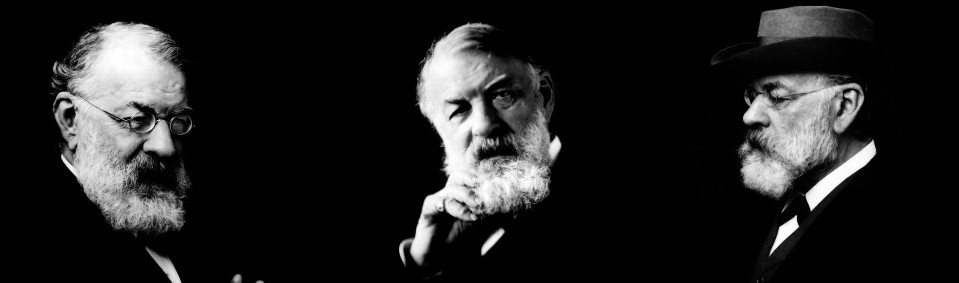
Arno Kleffel, „Das Joachim’sche Quartett,“ Schorers Familienblatt 11, Nr. 11 (1894): 41–42.
[English translation below]
Das Joachim’sche Quartett
Das war am 25. Januar dieses Jahres ein denkwürdiger und für alle, die ihn miterlebt, ein erhender Abend. Von Meister Joachim und seinen ausgezeichneten Genossen, den Professoren Kruse, Wirth und Hausmann, denen sich diesmal zur Ausführung der zweiten Violastimme noch Herr Concertmeister Eldering angeschlossen, war soeben als Schlußnummer des Programms Beethoven’s C-dur-Quintett beendet worden, als sich plötzlich die gesamte Zuhörerschaft erhob und in eine Beifallsovation ausbrach, wie sie die Räume der Singakademie in so demonstrativer Weise und in gleich zündender Unmittelbarkeit wohl kaum noch vernommen, und die nicht eher zu dämpfen war, als bis Joachim auf dem Podium zu verschiedenen Malen den Danktribut der begeisterten Zuhörerschaft in Empfang genommen hatte. Was war, hätte man fragen können, geschehen, um diesen außergewöhnlichen Jubelausbruch zu entfesseln? Weder das Werk noch dessen Wiedergabe konnten dazu die Veranlassung gegeben haben, denn daß von dem Joachim’schen Quartett immer nur das Beste in der vollendetsten Ausführung geboten wird, muß ja jedem von vornherein als selbstverständlich gelten. Niemand von den Zuhörern würde im Augenblick die rechte Antwort gefunden haben. Jeder fühlte nur, daß sein Herz nach überquellender Dankesäußerung verlange. In dieser, vom Augenblick geborenen Huldigung liegt vielleicht die höchste Ehre, die einer Kunstleistung zu Teil werden kann. Es bedarf heutigen Tages keines Hinweises mehr, welche Stellung das Joachim’sche Quartett in Berlin, ja in der gesamten musikalischen Welt einnimmt. Wie es noch niemals einen mit blendendster Virtuosität ausgestatteten Künstler gegeben hat, der mit Verachtung jedweden äußeren Effektmittels sich während seines ganzen Lebens in so selbstloser Weise dem Dienst der Kunst geweiht hat, wie Joachim, ebenso wenig wird es auf der Welt eine zweite Künstlervereinigung geben, welche die bedeutendsten Schätze unserer Kammermusikliteratur in gleich vollkommener Stilreinheit, mit gleich pietät- und weihevoller Hingabe auszuführen im Stande ist, wie das Joachim’sche Quartett. Wie Joachim der erste war, der die musikalische Welt mit den Bach’schen Violinwerken bekannt machte, der es ferner wagte, das halbvergessene Beethoven’sche Violinconcert bei Gelegenheit des Düsseldorfer Musikfestes im Jahre 1853 zum ersten Mal öffentlich zu spielen, ebenso kannte er als Führer seiner Quartettvereinigung kein höheres Ziel, als das Verständnis des deutschen Volkes für die bisher gefürchteten und unausführbar geltenden letzten Beethoven’schen Streichquartette zu erschließen. Wie es seiner Anregung und thätigen Mithilfe erst zu danken war, daß in Bonn Beethoven’s Geburtshaus angekauft und zu einem künftigen Beethoven-Museum bestimmt wurde, so bildete seine Quartettvereinigung wiederum ein Mittelpunkt der musikalischen Aufführungen, als vor vier Jahren in Bonn das erste Beethoven-Kammer-Musikfest ins Leben gerufen wurde, um diesem Museum den ersten nennenswerten Beitrag als Stammfond zuzuführen. Wie Joachim niemals ein Tonstück zur Folie seiner außerordentlichen Kunstfertigkeit verwendet, sondern einzig und allein in möglichst abgeklärter Reproduktion desselben sein künstlerisches Genüge findet, ebenso ist man beim Anhören jeder seiner Quartettdarbietungen überzeugt, daß sich der Schöpfer so und nicht anders sein Werk gedacht haben mag. Nie hört man ein Hervordringen eines Instruments, jede Stimme scheint der anderen liebevoll
42
entgegen zu kommen, und so vereinigen sich alle vier zu einem harmonisch vollkommenen Ganzen. Es hat deshalb etwas wunderbares, mit welcher Deutlichkeit bei diesem Sichtergänzen und Ineinanderfügen der Stimmen doch die Fäden des Gewebes unserem Auge klargelegt, wie die geheimsten Gänge und Irrpfade unserem Geiste erschlossen werden. Man muß vor vier Jahren in Bonn Zeuge gewesen sein, wie mächtig, wie Offenbarungen gleich die beiden Riesenquartette von Beethoven in Cis-moll und B-dur auf die Zuhörer wirkten. Man stand unter dem Eindruck, daß Vollkommeneres nicht zu leisten, dem menschlichen Auge wenigstens nicht mehr erkennbar sei. So bilden seit Jahren die Joachimschen Quartettabende nicht nur den Brennpunkt des Berliner Musiklebens, sondern die denkbar vollkommenste Künstlervereinigung überhaupt. Während sich das Publikum sonst in den Concert- oder Theateraufführungen aus den verschiedensten Schichten des Volkes zusammensetzt, besteht die Zuhörerschaft der Joachim-Abende fast ausschließlich aus dem geistigen Adel der Residenz.
Wenn man einmal alle die Namen derjenigen in Erfahrung bringen könnte, welche die andächtige Gemeinde nur eines einzigen dieser Abende bilden, man würde über die große Zahl hervorragender, teils weltberühmter Kapacitäten erstaunt sein. Gleichviel welchem Zweig der Wissenschaft, der Kunst oder welchem Beruf er sonst angehören mag, jeder Zuhörer findet dort Anregung und Erbauung, jeder erlebt dort Stunden reinen, ungetrübten Glücks. Der Dank für diese Stunden und das Überströmen der Freude, daß der Meister, der sie uns geboten, als leuchtendes Vorbild noch in voller Manneskraft unter uns weilt, hatte plötzlich die Herzen an jenem Abend erglühen gemacht. So glänzende und rauschende Ovationen auch Joachim erlebt haben mag, vielleicht wird er auf keine mit größerem Stolz und innigerer Freude zurückblicken, als auf jene Huldigung am 25. Januar.
It was, on the 25th of January of this year, a memorable evening—one that proved uplifting for all who experienced it. Master Joachim and his distinguished colleagues, Professors Kruse, Wirth, and Hausmann—joined on this occasion for the performance of the second viola part by Concertmaster Eldering—had just concluded Beethoven’s C-major Quintet as the final number on the program, when suddenly the entire audience rose to its feet and burst into an ovation such as the halls of the Singakademie have scarcely ever heard in so demonstrative a form and with such immediate fervor, and which could not be subdued until Joachim, on the podium, had received the tribute of thanks from the enthusiastic audience several times over.
What, one might have asked, had occurred to unleash this extraordinary outburst of jubilation? Neither the work itself nor its performance could have been the cause; for it must be taken as self-evident that the Joachim Quartet always offers only the finest in the most perfect execution. No one among the listeners would, in that moment, have found the proper answer. Each felt only that his heart demanded an overflowing expression of gratitude. In such homage, born of the moment, perhaps lies the highest honor that can be bestowed upon an artistic achievement.
Nowadays, it needs no further explanation what position the Joachim Quartet occupies in Berlin, indeed in the entire musical world. Just as there has never been an artist endowed with the most dazzling virtuosity who, with disdain for every outward effect, devoted himself so selflessly throughout his life to the service of art as Joachim, so too there can scarcely exist another ensemble capable of performing the greatest treasures of our chamber music literature with equal purity of style and with such reverent and consecrated devotion as the Joachim Quartet. As Joachim was the first to acquaint the musical world with Bach’s works for violin, and further dared, on the occasion of the Düsseldorf Music Festival in 1853, to perform publicly for the first time the half-forgotten Beethoven Violin Concerto, so also, as leader of his quartet, he knew no higher aim than to open the understanding of the German people to the last Beethoven string quartets, hitherto feared and deemed unperformable.
Just as it was due to his initiative and active assistance that Beethoven’s birthplace in Bonn was purchased and designated as a future Beethoven museum, so too his quartet formed a central focus of musical performances when, four years ago in Bonn, the first Beethoven Chamber Music Festival was established in order to provide this museum with its first substantial endowment. As Joachim never uses a musical work as a mere foil for his extraordinary technical skill, but finds his artistic fulfillment solely in its most purified reproduction, so one is convinced, in hearing each of his quartet performances, that the composer must have conceived the work precisely thus and not otherwise. One never hears any instrument thrust itself forward; each voice seems to meet the others with loving consideration, and thus all four unite into a harmoniously perfect whole.
It is therefore something remarkable how clearly, in this mutual complementing and interweaving of the voices, the threads of the texture are laid bare to the eye, how the most hidden pathways and byways are revealed to the mind. One must have witnessed, four years ago in Bonn, how powerfully—like revelations—the two gigantic quartets of Beethoven in C-sharp minor and B-flat major affected the listeners. One stood under the impression that nothing more perfect could be achieved, at least nothing further perceptible to the human eye. Thus for years the Joachim Quartet evenings have formed not only the focal point of Berlin’s musical life, but the most perfect ensemble of artists imaginable.
Whereas audiences at concerts or theatrical performances are otherwise drawn from the most varied strata of society, the listeners at Joachim’s evenings consist almost exclusively of the intellectual aristocracy of the capital. If one could ascertain all the names of those who form the devout congregation of even a single such evening, one would be astonished at the great number of eminent—some world-renowned—figures. Whatever branch of science, art, or profession they may belong to, every listener finds there stimulation and edification; each experiences hours of pure, unclouded happiness. Gratitude for these hours, and the overflowing joy that the master who has granted them to us still dwells among us in the full vigor of manhood as a shining example—this it was that suddenly set hearts aflame on that evening. However brilliant and resounding the ovations Joachim may have experienced, he may look back on none with greater pride and more heartfelt joy than on that tribute of January 25.
Seit zwei Jahre Ihre freundliche Einladung bey der unvergessliche Bettina, Hannover unter Ihren Auspicien zu besuchen, gedenkend, nehme Ihr Wohlwollen in Anspruch um anzufragen ob die [K. l. ?] Theater- -direktion mir die Erlaubniß geben werde im Theater ein Concert zu geben. Die Bedingungen werden Sie selbst bestimmen, ich gebe Ihnen ganz carte blanche, da ich sicher bin meine Interesse in die besten Hände gelegt zu haben. In der Hoffnung Sie wieder zu sehen und einmal hören zu konnen verbleibt
Mit größter Hochachtung Ihr Ole Bull
S— Herrn Concertmeister J. Joachim
English Translation
Hamburg, November 30th 1860 Victoria Hotel
Most Honored Sir!
Recalling for two years now your kind invitation—extended at the unforgettable Bettina’s house—to visit Hannover under your auspices, I now appeal to your goodwill to inquire whether the theater management would grant me permission to give a concert in the theater. You may determine the conditions yourself; I give you complete carte blanche, as I am certain that I have placed my interests in the best possible hands. In the hope of seeing you again and being able to hear you play sometime, I remain
N. B.: The following partial listing of Joseph Joachim’s students is based originally upon a list given in Andreas Moser’s Joseph Joachim. A Biography, London: Philip Wellby, 1901, pp. 242-244 [M], as well as information given in Wilhelm Joseph von Wasielewski’s Die Violine und ihre Meister, Leipzig: Breitkopf & Härtel, 1904 [W], and profiles from Musik und Gender im Internet.[MUGI]. Names marked [P] come from Dr Sanna Pederson’s blog Chamber Music in Berlin, 1870-1910: An Empire for Absolute Music , and names marked [KJ] have been garnered from the program of Joachim’s “60-jährigen Künstler-Jubliäum,” Berlin, 22 April 1899, for which the orchestra strings were drawn “exclusively from current or former students of the honoree, as well as participants in his quartet classes.” Other names have been culled from diverse sources. The Saerchinger/WHO’S WHO articles, while interesting and helpful, are not 100% accurate, particularly as regards birth dates. Where possible, I have provided correct dates and sources. This list is in the process of verification and elaboration, and is subject to recurring emendation. At this point, I do not completely vouch for its accuracy.
Finally, it should be noted that Joachim very seldom gave private lessons, preferring to teach in masterclass format; he also made extensive use of teaching assistants, who were responsible for most of the students’ technical training.
JOACHIM AND DISCIPLES
Left to right, standing: Theodore Hemberger, Theodore Spiering, Rudolph Lenz, Mary Cardew, Sol Marcosson, Josef Hösl, Carl Bemmer, Rosa Schindler, Bernard Sinsheimer; seated, Joseph Joachim, Emmanuel Wirth.
[photo probably ca. 1892]
Thanks to John Maltese.
Joseph Joachim’s Students
Ackroyd, W. [KJ] Stud. a. d. Kgl. Hochsch. f. Mus. Berlin. Links: KJ
Violinist and conductor. Studied with Monasterio in Madrid, Vieuxtemps in Brussels, and Joachim in Berlin. 1894-1915 Professor of Violin at Royal College of Music (London). Conductor, Madrid Symphony Orchestra. 1932 conducted first Spanish performance of Stravinsky’s Sacre du Printemps. [Arthur Jacobs and Tully Potter. “Arbós, Enrique Fernández.” Grove Music Online. Oxford Music Online. Oxford University Press, accessed November 29, 2014.]. Saerchinger/WHO’S WHO (1918) gives his birth date as December 25.
Auer, Leopold (Lipot) (*June 7, 1845 — †July 15, 1930)
From 1853, studied at Budapest Conservatory with Ridley Kohne; 1855 Vienna Conservatory with Dont and Hellmesberger (Diploma 1858); with Joachim in Hanover 1863-65. 1863 Concertmaster in Düsseldorf; 1866 in Hamburg. 1868 followed Wieniawski as professor the St. Petersburg Conservatory. Solo violinist, concertmaster and and chamber musician. 1911 moved to Dresden; 1914 returned to St. Petersburg. 1917 moved to Oslo, and 1918 to New York. Teacher of Achron, Elman, Milstein, Heifetz, Seidel and Zimbalist. Author (Graded Course of Violin Playing, Violin Playing as I Teach It, My Long Life in Music), editor.
Graduated from Prague Conservatory, 1889. Studied with Joachim until 1896. Played in a quartet with Gustav Holländer, and taught at the Stern Conservatory in Berlin. Subsequently First Concertmaster of the Hamburg Philharmonic Orchestra. Also a distinguished violist.
Brother of Carl Louis B. Pupil of Spohr and Joachim. Court musician in Detmold (1859-61), and Münster (1861-66). From 1866 until his death concertmaster and professor of music in Basel.
Bargheer, Carl Louis (*December 31, 1831 — †May 19, 1902) Possible student of Joachim — may be mistaken for his brother. Links: BW, FL, WIKI Portrait: Hoyer, Göttingen, ca. 1855
Brother of Adolf B. Studies with Spohr (1849), David (1851), and possibly Joachim (in Hanover). Kapellmeister in Detmold from 1863-76. 1876-88 concertmaster in Hamburg; 1876-87 teacher at the Hamburg Conservatorium.
Barmas, Issay (*1872 — †1946) [KJ] Links: EJ, KJ Photo credit: Goethe Universität. Issay Barmas, “violinist and teacher. Born in Odessa, Barmas studied with I. Grzimali in Moscow and with J. Joachim in Berlin. He made his debut as a soloist in Berlin in 1899 and toured Europe. He also formed his own quartet in 1919. From 1900 to 1929 he taught in Berlin (Stern Conservatoire, 1900–05; Klindworth-Scharwenka Conservatoire, 1905–29) and later moved to London. Among his publications are Die Lösung des geigentechnischen Problems (1913), Tonleiter-Spezialstudien, Doppelgriff-Spezialstudien, redactions, and editions of classical works.” [“Barmas, Issay.” Encyclopaedia Judaica. 2007. Encyclopedia.com. (November 17, 2014)].
Barth, Richard (*June 5, 1850 — †December 25, 1923) [W] [KJ] Links: BMLO, KJ, W
(Left-handed) violinist, composer, educator. Studied with Joachim in Hanover, 1863-67. Concertmaster in Münster and Krefeld. 1887-94 Director of Music at the Marburg University. 1895 Director of the Philharmonic concerts and the Singakademie in Hamburg; 1908 Director of the Hamburg Konservatorium. Author: Johannes Brahms und seine Musik (1904); Johannes Brahms im Briefwechsel mit J.O. Grimm (1908). Ref: Saerchinger/WHO’S WHO
Bauerkeller, Rudolph (*May 23, 1879 — †) [KJ] Stud. a. d. Kgl. Hochsch. f. Mus. Berlin. Links: KJ Ref: Saerchinger/WHO’S WHO
His father was a first violinist in the Hallé Orchestra in Manchester, England. Studied at Paris Conservatory, and Berlin Hochschule with Joachim and Wirth.
(Saerchinger/WHO’S WHO, 1918)
Manchester Courier and Lancashire General Advertiser, April 11, 1902: “… a very interesting concert… The solos were all chosen with taste, and were not made the vehicle for a vain-glorious display of technique. A Prelude and Fugue in G minor by Bach, Tartini’s celebrated “Devil’s trill” Sonata, and an Introduction and Rondo Capriccioso by Saint-Saens were the works in which Mr. Bauerkeller displayed his highly-cultivated style, and a breadth and purity of tone, such as might be looked for in a pupil of Joachim.”
Baumann, Joseph W (*October 29, 1847 — †April 3, 1905) Ref: CE
“Joseph W. Baumann. Violinist, teacher, b Berlin (Kitchener), Ont, 29 Oct 1847, d Hamilton, Ont, 3 Apr 1905. He was self-taught until at 21 he departed for Vienna to study with Adolf Brodsky. Two years later he went to Berlin for private study with Joseph Joachim. Returning to Canada, he taught in a succession of Ontario towns – Walkerton, Berlin, Toronto – before settling in Hamilton in 1882. About 1888 he appeared frequently in recital with the pianist D.J. O’Brien, founder of the Hamilton Musical Institute (see Royal Hamilton College of Music). Baumann’s playing was noted for its full tone and robust technique, both of which were imparted to his pupils, including George Fox and Nora Clench.” (Canadian Encyclopedia, CE)
Becker, Dora Valesca (*1870 — †1958) [M] (The first female violinist on record: 1898) Recording, Links: M
Born in Berlin, she studied violin at the Berlin Hochschule from 1892 to 1896 under Karl Markees, concluding her final year of instruction under Joseph Joachim. She made her public debut on March 15, 1899, at the Berliner Singakademie, where music critics praised her “fresh and bright tone” and exceptional musicality. In 1896, she married the composer, organist, and university professor Otto Becker, with whom she had three children. The family relocated to Potsdam in 1910 upon her husband’s appointment to the Garrison Church (Garnisonkirche). There, she became a vital pillar of the local cultural scene, co-founding the “Becker Trio” and organizing the highly successful Garrison Church Concerts, which regularly drew premier musical talent from nearby Berlin until her death in Potsdam in 1925.
Born in Oakland CA, Sigmund Beel was concertmaster in Los Angeles.
(Saerchinger/WHO’S WHO, 1918)
Békei (Békey), Józsa (*January 17, 1877 — †?) Links: A Hegedű. Studied with Hubay and Joachim. She was a noted Hungarian violinist and became one of the early certified female violin teachers in Hungary. Ref: Vajda, p. 275.
The Carolyn Belcher Quartet (Carolyn Belcher and Anna Eichhorn, violins, Sara Corbett, viola, and Charlotte White, cello) was resident in Boston. Ref: CB
Besserer, Erika (*July 31, 1887 — †February 7, 1951) [MUGI] Links: MUGI. Born in Dorpat (Tartu), Estonia. Studied violin at the Royal Academy of Music (Königliche Hochschule für Musik) in Berlin under Emanuel Wirth and Joseph Joachim, beginning her studies with Joachim in 1901 MUGI, Joseph Joachim Students Registry. She established herself in German musical life as a soloist and chamber musician, notably debuting in New York alongside cellist Henry Brahmsen in 1905.
Bild, Max (*March 2, 1869 — †September 5, 1942) [M] [KJ] Tonkünstler. Paris. Links: KJ, M
“A new conductor, Mr. Alexander Z Birnbaum, a native of Warsaw, who directs the Philharmonic Orchestras at Lausanne and Geneva, also made his first appearance in that rôle in London, taking charge of our Queen’s Hall Orchestra […] Mr. Birnbaum is a conductor who employs almost a super-abundance of gesture, and never spares himself in the matter of energy. At the same time, he is one who carries his forces along with him, and admirably the bandsmen answered to his virile beat.” Musical News (London: July-December, 1907), 33:3.
“Still another former Joachim pupil Zózislaw Alex. Birnbaum played recently. He made his début last winter, and since then he has studied with Ysaye. Birnbaum has a glowing temperament, such as I have never seen in a Hochschule pupil before. He has, too, a great technical talent and a beautiful sensuous tone. Unfortunately his temperament runs away with him. He hurries the tempi, and his technic is in consequence often faulty. He is flighty, but he has the genuine violin nature and always arouses his audience to demonstrative applause.” The Musical Courier (New York: January 10, 1900), 13.
Blancke, Georg Heinrich Adolf (*June 24, 1862 — † June 15, 1937) [KJ] Mitglied des Philharm. Orchesters. Berlin. Links: KJ
Blankensee, Julius (*April 4, 1858 — †November 3, 1941) [M] [W] Studied 1873-77 (W) Links: BMLO, M, W
Bleuer, Ludwig (*1863 — †1897) [M] Links: Baker’s, M
Bligh, Eldina (*Geneva 1867 — †March 5, 1953)
Mus. ed. at Brussels Cons., and the Berlin Hochschule; stud with Joachim. London debut at St. James’ Hall. Appeared by Royal command before Queen Victoria in Dublin. Ref: Saerchinger/WHO’S WHO
Bögner, Eugen (Eugene Boegner) (*March 3, 1870 — †March 23, 1947) [M] Links: STOK, M
Studied with Rudolf Rösel in Weimar, Hans Rosenmeyer in Erfurt. 1898 at Berlin Hochschule: two years with Emanuel Wirth. 1900-1901 with Joachim, Wirth, and Moser, and 1901-1902 with Joachim and Gabriele Wietrowetz. Second violinist with the Erfurter Tonkünstlerquartett. After her marriage to the architect W. Stietzel, mostly active as a teacher.
Studied with Joachim at the Berlin Hochschule 1881-1885.
Butler, Herbert Dalton (*February 2, 1873 — †October 6, 1946) [KJ] Links: ETUDE, KJ, MB, MUSIC
Analysis of Tartini’s G minor Sonata. Stud. a. d. Kgl. Hochsch. f. Mus. Berlin. From Omaha, Nebraska. Also studied with Gustav Hollaender at the Stern’sche Konservatorium der Musik. Extensive web-page by James Radomsky, Professor of Music History, California State University San Bernardino here.
Studied with Richard Gompertz and Emile Sauret at the RAM (London), and with Gabriele Wietrowetz and Joseph Joachim at the Berlin Hochschule. Solos with Berlin Philharmonic, Richter Concerts in London, New York Philharmonic. Daughter of an English clergyman; after her marriage, she settled in Los Angeles, where she was active as a teacher. Soloist with Berlin Philharmonic 1903, 1905. [P]
“Margaret Eleanor was born 19 October 1874 in Nottingham [England]. She is living with her parents, William and Charlotte, in the 1881 and 1891 censuses. She attended Nottingham High School from 1886 to 1891, specialising in music and the violin. After leaving high school she attended the Berlin Conservatoire from September 1892 a became an accomplished violinist. In 1901 she is a Teacher of Violin in Middlesbrough. There is a marriage for Margaret Eleanor Clark in Nottingham in Jun 1906 (7b/647) to Henry Stanley PROUDLOCK. In 1911, the family are living in Castleton, Yorkshire, a small village on the banks of the Esk River, and inland from Whitby. Henry’s occupation was consulting mechanical engineer. He probably found work at the numerous quarries and mines in the district. In 1911, Margaret is recorded as a violinist. They had one daughter, Margaret Ursula, aged 5.5 months. There is also a birth recorded for John PROUDLOCK in Newcastle on Tyne in Dec 1916, mother’s maiden name CLARK.”
“Corinne Coryn, violinist, played Bach’s A major sonata and the Joachim variations. She plays with great earnestness of purpose and with exceeding care, and has a neat technic and a pretty, smooth tone. She is a little lacking in temperament, and quite so in individuality of style, but there is plenty of time for improvement in these respects, Miss Coryn being apparently still very young, and there is considerable promise for higher attainments in the future.” [The Musical Courier, Vol. 54, No. 2 (January 9, 1907), p. 6.]
“Eine reife Künstlerin in Bezug auf Auffassung ist Fräulein Corinne Coryn; sie schöpfte den geistigen Gehalt des Brahmsschen Konzerts und der Bachschen Ciacona voll aus. Wenn ihr bei Brahms technisch manches, so namentlich die Oktaven, nicht gelang, so lag dies wohl mehr an ihrer Befangenheit, als an nicht gefestigter Technik; ihr prächtiger warmer Ton kam besonders im Adagio des D-moll-Konzerts von Vieuxtemps zu schönster Geltung. Wir dürfen noch viel von ihr erwarten.” [Die Musik, I Februarheft 1902, p. 833.]
Courvoisier, Karl (*1846 — †1908) [M] Studied 1869-70 (Baker’s). Links: BMLO, Baker’s, M, Worldcat
(Saerchinger/WHO’S WHO, 1918)
Croner, Helene (*February 27, 1885 — † after 1943) [MUGI] Links: MUGI
Violinist and violist. Studied 1902-1906 with Markees and Joachim at the Berlin Hochschule. In June, 1943, Helene Croner was deported from Berlin to Auschwitz, where she was murdered. [MUGI]
Ellenberger, Georg (George) [KJ] [M] Tonkünstler. Nottingham. Links: KJ, M
Violinist and violist, teacher of Eric Coates. Advertisement in Sheffield Daily Telegraph, December 13, 1902: “MR. GEORG ELLENBERGER (Solo Violinist), pupil of Dr. Joachim receives Pupils at Messrs. Wilson, Peck, and Co.’s where terms and particulars may be obtained.”
Studied with Böhm in Vienna and later with Joachim. A proponent of the works of Wagner, he was the first music critic for La revue blanche, founded in 1891. [Brigitte Massin. “Ernst, Alfred.” Grove Music Online. Oxford Music Online. Oxford University Press, accessed November 29, 2014.]
Ferchland, Helene (*August 5, 1879 or 1880 — †) [KJ] [MUGI] Links: KJ, MUGI
Studied with Joachim in Berlin and Thibaud in Paris. 1905 recipient of the Felix Mendelssohn Bartholdy Scholarship. Solo with Berlin Philharmonic. Member (with Gertrud Schuster-Woldan and Eugenie Stoltz) of Gabriele Wietrowetz’s string quartet, to which she belonged until it disbanded in 1917. Joachim praised her playing as “secure, accomplished, and musically intelligent. Unusually talented…” [MUGI]
Student of Joachim in the early 1850s. Further studies with Ferdinand Laub. Member of Weimar Kapelle; 1860 Soloist in Aachen; 1864 until his death Hofkonzertmeister Meiningen.
Francke, H. [KJ] Concertmaster. Laussnitz b. Königsbrück. Links:KJ
Advertisement in Exeter and Plymouth Gazette, October 16, 1903: “VIOLIN LESSONS GIVEN BY Miss SIBYL FRENCH, PUPIL OF DR. JOACHIM, BERLIN. For Terms apply Mrs. SMITH, Music Warehouse, Queen-street, Exeter.”
Freund, M. [KJ] [M] Concertmaster, Berlin Philharmonic Orchestra. Links: KJ, M
Son of Niels Wilhelm Gade. 1879-1881 studied at Royal Danish Conservatory with Valdemar Tofte. Further studies with Joachim. 1884 violinist with Det Kongelige Kapel; 1910 concertmaster. 1885 violin teacher at the conservatory. Composer of violin works, and several operas.
Gerhardt, Oskar (*1856 – 1929) [KJ] Mitgl. d. Philharm. Orch. Berlin. Links: KJ
Gompertz, Richard (*1859 – †1921) [KJ] [M] Links: IMSLP, KJ, M
Studied with Joachim in Berlin, 1875-1878. Moved to England in 1880. First violinist with Cambridge SQ. 1883, taught at Royal College of Music, London; from 1895 Professor of Violin.
de Graan, Jean (*1852 — †1874), den Haag.
Manchester Courier and Lancashire General Advertiser, January 19, 1874: “Intelligence has just reached us of the death of this young Dutch violinist, a pupil of Joachim and known from his earliest days at Amsterdam as one of the most promising artistes in Europe. On his debut in London at the Musical Union, in 1870, he at once created a favourable impression, evincing a rare degree of musical intelligence and considerable executive power. During his visit to London he was the guest of Professor Ella, the director of the Musical Union, and won the esteem of many of our local professors and amateurs. After a lingering illness in Italy, he died last week, at the Hague, of consumption, at the age of 21.”
Gregorowitsch, Charles (Karol Gregorowicz) (*October 25, 1867 — †March 25, 1921) [M] [Groves] Berlin. Links: M, BI, Recording
Studied with Vassily Bezekirsky, Jacob Dont, and Joachim, who said to Bezekirsky: “You have sent me a finished violinist. There is nothing to teach him.” 1886 Berlin debut. Recipient of Mendelssohn prize. Taught Bronislaw Hubermann, who claimed he taught him “everything that could be learned from a teacher.” [Tully Potter. “Gregorowicz, Karol.” Grove Music Online. Oxford Music Online. Oxford University Press, accessed December 10, 2014].
Grimson, R. [KJ] Lehrer am Royal College. London. Links: KJ
Gumprecht, G. [KJ] Stud. a. d. Kgl. Hochsch. f. Mus. Berlin. Links: KJ
Hänflein, Georg (*March 17, 1848 — †ca. 1909) [KJ] [M] [W] Links: KJ, M, W
1862-65 studied with Ferdinand David; three years’ study with Joachim. Member of the Italian Opera in St. Petersburg. 1874 Concertmaster, Royal Theater Hanover.
Hagemeister, [M] Richard Kammermusiker, Berlin. Links: BMLO, M
Halíř, Karel (*February 1, 1859 — †December 21, 1909) [KJ] [M] Concertmaster, Professor, Hochschule für ausübende Tonkunst, Berlin. Links: BMLO, KJ, M
Violinist and conductor. Studied with Joachim at the Berlin Hochschule beginning 1898. After 1900 concertmaster in Lübeck; 1905 Hofkonzertmeister in Darmstadt and Hamburg. 1911 teacher at the Leipzig Konservatorium. 1915-1921 concertmaster of the Dresden Hofoper. 1920s, primarius of the Havemann String Quartet, noted for its performances of modern music. Author: “Was ein Geiger wissen muss“ (1921), “Die Violintechnik bis zur Vollendung.“ (1928) Havemann was a committed anti-Semite, and a member of the Nazi party. Eventually ran afoul of Goebbels and the Nazis over his support for Hindemith. Havemann’s 1719 Stradivari was, ‘acquired’ when the Russian army entered Berlin in 1945 and was passed to the state collection in 1946. The instrument was loaned to David Oistrakh in 1947, and he used it for several years.
Herner, Carl (*January 23, 1836 — †July 16, 1906)
Educated at the Prague Conservatory, he gained his first experience in Hamburg, Kiel, and Copenhagen, and played solo violin in Brussels. He studied with Joachim in Hanover. On 1. February 1858 he became a member of the Hoftheaterorchester Hannover. Herner was a member (together with N.N. Bach and Waldemar Bargiel) of one of Joachim’s quartets that became very popular in the early 1860s. He worked as first violinist, Solo-Repititor, choir director, conductor, and finally as Kapellmeister until his retirement 1900. Herner worked 42 years in the Hanover orchestra. He composed 20 pieces for ballet, opera, choir and orchestra. [Thanks to Jürgen D. Müller of Hanover, Germany, for this information]
Studied with his father, a pupil of Spohr. 1865 moved to USA, touring with the Theodore Thomas orchestra at the age of nine. 1876-78 studied with Joachim in Berlin. 1878-86 concertmaster in Frankfurt am Main; 1886-88 concertmaster in Rotterdam. 1888 sojourn in England; leader of Hallé Orchestra in Manchester. 1895 returned to Germany and became Professor of Violin at the Cologne Conservatorium. 1900 successor of Saurret at the Royal Academy of Music in London. 1904-1910 concertmaster of Boston Symphony Orchestra. 1910 returned to Berlin and taught at the Hochschule für Musik until 1928. [Watson Forbes. “Hess, Willy (i).” Grove Music Online. Oxford Music Online. Oxford University Press, accessed November 27, 2014.]
Hille, Gustav (*1849 or 1851 — †after 1926) Links: UM, IMSLP, UM
1870 Pupil of Joachim at the Berlin Hochschule. 1879 member of the Mendelssohn Quartet, Boston; 1880 teacher at the Academy of Music, Philadelphia. Composer of various works for violin, piano, songs.
Himmelstoss Richard (*June 17, 1843 — †) [M] Links: M
1871 Concertmaster, Breslau.
Hollaender, Gustav (*February 15, 1855 — †1915) [KJ] [M] [W] Professor, Berlin. Links: BMLO, KJ, M, W
1892-96 Studied under Joachim (primarily with Markees) in Berlin. Also studied with Charles Gregorovitch (whom he said “taught him everything that could be learned from a teacher”), Hugo Heermann and Martin Marsick. His performance of the Brahms violin concerto was admired by the composer. Founder of the Palestine Symphony Orchestra, later the Israel Philharmonic Orchestra. Author: Aus der Werkstatt des Virtuosen (1912). [Boris Schwarz and Margaret Campbell. “Huberman, Bronisław.” Grove Music Online. Oxford Music Online. Oxford University Press, accessed November 27, 2014.]
Studied with Joachim, Rudorff, and Spitta at the Berlin Hochschule. Though a singer and pianist, Joachim claimed: “Sie war und (Rudorff, Spitta und mir) immer eine sehr liebe Schülerin, und ist uns lieb und wert geblieben.” (Schumann Briefedition Serie II, Band 2,2, p. 1334) Hundoegger was one of the founders of the tonic-sol-fa system, and an influential innovator in music education.
Lenora Jackson owned a 1714 Stradivari violin that had previously belonged to Joachim
Jacobsen Heinrich (*January 10, 1851 — †ca. 1901) [M] [W] Professor, Hochschule für ausübende Tonkunst, Berlin. Links: M
Student of Ferdinand David. 1869 member of Leipzig Gewandhaus Orchestra. 1873 studied with Joachim. 1876 until his death instructor of violin at the Berlin Hochschule.
Upon graduation from the Berlin Hochschule für Musik, he toured as a concert violinist and then was appointed Professor of violin at the Hochschule. Jacobson taught many of Joachim’s pupils and or taught the pupils who aspired to be Joachim’s students. When Maude Powell came to Berlin, Jacobson was her initial Professor. Other Jacobson pupils included Will Marion Cook, Emily Shinner-Liddell, Lilian Shattuck, and Helene Ferchland. Jacobson later became Chairman of the Orchestral Instruments Department at the Hochschule. Occasional participant with the Joachim Quartet. On November 9, 1879, Jacobson took part in the World Premier of the Dvorak String Sextet with the Joachim Quartet.
Jäger, H. [KJ] Königlicher Kammer-Musiker. München. Links: KJ
Jahn, Karl (*August 29, 1846 — †) [M] [W] Concertmaster, Bern. Links: M, W
Born in Budapest, Hungary. He studied first at the National Music Hall and then in Berlin as Joachim’s pupil. In 1890 he was appointed teacher at the Königsberg Conservatory and in 1897 director. In the autumn of 1898 he returned to Budapest to teach violin at the Music Academy. He was a member of the Hubay-Popper String Quartet, and later founded the Kemény-Schiffer String Quartet Society, which was dissolved in 1910.
Kess (or Kes), Willem (*February 16, 1856 —†) [M] Kapellmeister, Moscow. Leader at Amsterdam, and Kapellmeister at Dordrecht. After 1883 conductor in Amsterdam. Links: M
Ketèlbey, Harold (Brother of composer Albert Ketèlbey). Ref: Morning Post (London) 13 October 1905, p. 8.
Violinist, conductor, and teacher, studied with Johann Kruse, and one year with Joseph Joachim (1889 — 1890) at the Königliche Hochschule für Musik in Berlin. Concertmistress of the York Symphony Orchestra, which she founded together with T. Tertius Noble. Author: The Making of a Violinist (1921), Violinist’s Vade Mecum (appeared posthumously, 1952), and translator of Leopold Mozart’s Versuch einer gründlichen Violinschule (orig. 1756; trans. 1948).
Koch, Oskar (*November 12, 1862 — †March 22, 1919) [KJ] [M] Links: GENI, GN, KJ, M, NG
Concertmaster, Magdeburg (23 years). [Magdeburger Zeitung, March 25, 1919.]
König, E. [KJ] Königlicher Kammer-Musiker. Dresden. Links: KJ
Kornfeld, J.
Advertisement in Kent & Sussex Courier, December 20, 1882: “VIOLIN AND ACCOMPANIMENT LESSONS GIVEN TO LADIES AND GENTLEMEN BY HERR J. KORNFELD, PUPIL OF HERR JOACHIM. Pupils Prepared for the Local Examinations of the ROYAL ACADEMY OF MUSIC. For particulars apply (personally or by letter) to Herr J. KORNFELD, Bishop’s Down Spa; COLBRAN’S Royal Library, High-street, Tunbridge Wells; and at CHAPPELL and Co.s, New Bond-street London.”
Kotek, Josef (or Iosif) (*October 25, 1855 — †January 4, 1885) [M] [W] Instructor at Hochschule für ausübende Tonkunst, Berlin. Links: M, W
Born in Devon, England. Studied with Joachim pupil Joseph Ludwig and with Wilhelmj. 1893 Debut at Crystal Palace under Manns (Bruch Concerto No. 1). Studied 1903-1906 with Joachim at the Berlin Hochschule. Retired from concertizing ca. 1920 due to arthritis. [MUGI]
Advertisement in North Devon Journal, September 28, 1905: “Miss Marjory Langley (A Pupil of Professor Joachim from the Royal Hochschule, Berlin), gives Lessons in Violin and Viola Playing and Chamber Music At Barnstaple and Bideford. — Terms, apply, J. T. White’s Music Warerooms, Barnstaple.
László, Akós (*February 10, 1871 — †1946) Links: DTA
Composer and music critic with Otto Kreßmann’s “Allgemeine Musikzeitung.” Studied violin Emanuel Wirth, and perhaps with JJ at the Berlin Hochschule.
Works: Aus meiner Heimat (Ernſte u. heitere En. aus Ungarn, eingeleitet von Jul. Stettenheim), 1898. Neue Folge as: Ungarische Skizzen (Ernste u. heitere En.), 1900.
Lefkowitz, J. [KJ] Stud. a. d. Kgl. Hochsch. f. Mus. Berlin. Links: KJ
Studied with Ferdinand David, Joachim, and Vieuxtemps. First violin in the Leipzig Gewandhaus Orchestra at age 15. Court Kammervirtuose in Rudolstadt. 1867 moved to New York; debut in Steinway Hall. Next year made his Boston debut with Joachim’s Hungarian Concerto. 1871-1874 concertmaster of Theodore Thomas orchestra. Member of Mendelssohn Quintette Club. 1881 first concertmaster of the Boston Symphony Orchestra. 1893 taught at the Chicago College of Music. [Leonard Burkat and John C. Schmidt. “Listemann, Bernhard.” Grove Music Online. Oxford Music Online. Oxford University Press, accessed December 10, 2014.]
Loeffler, Charles Martin (*January 30, 1861 — †May 19, 1935)
Studied with Joachim and Eduard Rappoldi; theory with Kiel and Bargiel at Berlin Hoschschule. Furthered his violin studies with Massart, and composition with Guiraud in Paris. 1881 departed for USA. Briefly returned to Paris to study with Léonard in 1884. 1887 became American citizen. Second concertmaster of Boston Symphony Orchestra (21 years). Gave American premieres of works by Bruch, Saint-Saëns and Lalo. Retired from BSO 1903. Major activity as a composer. [Ellen Knight. “Loeffler, Charles Martin.” Grove Music Online. Oxford Music Online. Oxford University Press, accessed December 12, 2014.]
Ludwig, Joseph (*April 6, 1844 — †) [M] [W] London Academy of Music (1870). Links, M, W
Studied with Joachim winters 1864 and 1865 [W]. Teacher of Beatrice Langley [MUGI: Beatrice Langley].
Notice in Kent & Sussex Courier, February 18, 1881 for a performance by “Herr Emil Mahr, Pupil of Joachim” playing Bach Chaconne.
Marcosson, Sol (*June 10, 1869 — †January 10, 1940) Concertmaster, Cleveland Orchestra (1918) Links: DFG, ECH, COS
Born in Louisville, Ky. Studied at the Berlin Hochschule under Joseph Joachim. Member of Boston Mendelssohn Quintet and quartet of the New York Philharmonic Club. Concertmaster, Chicago Symphony, and inaugural season of the Cleveland Orchestra (1918-1919).
Marienhagen, O. [KJ] Mitgl. d. Philharm. Orch. Berlin. Links: KJ
Markees, Karl (*February 10, 1865 — †1926) [KJ] [M] Links: AL, AP, KJ, M
Studied with Wirth and Joachim. Member of Berlin Philharmonic Orchestra, and also Kruse Quartet and Halir Quartet. Instructor at Hochschule für ausübende Tonkunst, Berlin.
Marsick, Martin Pierre Joseph (*March 9, 1847 — †October 21, 1924) [M] Links: M, Oxford
1865-1867 studied with Léonard in Brussels; 1868-1869 with Massart in Paris; 1870-1871 with Joachim in Berlin. In 1892, he succeeded Sauzay as violin professor at the Paris Conservatory. Composer of various violin works.
v. d. Marwitz, (Miss) M. [KJ] Tonkünstlerin. Berlin. Links: KJ
Studied with Joachim pupils Max Brode and Ernst Wendel. 1900 – 1904 studied at the Berlin Hochschule, first year with Moser, second with Wietrowetz, and after 1902 with Joachim. [MUGI]
Studied at the Berlin Hochschule with Markees (1898) and Joachim (1899-1903). Debut with the Berlin Philharmonic. After 1911, lived in Munich as a performer and pedagogue. Leader of the Michaelis String Quartet and the Kammerorchester für altklassische Musik. Michaelis became a noted advocate for contemporary music. [MUGI]
Morgan, Geraldine (*1867 — †1918) [M] [MUGI] New York. Links: ETUDE, M, MH
Studied engineering and music history; violin studies with Joseph Joachim in Berlin. 1883 Concertmaster in Mannheim. After 1888 taught violin at the Royal Hochschule für Musik in Berlin. With Joachim published the Violinschule (3 vols.), numerous editions. Author: Joseph Joachim. Ein Lebensbild, and Geschichte des Violinspiels.
Muddock, (Miss) E. [KJ] Stud. a. d. Kgl. Hochsch. f. Mus. Berlin. Links: KJ
Müller, [M] Leeds, England. Links: M [Possibly the same as G. Müller, West Dulwich, England — Ref: Sevenoaks Chronicle and Kentish Advertiser, November 21, 1902: p. 4]:
Studied with Tullio Ramacciotti and Joachim in Hannover (1864). Taught at Accademia di S. Cecilia in Rome. 1874 founder of Società Orchestrale Romana, which he directed for 25 years.
Polo, Enrico (*November 18, 1868 — †December 3, 1953) [KJ] Professor, Turin. Links: KJ, SANPowell, Maud (*August 22, 1867 — †January 8, 1920) [M] [MUGI] Studied 1884-85. Links: M, MUGI, SL Recordings: LOCPrill, Karl (*1864 — †August 15, 1931) Leader at Pavlovsk, then at Magdeburg. After 1891 in the Gewandhaus Orchestra, Leipzig. [M] Links: BMLO, M, Mason, Payne & Ehrlich
Studied from October 1903 until Easter 1907 at the Berlin Hochschule — at first with Joachim and Wirth, and in the last year exclusively with Joachim. In 1925 became second violinist in an all-female quartet in Berlin led by Charlotte Rosen.
Ritter, Hermann (*September 16, 1849 — †?) Links: DTA
Studied with Joachim at the Berlin Hochschule. Member, Hoftheaterkapelle in Schwerin. Music Director in Heidelberg. Played under Wagner in Bayreuth. 1879 Professor for Music History and Aesthetics at the Royal Music School in Würzburg.
Alfred Ross was a pupil of Joseph Joachim at the Royal School of Music in Berlin, Germany between 1891 and 1896. In 1907, in New York, he married fellow student and American-born Marguerite Stilwell (a pianist taught by Ukrainian-born Vladimir de Pachmann). Alfred and Marguerite Ross returned to the UK after their wedding. Both were acclaimed concert performers, and teachers of music in Liverpool. Ross played in a quartet with Ernst Schiever.
Roy, (Miss) G. [KJ] Tonkünstlerin. Berlin. Links: KJ
Ruthström, Julius (*December 30, 1877 — †April 2, 1944)
Studied 1901-03 at the Berlin Musikhochschule under Burmester, Moser and Joachim. Awarded the Joachim Prize. 1904 gave the premiere performance of Reger’s solo violin sonata op. 42, no. 1. 1928-35 director of Mellersta Sveriges Kammarmusikförening (Sweden). “Ruthström was a persuasive advocate of Swedish music and an influential teacher. His repertory was unusually large, and he was famed for his performances of Reger, Sibelius’s concerto and a variety of contemporary music. He wrote a number of technical studies for the violin.” [Robert Layton. “Ruthström, Julius.” Grove Music Online. Oxford Music Online. Oxford University Press, accessed November 27, 2014.]
Salzwedel, [KJ] [M] Kammermusiker, Berlin. Links: KJ, M
Sanders, W. [KJ] Stud. a. d. Kgl. Hochsch. f. Mus. Berlin. Links: KJ
Schäffer, E. [KJ] [M] Stud. a. d. Königl. Hochsch. f. Mus. Berlin. Links: KJ, M
Schering, A. [KJ] Stud. a. d. Kgl. Hochsch. f. Mus. Berlin. Links: KJ
Schiever, Ernst (*March 23, 1844 — †1915) Links: Oxford
Studied with Joachim in Hannover from 1860-1864. 1868 – 1869 replaced Auer as first violinist of the Müller Quartet. 1869 Founding member (second violinist) of the Joachim Quartet, and violin teacher at the Berlin Hochschule. 1878 settled in Liverpool as concertmaster of the Richter Orchestra. For three decades, primarius of the Schiever Quartet (with Alfred Ross, Carl Courvoisier, and Walter Hatton). [Groves]
Schindler, Rosa (*September 2, 1874 — †) [MUGI] Links: MUGI
Studied with Hans Hasse, Kruse and Joachim. Debut with Berlin Philharmonic. Seldom concertized after her marriage.
Schleicher, [KJ] [M] Concertmaster, Bremen. Links: KJ, M
Studied four years in Budapest with Jenö Hubay; 1900 to 1902 continued her studies at the Berlin Hochschule, the first year with Wirth, Jacobsen and Joachim, the second year with Wirth and Joachim. Recipient of the Mendelssohn Scholarship; debut under Joachim’s leadership in the Berlin Singakademie; member of the Wietrowetz Quartet. Settled in London ca. 1912. Joachim’s assessment of her playing: “An outstanding achievement, masterful in every respect. A rare artist; conception, brilliant technique, everything there.” [MUGI]
Schumann, Frida (née Quehl. See: Quehl, Frida)
Schuster, Heinrich [KJ] [M] Concertmaster, Strassburg. Links: KJ, M
Studied with Gustav Hollaender. Matriculated at the Berlin Hochschule in 1888. Studied one year with Kruse, and from 1889 to 1892 with Kruse and Joachim. 1892-1893 exclusively with Joachim. Debut with Berlin Philharmonic under Joachim (Joachim G Major concerto, Vieuxtemps Ballade and Polonaise, op. 38, Mendelssohn e minor concerto, op. 64). Played Beethoven concerto under Nikisch. 1898 married Alfred Francken, and retired from public performance. Murdered in the Sobibor concentration camp, July 16, 1943. [MUGI]
Seibert, Willy (*1870 — †) [KJ] [M] Concertmeister, Köln. Study: four years. Links: WWC, KJ, M
Seligmann, J. [KJ] Stud. a. d. Kgl. Hochsch. f. Mus. Berlin. Links: KJ
Soldat-Röger, Marie Ernestine (*March 25, 1863 — †September 30, 1955) [KJ] [M] [MUGI] Links: M, MUGI, Sophie Drinker Institut, KJ
Spence, Bessie
Notice in The Violin Times, November 15, 1899: Glasgow: Miss Bessie H. Spence, the young violinist, who has often delighted Glasgow audiences, has been accepted by Dr. Joachim as a pupil in the Hochschule, Berlin, after a keenly-contested competitive examination. Miss Spence is a daughter of Mr. William Spence, schoolmaster, Cleland, and studied in this city under Mr. Elkan Kosman.” Notice in Aberdeen Journal, January 9, 1901 of a performance by “Miss Bessie Spence (a pupil of Joachim’s, Berlin).” Bessie Spence performed often in concert and on the radio, as a soloist, chamber musician, and as second violinist of the Fellowes String Quartet, at least into the 1930s in Scotland.
Studied 1898-92. St. Louis, Chicago, CM NY Philharmonic under Mahler.
Stiehle, Ludwig Maximilian Adolph (*August 19, 1850 †July 6, 1896) [M] [W] Muhlhausen, Alsace. Links: M
Studied with Vieuxtemps; 1863-67 with Hugo Heermann. Studied with Joachim at the Berlin Hochschule 1869-70, and again 1871-72. Member of Alard’s Quartet, Paris, 1872. 1876 Director of the Musikverein Concordia, Mühlhausen.
Stietzel, Elli (née von Broen. See: von Broen, Elli)
Such, Henry (*March 31, 1872 — †November 4, 1929) [KJ][M] London. Links: KJ, M, MUSIC, OM, YM
Studied from 1885-1892 with Joachim at the Berlin Hochschule. 1892 Berlin debut. 1895-1896 further studies with Wilhelmj. Professor at the Guildhall School of Music. Played a Stradivari violin formerly owned by Paganini. [Bakers]
Sussmann, (or Süssmann) Jascha [KJ] Stud. a. d. Kgl. Hochsch. f. Mus. Berlin. Links: ETUDE, KJ
Tennenbaum, Betty — Sanna Pederson lists Betty Tennenbaum as having studied with Joachim from 1905-1906. I have found no other verification of this, though she is cited in a favorable 1911 review (of Saint-Saens’ violin concerto) as having studied with Emil Sauret, and performing according to the French school. Wilhelm Altmann wrote in Die Musikof her appearance with the Berlin Philharmonic that it “lacked justification for a public performance in so formidable a setting.”
Tofte, Lars Valdemar (*October 21, 1832 — †May 281907) [M] [W] Links: M, Mason, W
Studied with C. Petersen and J. Selmer; in Germany with Spohr, and 1853-1856 with Joachim. 1856 Copenhagen debut. 1868-1892 first violinist with Copenhagen Court Orchestra; 1866-1904 professor of violin at Copenhagen Conservatory.
Treichler, (Hans?) [M] Concertmaster, Zürich. Links: BMLO, M
Isidore Troostwyk (1862-1923) was born in Zwolle in the Netherlands. He began studying the violin at the age of ten, and when he was sixteen, patrons funded lessons with Joseph Joachim in Berlin. (Joachim later sent him to the United States with a letter of recommendation.) In 1883 Troostwyk was appointed professor of the violin at the Academy of Music in Amsterdam, and was appointed concertmaster of the Concertgebouw orchestra. Troostwyk emigrated to the United States in 1888. He was co-founder of the Dessauer-Troostwyk School of Music, at 781 Chapel Street in New Haven, incorporated in 1893. In 1895, Troostwyk was appointed as the first Instructor of Violin at the newly established Yale School of Music, where he was later promoted to Assistant Professor, and performed as a member of the Faculty Trio. Troostwyk became the concertmaster of the New Haven Symphony at the time of its organization in 1894. He was the founding conductor of two orchestras: the New Haven String Orchestra (1907) and the Bridgeport Symphony Orchestra.
Born in Helsinki. Studied with Adolf Niemann, Anton Sitt; in Berlin with Wirth and Joachim. 1887 played second violin in a quartet headed by Marie Soldat. 1889 – 1890 traveled in England. 1891 returned to Scandinavia. Composed works for violin and songs.
Warburg, (Miss) S. [KJ] Tonkünstlerin. Manchester. KJ
Wasner, (Miss) K. [KJ] Stud. a. d. Kgl. Hochsch. f. Mus. Berlin. Links: KJ
Weintraub, J. [KJ] Fürstlicher Concertmeister. Gera. Links: KJ
Wendel, Ernst [MUGI] see: MUGI article on Else Mendel-Oberüber.
Wendheim, Gabriele von (Hoffmann, Hofmann von Wendheim, Hoffmann von Wendheim
Cited in the Neue Zeitschrift für Musik as a student of Moritz Mildner in Prague (NZfM 1858 I, p. 84). Pupil of Joachim in Hanover, ca. Winter 1858. Dedicatee of Joachim’s Notturno for violin and orchestra, op. 12. Links: SDI
Wendling, Carl (*August 10, 1875 — †March 27, 1962) Studied in Strasbourg with Heinrich Schuster and Florián Zajic, and in Berlin with Halir and Joachim. Links: ETUDE
1908: “Mr. CARL WENDLING was born in Strassburg in 1875. He studied the violin at the Conservatory of Music in his birthplace, and afterward went to Berlin, where he pursued his studies under Joachim for three years and a half. Returning to Strassburg, he taught for a year at the Conservatory. In 1899 he went to Meiningen, where he was concert-master of the Meiningen Orchestra, then led by Mr. Fritz Steinbach, for four years. From Meiningen he went to Stuttgart as concert-master of the Royal Court Theatre of that city and of the regularly established concerts of the Court Orchestra. He was also leader of the Chamber Musicians’ String Quartet, with Messrs. Künzel, Presuhn, and Seitz as associates. He still holds his official positions in Stuttgart, for he was granted leave of absence for one year to be the first concert-master of the Boston Symphony for this season. Mr. Wendling has been concert-master of the Wagner Festival performances at Bayreuth since 1903, and in 1903, 1904, 1905 he was concert-master for Hans Richter at Covent Garden in performances of German opera. Mr. Wendling made his first appearance in America as a soloist on October 26, 1907, at a concert of the Boston Symphony Orchestra in Boston, when he played Brahms’s Concerto in D major.” [BSO] Wending became director of the Royal Stuttgart Conservatory in 1929. He died in Stuttgart in 1962. See also here.
Werner, Theodore [KJ] [M] London. Paris. Links: KJ, M
Edinburgh Evening News, March 16, 1887: “A NEW MUSICAL GENIUS. A great deal of curiosity has been recently expressed in musical circles concerning the new and phenomenal fiddle player, the great merit of whom was instantly recognized not long since by the Prince of Wales… The other night… Mr. Theodore Werner, the new violinist, played at the Lyric Club before a very representative and brilliant assembly of prominent artistic personages, and (according to a London correspondent) he created a remarkable and profound sensation. He is a pupil of Joachim, and his bowing is worthy of the great master himself; the quality of tone he produces is very fine indeed, and as a rule more rich than that of Sarasate; while his fingering is simply perfect in finish, and absolutely faultless in rapidity and determination. Mr Werner is altogether a very marvelous musician.
Wickham, Madge Soloist with Berlin Philharmonic 1887.
Left to right, standing: Theodore Hemberger, Theodore Spiering, Rudolph Lenz, Mary Cardew, Sol Marcosson, [Josef] Hösl, [Carl] Bemmer, Rosa Schindler, Bernard Sinsheimer; seated, Joseph Joachim, Emmanuel Wirth.
[photo probably ca. 1892]
Thanks to John Maltese.
From Musical Courier, May 6, 1914, page 27:
Theodore Spiering Writes
The picture you reproduced in your Cleveland article, lent to you by Sol Marcosson and showing Joachim and Wirth with a group of pupils, took me back twenty-two years. Joseph Hösl (for years third concertmaster in the Munich Opera Orchestra) and Carl Bemmer (cello professor at the largest conservatory in Athens, Greece) seem to have dropped from Mr. Marcosson’s memory. They have been my good friends in all these years. The picture was taken after the Joachim quartet class, at which, if I remember correctly, I had prepared a string quartet of Eugene d’Harcourt—a Frenchman who has since played quite an important role in the local Parisian field—my colleagues being Hösl, Lenz and Bremmer. The regular string quartet, which for three seasons I held together, consisted, beside myself, of Marcosson, C. Rawdon Briggs (now concertmaster in Manchester, with the Hallé Orchestra) and Paul Morgan, of New York. Those times seem ages ago.
Joseph Joachim: Romanze aus dem Concert in Ungarischer Weise, Berlin, 9 January 1893
Cardiff, March, 1894 AMusQS. (“Joseph Joachim”). 1½ pp. Oblong 8vo. On a single sheet of folded paper. Five measures from the second movement of Giuseppe Tartini’s Devil’s Trill Sonata marked “Tempo giusto” and inscribed in German “In memory of the concert in Cardiff and of Joseph Joachim.” Sold by Lion Heart Autographs.
Joseph Joachim: Album Leaf for Elisabeth Joachim, Spring 1897
“Zur Erinnerung an den letzten Kammermusikabend 1896-97. Möge, liebes Kind, Brahms Musik dir ein treuer Schatz für’s Leben bleiben, wie mir!
Joseph Joachim
Frühling 1897.”
“In remembrance of the last chamber music evening 1896-97. May Brahms’s music remain for you a true treasure, dear child, as for me!
Joseph Joachim
Spring 1897.
Berlin, June 5, 1897 Incipit. Bach, Fugue in C Major from Violin Sonata No. 3 in C Major, BWV 1005. [In English] “In remembrance of Joseph Joachim / Berlin / June 5th 1897”
Bern, March 14, 1900 Incipit. Joachim, Romanze in B flat Major, from Drei Stücke, op. 2. [In English] “With many thanks for your nice little letter, and for telling me that your mamma liked the piece. / Joseph Joachim / Berne / March 14th 1900”
Joseph Joachim’s story is usually told from the vantage point of his later eminence: the revered Berlin teacher, the intimate of Brahms, the “Geigerkönig” whose authority shaped violin playing and musical interpretation across Europe. Yet within a generation of his debut, there were already attempts to capture his life in biographical form. Among these is Ignaz Reich’s “Joachim Joseph,” published in the first volume of Beth‑El: Ehrentempel verdienter ungarischer Israeliten (Pest, 1856), when Joachim was twenty-five. Reich’s book is a biographical “temple of honor” for notable Hungarian Jews, and his Joachim sketch stands as the earliest extended narrative of the violinist’s life.
Unlike later German biographies, which tend to present Joachim primarily as a central figure in the canon of “German” music, Reich’s portrait anchors him explicitly in a Hungarian‑Jewish milieu. The narrative begins in Kittsee and Pest and lingers over domestic scenes: the boy listening outside the door while his sisters take lessons, his plea to be allowed to learn music as they do, the arrival of the first small violin and music stand. Although Reich misidentifies Joachim’s earliest teachers (his “Stiegnitz” is identified in Moser’s biography as “Stieglitz,”Gustav Ellinger is left out completely, and Joseph’s more advanced Budapest teacher was concertmaster Stanisław Serwaczyński, not Ladislaus Szervasinsky), he preserves an important memory of early instruction and family support in Pest that dovetails in broad outline with later, more fully documented accounts.
Today’s more authoritative reconstructions of Joachim’s early years draw systematically on letters, reviews, and archival sources unavailable to Reich. What makes Reich’s much earlier sketch worth revisiting is not that it offers “new facts” beyond these, but that it shows how Joachim’s life was, already in the 1850s, being shaped into an exemplary narrative. Reich writes for a Jewish readership eager for models of Hungarian Jewish accomplishment. He emphasizes parental devotion, tireless discipline, and the boy’s modesty and moral soundness at least as much as his prodigious gifts. The text is closer in tone to a moralizing Lebensbild than to critical biography.
At the center of the story stands Felix Mendelssohn Bartholdy. Reich presents a pivotal evening in Mendelssohn’s Leipzig home, where the eleven‑year‑old Joachim plays before a circle of “seasoned masters.” After the performance, Mendelssohn kisses the boy on the brow — the “Weihekuß” of art, evoking Beethoven’s famous “kiss of consecration” on young Liszt — and exclaims: “Just as that child there plays, so, I believe, I must once have played myself!” Around this portentious scene, Reich weaves genuinely documentary material: Mendelssohn’s famous letter of recommendation to Ignaz Moscheles, Joachim’s own highly interesting account of his daily Leipzig study routine, and the searing letter he wrote to his parents upon witnessing Mendelssohn’s death in November 1847. These inclusions, undoubtedly supplied by family members, give the sketch a documentary core even as the narrative as a whole tends toward hagiography.
From a modern standpoint the Reich article is therefore both valuable and problematic. It is valuable because it preserves early family traditions and contemporary perceptions: the sense of Joachim as a Jewish‑Hungarian prodigy, the emphasis on his relationship to Mendelssohn, and the way his London successes could already be read as a source of communal pride. It is problematic because Reich’s chronology and some of his anecdotes are unreliable. Most conspicuously, he dates Joachim’s “first journey to England” to 1843, whereas contemporary press, programs, and correspondence firmly establish spring 1844 as the date of his first documented visit to London and Windsor; his description of events clearly corresponds to that 1844 trip. Similarly, the anecdote of the Viennese critic (in Moser’s biography revealed to be Joachim’s own teacher, Hellmesberger) who declares Joachim’s bowing hopeless and later repents reads like a stock cautionary tale, modeled — as Reich freely admits — on the familiar story about Rachel at the Théâtre Français.
For these reasons, Reich’s “Joachim Joseph” is best approached not as a primary authority for dating and fact, but as a witness to the early myth‑making around Joachim. Where Reich can be checked against letters and reviews — above all in the case of the Moscheles and Leipzig family letters — his testimony is extremely useful. Where he stands alone, especially in precise dates or unnamed anecdotes, his assertions must be tested against later critical tradition.
In presenting the text that follows, we therefore treat Reich’s narrative as a document of reception: a mid‑century attempt to place Joseph Joachim among the “deserving Israelites” of Hungary and to read his prodigious rise through the lenses of Jewish bourgeois virtue and Mendelssohnian patronage. Read alongside the contemporary scholarly literature and the surviving correspondence, this early sketch allows us to see not only what happened in Joachim’s youth, but how, already in 1856, his story was being told, idealized, and claimed.
JOACHIM JOSEPH. [English translation below]
Dieser in der Musikwelt so frühzeitig zur Anerkennung gelangte Violinvirtuose und Kompositeur wurde 1831 zu Kitsee, Wieselburger Komit., geboren. Einige Jahre später übersiedelten seine Eltern nach Pest, wo sich ihnen die Gelegenheit eröffnete, für eine zeitgemäße Erziehung ihres geliebten und wie sich bald ergab, reich-talentirten Kindes, nach besten Kräften zu sorgen. Kaum 5 Jahre alt, bekundete sich bereits in ihm die lebhafte Neigung zu jener süßen Beschäftigung, die seitdem seine stete und treueste Lebensgefährtin geworden — zur Musik. Als nämlich seine Schwestern den ersten Unterricht in dieser Kunst erhielten, lauschte er mit sichtbarem Eifer während der Lehr- und Widerholungsstunden derselben, den ihm holdklingenden Tönen, und man konnte leicht erkennen, wie bei dieser geringen Veranlassung die Phantasie des Kindes so wunderbar mächtig angeregt wurde. Eines Tages überraschte den zärtlichen Vater seine inständige Bitte: er möge auch ihm gleich den lieben Schwestern den Unterricht in der Musik angedeihen lassen. In Folge dessen war die Violine, der kleine Notenpult mit allem nöthigen Zugehör bald an Ort und Stelle und das wißbegierige Kind erhielt in Hr. Stiegniß seinen ersten Musiklehrer.
Die seltene Anlage J.’s erprobte sich rasch. Kaum waren 4 Wochen des Unterrichts vorüber, als sich bereits die frohe Hoffnung für die Zukunft des Kindes im Herzen der zärtlichen Eltern zu erschließen begann. Kein mögliches Opfer scheuend, das dem Zwecke seiner musikal. Ausbildung förderlich werden konnte, gelang es ihnen später Hr. Ladislaus Szervasinsky’s (Orchester-Direktors und Solospielers am Pester städt. Theater) treffliche Leitung für das Kind zu gewinnen. Unter diesem überaus kunstverständigen Meister mußten seine herrlichen Anlagen noch um so rascher und unzweideutiger zum Vorschein gelangen, da sich der Fleiß und Eifer des Zöglings in dem Maße, als er die ersten Schwierigkeiten seines Instrumentes zu überwinden vermochte, stets glänzender entwickelten. Oft sah man einen unverkennbaren Strahl der geistigen Befriedigung aus den feuerig hellen Augen des kleinen Geigers leuchten, wenn irgend eine gelungene Passage, eine etwas kühnere Bogenführung den Beifall des gewissenhaften Meisters erweckte, auf den er, voll inniger Anhänglichkeit, viel aufmerksamer noch, als auf die kalten stummen Notenzeichen zu schauen pflegte. — Nach Verlauf eines einjährigen Unterrichtes waren die Fortschritte des 6-jährigen Knaben bereits dahin gediehen, daß Szervasinsky
(Page 62)
kein Bedenken trug, ihn vor einem kunstsinnigen Publikum im adeligen Kasino Pests, Pechatseks Variationen spielen zu lassen. Der ungetheilte Beifall, der hier dem Kinde reichlich gezollt wurde, rechtfertigte auch das Vertrauen des wackern Meisters aufs Glänzendste. 1839, im Alter von 8 Jahren, kam er auf Szervasinsky’s eigenes Anrathen nach Wien, wo er im Hause Prof. Böhms die sorgfältigste, sowol leibliche als geistige Pflege genoß. Unter der unmittelbaren Aufsicht des unübertrefflichen Meisters lebte er volle 3 Jahre fast unausgesetzt seiner Violine, während er außerdem von dem gefeierten Regens Chori zu St. Stephan, Preyer, die klassische Unterweisung im Generalbaß erhielt. Während seines Aufenthaltes in Wien trat er nur bei wichtigen Gelegenheiten, etwa wenn es einem Wohlthätigkeitszwecke oder einer allgemeinen Zöglingsproduktion des Konservatoriums galt vor die Öffentlichkeit, wo ihm aber auch stets die rühmlichste Anerkennung zu Theil wurde. In der That brachten seine an und für sich ausgezeichneten Leistungen damals eine um so größere und überraschendere Wirkung hervor, je anspruchloser und unerwarteter sie zum Vorschein gelangten. Die „T. Z.“ vom 31sten Jän. 1842 leitet ihre kritische Besprechung über das 4-te Zöglingskonzert des Konservatoriums, mit folgenden vielbezeichnenden Worten ein:
„Die Palme des heutigen Abends ward und gebührte dem 10-jährigen Schüler des Hr. Prof. Böhm, Joachim, welcher Variationen von Ernst mit einer erstaunenswerthen Virtuosität spielt…“ „Hört man“ — heißt es weiter — „in dem Spiele des Knaben das wunderbare Cantabile mit dieser Innigkeit des Gefühles, das zarte Tonleiden, die Klage der Violine, diesen klingenden Schmerz…; so wird man an der Erscheinung irre und hält sich für das Spielwerk eines optischen Truges…“ „In diesem Knaben“ — so schließt diese, von höchster, unmittelbarer Ergriffenheit zeugende Besprechung — „in diesem Knaben sehen wir die reifste Frucht in der beginnenden Blüthenzeit; wir erblicken in ihm den fertigen, tieffühlenden Künstler.“
So bekundete sich frühzeitig dieses mächtige Talent vor den Augen Aller die es zu beobachten und zu bewundern Gelegenheit hatten. Und doch fehlte es auch damals an scheelsüchtigen Beurtheilern nicht, denen der allzukühne Aufschwung des Knaben nicht ganz geheuer vorkommen wollte. Merkwürdig bleibt es, daß sich unter manchen unbedeutenden Stimmen auch eine jetzt in der Musikwelt namhafte Persönlichkeit Wiens zu der voreiligen Prophezeihung veranlaßt sah, daß der junge J. eine überaus verfehlte Bogenführung besitze und daß er überhaupt nie etwas Tüchtiges zu leisten im Stande sein werde! Dieses Urtheil hat seitdem längst seine glänzendste Widerlegung gefunden. Mittlerweile hat sogar dieser ungünstige Kritiker dem
(Page 63)
zu höherer Meisterschaft gediehenen J. die ehrende Huldigung seiner innigsten Freundschaft, als Zeichen seiner vollsten Anerkennung liebreich zugewendet. *) Indes schritt J. rüstig und unbeirrt seinem Ziele zu. Während man sich in den Kunstsalonen Wiens recht gemüthlich über die wahren oder scheinbaren, mehr oder minder verheißenden Anlagen des Virtuosenkindes unterhielt, bildete sich dieses in aller Zurückgezogenheit unter den wachsamen Augen seiner trefflichen Lehrer immer selbstständiger und kräftiger heran, und wußte sich deren Beifall und Würdigung im vollsten Maße zu erwerben.
Gegen Ende des Jahres 1842, eilf [sic] Jahre alt, verließ er auf Anordnung seiner Verwandten Wien und ging nach Leipzig in der Absicht, das dortige Konservatorium zu besuchen. Hier fand er bald Gelegenheit im Hause MendelssohnBartholdy’s bei einem Feste, das dieser seinen Kunstfreunden zum Besten gab, und wo die himmlische Kost der Musik den irdischen Annehmlichkeiten mehr als vorwalten sollte mitzuwirken. Selten war ein Konzert für einen Künstler so ehrenreich und lohnend, als das harmlose, aber entzückend schöne Spiel J.’s an diesem Abend. In andächtiger Stille verharrten die bewährtesten Meister dem Knaben gegenüber. Seine kleine Violine führte lange allein das mächtige Wort. Und als sie endete, da schritt Mendelss. voll Rührung dem volllockigen Spieler zu, und mit einem Kusse, der die Weihe der Kunst auf seine Stirne drückte, rief er begeisterten Tones: „So wie dieses Kind da, bin ich selbst wol einst gewesen!“ Mehr bedurfte es nicht; die Zukunft J.’s war von da an gesichert. Fortan wurde Mendelss. sein treuester Be-
*) Unwillkührlich wird man hiebei an jenen wackern Künstler des Theater Français erinnern, der dem damals noch unbekannten Judenmädchen Rachel, bei einer Gelegenheit den gutgemeinten Rath ertheilte sie möge nach wie vor lieber ihre niedlichen Blumensträuschen winden und dem gesangsliebenden Publikum zum Kaufe anbieten; indem er treuherzig versichern könne, daß sie bei ihren schwachen Mitteln für das Schauspielen nie geeignet sein werde. Einige Jahre später befand sich, nach Dr. Verons Erzählung, derselbe Künstler hinter den Koulissen des Theater Français gerade an jenem Abend wo Rachel ihren ersten und glänzendsten Triumpf in „Phédre“ feierte. Kränze und Blumen fielen von allen Seiten des geräumigen Schauspielhauses so reichlich zu den Füßen der gefeierten Künstlerin, daß sie bequem ihre faltenreiche, weite Tunika damit füllen konnte. Und als sie so die Scene verlassen, da trat sie ihrem ehemaligen Unheilverkünder entgegen und bot ihm kniend diese kostbaren Blumen, die Zeugen ihres ersten Triumpfes, zum Kaufe an. Der ehrliche Künstler sichtlich gerührt, sagte indem er sie liebreich aufrichtete: Es freut mich mehr als irgend Jemanden kein Prophet gewesen zu sein.“
(Page 64)
schützer, sein wärmster Freund; Haus und Herz des bewährten Meisters stand jetzt dem Kinde allzeit offen. — Vor Allem war es Mendelss., der sich dem Ansinnen, daß J. das Konservatorium besuche, widersetzte; indem er behauptete: er sei bereits dieser Anstalt längst entwachsen, und daß sich kaum ihm ebenbürtige Zöglinge daselbst finden würden. Dafür erhielt der Knabe auf weitere Veranlassung seines neuen Beschützers den Unterricht in den Bach’schen Kompositionen bei David und setzte bei Hauptmann den Generalbaß fort. Ausserdem hatte er sich Mendelssohns eigener Leitung zu erfreuen, dem er — wie er sich einst in dankbarer Rührung äußerte — die eigentliche Weihe der Kunst zu verdanken hatte.
1843 wagte J. schon seine erste Kunstreise nach London. Er ging dahin mit einflußreichen Empfehlungsschreiben versehen, besonders von Seiten seines nunmehrigen Lehrers und Freundes Mendelss. — die zur Folge hatten, daß ihm als 13-jährigem Jüngling die hohe Ehre zu Theil wurde, in einem glänzenden Hofkonzerte im Schlosse Windsor vor der Königin von England, dem Kaiser von Rußland, dem Könige von Sachsen, so wie vielen hohen und höchsten Staatsmännern: Welington, Russel u. s. w. zu spielen. Der ehrenreiche Beifall, den er hier erntete, wurde durch ein besonderes Zeichen der Anerkennung von Seiten der Königin bekundet, indem sie dem Künstler eine goldene Uhr nebst Kette, zum Andenken an diesen Tag, zustellen ließ.
Höchst bezeichnend und interressant ist das, bei dieser Gelegenheit von Mendelss. an seinem ehemaligen Lehrer Moscheles, gerichtete Schreiben, worin er seine Liebe für den 13-jährigen Knaben in der herzlichsten Weise an den Tag legt. Dieses Schreiben lautet:
„Lieber Freund! durch diese Zeilen stelle ich dir einen Knaben vor, der mir durch ³/₄ Jahre, wo ich ihn zum ersten Male kennen lernte, so recht ans Herz gewachsen, so wahrhaft lieb geworden, und für den ich eine Hochachtung fühle, wie nur für Wenige, mit denen ich in der letzten Zeit in Berührung stand. Es ist der 13-jähr. Joachim aus Pest in Ungarn, der die Absicht hat, seinem in London wohnenden Onkel einen Besuch abzustatten. Sein außerordentliches, wunderbares Talent in der Handhabung der Violine kann ich dir nicht genug beschreiben; Du mußt ihn selbst hören, um aus der Art und Weise, wie er alle möglichen jetzigen und früheren Solo’s spielt, wie er mit einer Leichtigkeit alles zu dechifriren im Stande ist, was auf Noten steht; wie er Musik hört und kennt — auf die herrlichsten Aussichten
(Page 65)
zuschließen, die der Kunst in ihm bevorstehen, und wodurch ich berechtigt bin ihn so hochzustellen, wie ich es wirklich thue.
Zugleich wirst du in ihm einen trefflichen, kerngesunden, wolerzogenen und durchaus braven und klugen Jungen finden, voll Verstand und Ehrlichkeit.
Sei ihm daher freundlich zugethan und nimm dich seiner in der großen Weltstadt London an. Stelle ihn denjenigen unserer Bekannten vor, die eine so herrliche Erscheinung zu würdigen wissen, und an denen er sich seinerseits erfreuen und heranbilden kann. Hiebei denke ich vorzüglich an unsern Freund Horsley. Auch bei Chelieis[Chorleys?] führe ihn, wenn möglich, ein. Überhaupt was du dem Knaben Gutes bezeigest, das leistest du mir. Auf baldiges, so Gott will, glückliches Wiedersehen.
„Mendelssohn.“
Diese wenigen Zeilen gestatten uns einen tiefen beseligenden Einblick in das überaus zarte und seltene Verhältniß der Freundschaft, das zwischen diesen Beiden obwaltete: zwischen dem vollendeten, ruhmbewährten Meister und seinem in edlem Nachelfer heranstrebenden Zögling. Eine Freundschaft, die uns aus jedem der warmen liebevollen Ausdrücke, aus jedem der herrlichen Worte, mit denen er seinen Joachim in die große Weltstadt begleitet — in den lichtvollsten Zügen entgegen glänzt. Moscheles bemühete sich dem Wunsche seines Freundes mit dem größtmöglichen Eifer zu entsprechen, indem er seinem theueren Schutzbefohlenen die besten Dienste leistete. Durch ihn kam J. mit sämmtlichen musikal. Berühmtheiten Londons in freundschaftliche Berührung. Zugleich lernte er hier Ernst, Sivori, Lablache und irren wir nicht, auch Schumann kennen, zu dem er bald in ein besonders zartes Verhältniß getreten. Nach einem 3-monatl., vom glänzendsten Erfolge gekrönten Aufenthalte in London, kehrte er als bereits namhafter Künstler nach seinem stillen Leipzig zurück, wo er sich so harmlosen Gemüthes seinen alten Studien wieder zuwendete, als ob nichts von Bedeutung mit ihm vorgegangen wäre. Daß die sehr überschwänglichen Lobeserhebungen der großen Weltstadt keinen beirrenden Einfluß auf J. übten, zeigt sich am besten aus einem Familienschreiben, das er kurz nach seiner Rückkunft aus London an seinen Vater richtete. Keine Spur von überspannter Einbildung oder nur von kindischer Selbstgefälligkeit verräth sich in diesen, voll gemüthlicher Einfalt geschriebenen Zeilen. Das gefühlvolle Kind berichtet unter Anderem seinem Vater:
(Page 66)
„Meine Lektionen bei Hr. Hauptmann haben bereits wieder ihren Anfang genommen. Auch mein deutscher Lehrer Hr. H[1]…, der gegenwärtig verhindert ist, glaubt bereits in 14 Tagen beginnen zu können. Ich hoffe im Laufe des Winters sowol in der Musik, als auch in andern Lehrgegenständen bedeutende Fortschritte zu machen. Ich stehe täglich (außer Sonntag) um 6 Uhr Morgens auf, wo ich bis zum Frühstücke LateinischeKlassiker oder sonst etwas Nützliches studire, worauf ich dann den ganzen Vormittag ausschließlich der Musik widme und zwar dem Violinspiele; der Komposizion und den nöthigen Übungen im Generalbaß. Um 2¹/₄ Uhr Nachmittags gehe ich wieder an die Arbeit und schreibe bis 4 Uhr; von da bis 6 Uhr spiele ich Klavier. Dann nach einem Spaziergange und Souper arbeite ich wieder bis 9 Uhr in der Musik. Zuweilen lerne ich auch Stellen aus unserem herrlichen Schiller auswendig, dabei komponire ich an einem Konzerte und spiele fleißig Fugen u. s. w.“
Ein ganzes Jahr verweilte er jetzt eifrigen Fleißes in seinem studiengeweihten Leipzig, ehe er ein zweites Mal in die Schranken der Öffentlichkeit trat; um von seinen weit gediehenen Fortschritten Rechenschaft abzulegen.
1844 ging er neuerdings nach London, wohin ihn die derzeitige Anwesenheit Mendelssohns bestimmt zu haben scheint. Er genoß diesmal wieder die seltene Auszeichnung, in einem philharmonischen Konzerte mitzuwirken, wo sonst statutenmäßig kein Künstler unter 20 Jahren zugelassen wurde. Über den herrlichen Erfolg dieses Konzertes vom 27-ten Mai 1844 lieferten die Weltblätter „Morning Post“, „Times“, „Chronicle“ u. s. w. die glänzendsten Berichte. *)
1847, 3 Jahre nach dem beispiellosen Triumpfe ging er nach Paris. Hier kündigte Heinrich Blanchard seine Kritik in den „Debats“ vorläufig in folgenden kurzen, aber vielsagenden Worten an: „Der Löwe der jetzigen Saison J. ergötzt uns durch sein gewaltiges, großartiges Spiel; durch die Fülle des Tones, den
*) In der „Times“ heißt es unter Anderem: „Joachim hat durch die ihm besonders eigenthümliche höhere Auffassung des Beethoven’schen Violinkonzerts ein so vollständiges einheitliches Ganze erzielt, daß er in dem großen Meisterwerke die vom Kompositeur beabsichtigte Wirkung vollkommen erreichte.“
„Morning Post“ schließt ihre höchst gediegene Kritik mit den Worten: „Alles beweist, daß sein Spiel der wahre Ausdruck dessen ist, was sein eigenes Herz empfindet, was Geist und Seele des Dichters ihn erfüllen; und gerade hierin ist es, worin er sich vor so vielen frühern Erscheinungen so glänzend auszeichnet.“
(Page 67)
er mit Zaubermacht seinem Instrumente entlockt… Ich werde dieser Tage über den jungen großen Künstler sprechen. Vor der Hand sei es genug, daß in ihm das schönste Talent und der beste Karakter den herrlichsten Akkord bilden.“
Kurze Zeit darauf sah J. London zum 3-ten Male, ging von da ehrenhaften Rufen Folge leistend, nach Dublin, Manchester, Liverpool u. s. w. — was auch die längste Zeit seiner Abwesenheit von Leipzig war, wo er durch 7 aufeinanderfolgende Jahre der Kunst und der Wissenschaft oblag. Hieher zurückgekehrt, hatte er bald die ehrenvolle Genugthuung als Lehrer an jener Musikschule ernannt zu werden, wo er vor wenigen Jahren als bescheidener Schülereintreten sollte. 1847 übernahm er den Unterricht am Leipziger Konservatorium. Dieser Beweis der Anerkennung hätte gewiß den freudigsten Eindruck auf ihn hervorgebracht, wenn nicht fast zur selben Zeit ein trauriges Ereigniß eingetreten wäre, das auf seine Zukunft von entscheidendster Wirkung wurde. Am 5-ten Nov. 1847 langte von ihm folgender Brief nach Pest:
„Theure, liebe, gute Eltern! Bereiten Sie sich vor, etwas ganz unerhört Schreckliches und Trauriges von mir zu vernehmen. Der liebe Gott hat mich gestern zum ersten Male mit einem großen Unglück heimgesucht; all meine Freuden, all mein Hoffen, Alles, Alles ist seit gestern Abends 9 Uhr zerstört, Mendelssohn ist todt! Es liegt eine Welt von Schmerz in den drei Worten; leider sind sie nur allzuwahr. — Todt! todt! todt! — Es ist mir unmöglich an irgend etwas Anderes zu denken oder nur einen Ton Musik zu hören. Mendelssohn war schon lange unwohl, er wurde gestern vor 8 Tagen rezidiv und ein leichter Schlaganfall kam dazu; dennoch hatten wir die ganze Zeit die beste Hoffnung, bis sich der Anfall mit großer Heftigkeit vorgestern Mitwoch um 2 Uhr wiederholte und es immer bedenklicher wurde. Gestern Abend stellte sich ein Röcheln ein, und nach und nach schwanden die Kräfte, so daß er wenige Minuten nach 9 Uhr, ruhig wie es nur ein Engel thun kann, in eine schönere Welt hinüberschlummerte.“
„Der Gedanke an Sie und andere liebe Wesen in Pest, ist das einzige, was mich noch aufrichtet. Ich bin aber sehr, sehr unglücklich und werde wol nie wieder froh werden. Wie wohl mir ein Paar Zeilen von Ihnen thun würden, liebe Eltern, können Sie sich denken, und ich hoffe sehnlichst, daß Sie mir bald Ihre lieben Schriftzüge zeigen werden.“
„Ihr trostloser Joseph.“
English Translation
JOSEPH JOACHIM
This violin virtuoso and composer, so early recognized in the musical world, was born in 1831 in Kittsee, in the county of Wieselburg. A few years later his parents moved to Pest, where they now had the opportunity, so far as they were able, to provide their beloved child—soon revealed to be richly gifted—with an education suited to the times. Barely five years old, he already showed a lively inclination for that sweet occupation which has since become his constant and most faithful companion in life: music. When his sisters began their first lessons in this art, he would listen with visible eagerness during their hours of instruction and practice to the tones that sounded so dear to him, and it was easy to see how, on this slightest of occasions, the child’s imagination was stirred in the most wonderfully powerful way. One day his tender father was surprised by his urgent plea that he, too, might be given lessons in music like his dear sisters. The result was that a violin and a little music stand with all the necessary accessories soon found their place in the home, and the inquisitive child received, in Herr Stiegniß, his first music teacher.
Joachim’s remarkable gifts quickly proved themselves. Scarcely four weeks of lessons had passed when the joyful hope for the child’s future began to dawn in the hearts of his devoted parents. Shrinking from no sacrifice that might further the purpose of his musical training, they later succeeded in securing for him the excellent guidance of Ladislaus Szervasinsky,1 conductor and solo violinist at the Pest municipal theatre. Under this highly expert master the boy’s splendid natural endowment had to emerge all the more rapidly and unmistakably, since his diligence and zeal developed ever more brilliantly as he succeeded in overcoming the first difficulties of his instrument. Often an unmistakable gleam of inward satisfaction would shine from the bright, fiery eyes of the little violinist when some well‑executed passage, or a somewhat bolder stroke of the bow, elicited the approval of his conscientious teacher, on whom, in his deep attachment, he tended to fix his gaze even more attentively than on the cold, mute notes on the page. After a year of instruction, the progress of the six‑year‑old boy had already reached the point at which Szervasinsky felt no hesitation in allowing him to appear before an appreciative public at the aristocratic casino in Pest, playing Pechatschek’s Variations. The unanimous applause so lavishly bestowed on the child there justified in the most brilliant way the good master’s confidence. In 1839, at the age of eight, he came—on Szervasinsky’s own recommendation—to Vienna, where he enjoyed in the home of Professor Böhm the most careful nurture, both physical and intellectual. Under the immediate supervision of this unsurpassed master, he devoted nearly three full years, almost without interruption, to his violin, while also receiving from the celebrated regens chori of St. Stephen’s, Preyer, a classical grounding in thoroughbass.
During his stay in Vienna he appeared in public only on important occasions, when it was a matter of a charitable purpose or a general concert of the conservatory’s pupils, and on such appearances he always received the most laudatory recognition. Indeed, his already distinguished achievements made all the greater and more striking an impression for being presented with such modesty and so little fanfare. The Theater‑Zeitung of 31 January 1842 begins its review of the fourth pupil concert of the conservatory with the following highly significant words:
“The palm of this evening was won, and rightly so, by Joachim, the ten‑year‑old pupil of Professor Böhm, who played variations by Ernst with astonishing virtuosity…”
“Listening,” it continues, “to the wondrous cantabile in this boy’s playing, to such depth of feeling, to the violin’s tender suffering and its plaint, to this sounding pain… one is almost tempted to mistrust one’s senses and to take the whole apparition for some optical illusion…”
“In this boy,” the review concludes—a response that bears witness to the most immediate and profound emotion—“in this boy we see the ripest fruit in the early blossom; in him we behold the finished, deeply feeling artist.”
Thus this powerful talent made itself known early on to all who had the opportunity to observe and admire it. And yet even then there was no lack of jealous judges for whom the boy’s all‑too‑bold ascent seemed not entirely above suspicion. It remains a curious fact that among a number of insignificant voices there was also a figure who has since become a prominent personality in the musical life of Vienna, and who at that time felt moved to the premature prophecy that young Joachim possessed a thoroughly faulty bow‑stroke and would never in general be capable of achieving anything of real worth. This verdict has long since found the most brilliant refutation. In the meantime that unfriendly critic has even offered to the now more highly perfected master Joachim the warm homage of his most heartfelt friendship as a token of his full recognition.
Joachim, however, pressed on sturdily and undeterred toward his goal. While people in Vienna’s musical salons were comfortably discussing the real or supposed, the more or less promising gifts of the child prodigy, he continued to develop, in the greatest seclusion and under the watchful eyes of his excellent teachers, ever more independently and forcefully, knowing how to win their fullest approval and esteem. Toward the end of 1842, at the age of eleven [sic], he left Vienna at the instruction of his relatives and went to Leipzig with the intention of attending the conservatory there. Before long he had an opportunity to take part, in Mendelssohn Bartholdy’s house, in a musical gathering that the master gave for his artistic friends and at which the heavenly nourishment of music was to prevail far more than earthly refreshments. Seldom has a concert been so honorable and so rewarding for any artist as was Joachim’s innocent yet enchanting performance that evening. The most seasoned masters sat in devout silence before the boy; his little violin held the commanding word for a long time. And when it fell silent, Mendelssohn, deeply moved, stepped up to the curly‑haired player and, with a kiss that set upon his brow the consecration of art, exclaimed with enthusiasm: “Just as that child there plays, so, I believe, I must once have played myself!”
No more was needed; Joachim’s future was assured from that moment on. From then on Mendelssohn became his most faithful protector and warmest friend; the master’s house and heart stood open to the boy at all times. It was above all Mendelssohn who opposed the proposal that Joachim enter the conservatory, insisting that he had already outgrown that institution and that scarcely any pupil of equal standing with him could be found there. Instead, at his new protector’s further recommendation, the boy received instruction in the compositions of Bach from David, and continued his studies in thoroughbass with Hauptmann. In addition, he had the good fortune to come under Mendelssohn’s own guidance, to whom, as he once confessed in grateful emotion, he owed “the true consecration to art.”
In 1843 Joachim already ventured his first artistic journey to London.2 He went there provided with influential letters of recommendation, especially from his teacher and friend Mendelssohn—letters that had the result that this thirteen‑year‑old youth received the high honor of performing at a splendid court concert at Windsor Castle before the Queen of England, the Emperor of Russia, the King of Saxony, and many leading statesmen—Wellington, Russell, and others. The distinguished applause he earned on this occasion was marked by a special sign of favor from the Queen, who sent the young artist a gold watch and chain as a memento of the day.
Extremely characteristic and interesting in this context is the letter Mendelssohn addressed, on this occasion, to his former teacher Moscheles, a letter in which he gives the warmest expression to his affection for the thirteen‑year‑old boy. It reads:
“Dear friend, Through these lines I commend to you a boy who, in the three‑quarters of a year since I first came to know him, has grown so close to my heart, become so truly dear to me, and for whom I feel a respect as great as for scarcely anyone with whom I have come into contact in recent times. This is the thirteen‑year‑old Joachim from Pest in Hungary, who intends to pay a visit to his uncle living in London. His extraordinary, wondrous talent in handling the violin I cannot adequately describe to you; you must hear him yourself so that, from the manner in which he plays all manner of present‑day and earlier solos, from the ease with which he is able to decipher whatever is set before him in notes, from the way he hears and understands music, you may draw the happiest conclusions about what art may expect from him in the future, and see why I am justified in valuing him as highly as I do.
At the same time you will find in him an excellent, thoroughly sound, well‑brought‑up, and entirely honest and intelligent boy, full of understanding and integrity.
Be kindly disposed toward him, then, and take him under your wing in the great metropolis of London. Introduce him to those of our friends who can appreciate so splendid a phenomenon and from whom he, for his part, may derive joy and further formation. Here I am thinking especially of our friend Horsley. If possible, take him also to Chelieis [Chorley?]. In general, whatever kindness you show this boy you will be doing for me.
Until we meet again soon, if God wills it, in happiness.
Mendelssohn.”
These few lines grant us a deeply moving insight into the unusually delicate and rare relationship of friendship that prevailed between these two: between the accomplished, widely celebrated master and his pupil, striving in noble emulation. From every warm, affectionate expression, from every splendid word with which he accompanies “his” Joachim into the great world city, this friendship shines forth toward us in the brightest light. Moscheles made every effort to comply with his friend’s wishes as fully as possible, rendering the dear protégé the best of services. Through him Joachim came into friendly contact with all the leading musical figures in London. There, too, he met Ernst, Sivori, Lablache, and—if we are not mistaken—Schumann, with whom he soon entered into a particularly delicate relationship. After three months in London, a stay crowned with the most brilliant success, he returned, already a musician of name, to his quiet Leipzig, where he resumed his former studies with as unassuming a spirit as if nothing of consequence had happened to him.
That the lavish praise heaped upon him in the great metropolis exerted no unsettling influence on Joachim is shown most clearly by a family letter he wrote to his father shortly after his return from London. In these lines, full of unaffected simplicity, there is not the slightest trace of exaggerated self‑regard or even childish self‑satisfaction. The sensitive child reports to his father, among other things:
“My lessons with Herr Hauptmann have already begun again. My German teacher, Herr H…,3 who is at present prevented, also believes he will be able to start in a fortnight. I hope in the course of the winter to make considerable progress both in music and in my other studies. Every day (except Sunday) I get up at six in the morning and, until breakfast, study Latin classics or something else useful; then I devote the whole of the forenoon exclusively to music, namely to violin playing, to composition, and to the necessary exercises in thoroughbass. At a quarter past two in the afternoon I go back to my work and write until four; from then until six I play the piano. After a walk and supper, I work again, at music, until nine. From time to time I also learn passages from our magnificent Schiller by heart; besides that, I am composing a concerto and diligently practicing fugues, and so on.”
He now spent a full year of earnest industry in his study‑dedicated Leipzig before stepping a second time into the arena of public performance to give an account of the progress he had made. In 1844 he once more set out for London, doubtless prompted on this occasion by Mendelssohn’s presence there. Again he enjoyed the rare distinction of appearing in a Philharmonic concert, even though the society’s statutes normally admitted no artist under twenty years of age. On the splendid success of this concert of 27 May 1844 the London papers—Morning Post, Times, Chronicle, and others—provided the most glowing reports.
In 1847, three years after this unparalleled triumph, he traveled to Paris. There, Henri Blanchard announced his forthcoming review in the Débats in the following brief but telling words: “The lion of the present season, Joachim, delights us with his powerful, grandiose playing; with the fullness of tone that he draws as if by magic from his instrument… In him the finest talent and the best character form the noblest harmony.”
Shortly thereafter Joachim saw London for the third time, and from there, responding to honorable invitations, he went on to Dublin, Manchester, Liverpool, and other cities—this being also the longest interruption of his seven consecutive years devoted to art and scholarship in Leipzig. On his return he soon had the gratifying satisfaction of being appointed teacher at the very conservatory where only a few years earlier he had entered as a modest pupil. In 1847 he took up a post at the Leipzig Conservatory. This mark of recognition would surely have filled him with the deepest joy, had it not coincided with a sorrowful event that was to have the most decisive effect on his future.
On 5 November 1847 the following letter from him reached Pest:
“Dearest, beloved, good Parents, Prepare yourselves to hear something utterly, unimaginably dreadful and sad from me. Yesterday the dear Lord visited me for the first time with a great misfortune; all my joys, all my hopes, everything, everything has been shattered since yesterday evening at nine o’clock: Mendelssohn is dead! There is a world of pain in those three words; alas, they are only too true. Dead! dead! dead! It is impossible for me to think of anything else or even to hear a single tone of music. Mendelssohn had long been unwell; a week ago yesterday he suffered a relapse, and a slight stroke was added to it; nevertheless throughout that time we entertained the best of hopes, until the seizure returned the day before yesterday, Wednesday, at two o’clock with great violence, and his condition became steadily more alarming. Yesterday evening a rattling in his breathing set in, and gradually his strength ebbed away so that, a few minutes after nine, he passed over, as peacefully as only an angel can, into a fairer world.
The thought of you and of other dear ones in Pest is the only thing that still sustains me. But I am very, very unhappy and feel that I shall never be truly happy again. You can imagine how much good a few lines from you would do me, dear Parents, and I long most fervently to see your dear handwriting again.
Your inconsolable Joseph.”
Ignaz Reich (1821–1887) was a Hungarian Jewish writer, poet, teacher, and translator, born in Zsámbék and later active in Pest/Budapest. His work forms an important part of the mid-19th‑century Hungarian Jewish literary and educational renaissance. Trained first by his father, the communal notary, and then at the yeshiva in Grosswardein (Oradea, Romania) and the gymnasium in Arad, he combined traditional Jewish learning with a solid humanistic education and wide linguistic competence, eventually mastering Hungarian, German, French, Hebrew, Latin, and later English. From 1851 he taught for decades at the Pest Jewish communal school (and also at the state institute for the blind), where he was a pioneer in using Hungarian as the language of instruction in Hebrew grammar and in translating the Hebrew Bible for his pupils into Hungarian. A convinced and visibly demonstrative Hungarian patriot, known for always wearing the national costume, he sought to integrate Jews into the civic and cultural life of the country while fostering economic and social improvement through education. His major work, the multi-volume German‑language Beth‑El. Ehrentempel verdienter ungarischer Israeliten (Pest, from 1856), a biographical anthology of eminent Hungarian Jews, includes the earliest published biographical sketch of the young Joseph Joachim, evidently based on information from the Joachim family. Reich also edited the yearbook Beth Lechem, promoting agriculture, trade, and industry among the Jews of Hungary, translated liturgical texts (including the prayer book and the Haggadah) into Hungarian, and contributed essays and feuilletons to the Jewish press, making him a key intermediary figure between German‑Jewish Bildung and emerging Hungarian‑Jewish culture.
“Odessa, den 8. Februar.” Wiener Signale. Wochenschrift für Theater und Musik (Vienna), February 11, 1882, 48–49.
[English translation below]
__________
Odessa, den 8. Februar.
Nach den glänzenden Erfolgen und Triumphen, welche Joachim in Petersburg, Moskau und Kieff feierte, kam endlich der große Meister auch zu uns. Ich sage „endlich“, denn seit Jahren hatte man mit Sehnsucht sein Hieherkommen erwartet, umsomehr, da das hiesige Publicum Gelegenheit hatte, so ziemlich alle bedeutenden Erscheinungen der Musikwelt kennen zu lernen, und nur Joachim, obschon wiederholt angesagt, bisher der „Perle des schwarzen Meeres“ fern geblieben war. Groß waren die Erwartungen aller Musikliebhaber, und das allgemeine Interesse war so hoch gespannt, daß längst vor dem Eintreffen Joachim’s die beiden für zwei aufeinanderfolgende Abende angekündigten Concerte bereits ausverkauft waren. Er brauchte gar nicht venividi zu sagen, aber vici konnte der Meister wohl ausrufen, denn eines so großartigen Erfolges hatte sich bisher kein Instrumentalkünstler noch in Odessa zu erfreuen, und dies hat viel zu bedeuten in einer Stadt, wo die beiden Rubinstein, Laub, Bülow, Tausig, Wieniawski, die Florentiner, die Damen Wilt, Essipoff u. A. glänzende Erfolge hatten. Aber ein solcher Andrang des Publikums, eine solche Ueberfüllung des Börsesaales war meines Wissens noch nie hier vorgekommen, — und all’ dieß auf eine kleine Annonce, ohne irgendwelche Reclame in den Journalen (Memento Sarah Bernhardt). Dieser außerordentliche materielle Erfolg wurde jedoch noch übertroffen von dem moralischen Erfolge der beiden Concerte. Ich habe bei mehreren der obenerwähnten Künstler schon viele enthusiastische Kundgebungen miterlebt, aber solcher Ovationen, wie sie dem „Könige der Geiger“ zu Theil wurden, kann ich mich nicht erinnern. — Sehr richtig bemerkt heute eine russische Zeitung, daß im zweiten und letzten Concerte der Künstler fast während einer ganzen Stunde hindurch mit den Hervorrufen zu thun hatte, theils Stücke zugebend, theils sich verneigend vor den enthusiastischen Beifallsbezeugungen des Publikums, welches sich zum Schlusse des zweiten Concertes in dichten Massen um die Estrade sammelte, den Künstler von allen Seiten umringend. Herr Joachim mag nicht wenig erstaunt gewesen sein, als er plötzlich von der studirenden Jugend emporgehoben und nun nach russischem Brauche unter betäubenden Hurrahrufen fünf- bis sechsmal in den Lüften „gehutscht“ wurde. Und Alles dies hat Joachim nicht mit Flageolet=Stückchen, nicht mit Feuerwerks=Raketen — nein, diesen Siedepunkt des Enthusiasmus hat der große Künstler mit Bach’s „Chiaconne“ [sic], mit Tartini’s „Teufels“=Sonate, mit Spohr’s Gesangs=scene, mit Mendelssohn’s und Bruch’s Concerten hervorgebracht. Dann zweifle man noch an der Zaubergeige des „Geigerkönigs“. Allgemein und tief war das Bedauern des Odessaer Publikums, daß der Meister seinen Aufenthalt auf 2 Tage beschränken mußte; hätte er an den folgenden zwei Tagen noch zwei Concerte angezeigt, sie wären ebenso überfüllt gewesen. Auch der „Englische Club“ (des Casino unserer high-life) hatte auf den berühmten Künstler für einen Abend gerechnet und die Mitglieder waren geradezu trostlos über die Ablehnung ihrer Einladung. Ueberdieß kamen während dieser zwei Tage aus mehreren umliegenden Städten Telegramme mit der Bitte, Herrn Joachim zu bewegen, die dortigen Bewohner wenigstens mit je einem Concerte zu beglücken. Aus Kischeneff kam sogar eine solche telegrafische Bitte im Namen der gesammten dortigen Gesellschaft mit der Unterschrift des Stadtoberhauptes. Wenn nun nach dem Gesagten die Erfolge des Herrn Joachim als Künstler wirklich zu den außerordentlichsten gerechnet werden müssen, welche überhaupt je hier vorkamen, so verdient es gleichzeitig hervorgehoben zu werden, daß der große Künstler im Laufe dieser zwei unvergeßlichen Tage auch als Mensch die Sympathien aller Jener im Sturme eroberte, welche das Glück hatten, mit ihm in Berührung zu kommen. Eine seltene harmonische Vereinigung von Liebenswürdigkeit, Freundlichkeit und loyaler Collegialität, wie sie eben in Joachim’s Wesen liegen, müssen natürlich Jeden magnetisch fesseln.
In beiden Concerten des Herrn Joachim wirkte der Pianist Herr Bonawitz sowohl mit Solovorträgen, als auch accompagnirend mit, und hat nach beiden Richtungen allgemeine Anerkennung gefunden. Wenn man erwägt, wie schwierig es dem besten Pianisten wird, sich neben der mächtigen Geige eines Joachim, ohne den Nimbus einer unantastbaren Autorität, zu behaupten, so kann Herr Bonawitz mit seinem ehrenvollen und verdienten Erfolge zufrieden sein; denn er wurde nach seinen Solonummern jedesmal durch Beifall und wiederholten Hervorruf ausgezeichnet. Auch sein vortreffliches Accompagnement wurde allgemein bemerkt und in der Brahms’schen G-moll-Sonate für Clavier und Violine hat Herr Bonawitz sich als vorzüglicher Interprete des Kammermusik-Genres bekundet.
So sind denn die zwei Joachim’schen Festabende wie ein schöner Traum entschwunden; die Erinnerung daran wird lange in uns hier fortleben, und ganz Odessa hegt den Wunsch, sowie die Hoffnung, daß der Großmeister aller Geiger seinem Versprechen gemäß uns im nächsten Jahre auf längere Zeit hier besuchen werde. R. F.
English Translation
Odessa, 8 February
After the brilliant successes and triumphs that Joachim has enjoyed in St. Petersburg, Moscow, and Kiev, the great master has at last come to us as well. I say “at last,” for his arrival here has been eagerly awaited for years — all the more so because the public in this city has had ample opportunity to become acquainted with virtually all the major figures of the musical world, and only Joachim, though repeatedly announced, had until now stayed away from the “Pearl of the Black Sea.” Expectations among music lovers were very high, and public interest so intense, that long before Joachim arrived the two concerts announced for successive evenings were already sold out. He had no need to say veni, vidi, but vici he could certainly have proclaimed, for no instrumental artist in Odessa has ever before enjoyed such an overwhelming success—and that is saying a great deal in a city where both Rubinsteins, Laub, Bülow, Tausig, Wieniawski, the Florentines, Mesdames Wilt and Essipoff, and others have all met with brilliant triumphs. Yet such a crush of people, such overcrowding of the Exchange Hall, has, to my knowledge, never been seen here before — and all this in response to a small advertisement, without any sort of newspaper publicity (memento Sarah Bernhardt).
The extraordinary “material” success of these evenings was surpassed only by their artistic impact. I have been present at many enthusiastic ovations for several of the artists named above, but I cannot recall anything like the homage paid to this “king of violinists.” A Russian paper remarked very aptly today that, at the second and final concert, the artist spent almost an entire hour responding to calls back to the stage — now adding encores, now bowing in acknowledgment of the audience’s passionate applause; by the end of the concert the listeners had surged in dense masses around the platform, surrounding the artist on all sides. Joachim can hardly have been prepared for the moment when the students suddenly hoisted him aloft and, according to Russian custom, tossed him five or six times into the air amid deafening cheers. And all this Joachim achieved not with flashy showpieces of harmonics, not with musical fireworks, but with Bach’s “Chaconne”, Tartini’s “Devil’s” Sonata, Spohr’s concert aria, and the concertos of Mendelssohn and Bruch. And yet people still dare to doubt the magic of the “violin king’s” instrument!
The regret in Odessa was deep and widespread when it became known that the master would limit his stay to only two days; had he announced two further concerts on the next two evenings, they would have been equally overcrowded. The “English Club” (the casino of our high life) had also counted on securing the famous artist for one evening, and its members were frankly inconsolable when he declined their invitation. In the course of these two days, telegrams arrived from several neighboring towns asking that Joachim be persuaded to favor their inhabitants with at least a single concert. From Kishinev there even came such a telegram in the name of the entire local society, bearing the signature of the city’s chief magistrate.
If, in light of all this, we must count Joachim’s artistic success among the most extraordinary our city has ever witnessed, it is equally worth emphasizing that during these two unforgettable days the great artist also, as a human being, won the hearts of all who had the good fortune to meet him. A rare and harmonious combination of amiability, kindness, and loyal collegiality — qualities so characteristic of Joachim — naturally exerts an irresistible attraction on everyone.
At both of Joachim’s concerts the pianist Herr Bonawitz appeared both as soloist and as accompanist, earning general recognition in both roles. Considering how difficult it is even for an excellent pianist to hold his own beside the commanding violin of a Joachim, without the protective aura of unassailable authority, Herr Bonawitz can be well satisfied with his honorable and well‑deserved success; after each of his solo numbers he was greeted with strong applause and repeated recalls. His fine accompanying also attracted general notice, and in Brahms’s G‑minor Sonata for piano and violin he proved himself an outstanding interpreter of chamber music.
Bonawitz, Johann Heinrich. “Meine Reise mit Joachim in Rußland.” Wiener Signale: Wochenschrift für Theater und Musik 5, no. 3 (January 21, 1882); 5, no. 6 (February 11, 1882); 5, no. 7 (February 18, 1882).
Johann Heinrich Bonawitz (1839 – 1917)
Johann Heinrich Bonawitz’s “Meine Reise mit Joachim in Rußland” (1882) is a lively, often humorous report of a concert tour that took Joseph Joachim and the author through Germany and Austria-Hungary to the Russian Empire, with stops in Breslau, Krakau, Saint Petersburg, Moscow, Kiev, Odessa, and Lemberg. Alongside anecdotes about eccentric fellow-travellers, house porters watching for nihilist proclamations, and the perils of thawing Moscow streets, Bonawitz offers detailed, first-hand observations of Joachim’s programs, collaborators, and reception, as well as of operatic and institutional life in the major Russian musical centers. Read today, the article is not only an entertaining piece of travel writing, but also a valuable primary source for Joachim’s repertory and artistic prestige in the early 1880s, and for German perceptions of Slavic musical culture on the eve of Russia’s emergence as a self-conscious “third musical power” alongside Germany and Italy.
Musik. Meine Reise mit Joachim in Rußland. Von J. H. Bonawitz.
[English translation below]
I.
In der Weihnachtswoche trat ich, von London aus, die Reise nach Rußland an. In Kissingen angelangt, wo wir etwa eine halbe Stunde auf die Weiterfahrt warten mußten, ergözte ein, mitten im Wartesaal I. und II. Classe stehender Hahn im Korbe die anwesenden Passagiere durch sein unaufhörliches „Kikeriki“, und als der Conducteur das Zeichen zum Einsteigen gab, wollte die Eigenthümerin des seltsamen Passagieres (eine nach Berlin reisende Frau in den besten Jahren) durchaus ihren Liebling mit in’s Coupé nehmen. Doch mußte sie sich schließlich den Anordnungen des Eisenbahntyrannen fügen und den Vogel im Gepäckwagen unterbringen.
Die arme Frau that mir leid, denn sie hatte offenbar den Hahn lieb, und der garstige Conducteur sah vielleicht nur einen Rivalen in ihm, denn er half in der That alle Stationen ausrufen: Breda! Kikeriki! Benlo! Kikeriki! Goch! Kikeriki!
Eine junge mit uns reisende Engländerin schien sehr erbittert über die gestellte Zumuthung der Hahnfreundin, das arme harmlose Thier in unserem Coupé unterbringen zu wollen, denn sie raisonnirte, während sie auf einer stummen Claviatur klimperte, unaufhörlich, und wer weiß, ob nicht noch ein Kampf um den Hahn entstanden wäre, wenn ich nicht, um dem Streit ein Ende zu machen, folgendes Gespräch mit der clavierklimpernden Engländerin angeknüpft hätte.
„Sie scheinen die Kunst des Clavierspielens eifrig zu betreiben?“
„Ich bin Virtuosin und spiele viel öffentlich!“
„Darf ich mir die Frage erlauben, ob Sie auch in London concertiren?“
„Gewiß. Die „Foreigners“ jedoch nehmen uns die besten Engagements weg. Meine Landsleute, die Engländer, sind die größten Dummköpfe, die es gibt. Sie lassen nur solche gelten, die entweder „Herr“ oder „Signor“ „Madame“ oder „Mademoiselle“ vor ihre Namen setzen, oder doch wenigstens ihre Studien in Deutschland gemacht haben. Wir Engländer leisten ganz ebensoviel und vielleicht mehr als alle in den letzten Jahren zu uns nach England gekommenen „Foreigners“ — Of course, Joachim und Frau Schumann ausgenommen.“
„Of course,“ sagte ich und zog meinen Hut ab, als Zeichen meiner Bewunderung ihres Heldenmuthes, den von der ganzenWelt hochverehrten Künstlern ebenfalls ihre Anerkennung gezollt zu haben.
„Die meisten Uebrigen aber,“ fuhr sie fort, „sind nur mittelmäßige Talente, die kaum so viel leisten als wir.“
Nachdem sich meine englische Collegin noch, ihrer Ansicht entsprechend, über verschiedene meiner in London lebenden geachteten deutschen Collegen geäußert hatte, frug ich sie, ob ihr auch ein gewisser Bonawitz bekannt sei. Doch der gütige Leser erlasse mir die Schilderung der Hinrichtung meines Namens, die darauf erfolgte.
Ich wurde förmlich mit Keulen todtgeschlagen, und würde bitterlich zu weinen angefangen haben, wenn nicht der Hahn aus dem Gepäckswagen heraus unaufhörlich „kikerikit“ hätte. Da mir meine unbarmherzige Collegin im Laufe des Gespräches mitgetheilt, daß sie (um den Ansprüchen ihrer „dummen Landsleute“ zu genügen, die durchaus deutsch-musikalische Ausbildung verlangen) auf ein Jahr nach . . . . . gehe, nahm ich Veranlassung, ihr eine Einführungskarte an meinen dort lebenden Freund Prof. N. anzubieten, dem sie sich persönlich vorstellen wollte. Ich gab ihr jedoch meine Karte mit der Empfehlung an meinen Freund erst im Moment des Umsteigens. Ob sie wohl Gebrauch davon machen wird?!!
Gern hätte ich einen Abstecher nach Leipzig gemacht, um mich mit der nöthigen Weihe für die bevorstehende Tournée zu versehen, aber ich wollte doch die Unmenschlichkeit nicht zu weit treiben, denn es war mir unterwegs ein Hund anvertraut worden, den ich in Berlin abliefern mußte, und bei der bekannten Furcht der Sachsen vor wüthenden Hunden (die gar nicht einmal wüthend sind) wäre dies geradezu polizeiwidrig gewesen. Ich verzichtete daher aus Menschlichkeit, weil ich die guten Sachsen „nich ferchten machen wollte“, auf Blümchenkaffee und Weihe, und ging direct nach Berlin, wo ich gerade noch rechtzeitig eintraf, um einem Quartett-Abend der Herren Joachim, de Ahna, Wirth und Hausmann beiwohnen zu können. Das unvergleichliche Quartett entzückte mich mehr als je an jenem Abend, und namentlich unvergeßlich wird mir die Ausführung des Mozart’schen G-moll-Quintetts (mit Hinzuziehung einer zweiten Bratsche) bleiben. Man mag über Joachim als Solospieler urtheilen wie man will, als Quartettspieler steht er einzig und unerreicht da.
Nachdem ich noch einige angenehme Tage bei dem „Meister der Meister“ in Berlin verbracht, traten wir unsere Reise an. In Breslau fand am 2. Jänner das erste Concert statt. Meister Joachim und ich eröffneten dasselbe mit der Brahms’schen Sonate in G-dur, die ungemein gefiel. Dann folgten Violinsoli von Tartini, Viotti, Paganini und Schumann; ferner Claviersoli von Chopin, und die Frl. Rosa und Blanca Thiel (aus Breslau) sangen Duette von Carissimi, Händel, Schumann, Löwe und Hollstein.
Am 3. Jänner spielten wir in Krakau. Das Programm war folgendes: 1. Concert von Bruch (Joachim). 2. Nocturne und Polonaise von Chopin (Bonawitz). 3. Romanze F-dur von Beethoven, Sarabande und Tambourin von Leclair, ungarische Tänze von Brahms-Joachim (Joachim). 4. Introduction und Scherzo von Bonawitz (Bonawitz). 5. Concert von Mendelssohn (Joachim).
Nach dem Concert waren wir bei dem berühmten polnischen Schauspielerin Modrzejewska zum Souper eingeladen. Unter anderen Gästen war auch der polnische Componist Zelenski erschienen, der, gemeinschaftlich mit Joachim und einem tüchtigen Cellisten, ein interessantes Trio eigener Composition vorführte. Während des Mahles ließen wir die Polen leben, und sie uns, und nachdem wir uns Tags darauf noch die Hauptsehenswürdigkeit der ehemaligen polnischen Königsstadt, die Schloßkirche mit ihren Königsgrüften, angesehen, zogen wir gegen St. Petersburg.
II.
Am 15. Jänner (3. Jänner russischen Datums) fand unser erstes Concert in St. Petersburg statt. Dasselbe wurde unter Leopold Auer’s umsichtiger Leitung mit der „Sommernachtstraum“-Ouverture eröffnet. Hierauf folgte die Hauptnummer des Abends, das Beethoven- oder vielmehr das Beethoven-Joachim’sche Violinconcert, denn es spielt’s Joachim doch keiner nach. Zweite Hauptnummer war die Joachim gewidmete Schumann’sche Phantasie, die außer dem großen Geiger bekanntlich Niemand öffentlich zu spielen wagt, und die — troß aller Hochachtung für Schumann sei es gesagt — auch nur unter seinen Händen genießbar ist. Es folgten dann kleinere Piecen von Viotti, Joachim und Paganini, und zwischen den Solovorträgen Joachim’s spielte ich Claviersoli von Chopin, Schumann und Mendelssohn. Der Erfolg Joachim’s war, wie er selbst zugesteht, der größte eines Lebens.
Am darauf folgenden Abend gaben wir ein Concert in Wiborg (Finnland), in welchem die Brahms’sche Clavier-Violin-Sonate (G-dur) Hauptnummer des Programmes war. Da wir gleich nach dem Concerte nach St. Petersburg zurückkehrten, hatte ich — zwischen dem ersten und zweiten dortigen Auftreten — mehrfach Gelegenheit, mich mit den Musikverhältnissen der Hauptstadt Rußlands bekannt zu machen.
Petersburg besißt zwei kaiserliche Opern, eine russische und eine italienische. In der russischen Oper sind Chor und Orchester besser als bei den Italienern. Ueber die Solosänger vermag ich keinen Vergleich anzustellen, da ich nur einen Theil des Personales zu hören bekam. Was übrigens die „mise en scene“ anbelangt, so übertrifft die Petersburger italienische Oper Alles, was ich bis jetzt gesehen. Bei den Russen hörte ich die „Novgoroder“ von Napravnik, unter des Componisten Leitung, und bei den Italienern Massenet’s „Der König von Lahore“. Während mich Napravnik’s Oper ihrer slavischen Färbung wegen interessirte, konnte ich dem bombastischen, von Reminiscenzen strotzenden „König von Lahore“ nicht den geringsten Geschmack abgewinnen.
Die kaiserlich russische Musikgesellschaft, welche über das ganze Reich verzweigt ist, und (unter des Großfürsten Constantin’s Patronage) ihren Hauptsiz in St. Petersburg hat, veranstaltet (unter Davidoff’s Leitung, der zugleich Director des Conservatoriums ist) jährlich acht große Concerte. Leider gab es keine Gelegenheit, eines davon zu hören; auch das vielgerühmte Quartett: Auer, Pickel, Weickmann, Davidoff, pausirte gerade. Dagegen hatten wir Gelegenheit, einer Production des Kammermusik-Vereines beizuwohnen, welcher durch Albrecht, Hildebrand, Hille, Werschbilowitsch und Klimoff Quartette von Davidoff und Tschaikoffsky und ein Claviertrio von Napravnik zu Gehör brachte.
Das Conservatorium der k. russischen Musikgesellschaft hat Namen wie Auer, Brassin, Davidoff, Klimoff etc. unter seinen Professoren aufzuweisen, und soll jeder erste Professor den Rang eines „Oberst“ haben. Dabei sehen aber die Herren, etwa Brassin ausgenommen, nichts weniger als „militärisch“ aus.
Am 18./6. Jänner fand unser zweites und letztes Concert (für Kammermusik) in St. Petersburg statt. Joachim spielte mit Pickel, Weickmann, Hildebrand und Davidoff Mozart’s G-moll-Quintett und Beethoven’s C-dur-Quartett, Op. 59, und mit mir die Brahms’sche G-dur-Sonate. Der enthusiastische Beifall, der nach dem C-dur-Quartett losbrach, veranlaßte Joachim, außer der Chaconne noch verschiedene andere Sachen von Bach zuzugeben, und wäre es auf’s Publikum angekommen, so hätte er bis den anderen Tag gespielt. Die von mir benügten Concertflügel waren aus der 1818 gegründeten Fabrik des Herrn C. M. Schröder in St. Petersburg. Was Größe und Qualität des Tones anbetrifft, können diese Instrumente den vorzüglichsten der alten und neuen Welt an die Seite gestellt werden; ihre Spielart wird vielleicht nur von Erard übertroffen.
Zwei Stunden vor unserer Abreise von St. Petersburg nach Moskau hatten wir noch die Ehre, im Palaste der Großfürstin Katharina zu spielen. Ihre kaiserliche Hoheit die Frau Großfürstin, sowie die übrigen anwesenden Prinzen und Prinzessinnen des Hauses Romanoff schienen sich lebhaft für die Brahms’sche Sonate (die natürlich wieder auf dem Programm stand) zu interessiren.
Nach 19stündiger Fahrt langten wir am 20. Jänner in Moskau an, wo wir von dem Director des Conservatoriums, Herrn N. Hubert, in liebenswürdigster Weise empfangen wurden.
III.
Wer das Glück hat, Moskau in gefrorenem Zustand zu treffen, der wird von einigen asiatischen Stadttheilen — insbesondere vom Kremel — einen feenhaften Eindruck bekommen. Wehe aber, wenn Thauwetter eintritt! Geht man zu Fuß, so wadet man zolltief im Schmutz, und fährt man, so kehrt man bis über die Ohren besprißt nach Hause zurück, denn die Fahrzeuge sind alle offen und sehr niedrig. Man thut zu solchen Zeiten gut, einfach zu Hause zu bleiben, denn Moskau ist nur „gefroren“ genießbar. In der Nacht machen die vor jedem Haus sitzenden armen Hausmeister, die Acht zu geben verpflichtet sind, daß keine nihilistischen Proclamationen angeklebt werden, einen mitleiderregenden Eindruck. Was würden wohl die Wiener gnädigen Herren Hausmeister sagen, wenn man ihnen etwas Derartiges zumuthete?
Die Moskauer Musikverhältnisse sind denen von St. Petersburg sehr ähnlich. Die kaiserlich russische Musikgesellschaft gibt jährlich zehn große Concerte (gegenwärtig unter Hofcapellmeister Erdmannsdörfer’s Leitung), das damit verbundene Quartett: Hrimaly, Hill, Babuschka, Fitzenhagen, ebenso viele Kammermusik-Abende, und die kaiserlich russische Oper führt, wie in St. Petersburg, vorzugsweise nationale Opern auf. Die italienische Oper ist seit Kurzem eingegangen. Das Conservatoriumsgebäude (früher ein fürstliches Schloß) wurde der kais. russischen Musikgesellschaft von Herrn Nicolai AlexandrovitschAlexcieff geschenkt. Nicolaus Rubinstein, der Gründer des Moskauer Conservatoriums, soll einmal in Gegenwart dieses hochherzigen Mannes die Hoffnung ausgesprochen haben, die Mittel zum Ankauf dieses schönen Gebäudes mit der Zeit zu erlangen, worauf Herr von Alexcieff, ohne sich lange zu besinnen, das Schloß, im Werthe von 150,000 Rubel, der kais. russischen Musikgesellschaft schenkte. Das Conservatorium wird, wie das St. Petersburger und das Warschauer, von der Regierung subventionirt, zählt über 400 Schüler und 50 Professoren, darunter Dr. Neitzel, Pabst, Fitzenhagen, Hrimaly, Hill und Albrecht.
In der russischen Oper hörte ich Tschaikovsky’s „Eugen Onegin“. Das Werk, welches sich, wie alle slavische Musik, vorzugsweise in Molltonarten bewegt, macht einen sehr edlen Eindruck. Es liegt in der Musik der Slaven ein großer Schaß begraben. Ersteht der Nation ein bahnbrechendes Genie, wie Bach oder Gluck, dann wird Rußland, neben Deutschland und Italien, die dritte musikalische Großmacht der Welt. An Talent fehlt es den Slaven ebensowenig als den Deutschen oder Italienern, an Gemüthstiefe und Innigkeit stehen sie vielleicht am höchsten, aber die „Schule“ fehlt noch, und deshalb macht ihre Musik (besonders die dramatische) häufig den Eindruck des Unfertigen, Unbeholfenen.
Eigene Concerte gab Joachim in Moskau nicht. Er war von der Musikgesellschaft für zwei Concerte mit Orchester und einen Kammermusikabend gewonnen worden. Im zweiten Concerte mit Orchester hatte auch ich die Ehre, mitzuwirken. Die Programme der beiden Orchesterconcerte enthielten die Violinconcerte von Brahms und Beethoven; Schumann’s C-dur-Symphonie, die Coriolan-Ouverture, eine Serenade von Tschaikovsky, Schubert’s Divertissement (von Erdmannsdörfer orchestrirt) und diverse Clavier- und Violin-Soli von Spohr, Leclair, Paganini, Viotti, Chopin u. s. w. Der Kammermusikabend fand, wie die Orchesterconcerte, im großen Adelssaale statt; Hauptnummern des Programmes waren die Quartette in A-dur und Cis-moll von Schumann und Beethoven. Zwischen dem zweiten und dritten Concert reisten wir nach Tula, wo wir am 25. Jänner spielten, kehrten aber noch in derselben Nacht nach Moskau zurück.
In einer Soirée des Violin-Professors Besekierski hörten wir, nach unserer Rückkehr von Tula, dessen 13jährigen Schüler Charles Gregorovitch. Er spielte das Bruch’sche G-moll-Concert und kleinere Piecen von Ernst. Joachim findet schon jetzt seine Technik „fabelhaft“ und glaubt, daß bei fortgeseztem Studium, das Höchste von ihm zu erwarten sei. — Ich brauche wohl nicht erst zu versichern, daß auch hier der Erfolg Joachim’s ein wahrhaft großartiger war. Er hätte, wenn er nicht ein abgesagter Feind aller Reclame wäre, mit demselben Recht wie einst Julius Cäsar die Worte: „Veni, vidi, vici!“ nach Hause berichten können. Nachdem wir uns noch das größte Wunder der Stadt Moskau, die zum Andenken an „1812“ gestiftete „Erlöserkirche“, die noch in diesem Jahre (zur Kaiserkrönung) eröffnet werden soll, und 120 Millionen Rubel gekostet hat, angesehen, reisten wir nach Orel, wo wir am 30. Jänner spielten.
Ueber Orel läßt sich in musikalischer Beziehung nicht viel mehr sagen, als daß das dortige Publikum sehr liebenswürdig ist, und selbst eine Schumann’sche Violin-Phantasie zu würdigen versteht. Kieff bietet schon mehr des musikalisch Interessanten. Es existirt dort ein kleines Conservatorium und eine russische Oper, welche 7 bis 8 Monate im Jahre spielt. Bemerkenswerth ist, daß in dieser von 150.000 Menschen bewohnten Zuckerfabriksstadt 30.000 Juden leben, wovon jedoch nur 3.000 Asylrecht haben. Was auswärtige Zeitungen über die in Kieff stattgehabten Judenverfolgungen berichteten, soll nicht übertrieben gewesen sein.
In den am 31. Jänner und 2. Februar stattgehabten Concerten spielten wir u. A. die Kreuzer-Sonate, die Chaconne von Bach, die Clavierphantasie, Op. 17, von Schumann, Violinconcerte von Spohr und Bruch etc. Herr Kaulfuß, der erste Claviermeister und Schüler von Carl Tausig, ist seit einer Reihe von Jahren in Kieff ansässig.
Odessa ist ohne Zweifel in musikalischer Beziehung die glücklichste Stadt der ganzen civilisirten Welt, denn die „Conservatoriumsseuche“ ist dort nie zum Ausbruch gekommen, obgleich so vortreffliche Künstler wie Feldau und Tedesco, denen es gewiß nicht an Macht und Einfluß gefehlt hätte, Conservatorien zu gründen, sich dort aushalten. Aber sie thut’s aus Humanität nicht, weil sie in Südrußland kein musikalisches Proletariat schaffen wollten. Die Hauptstadt Südrußlands hat aber keine Symphonie- und Kammermusik-Concerte, und das ist sehr zu bedauern. Warum ruft Herr Feldau, Odessas erste Autorität, nicht solche Concerte in’s Leben? Wir concertirten in Odessa am 5. und 6. Februar. Unsere Programme enthielten u. A. die Brahms’sche Clavier-Violin-Sonate, Schumann’s Clavier-Phantasie, Op. 17, Bach’s Chaconne für Violine, und Concerte von Bruch und Mendelssohn. Daß Joachim hier wie überall in Rußland förmlich auf den Händen getragen wurde, ist buchstäblich wahr.
Der Kunstsinn der Russen ist ein ganz außerordentlicher, und wäre dies gewiß höchst erfreulich, wenn nicht dabei ein fast allzustarker Autoritätsglaube verbunden wäre. Ich habe bei Slaven überhaupt die Wahrnehmung gemacht, daß sie berühmten Künstlern, selbst wenn ihnen deren Leistungen noch völlig unbekannt, die überschwenglichsten Sympathien entgegenbringen, während sie anderen ganz tüchtigen Menschen, die aber nicht das Glück haben, berühmt zu sein, nur geringe Beachtung schenken. Der Autoritätsglaube existirt zwar auch bei uns in Deutschland, aber doch nicht in dem Grade. Man findet bei uns immer noch Leute genug, die sich nicht von der Einbildung allein beherrschen lassen. Daher kommt es auch, daß hervorragende Musiker wie Clementi, Cherubini, Berlioz, Rubinstein und Saint-Saëns in Deutschland früher Anerkennung fanden, als bei ihren, vom Autoritätsglauben stärker beeinflußten Landsleuten. — Dieser Objectivität und Gerechtigkeitsliebe hat Deutschland gewiß mit zum Theil seine Superiorität in künstlerischen Dingen zu verdanken.
Mit Odessa war eigentlich unsere russische Tournée zu Ende, aber wir gaben auf der Heimreise noch ein Concert in Lemberg (am 8. Februar), von welchem ich, da die dortigen Musikverhältnisse gewiß jedem Leser dieser Blätter zur Genüge bekannt, nur das Programm anführen will. Wir spielten folgendes: 1. Concert von Bruch. 2. Phantasie, Op. 17, von Schumann. 3. Adagio von Viotti. 4. Variationen von Joachim. 5. Introduction und Scherzo von Bonawitz. 6. Ungarische Tänze von Brahms-Joachim.
Ich muß nun von den geehrten Lesern der „Wiener Signale“ für kurze Zeit Abschied nehmen. Nach London zurückgekehrt, werde ich meinen „amerikanischen“, „italienischen“ und „russischen“ Musikberichten bald einen „englischen“ folgen lassen. An Stoff dazu fehlt es, der dortigen höchst eigenthümlichen Musikverhältnisse wegen, keinesfalls. *)
*) Der geehrte Herr Verfasser, dessen Beiträge uns, und hoffentlich auch unseren Lesern jederzeit sehr willkommen sind, wird entschuldigen, wenn wir uns erlaubt haben, den Schlußpassus seines Aufsatzes wegzulassen. Es ist in demselben dem Eigenthümer der „Wiener Signale“ in Bezug auf das Arrangement der Tournée Joachim ein großes Compliment gemacht; der Eigenthümer der „Wiener Signale“ aber besitzt eingedenk des bekannten Sprichwortes vom Eigenlobe in dieser Beziehung eine vielleicht etwas weitgehende Empfindlichkeit. Die Redaction.
J. H. Bonawitz – Meine Reise mit Joachim in Rußland Reiseplan und Programme (nach den Wiener Signale‑Berichten, 1882)
Weihnachtswoche (Ende 1881)
London → Kissingen (Bad Kissingen) → Berlin
2. Jänner – Breslau (Wrocław)
Ort: Breslau
Programm:
Brahms: Sonate G‑dur für Clavier und Violine (Joachim, Bonawitz)
Tartini: Violinsolo (Joachim)
Viotti: Violinsolo (Joachim)
Paganini: Violinsolo (Joachim)
Schumann: Violinsolo (Joachim)
Chopin: Claviersoli (Bonawitz)
Duette von Carissimi, Händel, Schumann, Löwe, Hollstein (Frl. Rosa und Blanca Thiel, aus Breslau)
3. Jänner – Krakau (Kraków)
Ort: Krakau
Programm:
Bruch: Violinkonzert (Joachim)
Chopin: Nocturne und Polonaise (Bonawitz)
Beethoven: Romanze F‑dur (Joachim) – Leclair: Sarabande und Tambourin (Joachim) – Ungarische Tänze von Brahms–Joachim (Joachim)
Bonawitz: Introduction und Scherzo (Bonawitz)
Mendelssohn: Violinkonzert (Joachim)
15. Jänner (3. Jänner russischen Datums) – St. Petersburg (Sankt-Peterburg)
Ort: St. Petersburg
Programm:
Mendelssohn: „Sommernachtstraum“-Ouverture (Orchester, Leitung: Leopold Auer)
Beethoven: Violinkonzert (Joachim)
Schumann: Phantasie (Joachim gewidmet) (Joachim)
Viotti: Stück für Violine (Joachim)
Joachim: Stück(e) für Violine (Joachim)
Paganini: Stück für Violine (Joachim)
Chopin: Claviersoli (Bonawitz)
Schumann: Claviersoli (Bonawitz)
Mendelssohn: Claviersoli (Bonawitz)
(Zwischen dem 15. und 18./6. Jänner) – Wiborg (Viipuri/Vyborg, Finnland)
Ort: Wiborg
Programm:
Brahms: Sonate G‑dur für Clavier und Violine (Joachim, Bonawitz)
(weitere Nummern nicht näher bezeichnet)
18./6. Jänner – St. Petersburg (zweites Concert, Kammermusik)
Violinkonzerte von Bruch und Mendelssohn (Joachim)
8. Februar – Lemberg (Lviv)
Ort: Lemberg
Programm:
Bruch: Violinkonzert (Joachim)
Schumann: Phantasie, Op. 17 (Bonawitz)
Viotti: Adagio (Joachim)
Joachim: Variationen (Joachim)
Bonawitz: Introduction und Scherzo (Bonawitz)
Brahms–Joachim: Ungarische Tänze (Joachim)
Nach dem 8. Februar – Rückkehr nach London
Ort: London
Music. My Journey with Joachim in Russia. By J. H. Bonawitz.
I.
During the Christmas week I set out, from London, on the journey to Russia. On reaching Kissingen, where we had to wait about half an hour for the onward connection, a rooster in a basket standing in the middle of the waiting room for first and second class amused the passengers present with his incessant “cock‑a‑doodle‑doo,” and when the conductor gave the signal to board, the owner of this odd passenger (a lady in her prime, travelling to Berlin) was absolutely determined to take her darling with her into the compartment. In the end, however, she had to bow to the orders of this railway tyrant and have the bird stowed in the luggage van.
The poor woman made me feel sorry for her, for she was evidently fond of the rooster, and the nasty conductor perhaps saw only a rival in him, since he really did help to call out all the stations: “Breda! – Cock‑a‑doodle‑doo! – Benlo! – Cock‑a‑doodle‑doo! – Goch! – Cock‑a‑doodle‑doo!”
A young Englishwoman travelling with us seemed greatly incensed at the proposal of the rooster’s friend to house the poor harmless creature in our compartment, for she went on reasoning without ceasing—while tinkling away on a dumb keyboard—and who knows whether a fight over the rooster might not have broken out if I had not, in order to put an end to the quarrel, struck up the following conversation with the keyboard‑tinkling Englishwoman.
“You seem to be practising the art of piano playing quite diligently?”
“I am a virtuoso, and I play a great deal in public!”
“May I ask whether you also appear in concert in London?”
“Certainly. The ‘foreigners,’ however, take the best engagements away from us. My compatriots, the English, are the greatest fools that exist. They recognize only those who either put ‘Herr’ or ‘Signor,’ ‘Madame’ or ‘Mademoiselle’ in front of their names, or at least have done their studies in Germany. We English achieve just as much, and perhaps more, than all the ‘foreigners’ who have come to us in England in recent years—of course excepting Joachim and Madame Schumann.”
“Of course,” I said, raising my hat as a sign of my admiration for her heroism in according recognition even to artists who are held in the highest esteem throughout the world.
“Most of the others, though,” she continued, “are only mediocre talents, who can scarcely do as much as we can.”
After my English colleague had further expressed herself, in keeping with her opinion, about several of my respected German colleagues living in London, I asked her whether she was acquainted with a certain Bonawitz. But the kindly reader will spare me the depiction of the execution of my name that followed.
I was, as it were, beaten to death with clubs, and would have begun to weep bitterly if the rooster, from out of the luggage van, had not gone on crowing incessantly. Since, in the course of our conversation, my merciless colleague had confided to me that she was going for a year to . . . . . (in order to satisfy the demands of her “stupid compatriots,” who insist on a German musical training), I took the opportunity to offer her a letter of introduction to my friend Prof. N., who lives there, and whom she wished to visit in person. I gave her my card with the recommendation to my friend only at the moment of changing trains. Will she make use of it?!!
I would gladly have made a detour to Leipzig, in order to equip myself with the necessary consecration for the impending tour, but I did not want to carry inhumanity too far, for on the way I had been entrusted with a dog that I had to deliver in Berlin, and in view of the well‑known fear of the Saxons of rabid dogs (that in fact are not rabid at all), such a thing would have been downright contrary to police regulations. I therefore renounced, out of humanity, because I did not want to “make the good Saxons afraid,” both the flower‑coffee and the consecration, and went straight to Berlin, where I arrived just in time to be able to attend a quartet evening given by Messrs. Joachim, de Ahna, Wirth, and Hausmann. The incomparable quartet delighted me more than ever that evening, and in particular I shall never forget the performance of Mozart’s G minor Quintet (with the addition of a second viola). People may judge Joachim as a soloist as they will; as a quartet player he stands alone and unsurpassed.
After I had spent a few more pleasant days with the “master of masters” in Berlin, we set out on our journey. In Breslau the first concert took place on 2 January. Master Joachim and I opened it with the Brahms Sonata in G major, which pleased extremely. Then followed violin solos by Tartini, Viotti, Paganini, and Schumann; further, piano solos by Chopin, and Misses Rosa and Blanca Thiel (from Breslau) sang duets by Carissimi, Händel, Schumann, Löwe, and Hollstein.
On 3 January we played in Krakau. The program was as follows: 1. Concerto by Bruch (Joachim). 2. Nocturne and Polonaise by Chopin (Bonawitz). 3. Romance in F major by Beethoven, Sarabande and Tambourin by Leclair, Hungarian Dances by Brahms–Joachim (Joachim). 4. Introduction and Scherzo by Bonawitz (Bonawitz). 5. Concerto by Mendelssohn (Joachim).
After the concert we were invited to supper by the famous Polish actress Modrzejewska. Among the other guests was also the Polish composer Zelenski, who, together with Joachim and a capable cellist, performed an interesting trio of his own composition. During the meal we drank to the health of the Poles, and they to ours, and after we had viewed on the following day the chief sight of the former Polish royal city, the castle church with its royal tombs, we set off in the direction of St. Petersburg.
II.
On 15 January (3 January Russian style) our first concert in St. Petersburg took place. It was opened, under Leopold Auer’s careful direction, with the Midsummer Night’s Dream Overture. This was followed by the main number of the evening, the Beethoven—or rather Beethoven–Joachim—Violin Concerto, for no one indeed plays it after Joachim. The second main number was the Schumann Fantasy dedicated to Joachim, which, as is well known, no one but the great violinist ventures to play in public, and which—despite all respect for Schumann, be it said—is also only under his hands truly enjoyable. There then followed shorter pieces by Viotti, Joachim, and Paganini, and between Joachim’s solo appearances I played piano solos by Chopin, Schumann, and Mendelssohn. Joachim’s success was, as he himself admits, the greatest of his life.
On the following evening we gave a concert in Wiborg (Finland), in which the Brahms Sonata in G major for piano and violin was the chief number of the program. Since we returned to St. Petersburg immediately after the concert, I had—between the first and second appearances there—ample opportunity to acquaint myself with the musical conditions of the Russian capital.
Petersburg possesses two imperial opera houses, one Russian and one Italian. In the Russian opera the chorus and orchestra are better than with the Italians. As for the solo singers, I am unable to make a comparison, as I heard only part of their personnel. In respect of the mise en scène, however, the Italian opera in Petersburg surpasses everything I have seen up to now. At the Russian opera I heard The Novgorodians (Novgoroder) by Napravnik, conducted by the composer himself, and at the Italian opera Massenet’s Le Roi de Lahore (The King of Lahore). While Napravnik’s opera interested me because of its Slavonic coloring, I could not take the slightest pleasure in the bombastic King of Lahore, which teems with reminiscences.
The Imperial Russian Musical Society, which ramifies throughout the entire empire and, under the patronage of Grand Duke Constantine, has its main seat in St. Petersburg, presents, under Davidoff’s direction (he is also director of the Conservatory), eight large concerts every year. Unfortunately there was no opportunity to hear one of these; the much‑praised quartet Auer, Pickel, Weickmann, Davidoff was also just taking a break. We did, however, have the opportunity to attend a concert of the Chamber Music Society, at which Albrecht, Hildebrand, Hille, Werschbilowitsch, and Klimoff performed quartets by Davidoff and Tschaikovsky and a piano trio by Napravnik.
The Conservatory of the Imperial Russian Musical Society counts names such as Auer, Brassin, Davidoff, Klimoff, etc., among its professors, and each first professor is said to hold the rank of a “colonel.” The gentlemen, however—Brassin perhaps excepted—look anything but “military.”
On 18/6 January our second and last concert (a chamber music concert) took place in St. Petersburg. Joachim played, with Pickel, Weickmann, Hildebrand, and Davidoff, Mozart’s G minor Quintet and Beethoven’s C major Quartet, Op. 59, and with me the Brahms Sonata in G major. The enthusiastic applause that broke out after the C major Quartet induced Joachim, in addition to the Chaconne, to give various other pieces by Bach, and had it been up to the audience, he would have played until the next day. The concert grand pianos that I used came from the factory of Mr. C. M. Schröder in St. Petersburg, founded in 1818. As far as size and quality of tone are concerned, these instruments can be ranked alongside the finest of the Old and New Worlds; their touch is perhaps surpassed only by Erard’s.
Two hours before our departure from St. Petersburg for Moscow, we still had the honor of playing in the palace of Grand Duchess Katharina. Her Imperial Highness the Grand Duchess, as well as the other princes and princesses of the House of Romanoff who were present, appeared to take a lively interest in the Brahms Sonata (which, naturally, was again on the program).
After a journey of 19 hours we arrived on 20 January in Moscow, where we were received most kindly by the director of the Conservatory, Mr. N. Hubert.
III.
Anyone who has the good fortune to encounter Moscow in a frozen state will receive, from certain Asiatic parts of the city—above all from the Kremlin—a fairy‑tale impression. But woe if a thaw sets in! If one goes on foot, one wades ankle‑deep in mud, and if one drives, one returns home splashed up to the ears, for all the vehicles are open and very low. At such times one does well simply to stay at home, for Moscow is only enjoyable “frozen.” At night the poor house janitors sitting in front of every house, who are obliged to keep watch that no nihilist proclamations are pasted up, make a pitiable impression. What, one wonders, would the gracious gentlemen house janitors in Vienna say if something of this sort were demanded of them?
The musical conditions in Moscow are very similar to those in St. Petersburg. The Imperial Russian Musical Society gives ten large concerts each year (at present under the direction of Court Kapellmeister Erdmannsdörfer); the associated quartet—Hrimaly, Hill, Babuschka, Fitzenhagen—gives an equal number of chamber music evenings, and the Imperial Russian Opera, as in St. Petersburg, performs chiefly national operas. The Italian opera has recently ceased operations. The Conservatory building (formerly a princely palace) was given to the Imperial Russian Musical Society by Mr. Nicolai Alexandrovitsch Alexcieff. Nicolaus Rubinstein, the founder of the Moscow Conservatory, is said once, in the presence of this generous man, to have expressed the hope of someday acquiring the means to purchase this fine building, whereupon Mr. von Alexcieff, without much hesitation, donated the palace, valued at 150,000 rubles, to the Imperial Russian Musical Society. The Conservatory, like those in St. Petersburg and Warsaw, is subsidized by the government and has over 400 students and 50 professors, among them Dr. Neitzel, Pabst, Fitzenhagen, Hrimaly, Hill, and Albrecht.
At the Russian opera I heard Tschaikovsky’s Eugene Onegin. The work, which moves, like all Slavonic music, predominantly in minor keys, makes a very noble impression. A great treasure lies buried in the music of the Slavs. Should a path‑breaking genius arise for the nation, like Bach or Gluck, then Russia will, alongside Germany and Italy, become the third great musical power in the world. The Slavs are in no way lacking in talent as compared with Germans or Italians; in depth of feeling and inwardness they perhaps stand highest of all, but what they lack is “school,” and therefore their music (especially dramatic music) often gives an impression of something unfinished, awkward.
Joachim gave no separate concerts in Moscow. He had been engaged by the Musical Society for two concerts with orchestra and one chamber music evening. In the second orchestral concert I too had the honor of taking part. The programs of the two orchestral concerts contained the violin concertos of Brahms and Beethoven; Schumann’s Symphony in C major, the Coriolan Overture, a serenade by Tschaikovsky, Schubert’s Divertissement (orchestrated by Erdmannsdörfer), and various piano and violin solos by Spohr, Leclair, Paganini, Viotti, Chopin, etc. The chamber music evening took place, like the orchestral concerts, in the great Nobles’ Hall; the chief items of the program were the quartets in A major and C sharp minor by Schumann and Beethoven. Between the second and third concert we travelled to Tula, where we played on 25 January, but returned to Moscow again the same night.
At a soirée given by the violin professor Besekierski, after our return from Tula, we heard his thirteen‑year‑old pupil Charles Gregorovitch. He played Bruch’s G minor Concerto and shorter pieces by Ernst. Joachim already finds his technique “fabulous” and believes that, with continued study, the very highest is to be expected of him. I hardly need say that Joachim’s success here too was truly magnificent. Had he not been a sworn enemy of all publicity, he might, with the same right as Julius Caesar of old, have reported home in the words: Veni, vidi, vici! After we had also seen the greatest wonder of the city of Moscow, the “Church of the Redeemer,” founded in commemoration of “1812,” which is to be opened this year (for the coronation) and has cost 120 million rubles, we travelled on to Orel, where we played on 30 January.
Musically there is not much more to be said about Orel than that the audience there is very amiable and knows how to appreciate even a Schumann violin fantasy. Kieff already offers more that is of musical interest. There is a small conservatory and a Russian opera which plays seven to eight months of the year. Remarkable is the fact that in this sugar‑factory city of 150,000 inhabitants there live 30,000 Jews, of whom only 3,000 have the right of residence. What foreign newspapers reported about the persecutions of Jews that took place in Kieff is said not to have been exaggerated.
In the concerts that took place on 31 January and 2 February we played, among other works, the “Kreutzer” Sonata, the Chaconne by Bach, the Piano Fantasy Op. 17 by Schumann, violin concertos by Spohr and Bruch, etc. Mr. Kaulfuß, the leading piano teacher and pupil of Carl Tausig, has been settled in Kieff for a number of years.
In musical respects Odessa is without doubt the happiest city in the whole civilized world, for the “conservatory epidemic” has never broken out there, although such excellent artists as Feldau and Tedesco—who certainly would not have lacked the power and influence to found conservatories—reside there. But they refrain from doing so out of humanity, because they do not wish to create a musical proletariat in southern Russia. The capital of southern Russia, however, has no symphony and chamber music concerts, and that is very much to be regretted. Why does Mr. Feldau, Odessa’s first authority, not bring such concerts into being? We gave concerts in Odessa on 5 and 6 February. Our programs included, among other works, the Brahms Sonata for piano and violin, Schumann’s Piano Fantasy Op. 17, Bach’s Chaconne for violin, and concertos by Bruch and Mendelssohn. That Joachim was here, as everywhere in Russia, literally carried on the hands of the public is no mere figure of speech.
The artistic sense of the Russians is quite extraordinary, and this would certainly be most gratifying were it not combined with an almost excessive belief in authority. Among the Slavs in general I have noticed that they bestow the most exuberant sympathies on famous artists, even when they are still entirely unacquainted with their achievements, while paying only scant attention to other quite capable people who do not have the good fortune to be famous. Belief in authority exists with us in Germany as well, but not in the same degree. With us one still finds enough people who are not governed solely by imagination. It is for this reason also that outstanding musicians such as Clementi, Cherubini, Berlioz, Rubinstein, and Saint‑Saëns found recognition earlier in Germany than among their own compatriots, who are more strongly influenced by belief in authority. To this objectivity and love of justice Germany surely owes, at least in part, its superiority in artistic matters.
With Odessa our Russian tour was really at an end, but on the return journey we gave another concert in Lemberg (on 8 February), regarding which, since the musical conditions there are surely known well enough to every reader of these pages, I shall confine myself to giving the program. We played the following: 1. Concerto by Bruch. 2. Fantasy Op. 17 by Schumann. 3. Adagio by Viotti. 4. Variations by Joachim. 5. Introduction and Scherzo by Bonawitz. 6. Hungarian Dances by Brahms–Joachim.
I must now take leave of the esteemed readers of the Wiener Signale for a short time. Once back in London, I shall soon let an “English” report follow my “American,” “Italian,” and “Russian” musical reports. As to material, there will certainly be no lack, given the highly peculiar musical conditions there.
*) The esteemed author, whose contributions are at all times very welcome to us and, we trust, also to our readers, will forgive us if we have taken the liberty of omitting the concluding passage of his article. In it, a great compliment is paid to the proprietor of the Wiener Signale with regard to the arrangement of the Joachim tour; the proprietor of the Wiener Signale, however, mindful of the well‑known proverb about self‑praise, has in this respect perhaps an unduly delicate sensibility. The Editors.
J. H. Bonawitz – My Journey with Joachim in Russia Itinerary and programs (from the Wiener Signale reports, 1882)
Christmas week (late 1881)
London → Kissingen (Bad Kissingen) → Berlin
2 January – Breslau (Wrocław)
Place: Breslau
Program:
Brahms: Sonata in G major for piano and violin (Joachim, Bonawitz)
Tartini: violin solo (Joachim)
Viotti: violin solo (Joachim)
Paganini: violin solo (Joachim)
Schumann: violin solo (Joachim)
Chopin: piano solos (Bonawitz)
Duets by Carissimi, Händel, Schumann, Löwe, Hollstein (sung by Misses Rosa and Blanca Thiel, from Breslau)
3 January – Krakau (Kraków)
Place: Krakau
Program:
Bruch: Violin Concerto (Joachim)
Chopin: Nocturne and Polonaise (Bonawitz)
Beethoven: Romance in F major (Joachim) – Leclair: Sarabande and Tambourin (Joachim) – Hungarian Dances by Brahms–Joachim (Joachim)
Bonawitz: Introduction and Scherzo (Bonawitz)
Mendelssohn: Violin Concerto (Joachim)
15 January (3 January Russian style) – St. Petersburg (Sankt-Peterburg)
Place: St. Petersburg
Program:
Mendelssohn: A Midsummer Night’s Dream Overture (orchestra, conducted by Leopold Auer)
Beethoven: Violin Concerto (Joachim)
Schumann: Fantasy (dedicated to Joachim) (Joachim)
Viotti: piece for violin (Joachim)
Joachim: piece(s) for violin (Joachim)
Paganini: piece for violin (Joachim)
Chopin: piano solos (Bonawitz)
Schumann: piano solos (Bonawitz)
Mendelssohn: piano solos (Bonawitz)
(Between 15 and 18/6 January) – Wiborg (Viipuri/Vyborg, Finland)
Place: Wiborg
Program:
Brahms: Sonata in G major for piano and violin (Joachim, Bonawitz)
(other items not specified in detail)
18/6 January – St. Petersburg (second concert, chamber music)
Place: St. Petersburg
Program:
Mozart: G minor String Quintet (Joachim, Pickel, Weickmann, Hildebrand, Davidoff)
Beethoven: String Quartet in C major, Op. 59 (Joachim, Pickel, Weickmann, Hildebrand)
Brahms: Sonata in G major for piano and violin (Joachim, Bonawitz)
Encores: Bach: Chaconne and further pieces (Joachim)
20 January – Moskau (Moscow)
Place: Moskau (arrival; several concerts with the Imperial Russian Musical Society)**
First and second orchestral concerts of the Society (dates not individually given)
Place: Moskau, within the concerts of the Imperial Russian Musical Society
Program (selection):
Violin Concerto by Brahms (Joachim)
Violin Concerto by Beethoven (Joachim)
Schumann: Symphony in C major (orchestra)
Beethoven: Coriolan Overture (orchestra)
Tschaikovsky: Serenade (orchestra)
Schubert: Divertissement (orchestrated by Erdmannsdörfer) (orchestra)
Piano and violin solos by Spohr, Leclair, Paganini, Viotti, Chopin, etc. (Joachim, Bonawitz)
Chamber music evening of the Society (date not individually given)
Place: Moskau, Great Nobles’ Hall
Program (main works):
Schumann: String Quartet in A major
Beethoven: String Quartet in C sharp minor
(further items not specified in detail)
25 January – Tula (Tula)
Place: Tula
Program:
(program not given in detail; concert between the second and third Moscow concerts)
30 January – Orel (Oryol)
Place: Orel
Program:
Schumann: Violin Fantasy (Joachim)
(further works not specified in detail)
31 January and 2 February – Kieff (Kiev/Kyiv)
Place: Kieff
Programs (selection):
Beethoven: “Kreutzer” Sonata (Joachim, Bonawitz)
Bach: Chaconne for violin (Joachim)
Schumann: Piano Fantasy, Op. 17 (Bonawitz)
Violin concertos by Spohr and Bruch (Joachim)
(other items not specified in detail)
5 and 6 February – Odessa (Odesa)
Place: Odessa
Programs (selection):
Brahms: Piano–Violin Sonata in G major (Joachim, Bonawitz)
Schumann: Piano Fantasy, Op. 17 (Bonawitz)
Bach: Chaconne for violin (Joachim)
Violin concertos by Bruch and Mendelssohn (Joachim)
Wiener Signale. „Musik. Concerte.“ Wiener Signale 3, no. 4 (24 January 1880): 27–28.
[English Translation Below]
Musik. Concerte.
– Diese Woche war besonders günstig für die Freunde wahrer Musik. Neben den klassischen Opern Mozart’s, welche in dieser Woche im Hof-Operntheater in historischer Reihenfolge vorgeführt wurden, war es der Clarissker unter den Violinisten Josef Joachim, welcher uns in zwei Concerten, wie Mozart im Theater, zeigte, was in der Kunst unvergänglich schön und was bei allen Verirrungen des Geschmacks doch allein berufen ist, die Siegespalme durch alle Zeiten zu tragen. Veni, vidi, vici, so kann Joachim, gleich Julius Cäsar, von sich sagen; denn in demselben Saale, wo man einige Tage zuvor sich von den einschmeichelnden Sirenentönen eines fremdländischen Violinisten gefangen nehmen ließ, drängte sich am vorigen Sonntag ein noch zahlreicheres Publikum, um der echten, überzeugungskräftigen Stimme eines wahren Apostels der Kunst mit voller Hingebung zu lauschen. – Im Concert mit Orchester, das Joachim am vorigen Sonntag im großen Musikvereins-Saale veranstaltete, führte uns der Meister zwei der größten Meisterwerke der Violinliteratur vor, und zwar Spohr’s 9. Concert in D-moll und zum Schlusse Beethoven’s Concert. Es schien als ob Joachim in der Wiedergabe dieser wunderbaren Tondichtungen sich selbst übertroffen hätte und bildeten Spiel und Composition ein so unzertrennliches Ganze, daß bei dieser Vollendung der Interpretation die beiden Werke erschienen, als würden sie soeben von den Tondichtern selbst improvisirt. Das bildet eben die große nicht genug zu rühmende Eigenschaft im Spiele Joachim’s, daß man bei ihm den Virtuosen vergißt und sich in voller Ungetrübtheit dem reinen Genusse des Meisterwerkes hingeben kann. In seiner Selbstlosigkeit bewährt sich dieses echten Künstlers Größe, welcher durch sein Spiel, trotz aller bewundernswerthen technischen Qualitäten, nicht äußerlich zu blenden, sondern innerlich zu überzeugen sucht. Es ist selbstverständlich, daß Joachim nach dem Vortrag dieser beiden Werke durch stürmische Hervorrufe ausgezeichnet wurde, welche am Schlusse des Concertes nicht früher endeten, als bis er sich zur Zugabe zweier Sätze aus einer der Bach’schen Violin-Sonaten entschloß. – Neu waren in diesem Concerte die von Joachim zum erstenmale vorgetragenen Variationen mit Orchester seiner Composition, ein nicht bloß den Schwierigkeiten einer außerordentlichen Violin-Technik, sondern auch den Anforderungen an geistvolle musikalische Conception volle Rechnung tragendes Werk, das in der Ausführung Joachim’s seiner außerordentlichen Wirkung, wie hier, auch überall sicher sein wird. – Unterstützt wurde der Concertgeber durch das von Director Hellmesbergertrefflich geleitete Orchester und durch die sehr beifällig aufgenommenen Gesangs-Vorträge des Herrn David Ney, Opernsängers des National-Theaters in Pest, dessen prachtvolle, tiefe Baritonstimme sich durch musikalisch schönen Vortrag in Brahms’ „Von ewiger Liebe“ und Schubert’s „Wanderer“ zu bewähren Gelegenheit fand, so daß er zu einer Zugabe eines von Clara Schumann componirten Liedes sich veranlaßt sah.
– Das zweite Concert Joachim’s am Mittwoch im Saale Bösendorfer hatte einen in jeder Hinsicht sensationellen Erfolg. Hunderte von Personen konnten aus Mangel an Raum keinen Einlaß finden und der Vorsaal war ebenso gedrängt voll Zuhörer, als der Saal selbst. Das Concert wurde eröffnet mit Schumann’s tiefsinniger und an poetischen Schönheiten reicher Sonate in A-moll für Clavier und Violine. In welch geistvoller, rhythmisch prägnanter Weise Joachim Schumann’s Werke interpretiert, ist bekannt. Der Concertgeber fand am Clavier in Herrn Bonawitz einen würdigen Partner, der den Intentionen dieses schönen Werkes in jeder Hinsicht gerecht wurde. Wiederholte Hervorrufe folgten diesem Vortrag. Die hierauf von Joachim vorgebrachten Sätze aus Bach’s erster Violin-Solo-Sonate Adagio und Fuge, gespielt wie eben nur Joachim einzig und allein Bach zu spielen versteht, entfesselten einen solchen Sturm von Beifall, daß der Künstler den letzten Satz wiederholte. Das gleiche Schicksal hatten die vier kleineren Piecen: Adagio von Hiller, Barcarole von Spohr, Caprice von Paganini und zwei ungarische Tänze (Nr. 9 und 10) von Brahms, wovon die letztgenannten wiederholt wurden. Das Quartett in E-moll von Beethoven, meisterhaft vorgetragen von dem Concertgeber und dem Herrn Director Hellmesberger (Viola) und den Professoren Hellmesberger jun. und Hummer, war der würdige Schluß dieses überaus genußreichen Abends. Das Auditorium wollte den Saal gar nicht verlassen und wurde nicht müde, den Künstler unzählige Male hervorzurufen. Auch die Gesangs-Vorträge des Frl. Rachel Büchler, welche zwei schöne Lieder von Hensberger und einige Gesangs-Perlen der Brahms’schen Tonmusik, worunter das reizende Lied „Des Liebsten Schwur“ mit dem Aufgebot ihrer sehr sympathischen Stimme und ihrer aus der trefflichen Schule Professor Gänsbacher’s hervorgegangenen geschmackvollen Methode zum Besten gab, erfreuten sich allgemeinen Beifalls.
Cz.
English Translation
Music. Concerts.
This week was particularly favorable for friends of true music. Alongside the classical operas of Mozart, which were presented this week at the Court Opera Theatre in historical sequence, it was the classicist among violinists, Joseph Joachim, who in two concerts, as Mozart in the theatre, showed us what in art is imperishably beautiful and what, amid all aberrations of taste, alone is called to bear the palm of victory through all ages. “Veni, vidi, vici,” Joachim can say of himself, like Julius Caesar; for in the same hall where a few days earlier people had allowed themselves to be captivated by the ingratiating siren-tones of a foreign violinist, last Sunday an even more numerous audience thronged together in order to listen with complete devotion to the genuine, powerfully persuasive voice of a true apostle of art. In the concert with orchestra that Joachim gave last Sunday in the great hall of the Musikverein, the master presented us with two of the greatest masterpieces of the violin literature, namely Spohr’s Ninth Concerto in D minor and, in conclusion, Beethoven’s Concerto. It seemed as though in the reproduction of these wonderful tone-poems Joachim had surpassed himself, and performance and composition formed so inseparable a whole that, in the perfection of this interpretation, the two works appeared as if they were being improvised on the spot by the tone-poets themselves. This is precisely the great quality in Joachim’s playing that cannot be praised enough: that with him one forgets the virtuoso and can surrender in completely undisturbed fashion to the pure enjoyment of the masterwork. In his selflessness the greatness of this true artist proves itself, who through his playing, despite all its admirable technical qualities, does not seek outwardly to dazzle, but inwardly to convince. It goes without saying that after the performance of these two works Joachim was honored with stormy recalls, which did not cease at the end of the concert until he decided to give as an encore two movements from one of Bach’s violin sonatas. New in this concert were the variations with orchestra of his own composition, performed by Joachim for the first time, a work that does full justice not only to the difficulties of an extraordinary violin technique, but also to the demands of a spirited musical conception, and which, in Joachim’s performance, will certainly achieve its extraordinary effect everywhere, as it did here. The concert giver was supported by the orchestra, excellently directed by Director Hellmesberger, and by the very favorably received vocal performances of Mr. David Ney, an opera singer at the National Theatre in Pest, whose magnificent, deep baritone voice had the opportunity to prove itself through musically beautiful renderings of Brahms’s “Von ewiger Liebe” and Schubert’s “Der Wanderer,” so that he was moved to give an encore of a song composed by Clara Schumann.Joachim’s second concert, on Wednesday in the Bösendorfer Hall, was in every respect a sensational success. Hundreds of people could not gain admission for lack of space, and the anteroom was as densely packed with listeners as the hall itself. The concert opened with Schumann’s sonata in A minor for piano and violin, profound and rich in poetic beauties. In what spirited and rhythmically trenchant manner Joachim interprets Schumann’s works is well known. At the piano the concert giver found in Mr. Bonawitz a worthy partner, who in every respect did justice to the intentions of this beautiful work. Repeated recalls followed this performance. The movements from Bach’s first solo sonata for violin, Adagio and Fugue, which Joachim then performed, played as only Joachim knows how to play Bach, unleashed such a storm of applause that the artist repeated the final movement. The same fate befell the four shorter pieces: an Adagio by Hiller, a Barcarole by Spohr, a Caprice by Paganini, and two Hungarian Dances (Nos. 9 and 10) by Brahms, of which the last-named were encored. The Quartet in E minor by Beethoven, masterfully performed by the concert giver and Director Hellmesberger (viola) and Professors Hellmesberger Jr. and Hummer, formed the worthy conclusion to this thoroughly enjoyable evening. The audience was unwilling to leave the hall at all and did not tire of calling the artist back countless times. The vocal performances of Miss Rachel Büchler, who gave two lovely songs by Hensberger and several vocal gems of Brahmsian art music, among them the charming song “Des Liebsten Schwur,” making the most of her very sympathetic voice and her tasteful method acquired in the excellent school of Professor Gänsbacher, likewise met with general applause.
Bonawitz, Johann Heinrich. “Meine Reise mit Joachim. I.” Wiener Signale. Wochenschrift für Theater und Musik 3, no. 12 (March 20, 1880): 92–93; part II: Bonawitz, Johann Heinrich. “Meine Reise mit Joachim. II.” Wiener Signale. Wochenschrift für Theater und Musik 3, no. 13 (March 27, 1880): 98–100.
Johann Heinrich Bonawitz’s “Meine Reise mit Joachim” offers an unusually vivid, insider’s view of Joseph Joachim at the height of his European fame, seen not from the perspective of an admiring critic or distant biographer, but through the eyes of a trusted colleague at the keyboard and on the road. Born in Dürkheim am Rhein in 1839, Bonawitz trained as a pianist and composer at the Liège Conservatory, emigrated to the United States as a teenager, and fashioned a career that oscillated between the Old and New Worlds: as a struggling immigrant musician in 1850s Philadelphia, as a concert entrepreneur and opera composer in post–Civil War America, and later as an established figure in Vienna, and in London, where he founded a Mozart Society and contributed to the city’s chamber-music life. His long professional life brought him into contact with many of the century’s most powerful musical personalities — Liszt, Brahms, and especially Joachim. “Meine Reise mit Joachim,” first published in two installments in the Wiener Signale in March 1880, distills that experience into a richly detailed narrative of a winter tour that led the two musicians from Berlin through Innsbruck and the major Italian centers to Graz, Vienna, Budapest, and into the Hungarian provinces. What emerges is a portrait of Joachim that complements and sometimes gently corrects the familiar image of the severe “priest of art”: Bonawitz shows him in railway compartments and hotel parlors, joking in every imaginable dialect, relishing practical jokes and absurd provincial mishaps, yet everywhere upholding the highest ideals of repertoire and style while tirelessly championing Bach and Brahms before new publics in Milan, Venice, and beyond. At the same time, the article is a self-portrait of Bonawitz as Joachim’s partner and foil — an adaptable touring pianist who shares Joachim’s commitment to “serious” German instrumental music, but who also records with wry humor the logistical improvisations, social pressures, and inadvertent comic episodes that defined life on the road for late nineteenth-century virtuosi. Read today, “Meine Reise mit Joachim” is not only a primary document for Joachim’s concert activity and reception in Italy, Austria-Hungary, and Galicia around 1880, but also a finely textured contribution to the broader history of German musical cosmopolitanism, written by an émigré musician whose own career bridged conservatory culture, the American musical marketplace, and the London chamber-music scene.1
Johann Heinrich Bonawitz: Meine Reise mit Joachim [English translation below]
I.
Am Abend des 2. Jänner fanden sich am Anhalter Bahnhof in Berlin eine große Anzahl Schüler der dortigen Hochschule ein, um von ihrem verehrten Meister Josef Joachim, der eine mehrwöchentliche Kunstreise nach Italien, Oesterreich-Ungarn, Galizien und Böhmen antrat, Abschied zu nehmen. Nachdem Joachim die diversen Blumenspenden entgegengenommen und noch einige freundliche Worte an seine getreuen Schüler gerichtet, gab die Glocke das Zeichen zum Einsteigen und einige Augenblicke später führte uns das Dampfroß gegen Innsbruck zu, wo am 4. das erste Concert stattfand. Kaum hatten wir einige Stationen zurückgelegt, so bemerkte ich, daß der sonst so ernste Mann sehr heiter und humoristisch sein kann. Alle Dialecte, vom sächsischen angefangen bis auf den deutsch-ungarischen, sprach er mit einer Vollkommenheit, die mich in Erstaunen und Heiterkeit versetzte.
Das Reisen scheint für Joachim eine förmliche Erholung zu sein. Die fast übermenschlichen Anstrengungen, welche ihm seine Stellung als Director der Hochschule, verbunden mit den fortwährenden Proben und Productionen seines Quartetts und Orchesters auferlegen, lassen ihn zu keiner rechten Sammlung gelangen, und so lernt man den großen Künstler in seiner vollen Lebenswürdigkeit eigentlich erst unterwegs, auf Reisen kennen.
Bei unserer Ankunft in Innsbruck, am 3. Jänner 11 Uhr Abends, fanden wir die für uns bestimmten Zimmer im Hotel zur „goldenen Sonne“ sehr comfortabel und geheizt. Dank der Fürsorge unseres Agenten in Wien durften wir uns während der ganzen Tournée weder um Hotels, noch um Abgang oder Ankunft der Bahnzüge bekümmern. Alles war von Wien aus besorgt. Wir brauchten bloß den von demselben ausgearbeiteten Reiseplan zu consultiren.
Ueber das im Innsbrucker Theater stattgehabte Concert wüßte ich weiter nichts zu erwähnen, als daß Joachim’s Auftreten die gewohnte Begeisterung hervorrief. Neu jedoch war eine uns bisher unbekannte Vorsichtsmaßregel der umsichtigen Direction, welche auf das eingestrichene „a“ des Concertflügels einen blauen Streifen Papier hatte kleben lassen, um dem im Clavierspielen nicht besonders gewandten Theaterdiener das „A-Angeben“ zum Stimmen der Violine zu erleichtern. Praktisch!
Am 5., Nachmittags 1 Uhr, traten wir die Reise nach Mailand an, wo wir am andern Morgen, 7 Uhr, halb erstarrt von Kälte ankamen. Die Eisenbahnwagen waren nicht geheizt und hofften wir bei der Ankunft im Hotel wenigstens warme Zimmer zu finden. Doch vergebens! Der Italiener ist nicht auf den Winter eingerichtet, unsere deutschen Oefen kennt er nicht und bei dem luftigsten Kaminfeuer kann der abgehärtete Nordländer erfrieren. Daher auch der schlaue Sohn des Südens selten zu Hause bleibt, wenn die Kälte anfängt ihm unbequem zu werden. Er steckt heiße Kastanien in die Taschen, um sich die Hände zu erwärmen, und geht auf der Gasse spazieren, der Sapormenter!
In Mailand wirkt seit etwa 20 Jahren ein Musikverein „Società del Quartetto“, an dessen Spitze der um die dortigen Musikverhältnisse hochverdiente holländische Consul Emil Struth steht. Diese Gesellschaft von Kunstfreunden läßt alljährlich Einladungen an ein oder mehrere Kunstgrößen ergehen, die (mit Ausschluß des übrigen Publikums) in den von ihr veranstalteten Concerten mitwirken. Dieses Jahr war Joachim der Auserwählte und ich denke, die Mailänder Kunstfreunde dürfen sich dazu gratuliren, denn mit dem ersten Bogentrich eroberte Meister Joachim sein Publikum und besiegte das Vorurtheil, daß deutsche Musiker wohl gründliche, aber trockene, langweilige Gesellen, ohne jedes wärmere Empfinden seien. Die „Gesangscene“ von Spohr war die erste Nummer, welche Joachim den Mailändern zum Besten gab. Kaum hatte der Edelste der Violinvirtuosen die ersten Tacte des Recitativs gespielt, als ein Beifallssturm losbrach, der sich im Verlaufe des Stückes wohl noch unzähligemale wiederholte und steigerte, wie ich ihn noch nie und nirgends erlebt.
Nach dem ersten Concerte war ganz Mailand in ein „Joachimfieber“ versetzt. Man unterhielt sich von nichts mehr als von ihm. Visitenkarten, Gratulationsschreiben, Sonetten, Einladungen und unvermeidliche Stammbücher regnete es förmlich. Den einzig freien Abend in Mailand widmete Joachim unserem Freunde Emil Struth. Im Kreise seiner liebenswürdigen Familie und einer Anzahl Gäste, worunter auch Bazzini und Boito, verlebten wir herrliche Stunden. Joachim spielte zum Entzücken Aller Bach’sche Suiten und Sonaten und schließlich vereinigte sich noch der liebenswürdige alte Maestro Bazzini mit Joachim und mir, um das Trio in Es-dur von Mozart zu Gehör zu bringen.
Unter den großen, Joachim erwiesenen Ehren hebe ich noch besonders eine Aufführung der 2. Symphonie von seinem Lieblingscomponisten Johannes Brahms durch das Orchester der „populairen Concerte“ (welche Sonntag Nachmittags stattfinden) unter Andreoli hervor. Die Compositionen dieses Meisters haben auch hier rasch die Gunst der Musiker und der Musikfreunde gefunden. Von den drei in Mailand stattgehabten Concerten waren die zwei ersten dem Solospiele und das letzte der Kammermusik gewidmet. Joachim spielte Compositionen von Bach, Tartini, Leclair, Spohr, Mendelssohn, Schumann und Max Bruch und ich war so frei den Italienern Mozart, Chopin und Schumann ohne Extraspesen vorzusetzen. Im Kammermusik-Concerte spielte Joachim mit den Herren De Angelis, Cernichiaro und Mattioli die Quartette in C-dur Op. 59 von Beethoven und G-dur von Haydn und mit mir Schumann’s A-moll-Sonate.
Die Mailänder Zeitungen überboten sich förmlich in ihrem Enthusiasmus für Joachim und auch ich kam nicht schlecht weg dabei. — „Hier ischt etwas sehr Gutes über Sie“, mit diesen Worten kam mir unser schweizerischer Hotelportier, die „Perseveranza“ in der Hand, entgegen. „Verstehet Sie italienisch?“ — „Kein Wort!“ — „Nu so will ich’s Ihne übersetze“. „Es steht hier“, fuhr er fort, „daß die Herre „Kopin“ und Schumann in der letztezte Zeit hier ware, daß aber keiner“ — „So geschwitzt hat“ unterbrach ich ihn — „Nein, keiner so gut „gegeigt“ hat wie Herr Bonawitz.“
Ich war natürlich von der Mittheilung, daß die vor 25—30 Jahren verstorbenen Herre „Kopin“ und Schumann in der letztezte Zeit gegeigt hatten, so ergriffen, daß ich augenblicklich beschloß, dem gefälligen Manne ein gutes Trinkgeld zu geben, was auch ganz gewiß geschehen wäre, wenn ich zufällig 5 oder 10 Centimes kleines Geld in der Tasche gehabt hätte.
Nach Mailand war Venedig die bedeutendste italienische Stadt, die wir berührten. Wir „wasserten“ daselbst gegen 8 Uhr Abends und wurden von Frontali (einem ehemaligen Schüler Joachim’s) und Consul Baron Texeiria de Mattos, dem liebenswürdigen Besitzer des Palastes der Desdemona, empfangen und in der Gondel des Letzteren nach dem „Grand Hotel“ gebracht.
Gleich beim Eintritt ins Hotel begegnete uns der Pianist Leopold von Meyer, der mit seiner jungen Frau und einem Hündchen nach Venedig gekommen war, um seine Gesundheit zu pflegen. „Erinnern Sie sich noch, wie ich Sie als ganz jungen Menschen in London kennen lernte?“ sagte er zu Joachim, „Sie waren damals schon ganz classisch und ich nur halb, deshalb verkehrten wir auch nicht viel miteinander.“ „Während Sie eigentlich jetzt erst recht anfangen, muß ich bald ins Gras beißen“, sagte er schmerzlich. — Wir waren sehr gerührt und wurden erst wieder heiter als uns Meyer’s bekannte Rechtfertigung einfiel. „Warum spielen Sie nichts von Beethoven?“ soll ihn irgend Jemand gefragt haben, worauf er erwiederte: „Hätte Beethoven was von mir gespielt!“
Nachdem wir uns umgekleidet und etwas genossen hatten, gingen wir ins Theater „Fenice“, wo sich die „Favoritin“ bereits im 2. Acte befand. Das Haus ist wunderschön und das Orchester vorzüglich. Das Solopersonal dagegen war durchwegs unzulänglich, der Chor desgleichen. Ich hatte so was selbst in L. nicht erlebt. In Deutschland verlasse ich gewöhnlich nach dem 3. Acte das Theater, aber in Venedig gingen wir Alle nach dem 2., um den St. Marcus-Platz bei Nacht und ohne Mondenschein zu sehen. — Das am darauffolgenden Tag stattgehabte Concert wurde mit demselben Beethoven’schen Quartett eröffnet, welches Joachim in Mailand gespielt hatte. Erstaunt waren wir über die ausgezeichneten Instrumentalkräfte in Italien. Die Gesangskunst scheint dagegen noch größere Rückschritte zu machen als bei uns, was bei dem ungleich begabteren Volke nur schwer zu begreifen und zu entschuldigen ist. Das vor wenigen Jahren gegründete „Liceo Benedetto Marcello“ erfreut sich eines tüchtigen Lehrkörpers und strebsamer Eleven, die den Joachim’schen „Bach-Vorträgen“ mit begeisterter Aufmerksamkeit lauschten. Joachim erzielte überhaupt mit den Vorführungen der Werke unseres Altmeisters die allergrößten Erfolge in Italien, was uns zugleich überraschte und hocherfreute.
Venedig ist, wie Mailand, auf dem besten Wege, eine Heimstätte deutscher Kunst zu werden. In der „Fenice“ wurde gerade „Lohengrin“ vorbereitet und das „Liceo Benedetto Marcello“ thut das Uebrige, um unsere deutsche Instrumental-Musik einzubürgern.
Die venetianischen Blätter waren ebenfalls sehr liebenswürdig, bis auf eines, welches fand, daß Joachim zu viel deutsche (das heißt zu wenig melodische) Musik spiele, und man meinem Spiele zu sehr die deutsche Genauigkeit und Gründlichkeit anmerke. Wer hat nun recht, der Leipziger Kunstgelehrte, der mir „Nonchalence“ und „Salonausdrücke“ vorwarf, oder der Venetianer? — Dem einen bin ich zu solide, dem Anderen zu liederlich!
Erkläre mir, Graf Oerindur!
J. H. Bonawiz.
98
Musik.
Meine Reise mit Joachim.
II.
Von Venedig reisten wir direkt nach Graz, wo wir am 16. Jänner kurz vor Mittag eintrafen. Da das Concert schon um 4 Uhr Nachmittags anfing und wir einige Stunden später wieder weiter, nach Wien, reisten, blieb uns, Dank der vielen Besuche, die Joachim empfing, auch kein Moment zur Erholung übrig.
Erstes Bild. In das mit Verehrern gefüllte Zimmer tritt eine schwarz verschleierte Dame. „Ich weiß nicht an welchen der anwesenden Herren ich mich wenden soll?“
„Wen wünschen Sie denn zu sprechen?“
„Herrn Professor Joachim.“
„Der bin ich.“
„Ach, das sieht man ja gleich!“
99
Zweites Bild. Ein Vater tritt mit seinem „Wunderknaben“ herein. „Dürfte mein Sohn die Ehre haben, dem Herrn Director etwas vorzugeigen?“
Drittes Bild. Abermals ein Herr mit einer Violine unter dem Arm. „Würden Sie, Herr Professor, wohl die Freundlichkeit haben, sich meine neueste Verbesserung an der Violine anzusehen?“
Viertes Bild. Ein angehender Beethoven, mit einer 7 Pfund schweren Partitur, stellt sich Joachim vor und bittet um die Erlaubniß, ihm seine neueste Composition widmen zu dürfen. Natürlich hofft er, daß Joachim sie bald öffentlich spielen werde.
Fünftes Bild. Ein alter Herr, mit einer blauen Brille auf der rothen Nase, will wissen, wie Joachim von der Zukunftsmusik denkt.
Nun war mir’s aber denn doch zu toll. Ich ging zum Portier und band ihm auf die Seele, vor dem Concerte Niemanden mehr bei Joachim vorzulassen. Er that wie ich verlangte, schickte aber dafür die Leute zu mir. Als ich das endlich merkte, schloß ich die Thüre zu und ließ Alle nach Herzenslust klopfen. Einem besonders Zudringlichen jedoch mußte ich zuletzt öffnen, nachdem sich folgender Dialog durch die verschlossene Thüre entsponnen hatte: „Wer klopft denn gar so arg?“
„Ich möchte Herrn Joachim sprechen.“
„Herr Joachim ist nicht zu sprechen.“
„Ich muß aber Herrn Joachim sprechen, ich habe ihn seit 20 Jahren nicht gesehen.“
„Wenn Sie ihn so lange nicht gesehen und nicht gesprochen haben, dann können Sie wohl noch bis nach dem Concerte warten.“
„Sie denken doch nicht etwa, daß ich eine Karte geschenkt haben will?“
„Ich denke gar Nichts!“
„Nun, so machen Sie auf, ich werde Ihnen dann mein Concertbillet zeigen“
Während dieses Gespräches hatte ich meine Toilette beendigt und ließ den Zudringlichen herein.
„Warum wollen Sie mich nicht mit Joachim sprechen lassen?“
„Weil er noch mit seiner Toilette nicht fertig ist.“ Ist denn Ihre Angelegenheit gar so wichtig?
„Ja, ich will ihm einen Violinbogen verkaufen.“
Ich sah nun den Mann sehr ernst an und sagte: „Hüten Sie sich, Joachim vor dem Concerte zu belästigen, er wird sonst leicht grimmig wie ein Tiger (Gott verzeihe mir diese grobe Lüge!) und weiß dann nicht mehr was er thut.“
Das wirkte. Der Mann ging und ward nicht mehr gesehen. — Wenige Stunden nach dem Concerte, in welchem wir ein liebenswürdiges Publikum und ein recht tüchtiges Orchester kennen lernten, reisten wir nach Wien, wo Joachim allein in einem Gesellschafts-Concerte mitwirkte.
Bei dieser Gelegenheit hörte ich zum erstenmale Joachim’s neue Variationen mit Orchester, die mich ebenso sympathisch berührten wie alle seine übrigen mir bekannten Compositionen. Schade, daß Joachim so wenig schreibt! Die Leitung des Orchesters hatte Director Hellmesberger übernommen. Es war mir immer unbegreiflich, wie man in Wien, von verschiedenen Seiten, diesem Manne die Fähigkeiten ein Orchester zu leiten, absprechen konnte. Ich habe in meinem Leben vielleicht ein halbes Hundert verschiedene, größere und kleinere Orchester geleitet und glaube daher mit einiger Berechtigung sagen zu dürfen, daß Hellmesberger nicht bloß ein tüchtiger, sondern sogar ein ganz vorzüglicher Dirigent ist. Um die Joachim’schen Variationen so zu dirigiren, wie Hellmesberger mit einer Probe gethan, dazu gehört schon etwas mehr als bloße Routine.
Nachdem wir inzwischen in Linz concertirt hatten, fand am 21. das zweite Concert in Wien, im Bösendorfer’schen Saale statt. Joachim und ich eröffneten dasselbe mit Schumann’s A-moll-Sonate, dann folgten diverse Violinstücke von Spohr, Hiller, Paganini, sowie einige ungarische Tänze und den Schluß des Abends bildete Beethoven’s E-moll-Quartett Op. 59, vorzüglich executirt von den beiden Hellmesberger (Vater und Sohn), Herrn Hummer und dem Concertgeber. Der Andrang zu diesem Concerte war so außerordentlich, daß Hunderte abgewiesen werden mußten und Joachim dem allgemeinen Wunsche, ein 3. Concert zu veranstalten, seine Zustimmung ertheilte. Um dies zu ermöglichen, mußten jedoch zwei von den bereits in Galizien angekündigten Concerten rückgängig gemacht werden.
In Pest wurde Joachim durch die Verwechselung mit einem ungarischen Violinvirtuosen in die größte Heiterkeit versetzt. Es geschah dies im Restaurant des „Grand Hotel Hungaria“, wo eine Zigeunerbande spielte, welche, da sie erfahren, daß der „Geigerkönig“ anwesend, immer näher rückte, bis sie sich endlich unserem Tische gegenüber befand.
Joachim, der großen Gefallen an ihrem Spiele hatte, ließ nun für jeden der Zigeuner eine Flasche Wein und Cigarren bringen, worauf das Haupt derselben, mit dem gefüllten Glase in der Hand, sich Joachim ehrerbietigst näherte und „Eljen — Reményi!“ rief. Ich habe Joachim nie herzlicher lachen hören.
Im ersten Pester Concerte, (welchem ich nur als Zuhörer beiwohnte) spielte Joachim in seiner unnachahmlichen Weise das Beethoven’sche Concert, die „Gesangscene“ und seine neuen Variationen. Eine Schaar musikstudirender Knaben, von 10—15 Jahren erwartete ihn am Eingang des Redoutensaales, geleitete ihn schweigend hinauf, folgte ihm jeden Schritt, den er im Künstlerzimmer that, und lief wieder ebenso schweigend hinter ihm her, als er den Saal dann verließ.
Diese stillschweigende kindliche Ovation machte Joachim viel Vergnügen.
In Miskolcz passirte es uns, daß wir wegen eines Concertflügels in Verlegenheit geriethen. Das für dieses Concert von Wien abgesandte Clavier traf nicht rechtzeitig ein, und so blieb uns im letzten Moment nichts übrig, als mit einem Instrumente, auf welchem vielleicht vor fünfzig Jahren ein Sohn Arpads die Tonleitern gelernt, fürlieb zu nehmen. Es waren zwar nur zwei Hämmer (das große c und das kleine a) gebrochen, die anderen waren alle noch gesund, wenn auch ziemlich stark von Podagra gelähmt, aber angenehm darauf zu spielen war es doch nicht.
Joachim rief mir nach jedem Satz der „Kreutzer Sonate“, die unglücklicher Weise gerade an jenem Abend auf dem Programm stand: „Armer Bonawiz“ zu, was ich nur mit einem wehmuthsvollen, schmerzerfüllten Lächeln beantworten konnte.
Bei unserer Ankunft in Kaschau (6 Uhr Abends) erfuhren wir, daß ein junger Cellist, Herr Elischer, Mendelssohn’s B-dur-Sonate mit mir spielen sollte. Es
100
war dies das einzigemal, daß unser Agent eine fremde Kraft hinzugezogen. Wir fuhren also zunächst zur Probe und dann erst ins Hotel, wo uns gerade noch knapp Zeit zur Concert-Toilette übrig blieb.
Debreczin ist bekanntlich berühmt durch seine Schinken und Würste, neuerdings aber auch durch sein Conservatorium und durch sein wirklich prachtvolles Theater.
Da wir zufällig am Geburtstage Mozart’s in Debreczin concertirten, beschlossen wir, ihm zu Ehren eine nicht auf dem Programm angekündigte Sonate des unsterblichen Meisters zu spielen.
Erst nach vielem Bemühen jedoch erhielten wir die dazu nöthigen Exemplare. Als nun der rechte Moment gekommen, trat ein Debrecziner Cavalier hinaus, um dem Publikum in ungarischer Sprache den Grund der Programmerlängerung auseinanderzusetzen, worauf wir durch den Vortrag der B-dur-Sonate Mozart in unserer Weise feierten.
Nachdem wir noch in Großwardein gespielt, kehrten wir nach Pest zurück, wo Joachim diesmal Concerte von Viotti und Brahms, und ich Händel’s G-moll-Suite und Chopin’s B-moll-Scherzo spielte. Liszt, der dem Concerte sowohl als auch der Probe beiwohnte, beehrte uns mit einer Einladung für den nächsten Tag, und hatte sogar die Liebenswürdigkeit uns vor Tisch mehrere neu erschienene Clavierstücke vorzuspielen.
Während er die Etude eines Spree-Atheners vortrug, sagte er: „Recht kühn für einen Berliner!“ Graf Zichy, den durch den Verlust seines rechten Armes berühmt gewordenen „Linke-Hand-Spieler“, nannte er den Glücklichsten der Menschen, weil er keinen Rivalen habe. Man sieht, Liszt ist trotz seiner 69 Jahre immer noch geistreich und voller Humor. Mögen ihm diese liebenswürdigen Eigenschaften noch lange erhalten bleiben! Mit Pest wäre mein Engagement eigentlich zu Ende gewesen, doch verschaffte mir Brahms’ verspätetes Eintreffen das Vergnügen, noch ein Concert in Groß-Kanisza mitzumachen, und Joachim in Wien bei seinem 3. Concerte zu begleiten. Nach dem Wiener Concerte traten die Meister Brahms und Joachim eine achttägige Concertreise nach Galizien an, und ich zog mich nach London zurück, wo ich vorläufig noch in Erwartung der Dinge lebe, die da kommen sollen.
J. H. Bonawitz.
My Journey with Joachim.
I.
On the evening of January 2, a large number of students from the Hochschule gathered at the Anhalter Bahnhof in Berlin to bid farewell to their revered master, Joseph Joachim, who was setting out on an artistic tour of several weeks through Italy, Austria-Hungary, Galicia, and Bohemia. After Joachim had received the various floral tributes and addressed a few friendly words to his devoted pupils, the bell gave the signal to board, and a few moments later the iron horse bore us toward Innsbruck, where the first concert took place on the 4th. Hardly had we passed a few stations when I noticed that the man usually so serious can be very cheerful and humorous. He spoke all dialects—from Saxon to German-Hungarian—with a perfection that filled me with astonishment and amusement.
Travel seems to be for Joachim a kind of recreation. The almost superhuman exertions imposed upon him by his position as director of the Hochschule, together with the continual rehearsals and performances of his quartet and orchestra, leave him no real opportunity for composure; and thus one truly comes to know the great artist in the fullness of his humanity only while en route, on his travels.
Upon our arrival in Innsbruck, at 11 o’clock in the evening of January 3, we found the rooms reserved for us at the Hotel “Golden Sun” very comfortable and well heated. Thanks to the foresight of our agent in Vienna, we had no need throughout the entire tour to trouble ourselves about hotels or train departures and arrivals. Everything had been arranged from Vienna; we had only to consult the itinerary he had prepared.
Of the concert held in the Innsbruck theatre I have nothing further to report except that Joachim’s appearance aroused the customary enthusiasm. New to us, however, was a precautionary measure adopted by the prudent management: a blue strip of paper had been pasted on the “a” above Middle C on the concert grand, in order to assist the theatre attendant—who was not particularly skilled at the keyboard—in giving the A for tuning the violin. Practical!
On the 5th, at one o’clock in the afternoon, we set out for Milan, where we arrived the following morning at seven, half frozen with cold. The railway carriages were unheated, and we hoped at least to find warm rooms at the hotel upon arrival. In vain! The Italian is not equipped for winter; he does not know our German stoves, and even the most generous fireplace can leave the hardened northerner freezing. Hence the clever son of the South rarely remains at home when the cold becomes uncomfortable. He puts hot chestnuts in his pockets to warm his hands and strolls about in the streets—the rascal!
In Milan there has existed for some twenty years a musical society, the “Società del Quartetto,” at whose head stands the Dutch consul Emil Struth, highly meritorious for the musical life there. This society of art lovers annually invites one or more eminent artists to perform (to the exclusion of the general public) in its concerts. This year Joachim was the chosen one, and I think the Milanese may congratulate themselves: from the first stroke of the bow, Master Joachim conquered his audience and dispelled the prejudice that German musicians are indeed thorough, but dry and dull fellows, devoid of warmer feeling. Spohr’s “Gesangsszene” was the first piece Joachim offered them. Hardly had the noblest of violin virtuosi played the opening bars of the recitative when a storm of applause broke out, which recurred and intensified innumerable times during the course of the piece, as I have never before or since experienced.
After the first concert, all Milan was seized with a “Joachim fever.” One spoke of nothing else. Visiting cards, letters of congratulation, sonnets, invitations, and inevitable autograph albums fairly rained down. Joachim devoted his only free evening in Milan to our friend Emil Struth. In the circle of his charming family and a number of guests—including Bazzini and Boito—we spent delightful hours. Joachim played Bach suites and sonatas to everyone’s delight, and finally the kindly old maestro Bazzini joined Joachim and me in performing Mozart’s Trio in E-flat major.
Among the many honors shown to Joachim, I should particularly mention a performance of the Second Symphony of his favorite composer, Johannes Brahms, by the orchestra of the “popular concerts” (held Sunday afternoons) under Andreoli. The compositions of this master have here, too, quickly found favor with musicians and music lovers. Of the three concerts in Milan, the first two were devoted to solo playing and the last to chamber music. Joachim played works by Bach, Tartini, Leclair, Spohr, Mendelssohn, Schumann, and Max Bruch, and I took the liberty of presenting the Italians with Mozart, Chopin, and Schumann without extra charge. In the chamber concert, Joachim performed with Messrs. De Angelis, Cernichiaro, and Mattioli Beethoven’s Quartet in C major, Op. 59, and Haydn’s in G major, and with me Schumann’s Sonata in A minor.
The Milanese newspapers outdid themselves in enthusiasm for Joachim, and I too came off rather well. “Here is something very good about you,” said our Swiss hotel porter, approaching me with the Perseveranza in hand. “Do you underschtand Italian?”— “Not a word!”—“Well then I translate it for you.” “It says here,” he continued, “that the gentlemen ‘Kopin’ and Schumann have been here lately, but that none” — “has sweated so well,” I interrupted — “No, none has “fiddled” so well as Herr Bonawitz.”
I was naturally so moved by the news that the gentlemen “Kopin” and Schumann, who died 25–30 years ago, had been playing here recently, that I immediately resolved to give the obliging man a good tip—which I would certainly have done had I happened to have 5 or 10 centimes of small change in my pocket.
After Milan, Venice was the most important Italian city we visited. We “watered” there at about eight in the evening and were received by Frontali (a former pupil of Joachim’s) and Consul Baron Texeira de Mattos, the amiable owner of Desdemona’s palace, and conveyed in his gondola to the Grand Hotel.
Upon entering the hotel we encountered the pianist Leopold von Meyer2, who had come to Venice with his young wife and a little dog to restore his health. “Do you remember how I met you as a very young man in London?” he said to Joachim. “You were already quite classical then, and I only half so; that is why we did not associate much.” “While you are really only just beginning now, I must soon bite the dust,” he added sorrowfully. We were deeply moved, and only regained our cheerfulness when we recalled Meyer’s well-known justification: when someone asked him, “Why do you not play anything by Beethoven?” he replied, “Did Beethoven ever play anything of mine?”
After changing and taking some refreshment, we went to the Teatro La Fenice, where La Favorita was already in the second act. The house is beautiful and the orchestra excellent; the soloists, however, were throughout inadequate, and the chorus likewise. I had never experienced anything like it, even in L. In Germany I usually leave the theatre after the third act, but in Venice we all departed after the second in order to see St. Mark’s Square at night and without moonlight.
The concert held the following day was opened with the same Beethoven quartet that Joachim had played in Milan. We were astonished by the excellent instrumental forces in Italy. Vocal art, on the other hand, seems to be declining even more than with us—something difficult to understand and excuse in a people so much more naturally gifted. The recently founded “Liceo Benedetto Marcello” boasts a capable faculty and industrious pupils, who listened with enthusiastic attention to Joachim’s “Bach lectures.” Indeed, Joachim achieved his greatest successes in Italy with performances of our old master’s works, which both surprised and delighted us.
Venice, like Milan, is well on the way to becoming a home of German art. At the Fenice, Lohengrin was in preparation, and the Liceo Benedetto Marcello is doing the rest to establish our German instrumental music.
The Venetian papers were likewise very kind, with one exception, which found that Joachim played too much German (that is, too little melodic) music, and that my playing bore too clearly the marks of German precision and thoroughness. Who, then, is right—the Leipzig connoisseur who reproached me with “nonchalance” and “salon mannerisms,” or the Venetian? To one I am too solid, to the other too careless!
From Venice we traveled directly to Graz, where we arrived on January 16 shortly before noon. As the concert began already at four in the afternoon and we departed again for Vienna a few hours later, we had not a moment’s rest, thanks to the many visitors Joachim received.
First scene. A lady in black veil enters the room filled with admirers. “I do not know to which of the gentlemen present I should turn.”
“Whom do you wish to speak with?” “Professor Joachim.” “That is I.” “Ah, one can tell at once!”
Second scene. A father enters with his “prodigy.” “Might my son have the honor of playing something for the Director?”
Third scene. Another gentleman, violin under his arm: “Would you, Professor, be so kind as to examine my latest improvement to the violin?”
Fourth scene. An aspiring Beethoven, with a seven-pound score, presents himself and requests permission to dedicate his latest composition to Joachim—naturally hoping it will soon be publicly performed.
Fifth scene. An elderly gentleman with blue spectacles on a red nose wishes to know Joachim’s opinion of the “music of the future.”
At this point it became too much for me. I went to the porter and impressed upon him that no one was to be admitted to Joachim before the concert. He obeyed—but sent them all to me instead. When I finally realized this, I locked the door and let them knock to their hearts’ content. One particularly persistent individual, however, I had at last to admit after the following dialogue through the closed door:
“Who is knocking so violently?” “I wish to speak with Herr Joachim.” “Herr Joachim is not receiving.” “But I must speak with him—I have not seen him for twenty years.” “If you have neither seen nor spoken with him for so long, you can surely wait until after the concert.” “You do not suppose I want a complimentary ticket?” “I suppose nothing!” “Well then open the door; I will show you my ticket.”
During this exchange I had finished dressing and admitted the intruder.
“Why will you not let me speak with Joachim?” “Because he has not yet finished dressing. Is your business so very important?” “Yes—I want to sell him a violin bow.”
I looked at the man very seriously and said: “Take care not to trouble Joachim before the concert; he may easily become as fierce as a tiger (God forgive me this gross lie!) and then no longer know what he is doing.”
That did the trick. The man left and was not seen again.
A few hours after the concert—in which we encountered a gracious audience and a very capable orchestra—we traveled on to Vienna, where Joachim alone participated in a society concert.
On this occasion I heard for the first time Joachim’s new variations with orchestra, which impressed me as sympathetically as all his other compositions known to me. It is a pity that Joachim writes so little! The orchestra was conducted by Director Hellmesberger. I have always found it incomprehensible that in Vienna some have denied this man the ability to conduct an orchestra. I have directed perhaps fifty orchestras in my life, large and small, and may therefore claim some authority in saying that Hellmesberger is not merely competent but indeed an excellent conductor. To conduct Joachim’s variations as he did after a single rehearsal requires something more than routine.4
After a concert in Linz, the second concert in Vienna took place on the 21st in the Bösendorfer Hall. Joachim and I opened with Schumann’s Sonata in A minor, followed by various violin pieces by Spohr, Hiller, and Paganini, as well as several Hungarian dances; the evening concluded with Beethoven’s Quartet in E minor, Op. 59, excellently performed by the two Hellmesbergers (father and son), Herr Hummer, and the concert-giver. The demand for tickets was so great that hundreds had to be turned away, and Joachim consented to general requests for a third concert—necessitating the cancellation of two already announced engagements in Galicia.
In Pest, Joachim was thrown into great amusement by being mistaken for a Hungarian violin virtuoso. This occurred in the restaurant of the Grand Hotel Hungaria, where a gypsy band, having learned that the “king of violinists” was present, gradually approached until they stood before our table. Joachim, greatly pleased with their playing, had a bottle of wine and cigars brought for each of them, whereupon their leader, glass in hand, approached him respectfully and cried: “Éljen—Reményi!” I have never heard Joachim laugh more heartily.
In the first Pest concert (which I attended only as a listener), Joachim played Beethoven’s concerto, the Gesangsszene, and his new variations in his incomparable manner. A group of music students aged ten to fifteen awaited him at the entrance to the Redoutensaal, silently escorted him upstairs, followed his every step in the artists’ room, and then just as silently followed him out again. This mute, childlike ovation greatly delighted him.
In Miskolcz we found ourselves in difficulty for want of a concert grand. The instrument sent from Vienna failed to arrive in time, and we had at the last moment to make do with a piano on which, perhaps fifty years ago, a son of Árpád had practiced his scales. Only two hammers (high C and A) were broken; the others were still intact, though somewhat paralyzed with gout—but pleasant to play it was not.
After each movement of the “Kreutzer Sonata,” which unfortunately stood on the program that evening, Joachim called out to me: “Poor Bonawiz,” to which I could respond only with a melancholy, pained smile.
Upon our arrival in Kaschau (six in the evening), we learned that a young cellist, Herr Elischer, was to perform Mendelssohn’s B-flat major sonata with me. This was the only occasion on which our agent engaged outside assistance. We went first to rehearsal and only then to the hotel, where we had just enough time left for concert dress.
Debrecen is well known for its hams and sausages, but more recently also for its conservatory and its truly splendid theatre. As we happened to be performing there on Mozart’s birthday, we decided to honor him by playing a sonata not listed on the program. Only after considerable effort did we obtain the necessary parts. When the moment arrived, a Debrecen gentleman stepped forward to explain to the audience in Hungarian the reason for the program’s extension, after which we celebrated Mozart in our own way with the B-flat major sonata.
After further concerts in Grosswardein, we returned to Pest, where Joachim played concertos by Viotti and Brahms, and I performed Handel’s G minor suite and Chopin’s B minor scherzo. Liszt, who attended both the rehearsal and the concert, honored us with an invitation for the following day and even had the kindness to play several newly published piano pieces for us before dinner.
While performing an étude by a “Spree Athenian,” he remarked: “Quite bold for a Berliner!” Count Zichy, the “left-hand pianist” made famous by the loss of his right arm, he called the happiest of men, because he has no rival. One sees that Liszt, despite his sixty-nine years, remains witty and full of humor. May these amiable qualities long be preserved to him!
My engagement really ended in Pest, but Brahms’s delayed arrival afforded me the pleasure of participating in another concert in Gross-Kanisza and accompanying Joachim in his third concert in Vienna. After the Vienna concert, the masters Brahms and Joachim undertook an eight-day concert tour to Galicia, while I withdrew to London, where for the present I live in expectation of what is yet to come.
Leopold de Meyer (Leopold von Meyer, 1814–1883) was a virtuoso Austrian pianist and salon‑music composer, famed in the mid‑19th century for his brilliant touring career across Europe and America. ↩︎
Graf Oerindur is the tragic protagonist of Adolf Müllner’s once hugely popular fate‑tragedy Die Schuld (1813), whose life is destroyed by an irreconcilably “split” nature—torn between Northern and Southern heritage—and by inherited guilt; by mock‑appealing to this emblematic figure of divided character to decide whether he is “too slovenly” (for the Leipzig connoisseur who reproached him with “nonchalance” and “salon expressions”) or “too solid” (for the Venetian critic, who heard only German exactness and thoroughness), Bonawiz measures these mutually exclusive clichés—north‑German rigor versus southern ease—against Oerindur’s inner conflict, at the same time shrugging them off as a pseudo‑tragic dilemma no authority can meaningfully resolve. ↩︎