• Home
  • INDEX

Joseph Joachim

~ biography and research

Joseph Joachim

Monthly Archives: March 2017

Review: Adolph Kohut’s “Josef Joachim. Ein Lebens- und Künstlerbild.”

16 Thursday Mar 2017

Posted by Joachim in Miscellaneous Articles

≈ Leave a comment

From: Leipziger Zeitung 95 (August 11, 1891): 380.


J.— Josef Joachim. Ein Lebens= und Künstlerbild. Festschrift zu seinem 60. Geburtstage, am 28. Juni 1891, von Dr. Adolph Kohut. Mit einem Bildniß Josef Joachim’s. Berlin, 1891, A Glas, Musikalienhandlung. Preis brosch. M. 1,20. — Das vorstehende Schriftchen, eine Huldigung für unsern größten Geiger, gehört zu den besseren Arbeiten des Verfassers. Hat es auch auf Selbständigkeit keinen Anspruch — denn die eigenen Zuthaten beschränken sich im Wesentlichen auf einige Zeitungsreferate, Briefe und Anekdoten — so schöpft es doch aus gute Quellen. Sehr ausgiebig benutzt der Autor Otto Gumprecht’s Joachim=Skizze aus den “Neuen musikalischen Charakterbildern” (Leipzig, Hässel, 1876). Auch Charles’ “Zeitgenössische Tondichter” und Wasielewski’s “Die Violine und ihre Meister” werden viel citirt. Den genannten Werken entnimmt Dr. Kohut auch die Urtheile über Joachim’s Künstlerschaft. Er thut wohl daran, den Leuten von Fach das Wort zu lassen; er ist selber doch kein Musikschriftsteller, auch wenn er noch so viel über Musik schreibt.

Share this:

  • Share on X (Opens in new window) X
  • Share on Facebook (Opens in new window) Facebook
  • Email a link to a friend (Opens in new window) Email

Like this:

Like Loading…

Anecdotal

12 Sunday Mar 2017

Posted by Joachim in Reminiscences & Encomia

≈ Leave a comment

Anecdotal


§ Lady Macfarren, Recollections of Dr. Joachim

I first saw Joachim at a vistit Professor Macfarren and I paid to his uncle, Mr. Figdor, residing at Tulse Hill. It was a grey, warm afternoon, and I saw a tall, genial youth, who I was told was a great violin player. I had a long game of ball with him, several times resumed, on the lawn, whilst Professor Macfarren and his uncle walked up and down on the paths at the sides of the garden. There was no music, and I remember no other people.

The song ‘Kleine Blumen, kleine Blätter,’ mentioned in your article, recalls to me that Joachim said he would like to write a song for me, and I looked out several sets of words. I must have told him of my regret that I could not sing Beethoven’s song to the above words, which I was very fond of, as it was too high for me and does not lend itself favourably to transposition. I have a dim remembrance of my surprise and pleasure to see these words set by Joachim for me. The copy was inserted into Professor Macfarren’s album.

We had returned from America in 1850, and in the first days of the Crystal Palace concerts I remember our hearing Joachim play the Beethoven Concerto and his joining us afterwards. We had our (then) little girl with us, and Joachim swung her on his shoulder to take her to look at the bears, pronouncing the word as rhyming with tears, which amused us all.

In 1854 or ’55 we took a small house in a large piece of ground in Alpha Road, St. John’s Wood, and there we saw the most we ever did of Joachim, of whom I treasure a store of delightful recollections. He was fond of the place, its shrubs and trees. He loved every spring to see the lovely blossom of an old medlar tree; took the liveliest interest in all our doings, down to some pigeons in an old shed, where he would go up a ladder to see all about them. He always brought his violin, took our early dinner with us, and if Professor Macfarren was writing anything new he wished to hear it, often playing a voice or solo part from my transcription. In successive years he brought many works to us that were appearing in Germany of Bach and others, his own fine Hungarian Concerto and other things. He played them over and over again with the earnest enthusiasm we all had noted so long. Those were happy, memorable occasions. Many a book I heard of only from him, and he often noted what we were reading in English.

In my memory he stands as one of the dearest of friends, who gave me much invaluable musical advice, for which I shall remain indebted whilst I live.

— Lady Macfarren, Recollections of Dr. Joachim, The Musical Times (October 1, 1907): 662.


JJ Reutlinger Paris Old BNF PS2

§

April 17 [1901]

Lunched with Felix Moscheles. He had just finished and sent off a picture which so delighted Robert Browning that the poet became its godfather and presented it with a handsome sonnet. Amongst other guests were Joachim and Herbert Gladstone. The former was in great force. It is strange to see a man who has lived to become a classic and is associated with severity and sublimity so genial and so good a story-teller. He told us how he was getting his hair cut in Kensington, and the hairdresser proposed to snip off a certain lock which the violinist always wears behind his ear. If it is not long enough to fit into that resting-place, it falls over his forehead as he bends over the fiddle and disturbs him playing. So he is careful to keep it long.

“I should have it short,” said the hairdresser.

“Oh, no,” said Joachim, alarmed.

“Oh, yes,” the barber insisted. “Have it cut off. It makes you look like a philosopher ——”

“The barber was evidently thinking of Locke,” interrupted a frivolous guest.”

“It makes you look like a philosopher,” continued Joachim, ignoring the interruption, “or one of them German fiddlers who come over.”

— Sir Henry William Lucy, The Diary of a Journalist, New York: E. P. Dutton & Co., 1922: 134.


§ Harry B Cohn, the Montreal violinist and critic, was in Berlin for several days. While here he attended a concert of the celebrated Joachim Quartet. Asked how he liked their playing, Mr. Cohn replied: “I fully realized that there is only one quartet on earth—the Kneisel Quartet, of Boston.”

— The Musical Courier, New York (5 March 1902): 35.


§ One day his friend (and the friend of Thackeray), the late Rev. W. H. Brookfield, took him to the house of the great philosopher at Chelsea [Carlyle], and introduced him as the eminent violinist, &c. Brookfield had another engagement, so he said: ‘I’ll leave you two together,’ and departed. As Carlyle was just about to take his morning ‘constitutional’ he asked Joachim to accompany him. During a very long walk in Hyde Park the Chelsea sage talked incessantly about Germany—the kings of Prussia, Moltke, Bismarck, the war &c. At last Joachim thought that he ought to say something, so he innocently asked his irascible companion: ‘Do you know Sterndale Bennett?’ ‘No,’ replied Carlyle—(pause)—’I don’t care generally for musicians. They are an empty, windbaggy sort of people.’

— The Musical Times, London 775/48 (1 September 1907): 577.


§ Mr. Ap’M. […] has been favored with an anecdote of Joseph Joachim, in Teuton:—

Der Violinvirtuose Joachim wollte in diesem Winter in Hannover das Schlittschuhlausen [sic] noch erlernen fiel dabei tüchtig hin und sein Lehrmeister, der Bahnwärter, sagte ihm: “Ja, ja so licht is dat nicht, als Viggelin speelen.”

[This winter in Hanover, the violin virtuoso Joachim wished to learn to skate, and fell down hard. His teacher, the railroad signalman, said to him: “Ja, ja. It’s not as easy as playing the fiddle.”]

— The Musical World, London (23 April 1864): 269.


§ Once at a dinner with his intimate friends, the sisters Anna and Julie von Asten, Joachim asked “Do tell me why you have no red wine on your table to-day?”

One of the hostesses replied, “My dear Joachim, you told us last time you were here that you did not like wine with your dinner, and therefore we ordered Munich beer.”

Joachim: “To-day I want some wine very much, and I think you would do well to follow my example, for depend upon it wine is much wholesomer than beer.” Naturally the ladies hastened to fulfill the wishes of their guest, and commissioned their servant to purchase wine from a neighbouring wine-merchant. With a hearty laugh Joachim stopped them, and, feeling in the breast pocket of his coat, produced the following letter, which he proceeded to read to his astonished hostesses:—

“HONOURED HERR PROFESSOR,—Having heard that you move in good society, we permit ourselves to ask if you feel disposed to recommend new customers to our firm. You could in this way with great ease considerably augment your income, for on every order you would receive a commission of 25 per cent.—Faithfully yours,

“N. N., Wholesale Wine-merchant.”

The whole manœuvre with the red wine was only in order to see how far he was qualified for such a post! Amid roars of laughter the company testified to his qualifications as a wine-agent.

— Andreas Moser (Lila Durham, trans.), Joseph Joachim: A Biography (1831-1899), London: Philip Welby, 1901: 317-318.


§ … on a misty afternoon, with a young cousin, a friend of Miss Horsley’s, [the author] went to inquire for Mrs. Horsley, the mother of the family, who was dangerously ill in her house on Campden Hill. There was a garden in front of the house, and the door opened as we came up, and then some one who had been watching from the window ran out quickly from within, passing the maid who had come to the door, and saying: “I saw you crossing the garden. Come in, come, both of you. Come quietly; my mother is very, very ill. But Joachim is here, he has come to play to her; she wanted to hear him once more….” In a dim, curtained back room looking across another garden the dying mistress of the house sat propped up with cushions in a chair. Joachim stood with his back to the window, holding his violin, and we waited in silence by the doorway while he played gravely and with exquisite beauty. The sad solemn room was full of the blessing of Bach, coming like a gospel to the sufferer in need of rest.

—  Anne Thackeray Ritchie, Blackstick Papers, New York and London: G. P. Putnam’s Sons, 1908: 60-61.


§ [Felix Weingartner] described his encounter with Joseph Joachim when, in 1907, as part of the preparation for the upcoming centennial Haydn activities, they were both invited to sit on the advisory committee of the Breitkopf & Härtel complete Haydn edition. Weingartner had had little prior contact with Joachim, who was suspicious of Weingartner’s Wagnerian and Lisztian sympathies. Non the less, at the meetings Joachim (then a man of over seventy, who would die later that year) more than once took Weingartner’s hand and asked, ‘Truly, was not Haydn indeed a great man?’

— Leon Botstein, “The consequences of presumed innocence: the nineteenth-century reception of Joseph Haydn,” Haydn Studies, W. Dean Sutcliffe (ed.), Cambridge: Cambridge University Press, 1998: 6.


§ Landon Ronald, More about Melba

A few days afterwards I received an invitation to spend Sunday at Marlow, as Joachim was staying with the prima donna. I must admit they made a funny couple together. The heavy, ponderous, learned Hungarian fiddler, used to being listened to with awe and baited breath; and the vivacious, chaffing, light-hearted prima donna, throwing all seriousness to the wind, and heartily disliking hero-worship in her own home. They were in very truth the two extremes meeting, and yet Joachim’s fascination and admiration for Melba were very real and very sincere. As far as I remember there was only one other person present, Mr. Arthur Davis, a Stock Exchange magnate, a well-known “first-nighter” and patron of concerts and opera. After dinner some informal music began. Joachim played with me several of the Brahms-Joachim Hungarian dances, and played them wonderfully. Then Melba sang a Mozart aria with violin obbligato, and eventually Joachim and I played the Kreutzer Sonata of Beethoven. Just as we were about to begin the last movement, I discovered to my dismay that we had missed the last train back to town. Davis and I had to get back, so what was to be done? There was only one way—a special train! The local station-master placed every possible obstacle in the way, but eventually, on being persuaded that the matter was of vital importance to the State, the special train was duly obtained. It was composed of one saloon carriage and an engine, and when Davis was called upon to pay for it I remember him remarking that it was the greatest and cheapest concert he had ever been to in his life.

—   Landon Ronald, Variations on a Personal Theme, London: Hodder and Stoughton Ltd., 1922: 62-64.


§ JJ, Tovey, and Adila Fachiri

…but the most important friend she [Adila Fachiri] made among her great-uncle’s friends was undoubtedly Donald Tovey, then in his early thirties, as tall, dominating, authoritative and knowledgeable as Joachim himself.

The young Englishman was a scholar, composer, pianist, and conductor, of equal merit. Also one of the best educators in his musical generation. Joachim said of him that he knew more about music than any man living. According to Casals, Joachim also said that he could easily talk about music with Schumann and Brahms, but not with Tovey, ‘he knows too much’.

When Adila entered the room to meet this paragon for the first time, her great-uncle said, ‘I want you to meet the greatest musician since Brahms’. Tovey was kindly, however, and respectful when Adila joined the two in the Bach Double Concerto in D minor. He was tolerant and self-restrained and interested in other people’s points of view; and he and Adila became great friends. But Adila regarded him for the rest of his life with awe. It was her own word.

When Tovey only thirteen he had played a sonata of his own with Joachim: and later in his life Casals, whose declared opinions must be respected, made the startling comment: ‘The Brahms Concerto played by Schnabel was remarkable, but Tovey’s rendering was superior to his.’

— Joseph Macleod, The Sisters d’Aranyi, Boston: Crescendo: 48-49.


§ Bernard Scholz on Joachim and King George V of Hanover

Moritz Hauptmann, together with his tiny wife, had come to Hanover at the invitation of the King; he was to be accorded special honors, and the King asked Wehner, who was a close acquaintance of Hauptmann’s, what the old man might find especially pleasing. Wehner suggested the performance of one of Hauptmann’s violin sonatas, and the King agreed. Now, he had until then no idea of the existence of these sonatas; but that did not prevent him that evening from calling out to Joachim: “Dear Joachim, please play one of Hauptmann’s beautiful sonatas that I love so much; you know, of course, the one you always have to play for me!” Joachim was livid that he should have a role in such a comedy foisted upon him; later on, I had the greatest difficulty persuading him that the King had only wanted to honor the old master and give him pleasure, and that this untruth did not harm anyone. [i]

[i] Scholz/WEISEN, p. 147. On April 1, 1860, Hauptmann wrote to Hauser: “Susette [his wife], Helene, and I spent the first fortnight of March in Hanover, by special invitation of the blind King, who for a long time has wanted to know me personally. He likes some of my compositions, which are often sung to him by his new Cathedral Choir…. Their Majesties were very gracious. One evening, Joachim and Wehner played my G minor Sonata, Op. 5, and Frau Platzhoff sang the Violin Songs. His Majesty complimented my highly on the Sonata, which he thought very poetical, and he encored the Andante; the whole Sonata was repeated at a second Soirée. They were most friendly.” [Hauptman/CANTOR II, p. 140.]


§ E. Konold, Eine kleine Erinnerung an Joachim.

Während meiner Berliner Studienzeit im Winter 1900/01 wohnte ich dem Festbankett der Neuen Bach=Gesellschaft bei, das den Abschluß des damaligen Bach=Festes in Berlin bildete. Joachim, der die Seele der Veranstaltungen gewesen war, fehlte natürlich nicht. Ich hegte den begreiflichen Wunsch, den großen Geigenkünstler auch persönlich kennen zu lernen, und mein Tischnachbar, Dr. Waldemar von Wasielewski, der Sohn des bekannten Verfassers des Buches “Die Geige und ihre Meister”, war so liebenswürdig, mich dem Meister vorzustellen. Es entspann sich ein kleines Gespräch über meine musikalischen Bestrebungen, nach dessen Verlauf mich Joachim fragte, ob ich denn nicht Lust hätte, mich ganz der Musik zu widmen. “Dazu bin ich doch wohl schon zu alt,” erwiderte ich, “auf dieser Welt wird wohl nichts daraus werden; aber wenn ich einmal in den Himmel komme, so werde ich mich bei der Abteilung für Musik melden.” Mit einem gütigen und halb wehmütigen Lächeln das ich nie vergessen werde, klopfte mir Joachim auf die Schulter und sagte: “Dann melden Sie sich bei mir; ich komme vor Ihnen hin!”

Stuttgart.                                                                               E. Konold.

—Neue Musik-Zeitung, Carl Grüninger (ed.), Stuttgart-Leipzig: vol. 28, no. 23 (5 September 1907): 500.


§ William Mason, Joseph Joachim

“Leipsic, Wednesday, September 19, 1849.” Under this date I find in my diary a note to the effect that Joachim the violinist made me a friendly call at half-past ten o’clock. I had previously called on him to present a letter of introduction which I had received in Hamburg from Mortier de Fontaine.

Joachim made a marked impression upon me as being genial and unassuming in manner. He very cordially invited me to come to his room, saying, “We will play sonatas for violin and pianoforte together.” This afforded a fine opportunity to a young piano-student, and, coming as it did without solicitation or expectation, was all the more appreciated. Less than two weeks later, on September 30, I heard him play the Mendelssohn violin concerto at the first Gewandhaus concert of the season, and was enchanted with his musical interpretation of the beautiful composition.

—William Mason, Memories of a Musical Life, New York: The Century Co., 1902: 62.


§ Richard Heuberger, Recollections of Johannes Brahms 

When Joachim performed the Brahms violin concerto for the second time in Vienna under the direction of the composer, I was present at the rehearsal. The orchestra members, probably influenced by an unfavorable opinion, did not respond well. Brahms wanted to work seriously, to rehearse the difficult wind parts, but then things got restless. Joachim noticed this and said to the orchestra: “Gentlemen! I have been working diligently on this piece for a year, and from the difference between how I play it now and how I played it before I can see how necessary that was. Now give yourself even just one hour of hard work. It will be worth it!” These words, spoken in the kindest of tones, clearly had an effect on the stuck-up young gentlemen from the student orchestra of the Conservatory of the Gesellschaft der Musikfreunde

Als Joachim das Brahmssche Violinkonzert unter der Leitung des Komponisten zum zweiten Mal in Wien vortrug, war ich bei der Probe anwesend. Die Orchestermitglieder, wohl durch ungünstigen Einfluß dazu angeregt, parierten nicht recht. Brahms wollte ernstlich studieren, die schweren Bläser Einsätze einüben, da wurde es unruhig. Joachim bemerkte dies und sprach zum Orchester: “Meine Herren! Ich habe mich jetzt im Laufe eines Jahres fleißig mit dem Werk beschäftigt und an dem Unterschied, wie ich es jetzt gegen früher bewältige, sehe ich, wie nötig dies war. Geben Sie sich jetzt auch nur eine Stunde recht sehr Mühe. Es wird sich lohnen!” Diese in liebenswürdigstem Ton gesprochenen Worte wirkten auf die hochnäsigen jungen Herren des Schülerorchesters des Konservatoriums der Gesellschaft der Musikfreunde sichtlich.

—Richard Heuberger, Erinnerungen an Johannes Brahms, Kurt Hofmann (ed.), Tutzing: Hans Schneider, 1971: 20.

Share this:

  • Share on X (Opens in new window) X
  • Share on Facebook (Opens in new window) Facebook
  • Email a link to a friend (Opens in new window) Email

Like this:

Like Loading…

Malcolm Tozer: Josef Joachim at Uppingham School

11 Saturday Mar 2017

Posted by Joachim in Articles by Contributing Authors

≈ 2 Comments

© Malcolm Tozer 2017


Josef Joachim at Uppingham School
Malcolm Tozer

A post elsewhere on this website, Paul David: Joseph Joachim (1894), notes the relationship between two Leipzig friends:

Paul David (1840-1932) was the son of Joseph Joachim’s mentor, the Gewandhaus concertmaster Ferdinand David. In his later years, he was the first Director of Music at the Uppingham School in Uppingham, Rutland, England. Joachim’s last performance of the Beethoven Violin Concerto was at the dedication of the [Paul] David Concert Room at Uppingham School, May 23, 1905.

David’s ‘later years’ at Uppingham School extended from 1865, when he was 25 years of age, until 1908, when he retired to Oxford. The new Concert Room at the school, in part modelled on the interior of the Gewandhaus and doubling up as a gymnasium, marked his fortieth year at the school and celebrated the achievements of the first director of music at any British school.

David Concert Room

Joachim had been a frequent visitor to England since 1844 so he agreed to accompany David, nine years his junior, on his maiden trip abroad and to travel with him all the way to Uppingham – a market town in England’s smallest county, 90 miles north of London. The Rev Edward Thring had raised the town’s ancient grammar school, with a local reputation and two dozen pupils, to a boarding school of national renown and three hundred boys in the twelve years since his appointment in 1853. Thring was obviously pleased with his new addition to the teaching staff for he declared Monday 13 March 1865 ‘a half holiday in honour of Herr David’s arrival’.

The Leipzig friends kept in touch over the next decade as David appointed a team of six, mainly German, music teachers to instruct the boys, and he steadily improved the standard of the school’s choral and instrumental music. By 1875 David had the confidence to invite Joachim back to Uppingham to see – or rather – to hear what he had achieved. Better than that, Joachim agreed to play in a school concert. It was the first of many visits.

Joachim usually visited England each spring to perform in London and in provincial cities. Thus it was arranged that he would join the school concert that David, his colleagues and the boys had prepared for the end of the spring term, 10 March 1875. This pattern was repeated in successive years, with concerts in late March or early April. The Uppinghamians usually performed an oratorio by Mendelssohn or Handel; Joachim brought his own programme and friends to play with him or, in later years, joined the school orchestra of boys, masters and guests.

It comes as a surprise that Joachim’s visits to Uppingham were not well publicised by the school. In consequence it has taken much searching of school magazines, concert programmes, local newspapers, diaries and correspondence to discover when he came and what he played. To date, sixteen visits have been identified but there may be more. Joachim’s ninth visit as listed below is recorded in the Uppingham School Magazine of 1891 as his sixteenth. If that is correct, there were six more visits between 1875 and 1891. Comments in contemporary correspondence noted that he was expected in 1888, whilst in 1879, 1880, 1881, 1883 and 1887 Joachim played in the nearby cities of Leicester or Nottingham in the period close to the time of the Uppingham spring concerts. The hunt goes on.

The programmes of what Joachim played and who he played with are as follows.

  1. 10 March 1875

• J S Bach concerto for two violins in D minor BWV1043 – with Paul David*
• J S Bach violin partita no 3 in E major BWV1006
• Mendelssohn string octet in E-flat major opus 20 – violins Josef Joachim, Wilhelm Wiener, Edward H Donkin, Paul David; violas Hermann Heydrich*, Josef Ludwig, William F Donkin; cellos Hugo Daubert, Arthur E Donkin
• Spohr barcarolle opus 135 no 1
• Brahms/Joachim Hungarian Dances (probably no 2 in D minor & no 6 in D-flat major)

* = Uppingham School music teacher

This concert raised £45 for the Bach Memorial at Eisenach.

Paul David* (1841-1932), German by birth but naturalised British, was Music and Choir Master at Uppingham School from 1865 to 1908. He was the son and pupil of Ferdinand David of Leipzig.
Wilhelm Wiener (1838-1895) was a distinguished London-based violinist and professor.
Hermann Heydrich* (1856-) was an assistant music teacher at Uppingham School from 1876 to 1881.
Josef Ludwig (1844-1924), German by birth but naturalised British, was a violinist, teacher and composer. As a boy he had studied under Julius Grünwald and Ferdinand Hiller in Cologne. He then went to Hanover where he was a student of Josef Joachim in 1864 and 1865. He ran an annual series of chamber concerts in London in the 1880s and 1890s.
Edward H Donkin, William F Donkin and Arthur E Donkin were from the well-known family of Oxford amateur musicians.
Hugo Daubert was a well-known London-based cellist.

  1. 28 March 1878

• Spohr violin concerto no 8 in A minor ‘in modo di scena cantante’ opus 47
• Beethoven string quartet in C major opus 59 no 3 – violins Josef Joachim, Paul David; viola Josef Ludwig; cello Hugo Daubert
• Tartini violin sonata in G minor, Bg5 ‘The Devil’s Shake’

  1. 31 March 1882

• Viotti concerto for violin no 22 in A minor
• Beethoven string quintet in C major opus 29 – violins Josef Joachim, Paul David; violas Josef Ludwig, Hermann Heydrich; cello William Whitehouse
• Brahms/Joachim Hungarian Dances (probably no 2 in D minor & no 6 in D-flat major)

William Whitehouse (1859-) studied violin under Adolphe Griesbach and cello under Walter Pettit before entering the Royal Academy of Music to be taught by Alfredo Piatti and Alessandro Pezze . He became Professor of the Royal Academy of Music, Cambridge University, the Royal College of Music, King’s College, London, and Manchester New College of Music. He was a regular performer at Josef Ludwig’s chamber concerts.

  1. 28 March 1884

• Mozart violin concerto no 5 K219
• Mendelssohn violin concerto in E minor opus 64
• Haydn string quartet no 53 in D major (“The Lark”), opus 64, no 5 – violins Josef Joachim, Paul David; viola Josef Ludwig; cello Charles Ould

Charles Ould received his first tuition from a member of the orchestra of the Italian Opera in London before transferring to the Belgian cellist, Guillaume Paque. For many years he was first cellist at the London concerts run by Hans Richter.

  1. 24 March 1885

No details of the programme are recorded.

Eight instrumentalists are named: violins Josef Joachim, Emil Mahr; violas Josef Ludwig, Hermann Heydrich; cello Carl Zeisberg*; double bass James Haydn Waud; oboe A Peisel; trumpet Julius Kosleck

Julius Kosleck was in England to play at Joachim’s suggestion in Bach’s B-minor Mass on the bicentenary of the composer’s birth on 21 March 1885 at the Albert Hall in London.

The school magazine reports that Joachim played five items, at least one with the orchestra, and mentions a bourrée, a gavotte and a chaconne: this suggests J S Bach Sonatas and Partitas BWV1001-1006.

Emil Mahr (1851-1914) had been a pupil of Josef Joachim and he played at several Bayreuth Festivals. He later moved to the New England Conservatory.
Carl Zeisberg* (1856-) was an assistant music teacher at Uppingham School from 1879 to 1898.
James Haydn Waud (1848-1918) was Professor at the Guildhall School of Music, a member of the Philharmonic Society, and was principal double bass for many years of the Glasgow Choral Union, the Crystal Palace Orchestra, and the Queen’s Hall Orchestra. He composed numerous double bass solos and three orchestral overtures.
A Peisel played in concerts throughout the English Midlands in the 1880s and 1890s.
Julius Kosleck (1825-1905), a German, was the leading trumpeter of the day. He played in the Berlin Königliche Kapelle and taught at the Berlin Hochschule für Musik . He was founder of the Kaiser-Kornettquartett in 1885, which became the Kosleck’sche Bläserbund in 1890.

  1. 13 April 1886

• Spohr violin concerto no 8 in A minor ‘in modo di scena cantante’ opus 47
• Mendelssohn string octet in E-flat major opus 20 – violins Josef Joachim, Paul David, Samuel Fricker*, Emil Mahr; violas Otto Oberholtzer*, Otto Krause; cellos Charles Ould, Gerardo Vollmar
• Violin solo arranged from Schumann by Ernst Rudorff, from Klavierstücke für kleine und große Kinder opus 85: Gartenmelodie no 3 and Am Springbrunnen no 6

Samuel Fricker* (1856-) was an assistant music teacher at Uppingham School from 1878 to 1891 and from 1893 until 1923. He had been a pupil of Josef Joachim in Berlin. He married Paul David’s daughter Charlotte.
Otto Oberholtzer* (1861-) was an assistant music teacher at Uppingham School from 1882 to 1891. He had studied in Leipzig.
Otto Krause – nothing known.
Gerardo Vollmar played in the Quartetto Campanari in the 1890s.

  1. 10 April 1889

• Beethoven string quartet in F major opus 18 no 1 – violins Josef Joachim, Paul David; viola Josef Ludwig; cello Alfredo Piatti
• Joachim romance – solo
• Spohr scherzo opus 135 no 2
• Spohr duet for violins opus 67 no 2 – with Josef Ludwig
• J S Bach Partita no 3 in E major BWV1006 – solo

Alfredo Piatti (1822-1901) was considered the best cellist playing in Britain. He had been principal cellist in the Italian Opera orchestra. He was a long-time member of quartets led by Josef Joachim, playing with Louis Ries, Ludwig Strauss, Heinrich Wilhelm Ernst and Henryk Wieniawski. Robert Haussmann and William Whitehouse were two of his pupils.

  1. 8 March 1890

• Beethoven string quartet no 4 in C minor opus 18 no 4 – violins Josef Joachim, Paul David; viola Hermann Heydrich; cello William Whitehouse
• Spohr violin concerto no 7 opus 38, adagio – solo
• Haydn string quartet in G major opus 76 no 1 – violins Josef Joachim, Paul David; viola Hermann Heydrich; cello William Whitehouse

  1. 24 March 1891

• J S Bach concerto for two violins in D minor BWV1043 – with Josef Ludwig
• Beethoven romances for violin and orchestra no 1 in G major opus 40, and no 2 in F major opus 50
• Mendelssohn string quintet in B-flat major opus 87 – violins Josef Joachim, Paul David; violas Josef Ludwig, Hermann Heydrich; cello Charles Ould

  1. 16 April 1892

• Bruch violin concerto no 3 in D minor opus 58 – adagio – accompanied by Theodor Raillard* piano
• J S Bach Violin Sonata in C minor, either BWV1017 or 1024 – this was an encore
• Spohr double string quartet in E minor opus 87 – violins Josef Joachim, Josef Ludwig, Paul David, Samuel Fricker; violas Hermann Heydrich, B F Fletcher*; cellos Paul Ludwig, Carl Zeisberg
• Handel sonata for violin in A major (probably HWV361) – accompanied by Theodor Raillard piano

Theodor Raillard* (1865-) was an assistant music teacher at Uppingham School from 1888 to 1893. He had studied in Berlin.
B F Fletcher* was an assistant music teacher at Uppingham School from 1891 to 1893. He had studied at the Royal College of Music.
Paul Ludwig was a member of several London chamber groups in the 1890s and 1900s. He played in the inaugural performance of Ralph Vaughan Williams’s Piano Quintet in 1905.

  1. 16 March 1893

• J S Bach chaconne
• Mendelssohn violin concerto in E minor opus 64 – andante
• N W Gade capriccio in A minor
• Mendelssohn violin concerto in E minor opus 64 – allegretto non troppo, allegro molto vivace – this was an encore
• Mendelssohn string octet in E-flat major opus 20 – violins Josef Joachim, Samuel Fricker, Theo Kienle*, K Metzler*; violas Josef Ludwig, Hermann Heydrich; cellos William Whitehouse, Carl Zeisberg

Theo Kienle* was an assistant music teacher at Uppingham School from 1891 to 1893. He had studied in Berlin.
K Metzler* was an assistant music teacher at Uppingham School from 1893 to 1900. He had studied in Leipzig.

  1. 20 March 1894

• Spohr violin concerto no 8 in A minor ‘in modo di scena cantante’ opus 47
• Schumann piano quintet in E-flat major opus 44 – piano Fanny Davies; violins Josef Joachim, Paul David violins; viola Josef Ludwig; cello Paul Ludwig
• N W Gade capriccio in A minor

Fanny Davies (1861-1904) was a student of Clara Schumann in Frankfurt in 1883 and 1885. After her debut in the Crystal Palace, her career led her to Spain, Hungary, Germany, Austria, France and Italy. Her play was considered a perfect reflection of her teacher’s.

  1. 31 March 1896

• Spohr violin concerto no 7 opus 38, adagio – solo
• Spohr barcarolle opus 135 no 1 – as an encore
• Haydn symphony no 4 in D major, Hoboken I/4 – Joachim in the orchestra
• Beethoven septet in E-flat major opus 20 – clarinet Charles Draper; horn Franz Paersch; bassoon Mr Cordwell; violin Josef Joachim; viola Josef Ludwig; cello Paul Ludwig; double bass O Bedall*
• Haydn variations on The Austrian Hymn – violins Josef Joachim, Paul David; viola Josef Ludwig; cello Paul Ludwig

Charles Draper (1869-1952) was described as the grandfather of English clarinetists. He studied at the Royal College of Music under Henry Lazarus and Julian Egerton. He premiered Stanford’s Clarinet Concerto and Clarinet Sonata. Draper was also a notable teacher at the Royal College of Music, Trinity College of Music, and Guildhall School of Music.
Franz Paersch (1857-1921) studied in Leipzig with Friedrich Gumpert. He immigrated to England in 1882 and became first horn with the Hallé Orchestra (1883-1915) and taught at the Royal Manchester College of Music. Paersch’s tone was reported to be superb and his playing fantastically accurate; he is said to have never missed a note.
Mr Cordwell played in chamber groups across the English Midlands in the 1890s.
O Bedall* was an assistant music teacher at Uppingham School from 1895 to 1915. He had studied in Munich.

  1. 5 April 1898

The Joachim Quartette – violins Josef Joachim, Johann Kruse; viola Emmanuel Wirth; cello Robert Hausmann

• Brahms string quartet in B-flat major opus 67
• Beethoven string quartet no 10 in E-flat major opus 74
• Schubert string quartet no 14 in D minor – 2nd and 4th movements

Johann Kruse (1859-1927), an Australian of German origin, studied under Josef Joachim at the Berlin Hochschule. He soon won repute as one of Joachim’s foremost pupils and after a successful début was hailed as ‘Joachim Secundus’. He became principal violinist and sub-conductor of the Berlin Philharmonic Society. In 1892 he joined the Joachim Quartet as second violin.
Emmanuel Wirth (1842-1923) – or Emanuel Wirth – was Bohemian. He studied at the Prague Conservatory and then became concertmaster of the opera orchestra in Rotterdam. He later taught at the Berlin Hochschule as Josef Joachim’s assistant and played viola in the Joachim Quartet. The 1713 Stradivarius violin he played now bears his name.
Robert Hausmann (1852-1909) was a notable German cellist. He was also a teacher and a minor composer. He had been one of the first pupils of the Berlin Hochschule where he studied under Wilhelm Müller and Josef Joachim. Joachim introduced him to Alfredo Piatti, who taught him in London and in Italy. He joined the Joachim Quartet in 1878. Stanford wrote a Cello Concerto in D minor for him, and Brahms and Bruch dedicated compositions. He played a 1724 Stradivarius cello which is still known as the “Hausmann”.

  1. 28 March 1899

• Beethoven string quartet no 9 in C-major opus 59 no 3 – violins Josef Joachim, Josef Ludwig; viola Paul David; cello Paul Ludwig
• Mozart violin concerto no 5 K219
• Brahms/Joachim Hungarian Dances no 2 in D minor & no 6 in D-flat major

  1. 23 May 1905

• Beethoven violin concerto in D major opus 61
• Beethoven romance for violin and orchestra no 1 in G major opus 40
• An unreported violin solo, probably as an encore

Program 1

Program 2


Malcolm Tozer taught at Uppingham School from 1966 to 1989. For more on David, Joachim and Uppingham School, see Malcolm Tozer, The Ideal of Manliness: the legacy of Thring’s Uppingham (Sunnyrest Books, Truro, 2015). The David Concert Room and Gymnasium is now the school’s theatre.

The author thanks Jerry Rudman, the archivist at Uppingham School, for his help with this research.

Share this:

  • Share on X (Opens in new window) X
  • Share on Facebook (Opens in new window) Facebook
  • Email a link to a friend (Opens in new window) Email

Like this:

Like Loading…

Query: Georg Wilhelm Rauchenecker (1844-1906) String Quartet No. 4

10 Friday Mar 2017

Posted by Joachim in Queries

≈ Leave a comment

The violin 1 and violoncello parts of a lost string quartet (No. 4) by Georg Wilhelm Rauchenecker (1844-1906) have recently been discovered by the composer’s great-great-grandson. The second violin and viola parts are missing. The quartet is dedicated to Joseph Joachim and was performed for the first time in October 1883 in Winterthur/Switzerland. According to letters of his daughter, Joachim performed this string quartet.

Rauchenecker was a prolific composer, who conducted the Berlin Philharmonic Orchestra in 1884/85.

Any information as to the whereabouts of the missing parts, or possible performances by the Joachim Quartet would be gratefully received and acknowledged.

String Quartet 4 copy

Share this:

  • Share on X (Opens in new window) X
  • Share on Facebook (Opens in new window) Facebook
  • Email a link to a friend (Opens in new window) Email

Like this:

Like Loading…

Joseph Joachim, “Im Herbst.” Lied after Ludwig Uhland (1849) (Holograph Score)

09 Thursday Mar 2017

Posted by Joachim in Scores, Works

≈ Leave a comment

Joseph Joachim, “Im Herbst.” Lied after Ludwig Uhland (Leipzig, 22 December, 1849), Staatsbibliothek zu Berlin Preußischer Kulturbesitz, Musikabteilung (Sammlung Musikerbriefe an Hermann und Raymund Härtel, Mus. Sig. Härtel 117.

Screenshot 2017-03-09 22.36.34

Mus.Sig Härtel 117

On the MS, in foreign hand, appears the question “Joachim? Jedenfalls” (“Joachim? In any case”). Beneath, Joachim has written, humorously: “Leider von mir! Joseph Joachim Berlin den 14ten Februar 1906” (“Unfortunately by me! Joseph Joachim Berlin 14 February, 1906”). The joke stems from many years earlier, in England, when a group of his songs appeared on a program as “Leider by Joachim” instead of “Lieder by Joachim.” (“Unfortunately by Joachim” instead of “Songs by Joachim”) Joachim often told that story at his own expense.


Ludwig Uhland (1787-1847)
Im Herbste [Joachim: “Herbst”]

Seid gegrüßt mit Frühlingswonne,
Blauer Himmel, goldne Sonne!
Drüben auch aus Gartenhallen
Hör´ ich frohe Saiten* schallen.

Ahnest du, o Seele wieder
Sanfte, süße Frühlingslieder?
Sieh umher die falben Bäume!
Ach! Es waren holde Träume.

*Joachim changed this to “Lieder.”

Share this:

  • Share on X (Opens in new window) X
  • Share on Facebook (Opens in new window) Facebook
  • Email a link to a friend (Opens in new window) Email

Like this:

Like Loading…

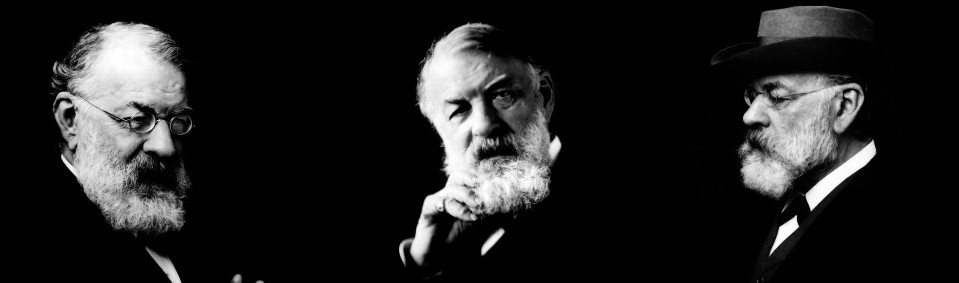
Photo collage © Mathias Brösicke — Dematon, Weimar

Archives

Categories

  • 1 Biographical Posts — RWE
  • 2 Articles and Essays — RWE
  • 3 Talks — RWE
  • Articles by Contributing Authors
  • Bibliography
  • Biographical Sketches
  • Books About Joseph Joachim
  • Brief Biography
  • Chronology
  • Concert Reviews & Criticism
  • Concerts
  • Contracts
  • Documents
  • Ephemera
  • Estate/Nachlass
  • Family
  • Iconography
  • Instruments
  • Joachim in Great Britain
  • Joachim Quartet
  • Letters
  • Links
  • Literature
  • Literature Review
  • Miscellaneous Articles
  • Obituaries
  • Pages
  • Queries
  • Recordings
  • Reminiscences & Encomia
  • Scores
  • Speeches and Utterances (Joachim)
  • Students
  • Uncategorized
  • Works
  • Writings (Joachim)

Pages

  • INDEX

Recent Comments

Johann Heinrich Bona… on Concerts: Vienna, January, 188…
Johann Heinrich Bona… on Joachim at the Società del Qua…
Johann Heinrich Bona… on Joachim in Italy (1880)
Concert: Düsseldorf,… on The 31st Lower Rhine Music Fes…
INDEX | Joseph Joach… on Mendelssohn’s Death

Meta

  • Log in
  • Entries feed
  • Comments feed
  • WordPress.org

Email: Reshbach(at)unh.edu

Powered by WordPress.com.

Loading Comments...

    %d