• Home
  • INDEX

Joseph Joachim

~ biography and research

Joseph Joachim

Author Archives: Joachim

Robert Imandt

10 Sunday Mar 2019

Posted by Joachim in Uncategorized

≈ 1 Comment

IMAGE_FULL_SIZE_JPEG

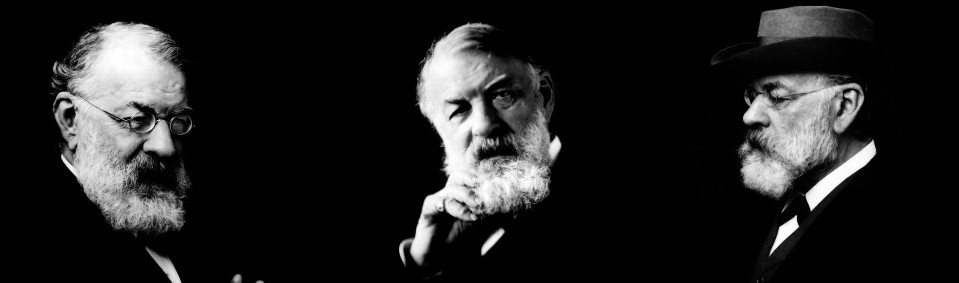
Robert Imandt
Photo: University of South Florida
Charles Ringling Family Collection

I’ve been thinking about this beautiful, artistic, photograph, so reminiscent of Julia Margaret Cameron, and thinking I had seen it before — which, of course, I have — in a celebrated painting of Joseph Joachim by Cameron’s friend George Frederic Watts. The photo is of Robert Imandt (1894-1969), a French-born American violinist and photographer who, in his youth, not only studied with Joachim, but lived with him in his Berlin home. It is clearly an hommage.

Screenshot 2019-03-09 19.48.37

Imandt had a burgeoning career that was interrupted by WWI: he served for a number of years in the French military, and was wounded twice — once receiving a shrapnel wound in the first two fingers of his left hand. He never fully recovered his ability to play, though he tried for some years. Eventually, he became a known photographer, and his photographs still sell on the market…

In any case, as I say, I find this photo to be extraordinarily beautiful and artistic — even far surpassing Watts’s painting, which I have never particularly liked. It captures the same gaze — the same “inwardness”  — which has always been mentioned as characteristic of Joachim’s playing, and of Watts’s painting of him, but also gives a wonderful impression of virtuosity (which the Watts painting does not, intentionally so) — the pronated bow hand, blurred in motion, the head thrown back instead of forward — the complete package of an artist. I would like to have heard Imandt in his prime. He was said to possess a perfect technique, including a sensational bow arm. Having been brought up by Joachim, I imagine he was also a superlative musician. He died in 1969 — late enough that I might have known him and been able to learn from him, had I been involved with Joachim at that time, and able to travel to speak with him. Alas, his son died in Springfield MA just a few years ago…

There is a very fine article on the Watts painting and the whole issue of ‘sentimentalism’ by Stephen Downes in a recent issue of 19th Century Music — much to be recommended: Stephen Downes, “Sentimentalism, Joseph Joachim, and the English,” 19th Century Music, XLII/2 (Fall, 2018): 123-154.

RWE 3.10.2019


The Owosso Times, Owosso, Michigan, 24 March, 1922, p. 5:

Robert Imandt, one of our most noted French artists. Imandt’s musical career began with Louis Beittinhofer, a disciple of the great Jules Garcin. Later he journeyed to Berlin and played before the great Hungarian Master, Joseph Joachim. He not only was taken in by Joachim as a pupil, but as one of the family. At the age of thirteen Robert made his formal Berlin debut and filled numerous engagements in Paris and Provinces of France as well.

At the age of fourteen he was received at the Paris conservatory carrying off the first prize of violin with more than one hundred competitors. Later after spending considerable time in Berlin and Poland, Robert was called into service, sacrificing six years of his artistic career for the need of his country. He enrolled as a simple private, was wounded twice and won croix de guerre with citations. He later took up radio work and was commissioned. His first two fingers being injured with sharpnel [sic], was [sic] restored to usefulness in a few weeks at Fort Sheridan, N. S.

Imandt also possesses a voice which is incomparable, it has been trained from infancy by his master Joachim to faithfully interpret the works he plays. Imandt has rare tone quality, absolute accuracy, marvelous technic and perfect control of the bow.


Screenshot 2019-03-10 13.56.00.pngScreenshot 2019-03-10 13.54.47.png

Share this:

  • Share on X (Opens in new window) X
  • Share on Facebook (Opens in new window) Facebook
  • Email a link to a friend (Opens in new window) Email

Like this:

Like Loading...

Donald Francis Tovey, “Joseph Joachim: Maker of Music”

05 Tuesday Mar 2019

Posted by Joachim in Miscellaneous Articles

≈ Leave a comment

The Monthly Review, No. 20 (May, 1902): 80-93.


Screenshot 2019-03-05 21.13.29

Joseph Joachim: Maker of Music

In the language of their own age the greatest artists speak for all time; which is as much as to say that they do not speak merely for posterity, and that they may be as far beyond the comprehension of a later age as they were beyond that of their own. The works of Palestrina and Shakespeare (to take the most widely different examples) were greeted by their contemporaries with an intelligent sympathy of which hardly a trace appeared in posterity until comparatively recent times; and even in cases like that of Beethoven, where there seems to have been a century of steady progress in the understanding of his work, it is rather humiliating to reflect how much of our superiority over our ancestors is merely negative. Beethoven was surrounded by brilliant musicians who worked for their own time and had not a word to say to us. Our ancestors had to single Beethoven out from that dazzling crowd; but we have little more than vague ideas as to who was in the musical world a hundred years ago besides the venerable Haydn, then penning his last compositions, and Schubert, Weber, Cherubini, Spohr; in short, precisely those men who are too great and typical to be compared with each other. And in so far as we are thus incapable of realising what it was in these great artists that was too new for their contemporaries to understand, we lose a certain insight which their comparatively few intelligent supporters possessed in an eminent degree, and we fall into the error of greatly under-estimating the difficulty of classical art for ourselves. Indeed, an intelligent sympathy with great art is a privilege that is in all ages hardly won and easily lost. It is not the privilege of experts, nor even of remarkably clever people; it probably needs nothing beyond the sensibilities necessary for the enjoyment of the art, controlled by such clearness of mind as will save us from the unconscious error of setting ourselves above the greatest artists of the present in the past. It is astonishing how many disguises this error assumes; and it often has no more connection with conceit than bad logic has with fraud. The expert is always in danger of reasoning as if his fund of recent technical and aesthetic knowledge had raised his intellect to a higher plane than that of the great men of an earlier generation; the student is constantly mistaking the limitations of his own technique for laws of art, and doubting whether this or that in a great work is justifiable when he ought simply to realize that it is a thing he cannot possibly do himself; and (most insidious of all such confusions of thought) many persons of broad general culturre allow their own legitimate pleasure in a work of art to be spoilt by the consciousnes that there is so much that they do not understand; as if it were an insult to their intelligence to suppose that any work of art should be too great for them to grasp at once.

These very obvious considerations seem to be more neglected in the criticism of performances than in that of compositions; yet it would seem that the very great performer must be almost as far beyond his own age as the very great composer, with the disadvantage that his playing cannot survive him to meet with more justice from posterity. The object of the present sketch is to describe the permanent element in the life-work of one whom most persons of reasonably wide musical culture and knowledge believe to be probably the greatest interpreter of music the world has ever seen. It may seem a strained figure of speech to call the greatness of Joachim’s playing a permanent quality, except in the sense that it has more than stood the test of time as measured by his own career of over sixty years of unbroken triumph; but there can be no doubt that the influence of such playing on subsequent art, both creative and interpretive, must continue to be profound and vital long after the general public can trace it to its source in the personality of the great artist who originated it. The immortality for which the greatest artists work is a thing of fact rather than of fame. Bach wrote his two hundred odd cantatas, sparing no pains to make them as beautiful as only he could understand music to be; yet he not only knew that there was no prospect of their becoming known outside his own circle during his life-time, but he cannot even have a consoled himself with the hope of an immortality of fame for them afterwards; unless we are to suppose that he foresaw such a glaringly improbable thing as their publication by the Bach-Gesellschaft on the Centenary of his death! To such minds facts are facts even if the world forgets them, the artist aims at nothing but the perfection and growth of his art. He cheerfully uses it to earn an honest living, and nothing of human interest is too remote to be material for his art; but he remains undeterred by all that does not affect the matter in hand. The desire for fame, contemporary or posthumous, as an end in itself, can no more explain the cantatas of Bach or the playing of Joachim than the desire for wealth or popularity. All men desire these things, for ulterior purposes, and many great men attain them; but to an artist the actuality of artistic production will always override all considerations of what the world will say or do when the work is finished. In extreme cases the artist is even blameworthy in his indifference to the fate of his work, as when a great painter is heedless in the use of his colors that are not permanent.

Joachim’s unswerving devotion to the highest ideals of the interpretation of classical music is a striking illustration of this rigorous actuality in the true artist’s guiding principles. A composer must have more serious purpose than the normal man of talent if he persists in doing far more careful and copious work than practical purposes demand, while he is all the time convinced, as Bach must have been, that this work will never become known. And this is yet more obviously true of a player; even if it be happily the case, as it certainly is with Joachim, that his efforts have met with the warm gratitude of the public throughout the whole musical world. Indeed, Joachim’s success is as severe a test as his playing could possibly have had; for popular success cannot encourage an artist not absorbed in the realisation of pure artistic ideals to maintain his playing at a height of spiritual excellence far beyond the capacity of popular intelligence. At the present day it is as true as it always has been, that a student of music can measure his progress by the increase in his capacity to enjoy and learn from the performances of the Joachim Quartet: just as a scholar can measure his progress by his capacity to appreciate Milton. Here, then, we have work perfected for its own sake; work that must have been even so perfected if it had never been rewarded as it has been, or surely of all roads to popularity that which Joachim chose—the road of Bach and Brahms—was the most unpromising. The immortality of fact, not of name, is the only principle which will explain Joachim’s career; indeed, it is the only explanation of his popular success. , For, as it is sometimes pointed out with unnecessary emphasis, he has attained his threescore years and ten; so that it is absurd to suppose that his present popularity can still spring either from the novelty of scope, which was once the distinguishing feature of his as of other remarkable young players’ technique, or from that capacity for following the fashion which he never had and never wanted. It is the permanent and spiritual element that makes his playing as profoundly moving now as it was in his youth, and that would remain as evident to all that have ears to hear, even if what is sometimes said of his advancing age were ten times true. As a matter of fact, Joachim’s energy is that of many a strong man in his prime. I believe it cannot be generally known in England what an enormous amount of work he continues to do every day, apart from his concert-playing As the original director of the great musical Hoch-Schule in Berlin, he continues to fill out his working-day with teaching, conducting, administering, and examining; while his numerous concerts, which we in England are apt to regard as the chief, if not the only, demand on his energy, are given in the intervals of this colossal work of teaching by which he has become a maker of minds no less than of music. His concert season in England—those few weeks crowded with engagements that leave barely time to travel from town to town to fulfil them—is in one sense his holiday; and while there are no doubt plenty of young artists who would be very glad of a fixed position in a great musical Academy as a kind of base of operations for occasional concert tours, there are probably few who would not shrink from devoting themselves in old age to both these occupations as Joachim continues to devote himself at the present day. And his vigour seems, to those who have followed his work during the last eighteen months or so, to have increased afresh; certainly nothing can be less like the failing powers and narrowing sympathies of old age than his constant readiness to help young artists not only with advice and encouragement, but by infinite patience in taking part with them in their concerts. If all that he has done in such acts of generosity could be translated into musical compositions, the result would be like Bach’s “fünf Jahrgänge Kirchen-cantaten,” five works of art for every day in the year. In the presence of such an age it is the failings of youth that seem crabbed and unsympathetic. In boyhood the friend of Mendelssohn, whose wonderful piano-forte playing he can at this day describe to his friends as vividly as he can interpret Mendelssohn’s violin concerto to the world at large; in youth the friend of Schumann, to whom he introduced his younger friend, Brahms; throughout life the friend of Brahms, whom he influenced as profoundly as Brahms influenced him; and in middle age one of the very first and most energetic in obtaining a hearing for the works of Dvoràk: a man of such experience might rather be expected to become in the end a laudator temporis acti, with little heart to encourage the young. But Joachim was not born in 1881 that his experience might be useless to those who begin their work in the twentieth century: and there is no man living whose personal influence on all young artists who come into contact with him is more powerful or leaves the impression of a deeper sympathy.

It is not my intention to repeat here the glorious story of Joachim’s career; his leading part in the building up of practically the whole present wide-spread public familiarity with classical chamber-music, including that of Schumann and Brahms; the remarkable history of his early relations with Liszt and Wagner at Weimar, so will set forth in Herr Moser’s recent biography of Joachim, and so entirely different from the crude misunderstandings of the typical anti-Wagnerian; or even the list of illustrious pupils who prove that Joachim’s labour of love in the Hoch-Schule is not in vain. On the other hand, of Joachim the composer I have something to say, more especially as that is a capacity in which he has met with very scanty recognition; perhaps chiefly because his works are as few as they are beautiful, for music is not, like precious stones, famed in proportion to its rarity. Three concertos, five orchestral overtures (of which two are still unpublished, while the exquisitely humorous and fantastic Overture to a Comedy by Gozzi, though composed in 1856, has only just now appeared); these, with a moderately large volume of smaller pieces, such as the rich and thoughtful Variations for viola, and the later set for violin and orchestra, and several groups of pieces in lyric forms, are a body of work that is more likely to escape to preoccupied attention of the present age than that of the posterity that will judge of our art by its organization rather than by its tendencies. Perhaps we may hope for a more immediate recognition of the beauty of the newly published Overture to a Comedy by Gozzi; for its humour and lightness are a new revelation to the warmest admirers of Joachim’s compositions, while it is second to none in perfection of form.

jjtovey1

But let us turn from this subject for a moment to consider what is the real attitude of the public with whom Joachim as an interpreter is so popular. It is absurd to suppose that the public can completely understand the greatest instrumental music; that there is not much in the works of the great classical composers that is at least so far puzzling to them that they would prefer a course or one-sided interpretation to such a complete realization of the composer’s meaning as Joachim gives. But fortunately the typical representative of the intelligent public is not the nervous and irritable man of culture who is always distressing himself because he cannot grasp the whole meaning of a great work of art. The inexpert, common-sense lover of music, who represents the best of the concert-going public, never supposed that he could. All that he demands is that on the whole he shall be able to enjoy his music, and, unless it is exceptionally unfamiliar to him, he can generally enjoy a great part of it almost as intelligently as a trained musician, and often far more keenly, since he is less likely to suffer from over-familiarity with those artistic devices that mean intense emotion in great art and mere technical convenience in ordinary work. No doubt, the ordinary inexpert listener often fails to understand what is it once great and specially new to him; otherwise Bach would have been recognised from the outset as a profoundly emotional and popular composer. And, on the other hand, without the experience of constantly hearing the finest music even an intelligent man may easily be deceived into admiring what is thoroughly bad: indeed, it is a common place of pessimistic critics to point out that the audience the crowds a great hall to hear Joachim has been known in the very same concert to encore songs of a character altogether beneath criticism. But we often over-rate the importance of such things. The public does not claim to be able to tell good from bad; it simply takes considerable trouble to enjoy what it can, being in that respect far more energetic and straightforward than many of those who would improve its taste. And if it often shows that it enjoys many things merely because it is not found out how horribly false they are, that is no proof whatever that its enjoyment of great art is spurious. No doubt it is sad to be victimised by false sentiment; but surely it is good to be stirred by true enthusiasm; and that the public can be so stirred without the smallest concession being made either to its ignorance or its sentimentality the whole of Joachim’s career triumphantly testifies. Since the time of Handel it is probable that no musician devoting himself exclusively to the most serious work in his art has approached Joachim’s record of a continuous popularity rising yet, after more than sixty years, to new triumphs that excite the wonder of many whose interest in music is of too recent growth for them to remember what enormous influence he has always had on his contemporaries and juniors, or to realise that many things now regarded as of quite a new and even anti-academic school owe their vitality to the tradition which he has established. Surely the public that has learnt so well to recognize and testify to the greatness of such a life deserves forgiveness for many temporary errors of taste. It is more important to love good art than never to be deceived by bad.

In the face of Joachim’s universal popularity, the accusations of “cold intellectuality” which of been every now and then directed against him by those whose ideal of art is the greatest astonishment of the greatest number, are not only signs of second-rate criticism but libels on the public. If there is one thing in which the public is almost infallible in the long run, it is in detecting a lack of warmth in work that claims to be serious and solid. No assault on the public’s feelings is too brutal (as Stevenson said of “Home, sweet Home!”), in other words, no sentiment is too false for popular success; but on the other hand no apathetic solidity is imposing enough to interest the public which suspects that it has not interested the artist himself. Indeed, the public is severe in its sensitiveness to the difference between things done as the direct result of an intimate knowledge and love of the work in hand and the very same things as done simply because So-and-so does them. But, on the other hand, it does not readily fall into the error of demanding that no two artists shall have the same “reading “of a composition. When a man of good sense without musical training troubles to think about “readings” at all, the idea that a “reading” is the worse for occurring to a dozen great artists in different generations is the last thing to enter his head. There is no reason why pupils should fail to become great artists because they have learnt all that they know of the interpretation of great music from such a man as Joachim; what art needs, and what the public has the sense to demand, is that they shall so play because they so understand and feel. It does not then always follow that the public will give such work its due; but it is certain that where the artist has not thus made his master’s knowledge and feeling his own, the public will not be deluded into believing that he has. Even the mere virtuoso must have some pleasure in his own virtuosity, or the public will have none. And it is probably sheer tenderness of conscience that causes the universal popularity a false settlement; no one feels comfortable in refusing to respond when his feelings are appealed to by those his claims he has no means of refuting, and this is precisely the position of the inexpert listener with regard to sentimental music.

Much has been written in praise and illustration of Joachim’s playing and that of his quartet; and from most points of view it has been so well and so recently described, both in England and abroad, that to say more here would be impertinent. One point of view has, however, been somewhat neglected. I am not aware that Joachim’s playing has been expressly reviewed as the playing of a composer; and I therefore proposed to devote the rest of the sketch to a few observations on the largest and best known of his works, the Hungarian Concerto, drawing some parallels between it and his playing, and thus illustrating how his sympathy with the great composers has come from a share in their creative experience.

The concerto is on an enormous scale; the first and last movements are, if I am not mistaken, the longest extant examples of well-constructed classical concerto form. And that the form is of classical perfection no one who has carefully studied the work can deny; indeed, so convincing and natural is the flow, and so are the contrasts, that the length of the work remains quite unsuspected by the attentive listener, and would probably never be discovered at all but for the necessity of sometimes timing the items of concert programmes. One may imagine that the composer who shows such colossal mastery of form, would see to it that his playing of classical music revealed the proportions of all that he played, and that he would never dream of “bringing out the beauty” of this or that passage by playing it as slowly as if it belonged to quite a different movement from that in which it occurs. This is, indeed, a tempting short cut to impressiveness of effect; in fact, many fine artists have spared no pains or thought in the search for fresh passages in classical music that can be so revealed to the public; and at all times there has been a definite school of criticism that regards such a method as the true way of artistic progress. It must also be candidly confessed that the higher criticism ruins its own cause when it accuses such artists of false sentiment or vulgarity, or anything more reprehensible than the failure to recognise how much of the greatness of art lies in proportion and design. A sense of form, such as is shown in the Hungarian Concerto, is almost the rarest thing in art, and is incomparably the highest of technical faculties. If Joachim had not been capable of composing a work thus worthy to take a place among the great classical concertos, he would not have been able as a player to found that great tradition of interpretation that has made the last quartets of Beethoven on the whole better understood by the musical public than Shakespeare is by the average reader. The tradition, once founded, can be nobly carried on by players who have no thoughts of composition; but to originate such a work requires an essentially creative mind. No amount of exploration from point to point, or loving care in the delivery of each phrase, no genius for breadth and dignity of musical declamation would ever have sufficed to make these works, so unfathomable in detail, grandly intelligible as wholes. And unless the whole is grasped, the details remain undiscovered.

Of course this grand quality of form is not directly recognisable by the public, either in compositions or in performances. It is a cause rather than an effect, and it is absolutely unattainable by mere imitation. Nor is a school-knowledge of the general facts of classical form equivalent to this true grasp of musical organisation, either in playing or in composition; for these general facts, just in so far as they are general, are accurately true of no one classical work. They are not the principles that make classical music what it is; they are the average phenomena that enable us to define and classify art-forms: and that kind of playing that carves the music joint byjoint, that treats a fugue as if nothing but the fugue-subject were fit for the public ear, and that always plays a specially beautiful phrase louder and slower than its context, —— such playing is as far removed from Joachim’s method of interpretation as the form of a bad degree-exercise is from that of the Hungarian Concerto.

There is nothing scholastic or inorganic in Joachim’s form; perhaps in the first movement one has a temporary impression of rather cautious symmetry of rhythm, just as one has with the first movement of Beethoven’s Concerto in C minor, a work that in formal technique and proportions is remarkably akin to Joachim’s and probably influenced it more powerfully than the entire absence of resemblances in external style and theme would suggest. But, like the Beethoven C minor, the Hungarian Concerto soon shows that it is not of such matter as can be cast in a merely academic mould. Though in both works the opening tutti, with its deliberate transition from first subject to second, is more like the beginning of a symphony than either Beethoven or Brahms allowed in the tuttis of their later concertos to be, yet the treatment of the solo instrument, its relation to the orchestra, and the grouping and development of the themes, are in both works as mature and highly organised as pollible, and as surely the work of a great composer in Joachim’s case as in Beethoven’s. The very outset of Joachim’s first solo, where the violin passes from the impressive first theme to allude to the tender sequel of the second subject, a phrase originally uttered in the major mode by the oboe in its poignant upper register, but now given in the minor mode with the solemn tones of the violin’s G-string; this is just such a freedom of form as only a true tone-poet can invent. Classical music is full of such things; ordinary formal analysis cannot explain them, since, as we have seen, it is concerned with averages, not with organic principles; and these passages have no external peculiarity to call the attention of the inexperienced to their significance. If there is much of this kind in classical music that is now of common knowledge, if it is possible to point out such things here, this is mainly due to the fact that the most influential musical interpreter of modern times can reveal the meaning of such traits because he has experienced them In his own creative work.

All that has been said here as to the form of the Hungarian Concerto and its analogy with the architectonic quality of Joachim’s playing may be repeated in different terms as to the more detailed aspects of the work. The score is so full of detail that it is very difficult to read; not that there is anything startlingly “modern” about it; those who would seek in it the “latest improvements of modern orchestration” are doomed to disappointment. For one thing, it was written within two years of Schumann’s death, eighteen years before the appearance of Brahms’ first symphony, and twenty years before Dvoràk came to his own (largely through the united efforts of Brahms and Joachim themselves). The only modern influence that could possibly affect a work in so classical a form at the date of this concerto was to be found in Brahms, to whom, in fact, the work is dedicated. But at that time Brahms was twenty-four and Joachim was twenty-six; and the history of the opening of Brahms’ B♭ sextet and many things in his first pianoforte concerto will bear witness that the influence was about equally strong on both sides. However, all such historical matters are beside the mark. Joachim, both as composer and player, is an immortal whose work is so truly for all time that it cannot be measured in terms of the present or any age. The Hungarian Concerto may perhaps seem, to some who put their trust in symphonic poems, almost as antiquated as Bach’s arias and recitatives seemed to most musicians in the ‘fifties just a century after Bach’s death; but a time always comes, even though centuries late, when it is recognised that in art all “effects” must have their causes no less than in logic and nature; and that the work in which the effects come from sufficient and deep-rooted causes has more vitality than that which depends merely on brilliant allusions to the latest artistic discoveries of its day.

When the time comes for the verdict of history as to the instrumental music of the last sixty years, Joachim will still be known as a purifying and ennobling influence of a power and extent unparalleled in the history of reproductive art; but I cannot believe that historians will ascribe this influence merely to the violinist; and they will see in the enormous wealth of a harmonious detail that crowds the score of the Hungarian Concerto that very completeness and justness that we know so well in his playing. When they admire the art with which the solo violin is made to penetrate the richest scoring with ease, they will understand, perhaps better than ourselves, that true balance of tone and perfection of ensemble with which the Joachim Quartet quietly and simply discloses all essential points without reducing the accompaniment to a dull, disorganised mumble. When they see the wonderful burst of florid figuration that accompanies the return of the theme of the slow movement, or the freedom and subtlety of its coda, they will hear what it was in Joachim’s playing that showed us the true depth of expression in Bach’s elaborately ornate melody, which our fathers thought so antiquated and rococo. And they will long to have heard Joachim’s violin-playing as we long to have heard Bach at his organ: not from curiosity to verify an old record of technical prowess, but from the desire to recover the unrecorded manifestations of a creative mind.

DONALD FRANCIS TOVEY.

Share this:

  • Share on X (Opens in new window) X
  • Share on Facebook (Opens in new window) Facebook
  • Email a link to a friend (Opens in new window) Email

Like this:

Like Loading...

Hans Joachim Moser: Joseph Joachim (1908)

30 Wednesday Jan 2019

Posted by Joachim in Miscellaneous Articles

≈ 1 Comment

Hans Joachim Moser, Joseph Joachim, Sechsundneunzigstes Neujahrsblatt der Allgemeinen Musikgesellschaft in Zürich, Zürich & Leipzig: Hug & Co., 1908


moser, h. j. joachim

Share this:

  • Share on X (Opens in new window) X
  • Share on Facebook (Opens in new window) Facebook
  • Email a link to a friend (Opens in new window) Email

Like this:

Like Loading...

Concert: London Philharmonic Debut, May, 1844 (Beethoven Concerto/Mendelssohn)

22 Tuesday Jan 2019

Posted by Joachim in Uncategorized

≈ Leave a comment

Der Humorist, No. 137 (June 7, 1844), p. 548.


Musikalisches.

(Joseph Joachim) ist noch immer der musikalische Löwe in London. Sein Spiel hat die frostige Seele John Bull’s aufgethaut, und die Bewunderung für ihn wird desto größer, je mehr er gehört wird. Unlängst spielte er in einem Philharmonic=Concert Beethoven’s herrliches Violin=Concert, zu welchem er sich selbst Kadenzen komponierte, in denen sich ein so feiner Geschmack und so viel frische Fantasie bekundete, daß Mendelssohn beim Anblicke der Komposition Freudentränen vergoß. Diese Kadenzen sind so im Geiste und des Charakters des Concertes selbst gehalten, daß man die für einen integrirenden Theil desselben hält. Die “Morning Post” bemerkt dabei, daß moderne Fantasien=Macher von Joachim lernen können, sich den Ideen der Meister anzuschmiegen. Der “Morning herald” sagt Folgendes über des jungen Joachim’s, welches Jedermann mit Bewunderung erfüllt, das Beethoven‘sche Concert, vor welchem selbst die hochgespieltesten Künstler zurückfahren, wurde, so viel wir wissen, hier bloß von Mori, Blagrove und Eliasson, und zwar nicht mit vollständigem Erfolge exekutirt. Wir thun nicht zuviel, wenn wir sagen, daß Joachim sie alle Drei hierin übertraf, ja, selbst den Erstgenannten von ihnen, so groß und bewundernswert dieser auch war. Daß ein Knabe von 13 oder 14 Jahren mit viel Fertigkeit spielt, ist gegenwärtig keine so besondere Merkwürdigkeit; daß sich aber in dieser Fertigkeit eine seltene Vollkommenheit sowohl des Vortrages, als auch der Intonation offenbart, daß der Ton sich ebenso durch Reinheit als durch Fülle und Schönheit, daß die ausgedehntesten Distanzen, selbst in den schwierigsten Gängen mit unfehlbarer Präcision ausgeführt werden, daß zu dem Allen sich ausgezeichnetes Gefühl und tiefes Verständniß der erhabensten und idealsten Musik gesellt, daß diese Vorzüge alle bei einem Kinde vereinigt sein sollen, das ist’s was Einen ganz aus der Fassung bringt. Die Erscheinung des Jungen im Orchester, mit seinem lächelnden und klugen Angesichts, mit auf die Schulter zurückgeschlagenen Kragen, die Taschen wahrscheinlich noch mit Spielkugeln und Peitschenschnüren voll gestopft, ist gewiss ein Anblick, welcher die Greifköpfe stutzen macht. Da steht er, seine Violine mit der Leichtigkeit und Zuversicht eines Paganini greifend, die Leitung der Philharmonic=Professoren übernehmend, und ihnen ihre Zeichen gebend, als wäre das Ganze bloß ein Spaß — bloß ein kindischer Zeitvertreib. An Joachim‘s Leistungen kann jeder Maßstab angelegt werden. Sein Styl ist rein und ungeziert, seine Ausführung vollendet, sein Geschmack künstlerisch und gediegen. Die Leistung wurde mit Entzücken aufgenommen, die sogar das Orchester theilte; es waren gewiß wenige anwesend, welche nicht bekennen mußten, daß dies die außerordentlichste Erscheinung frühgereiften Talentes sei, welche ihnen noch vorgekommen ist. Die Wirkung wurde durch die gediegensten Mittel hervorgebracht: es war ein schönes, gediegenes Spiel — die Ausführung eines Meisters, das Verständnis eines Musikers! Jäckchen und Höschen wurden ganz vergessen! —


Humorist Masthead June 7 1844.jpg

Humorist London Concert June 7 1844.jpg


This story was most likely “planted” by Joachim’s family with clippings sent from London. 

Share this:

  • Share on X (Opens in new window) X
  • Share on Facebook (Opens in new window) Facebook
  • Email a link to a friend (Opens in new window) Email

Like this:

Like Loading...

Ernst Rudorff on Joachim and Liszt

15 Tuesday Jan 2019

Posted by Joachim in Reminiscences & Encomia

≈ Leave a comment

extrarudorff1.jpg

Ernst Rudorff über die Künstlerschaft Liszts und Joachims


Brahms Institut Lübeck: http://www.brahms-institut.de/db_jjb/projekt_joachim_varia.php
Provenienz: Teilnachlass Joseph Joachim / Sammlung Hofmann
Sign: Joa : D2 : 4 Inv. Nr. ABH 6.3.106
(aus seinen Lebenserinnerungen. Nicht gedruckt!)

Abschrift anonym 3 Seiten

Translation below


…Joachim hatte mir gegenüber einmal die Aeusserung getan: “Auch in der Zeit meiner höchsten Schwärmeri für Liszt habe ich ihn niemals so spielen hören, dass nicht im geheimsten Winkel meines Inneren die Stimme der Gewissens Einspruch dagegen erhoben hätte.”

Als ich Joachim später einmal daran erinnerte, behauptete er: “das kann ich nicht gesagt haben, denn ich weiss Z. B. dass Liszt einmal mit Cossmann und mir zusammen das B-dur-Trio von Beethoven so herrlich gespielt hat, wie ich er nur jemals in meinem Leben gehört habe. Freilich, da musizierten wir drei ganz allein miteinander. Sobald nur irgendeine Dame auftauchte war es natuurlich aus mit dem Künstlerischen Ernst, und die Schauspielerei begann.” Trotz dieses seines Einwände blieb für mich die Tatsache bestehen, dass er jene Aeusserung getan hatte, und wann die Ausnahme mit dem B-dur-Trio wirklich stattgefunden hat, woran ich nicht zweifeln darf, so wurde sie ja nur die Regel bestätigen. Gewiss ist er verständlich, dass Liszt mit seinem schlechthin unvergleichlichen Klaviergenie, seinem blitzartig unmittelbaren Erfassen jeder Musik den um viele Jahre juungeren Joachim einstmals ganz und gar sich hätte zu eigen machen können. Aber so nahe sich hier die Talente berührten, so grund-verschieden seien die Charaktere. Es war eine kurze Täuschung, dass beide glaubten, einander von Grund aus anzugehören; die Wege die sie ihrem innersten Wesen nach einschlagen mussten, führten sie diametral auseinander. Liszt von früh auf das Urbild eines Virtusoen im weitesten und verwegensten Sinn des Wortes, suchte und fand bei allem was er leistete, lediglich die Triumphe seines Ichs. Kein Künstlerisches Bedenken hielt ihn in seiner Jugend ab, die Musik des Don Juan zu zerpflücken, um aus den Brocken ein frivoles Effektklavierstück zusammenzubrauen, und wiederum Meyerbeer war ihm für

2.

solche Zwecke ebenso recht wie Mozart oder Mendelssohns Sommernachtstraum. In Berlin spielte er in einem seiner Konzerte Beethovens Cis-moll-Sonate mit so unerhörten Tempoverzerrungen, dass die Masse zwar unbändig Klatschte, alle musikalischen Leute aber empört waren. Ein paar Tage darauf trug er dieselbe Sonate einem kleinen Kreis von Musikern vor, u-zwar dieses Mal in ganz angemessenem Zeitmass. Als die Zuhörer ihre Verwunderung darüber laut werden liessen, erwiderte er ohne Scheu, dem Publikum gegenüber müsse man andere Saiten aufziehen als den Kunstgenossen, um Eindruck zu erzielen. Seinen Schülern prägte er dann in späterer Zeit die Lehre ein, erstes Gebot beim Öffentlichspielen sei, keinen Augenblick vorübergehen zu lassen, ohne irgendwie das Publikum auf sich aufmerksam zu machen. Mit anderen Worten also: zu verblüffen um jeden Preis ist die Aufgabe des Künstlers, oder auch: der Triumph der Person ist der alleinige Zweck aller Reproduktion. Nun aber vergegenwärtige man sich dem gegenüber Joachim mit all seinem Fühlen, Tun, Streben und Wirken lebenslang, das nur darauf gerichtet war, mit der einen Kraft dem Echten, Bleibenden, wahrhaft Schönen, auch im Kampf mit mächtigsten zu dienen, sener Überzeungung treu zu bleiben, auch im Kampf mit mächtisgsten und gewissenlosesten Elementen, und man wird begreifen, dass dieses Joachim, deslebenslang mit seiner Person hinter der Sache zurück, die ihm heilig war, unmöglich im Bunde mit Liszt bleiben konnte.

Schleiermacher hat bei irgendeiner Gelegenheit den Ausspruch getan: “Grosse Gaben der Geister ohne sittliche Gesinnung sind ohne Wert.” Es liegt mir gewiss fern, die gewinnenden ethischen Züge in Liszts Persönlichkeit, seine Ritterlichkeit, seine unbegrenzte Hilfsbereitschaft jeder Bedurftigkeit gegenüber irgendwie herabsetzen oder verkennen zu wollen, aber darum bleibt es doch leider wahr, dass jenes strenge Wort auf die Künstlerschaft des vielgefeierten Mannes Anwendung findet. Der jugendliche Liszt hat auf seinem Triumpfzug durch die Welt die Heute in einen Rausch taumelhaften Entzückens versetzt wie kaum je ein anderer Sterblicher. Aber bei dem Rausch des Augenblicks hatte er auch sein Bewenden [?]. Erhoben, ergriffen, getröstet, mit Frieden erfüllt, wie es die echte Kunst unserer Meister in un-

3.

verfälschster Wiedergabe tut, hat er die Menschen nicht. Und wie der Meister, so seine Gefolgschaft. Liszt hat eine Schule der Willkür, der Affektation, des effektvollen Pose hinterlassen, der es leider gelungen ist, Boden im Überfluss zu gewinnen. Das Rüstzeug, dessen man sich hier bedient, um aufzufallen und geistreich zu erscheinen, besteht in unmotivierten Temporückungen, in Übertreibungen der Stärkegrade nach oben und unten hin, Übertreibungen der Kontraste sowohl in dynamischer wie in rhythmischer Beziehung, ungebührlicher Anwendung der Verschiebung und ähnlichen Dingen.

Dass Liszts Vorbild und Unterweisung auf dem Gebiet der rein technischen Seite des Klavierspiels ausserordentlich fördernd sein musste, versteht sich von selbst. Um die Bildung des Anschlags scheint er sich weniger bemüht zu haben.

Liszt hat eine ausserordentliche Menge von Kompositionen niedergeschrieben. Dass es ihm — ganz abgesehen von den Bedenklichkeiten seiner Harmonik und seines Aufbauens — an eigentlicher musikal. Erfindung so gut wie ganz gefehlt hat, wird wohl heute nur von einer kleinen Minderheit bestritten werden. Wirklich erfinderisch dagegen war er auf dem Gebiet der Klavieristischen Wirkungen. Ganz ungetrübte Freude kann man an diesen Zeugnissen seines Genies in allen den Fällen haben, wo er ein fremdes, für andere Mittel erfundenes Stück ohne irgendwelche eigene Zutaten zu einem Klavierstück umschafft. Meisterwerke dieser Art sind namentlich seine Übertragungen Paganini’scher Capricen für das Klavier. Auch eine Reihe Schubert’scher Lieder gehören hier her. Es ist unverkennbar, dass Brahms in seinen Klavierkompositionen rücksichtlich des Klaviersatzes mit grossem Erfolg bei Liszt in die Lehre gegangen ist…”


Joachim once commented to me: “Even in the time of my greatest enthusiasm for Liszt, I never heard him play in such a way that, in the innermost corner of my being, the voice of conscience did not object.”

Later, when I reminded Joachim of this, he claimed: “I can’t have said that, because I know, for example, that Liszt, Cossmann and I played the B flat Major trio of Beethoven as beautifully as I have ever heard it in my life. To be sure, the three of us were making music quite alone. As soon as some woman appeared, it was naturally all over with artistic seriousness, and the theater began.” In spite of this objection, the fact remained for me that he had made that comment, and if the exception with the B flat Major trio had really taken place, which I do not doubt, then it merely served to prove the rule. It is certainly understandable that Liszt, with his incontestably incomparable genius for the piano, with his lightning-quick comprehension of every music, would have completely captivated the many-years-younger Joachim. But as proximate as their talents were, so radically different were their characters. It was a short beguilement, that both believed that they fundamentally belonged to one another; the paths that their innermost natures compelled them to take led them in diametrically opposite directions. Liszt, from early times the epitome of a virtuoso in the broadest and most audacious sense of the word, sought and found in everything that he did merely the triumph of his ego. In his youth, no artistic scruples prevented him from picking to pieces the music of Don Juan, in order to concoct a frivolous effect-piece for piano out of the shards; Meyerbeer served him in turn just as well as Mozart or Mendelssohn’s Midsummer night’s Dream. In a concert in Berlin, he played Beethoven’s C sharp minor sonata with such egregious distortions of tempo, that, while the masses indeed clapped wildly, all musical people were outraged. A few days later, he performed the same sonata for a small circle of musicians — and this time in a completely suitable tempo. When the auditors expressed their astonishment at this, he replied unabashedly that one must string the piano differently for the public than for connoisseurs, in order to make an impression. In later time, he impressed upon his students that the first commandment of playing in public was not to let an instant go by, without somehow calling the audience’s attention to oneself. In other words, the job of the artist is to astound at any cost, or also: the triumph of the person is the sole objective of all reproduction. Picture this now in comparison with Joachim, with all his lifelong feeling, doing, striving and action directed solely, with all his strength, towards remaining true to his conviction of the genuine, enduring, truthfully beautiful — even in conflict with the most powerful and unscrupulous elements — and one will realize that it was impossible for this Joachim, who throughout his life placed his person behind the matter that was holy to him, to remain united with Liszt.

Translation © Robert W. Eshbach, 2013

__________

Share this:

  • Share on X (Opens in new window) X
  • Share on Facebook (Opens in new window) Facebook
  • Email a link to a friend (Opens in new window) Email

Like this:

Like Loading...

The house in which Joachim died, Berlin, Kurfürstendamm 28, corner Fasanenstraße

02 Wednesday Jan 2019

Posted by Joachim in Uncategorized

≈ Leave a comment

The house in which Joachim died
Berlin, Kurfürstendamm 28

Death house (The Sphere, 24 August 1907).png

Image: The Sphere, London (24 August, 1907) p. 176

The house today

Share this:

  • Share on X (Opens in new window) X
  • Share on Facebook (Opens in new window) Facebook
  • Email a link to a friend (Opens in new window) Email

Like this:

Like Loading...

Abschiedsworte des Präsidenten der Kgl. Akademie der Künste Geh. Regierungsrat Prof. Dr. ing. Joh. Otzen (1907)

01 Tuesday Jan 2019

Posted by Joachim in Uncategorized

≈ Leave a comment

Johannes Otzen

Abschiedsworte des Präsidenten der Kgl. Akademie der Künste
Geh. Regierungsrat Prof. Dr. ing. Joh. Otzen

Hochgeehrte Trauerversammlung!

Wir stehen hier im Angesichte eines Ereignisses, das, so sehr es den Grenzen menschlichen Daseins entsprechen mag, uns dennoch aufs tiefste erschüttert — der grosse Meister Joseph Joachim ist tot.

Diese Kunde ist in den Trauertagen der letzten Woche durch die ganze Kulturwelt geflogen, und wohl an jeder Stelle, an der seine gottbegnadigte Geige geklungen, wird sie das Gefühl eines unersetzlichen Verlustes auslösen.

Es hat ja vor ihm und neben ihm grosse Geiger gegeben. Die meisten sind vergessen; und bei den nicht ganz Vergessenen ist es fast immer nur ein grosses Virtuosentum gewesen, das ihren Namen der Nachwelt erhalten hat.

Wie anders hier.

Hochverehrte Trauer-Versammlung! Sie werden es mir nachfühlen, dass ich in diesm Augenblicke wünschen muss, ich wäre ein Musiker — oder aber ein solcher, der zu des Meisters Füssen gesessen und seines Geistes voll ist, stände an meiner Stelle.

Ich kann und ich darf nicht wagen, die unsterblichen künstlerischen verdienste des grossen Meisters auch nur zu berühren, die ich kaum zu ahnen, nicht zu verstehen, und noch weniger zu schildern vermag

Diese Tat, die volle Würdigung des künstlerischen Wesens und Wirkens von Joseph Joachim, muss zunächst einer Trauerfeier der Musik vorbehalten bleiben und wird in ihrer vollen Lösung wohl erst späteren Geschlechtern zufallen.

Was ich aber darf und was ich kann, das ist, in dieser feierlichen Abschiedsstunde des schönen Menschentums unsers Verblichenen zu gedenken und insbesondere sein Verhältnis zu uns, den Mitgliedern der Akademie, in Liebe und Wehmut zu zeigen.

Ihnen Allen, hochverehrte Mitglieder dieser Versammlung, die voll Ehrfurcht vor der Majestät solches Toten hier erschienen sind, wird es, auch wenn Sie den Musiker Joachim in erster Reihe verehren, doch schwer werden, diesen von dem Menschen Joachim zu trennen.

Wie oft und wie schmerzlich vermissen wir bei hoher Künstlerschaft dasjenige, was erst wahre Grösse verleiht: die harmonische Durchdringung des Künstlers mit dem Menschen.

Aber, daher auch das Sieghafte solcher Erscheinung. Es ist, als wenn die Menschheit aus dieser erst ihr wahres Ziel und ihren wahren Wert erkennt — aber auch die bedrückende Gewissheit, dass eine solche Harmonie nur von den ganz Auserwählten und Lieblingen der Götter zu erreichen ist.

Ein solcher Liebling war unser Joseph Joachim und dabei von einer Bescheidenheit, Güte und wahrer Menschenliebe erfüllt, die ihn Jedem unversgesslich machte, der auch nur vorübergehend je das Glück seiner Bekanntschaft genossen hat.

Gewohnt, auf den Höhen des Lebens zu wandeln mit den Grössten unserer Erde und ihren erlauchtesten Geistern zu verkehren, — selbst ein Fürst unter Fürsten, war er dennoch gegen Alle, die ihm nahe traten, und mochten sie noch so arm, so einfach und bescheiden in ihrer Lebensstellung sein, von unerschöplichem Wohlwollen.

Gegen die Genossen seiner Kunst und seiner Arbeit, gegen die trauernden Reste des weltberühmten Joachim’schen Quartetts; die betäubt von dem sie betroffenen Schlage an dieser Bahre stehen — von gleichbleibender Liebenswürdigkeit und voll Hingabe an die gemeinsame künstlerische Aufgabe.

Gegen die Akademie, deren Mitglied er seit 1874 und deren Vize-Präsident er seit 7 Jahren gewesen ist —, von treuer Pflichterfüllung und herzlicher Kollegialität erfüllt.

So wird er denn auch nicht am wenigsten von uns — so lange ein Zeuge seines Wesens unter uns lebt, mehr wie schmerzlich vermisst werden.

Sein edles Aeussere, das wunderbare Organ seiner wie Musik klingenden lieben Stimme, wird uns fehlen und niemals ersetzt werden.

Aber sind wir bildenden Künstler auch diesen ästhetischen Eindrücken mehr preisgeben, wie andere Menschen, — wir werden darüber nie vergessen, dass die Schönheit und edle Würde des Aeusseren im lieben Meister Joachim nur das Spiegelbild seiner edlen Seele waren.

Alles zusammen ein Gemälde von ergreifender Einfachheit, Schönheit und Kraft.

Auch wir legen unsern heissen Dank zu den Füssen dieses Sarges nieder und rufen dem teuren Entschlafenen in Wehmut, Ehrfurcht und Liebe zu:

Lebe wohl! grosser Meister und lieber Freund, lebe wohl! Möge dein Beispiel und dein Wesen, zu dem wir verehrend aufschauen, befruchtend und veredlend wirken auf alle kommenden Geschlechter, dass sie in Kunst und Leben dir nachstrebend das grosse Ziel des harmonischen Menschentums erkennen und erreichen.

Das walte Gott!


2018-07-09 16.39.11 copy.jpg

2018-07-09 16.39.28.jpg

Share this:

  • Share on X (Opens in new window) X
  • Share on Facebook (Opens in new window) Facebook
  • Email a link to a friend (Opens in new window) Email

Like this:

Like Loading...

Hans von Bülow

22 Monday Oct 2018

Posted by Joachim in Uncategorized

≈ Leave a comment

 Document2 copy

Hans von Bülow, 1855 [i]

            In early June, 1851, Hans von Bülow arrived in Weimar to begin his studies with Liszt. [ii] At twenty, Baron Hans Guido von Bülow (1830-1894) was already a brilliant and accomplished musician and person of deep culture. Neither his precocious talent for music, nor his taste for the musical avant-garde were fully understood or appreciated by his family, however, and it would take all of Liszt’s tactful personal involvement and moral support, as well as his musical and professional mentorship, to pave the way for Bülow to become one of the 19th century’s greatest pianists and conductors. The von Bülows were a noble family that traced their heritage to the 12th century. Hans’s grandfather, Ernst Heinrich Adolf von Bülow, was a major in Napoleon’s army (Saxony fought on the side of the French). His father, (Carl) Eduard von Bülow, was a writer. Beginning in 1828, Eduard had published numerous works, including stories and novellas, and an abundant array of translations and editions of standard authors. His knowledge of French, English and Italian literature was immense. Eduard von Bülow was a friend and colleague of the canonic Romantic writer Ludwig Tieck, with whom he edited Novalis’s works. In 1851, at the time that Hans made his way to Weimar, he published Tieck’s Die Sommernacht. Ein dramatisches Fragment.

Hans’s mother, Franziska Elisabeth Stoll von Bülow, also came from old nobility. She grew up in the house of her sister Henriette, who was twelve years older, and married to Leipzig Geheimkammerrat, Stadthauptmann Christian Gottlob Frege, one of the patricians of Leipzig society. [1] Franziska was musically gifted, and thoroughly au fait with the excellences of gesellige Bildung. The Frege houshold was a center of Leipzig geselligkeit, and through their acquaintances Franziska and Henriette learned to converse, not only in French and Italian, but in Russian and Polish as well. Goethe and Herder were among the Frege’s guests; the Mendelssohns, Schumanns and Niels Gade were close family friends.

Document3 copy
The Frege house
Katharinenstraße 11, Leipzig
[iii]

            Von Bülow’s parents did not have a happy marriage. Eduard lacked a steady job, and his income was sporadic and insufficient for family needs. His liberal romantic views and irregular habits did not sit well with his conservative wife. The couple divorced in 1849, when Hans was nineteen. Shortly thereafter, Eduard married Countess Louise Bülow von Dennewitz, a woman of means, and he started a second family with her in Switzerland.

Hans grew up in Dresden, a sickly, nervous child, who suffered from numerous life-threatening brain inflammations. It was after his recovery from the fifth such inflammation that his musical talent first began to show itself. His mother took him to a local ‘cellist named Hänsel, from whom he received his first instruction in music. He began piano lessons shortly thereafter. The precocious child entertained himself during his illnesses by deciphering scores in bed. From his second decade, he often heard such luminaries as Felix Mendelssohn and Clara Schumann. Clara would occasionally accompany his cousin’s wife, Livia Frege, a well-known singer and an intimate friend of the Mendelssohns and Schumanns. The family’s relations with Tieck, with Dresden’s Theaterintendant von Lüttichau, and with Dresden Concertmaster Karl Lipinski (who lived in the same building as the Bülows) helped to make Hans an avid theatergoer and opera lover. At the age of 12, already a knowledgeable and perceptive critic, he witnessed the premiere of Wagner’s Rienzi, performed by Joseph Tichatschek and Wilhelmine Schröder-Devrient. By his own account, that triumphant performance made him a “Wagnerianer.” For the rest of his life, Wagner would remain his musical idol, despite the appalling treatment he would eventually receive at Wagner’s hands.

It was about this time that the Bülows became acquainted with Liszt, though the story that the young boy was roused from his sleep, at Liszt’s insistence, to hear the master play is doubtless apocryphal. Hans’s musical interests quickly became consuming. At age fourteen, he went to live in Leipzig, where he was able to study music theory with Hauptmann and piano with Louis Plaidy, both of the Leipzig Conservatory. In 1845-1846, he studied piano with Friedrich Wieck, the father and teacher of Clara Schumann. Wieck was a strict and pedantic teacher, toward whom Bülow remained cool, despite the oft-cited flattering letter he wrote to his former teacher some years later: “I have never forgotten. . . what I owe you, most honored master. You were the one who first taught my ear to hear, who impressed upon my hand rules and regulations, logical order; led my talent upward out of the twilight of the unconscious to the bright light of consciousness…”[iv] He was later to be embarrassed by this letter, which had been written in response to a note that Wieck had scribbled after a concert: “Highly honored master, My esteem for you, Master of Masters, for the present in writing — in person later this month in Berlin…” By the time this exchange occurred in 1863, Bülow’s relations with Clara, Joachim and Brahms had become strained, and, taking Wieck’s note for irony, he responded with wary and unwarranted politeness. A more reserved and honest comment is contained in Bülow’s letter to Wieck from 1846: “I have more and more insight into the excellence of your teaching, and try to follow your instructions.”

In 1846, Bülow heard Wagner conduct an unforgettable performance of Beethoven’s ninth symphony, and made up his mind to meet his idol. Their first meeting occurred on July 29, while Wagner was vacationing. Wagner wrote in Hans’s Stammbuch:

If within you there smolders a genuine, pure warmth for art,
then surely the beautiful flame will be kindled for you;
but it is knowledge that nurtures and purifies
this warmth into a powerful blaze. [v]

            Later that year, Bülow and his mother moved to Stuttgart, where Hans began a friendship with the young composer Joseph Joachim Raff, who was at that time working on his opera Alfred, and supporting himself by writing music criticism. On January 1, 1848, Bülow gave his first public concert, performing Raff’s fantasy on themes from Friedrich Wilhelm Kücken’s (1810-1882) opera Der Prätendent. Violinist and composer Bernhard Molique (1802-1869), another of Bülow’s acquaintances, observed: “Even then, as a grammar-school boy, Hans von Bülow had an extremely intelligent appearance and lively features: a dark-complexioned face, fine, impeccable manners, chivalrous and noble in the fullest sense of the word. He often made music with my older sister Karoline; when he spoke with my father and explained to him this or that about music, one could read in his face his rapid comprehension, lightning-quick understanding and varying feelings. . . . When Bülow sat at the piano, one observed that a young master commanded the instrument. His fiery, noble delivery, his powerful and yet so wonderfully delicate and finely nuanced piano playing was, for my sister especially, a joy. He, for whom his mother planned a diplomatic career, was actually already a musician with his entire soul.” [vi]

Bülow spent the turbulent years of 1848-1849 as a university student in Leipzig, living with his Aunt and Uncle Frege. There, the eighteen-year-old was forced to endure his family’s pronounced disdain for both the music and the politics of his hero, Wagner. In the conservative atmosphere of Leipzig patrician society he developed a disgust for “the stubbornness and laziness toward the new, which people do not immediately understand and therefore despise.” [vii] When Tannhäuser was given in Dresden, he wrote to his mother: “I was seized by a strong feeling of bliss and pain. What would I have given to have been there! I would have walked there. . . I thank you, God, that I am not like. . . the Pharisees; that I am capable of grasping the full sacredness and holiness of the music that brings this work before the inner eye, and to understand the mission of the apostle Wagner. Therefore, I do not despise Wagner’s enemies when I am seized by a personal prejudice against them, but I pity them, that they are incapable of raising themselves out of the dust!” [viii] Despise or pity, he chafed against the restrictions of his home environment, and longed for the much-vaunted freedom of a proper university student.

Bülow would eventually become one of Liszt’s most beloved students. He married Liszt’s daughter, Cosima. Alexander Siloti would later write:

The name of Bülow is irresistibly linked with that of Tausig in my memory. These two were Liszt’s most beloved pupils. When he spoke of them his face became so radiant, and his voice so charged with emotion, that one felt at once the depth and power of his love for them. There were only two portraits standing on Liszt’s writing-table, one of the Gräfin Wittgenstein and one of Bülow; from these two he has never parted, even when travelling. He invariably spoke of Bülow as ‘dear Hans.’ Once while I was there Bülow came to Weimar. . . and Liszt was all excitement and happiness at the thought of seeing his ‘dear Hans’ fully three days before he arrived. He used to say that Bülow’s noble, chivalrous character should be a model for all artists. Liszt’s Danse Macabre was dedicated to Bülow with these words: ‘To the high-souled herald of our Art.’ (dem hochherzigen Progonen unserer Kunst). I cannot read the title ‘high-souled’ without emotion. In these two words there lies such boundless esteem for the artist and the man, and in uttering them Liszt raised Bülow nearer to his own inaccessible height. [ix]

Document4 copy

Hans von Bülow
[x]

Upon his arrival in Weimar, Bülow stayed at a Gasthof in town, until, encouraged by his friend Raff (by then working as Liszt’s assistant), he took up lodgings in the Altenburg. “There, on the third floor of the adjoining building, I have four beautiful rooms at my disposal,” he wrote to his father, “I make do, however, with two — actually only with one — in which a grand piano that is adequate for practicing stands next to my bed.”[xi] There he practiced eight to ten hours a day, with a break at mid-day for a walk and lunch at the Hotel Erbprinz (“one must do that, for in Weimar one must be seen in respectable society, and meet with musicians, singers, etc.”), and another walk into town for dinner at 9. “At 10:30 I am mostly back home,” he wrote, “and I improvise on the piano in the moonlight or cloudy sky — it makes no difference. Since there is only one copy of the house key, it is necessary for me to climb over a broken-down wall to get into the courtyard, and then to scramble through a sash window that can be opened from the outside in order to get into the house.” [xii] It was Liszt’s intention to groom him for a virtuoso career, and he did his best to seek acceptance into “the school of the école de Weimar” as Liszt had expressed it in both German and French. “I have for now relinquished my autonomy, and allow myself to be ‘Weimarized;’ of course I still retain enough of my ‘ego’ to be able to judge the results of the experiments that I allow to be conducted on my person.” [xiii]

Princess Caroline’s illness had kept Liszt was away from Weimar for most of the year, and by the end of summer his return was eagerly awaited. Bülow occupied himself at the piano, and, guided by Raff, made his first attempts at “that which until today had seemed almost to be a thing of complete impossibility, namely to write a proper piece for piano.” No one could help him better than Raff, he wrote, “who in his piano compositions has heard and grasped all the characteristic effects and tricks that Liszt has invented, and made very practical use of them. . . ” [xiv]

Bülow had first met Joachim at the Frege house in Leipzig in June of 1845. [xv] Now, little more than a week after his arrival, he joined Joachim and Bernhard Cossmann [2] for a private performance, on Liszt’s good piano, of an “intractably difficult” trio by Raff (“that even Liszt had had to take exceptional pains over”). [3] “I have never had two such exceptional partners in my life,” Bülow wrote. [xvi] “Joachim, who earlier in Leipzig had always behaved somewhat distantly toward me, here treats me quite pleasantly— in short, it does me a lot of good, finally to be among my peers, who, insofar as I deserve it, also value me. I can’t tell you how this eternal realization that I am undervalued has embittered and ultimately enervated me.” [xvii] Four days later, Bülow wrote to his mother: “I have found a congenial friend in Concertmaster Joachim.” [xviii]

In August, when heat made the noon walk oppressive, Joachim and Bülow studied Spanish. “The country and nation interest me,” Bülow wrote, “and I shall probably soon also have an opportunity to go there; furthermore, the language seems easy to me, and I want to continue to cultivate my facility in languages. After Spanish we want to learn Italian; we give ourselves at most a quarter-year for each.” [xix] Bülow, Raff and Joachim became constant companions. In the evening, the three friends would go for a walk to work up an appetite for dinner. For Bülow, language study, meals and walks provided the only diversion from his composing and practicing. “Other than Raff and Joachim, with whom I often make music, I have no companionship at all.” [xx]


[1] Frege was the godfather of Otto von Bismarck.

[2] Bernhard Cossmann (1822-1910) was a great German-Jewish violoncellist. Mendelssohn brought Cossmann to the Leipzig Gewandhaus in the year of his death (1847). Beginning in August 1850, Cossmann was principal in the Weimar orchestra under Liszt, and Joachim’s frequent chamber music partner.

[3] Among the auditors were writer and women’s rights activist Fanny Lewald (1811-1889) and her future husband, writer and critic Adolf Stahr (1805-1876).

[i] In vol. II of Briefe.

[ii] Bülow/BRIEFE I, p. 329.

[iii] Reimann/BÜLOW, p. 44.

[iv] Bülow/BRIEFE I, p. 554.

[v] Reimann/BÜLOW, p. 127.

[vi] Reimann/BÜLOW, pp. 139-140.

[vii] Reimann/BÜLOW, p. 172.

[viii] Bülow/BRIEFE I, p. 123.

[ix] Siloti/LISZT, pp. 67-68.

[x] From Reimann/BÜLOW

[xi] Bülow/BRIEFE I, p. 329.

[xii] Bülow/BRIEFE I, p. 332.

[xiii] Bülow/BRIEFE I, p. 331.

[xiv] Bülow/BRIEFE I, p. 350.

[xv] Reimann/BÜLOW, p. 120.

[xvi] Bülow/BRIEFE I, p. 330.

[xvii] Bülow/BRIEFE I, p. 333.

[xviii] Bülow/BRIEFE I, p. 338.

[xix] Bülow/BRIEFE I, p. 351.

[xx] Bülow/BRIEFE I, p. 351-352.

Share this:

  • Share on X (Opens in new window) X
  • Share on Facebook (Opens in new window) Facebook
  • Email a link to a friend (Opens in new window) Email

Like this:

Like Loading...

Concert: Leipzig, Gewandhaus, October 19, 1848

15 Wednesday Aug 2018

Posted by Joachim in Concert Reviews & Criticism, Uncategorized

≈ Leave a comment

Deutsche Allgemeine Zeitung, No. 296 (22 October 1848) p. 3888


Beethoven’s Violinconcert, welches Hr. Joseph Joachim, seit kurzem Mitglied unseres Orchesters, spielte, hörten wir von dem genannten Künstler in dem Zeitraum von drei Jahren zum dritten Male. Es ist das ein Uebermaß, und Referent tadelt darum die Wahl, sowie er es Armuth des Repertoire nennen würde, wenn ein Pianofortespieler in so kurzem Zeitraum drei Mal an demselben Orte dasselbe Beethoven’sche Pianoforteconcert spielen wollte. Auch mit der Ausführung glaubte Referent diesmal weniger zufrieden sein zu müssen. So sehr er das Talent und die Leistungen des in Rede stehenden Künstlers schätzt, es wollte ihm scheinen, als ob der Vortrag diesmal weniger glücklich gewesen wäre; vorzüglich war derselbe nur im Adagio und den Cadenzen.

Share this:

  • Share on X (Opens in new window) X
  • Share on Facebook (Opens in new window) Facebook
  • Email a link to a friend (Opens in new window) Email

Like this:

Like Loading...

Joachim Committee Concerts, 1903

17 Tuesday Jul 2018

Posted by Joachim in Concerts

≈ Leave a comment

Spring Season

Thanks to Mr. David Wyatt for the images.

Share this:

  • Share on X (Opens in new window) X
  • Share on Facebook (Opens in new window) Facebook
  • Email a link to a friend (Opens in new window) Email

Like this:

Like Loading...
← Older posts
Newer posts →

Photo collage © Mathias Brösicke — Dematon, Weimar

Archives

Categories

  • 1 Biographical Posts — RWE
  • 2 Articles and Essays — RWE
  • 3 Talks — RWE
  • Articles by Contributing Authors
  • Bibliography
  • Biographical Sketches
  • Books About Joseph Joachim
  • Brief Biography
  • Chronology
  • Concert Reviews & Criticism
  • Concerts
  • Contracts
  • Documents
  • Ephemera
  • Estate/Nachlass
  • Family
  • Iconography
  • Instruments
  • Joachim in Great Britain
  • Joachim Quartet
  • Letters
  • Links
  • Literature
  • Literature Review
  • Miscellaneous Articles
  • Obituaries
  • Pages
  • Queries
  • Recordings
  • Reminiscences & Encomia
  • Scores
  • Speeches and Utterances (Joachim)
  • Students
  • Uncategorized
  • Works
  • Writings (Joachim)

Pages

  • INDEX

Recent Comments

Joachim on Jakab Marastoni (Jacopo Antoni…
Joachim on Max Bruch: Gedenkworte für Jos…
Elena Breschkow on Max Bruch: Gedenkworte für Jos…
Bicskei Éva on Jakab Marastoni (Jacopo Antoni…
Bibliography | Josep… on Joachim’s Youth—Joachim…

Meta

  • Log in
  • Entries feed
  • Comments feed
  • WordPress.org

Email: Reshbach(at)unh.edu

Powered by WordPress.com.


Loading Comments...
 

    %d