
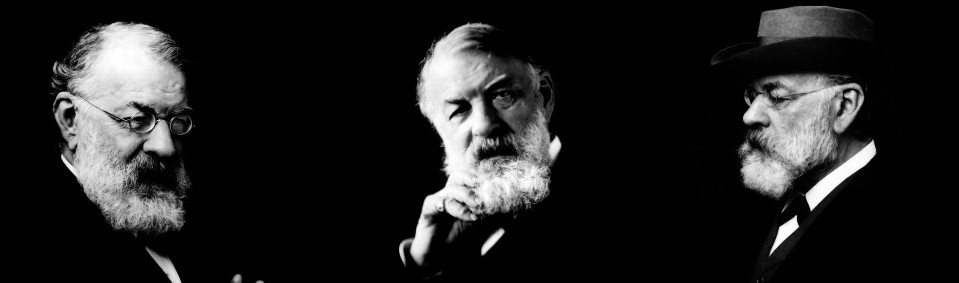
Johanna Eilert (photo): Joseph Joachim and his Grandson Hans,
eldest son of university librarian Johannes Joachim
Illustrierte Zeitung, (Leipzig), vol. 129, no. 3347, 22 August, 1907

16 Monday Jul 2018
Posted in Iconography
Johanna Eilert (photo): Joseph Joachim and his Grandson Hans,
eldest son of university librarian Johannes Joachim
Illustrierte Zeitung, (Leipzig), vol. 129, no. 3347, 22 August, 1907
15 Sunday Jul 2018
Posted in Concert Reviews & Criticism, Uncategorized
Review: Op. 11: Concert in ungarischer Weise
Deutsche Musik-Zeitung, vol. 11, nos. 32 and 33
August 12 and 19, 1861
14 Saturday Jul 2018
14 Saturday Jul 2018
Posted in Iconography
25 Sunday Feb 2018
Posted in Obituaries

Marburger Zeitung, 2 December, 1899, p. 2.
N. B.: Obituaries are posted for historical interest only, and should not be taken as sources of accurate biographical information.
(Amalie Joachim †.) Aus Berlin wurde unterm 5. d. berichtet: Deutschlands größte Lieder= und Oratorien=sängerin ist heute Nacht gestorben. Der Tod brachte der Künstlerin Erlösung von langen, schweren Leiden. Sie litt seit 26 Jahren an Gallensteinen, die verschiedensten Badecuren blieben erfolglos. Sie wagte das letzte Mittel, um Heilung zu finden, sie fasste den Entschluss, sich einer Operation zu unterziehen, einer Operation auf Tod und Leben. Letzten Mittwoch siedelte sie in Begleitung ihrer jüngsten Tochter und ihrer Gesellschafterin nach der Klinik über. Die schwierige Operation gelang; aber die Kräfte der Kranken waren zu schwach, um den Folgen Widerstand leisten zu können. Gestern nachmittags 4 Uhr begann der Kräfteverfall, das Bewusstsein schwand, wenige Stunden später, um 10 Uhr abends, war der liederreiche Mund für immer verstummt. Amalie Joachim ist 1839 in Marburg in Steiermark geboren. Ihre musikalische Ausbildung genoss sie in Wien; hier begann sie, deren Familienname Schneeweiß war, unter dem Theaternamen Weiß am Kärntnerthortheater ihre Bühnenlaufbahn. Die junge Sängerin erwarb sich durch ihre edle Altstimme und ihre vornehme Vortragsweise schnell einen Namen, sie wurde an das hannoversche Hof=Theater als erste Altistin berufen. Im Jahre 1861 heiratete sie den damals schon berühmten Violinvirtuosen Joseph Joachim und beendete gleichzeitig ihre theatralische Laufbahn, die sie glänzend begonnen hatte. Amalie Joachim wurde Concert=und Oratoriensängerin, sie ist in gewissem Sinne als die Begründerin des modernen Liedergesanges zu betrachten, indem sie das Schwergewicht auch nach der geistigen Seite hin verlegte. Der Ruf der deutschen Liedersängerin drang über ihr Heimatland hinaus, ihre echt deutsche Art, die Durchgeistigung und Verinnerlichung ihres Vortrages fand überall Verständnis und erregte darum allüberall Enthusiasmus. Es gab bald kein deutsches Musikfest mehr, bei dem die als die erste Oratoriensängerin, als die beste Liedersängerin geltende Amalie Joachim nicht mitwirken musste, und in England, woselbst Schumann schon damals eine außergewöhnliche Verehrung genoß, galt die Zuziehung der berufensten und vollendetsten Schumann=Interpretin beinahe als etwas Selbstverständliches.

26 Saturday Aug 2017
Posted in Letters
[Joseph Joachim, unpublished MS, British Library: Joachim Correspondence, bequest of Agnes Keep, Add. MS 42718.]
Joseph Joachim to his Parents
[Düsseldorf], August 12 [1856]
Beloved parents,
I have been worried about many things since you heard from me last! Unfortunately, things didn’t go as well as they might have for me in Heidelberg; for the most part I had to struggle with my health, so that the cheerful enjoyment of the beautiful region and carefree creative activity, such as I had hoped for before I came, was out of the question.
Granted, it went better for me by the end of my stay here — but I had hardly begun to enjoy it when news of Schumann’s impending end called me away. You know my heartfelt admiration for the departed one, the warm sympathy that I hold for him and his family, and you may well imagine how deeply the news affected me; it was impossible to stay in Heidelberg and I traveled to Bonn, where indeed I found my deeply-mourned friend no longer among the living. I nevertheless found an opportunity, together with my colleague Brahms, to assist his esteemed wife with a number of acts of kindness.
Of course, Schumann’s condition in recent years has been such that, even as a friend, one wished for a release from the gloomy world that tormented the master; nevertheless, with his death it has become doubly palpable for me how much I have lost of pure benevolence, of encouraging sympathy for my artistic activities. You have no idea how loving, how gentle, how intelligent Sch. was — as a man and as a musician — in his interactions with honestly striving people of good will. Also, how in his never-resting diligence he was a true role model, whose whole significance is written in my heart for life.
After the funeral I traveled with Frau Sch: to here. Düsseldorf is on the way to Hanover, and I shall go back there tomorrow, if only temporarily, in order hear what the King’s plans are for September. I almost fear that I will have to accompany him to Norderney (Seaside resort — an island)! It wouldn’t be very congenial for me; though sea-baths might be quite good for me, and I am henceforth determined to face fortune with a good spirit. If I don’t have to go to Nordeney, I will go for a month to Berlin, in part because of the music library, which I do not yet know, and which I would like to use in the future, and partly also to see my friends there, namely the Arnims, since I far prefer them all to my acquaintances in Hanover. Just now I received a letter from dear Fritz, delayed in the mail, since it strayed first to Hannover, and then to Heidelberg before it caught up with me here. I had no idea that my dear brother was so near, and now I have not seen him! Have you received my last letter? I have not yet heard from you all, and I long so to know about you all in Pest. I will soon send you, from Hanover, the address where you may write to me. How did the baths suit dear Mother, and the stay in the country dear Father? And what is Hermine doing? Frau Schumann has very sweet children, with whom I liked to go for walks — that reminded me of my nieces and nephews!
Now that I am completely healthy again, and have reason to believe that, since my illness has played itself out, I am freed of it for a long time (through careful, regular living and cold baths, for ever!), I am again very happy, and want nothing other than to have good musical thoughts come into my head! I long for continual cheerfulness, and will give evidence of it through frequent writing.
With heartfelt greetings to you all,
Your
Joseph
Translation © Robert W. Eshbach 2017
12ten Aug.
Geliebte Eltern
Seitdem Sie zuletzt von mir gehört war ich mannigfach besorgt! Leider gieng es mir in Heidelberg selbst nicht das Beste; ich hatte meist mit meiner Gesundheit zu kämpfen, so ich an einen frohen Genuß der schönen Gegend an ein heiteres, schaffensfrohes Arbeiten, wie ich vor dem Kommen gehofft//
nicht zu denken war. In der letzten Zeit meines dortigen Aufenthalts freilich gieng es beßer— aber ich fieng kaum an mich dessen zu erfreuen, als mich die Nachricht von Schumanns bevorstehenden Ende dort fortrief. Sie kennen meine herzliche Verehrung für den verstorbenen, den warmen Antheil den ich für Ihn wie für die Familie derselben hege, und // werden denken können wie tief mich die Nachricht ergriff; es war mir unmöglich in Heidelberg zu bleiben und ich reiste nach Bonn, wo ich meinen tiefbetrauerten Freund zwar nicht noch lebend traf, doch wenigstens Gelegenheit fand seines verehrten Frau in manchem Liebesdienst nachträglich, vereint mit meinem Kollegen Brahms, beizustehen. //
Schumanns Zustand war freilich in den letzten Jahren so gewesen, daß man eine Erlösung aus der trüben Welt die den Meister quälte, selbst als Freund wünschte, dennoch ward mir mit dem Tode erst doppelt fühlbar wie viel ich an reinem Wohlwollen an fördernder Theilnahme für mein künstlerisches thun // verloren! Sie haben keine Idee wie liebevoll, wie mild, wie geistig Sch. als Mensch wie als Musiker gegen Reinstrebende Gutes Wollende im Umgang war. Auch darin wie im nimmer ruhenden Fleiß ein wahres Vorbild, deßen ganze Bedeutung mir für meine Lebens=Zeit ins Herz geschrieben ist. //
Nach dem Begräbnißtage reiste ich mit Frau Sch: hinher. Duesseldorf liegt auf dem Wege nach Hannover, und ich will morgen dorthin zurück, wenn auch nur vorläufig um zu hören was des Königs Pläne für den September sind. Fast fürchte ich, daß ich dann mit nach Nordeney (Seebad //
ein Insel) soll! Es wäre mir nicht sehr wilkommen; obschon mir vielleicht Meerbäder recht zuträglich sein könnten, und ich deshalb auch entschloßen bin mich mit gutem Geist ins Geschick zu ergeben. Brauche ich nicht nach Nordeney so würde ich mich noch auf einen Monat nach Berlin begeben, theils der musikalischen Bibliothek wegen, die ich noch nicht//
kenne und die ich gerne für die Zukunft brauchen will, theils auch um meine Freunde dort, namentlich Arnims wieder zu sehen da ich sie meinen Hanoverschen Bekannten allen weit vorziehe. Eben erhalte ich einen Brief von dem lieben Fritz, verspätet durch die Post; da er erst nach Hannover, dann nach Heidelberg//
gewandert war, bevor er mich hier traf. Ich hatte keine Ahnung dass der liebe Bruder so nah war, nun hab’ ich ihn doch nicht gesehen! Haben Sie meinen letzten Brief erhalten? Ich habe noch nicht seitdem von Ihnen allen gehört, und doch sehne ich mich recht von den lieben Allen in Pesth zu wißen?. Von Hannover aus will ich //
gleich schreiben wohin Sie addressieren sollen. Wie ist das Bad der lieben Mutter bekommen, und der Landaufenthalt dem lieben Vater? Und was macht Hermine? Frau Schumann hat sehr liebe Kinder, mit denen ich gerne auf Spatziergänge verkehrte — das erinnert mich an die Nichten und Neffen! //
Jetzt, wo ich wieder ganz frisch bin, und Grund habe zu glauben, daß ich durch die Sommer, wo sich mein Uebel recht austobte, auf lange, (bei vorsichtig regelmäsigem Leben und kalten Bädern auf immer!) befreit bin, bin ich auch wieder ganz //
freudig und will mir auch nichts als gute musikalische Gedanken in den Kopf kommen lassen! Ich sehne mich nach fortdauender immer Heiterkeit und will das durch oftes Scheiben beweisen.
Alles von Herzen grüßend,
Ihr
Joseph.
15 Saturday Jul 2017
Posted in Iconography
Joseph Joachim and Nellie Melba, Guigoni & Bossi, Milan, 1897

Sold by Schubertiade:
Extraordinary photograph of the legendary violinist and the Australian Soprano, signed by both in ink and dated 1897. Albumen photograph by Guigoni & Bossi of Milan, mounting remnanta and losses to verso and around the edges, mostly on the mount only and easily matted out of sight. 22 x 17 cm.
In 1897 Melba and Joachim performed together at the Donizetti centenary celebrations at Bergamo and it is likely that the present photograph was signed on that occasion. ‘Over the years he had applauded her success from afar, occasionally meeting her in London…In Bergamo, with boyish ardor, he fell in love with her….Chaperoned by their retinues, the two celebrities saw the sights together…they also view manuscripts of Donizetti’s music copied by a young and impoverished Richard Wagner….It was an emotional moment, probably the only time the two enjoyed a true reciprocity of feeling. Charmed and intrigued as she was by Joachim’s attentions, there was no disguising the thirty-year age difference and the fact that this bulky body and bearded face reflected every month of his sixty-six years. Although she liked him, flirted with him, and smiled when he called her his Nelmel, there is no evidence that her feelings matched his.’ (Ann Blainey, “Marvelous Melba: The Extraordinary Life of a Great Diva,” p. 178) (10679)”
29 Thursday Jun 2017
Posted in Uncategorized
From: Esther Bright, The Ancient One: To the Young Folks at Home, London: The Theosophical Publishing House, 1927, pp. 46-59.

Esther Bright
I HAVE always loved music. I began to play the fiddle as a small child. My brother played the ‘cello. He was very musical. We loved our instruments, and would get up at 5.30 every morning, enjoy a cup of tea in the kitchen with old Ann, and then work from 6 to 7.30 or 8; real, steady work, we thought it. We made friends with the young organist of a neighbouring village church, who was a fine pianist, and helped us much. We met often, and performed the trios of Beethoven, Mendelssohn, Schubert and Haydn in quite a creditable fashion for young children. We gave concerts every Sunday evening to our parents, and charged them each 6d. entry. Sometimes we had refreshments in the interval of the concert. It was all very delightful. We also played in village concerts, and were applauded by the natives, and felt we were musicians.
My mother said to me one day: “I am going to take you to hear the greatest violinist in the world — Joachim.” So, in the Free Trade Hall, at a Hallé Concert, I was brought first under the influence of the greatest of musicians, not only of a great violinist. To-day we have fine fiddlers who are not musicians, many of them. . . . Joachim! What memories that name calls up !
It is over forty years since the first night when I listened entranced to his music, yet it seems like yesterday. He stood so quiet and still, was so big, simple, dignified, humble. He thought of himself as the interpreter of a master’s idea. Music was his religion. In later years I grew to know him well and love him, but I always remember that night in the old Free Trade Hall when as a child I listened to his music for the first time and felt that I had found, or refound, a friend who was very near to me. The wild, wonderful Hungarian dances — I remember the G minor especially — the warmth, the depth, the bigness of the tone, the pathos, the humour, the tenderness, were a revelation, and I made up my mind then that I would get to him and learn from him!
A year or two later I went to Italy with my parents, and kneeling down in the great cathedral at Milan, I prayed a very earnest, simple prayer: “God, let me go to Joachim and learn from him.” The prayer was answered in later years.
When I was eighteen years of age I went to Berlin and studied in the Hochschule, of which Joachim was Head. I got through the exam, when others, who played far better than I, failed. I did not realise how little I knew, and so was not afraid. I took no accompanist with me, and played the first movement of Tartini’s “Trille du Diable.” The room was full of, to me, old spectacled professors, sitting round a table with pencils and paper in front of them; but to me they were non-existent. Joachim was there; and my thought of him was so holy and other-worldly, so ideal and beautiful, that I played without fear and as well as I could. I think they were rather amused at the English girl with a big pigtail down her back, who had brought no music and no accompanist. At any rate, Joachim came up to me afterwards in a very friendly, delightful way, shook hands, and said he would come and call on my parents next day. I was in heaven!
He came to our hotel, as promised, and said to my father : “She played very bravely.” Dear old Jo! he could not say anything else, for I know now how
47
little I knew then and how badly I played. Anyway, I got in. My parents settled me in a funny kmd of lodging house — 100 marks a month for everything — in Potsdamer Street, just opposite the Hochschule. I had a very lively time there for some months. The landlady was not a lovable person; she scolded her little boy, beat her servants, who were continually running away, and sang the most rollicking songs very late at night. Altogether, she was a very lively person, though most polite to me, for I was “the rich English girl” who paid 100 marks a month, all found!
A little Spanish friend of mine paid only 60 marks for a tiny room, board and lodging. She had failed in the examination, though a better player than I. But I got rather badly starved there, for I was a vegetarian and could not touch the dreadful variety of cooked and raw Wurst which everybody else enJoyed. A professor who frequently dined at our table boasted of drinking thirty bottles of beer a day. I was a very frank and fearless young person, and I told him what I thought of him in plain language, and, curiously enough, he seemed to respect me for it.
There were two other girls in the house besides myself studying the fiddle. We were a very merry trio, but all bent on work. One day a young student came to enquire for a room. The landlady, Frau Lieutenant L., showed him the room next to mine, and every word they spoke was audible to me. “I want perfect quiet,” said the young man; “I’m working for an exam.” “Certainly, absolute quiet you shall have,” said she; “not a sound will you hear. You can study in peace.” This was too much; I rushed to my fiddle case, got out my fiddle,
49
and began playing scales as loudly as I could! Then I listened. Dead silence in the next room. What excuse she made, I do not know, but he engaged the room.
We had many funny experiences in that house. I moved out and got into pleasanter quarters later.
I stayed at the Hochschule for something over two years. A happy, happy time. The joy of life was strong, love of music filled every hour of the day. Joachim put me to study under Professor Kruse, that splendid teacher and grand musician. “I think you will be comfortable with him,” was the remark he made.
I was immensely interested and inspired by the long hours spent in that classroom, for we were ten or twelve pupils, and we all listened to each other’s lessons, thereby learning much. I was a duffer at technique, but during my stay in Berlin I lived deeply in music. Kruse got the best out of his pupils, and put his best into them. I remember the beauty he opened up for us in the study of the Tartini sonatas, Bach and Handel. He gave his pupils a good grounding. I attended Joachim’s quartette lessons, and his class also, for the sake of learning all I could. It was wonderfully interesting, but he could not teach, actually teach, as Kruse could. He would lean back in his chair, take up his fiddle now and then and play a passage for his pupils, his big hands holding the fiddle so quietly, so lightly — wonderful hands, soft, flexible, tender. “So, so! I can do it. Why can’t you?” he said once to an unhappy young man called Venus.
One boy I remember, Popelka, who had a terrible facility on the fiddle, terrible, because he could play anything through at sight, but never got any better.
50
He relied on this and never practiced at all. Once he brought a concerto in to Joachim and told him how many hours he had practiced on it, and found, turning the second page, that the copy had not even been cut. Joachim’s face! . . . and the look he gave the unfortunate lad! He just leaned back in his chair, sighing heavily, and let the boy play.
He took me into his class after my second year at the Hochschule — not that I deserved it. I was about the only pupil who was not going in for music professionally. He had from the first been very kind to me, and I loved with devotion and reverence, both man and musician. He introduced me to his girls, and I went sometimes to his lovely home near the Tiergarten. One most painful experience I had with him, which gave me the keenest suffering. My lesson was at 9.30, but I usually sat listening to the boy who came before me at 9. One day, I was feeling very nervous, and thought I would go into an empty room to play over my concerto once more before my lesson. At about 9.20, the door suddenly was thrown violently open and Joachim appeared on the threshold in a state of heated indignation. “Wo sind Sie denn? It suche Sie überall.” “I have been running over the whole school looking for you!” The boy who took his lesson before me had not turned up, so Joachim was waiting for me.
I was rushed into his classroom. He sat in his chair. I, unfortunate and most unhappy girl, stood in front of him and listened — it seemed to me for half an hour; it may have been five minutes — while he denounced me! “I do not give my lessons by the yard!” he kept saying when I tried to explain that my actual hour was 9.30. It was no good, so I just stood quiet and very icy and cold in
51
my heart, bearing the avalanche which swept over me. At last he grew quiet “Na, na, kommen Sie nur.” And I was expected to play after that! I suppose I did play, somehow or other. He was then very soft and gentle, and at the end of the lesson, perhaps realising my inwardly prostrate condition, though I tried to appear calm and dignified, asked me to come to lunch the next day. I left the classroom. Enough for the day!
That was the only time Joachim ever ill-used me. It was very distinctly ill-usage, and I think he realized it. Next day, I went to lunch at his house, and he showed his remorse by presenting me with a cadenza he had composed specially for me to the Nardini Sonata I was studying with him! It was copied out in his own handwriting. I was touched and surprised and grateful, but the suffering of that half hour lasted a long while. I have the cadenza framed. He had signed it “From Joseph Joachim,” and put my name on it.
JOACHIM, DE AHNA, WIRTH AND HAUSMANN
The Joachim Quartett was a delight. We pupils were always allowed to attend the last rehearsal. I gained a true idea of what quartette playing could be. The rehearsal was a wonderful feast of glorious sound — we heard Beethoven, Brahms, Schumann, Schubert, Haydn, Mozart, Cherubini and many others. Joachim lived in each old master. From the tragic greatness or humour of Beethoven, the mysticism of Brahms, he could turn to the joyous simplicity of Haydn and Mozart.
52
I realised music deeply. It has been a path to me, all my life, to a higher world. It is indeed an interpreter of Divine Ideas, for it expresses what no words can convey; a harmony is brought into our rough life here, a message which each can accept and interpret in his own way. And Joachim, with his great ideal, his childlike simplicity, his deep, pure love of art, was the messenger.
I saw him much in later years. He came to London every spring, and was always a good friend to me. Occasionally he had to make a speech in public — a thing he dreaded and hated. He said to me once: “I am nearly as nervous as you used to be when I taught you!” His golden jubilee was a great event in the old St. James’s Hall. Fifty years since he had appeared as a small boy in London — “a small, fat boy!” so Piatti described him, much to the amusement of Joachim himself and the great audience. He told us how on that occasion he had played the Beethoven Concerto — a little fellow of eleven years of age! — and all the world of music has read how that child played Beethoven’s masterpiece on that occasion. Now, at this golden jubilee, he played it again to us, a younger generation. It was a wonderful evening. Such love and veneration were showered on him. “The ugly man with the beautiful face,” he has been called. He was happy in the love of his many friends; “Uncle Jo,” or “the Uncle,” he was to us.
He could always enjoy a joke against himself. On one occasion he, Hallé and Piatti were giving a concert of chamber music in St. James’s Hall. They began with a Beethoven Trio, but before it was over an old fellow in the front row of the stalls yawned loudly and went out. An hour and a half afterwards
53
he returned to his seat. The musicians had just seated themselves for another Trio, and they heard the weary old gentleman in the stalls say distinctly: “What! Are those three old bogies still at it!” It was not encouraging. […]
54
* * * * *
The following description of a journey to Weimar with Joachim, to a Bach celebration, is taken from my diary. He had invited me to accompany him.
55
“WEIMAR, BERLIN,
“April 5th
“Joachim called for me at my Pension, 146, Kant Street, Berlin, this morning at 7.30 with his son Paul and we drove to the station together. He bought papers and we settled ourselves comfortably down in opposite corners. First we spoke about Goethe and Schiller. ‘Jo’ said how modest Schiller was, and how splendid was the friendship between the two. After a bit, he went to sleep, and lay back with his grand old lion-like head against the cushion, as simply as a child. I look at him with delight. He pleases me immensely. Simple, unassuming, unaffected, childlike, easily ruffled but easily set right again, with very kindly, noble instincts and a desire to help others. I love being with him. . . . Then he wakes up. ‘Are you warm?’ he says. ‘Are you hungry?’ and takes an apple out of his pocket and some bread-and-butter and gives them to me.
“Then we read and talk. He lived in Weimar from 1849-52. I tell him I am interested in the beginnings of the ‘Hochschule,’ at which he gives me one of his beaming looks and tells me ‘I began it in 1859 [sic. It was 1869]; there were 12 boys, violin and piano. I sent for Rudorff and for Schulze. Then the wind instruments came on. There was some disagreement about Rudorff. The minister was displeased with him, Rudorff, for wanting “Urlaub” or something, and told me to dismiss him. I said in that case I would go too! I was engaged by the old King, the old Wilhelm; he was always good to me. He was then in Versailles. I wrote to him, telling him what the minister was trying to do with Rudorff. The old Wilhelm wrote back to me at once: “If they
56
dismiss Rudorff, I will call him back again!” and he gave me (Joachim) more power and more responsibility in the School. It was a blow for the minister.’ He told me of an interesting new boy pupil whom he had got. Wirth wanted him, but he did not wish this and so kept the boy entirely to himself. He thinks he will be good.
“He gave me the names of two good German books. He showed me where his boys had been to school. Years ago he was introduced to Carlyle, and after some conversation he asked him if he knew Sterndale Bennett. ‘No,” said Carlyle, ‘I don’t care for musicians; they are all empty wind-baggy kind of people!’
“At Weimar we were met by his two grandchildren, dear girls of 6 and 8, and drive to this hotel (Hotel Erbprinz) and get lunch with the old composer, Lassen. Joachim goes to his room to have 40 winks, and tells me to go for a walk in the Park, and asks Frau —— to show me round. Sun and hail-storms greet us in the Park. It is charming, undulating and full of trees. The Ilm flows tranquilly through the green meadows. See the place where Goethe bathed every day, his well of clear water and his ‘Gartenhaus’ (most interesting and absolutely simple and tiny), his bed-chamber, ‘Arbeitszimmer,’ ‘Empfangszimmer,’ and kitchen! The old garden full of stone seats and tables. I could see the young Goethe working and thinking, joking and laughing. He must have been a very charming personality, capable of falling in love with a young girl at the age of 75! God understands such feelings, if men and women laugh. Also we saw the one-roomed wooden hut which Goethe had made for Karl August. There the most
57
serious matters were discussed for the people’s good, and also the maddest pranks were played.
“The rehearsal in the church was fine — A minor concerto, Bach.
“Back to the Hotel, and I gave Joachim and Frau von —— coffee in my bedroom. Then we drove to the church at 5.30 for the concert. J. J. played finely. The Bach Aria he also gave us. Drove with him back to a big dinner — 50 or 60 people — in Hotel. Speeches. He had to answer. He does hate it! He looks so terribly mournful before speaking, and so happy after! I say good-bye as he and his children set off at 9.30 for Jena, where I am to join them to-morrow.
“‘Be sure you lock your bedroom door at night,’ he said.
“April 6th,
“A most interesting day in Weimar; visited Goethe and Schiller house and Archives. I went back a century in thought.
“Joined Joachim in Jena and had a delightful journey with him to Berlin. Knowing him is one of the greatest pleasures of my life. I am sure he likes me. Grand old Jo! Bless you.
“He spoke of the Hungarian concerto: ‘I can’t play it in public now, I am too weak,’ holding up his old hands; ‘but I must say, although I wrote it, there is a great deal of feeling in that piece, and even now, when I play it, I feel it very much,’ and he lifted up his head and seemed lost in a memory. I took my courage in my hands and said: ‘Will you play it for me sometime in private?’ I told him how I loved it, so full of passion and longing and yet resignation. ‘I was longing to go home to Hungary
58
at that time,’ he said, ‘but could not get leave, and so I wrote it.’ I told him I was glad he had not got leave! at which he smiled. He told me many interesting things about the Emperor, and how much he liked him. Altogether we had a most delightful journey, sitting opposite each other at the little table, drinking coffee. The Uncle said: ‘The time has gone very quickly!’ I asked him if I might treat him to tea, but he said, ‘No, I will treat you.‘ He drove me home and got out and helped me, and his old face shone like the sun as he said: ‘Good-bye. I will communicate with you.'”
* * * * *
Joachim was amused by simple little things. I remember once, in St. James’s Hall, after he had left the platform on the occasion of a “Saturday Pop,” two ladies jumped down from the orchestra seats and fought for a hair or two he had torn off his bow during the concert. I told him afterwards, and he roared out: “Nein, nein!” in protestation at such foolish hero-worship. Once for fun, later on, he gave me some of his old strings in an envelope, with “Joseph Joachim, Saiten vom Konzert Stradivarius” written on the cover. He wrote me many charming, friendly letters. I always like to remember that he understood and valued my love for him, for he said to a mutual friend in his last illness, speaking of me, “Sie hat ein goldenes Herz” — she has a heart of gold.
Dear old Jo, you still live in our hearts, and never will a time come when you will be forgotten. . . . I went to Berlin to be near him at the end, but he was too weak; I might not go into his room. And afterwards, he lay in peace, the big, soft, tender
59
hands crossed over his breast, his face calm and quiet. . . . The music he loved must surely be around him now.
Joachim! Master Musician!
Esther Bright (1868 – 1957) was a pioneer in Co-Freemasonry in Britain in 1902 and a helper and close friend of Annie Besant. She was born on February 19, 1868, daughter of Rt. Hon. Jacob Bright, British member of Parliament and Ursula M. Bright. A member of the Theosophical Society, she was an active worker for many humanitarian movements.
14 Sunday May 2017
Posted in Ephemera, Uncategorized
Herman Grimm: Poem on the 60th Anniversary of Joachim’s Début
Joseph Joachim
Zur Erinnerung an den 17. März 1839
Vor sechzig Jahren, als es Frühling war,
Da stand ein Kind in lichtem Lockenhaar,
Vielhundert Augen sah es auf sich blicken,
Sie schienen Mut ihm freundlich zuzunicken;
Die kleine Geige nahm es unter’s Kinn,
Den Bogen setzt’ es auf die Saiten hin:
An diesem Abend klang zum erstmal
Dein Saitenspiel im weiterdrängten Saal.
Und jene Jahre sind Dir dann gekommen,
Wo Mendelssohn Dich an die Hand genommen,
Als Hauptmann’s treue Lehre Dich geleitet,
Als Deine Schritte Schumann’s Gang begleitet:
Zur Sonne war’s ein freier, hoher Flug,
Der damals ihn und Klara aufwärts trug,
Und fast wie Sage ist es schon zu lesen,
Wie ihre Schüler Du und Brahms gewesen.
Und als Du dann Dein eignes Reich gegründet,
Mit wie viel Freunden warst Du da verbündet!
Als Bülow Dich, Dich Liszt in Weimar fand,
Und Andre, tief im Herzen Dir verwandt.
Und in dem jugendlichen Weimar klang
Wie in den alten Tagen des Gesangs,
Und in das Brunnenrauschen mischt’ sich wieder
Nachts das Getön der Saiten und der Lieder.
Ein ferner Traum ist das. Doch Du strebst da —
Die Welt blieb jung und Deinem Herzen nah —
Ein Kind, wie es vor sechzig Jahren stand,
Und Kraft und Anmuth führen Deine Hand:
Nur leise, wenn der Beifall Dich umrauscht,
Klingt noch der Ton mit, dem Du einst gelauscht,
Die Stimme derer, die vor langen Jahren
Dir Beifall riefen als sie mit Dir waren.
Doch nicht zu diesen wende Deinen Blick
Erinnerungsvoll in’s Dämmerlicht zurück,
Auch die vergiß , die Dir mit tausend Händen
Von Tag zu Tag den Dank im Sturme senden:
Du selbst sollst heute Deines Beifalls Zeichen
Hier Deinen Schülern, Deinen Freunden reichen,
Die Dir zu Ehren jetzt ihr Loblied singen:
Dem Meister, dessen Lehre sie empfingen.
Was Lehre geben kann, Du lehrst es sie:
Beethoven’s überird’sche Melodie,
Schumann, qualvoll entzückt sein Herz zerreißend,
Bach, klar und still das Höchste uns verheißend,
Und Mozart’s himmlisch heitres Tongedränge,
Als ob das Lied der ew’gen Freude klänge,
Und all’ die Andern, die in lichten Scharen
Einst ihre Schüler, ihre Meister waren.
Du lehrtest sie’s! Und nun sind Alle nah,
Als Schüler sitzen sie noch einmal da:
Was sie gelernt, sie möchten’s gern Dir zeigen,
Als Schüler wollen sie noch einmal geigen,
Was Weber’s letzte Kräfte einst gesungen,
Als er mit hartem Schicksal hart gerungen,
Das Jubellied, das wie der Frühlingswind
Emporrauscht — Setzt die Bogen an! — Beginnt!
(Ouvertüre zur Euryanthe.)
Herman Grimm.
(4. April 1899.)


Beryl Gardiner’s Copy via her daughter Miss Olive B. Lanyon
(Private Collection)
Thanks to James Church for the images
Joseph Joachim to Herman Grimm
[Berlin] 21. April [1899]
Lieber Herman.
Nicht genug kann ich Dir’s danken, daß Du mir Deinen Prolog schon gestern gönntest; denn morgen hätte ich wohl Freude, aber nicht den rechten Genuß davon gehabt. Du hast so schlicht und doch tief empfunden über meine Erlebnisse gesprochen, in so schöner Harmonie unsere großen Meister anklingen lassen, selbst ein Meister der Poesie, daß es mich stets liebevoll daran denken lassen wird. Ich wollte Dir gestern mündlich meine Freude über Dein freundschaftliches Thun aussprechen, leider fand ich Dich nicht, und heute dürfte es mir um dieselbe Zeit ebenso gehen. Du hast hoffentlich mein Blumensträußchen erhalten, das ich von Damen aus dem Schul-Chor erhalten, die mich gerade zuvor reizend angesungen hatten.
Das Orchester soll überwältigend klingen; die vielen lieben alten Gesichter wieder zu begrüßen tut mir wohl! Lasse mir sagen, wie es Gustchen geht, die nun zu meinem Kummer nichts hören wird.
In treuer Dankbarkeit
Dein
Joachim
[Joachim/BRIEFE III, pp. 493-494]
27 Thursday Apr 2017
Posted in Ephemera
Royal Doulton Joseph Joachim Plate

Doulton’s Photographic ware is rare with examples dating between 1893-1905 approximately. The method of transferring a photographic image on to transfer paper for application on to a china body was developed by John Slater and examples usually carry a simple Doulton mark and also the “Slater’s Patent” stamp.
Credit: Christopher Evans, Doulton Collectors’ Club

