
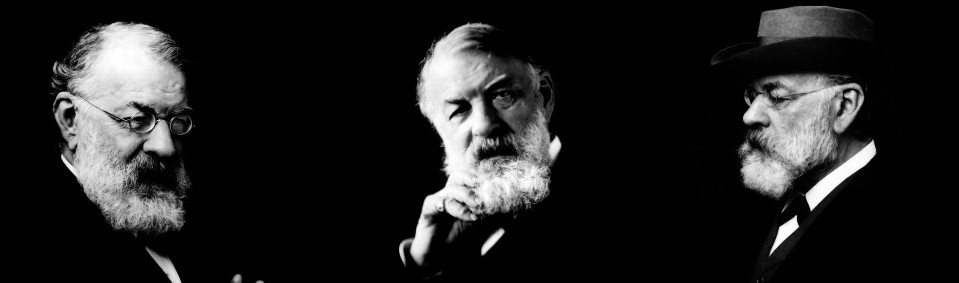
Joseph Joachim: Barraud, 1894

Dr. JOACHIM
“Men & Women of the Day”
1894
Eglington & Co. Publishers
7, Quality Court, London, W. C.
13 Sunday Sep 2015
Posted in Iconography
Joseph Joachim: Barraud, 1894
Dr. JOACHIM
“Men & Women of the Day”
1894
Eglington & Co. Publishers
7, Quality Court, London, W. C.
13 Sunday Sep 2015
Posted in Iconography
Joseph Joachim by Window & Grove, 1874 or Before

Joseph Joachim by Window & Grove
albumen carte-de-visite, 1874 or before
3 1/2 in. x 2 3/8 in. (90 mm x 60 mm) image size
Purchased, 1984
NPG Ax28528
© National Portrait Gallery, London/Creative Commons License

Joseph Joachim by [Frederick] Window & [William H.] Grove, 1874 or Before, offered for sale by Harmonie Autographs & Music, Inc., March 2024:

30 Sunday Aug 2015
Posted in Ephemera
Joseph Joachim: Musical Autographs
Joseph Joachim: Romanze aus dem Concert in Ungarischer Weise, Berlin, 9 January 1893

Cardiff, March, 1894
AMusQS. (“Joseph Joachim”). 1½ pp. Oblong 8vo. On a single sheet of folded paper. Five measures from the second movement of Giuseppe Tartini’s Devil’s Trill Sonata marked “Tempo giusto” and inscribed in German “In memory of the concert in Cardiff and of Joseph Joachim.” Sold by Lion Heart Autographs.


Joseph Joachim: Album Leaf for Elisabeth Joachim, Spring 1897
“Zur Erinnerung an den letzten Kammermusikabend 1896-97. Möge, liebes Kind, Brahms Musik dir ein treuer Schatz für’s Leben bleiben, wie mir!
Joseph Joachim
Frühling 1897.”

“In remembrance of the last chamber music evening 1896-97. May Brahms’s music remain for you a true treasure, dear child, as for me!
Joseph Joachim
Spring 1897.
Berlin, June 5, 1897
Incipit. Bach, Fugue in C Major from Violin Sonata No. 3 in C Major, BWV 1005.
[In English] “In remembrance of Joseph Joachim / Berlin / June 5th 1897”


Bern, March 14, 1900
Incipit. Joachim, Romanze in B flat Major, from Drei Stücke, op. 2.
[In English] “With many thanks for your nice little letter, and for telling me that your mamma liked the piece. / Joseph Joachim / Berne / March 14th 1900”

26 Wednesday Aug 2015
Posted in Concert Reviews & Criticism
The Weekly Herald (New York), August 31, 1844, p. 275.
This article is interesting primarily as one of the earliest mentions of Joachim in an American periodical. It concerns his first London sojourn, as Mendelssohn’s protégé, and mentions him in conjunction with several other violinists whose abilities young Joachim commented on in his letters (particularly Ernst, whom Joachim considered the greatest violinist he ever heard). Note that it gives Joachim’s age as fifteen. According to Joachim’s widely accepted birth date he was thirteen, but there is some additional evidence that he may have been older.
CORRESPONDENCE
London.
LONDON, August 1, 1844.
Musical Doings in Europe.
The season of 1844 which has been the most brilliant on record is drawing to a close, and will be classed in a few days among “things that were.” Lions out of number from every part of continental Europe paid us visits. Mendelssohn, the great composer; Ernst, the greatest living violinist, who has mounted the throne of Paganini, and sits unmolested. His success has no parallel in the musical annals. He has more fervor and passion — more grandeur and variety of expression in his playing than any of the great fiddlers. He possesses a poetical style which is to be preferred to all the mechanism in the universe, although as a mere mechanist his dexterity is unrivaled. Joseph Joachim is another violinist, of fifteen, who has now accomplished, what many of the most celebrated players have not yet achieved. He has the most complete command over the instrument and executes music of all schools from a fugue of Bach to a caprice of Ernst and Bériot with equally marvelous facility. He is Mendelssohn’s pet, and quite outshone Camillo Sivori, “the great humbug of the day,” who, although a violinist of great power, does not possess one atom of originality, and belongs to that respectable class who are justly nick-named “monkey-Paganinis.” Another violinist, who gained more laurels than sovereigns is Mr. Pott, a very clever artist, but who does not possess any transcendent quality so requisite to produce a sensation amongst such a galaxy of talent. […]

09 Sunday Aug 2015
Liszt – Joachim Rhapsodie Hongroise for Violin and Piano (Score)
Composed: ca. 1853
Publication: Leipzig, Hamburg, New York, J. Schuberth & Co
04 Tuesday Aug 2015
Posted in Uncategorized
Signale für die Musikalische Welt, Vol. 65, No. 59 (October 23, 1907), pp. 1079-1082.
Written in the months following Joachim’s death, this article by August Spanuth in Signale für die Musikalische Welt is unusual for being, not a eulogy, but a critical look at Joachim’s legacy as an opponent of the “progressive” music of Wagner and Liszt.
Joseph Joachim ein Phänomen.
Möge die Ueberschrift den Leser nicht irre führen. Noch ein Loblied auf Joachim das Wunderkind, den Geigerkönig, den Quartettspieler, oder den “vornehmen Künstler” anzustimmen, wird hier nicht beabsichtigt. Haben doch die Nekrologe der Eulogien genug gebracht. Der Tribut der Pietät ist dem toten Künstler vollauf bezahlt worden, und es wird nun allgemach Zeit, sich über die Stellung klar zu werden, die Joachim dauernd in der Musikgeschichte einnehmen wird. War er ein Phänomen? Ohne Frage, aber vielleicht nicht in dem Sinne, in dem es diejenigen meinen, die sich immer nur an seinem Violinspiel entzückt haben. Die Nachwelt aber, der nun doch einmal die Entscheidung zufällt, wird das eigentlich Phänomenale seiner Erscheinung in der Trutzstellung erblicken, die Joachim fünfzig Jahre lang der modernen Musik gegenüber eingenommen hat. Von solchen, die ihn noch in seiner Blütezeit gehört haben, mögen manche dagegen streiten, mögen behaupten, seine Vortragskunst sei das Phänomen gewesen, das die Welt in ihm zu bewundern gehabt. Aber sie vergessen, daß menschliche Erinnerung ein recht unsicherer Behälter ist, der den Inhalt selbst gegen unseren bewußten Willen beständig durchsickern läßt; und so sehr sich auch ihr Gefühl dagegen sträuben mag, sie werden das Urteil über Joachim dennoch der Nachwelt überlassen müssen, die — wie wir wissen — dem Mimen keine Kränze flicht. So groß auch seine Vortragskunst gewesen sein mag, sie muß doch in absehbarer Zeit zu einem ziemlich wesenlosen ästhetischen Begriff werden. Ja, es ist sogar vorauszusehen, daß sich spätere Generationen von Joachims Spiel noch viel weniger ein Bild werden machen können, als wir es uns vom Spiele Spohrs oder Paganinis konstruieren. Joachim hat eben keine solchen Kompositionen hintergelassen, aus denen man sich die Eigenart seines Vortrags nachträglich in der Phantasie rekonstruieren könnte. Trotz aller Schüler und aller Tradition muß doch der Zauber seines Spiels schließlich zur Mythe werden, während die Tatsache seines fünfzigjährigen Widerstandes gegen den musikalischen Fortschritt — oder was die Welt zur Zeit dafür hält — als Phänomen in die Musikgeschichte übergehen wird.
An und für sich braucht zwar ein solch’ langer und hartnäckiger Widerstand nichts Phänomenales an sich zu haben. Es gibt genug Gründe für den guten Musiker, das Neue abzulehnen; und wenn er das Neue nicht ohne weiteres, bloß weil es neu ist, für besser hält als das Alte, verrät er eher Besonnenheit, als Gedankenträgheit. Solche Stellungnahme liegt sogar dem Normalen näher, als dem Phänomenalen. Außer der Temperamentanlage ist dann auch das Alter zu berücksichtigen, insofern der normale Mensch mit zunehmendem Alter die Anpassungselastizität für neue Formen und Erscheinungen verliert. Sind doch nur wenige Künstler nach ihrem fünfzigsten Lebensjahre noch im Stande, neuen Ideen mit voller Ehrlichkeit zuzujubeln. Endlich kommt es auch darauf an, wie man mit dem Neuen bekannt gemacht wird, ob unter günstigen oder ungünstigen Umständen. Bei Joachim lagen nun aber die Verhältnisse so günstig wie möglich, und zudem wurde er bereits als junger Mann mit dem Geist der Neuerung in der Musik bekannt. Kein Geringerer als Liszt war ihm Dolmetscher dieses neuen Geistes gewesen, und der Jüngling Joachim war dem Ruf des damaligen Erz-Revolutionärs nach Weimar nicht ungern gefolgt. Auch geriet Joachim, obschon er mit dem Honigseim Mendelssohns gesättigt worden war, gerade wie alle anderen jungen Musiker jenes Zirkels vollständig unter den Zauberbann Liszts. Als der Jünger “seinem Meister” seine Hamlet-Ouvertüre überreicht, spricht er in schwungvollen Worten die Hoffnung aus, daß aus der Ouvertüre hervorgehen möge, wie Liszts Geist den Komponisten bei der Arbeit umschwebt habe. Aber dann kam das intime Zusammensein mit dem jungen Brahms: das Resultat war ein allmähliches Erkalten seiner Gefühle für Liszt, und endlich das bekannte schroffe Lossagen von dem Vorkämpfer des Neuen. Aus dem kaum gewonnenen sechsundzwanzigjährigen Paulus wurde wieder ein Saulus. Recht anschaulich läßt sich der Klimax und Antiklimax von Joachims Verhältnis zu Liszt aus den Ueberschriften von acht Briefen nachweisen, die Joachim vom Jahre 1852 bis 1856 an Liszt geschrieben hat. Zuerst heißt’s “Innig verehrter Herr Doctor”, dann “Verehrter teurer Meister”, später “Lieber, verehrter Freund”, und dann, als Meister und Jünger auf den Duzfuß gekommen, “Lieber Liszt”. Dabei bleibt’s ein paar Male. Dann kündigt Joachim dem “Verehrten Liszt” Schumanns Tod an, und bald darauf bleibt bei der bekannten geharnischten Absage die Anrede überhaupt fort.
Joachim hatte also zur Zeit seiner größten Empfänglichkeit und unter den allergünstigsten Auspizien die Bekanntschaft mit der neuen Art der Musik gemacht, brach aber nach einer kurzen Periode der Begeisterung den Stab über sie. Das war im Jahre 1857 geschehen, und fünfzig Jahre später stand Joachim noch genau auf demselben Standpunkt. Die Musik selbst dagegen war innerhalb dieses halben Jahrhunderts schon wieder eine andere geworden, die Fortschrittler von damals waren überholt worden. Steht doch heute Wagner bereits im Begriff, als Klassiker angesehen zu werden, während Liszt durch seine Nachfolger immer mehr in’s Hintertreffen gedrängt wird. Die gesamte musikalische Welt hat seit jener fernen Zeit viel durchgemacht, nur Joachim ist bis zu seinem Lebensende derselbe geblieben. Während Richard Wagner sich die ganze zivilisierte Welt eroberte und Deutschlands Abgott wurde, blieb Joachim nicht nur abseits stehen, sondern warf auch bei jeder Gelegenheit das erhebliche Gewicht seiner Persönlichkeit und seiner Stellung gegen Wagner in die Wagschale.
Nun scheint man sich aber doch darüber einig zu sein, daß Joachim den größten aller Komponisten, Beethoven, gründlicher verstand und schöner auszulegen wußte, als die besten seiner Kollegen. Dierser selbe Beethoven wird aber von den Fortschrittlichen als ihr legitimer Vorfahr angesehen. Da drängt sich doch die Frage auf, ob Joachim, der Beethoven so tief verstand, recht hatte, wenn er die Neuen ablehnte, oder ob er sich, trotzdem er so Beethovenkundig war, in der Beurteilung derer irrte, die auf Beethovens Schultern zu stehen glauben. Es wird wohl niemand leugnen wollen, daß sich auch jene beiden großen Vorkämpfer des musikalischen Fortschritts, Wagner und Liszt, gar nicht übel auf Beethoven verstanden; Wagner wird wohl der Neunten und Liszt den Sonaten nicht mehr schuldig geblieben sein, als Joachim den Quartetten. Es wäre nun zwar ganz poetisch, sich darüber zu freuen, daß jene Antipoden in dem größten Komponisten ihren Berührungspunkt fanden; aber viel weiter hilft uns der Gedanke nicht. Faßten sie wohl gar Beethoven verschieden auf? Sicherlich. Die beiden älteren Meister — die anachronistischer Weise die Neuerer waren — trachteten bei der Beethoven-Interpretation vor allem nach charakteristischem Ausdruck des Ideenganges, während der jüngere die Schönheit des Ausdrucks als oberstes Gebot anzuerkennen schien. Zu streiten darüber, wer von beiden recht hatte, wäre unfruchtbar, da die einzig zulässige Autorität, Beethoven selbst, nicht mehr darüber befragt werden kann. Das Publikum aber had je nachdem die eine Art der Auffassung so lebhaft bejubelt wie die andere.
Aber wenn wir nun auch zwei verschiedenen Arten der Beethoven-Interpretation die Existenzberechtigung zubilligen müssen — um sie in der gebräuchlichen Phraseologie zu charakterisieren: der klassisch-objektiven und der modern-subjektiven —, so wird damit doch noch keine Erklärung für die gänzliche Verschiedenheit der Schlußfolgerungen — hinsichtlich der ferneren Entwickelung der Musik — gegeben, die beide Teile aus Beethoven gezogen haben müssen. Wie war es möglich, daß Liszt und Wagner aus den Werken Beethovens Impulse für ihr eigenes Schaffen erhielten, und daß Joachim aus denselben Werken solche Impulse ganz und gar nicht heraushörte? Trugen Wagner und Liszt etwas in Beethoven hinein, was nicht hineingehörte, oder litt Joachim an einer partiellen Musiktaubheit, vielleicht an einer musikalischen Farbenblindheit? Gegen die letztere Annahme werden sich natürlich die Bewunderer Joachims sträuben, sie sollten aber zugeben, daß Joachims Abneigung gegen die modernen Tonkoloristen einen schon auf solchen Gedanken bringen kann. Will man nun aber Joachim recht geben, dann erklärt man damit indirekt die musikalische Entwicklung der letzten fünfzig Jahre, mit der Ausnahme von Brahms’ Anteil, für einen grandiosen Irrtum. Dann hätten uns Wagner und Liszt wirklich in eine Sackgasse gelockt, dann hätte man der Musik etwas innerlich Unmusikalisches zugemutet, als man sie zum Ausdruck poetischer Ideen, zur gesteigerten Stimmungsmalerei und zu allen möglichen Farbeneffekten benutzte. Neun Zehntel der musikalischen Welt deuten aber durch ihr Verhalten an, daß sie in Wagner und Liszt durchaus keine falschen Propheten zu sehen vermögen, und ein sehr beträchtlicher Prozentsatz sieht sogar dem extravaganten Treiben der Allermodernsten mit Sympathie zu. Das Häuflein derer um Joachim aber, die noch päpstlicher als der Papst sein zu müssen glaubten und daher für die Modernen nur das Hohnlachen der Verachtung hatten: wie wird es jetzt, nach seinem Tode, erst zusammenschmelzen! Es war schon seit langem so klein im Verhältnis zu der grossen Gemeinde der Bewunderer seines Spiels.
Freilich ist es nicht wahr, daß die Majorität immer recht hat, und des Argumentes wegen sei einmal der Fall gesetzt, daß Joachim die Zukunft der Musik besser verstanden habe als irgend ein anderer, daß Wagner und Liszt die Musik zu Uebergriffen auf Ausdrucksgebiete verführten, die ihr für allezeit hätten verschlossen bleiben sollen. Was könnte nun geschehen, nachdem sich die Welt an diese vermeintlichen Uebergriffe gewöhnt hat? Sollte sich die Musik während der letzten fünfzig Jahre wirklich in einer schiefen Richtung entwickelt haben: wird man deshalb diese Entwickelung und ihre Konsequenzen wie mit einem nassen Schwamm auswischen können? Nicht einmal eine langsame Zurückbildung würde sich bewerkstelligen lassen, denn unser Ohr ist ein merkwürdiges Ding, das sich ungemein schnell, trotz anfänglichen Erschreckens, an neue, überraschende Klänge gewöhnt, einem Rückbildungsprozeß aber gar keine natürliche Anlage entgegenbringt. Also selbst wenn die Majorität auch in diesem Falle nicht recht haben sollte — die Entscheidung fällt doch durch sie, denn ihr ist die Macht dazu gegeben. —
Fünfzig Jahre sind nicht nur im Leben eines Menschen, sondern auch in der Entwickelung der Musik eine gewaltig lange Zeit. Aus Eigensinn, aus Laune oder auch aus persönlicher Abneigung verharrt nur selten ein Mensch so lange bei einer Anschauung, die sich in Widerspruch setzt zu neun Zehnteln der übrigen Welt. Man muß also schon annehmen, daß Joachim an seiner Trutzstellung aus innerster Ueberzeugung festhielt. Daß aber die fernere Entwickelung der Musik ihm nachträglich noch recht geben wird, könnte nur ein sehr sonderbarer Schwärmer annehmen. Die Musikgeschichte wird daher als das eigentlich Phänomenale seiner Erscheinung die Tatsache registrieren, daß die musikalische Welt nicht aufhörte, in him einen großen Vortragskünstler zu verehren, trotzdem seine meisten zuhörer längst in einer ganz anderen musikalischen Richtung trieben, als er selbst.
August Spanuth.
31 Friday Jul 2015
Posted in Estate/Nachlass
C. G. Boerner: Auction Catalog of Joachim’s Autograph and Manuscript Collection
Permanent link: http://digi.ub.uni-heidelberg.de/diglit/boerner1908_05_08/0001
28 Tuesday Jul 2015
Joseph Joachim, Fantasies on Hungarian and “Irish” [recite: Scottish] motives [i.e. “Fantasia on Scottish Airs”]; Early Cadenza to Beethoven Violin Concerto, op. 61. ca. 1850
Digital Library of the University of Łódź, Poland.

PDF: joseph-joachim-fantasies-and-cadenza
Joseph Joachim, [1.] Fantasie über ungarische Motive, for violin and orchestra; [2.] Fantasie über irische Motive, for violin and orchestra; [3.] Cadenza (early version) for Beethoven’s Violin Concerto, op. 61; 69 fols., 32.5 x 26.5 cm [autograph ms., before 1853 (ca. 1850)] — H 15849, marked “Joseph-Joachim Nachlaß.” University of Łódź Library. From the Philipp Spitta Collection.
See: Christoph Wolff, From Berlin to Łódź: The Spitta Collection Resurfaces, Notes, Second Series, 46/2 (December, 1989): 311-327.
The manuscript, which was part of the Joseph Joachim Nachlaß at the Berlin Hochschule für Musik, was sent, along with other materials, to Poland during the Second World War. Christoph Wolff details his discovery of the collection in his 1989 article.
“The only manuscript from the Joseph Joachim estate of the Hochschule für Musik, today divided between a smaller part at the Hochschule der Künste Berlin (West) and a larger part at the Deutsche Staatsbibliothek Berlin (East).
 Program for the first performance of the Phantasie über ungarische Motive, woO, Weimar, October 19, 1850. Ref: Landesarchiv Thüringen.
Joachim gave the premiere of the Phantasie über ungarische Motive in Weimar on October 19, 1850. He gave further performances of the piece during his English sojourn in 1852 (Oxford, Sheldonian Theatre, June 23, and London, Hanover Square Rooms, June 25). On June 26, the London Daily News reviewed the latter concert:
HERR JOACHIM’S CONCERT.—This distinguished violinist gave a concert at the Hanover-square Rooms yesterday evening. His principal performance was Beethoven’s Concerto for the violin, in which he was accompanied by a full and excellent orchestra. He played it magnificently in every respect—in tone, style, execution, and expression. At the close of the first movement he introduced a new Cadenza of his own—very long, elaborate, and full of enormous difficulties, which he surmounted triumphantly; but it was more wonderful than pleasing, as it did not seem to flow out of the subject, and was deficient in melody. A Fantasia on Hungarian airs was a most marvelous display of executive power; but Mr. Joachim shines more as a performer than as a composer. His themes had less national character than many Hungarian airs that we have heard, nor was there anything characteristic in his treatment. It was, however, a perfect piece of violin playing, and, as well as his other pieces, was enthusiastically applauded. There was a numerous audience and a great many musical notabilités were present. M. Ferdinand Hiller officiated as conductor, and among other eminent personages in the room, we observed Dr. Spohr and the Chevalier Neukomm.

The first performance of the Fantasie über irische Motive [recte: Fantasia on Scottish Airs] was given with the Philharmonic Society of London on 31 May, 1852. The program also included Mendelssohn’s violin concerto. The performance occasioned one of the few truly bad reviews that Joachim ever got, in Bell’s Weekly Messenger, June 5, 1852: “Herr Joachim’s playing of Mendelssohn’s concerto, no less than of his own composition, much disappointed us. From the promise which this gentleman gave, when quite a boy, and when last in England, we fully expected to have found much greater improvement in tone and finish than he indicated. His reading of the first and last [movements] of the Mendelssohn concerto was bold and vigorous; but there was a roughness of bowing, a thinness of tone, and an occasional failing in the intonation, which destroyed the effects intended by the composer. The andante was better played; but even here the manner to our minds was not comparable with that of Mr. Cooper, who performed the same composition two years ago at one of these concerts. Herr Joachim is still young enough to improve, and we trust his visit to England will be the means of inducing him to observe the manner of such violinists as Sainton, Sivori, Blagrove, Cooper, and other artistes, whose talent and finish are equal to their execution. From constant playing upon the Continent, where boldness of manner is more applauded than delicacy of execution, he has fallen into a style which requires to be entirely remodeled ere he can be pronounced as one of the most eminent violinists of the day. In his second performance the composition was so mediocre as almost to defy criticism, and his playing, partaking of all the defects manifested in the first concerto, made it even more disagreeable.”
The London Evening Standard [June 1] was more charitable: “In the violin concerto of Mendelssohn, Herr Joachim came in almost immediate rivalry with Sivori, who played the same work last Friday night at the New Philharmonic Concerts. Each artist, however, had a specialty of his own. The fine bowing of Herr Joachim, and his pure musician-like style, were brought into noble requisition, and the concerto had thus every advantage belonging to a highly-refined taste and the most susceptible intelligence. The performance, in a word, was masterly; and the applause, consequently, was loud and vehement. The exquisite slow movement was rendered by this young and diligent artist with a fervour strongly suggestive of the passionate intensity of Ernst. We could not desire a more intellectual or poetical reading. His fantasia in the second act, founded on well-known Scottish airs, was of a more popular complexion; but equally favourable for the display of those fine qualities of style, mechanism, and expression, which every violinist acknowledges him to possess.”
The Morning Post [June 1] wrote: “In the fantasia on Scotch airs, the eminent violinist not only displayed his wonderful digital dexterity to the fullest extent, but proved at the same time, by the general excellence of his composition, that he possesses qualities entitling him to a much higher artistic rank than that of a mere executant. The fantasia, in addition to being so constructed as to exhibit most effectively the special powers of the leading instrument, is consistent in design, and offers, in its harmony and instrumentation, much to interest and charm the classical musician. The mechanical difficulties of this composition are enormous, but Herr Joachim mastered them all with a skill bordering upon the miraculous; and we could not but join heartily in the rapturous demonstrations of approval with which he was honoured.”
Of the Fantasia, the Examiner [June 5] wrote: “In his fantasia he introduced two Scottish airs, and played them with true feeling. But this second performance was altogether de trop. One violin piece is enough for one evening. A second, and from the same hand, argued a poverty of resource, or a want of the means of procuring aid; and as the Society is affluent, we are compelled to impute the error to a failure in the activity or in the judgment of the directors.”
The Morning Chronicle [June 1] compared the Mendelssohn interpretations of the “Teuton” from Prague (!) and the Italian, Sivori, but failed to mention the Fantasia at all.


The London Times, June 1, 1852
Subsequent Performances

The Morning Chronicle, Tuesday, June 1, 1852
Joachim performed the Fantasia again a few days later [Wednesday, June 2, at 1:30 p.m.] at “Mrs. Anderson’s Concert Annual Grand Morning Concert” “Under the Immediate Patronage of her Most Gracious Majesty the Queen” at the Royal Italian Opera, Covent Garden. Bell’s Weekly Messenger [June 6] reviewed the concert, mentioning: “The other solo and concerted instrumental pieces were Joachim’s fantasia on Scottish airs (the same that he played on Monday at the Philharmonic Society); Maurer’s concertante for four violins, performed by Messrs. Sainton, Cooper, Blagrove, and Day; and a duet for violoncello and contrabasso, by Piatti and Bottesini.” The Morning Advertiser [June 3] led with a mention of Joachim’s performance: “Costa conducted the instrumentalists, and of these we may, without invidious preference, mention as soloists Herr Joachim, whose violin fantasia in the first part exhibited a command of the resources and delicacies, as well as the more popular trickeries, practiced on that most marvellous of instruments.” The Windsor and Eton Express [June 5] declared that “Herr Joachim’s fantasia, for the violin, on Scotch airs” was “splendidly performed.”

The Morning Chronicle, Monday, June 7, 1852
A third performance came on Friday evening, June 11 in a benefit for the Royal Society of Female Musicians.
A modern edition of the fantasies is available from Bärenreiter, edited by Katharina Uhde:

Katharina Uhde, violin
Michael Uhde, piano
The first modern performance of the Irish (Scottish) Fantasy.
Katharina Uhde, violin
R. Larry Todd, piano
The first modern performance of the Hungarian Fantasy
See also: Katharina Uhde, “Rediscovering Joseph Joachim’s ‘Hungarian’ and ‘Irish’ [‘Scottish’] fantasias,” The Musical Times, Winter, 2017.
Also: Chapter 1, Virtuosity Uncoiled: Two Fantasies Rediscovered; Fantasy on Hungarian Themes (1848–50); Fantasy on Irish [Scottish] Themes (1852) in Katharina Uhde, The Music of Joseph Joachim, Woodbridge: The Boydell Press, 2018, 15-60.
19 Sunday Jul 2015
Posted in Scores
Joseph Joachim, Drei Stücke, op. 5
1. Lindenrauschen
2. Abendglocken
3. Ballade
Composed: 1853
Dedication: Fräulein Gisela von Arnim
Publication: Leipzig, Breitkopf und Härtel, 1855; French Edition: Paris, S. Richault
See: Kompositionsverzeichnis Joseph Joachim, in Beatrix Borchard, Stimme und Geige: Amalie und Joseph Joachim, Biographie und Interpretationsgeschichte, Wien, Köln, Weimar: Böhlau Verlag, 2005.
17 Wednesday Jun 2015
Posted in 2 Articles and Essays — RWE

Joseph Joachim
(b. Kittsee, 28 June 1831 — d. Berlin, 15 August 1907)
Ouvertüre zu Shakespeares “Hamlet” d-moll, op. 4
Den Mitgliedern der Weimarer Hofkapelle gewidmet
(Hannover, 1853)
Joseph Joachim
(b. Kittsee, 28 June 1831 — d. Berlin, 15 August 1907)
Ouverture to Shakespeares “Hamlet” in D minor, op. 4
Dedicated to the members of the Weimar Hofkapelle
(Hanover, 1853)
Preface
 oseph Joachim is remembered today primarily as a great violinist, and as a close friend and collaborator of Johannes Brahms. If he is less well-known as a composer, it is perhaps his own fault: with the exception of a few occasional pieces, he produced very few compositions after mid-life. The products of his early maturity are significant works, however, well-suited to the concert hall, and worthy of revival. Amongst them, Hamlet is one of the best, and has found a place in the repertoire of great orchestras. It was a work of personal significance to Joachim — a quasi-autobiographical example of what he later called “psychological music.” It was also, so to say, his musical calling card— the work with which he introduced himself as a composer to Liszt and Schumann, who praised it, and to Brahms, who admired it enough to make a four-hand piano arrangement of it.
Joachim began work on Hamlet in Weimar in the summer of 1852, near the end of his two-year sojourn there as Grand-ducal Concertmaster under Franz Liszt. Mendelssohn’s former protégé had been one of the first musicians that Liszt gathered there at mid-century, determined to re-invigorate Weimar’s reputation as the “Athens on the Ilm.” The prestigious seat of German letters, the home of Goethe, Schiller, Herder, and Wieland, may well have seemed a promising arena for an artist like Liszt, in whom “renewal of the art of music through its more intimate union with poetry” had become an article of faith, and the touchstone of all things modern. One of Liszt’s first performances there was the premiere of Wagner’s Lohengrin, a performance that Joachim attended, and that helped convince the young virtuoso and aspiring composer to accept Liszt’s offer of employment. In the ensuing years, Joachim would form cordial friendships with the musicians of the Weimar Hofkapelle, to whom Hamlet is dedicated. He would also be drawn briefly into Liszt’s intimate circle at the time when the composer was inventing the Symphonic Poem. Joachim’s Hamlet is an early and significant example of this “New German” tendency in music. It is no mere imitation of Liszt’s style, however — indeed, it precedes most of Liszts compositions in that genre. In it, we hear an authentic and original voice.
In the end, Joachim’s time in Weimar proved disappointing. Between periods of intense activity, Liszt was often away, attending to his ailing companion Princess Carolyne zu Sayn-Wittgenstein. Lonely and bored during Liszt’s absences, Joachim and Hans von Bülow filled their time with practicing, taking long walks in the Ilm Park, and teaching each other Spanish. After two years, Joachim left Weimar to become Royal Concertmaster in Hanover.
Joachim’s chronic loneliness was only made worse by his move to Hanover. As Julius Rodenberg later recalled: “He was the concert director, and, although favored by the court and admired by the public, he lived a quiet, secluded life. We regarded him with considerable awe as one who had a mission. He spoke little in those days; ‘Music is his language.’”[1]
Joachim completed his Hamlet Overture during his first months in Hanover (the score is dated “Hanover, 16 March, 1853” and initialed “f.a.e,” for “frei aber einsam,” — free but lonely), and he sent it to Liszt as “a token of my gratitude and devotion.”[2] Referring to his new position under Heinrich Marschner, he wrote: “I was very much alone. The contrast between the atmosphere that, through your activity, is ceaselessly filled with new sounds, and an air that has been made utterly tone-rigid by the rule of a phlegmatic northerner from the Restoration time is too barbaric! Wherever I looked, no one who shared my aspirations; no one except the Phalanx of like-minded friends in Weimar. […] I turned to Hamlet; the motives of an overture that I had already ‘wanted’ to write in Weimar came back to me […].”[3]
On April 7th, Joachim sent another, rough draft of Hamlet to Woldemar Bargiel, saying: “I need hardly justify myself to you over my choice of a hero for my musical essay. Hamlet is generally regarded as too introspective. But this introspection is merely a refuge from the constant tumult of his mind. The feelings which drive him to it, the strong and constant need for action, the sombre grief because this great longing for the realization of his inner life must wither impotently when opposed to external circumstances, these feelings must have tormented every human heart; they are universal, therefore they must be musical.”[4] For Joachim, this struggle to reconcile the inner life with outward circumstance would become a driving obsession. In the ensuing years, Polonius’ words to Laertes, “to thine own self be true,” and Hamlet’s words, “I know not seems… I have that within which passeth show,” would become for him a personal quest, and an unspoken artistic creed.
Liszt was quick to recognize the Hamlet overture as a kind of self-portrait, calling it a “remarkable work, which, among other merits, has that of bearing a strong resemblance to you as I know you and love you.” “’To be or not to be; that is the question,’” he wrote. “You resolve this great question with an emphatic affirmative, by a serious and beautiful work, greatly conceived and broadly developed, which categorically proves its right to exist.”[5] Nevertheless, when Liszt read the work with the Weimar Hofkapelle in late May, it met with a cool reception. “My overture appealed to just a few people there,” Joachim wrote to Woldemar Bargiel. “They said it sounded as if I had roared a fearsome ‘stay ten paces away from me.’ I liked that!”[6]
Liszt continued to think highly of Joachim’s overture, though, calling it noble and vigorous, and he often discussed it with his composition students. Five years later, Liszt would write his own Hamlet, a symphonic poem, dedicated to Princess Carolyne.
Encouraged by Liszt’s approbation, Joachim sent the score to Robert Schumann, with an appeal for criticism. “I hesitate to send it to you,” he wrote, “as this is the first time that you see one of my works.”[7] Schumann sent a long and detailed letter in return, elaborating his impressions. “As I read it, it seemed as though the scene gradually grew before my eyes and Ophelia and Hamlet actually stood forth,” he wrote. “There are very impressive passages in it, and the whole is presented in the clear and noble form which befits such a great subject. […] Music should, in the first place, appeal to the sympathies, and when I say that your work has appealed to mine you may believe me.”[8] Schumann’s interest in the work continued, even after his institutionalization in Endenich.
Hamlet made a strong impression on other contemporaries as well. In July, Albert Dietrich wrote to Bargiel: “[Joachim’s] entire being is impressed with the stamp of supreme artistry. Nevertheless, my respect and enthusiasm for him grew immensely when I came to know the Hamlet overture; the work has moved me deeply; the entire tragedy sounds forth from it in the most striking manner. The main motive of the allegro is remarkably characteristic — so indecisive, mysterious — like Hamlet; the interval of the minor third, distinctive of the entire overture, is of marvelous effect, etc.”[9]
Berlioz, and Joachim’s new-found friend Brahms, also admired the work, and thought that it marked Joachim as a composer of great promise. Nevertheless, the first public performance, with the already mentally ill Schumann as the thoroughly inadequate conductor, was a disaster. As Joachim wrote to his brother Heinrich: “There was nothing good to report about the performance of my Hamlet overture: the orchestra was bad; moreover, Schumann is an excellent, poetic man, and a great musician, but unfortunately no equally-great conductor — the work was not criticized, because it was simply not heard.[10]
Hamlet failed in Leipzig as well, under Joachim’s own direction, but for a different reason — a “progressive work,” it failed to appeal to the Leipzigers’ conservative taste. The Süddeutsche Musik-Zeitung opined that the overture “again provided clear evidence of what eccentric creations the new school produces.”[11] The performance was hissed.
Joachim revised the overture repeatedly and extensively following its initial performances (including another reading by the Cologne orchestra under Ferdinand Hiller), mostly to make the instrumentation more transparent. “I so often allowed a host of orchestral instruments to sound along with the melody,” he wrote to Gisela von Arnim, “yes, if only they were all sensitive souls! — but the musicians blow and bow the notes so coarsely — and what in my mind was a sigh or a joyful Ach! was a crass horn tone — a screechy fiddle bow noise — why are there so many workmen, only!!”[12]
Joachim performed Hamlet sporadically during his lifetime, and within intimate circles it was heard in Brahms’s four-hand arrangement. Though the parts were published by Breitkopf & Härtel in 1854, the score did not appear until 1908 — the year after Joachim’s death. Performance standards have risen enormously in the last century and a half, and the “progressive” music of the Weimar circle no longer provokes hisses in the concert hall. In recent years, Joachim’s Hamlet has found its audience: it has been performed and recorded often, and has taken its rightful place in the orchestral repertoire.
© 2015 Robert Whitehouse Eshbach
[1] “Er war Concertdirector und lebte, wiewohl vom Hofe bevorzugt und vom Publicum bewundert, ein stilles, zurückgezogenes Leben. Wir betrachteten ihn mit einiger Scheu, wie Einen, der eine Mission hat. Er sprach nicht viel damals; ‘Musik ist seine Sprache.’”
[2] “ein Zeichen meiner Dankbarkeit und Ergebenheit.”
[3] “[…] ich war sehr allein. Der Kontrast, aus der Atmosphäre hinaus, die durch Ihr Wirken rastlos mit neuen Klängen erfüllt wird, in eine Luft, die ganz tonstarr geworden ist von dem Walten eines nordischen Phlegmatikers aus der Restaurations-Zeit, ist zu barbarisch! Wohin ich auch blickte, keiner, der dasselbe anstrebte wie ich; keiner statt der Phalanx gleichgesinnter Freunde in Weimar. […] Ich griff da zum Hamlet; die Motive zu einer Ouverture, die ich schon in Weimar hatte schreiben ‘wollen’, fielen mir wieder bei […].”
[4] “Über die Wahl des Helden zu meinem musikalischen Versuch brauche ich mich wohl kaum bei Ihnen zu rechtfertigen. Hamlet wird gewöhnlich ein unmusikalischer Stoff genannt; die Leute halten sich daran, daß Hamlet viel reflektirt. Dies Reflektiren ist ja aber nur die nothwendige Flucht vor der Unruhe, die sein Inneres beständig durchwühlt. Was ihn da hintreibt, der ewige mächtige Thatendrang, die tiefe Trauer darüber, daß diese herrliche Sehnsucht nach Verwirklichung des innersten Lebens an äußeren Verhältnissen, an geistig Nichtigem machtlos verbluten muß, hat wohl jedes Menschen Brust durchzogen, ist allgemein menschliches Gefühl, also auch musikalisch.”
[5] “’To be or not to be; that is thé question’ […] Vous résolves cette grande question d’une manière très affirmative, par une œuvre sérieuse et belle, grandement conçue et largement développée, et qui prouve catégoriquement son droit d’être.”
[6] “Meine Ouvertüre hat dort nur wenigen Leuten zugesagt. […] Man meinte, sie klänge, als ob ich den Leuten ein fürchterliches: “Bleibt mir 10 Schritt vom Leib” zubrüllte. Das war mir lieb! — ”
[7] “…ich zage bei der Übersendung, denn es ist das erstemal, dass Sie von mir ein Werk zu Gesicht bekommen.”
[8] “Es war mir beim Lesen, als erhellte sich von Seite zu Seite die Scene, und Ophelia und Hamlet träten in leibhaftiger Gestalt hervor. Es sind ganz ergreifende Stellen darin, und das Ganze in so klarer und großartiger Form hingestellt, wie es einer so hohen Aufgabe gemäß ist. […] Sympathisch vor Allem muß die Musik wirken, und wenn ich das von Ihrer auf mich die sagen kann, so mögen Sie das glauben.”
[9] “[…] seiner ganzen Erscheinung ist der Stempel höchster Künstlerschaft aufgeprägt. Meine Verehrung u. Begeisterung für ihn steigerte sich aber noch gewaltig, als ich die Hamletouverture [op. 4] kennen gelernt; das Werk hat mich tief ergriffen; das ganze Trauerspiel klingt auf das Frappanteste daraus hervor. Merkwürdig characteristisch ist das Hauptmotiv des Allegro — so unentschieden, mysteriös — wie Hamlet; von wunderbarer Wirkung das der ganzen Ouverture eigene Intervall der verminderten Terz etc.”
[10] “Von der Aufführung meiner Hamlet-Ouvertüre war nichts Gutes zu berichten: das Orchester war schlecht, zudem ist Schumann ein ausgezeichneter, dichterischer Mann, und großer Musiker, aber leider kein ebenso guter Dirigent — das Werk wurde nicht beurtheilt, weil eben nicht gehört.”
[11] “ […] wieder einen recht deutlichen Beweis lieferte, welch verschrobene Schöpungen die neue Schule zu Tage fördert […].”
[12] “Ich ließ so oft neben der Melodie eine Menge Instrumente des Orchesters mitschwingen — ja wären das lauter fein empfindende Seelen! — aber so blasen und streichen die Musici roh die Noten — und was in mir ein Seufzer oder ein freudig Ach! war, wird ein plumper Hornton — ein kreischender Fiedelbogenlaut — Warum giebts nur so viele Handwerker!!”