• Home
  • INDEX

Joseph Joachim

~ biography and research

Joseph Joachim

Monthly Archives: July 2019

Marian Millar: Joseph Joachim (1887)

31 Wednesday Jul 2019

Posted by Joachim in Biographical Sketches

≈ Leave a comment

[From The Quarterly Review, vol. 3 (London: John Heywood, 1887), 178-182.


JOSEPH JOACHIM

JOSEPH JOACHIM, the youngest of seven children, was born on the 28th June, 1831, at Kittsee, an insignificant village near Pressburg. His father was a trader in a small way, who, in spite of strenuous endeavours to better his position, remained a poor man. Our hero had not completed his first year when the family went to settle in Pesth.

The universal experience that no talent shows itself so early as that of music was to be again illustrated in him. A guitar, which was won’t to serve as accompaniment in the vocal practice of his eldest sister, was his pet plaything, until one day his father brought home for him from the fair a child’s fiddle. This now became his inseparable companion, and soon beneath the tiny, active fingers it began to grow vocal and harmonious. Whatever he heard he would afterwards reproduce on his instrument. When boys of his own age were engaged in noisy play around him he would crouch down in some out-of-the-way corner, in perfect happiness, reproducing the melodies which he had picked up from the wandering gypsies, those indefatigable guardians of the rich national treasure of melody. Often had his people to search for him by the hour until distant notes would at length reveal to them his whereabouts.

Thus matters went on until he was six years old, when the boy began to receive instruction. It was his good fortune to find an experienced and conscientious teacher in the Pole, Servaczinski, to whom he owed the attainment of that early and safe “technique” which forms the indispensable basis of every artistic calling, and for the lack of which no after expenditure of pains is able to make up.

Before he was seven years old he had won his first laurels in the concert room. He had gradually exhausted all the musical pabulum provided by his native country, and now it became time to think of transplanting him to some more fertile soil. In Vienna there lived two of his father’s well-to-do brothers, and they promised to look after their nephew’s future. The next thing was to place him under George Hellmesberger’s tuition. This artist, after giving instruction to our hero for almost a year, unexpectedly declared ta the right hand of his pupil was too weak to handle the bow with the necessary energy. Just at that time the famous violinist, Ernst, was celebrating brilliant triumphs the Austrian capital. To him our youthful artist hastened, and told him of his plight, meeting with a kind reception, and receiving not merely consolatory encouragement and stimulating incitement, but,

179

what was more to the purpose, actual help. Thanks to the mediation of the virtuoso,  Ernst’s excellent teacher, Bohn, [sic!] received the boy into his own house, in order to be able to give every free moment to him. After three years had gone by there was nothing he could impart to his pupil. The education of the violinist was now complete—that of the artist was yet to begin.

In the thirties and forties of the present century Leipzig was the undisputed centre of German musical life, the focus which both received and dispensed all light and warmth. Vienna, once proud queen in the realm of sound, now found enjoyment and satisfaction but in the sweet siren-songs of voluptuous sensuousness. The same stage for which Gluck, Haydn, Mozart, Beethoven, and Schubert had created so many of their noblest works was now given up to Italian opera, to the fatal star-system of concert-givers, and to the fascinating Strauss waltzes; whilst the might dead rested forgotten in their graves. Wat the present time possessed in the way of musical productive wealth took creative shape in the persons of Mendelssohn and Schumann. To both Leipzig had become a second home. There they wrought by word and by example; there in the newly-erected Conservatorium of Music and in the old renowned Gewandhaus performances (still the pattern of all that is sterling in concert-giving over the whole civilised world) might be traced the fountain-head of all artistic teaching and stimulus. A cousin of Joachim, a lady with whom in early days he had diligently practiced the Beethoven sonatas, had married and settled in Leipzig. She could never say enough of all the musical marvels on the banks of th Pleisse, and every one of her letters was to our artist an alluring call to which his inner voice made lots and ever louder response. At length he could no longer resist. Notwithstanding the opposition of his uncles, he seized his wandering staff and merrily entered the “Reich.”* [*n. “Germany, as distinguished from German Austria]

We know from Mendelssohn’s letters what he was to his younger fellow-artist, what a true friend and indefatigable helper every serious worker ever found in him. In the most sympathetic manner he took up the cause of the thirteen-year-old Hungarian fiddler, whose genuine artistic cachet his keen experienced eye recognised at the first glance. Unremittingly he aided him, by giving both counsel and material help; everywhere his paternal care surrounded him; almost daily in his little “Cherub-faced trombone player,” as he used playfully to call him, must come and “make music” with him. It was he who opened his eyes to

180

the spirit of the masters, who allowed him to be eye-witness of his own composing, who watched over and corrected his attempts at composition, and who, under David’s guidance, had him introduced to the style of the school of Spohr. And not only did the musical development of his protégé lie next his heart, but he also took care that the youthful mind should not lack general intellectual culture. Neither in Pesth nor in Vienna had Joachim followed any studies outside those belonging to a strictly musical education—his violin had been everything to him— and he had, in quite a casual way, acquired little more than the three R’s. At Mendelssohn’s bidding, who selected for him suitable teachers, he now worked industriously at Latin, history, German literature, and modern languages. But more yet to him than all these studies was the unbroken personal intercourse with the matter. How zealously he strove in everything to live up to his high model is proved, amongst other things, by the exterior circumstance that his handwriting, even to this day,bears a remarkable resemblance to that of Mendelssohn. Of Mozart and his pupil Süssmayer a similar fact is related.

In the winter of 1844 Joachim was already playing in public at Leipzig and in the next year he followed Mendelssohn to London. That sacred shrine of English concert life, the hall of the Philharmonic Society, whose threshold was sternly guarded by a clause denying entrance to all musical juvenile prodigies opened its doors to Joachim. This, however, was only brought about by the composer of “St. Paul” pledging his word that in the half-fledged youth there really existed a perfect full-blown artist. By his execution of the Beethoven Joachim at that time laid the foundation of his extraordinary popularity in England. Many a London season has since welcomed him as an honoured guest.

After returning to Leipzig he became a member of the Gewandhaus orchestra which was likewise that of the theatre whenever opera was performed. Rich opportunity here was afforded him to get to know the Orchestra as a whole, as well as the nature of each individual instrument. In the autumn of 1849 he went, with the title of “Coneertmeister,” to Weimar, where Liszt reigned supreme, gathering about him the whole of young musical Germany, and striving to recall by the power of sound,
the glory of bygone times. This new sphere of activity did not long enchain our young artist; for so soon as 1851 be obeyed a call to Hanover as chief eonduetor of the Symphony Concerts established there in the course of that winter.

181

In 1863 he married Amalie Weiss, at that time prima donna at the Court Theatre, and after the Prusso-Austrian war had swept away the throne of the Guelphs he settled in Berlin. His influence in every direction has not failed to leave its mark upon the musical life of his newly-chosen home, not only in the concert-room, but as the director and principal of the Berlin Hochschule für Musik, a state-subventioned institution.

That he can hold his own against the “powers that be” was proved inter alia by the fracas with the Minister of Instruction and Fine Arts, Von Mühler, who, on his own authority, dismissed one of the teachers of the Academy. Although at that time attention was centred on the Franco-German war, the matter did not pass without exciting considerable comment, and it was even dragged into Parliamentary proceedings, serving as a stalking-horset to the”Progressists.” The result,as is well known, was that the statesman was worsted, and the musician issued as victor from the combat.

Amongst all the virtuosi of the present day Joachim undoubtedly occupies the first place. If it be that the highest attainment of art— the real soul of all music—is to be found in the tone produced,whether from the human voice or from an instrument, then is Joachim facile princeps, for it is the marvellous breadth and perfect beauty of his tone and the wonderful variety of expression which he evolves from his instrument which give the characteristic impress to the playing of our Fiddler-King. In every phase that music can assume—the deep chest note of the G string,the highest of flageolet sounds— in every degree of strength, even in the most powerful fortissimo which carries away the united force of the whole orchestra, he remains dominant, and asserts his inborn supremacy.Hand in hand therewith goes a facility of execution which no difficulties ever succeed in discomposing; the most hazardous passages fall spontaneously from his strings; his intonation being ever pure and clear as a bell, the articulation of each phrase distinct and transparent down to the very smallest detail.

To come to the most essential part of all—this splendid and infallible “technique” remains entirely at the service of a mind ever directed towards the purely ideal in art. Absolute fidelity, simplest veracity, stern adherence to the composer’s intention, are the elements in which Joachim’s execution lives and breathes, and from which it draws all its strength. Nowhere is the countenance of the composer obscured or dimmed by subjective additions on the part of the performer; it is 

182

always the essence of the composition which we receive, without deduction or meretricious ornament. How the playeer is entirely merged in the artist becomes apparent in the choice of works with which he appears before the public. No consideration for outside success can ever tempt him to perform one of those well-known mechanical productions solely designed to feed the bravura longings of a vain executant.

The richest and most solid treasures of violin literature lie deposited in the string quartet; and the unremittent cultivation, therefore, of chamber music lies nearest to Joachim’s heart. He is the centre of a society of artists who, season after season, give all music-lovers the opportunity of hearing Haydn’s, Mozart’s, Beethoven’s, Schubert’s, Mendelssohn’s, and Schumann’s works of this class. The largest of Berlin concert- rooms is hardly sufficient for the crowds who flock to these performances, and we cannot but marvel that one of the purest and severest forms of art should be enjoyed to the full and hailed with acclamation, not only by the narrow circle of connoisseurs, but by the great masses of the people— a circumstance little short of a modern miracle in a city which, like all other capitals, is supposed to be largely devoted to materialistic enjoyment.

Joachim is known to us as a composer, more particularly by his Hungarian Concerto; while in the capacity of Director of the Hochschule für Musik in Berlin he is signally successful. This institution is constantly advancing, flourishes in every way, and can point with just pride to its achievements in the field of violin playing. Moreover, on the occasion of a public examination of its students it has “many a time and oft” proved itself to be in possession of an orchestra of stringed instruments of which it would be difficult to find the equal. Thus the life of our great artist is in no sense barren, since the spirit of the master still lives in his disciples, and transmits to posterity a school worthy of the highest traditions of the divine art of Music.

MARIAN MILLAR

https://books.google.com/books?id=vukqAAAAYAAJ&pg=PA178&dq=joseph+Joachim&lr=&as_brr=1&ei=EBQ1S6S7KKCszASPut3MAQ&cd=35&hl=en#v=onepage&q=joseph%20Joachim&f=false

Share this:

  • Share on X (Opens in new window) X
  • Share on Facebook (Opens in new window) Facebook
  • Email a link to a friend (Opens in new window) Email

Like this:

Like Loading…

Joseph Joachim to Gisela von Arnim, Hanover, mid-April 1854

15 Monday Jul 2019

Posted by Joachim in Letters

≈ Leave a comment

Translation © Robert W. Eshbach, 2013


JJ Initials

Gisela

Gisela von Arnim

Joseph Joachim to Gisela von Arnim[i]

[Hanover, Mid-April 1854]

My dear friend,

Are you angry with your friend, that he has been silent for so long—? O, don’t do it, you dear Gisela, but believe him that it was necessary. I belong to you more securely than ever before, and will not torment you any more—I have done that so often, my dear friend. If only I could tell you, how I feel that I belong to you in inexhaustibly true love, how all my music resonates in solemn delight around the picture that you have poured into my heart. I make a girl my master; from the unprofaned grace of her gaze I learned intuitively to feel the truest beauty, pure faith. What would I have become without you; how dried out from the hothouse-warmth of my Weimar companions. You have reawakened delight, pain, all the primal flames of feeling, with your rich, sun-like being. Yes, I have recovered all my enthusiasm for music; I feel contented in the blissfulness of my feelings, come what may in this world, and I have you to thank eternally that I have again become myself, you who are born to harmony.

Ah, dear Giesel, you ask if I would have felt happy in Berlin! No, I was abysmally unhappy there—broken in my self-esteem; I felt thoroughly humiliated, dumb, inexperienced, a child from head to sole. I had to see that which I had only imagined, and experience that it is one thing to have honorable intentions and another to banish dearly-held wishes; —I had to hear from a girl, who had been magnanimous toward me, and whom I had offended, that she had thought me more high-minded than I was—ah, let me remain silent about how ashamed I felt—who had always believed himself so proud —

All the bitterness that came over me afterwards has been overcome—and I thank God that he has granted me that which will always raise me above every misfortune. I feel that I was born to be an artist, with joyous enthusiasm, and not with the morose reforming zeal of a moralist; I pay homage to the true, the beautiful, with the obstinacy of my dissatisfaction. I would not write that if it were a passing spring daydream; I feel that it grips me.

I am working now on a symphony whose first movements are already quite far along, and sing in me constantly. Hölderlin’s Hyperion, which I read for the first time recently has taken a powerful hold of me (Now I hear you exclaim how awfully young I still am!), and the themes of the symphony have sprung from the mood that it has aroused in me.

At first, the thought of a Prometheus Symphony came into my head; isn’t every creator a Prometheus?

Did you imagine
That I should hate Life,
Flee into deserts
Because all blossom-dreams did not mature?
Here I sit, forming men
To me, a kindred race
To suffer, to weep,
To relish and to be joyful —

                                    [Goethe]

How wonderfully that could be reproduced in 4 movements of a symphony:

  1. Prometheus, the creator of men,
  2. The sacred fire,
  3. The Soul,
  4. The chastised and freed Prometheus;

but I believe it will take a while for this desire to ripen into deed. So far it remains more in my speculation than in my mood. — And now, again heartfelt thanks for your poem Helgi and Sigrun. I ask your permission to keep it for yet another week; I like it so much that I would like to transcribe it myself — it is so steely and pristine, and yet what a warm breast the armor covers; what heavenly sun is mirrored in its fire!

You dear friend!

Herman’s Traum und Erwachen [ii] is very beautiful; many strophes delighted me — but I was staggered to see a secret of our lives confided to the public in it — I confess, I think Herman’s wish to open my eyes has more reason in the dedication than love for me — feeling of sympathy. He is too afraid to be Anton’s friend, and he holds me to be Anton —

Am I wrong about this?

Tell me soon that you are well—and whether you will soon travel to Wiepersdorf? I will be back and forth between Göttingen and Düsseldorf this summer. In autumn I travel to Pest.

Constantly,

your

J. J.

[i] Joachim/GISELA, pp. 29-31

[ii] Herman Grimm, Traum und Erwachen: Ein Gedicht, Berlin: Wilhelm Hertz, 1854.

Share this:

  • Share on X (Opens in new window) X
  • Share on Facebook (Opens in new window) Facebook
  • Email a link to a friend (Opens in new window) Email

Like this:

Like Loading…

Family Tree with Links

04 Thursday Jul 2019

Posted by Joachim in Family

≈ Leave a comment

Family Tree with Links


Avigdor (Figdor) (*ca. 1710 ‚ †1769)


Jakob/Jacob Figdor (*1742 — 1806) = Regina/Regine (Sinzheim) Figdor (*1752 — †ca. 1818)


Immediate Family


1. Isak Figdor (*ca. 1768 — †ca. October 9, 1850) = Anna (Schlesinger) Figdor (*1770 — †1833)

2. Fanny (Figdor) Joachim (*ca. 1791 — †1867) = Julius Joachim (*ca. 1791 — †1865)

3. Friedrich Joachim (*1812 — †November 26, 1882) = Regine Just

3. Josephine Pessel Joachim = (Thali Ronay) Otto Naftali Rosenthal

3. Julie Joachim (*Kittsee, ca. 1821— †Vienna, July 8, 1901) = Joseph Singer

3. Heinrich (Henry) Joachim (*Kittsee, ca. 1824 — †London, July 21, 1897) = Ellen Margaret Smart

3. Regine Joachim (*Kittsee, 1827 — †1862)

3. Johanna Joachim (*Kittsee, ca. 1822 — †ca. 1887) = Lajos Aranyi

3. (Georg Maria) JOSEPH JOACHIM (June 28, 1831?[1] — August 15, 1907) = Amalie (Schneeweiss) Joachim (*Maribor, Podravska, Slovenia/(Marburg, Austria), May 10, 1839 — †Berlin, February 3, 1899) Amalie_Joachim Short Biography (Beatrix Borchard, MUGI

4. Julius Johannes Hermann George Joachim (*Hanover, September 12, 1864 — †1949) = Else Ottilie Gensel

4. Giselher Bernard Hermann Joachim (*Hanover, January 24, 1866 — †August 15, 1917) = Suzanne Chaigneau (*Chailly-en-Bière, Seine-et-Marne, Île-de-France, France, June 14, 1875 — †Paris, April 13, 1946)

4. Marie Joachim (*Hanover, January 31, 1868 — †Hamburg, October, 1918)

4. Josepha Joachim (*Berlin, February 16, 1869 — †1937 or 1939) = Fritz Mayer (Fels)

4. Paul Philipp Heinrich Joachim (*Berlin, May 7, 1877 — †1933) = ? Joachim, +Bertha (Weigel) Joachim, +Elizabeth (Barth) Joachim

4. Elisabeth Anna Marie Charlotte Joachim (*Strobl, Salzburg, Austria,  June 26, 1881 — †New York, NY, October 28, 1968)

3. Unknown child, mentioned in Moser Lebensbild.


Extended Family


1. Isak Figdor (*ca. 1768 — †ca. October 9, 1850) = Anna (Schlesinger) Figdor (*1770 — †1833)

2. Fanny (Figdor) Joachim (*ca. 1791 — †1867) = Julius Joachim (*ca. 1791 — †1865)

3. Friedrich Joachim (*1812 — †November 26, 1882) = Regine Just

3. Josephine Pessel Joachim = (Thali Ronay) Otto Naftali Rosenthal

3. Julie Joachim (*Kittsee, ca. 1821— †Vienna, July 8, 1901) = Joseph Singer

3. Heinrich (Henry) Joachim (*Kittsee, ca. 1824 — †London, July 21, 1897) = Ellen Margaret Smart

3. Regine Joachim (*Kittsee, 1827 — †1862)

3. Johanna Joachim (*Kittsee, ca. 1822 — †ca. 1887) = Lajos Aranyi

3. (Georg Maria) JOSEPH JOACHIM (Kittsee, June 28, 1831? [1] — Berlin, 1907) = Amalie (Schneeweiss) Joachim (*Maribor, Podravska, Slovenia/Marburg, Austria May 10, 1839 — †Berlin, February 3, 1899) Amalie_Joachim Short Biography (Beatrix Borchard, MUGI

4. Julius Johannes Hermann George Joachim (*Hanover, September 12, 1864 — †1949) = Else Ottilie Gensel

4. Giselher Bernard Hermann Joachim (*Hanover, January 24, 1866 — †August 15, 1917) = Suzanne Chaigneau (*Chailly-en-Bière, Seine-et-Marne, Île-de-France, France, June 14, 1875 — †Paris, April 13, 1946)

4. Marie Joachim (*Hanover, January 31, 1868 — †Hamburg, October, 1918)

4. Josepha Joachim (*Berlin, February 16, 1869 — †1937 or 1939) = Fritz Mayer (Fels)

4. Paul Philipp Heinrich Joachim (*Berlin, May 7, 1877 — †1933) = ? Joachim, +Bertha (Weigel) Joachim, +Elizabeth (Barth) Joachim

4. Elisabeth Anna Marie Charlotte Joachim (*Strobl, Salzburg, Austria, May 26, 1881 or June 26 1881 — †New York, NY, October 28, 1968)

3. Unknown Joachim (Mentioned in Moser’s biography)

2. Wilhelm Wolf Figdor (*Kittsee, ca. 1793 — Vienna, April 28, 1873) = Amalia Strim Figdor (*Śrem, Wielkopolskie, Polska, (*ca. 1792 — †Vienna, February 22, 1863)

3. Franziska Fanny Christiane (Figdor) Wittgenstein (*Kittsee, April 7, 1814 — †Vienna, October 21, 1890)


[1] N.B. Joachim’s birth date, now commonly accepted as June 28, 1831, has never been authenticated. Joachim himself was unsure of his birth date. For the first 23 years of his life, he believed he had been born in July — either the 15th or the 24th (Carl Ferdinand Becker, for example, in his Die Tonkünstler des Neunzehnten Jahrhunderts, (Leipzig, 1849, p. 82), gives Joachim’s birthdate as July 15, 1831. Joachim was living in Leipzig at the time, and was, undoubtedly, the source of this information). Joachim’s boyhood friend Edmund (Ödön) Singer (* 14 October 1831, Totis, Hungary — † 1912) also calls into question the year of Joachim’s birth. “All reference books gave 1831 as Joachim’s birth year, as well as the birth-year of my humble self. […] Joachim himself asked me one day: ‘How does it happen that we are always mentioned as having been born in the same year?  I am at least a year older than you!’ — I, myself, finally established my glorious birth-year after many years, while Joachim tacitly allowed the wrong date to persist.” [Edmund Singer, “Aus meiner Künstlerlaufbahn,” Neue Musik-Zeitung (Stuttgart), Vol. 32, No. 1, (1911), p. 8.]

Share this:

  • Share on X (Opens in new window) X
  • Share on Facebook (Opens in new window) Facebook
  • Email a link to a friend (Opens in new window) Email

Like this:

Like Loading…

Amalie Schneeweiss Joachim Death Record

02 Tuesday Jul 2019

Posted by Joachim in Documents

≈ Leave a comment

Amalie Schneeweiss Joachim Death Record

Amalie (small)

Source: Ancestry.com. Berlin, Germany, Deaths, 1874-1920 [database on-line]. Provo, UT, USA: Ancestry.com Operations, Inc., 2014

Original data: Sterberegister der Berliner Standesämter 1874-1920. Digital Images. Landesarchiv, Berlin, Deutschland.

URL Access

Death Date: February 3, 1899

Amalie_Schneeweiss (Weiss) Joachim (*May 10, 1839) — †February 3, 1899) died while undergoing gall bladder surgery in the Berlin clinic of Dr. Werner Körte. Körte (*October 21, 1853 — †December 3, 1937) was a German surgeon who specialized in liver, gall bladder and pancreatic operations. From 1889 to 1924, he was director of the Krankenhaus Urban in Berlin.

Amalie Joachim is buried next to Joseph Joachim in the cemetery of the Kaiser-Wilhelm-Gedächtniskirche in Berlin.

OLYMPUS DIGITAL CAMERA

Amalie_Joachim Biography (English) [Beatrix Borchard: MUGI]

Obituary: Amalie Joachim; Marburger Zeitung (1899)

Obituary: Amalie Joachim: Die Gartenlaube (1899)

Share this:

  • Share on X (Opens in new window) X
  • Share on Facebook (Opens in new window) Facebook
  • Email a link to a friend (Opens in new window) Email

Like this:

Like Loading…

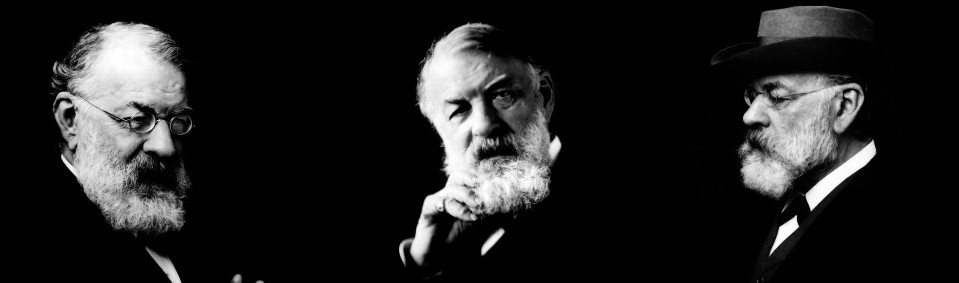
Photo collage © Mathias Brösicke — Dematon, Weimar

Archives

Categories

  • 1 Biographical Posts — RWE
  • 2 Articles and Essays — RWE
  • 3 Talks — RWE
  • Articles by Contributing Authors
  • Bibliography
  • Biographical Sketches
  • Books About Joseph Joachim
  • Brief Biography
  • Chronology
  • Concert Reviews & Criticism
  • Concerts
  • Contracts
  • Documents
  • Ephemera
  • Estate/Nachlass
  • Family
  • Iconography
  • Instruments
  • Joachim in Great Britain
  • Joachim Quartet
  • Letters
  • Links
  • Literature
  • Literature Review
  • Miscellaneous Articles
  • Obituaries
  • Pages
  • Queries
  • Recordings
  • Reminiscences & Encomia
  • Scores
  • Speeches and Utterances (Joachim)
  • Students
  • Uncategorized
  • Works
  • Writings (Joachim)

Pages

  • INDEX

Recent Comments

Johann Heinrich Bona… on Concerts: Vienna, January, 188…
Johann Heinrich Bona… on Joachim at the Società del Qua…
Johann Heinrich Bona… on Joachim in Italy (1880)
Concert: Düsseldorf,… on The 31st Lower Rhine Music Fes…
INDEX | Joseph Joach… on Mendelssohn’s Death

Meta

  • Log in
  • Entries feed
  • Comments feed
  • WordPress.org

Email: Reshbach(at)unh.edu

Powered by WordPress.com.

Loading Comments...

    %d