Joseph Joachim to Harold Henry Joachim1


Harold Henry Joachim
(1868 – 1938)2
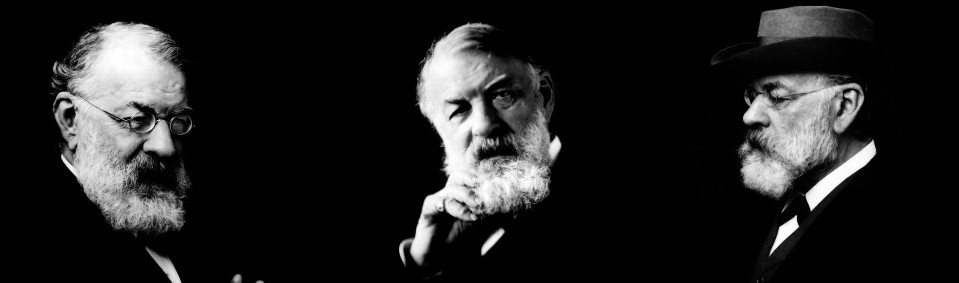
Joseph Joachim’s nephew (and later son‑in‑law), Harold Henry Joachim (1868–1938), was a British idealist philosopher at Oxford, best known for his influential work The Nature of Truth and for his close association with F. H. Bradley. A classical scholar of great distinction and a keen, highly skilled amateur violinist, Joachim was educated at Harrow and Balliol College, later serving as Fellow and Tutor of Merton College before becoming Wykeham Professor of Logic and a Fellow of New College. The son of Joseph’s elder brother Heinrich (Henry) Joachim, Harold further strengthened the family connection in 1907, the year of Joseph Joachim’s death, when he married Joseph’s youngest daughter, Elizabeth (“Lisel”). The following letter from Joseph to Harold offers a glimpse into the personal relationship between the philosopher and the celebrated violinist, illuminating the intersection of musical and philosophical culture in the late nineteenth and early twentieth centuries.
17, Bendler Str.
June 12th
My dear Harold!
I am pleased to hear that you are in possession of the Guarnerius and long to play on it. The Violin on which I made my début in London was also of the same maker; Miss Soldat3 played it for a long time, and has still the loan of it. I am very fond of the “Son of Andrew”.4
Now I want to tell you that the Quartet party is willing to come to England for three
2
weeks, from March 14th to April 4th. We fixed it this morning; I will arrange School matters accordingly.
I wrote to Chappell5 to tell him; of course my colleagues must have better terms than last year, for else it cannot pay them as they give up private lessons, etc. I have no doubt it can be settled satisfactorily; Kruse6 must speak to Chappell about it. But all are willing to go to Oxford at the terms you propose; so am I, i.e. for my part for nothing if desired. Now arrange the date with Chappell, and tell Miss Crum.7 I am sure we can get more engagements than necessary! I hope you will like the news, and look forward to your communication about Oxford.
Bravo for your last programme.
Vivat sequens!
With much love
Your old Uncle
Jo.

(Photograph digitally enhanced)
- Original in English, without year. ↩︎
- National Portrait Gallery https://www.npg.org.uk/collections/search/portrait/mw227590/Harold-Henry-Joachim ↩︎
- Marie Soldat‑Röger (1863–1955), Important Austrian violinist, Joachim’s pupil, noted for her performances of Brahms’s Violin Concerto. ↩︎
- A violin by Giuseppe Guarneri “filius Andreae” (Joseph Guarnerius filius Andreae), a Cremonese violin maker of the celebrated Guarneri family, active from the late seventeenth to the early eighteenth century. A son of Andrea Guarneri and father of Bartolomeo Giuseppe “del Gesù,” he produced instruments noted for their exceptional workmanship, elegant arching, and richly colored varnish, and is regarded as a central link between the Amati tradition and the later masterpieces of his son. ↩︎
- Between 1892 and 1897, the years that Kruse was a member of the Joachim Quartet, the firm of Chappell & Co. was headed by Thomas Patey Chappell (1819–1902). He had taken over the firm after his elder brother William Chappell (1809 – 1888) left, and remained in charge until 1897, when the partnership was converted into a limited company and Thomas was succeeded as board chairman by his son, Thomas Stanley Chappell. ↩︎
- Johann Kruse (1859–1927), Australian‑born violinist and second violin of the Joachim Quartet, 1892–97. ↩︎
- Probable reference to Mary Crum, a cellist active in Oxford and London musical circles. ↩︎