Obituary: La Revue Musicale

La Revue Musicale, Vol. 7, Nos. 18-19 (September 15-October 1, 1907), p. 457.

N. B.: Obituaries are posted for historical interest only, and should not be taken as sources of accurate biographical information.


jj-initials1-e1395761217629

NÈCROLOGIE: IOACHIM

Nous ne referons pas ici la notice du grand violoniste Ioachim, aussi estimé en France qu’en Allemagne; nous voulons cependant rappeler l’exemple qu’il laisse à tous les virtuoses. Ioachim a été le meilleur interprète de Beethoven parce qu’il avait pour principe, non d’étaler sa personnalité d’exécutant, mais de l’effacer au contraire devant le chef-d’œuvre qu’il jouait et qu’il laissait parler seul. Rien n’est plus rare qu’un tel mérite associé à une technique parfaite! Comme quartettiste, Ioachim lègue aussi cette leçon à tous ceux qui font de la musique d’ensemble: dans un quatuor classique, le premier violon ne doit pas chercher à tout dominer; ici encore, d’est le respect de la pensée du compositeur et non le souci du succès personnel qui est de règle. Telles sont le deux vérités qu’impose à notre réflexion le souvenir de l’admirable artiste allemand.


Screen Shot 2014-10-30 at 3.24.00 PMScreen Shot 2014-10-30 at 3.23.40 PM

Die Trauerfeier für Joseph Joachim (Berliner Tageblatt und Handels-Zeitung)

Berliner Tageblatt und Handels-Zeitung (August 20, 1907), p. 2.

N. B.: Obituaries are posted for historical interest only, and should not be taken as sources of accurate biographical information.


jj-initials1-e1395761217629

The Obsequies for Joseph Joachim

Deathbed

Yesterday afternoon at 4 o’clock a final and devout host of listeners congregated around Joseph Joachim. But it no longer was the golden tone of his violin that entranced the gathering. Joachim’s genius had lowered his flambeau, now only the rustling of the wings of death moved quietly through the hall.


Einladung_edited-1
Invitation to the memorial service for Joseph Joachim


In the entrance hall of the Academy of Arts which had been transformed into a chapel stood the casket veiled with a dark red blanket. The black walls of the chapel swallowed the little light that came from the covered lamps, and the only reflection came from the red coulour of the blanket, a small portion  of the shine of the personality of the man which only a short while ago shone over all the world.


The sizeable hall could not accommodate all that had come to spend one last time with Joachim under the same roof, far into the corridors people stood in silence, and outside in the summer’s afternoon light further thousands waited to see the casket of the master being taken to the burial site.

The family of the deceased was seated to one side of the resplendent bed which had been formed by the laying all around the catafalque the abundance of flowers that had been received. The Kaiser was represented by the not unknown composer First Lieutenant von Chelius [Oskar von Chelius (*1859 — †1923)], while the Kaiserin sent Count Mirbach [Wilhelm Graf von Mirbach-Harff (*1871 — †1918)]. Prince Friedrich Wilhelm von Prussia as well as the Fürst Reuss [Prince Heinrich XXIV Reuss of Köstritz (*1855 — † 1910)] also attended. The Government was represented by the Minister for Cultural Affairs Holle [Ludwig August Hugo Holle (*1855 — †1909)], the City of Berlin by its Mayor Reicke [Georg Reicke (*1863 — †1923)], and the Police President von Borries [Georg Hermann Julius Bodo Friedrich von Borries Jr. (*1857 — †1922)]. Further Chief of the General Staff von Moltke [Helmuth Johann Ludwig von Moltke (*1848 — †1916)], and Gerhard Hauptmann [(*1862 — †1946)] appeared on behalf of literature.

For Music the entire teaching staff appeared together with their colleagues from the Academy of Art, The University of Berlin sent a deputation, the Technical High school was represented by Professor Kammerer [Otto Kammerer (*1865 — †1951)] . Further deputations came from the City of Bonn, and the Bonn Beethoven House, the Meininger Court Band, the Privy Councillor of the Court Theatre of Dresden, and General Music Director Steinbach [Fritz Steinbach (*1855 — †1916)] for the Music Academy Köln. The ceremony was introduced through the solemn sounds of Bach’s hymn “when one day I shall die” softly transmitted from the side hall.

The Priest Niethack-Stahn [Walther Niethack-Stahn, or Nithack-Stahn  (*1866 — †1942)] of the Kaiser Wilhelm Memorial Church approached the casket and held the commemorative address, pleasant therein sounded the phrase that for decades Joachim had been the musical conscience of Germany. After the minister the president of the Academy of Arts Privy Councillor Otzen [Johannes Otzen (*1839 — †1911)] spoke, among other things he said: There have been other great violinists prior to Joachim as well as in his time, but most have been forgotten, and of those that have not been fully forgotten one can say that their artistic perfection had retained their name in posterity.

What a difference here. You will sympathize with me when at this moment I wish that I were a musician, or that one who had sat at the master’s feet, and were filled with his intellect were to stand here in my place.

I can not and must not dare to touch the immortal artistic merits of the great master, which I can barely foresee, or understand or delineate. The appreciation of the artistic being of Joseph Joachim must at first remain the prerogative of a musical ceremony, only late generations will fully understand. But what I may and can do in this solemn farewell is to highlight the relationship towards other members of the Academy by the deceased.

All of you honored members who have gathered here with reverence before the supreme greatness of the deceased will even if in the first instance you revere Joachim the musician, have difficulty separating him from Joachim the man.

Often in high quality artistry we painfully miss that which really indicates greatness. The harmonious penetration of the artist with the human, hence the triumph of such an appearance from which it seems that humanity must first draw its true goal to recognize its true value at the same time that it realizes that such harmony can only be found in choice favourites of the gods.

The speech by Otzen was followed by music, and the modest nut brown casket was carried out of the hall.

Personen / Musiker / Joachim, J. / Tod

THE FUNERAL PROCESSION

The streets of Old-Charlottenburg from the high school to the cemetery on the Fürstenbrunner Weg were lined with mourners. One could see that someone of great stature was being laid to rest, the procession stretched itself into an endless row. Ahead went students carrying the banner of the Academy of Music, then the plain hearse followed by five large carts carrying the load of wreaths and floral tributes. It was especially noted that in this procession the use of the empty imperial gala wagen [sic] as has been customary with the funeral of other important personalities was absent, instead the imperial representative accompanied the casket travelling in a court carriage to the cemetery. The row of carriages were accompanied by the uniformed band masters of each of the Berlin regiments.

AT THE GRAVE

Around six o’clock the impressive funeral procession arrived at the churchyard of the Kaiser Wilhelm-Memorial Church on the Fürstenbrunner Weg. Here the band of the 4th Guard Regiment under the direction of Army Music Superintendent Professor Rossberg led the casket with the sounds of Beethoven’s funeral march to the grave. After the minister had consecrated the corpse, the band intoned the song “what God does is benevolent” while at the same time family members moved closer to enable each to add to the tomb the customary handful of earth. Then the earth closed over Joseph Joachim.

Joachim's Grave

Kaiser-Wilhelm-Gedächtnis-Friedhof
Berlin-Charlottenburg, Germany

Grave: D-G2 Gitter (Ehrengrab)
Amalie Joachim (1839-1899) and Joseph Joachim (1831-1907)

©Robert W. Eshbach 2014


jj-initials1-e1395761217629Die Trauerfeier für Joseph Joachim.

Gestern nachmittag um vier Uhr geschah es zum letzten Male, daß eine andächtig lauschende Schar um Joseph Joachim versammelt war. Aber nicht mehr der goldene Ton seiner Geige hielt die Erschienenen im Bann, der Genius Joachims hatte seine Fackel gesenkt, und nur das Rauschen des Todesfittichs zog leise durch die Halle.

Im Vestibül der Kunsthochschule, das zu einer wunderschönen Trauerkapelle umgewandelt war, stand der Sarg, von einer dunkelroten Decke verhüllt. Die schwarzen Wände verschlangen das Licht, das aus den verhüllten Lampen strömte, und nur von dem Rot dieser Decke über dem Sarge Joachims strahlte ihr Glanz zurück — ein geringer Teil jenes Glanzes, der noch vor kurzem von der Persönlichkeit des Mannes im Sarge über die ganze Welt geleuchtet hatte.

Die geräumige Halle vermochte die Zahl derer, die gekommen waren, zum letzten Male unter einem Dache mit Joachim zu weilen, nicht zu fassen. Bis weit in die Gänge hinaus standen die schweigenden Scharen. Und draußen im hellen Lichte des Sommernachmittags warteten weitere Tausende, um den Sarg des Meisters zu sehen, wenn er zu Grabe getragen würde.

Zur Seite des prangenden Beetes, das aus den Blumen der in schier unendlicher Fülle rings um den Katafalk niedergelegten Kränze gebildet wurde, hatte die Familie des Verstorbenen Platz genommen. Als seinen Vertreter hatte der Kaiser den als Komponisten nicht unbekannten Oberstleutnant v. Chelius entsandt, die Kaiserin den Grafen Mirbach. Auch Prinz Friedrich Wilhelm von Preußen war erschienen, ebenso Fürst Reuß. Die Staatsregierung war durch den Kultusminister Holle vertreten, der Magistrat von Berlin durch Bürgermeister Reicke, und auch der Polizeipräsident v. Borries hatte sich eingefunden. Desgleichen der Chef des Generalstabes v. Moltke. Gerhart Hauptmann vertrat die Literatur, von der Musik war selbstverständlich der gesamte Lehrkörper der Hochschule erschienen, zusammen mit den Kollegen von der bildenden Kunst. Die Universität Berlin hatte eine Deputation gesandt, für die Technische Hochschule war der Rektor Professor Kammerer erschienen. Abordnungen hatten ferner die Stadt Bonn und das dortige Beethoven-Haus entsandt, desgleichen die Meininger Hofkapelle, die Generalintendanz der Dresdener Hoftheater und das Konservatorium in Köln mit Generalmusikdirektor Steinbach an der Spitze.

Die Feier wurde durch die ernsten Klänge des Bachschen Chorals “Wenn ich einmal soll sterben” eingeleitet, die von einem Nebensaal nur leise herüberwehten. Dann trat der Pfarrer der Kaiser Wilhelm-Gedächtniskirche Niethack-Stahn an den Sarg und hielt die Gedächtnisrede. Besonders wohltuend berührte darin der Satz, in dem er sagte, daß Joachim Jahrzehnte hindurch das “musikalische Gewissen” Deutschlands gewesen sei.

Johannes-otzen

Johannes Otzen

Nach dem Geistlichen ergriff der Präsident der Akademie der Künste, Geheimrat Otzen das Wort. Er sprach unter anderem:

“Es hat ja vor Joachim und neben ihm große Geiger gegeben. Die meisten sind vergessen, und  bei den nicht ganz vergessenen ist es fast immer ein großes Virtuosentum gewesen, das ihren Namen der Nachwelt erhalten hat.

Wie anders hier. Sie werden es mir nachfühlen, daß ich in diesem Augenblick wünschen muß, ich wäre ein Musiker, oder aber ein solcher, der zu des Meisters Füßen gesessen und seines Geistes voll ist, stände an meiner Stelle!

Ich kann und ich darf nicht wagen, die unsterblichen künstlerischen Verdienste des großen Meisters auch nur zu berühren, die ich kaum zu ahnen, nicht zu verstehen und noch weniger zu schildern vermag.

Diese Tat — die volle Würdigung des künstlerischen Wesens von Joseph Joachim, muß zunächst einer Trauerfeier der Musik vorbehalten bleiben und wird in ihrer vollen Lösung wohl erst späteren Geschlechtern zufallen.

Was ich aber darf, und was ich kann, das ist, in dieser feierlichen Abschiedsstunde des schönen Menschentums unsere Verblichenen zu gedenken und insbesondere sein Verhältnis zu uns, den Mitgliedern der Akademie, in Liebe und Wehmut zu zeigen. Ihnen allen, hochverehrte Mitglieder dieser Versammlung, die voll Ehrfurcht vor der Majestät solches Toten hier erschienen sind, wird es, auch wenn Sie den Musiker Joachim in erster Reihe verehren, doch schwer werden, diesen von dem Menschen Joachim zu trennen.

Wie oft und wie schmerzlich vermissen wir bei hoher Künstlerschaft dasjenige, was erst wahre Größe verleiht, die harmonische Durchdringung des Künstlers mit dem Menschen. Aber daher auch das Sieghafte solcher Erscheinung. Es ist, als wenn die Menschheit aus dieser erst ihr wahres Ziel und ihren wahren Wert erkennt, — aber auch die bedrückende Gewißheit, daß eine solche Harmonie nur von den ganz Auserwählten und Lieblingen der Götter zu erreichen ist.

Ein solcher Liebling war unser Joseph Joachim und dabei von einer solchen Bescheidenheit, Güte und wahren Menschenliebe, die ihn jedem unvergesslich machte, der auch nur vorübergehend je das Glück seiner Bekanntschaft genossen hat.” Nach der Rede Otzens erklang wiederum Musik, und der bescheidene nußbraune Sarg wurde hinausgetragen.

Der Leichenzug.

Die Straßen Alt-Charlottenburgs von der Hochschule bis zum Friedhof am fernen Fürstenbrunner Weg waren von einem lebenden Spalier eingesäumt. Man merkte es dem Straßenbilde an, daß ein ganz Großer zu Grabe getragen wurde. Der Leichenzug selbst dehnte sich in endloser Reihe. Voran fuhren Studenten mit dem Banner der Hochschule für Musik. Dann folgte der einfache Leichenwagen und dahinter auf fünf großen Tafelwagen die Last der Kränze. Es fiel besonders auf, daß in dem Zuge nicht wie bei den Begräbnissen anderer großer Männer das tote Prunkstück eines leeren kaiserlichen Gala-wagen mitfuhr, sondern daß der Vertreter des Kaisers an einer Hofequipage den Sarg bis zum Friedhof begleitete. Die Reihe der Wagen wurde dann noch einmal durch eine uniformierte Gruppe unterbrochen. Die Kapellmeister sämtlicher Berliner Regimenter schritten im Zuge mit. Auf diese Weise ehrte auch das militärische Oberkommando den Meister.

Trauerfeier Notice copy

OLYMPUS DIGITAL CAMERA

Kaiser-Wilhelm-Gedächtnis-Friedhof
Berlin-Charlottenburg, Germany

Grave: D-G2 Gitter (Ehrengrab)
Amalie Joachim (1839-1899) and Joseph Joachim (1831-1907)

Obituary: Berliner Tageblatt und Handels-Zeitung

Berliner Tageblatt und Handels-Zeitung 36, No. 413 (August 16, 1907): 2-3.

N. B.: Obituaries are posted for historical interest only, and should not be taken as sources of accurate biographical information.


jj-initials1-e1395761217629

Joseph Joachim.
Von
Dr. Leopold Schmidt.

Lange, lange schon mußten wir es kommen sehen — aber wir mochten uns mit dem Gedanken nicht vertraut machen. Das rüstige Alter des Meisters kam unserer Neigung entgegen, den Wandel der Dinge zu vergessen, und machte es der Vorstellung doppelt schwer, sich die ehrwürdige Gestalt aus dem Konzertleben fortzudenken. Wenn am Ende eines Winters in der letzten Quartettsoirée das teure Haupt sich in seiner vornehm-bescheidenen Weise dem endlosen Beifall neigte, regte sich wohl zuweilen in den Herzen seiner Hörer die bange Frage nach der Zukunft; aber wie auf etwas Selbstverständliches rechnete man stets auf sein Wiedererscheinen an der historisch gewordenen Stätte seiner Wirksamkeit. Wir mußten die Jahre zählen, wir mußten besorgniserregende Kunde erhalten, um das nahe Ende ernstlich vor Augen zu haben.

Man sagt, kein Mensch sei unersetzlich. Das trifft für Persönlichkeiten wie Joachim ganz gewiß nicht zu. Die Lücke, die sein Hinscheiden hinterlässt, wird auf zu verschiedenen Gebieten empfunden werden, als daß sie je ausgefüllt werden könnte. Hervorragende Künstler haben neben ihm gelebt und werden nach ihm kommen, deren Können und Energie unsere Verwunderung erheischen. Was ihnen Joachim gegenüber fehlt, ist das Geschlossene der Persönlichkeit und das, ich möchte sagen, reine Verhältnis zu ihrer Kunst. Joachim war der Letzte einer Generation, die noch unberührt war von Reklame- und gewinnsüchtigen Neigungen der Jetztzeit, die sich in idealistischer Gesinnung auslebte in dem, was sie sein mußte. Das war es wohl auch, was die Menge empfand, so oft der Meister das Podium betrat. Wer es miterlebt hat, welche Bewegung dann durch den Saal ging, wie dieser Beifall so ganz anders klang als der den Virtuosen gespendete, der weiß, in wie hohem Grade sich hier eine seltene Vereinigung von Mensch und Künstler wirksam erwies. In Joachim verkörperte sich eine längst entschwundene Zeit, die er zuletzt allein noch vertrat, und die mit ihm zu Grabe getragen wird. In Jahrzehnten treuester Hingabe an seinen Beruf hatte sich ein Nimbus um seine Person gebildet der überall empfunden und gewürdigt wurde. Und darin lag wohl vor allem die Bedeutung seines an Erfolgen und Ehrungen beispiellosen Daseins begründet. Joachim war mehr als ein Liebling des Publikums; auf einsamer Höhe stand er, der Stolz des musikalischen Deutschlands, gleich angesehen im Auslands, vornehmlich in England, das ihm fast eine zweite künstlerische Heimat geworden.

Es wäre kleinlich, seiner gedenkend nur von dem großen Geiger zu sprechen. Gewiß hat er, selbst als Virtuose, nicht seinesgleichen gehabt. Das wissen am besten seine Schüler, denen er in guten Zeiten mühelos vormachte, womit in öffentlichen Konzerten zu pruuken [sic] er verschmähte; die beobachten konnten, wie unabhängig seine Technik war, wie er sich in Proben und Aufführungen oft ganz verschiedener Lagen und Fingersätze bediente. Auch die Besucher seiner Quartettabende (in denen er vielleicht das Feinste und Beste seiner Kunst gegeben) erlebten es oft genug, daß er beim Reißen einer Saite unvorbereitet auf der anderen weiterspielte. Er, der geborene Ungar, war eben wie ein Zigeuner mit seinem Instrument verwachsen, das beim Musizieren gleichsam ein Glied seines Körpers wurde. Sein ganzes Spiel atmete Freiheit, Freiheit im Rhythmus, Freiheit in der Auffassung. Das überhörten diejenigen, die darin nur das Solide, technisch Vollendete und Edle wahrnahmen, mit dem Joachim recht eigentlich den Stil einer modernen deutschen Geigerschule begründet hat. Allein auch der Lehrmeister vervollständigt das Gesamtbild des Mannes nur halb. Als solcher hat er mittelbar und unmittelbar weitesten Einfluß geübt. Vor allem durch sein Vorbild; dann aber durch die zahllosen Schüler, die seine Lehre und Anschauungen in die ganze Welt getragen haben. Das Beste freilich konnte ihm niemand abgucken, das bleibt immer an die Persönlichkeit gebunden.

Das Wesentlichste in Joachims Erscheinung war bei alledem der eminente Musiker. Sein geniales Violinspiel war nur die zufällige Emanation einer Musiknatur, wie sie stärker kaum jemals auf die Mitwelt gewirkt hat. Deshalb konnten so gut wie Geiger auch Sänger, selbst Komponisten von ihm lernen. Nur so erklärt es sich auch, daß er mutschaffend das Musizieren von Generationen bestimmen konnte. Bekannt is, was er allein für die Darstellung der Beethovenschen Musik getan hat. Sein Vortrag des Violinkonzertes bedeutete seinerzeit eine Offenbarung, und wie er die gesamte Quartettmusik Beethovens zum Leben erweckt hat, wird sie für immer vorbildlich bleiben. Nicht weniger aber hat er mit dazu beigetragen, für die Auffassung und den Vortrag Bachs die Richtschnur zu geben, und mehr, als wir uns vielleicht bewußt sind, ist unsere Vorstellung von Spohr und Mendelssohn durch ihn beeinflußt. Seinen Freunden Schumann und Brahms endlich hat er wie im Leben, so in ihrem Schaffen als unermüdlicher Vermittler nahe gestanden.

Als ausübender Musiker ist Joachim in seiner Art nur wenigen Auserwählten an die Seite zu setzen. Liszt und Rubinstein als Pianisten, Stockhausen als Sänger waren aus demselben Holz geschnitzt. Wie diesen war es Joachim gegeben, den Hörer vom ersten Ton an in seinen Bann zu zwingen, und diese Macht entsprang wiederum der eigenen unbedingten Hingabe an die Sache. Joachim war es immer nur um die Musik zu tun, die er machte, und das fühlte man und folgte ihm willig. Das war das Geheimnis seiner Größe, die auch von den Gegnern — und Joachim hatte deren — anerkannte werden mußte.

Daß eine solche Künstlernatur sich auch schöpferisch betätigte, ist nur natürlich, wenn auch der Komponist in Joachim erheblich hinter dem reproduzierenden Musiker zurücktrat. Um so energischer brachte er seinen persönlichen Geschmack zur Geltung. Man hat es dem Meister zum Vorwurf gemacht, daß er allzusehr an den Idealen seiner Jugend festgehalten habe und dem Fortschritt im Wege gewesen sei. Wer seine Entwicklung aufmerksam bis ans Ende verfolgt hat, weiß, daß dem nicht ganz so ist. Alles wahrhaft Große hat ihn empfänglich gefunden, und es wäre eine Fälschung, ihn schlechthin zu einem Anti-Wagnerianer zu stempeln. Wenn auch nach längerem Widerstreben, so haben doch sowohl die Werke des Bayreuthers wie manches andere Moderne (zum Beispiel Verdi) später seine wohlabgewogene Schätzung erfahren. Allerlei Persönliches spielte eben dabei mit. Andererseits muß man es verstehen und sich dessen freuen, daß eine so aufgeprägte Individualität überzeugungstreu auf festem Grund und Boden stand und die Schwankungen des Zeitgeschmackes nicht haltlos mitmachte. Die Kunst war ihm etwas Heiliges, und er konnte zornig werden, wenn er ihre Würde von frevelnden Händen angetastet glaubte. Die jüngste Phase der musikalischen Entwicklung lehnte der alternde Meister einfach ab. In den Werken unserer Modernen und ihren Exzentrizitäten (die er übrigens bis in seine letzten Lebenstage verfolgte) vermochte er nichts zu entdecken, was sich mit seinen Begriffen von Schönheit, musikalischer Erfindung oder auch nur technischem Können noch irgendwie hätte in Einklang bringen lassen.

Wir alle wissen, wie sehr beim Künstler die menschliche Persönlichkeit mitspricht, wie sie sein Wirken hemmen oder fördern kann. Die Art, wie Joachim auf dem Podium dastand, wie er die Geige hielt und sie liebevoll ansah, gehörte mit zu dem Eindruck seines Spiels. Im Leben besaß er im hohen Grade das, was wir Charme nennen. Er konnte überaus gewinnend sein. Aus meiner Studienzeit kommen mir kleine Züge, die bezeichnend dafür sind, in die Erinnerung. Einst passierte Frau Neruda in der Probe, als sie Vittis [sic — recte: Viotti] A-moll-Konzert spielte, ein kleiner Gedächtnisfehler. “Seltsam,” sagte Joachim, um der Künstlerin chevaleresk über jede Verlegenheit vor dem Orchester hinwegzuhelfen, “an derselben Stelle komme ich auch immer heraus.” Als Eleve der Hochschule war ich mit einem der Lehrer in Konflikt geraten und verweigerte den weiteren Besuch seines Kursus. Ich wurde zum Direktor beschieden. In Erwartung ernstlicher Vorhaltungen und fest entschlossen, mein Recht zu behaupten, betrat ich des Meisters Amtszimmer. Freundlich wird ich gebeten, Platz zu nehmen; dann erwähnte Joachim kurz meine Weigerung, sah mich mit seinen tiefen Augen an und sagte, indem er mir die Hand bot: “Würden Sie wieder hingehen, wenn Sie mir damit einen Gefallen tun?” Natürlich tat ich es; es wäre unmöglich gewesen, in diesem Augenblick nein zu sagen.

Es gibt viele, die in ihrer Beurteilung den Menschen vom Künstler scharf getrennt haben. Joachim was wie alle temperamentvollen Naturen von starken Sympathien und Antipathien beherrscht. Auch war er durchaus keine von den verträumten, weltfremden Künstlerseelen und wußte aufrecht seinen Weg zu verfolgen. Da mochte es manchem nicht behagen, daß dieser Weg so hoch hinaufführte. Aber trotz allen Parteiengezänkes, trotz aller Strebungen, die sich im besonderen gegen Joachims Schöpfung, die königliche Hochschule für Musik, richteten, hat seine ehrwürdige Persönlichkeit, der schließlich auch das Unglück nicht erspart geblieben ist, die Kritiker zum Schweigen gebracht. Auch wer nicht in unbewachten Momenten einen Blick in diese Seele getan, wer nichts von den Opfern wußte, die das Leben von ihr gefordert: der konnte aus dem rührenden Ton seiner Kantilene, aus der männlichen Art der Pflichterfüllung bis zum letzten Krankenlager erkennen, welch guter und edler Mensch dieser Künstler gewesen ist. Am offenen Sarge, man kann es in Wahrheit sagen, wird nichts laut als die Trauer um den Heimgegangenen.

Schon jetzt dünkt uns der Verlust groß. Aber erst später und ganz allmählich werden wir in vollem Umfange uns bewußt werden, was wir an Josef Joachim verloren haben.

*     *
*

Im Sterbezimmer Joachims waren gestern beim Ableben des Meisters seine Töchter Frau Feld-Joachim, Marie und Elisabeth und die Söhne Dr. Paul, Dr. Hermann und Hauptmann Joachim versammelt. Ferner waren die Mitglieder des Joachim-Quartetts, die Professoren Halir, Hausmann und Wirth sowie die Herren Franz und Robert v. Mendelssohn anwesend. Joachim ist ganz sanft entschlafen.

Die von der Akademie der Künste veranstaltete Trauerfeier findet in der Hochschule für Musik in Charlottenburg am Montag, den 19. d. M., nachmittags 4 Uhr statt. Die Beerdigung erfolgt nach dem Kirchhof der Kaiser Wilhelm-Gedächtniskirche.


 12345

The Wittgensteins


Previous Post in Series: First Gewandhaus Concert. Pauline Viardot-Garcia

__________

jj-initials1-e1395761217629The Wittgensteins

Screen shot 2013-07-03 at 5.01.00 PM

Hermann Christian Wittgenstein (1802-1878) 

[1]

Emancipated Jews did not merely shed their old clothes in order to put on new, but attempted to become radically changed men and women.

                                                                        — George L. Mosse [2]

The man that Joseph still called “Herr Wittgenstein” must have been an imposing presence to young Joseph. Wittgenstein was a self-made man — a businessman, not a musician — with an unsentimental outlook on the world. He was a man who placed great store by his ability to succeed — or, as Ludwig Wittgenstein’s biographer Brian McGuinness characterized it, his capacity etwas durchzusetzen: to see something through. “I began my career in other and troublesome circumstances,” he wrote in his last will and testament. “Thrown back upon my own powers, I was never despondent, never solicited nor received any man’s favor, and endeavoring to emulate my betters, I never became an object of their contempt.” [3] This was doubtless a common sermon in the Wittgenstein household; one that received a mixed reception among his children. “I can’t actually imagine myself feeling comfortable in his company,” wrote his granddaughter Hermine, “I always sense the somewhat rigid and dignified manner that my mother later found so alienating and that caused my father, who was nothing less than rigid, to dub the family lunchtime “high mass.” [4]

The artistic and irrepressible Fanny had not been attracted to Herman at first; in fact, she had been repelled by the “severe, cold, yes, even gruff expression on his face.” One wonders what their conversation consisted of that evening in 1838 when her brother Gustav brought Hermann to dinner at her father’s house. Would she not rather have spoken with Mr. Nellison, his handsome, lively Dutch business associate? Seated next to Fanny, Hermann spoke exclusively about serious matters. “…you can imagine how strangely this apparition […] affected me, in comparison with our men, who only swim on the surface of things,” she wrote to a friend. [5] Whatever his ability to make a good first impression, Herman was a man of practical decision, who would always remain confident that he could bend her will to his. “Fill your house with guests and you’ll settle your daughters,” ran the old Viennese-Jewish adage. Within a matter of days Hermann had asked for Fanny’s hand.

To her friend, Fanny wrote: “I can imagine your astonishment; I, myself, feel as though I am only playing a role in some sort of fairy tale — the whole matter has fallen so out of the clear, blue sky.” [6] The two men had returned on another day, and this time Wittgenstein had seemed more agreeable. The entire company rode out to Baden, where they spent several days together at the Figdors’ summer home. There, Hermann and Fanny came to know one another better, and Wittgenstein began to thaw. One day, he arrived for lunch alone. “I found that completely incomprehensible,” wrote Fanny; “imagine my surprise when, after he had left, Nanette confided in me that, that same morning, he had spoken with Papa, and formally asked his permission to marry me. Now it came down to my consent, — and for the first time I felt no positive antipathy. This was already a lot — so I let the matter take its course… and whether it was his admirable nature, or his assurances of sincere love, enough, I didn’t feel in the mood to say no, though not exactly yes, since Papa had spoken not a syllable to me — which, furthermore, you will hardly believe, has not happened yet. […] I would only like to know how Wittgenstein would appeal to you. You have good judgment. The other members of my family like him, for he has great savoir vivre, and he has, (not only in my opinion) great understanding. He is a man of 35 or 36 years, and by no means handsome. Given the circumstances, think what a tense mood I am in!” [7]

Screenshot 2019-07-14 17.09.05.png

Fanny Wittgenstein with her children: Anna, Marie and Paul 

[8]

Prior to their wedding in 1839, Hermann and Fanny joined the swelling numbers of upper-middle-class Jews who were converting to the Protestant faith. Fanny’s conversion to Lutheranism was likely prompted by her impending marriage: Hermann may have been baptized as early as 1811 (Christian was his baptismal name), and mixed marriages were illegal at that time. Reportedly, the Wittgensteins had ambivalent feelings about their Jewish ancestry. Hermann in particular seems to have viewed it as a misfortune to be overcome through hard work and honorable living. Fanny’s attitude may have been like that of many Viennese Jews, who — unlike their enlightened Berlin counterparts seemed prepared to leave the fold primarily in pursuit of the secular rewards of freedom and prosperity. As Hans Tietze expressed it: “The Viennese Jewry were an elite of the rich and those who had the capacity to become rich if they could establish a foothold in the new terrain; nothing bound them to their peers except a residue of oppression, and nothing to Judaism except fading memories of hometown ghettos, whose dreariness contrasted so starkly with their bright new surroundings.” [9] Whatever their motivations, Hermann and Fanny raised their children with a Christian identity. It is said that Hermann forbade his children to marry Jews, a stricture that only his son Karl had the courage to breach.  According to family lore, the renunciation of their Jewish patrimony was so complete that daughter Milly one day felt compelled to ask her brother Louis whether it was true that they were Jewish. “Pur sang, Milly, pur sang,” Louis replied.

2005

Hermann Christian Wittgenstein (1802-1878)

 [10]

With his own children, Hermann was a formidable, controlling figure who brooked no opposition within his household. Punishments for the children were severe, and included occasionally locking them away in a dark room. This strictness, combined with Fanny’s nervous energy may help to explain certain characteristics of the Wittgenstein siblings that Joseph also shared. “They had exceptional loyalty to chosen friends but also a nervousness and a degree of sensibility which… made many of them difficult to live with save for a companion endowed with an unusual placidity of temperament,” wrote Brian McGuinness. “It was hard for die Geschwister Wittgenstein to keep or restore a friendship when it fell away from complete intimacy, hard to overcome the series of offences too small for comment and too large not to be felt that in time diminish most human relationships.” [11] This same nervous temperament, this same insatiable need for reassurance and compulsion to feel loved, is to be found in the Joachim family letters, and may well have been a Figdor family trait. In a famous letter, written in 1880 and produced at the divorce proceeding between Joseph and his wife Amalie, Joachim’s once-intimate friend, Johannes Brahms, wrote of “that unhappy character trait with which Joachim tortures himself and others so irresponsibly. Friendship and love I want to breathe as simply and freely as the air. When I sense that lovely feeling in a complicated or artificial form I skirt it with diffidence, particularly when sustained and heightened by pathological, embarrassing agitation. I abhor useless scenes evoked by someone’s imagination. In friendship, too, a partial divorce is sad, but it is possible just the same. And with Joachim I rescued just a small portion [of our friendship] by exercising caution; without that, I would have been left with nothing long ago.” [12]

In the case of the Wittgenstein’s son Karl, born in 1847, the irresistible paternal force met an immovable filial object as soon as Karl grew old enough to rebel. Headstrong like Hermann, a talented musician and free spirit like Fanny, Karl made his first, unsuccessful, attempt to run away from home at age eleven. At seventeen, he wrote an essay denying the immortality of the soul — an act that earned him dismissal from school. Herman hired tutors for his wayward son, but Karl was now old enough to run away for real. With nothing but a forged passport and his violin, he set off for New York, where he kept his family in the dark about his whereabouts as he waited tables and tended bar, taught mathematics and German and Latin and Greek, and played and taught violin and horn.

If Karl had his mother’s independence and love of art, he also inherited his father’s business sense. Returning to Austria after two years abroad, he pursued a technical training, and was hired as a draughtsman by his sister’s husband, the son of Schubert’s friend Leopold Kupelwieser. Karl entered the steel business while it was still in its infancy, and became, by century’s end, one of Europe’s wealthiest and most important industrialists — the Andrew Carnegie of Austria. He sold his business interests at the age of 52, and had the prescience to invest his money abroad, thus preserving the family wealth through the economic vicissitudes of the coming decades. Partly through Joachim’s influence, Karl and his wife, the accomplished pianist Leopoldine “Poldi” Kalmus Wittgenstein, became important patrons of music, art and architecture in fin-de-siècle Vienna. Their magnificent mansion was a center of music-making by, among others, Joachim, Clara Schumann, Brahms, Mahler, Josef Labor, Bruno Walter, Erica Morini and Pablo Casals. Through the intercession of his daughter Hermine, Karl Wittgenstein became a patron of Gustav Klimt. He financed the building of the Vienna Secession, and later commissioned Klimt to paint the famous wedding-portrait of another of his daughters, Margarete. Karl, who shared much of his father’s paternal rigidity, likewise had trouble with his sons. In 1902, his oldest, Hans, drowned in Chesapeake Bay, a presumed suicide. Two other sons committed suicide as well: Rudolf in 1904 and Kurt in 1918. The two sons who remained to him achieved a permanent place in history: the pianist Paul, who, after losing his right arm in World War I, continued to commission and perform an impressive repertoire for the left hand alone; and the youngest, the philosopher Ludwig.

The values and aspirations that Hermann and Fanny sought to impose on Karl were the same as they first held for Joseph—inherently respecable objectives pressed with a vehemence and rigidity that would eventually bring both boys to the point of rebellion. We find them expressed in the letter that Fanny wrote to Karl’s fiancée Poldi Kalmus on the occasion of their engagement: “Karl has a good heart and a clear head, but — he left the parental home too early. — A finished education, regularity, order, self-discipline, these are things that I hope he will learn through your loving companionship.” [13] The lesson that Hermann had ultimately hoped to impress upon his son — that “he must be brought to see that a goal can be reached only by work and that it can actually be reached by that means…” [14] — was a familiar household refrain. “I certainly wish [Joseph] well,” he once wrote to Fanny, “but he should consider that a person is often thrown, by fate or caprice, from the arms of prosperity onto the pavement of the hardest want, against which there is no protection but stoicism — that is to say, inurement. Beside this, if not before, comes keeping busy….” [15]

In these disciplinary efforts, the Wittgensteins were not very different from the Böhms, or, for that matter, Joseph’s own parents. And in a sense, they succeeded — Karl grew rich and successful in business, and Joseph achieved greatness as a musician. All his life, Joseph would carry a censorious conscience with regard to his own diligence. But no love of work, no joy in art could come from capitulation to the dutiful, unbending Wittgenstein manner. That would come instead from the strict but loving ministrations of the one man who would ever win Joseph’s lasting and unconditional love: Felix Mendelssohn.


Next Post in Series: Mendelssohn


[1] This picture available from the Wittgenstein website http://www.wittgen-cam.ac.uk/. The Wittgenstein Archive 
3 Anderson Court
 Newnham Road
 Cambridge 
CB3

[2] Reinharz/RESPONSE, p. 1.

[3] McGuinness/WITTGENSTEIN, p. 3.

[4] Wittgenstein/FAMILIENERINNERUNGEN, pp. 15-16.

[5] Wittgenstein/FAMILIENERINNERUNGEN, p. 7.

[6] Wittgenstein/FAMILIENERINNERUNGEN, p. 6.

[7] Wittgenstein/FAMILIENERINNERUNGEN, p. 8.

[8] This picture available from the Wittgenstein website http://www.wittgen-cam.ac.uk/. The Wittgenstein Archive 
3 Anderson Court
 Newnham Road
 Cambridge 
CB3 9EZ 
England Tele.: 0044 (0) 1223 328200

[9] Tietze/JUDEN, pp. 146-147.

[10] Wikipedia

[11] Wittgenstein/WRITINGS, p. xxi.


[12] Brahms/LETTERS, p. 572

[13] Wittgenstein/WRITINGS, p. xxv, xi.

[14] McGuinness/WITTGENSTEIN, pp. 10-11.

[15] McGuinness/WITTGENSTEIN, pp. 10-11.

Joseph Joachim to Andreas Moser, August 5, 1898

jj-initials1-e1395761217629

Joseph Joachim to Andreas Moser, August 5, 1898

Translation: Andreas Moser, Joseph Joachim. A Biography (trans. Lilla Durham), London: Philip Wellby, 1901, pp. 140-142


Dear Moser

You have asked me for information concerning a violin concerto of Robert Schumann which I possess in manuscript. I cannot speak of it without emotion, for it was written during the last months before the mind of the valued master and friend became clouded. (Düsseldorf, 11th September — 3rd October 1853, stands on the title-page.)

The circumstance that it is not published will bring you to the conclusion that it cannot be placed on an equality with the other sublime works of his creation. A new violin concerto by Schumann — with what rejoicing it would be greeted by all our colleagues! but, in spite of this consciousness, friendship — though jealous for the fame of the beloved composer — could not allow a publication of the work, however much desired by the publishers.

It must, unfortunately, be admitted that it shows a certain mental fatigue, which is apparent in spite of the struggle to overcome it.

Certain passages (how could it be otherwise?) testify to the deep sensibility of the composer; but this, by contrast unhappiily makes the weaker parts more evident.

The first movement, headed with In kräftigem nicht schnellen Tempo, in D minor Screen shot 2014-10-22 at 1.46.43 PMhas a capricious rhythm, sometimes violently running on, sometimes obstinately holding back; in the first tutti it is effectively quick, leading into a softer second subject of rich, beautiful sentiment, truly typical of Schumann! But this theme does not come to a satisfactory development; it gradually increases in tempo, changing into varied passages, which do not succeed in bringing out the brilliant ending to the solo part, because the violin part is very difficult to play without being effective.

The second tutti repeats the beginning, in the key of F major. In the solo which follows, and which in its treatment seems almost too intimate for a concerto, there is a subtly-conceived organ point on the dominant of the principal key. This could make a beautiful effect, but is scarcely as telling as it might be, because it does not lie well on the violin, and the instrumentation does not sufficiently support the climax.

The beginning of the second movement (Langsam) is deep, characteristic, and full of feeling; it leads to an expressive melody for the violin. If it were only possible to retain this mood of heavenly dreaming! Sublime master! so deep and full of feeling as ever!

My heart bleeds to confess it, but the rich fantasy changes into morbid reflections; the stream is checked, and the subjects meander as if the composer were trying to emerge from the fog of his ideas. He arouses himself to a transition, in the accelerated tempo, to the last movement, which is written as a polonaise in three-quarter time (Lebhaft, doch nicht schnell is the heading).

The first subject begins with spirit, but in the development it becomes monotonous and again shows this peculiar spasmodic rhythm. But even in this movement there is no lack of interesting detail. It contains charming allusions to the thoughtful adagio, which are brought into contrast with the brilliant principal subject of the finale. But even in this finale there is not the feeling of spontaneity. One can see that it was habit rather than feeling that led him to the development of the theme; repetitions are introduced till they become fatiguing, and the figures which are intended to be brilliant force the solo violin to great but ineffective work.

You will understand, dear Moser, now that I have fulfilled your wish, why you had to remind me several times before I could tell you anything about this concerto. One is unwilling to censure where one has been accustomed to love and reverence.

My hearty greetings and best wishes for the holidays. — From yours very sincerely,

Joseph Joachim

BERLIN, 5th August 1898


jj-initials1-e1395761217629

Lieber Moser

Sie bitten mich um Auskunft über ein als Mscrpt. in meinem Besitz befindliches Violinconcert von Rob. Schumann.

Ich kann nicht ohne Bewegung davon sprechen: stammt es doch aus dem letzten Halbjahr vor dem Ausbruch der Geisteskrankheit des theuern Meisters und Freundes, (Düßeldorf, 11. September — 3 Oktober 1853 steht auf dem Titelblatt)!

Der Umstand, daß es nicht veröffentlicht worden ist wird Sie schon zu dem Schluß bringen, daß man es seinen vielen herrlichen Schöpfungen nicht ebenbürtig an die Seite stellen kann. Ein neues Violinconcert von Schumann — mit welchem Jubel würde es von allen Kollegen begrüßt worden sein ! und doch durfte gewissenhafte Freundessorge für den Ruhm des geliebten Tondichters nie einer Publication das Wort reden, so vielumworben es auch von Verlegern war.

Es muß eben leider gesagt werden, daß es eine gewisse Ermattung, welcher geistige Energie noch etwas abzuringen sich bemüht, nicht verkennen läßt. Einzelne Stellen, (wie könnte das anders sein!) legen wohl von dem tiefen Gemüth des Schaffenden Zeugniß ab; um so betrübender aber ist der Contrast mit dem Werk als Ganzes.

Der erste Satz “In kräftigem nicht schnellen Tempo” überschrieben, D moll

Screen shot 2014-10-22 at 1.46.43 PMhat etwas rhythmisch Eigensinniges, bald heftigen Anlaufnehmend, bald trotzig stockend; im ersten Tutti wirksam schnell zu einem zweiten milden Thema von weicher schöner Stimmung hinleitend; echt Schumann’sch! Aber dieses kommt nicht zu recht erquickendem Ausbau und windet sich allmälig zu schnellerer Bewegung, um variierend in Passagen hinein zu lenken, die dennoch den gewollten glänzenden Abschluß der Solo-Stimme vor dem zweiten Tutti nicht gewähren, weil der Violinsatz oft schwer spielbar ist, ohne wirkungsvoll zu sein. Das zweite Tutti wiederholt in F dur den Anfang. Im darauf folgenden Solo, das fast zu intim für ein Concert in der Durchführung erscheint, ist ein fein angelegter Orgelpunkt auf der Dominante der Haupttonart hervortretend. Er könnte schön und bedeutend wirken, kömmt aber kaum zu voller Geltung, weil die Tonlage der Violine und die Instrumentation die Steigerung nicht genügend unterstützen.

Tief, eigenthümlich und gemüthvoll, hebt der zweite Satz (“langsam” überschrieben) einleitend an, zu einer “ausdrucksvollen” Melodie der Violine führend. Ließe  sich das selige Träumen doch festhalten — herrlicher Meister! so warm, so innig — Wie nur je! Aber die blühende Phantasie, mir blutet das Herz es zu gestehen, weicht kränkelnder Grübelei, der Fluß stockt, windet sich thematisch weiter und, als sehnte sich der Componist selbst aus diesem Grau der Reflektion hinaus, rafft er sich zu einem das Tempo steigernden Übergang in den letzten Satz auf, einem Polonaise-artigen Dreivierteltakt, (“lebhaft doch nicht schnell” überschrieben). Das Hauptthema setzt schwungvoll ein, wird jedoch in der Entwicklung monoton, wieder die gewisse charakteristische Starrheit des Rhythmus annehmend. Auch in diesem Satz fehlt es nicht an interessanten Einzelheiten; so ist es z. B. anmuthend, wie Anspielungen an das sinnende Adagio mit dem pomphaften Hauptmotiv des Finale in Gegensatz gebracht werden. Nur kommt auch hier kein freies Gefühl frohen Genußes auf. Man merkt, daß Gewohnheit, mehr als freudiger Aufschwung zur Entwicklung antreibt: Wiederholungen setzen ermüdend ein, und die glänzend gemeinten Figurationen zwingen der Solo- Violine ungewohnte, wirkungslose Arbeit ab.

Sie werden sich, lieber Moser, nun ich Ihren Wunsch erfüllt habe, etwas über das Concert mitzutheilen, erklären, warum Sie mich öfter zu mahnen hatten. Läßt man doch ungern die Reflektion da walten, wo man von ganzem Herzen zu lieben und zu verehren gewohnt ist!

Seien Sie freundschaftlichst mit den besten Wünschen für die Ferien gegrüßt von Ihrem sehr ergebenen

Joseph Joachim.


JJ Moser 1JJ Moser 2JJ Moser 3JJ Moser 4JJ Moser 5JJ Moser 6JJ Moser 7JJ Moser 8


Schumann Violin Concerto in D minor

Obituary: New York Times

New York Times (August 16, 1907) p. 7.

N. B.: Obituaries are posted for historical interest only, and should not be taken as sources of accurate biographical information.


jj-initials1-e1395761217629

JOSEPH JOACHIM IS DEAD, AGED 76

__________

The Celebrated Violinist Had Been Unconscious for Several Days.

__________

HE NEVER VISITED AMERICA

__________

But Americans Were Among His Pupils — Critics Class Him as the Greatest Violinist of His Day.

__________

BERLIN, Aug. 15. — Joseph Joachim, the celebrated violinist, conductor of the Royal Academy of Music, Berlin, and Music Director of the Royal Academy of Arts, died at 1:45 P. M. to-day.

Dr. Joachim had been suffering for a long time from asthma and had been unconscious for several days.

__________

Joseph Joachim has been classed by many critics as the greatest violinist of his day. He was born at Kittsee, near Presburg, on June 28, 1831. Like so many other great musicians he showed his talent at an early age, and he was put to work under an opera conductor in Pesth. In 1841 he became a pupil of Boehm in Vienna, and in 1843 he went to Leipsic, where Mendelssohn was presiding in the zenith of his fame and influence. Although Joachim was only 12 years old, he was at once recognized as a violinist of ability, and he made his début at a concert given by Mme. Viadot [sic] on Aug. 19, 1843. He was accompanied on the piano by Mendelssohn.

On the following Nov. 16 he apeared [sic] at a Gewandhaus concert, playing Ernst’s “Otello” fantasia. No [sic] Nov. 25, 1844, he took part at the Gewandhaus in a performance of Maurer’s concertante for four violins, the other players being such distinguished artists as Ernst, David, and Bazzini. He was of too serious a mind, however, to be beguiled by the temptation to enter at once on the career of a virtuoso. He devoted himself to close and earnest study under the famous David, under whose guidance he learned such standard works as the Mendelssohn concerto, the concertos of Spohr and Beethoven, and the solo works of Bach. His general education was at the same time so wisely directed that he developed a broad and deep artistic mind. Joachim remained in Leipsiz [sic] until October, 1850, playing at the same desk as David in the famous Gewandhaus Orchestra, but occasionally making artistic tours with great success. In 1844, on the recommendation of Mendelssohn, who was a great musical power in London, the violinist visited the English capital, where he played the Beethoven violin concerto at a Philharmonic concert. His success with the English press and public was emphatic, and he speedily attained a position which made him one of the features of the London musical season. He visited England again in 1847, 1849, 1852, 1858, 1859, and 1862. After that, he visited England yearly. From the time of the foundation of the Monday Popular Concerts Joachim was the principal violinist, and beyond all doubt he did more than any other one person toward making chamber music popular in London.

In 1849 he was made leader of the Grand Duke’s Band at Weimar, of which Liszt was the conductor. Joachim, however, was not in sympathy with Liszt and his Wagnerian tendencies, and in 1854 he became solo violinist and concert conductor to the King of Hanover, in whose service he remained till 1866. On June 10, 1863, he married the contralto, Amalia Weiss, who visited this country after her once great powers had declined. In 1868 he went to Berlin as the head of the musical department of the Royal Academy of Arts. The University of Cambridge conferred upon him the honorary degree of Doctor of Music in 1877. Glasgow made him an LL. D. in 1887, and Oxford made him a Doctor of Music in 1888. In 1899 the sixtieth jubilee of his first public appearance was celebrated in Berlin. Former pupils came from all parts of Europe to take part in it. The same year Frau Joachim died.

Dr. Joachim never visited America, but several Americans studied with him. He was a complete master of the technique of his instrument, but he used his technical skill solely as a means for the performance of great music in a noble style. In his maturity he eliminated from the répertoire all music that could by any possibility be classed as merely brilliant, and devoted himself to the interpretation of the acknowledged masterpieces for the violin. He was an authority on the correct performance of the great classical concertos, and to these he added the works of Brahms, for whom he had particular admiration.

Dr. Joachim also essayed composition, and though he attained no great celebrity he adhered to his artistic principles. He was essentially a disciple of Schumann, and most of his works are grave and sombre in character. He produced one composition, his Hungarian concerto, Opus 11, which has obtained high rank. He wrote, also, an andantino and allegro scherzo for violin and orchestra, an overture to “Hamlet,” an overture in memory of Kleist, the poet, a “Scena der Marga,” [sic] from Schiller’s unfinished play “Demetrius,” for contralto, solo, and orchestra, and some minor pieces.

___________

NY Times Obituary

Obituary: Amalie Joachim

Die Gartenlaube (1899)

N. B.: Obituaries are posted for historical interest only, and should not be taken as sources of accurate biographical information.


Amalie Joachim †.

Amalie (small)Eine Sängerin ersten Ranges, welche sich um die Pflege des Liedergesangs hervorragende Verdienste erworben hat, ist in Amalie Joachim dahingegangen, die am 3. Februar in Berlin schwerem Leiden erlag. Sie war eine Österreicherin; in Marburg in Steiermark kam Amalie Schneeweiß am 10. Mai 1839 als Tochter eines kaiserlichen Rates zur Welt. Für die Ausbildung ihrer schönen Altstimme bot die kleine Provinzialstadt nur unzulänglich Gelegenheit. Aber der häufige Besuch der guten Oper in Graz, der dem heranwachsenden Mädchen gewährt ward, ermöglichte es ihm wenigstens, aus eigenem Antrieb sich nach tüchtigen Mustern zu bilden. Sehr früh regte sich in ihr der Drang zur Bühne; ihr erstes Auftreten erfolgte in Troppau. Ihre seltene Begabung entwickelte sich hier schnell, und als sie im folgenden Jahr in Wien vor Cornet, dem Direktor des Operntheaters am Kärntner Thor, Probe sang, beeilte sich dieser, sie für seine Bühne zu engagieren. 1862 erhielt sie einen Ruf an das hannoversche Hoftheater als erste Altistin, wo sie mit glänzendem Erfolg wirkte.

Ihre Verheiratung mit dem berühmten Geigenvirtuosen Joseph Joachim wurde jedoch schon im folgenden Jahre zum Anlaß, daß sie ihre Kunst dem Theater entzog und sich hinfort auf den Konzert- und Oratoriengesang beschränkte. Und auf diesem Gebiete entfaltete sich ihr reiches Können erst in seiner ganzen machtvollen Eigenart. Die seelenvolle Auffassung, die innige Durchgeistigung, mit der sie die herrliche Lieder Franz Schuberts, Robert Schumanns, Felix Mendelssohns und ihrer Nachfolger zum Vortrag brachte, fanden überall enthusiastische Aufnahme. Auch im Ausland erlebte ihre edle Liederkunst begeisterte Anerkennung; namentlich in England gewann sich Frau Joachim als Lieder- und Oratoriensängerin eine große treue Gemeinde. Für einen Zyklus von Sonderkonzerten, der vier Abende umfaßte, stellte sie sich ein Programm “Das deutsche Lied” zusammen, das in geschmackvollster Auswahl eine Übersicht über die Entwicklung des deutschen Liedes darbot; die Kraft der Nachempfindung, mit welcher sie dem Reichtum der hier sich folgenden Stimmungen gerecht zu werden vermochte, erregte allgemeine Bewunderung.

Auch als Lehrerin ihrer Kunst hat Amalie Joachim sich große Verdienste erworben; zahlreiche Schüler und Schülerinnen trauern ihr nach und lohnen ihr mit treuer Anhänglichkeit die Fülle von Belehrung und Anregung, welche sie ihrem Unterricht und ihrer Kunstbegeisterung zu danken haben. Zu ihren erfolgreichsten Schülerinnen gehört auch eine ihrer Töchter, welche heute am Kasseler Hoftheater als erste Altistin wirkt. Sein 1868 lebte Frau Joachim in Berlin, wo ihr Gatte damals die Direktion der neuerrichteten Hochschule für Musik übertragen erhielt. Ihren Wohnsitz hatte die Künstlerin zuletzt in Charlottenburg.

Die_Gartenlaube_(1899)_0132_d

Vienna

VIENNA

Pepi

Joseph Joachim, an early daguerreotype

Joachim initially took up residence with his grandfather Isaac Figdor in Leopoldstadt, the district along the Danube canal that was home to most of Vienna’s Jewish population. Figdor, a widower of eight years, was a man of considerable wealth, a leader in the Viennese business community, a tolerated Jew of long-standing, and, in 1847, one of only 193 Jewish family heads enrolled in Vienna. He is said to have been traditionally strict about manners and habits, but he was also kindhearted, and gently solicitous of his grandson’s feelings of homesickness during a difficult period that left him vulnerable to what he later described as deeply rooted feelings of melancholy, desolation, abandonment and apathy.

index.php

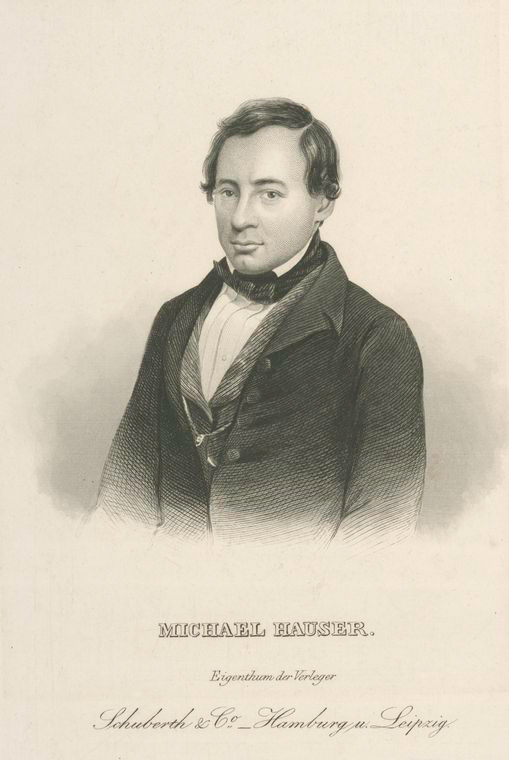
Miska Hauser

[i]

Joachim’s first teacher in Vienna was a seventeen-year-old student of Joseph Mayseder (*1789 — †1863), the mercurial Miska (Michael) Hauser (*1822 — †1887), then making a name for himself as an elegant salon player. The Joachims may have been aware of him through a local connection: Hauser came from a prominent Jewish family in Pressburg (Hauser’s father, Ignaz, was an accomplished amateur violinist, said to have been acquainted with Beethoven). It quickly became apparent that Joseph needed a more experienced teacher, however, and after only a few weeks the lessons were discontinued.

Georg_Hellmesberger_senior_by_Charles-Louis_Bazin

Georg Hellmesberger Sr

Portrait by Charles-Louis Bazin

Joachim was entrusted next to Georg Hellmesberger senior (*1800 — †1873), a distinguished and experienced pedagogue who had been an early pupil of Joseph Böhm (*1795 — †1876). Among Joachim’s fellow students were Hellmesberger’s two sons, Joseph (*1829 — †1893) and Georg junior (*1830 — †1852), both of whom would go on to significant professional careers. Together with Joachim and a boy named Adolf Simon, they formed a “quartet of prodigies” that on 25 March 1839 played Ludwig Maurer’s popular Sinfonia Concertante for the benefit of the Bürgerspital fund, a favored Viennese charity. “In spite of the great success of this concert, Hellmesberger was not wholly satisfied,” writes Andreas Moser on Joachim’s own authority, “for he found (Joseph’s bowing) so hopelessly stiff, that he believed nothing could ever be made of him.” Berlin critic Otto Gumprecht relates a similar story: “after nine months of instruction, [Hellmesberger declared] that he could not vouch for the student’s future, because his right hand was much too weak to draw the bow with power and endurance.” Joachim’s parents, in Vienna for the concert, resolved to take him back to Pest and train him for a different profession.

Coincidentally, Joseph Böhm’s most celebrated pupil, Heinrich Wilhelm Ernst (*1814 — †1865), had just arrived in Vienna, and was giving a series of highly-publicized concerts. When the Joachims turned to Ernst for advice about their son’s professional prospects, Ernst recommended Joseph Böhm as the best person to develop his talent.

Joseph Böhm

Joseph Böhm

An important teacher, [Leopold] Joseph Böhm is known today as the father of the Viennese school of violin playing. His pupils included some of the leading artists of the age: Ernst, Joachim, Georg Hellmesberger senior, Adolf Pollitzer, Eduard Rappoldi, Ede Reményi (Eduard Hoffmann), Ludwig Straus, Edmund Singer, Jakob Dont and Jakob Grün. As a member of the Imperial Hofopernorchester from 1821 to 1868, Böhm played in many historically significant concerts, including a performance of Beethoven’s 9th symphony under the composer’s direction. He became an early advocate for Schubert’s chamber music, and, on 26 March 1828, he gave the premiere of Schubert’s opus 100 trio.  Together with Holz, Weiss and Linke of the original Schuppanzigh Quartet, he performed Beethoven’s string quartets under the composer’s supervision. For Joachim, this direct personal and musical connection to Beethoven held a great and abiding significance.

Joachim’s training under Böhm was a true apprenticeship. In accepting him as a student, Böhm and his wife agreed to take him into their home just outside of Vienna’s first district, two blocks from the Schwarzspanierhaus where Beethoven had lived and died. For the next three years, for all but the Summer months, they would raise him in loco parentis, and train him in the practical skills of a professional violinist. Though not a violinist, Frau Böhm played a critical role in the Joseph’s musical upbringing, attending his lessons, and taking personal charge of his practicing.

Böhm had been a sometime pupil of Pierre Rode, and his method was a combination of the German and French schools. Under Böhm, the caprices of Rode, together with selected works of Mayseder, formed an important part of Joachim’s technical and musical training. In later life, Joachim could play from memory pieces by Viotti, Rode or Mayseder that he had studied with Böhm, though he had not practiced them since. As a teacher, Böhm was able to help Joseph remedy the defects in his bowing that Hellmesberger had found so ruinous.

Joachim gave his first public performance as Böhm’s protégé on 15 November 1841, playing an Adagio and Rondo by Charles de Beriot. The occasion was a gala benefit for the homeopathic hospital of the Merciful Sisters of St. Vincent de Paul, held in the in the k. k. Hoftheater nächst dem Kärntnerthore — the theater where, seventeen years earlier, Beethoven had conducted the premiere of his 9th Symphony. The long musikalisch-declamatorische Akademie featured the city’s most illustrious performers. Two months later (27 January 1842), he gave his first performance of a piece that would become his Cheval de Bataille: Heinrich Wilhelm Ernst’s Fantasie Brillante sur la Marche et la Romance d’Otello de Rossini, Op. 11 (dedicated to Joseph Böhm), first published two years earlier in Mainz.

Though he no longer concertized publicly, Böhm was an enthusiastic quartet player at home. He would occasionally allow Joachim to participate in these informal performances with colleagues, which formed an important part of Joachim’s musical education. “For Joachim,” writes Andreas Moser, “these gatherings in the Böhm household were an inexhaustible source of recollection about an epoch in the performing arts that has found its conclusion with his passing; and for me an object of inestimable edification when we later worked together on our shared edition of the Beethoven string quartets.”

Joachim studied privately with Böhm for more than two years before enrolling at the Vienna Conservatory. His name appears as a registered student there for a short time only — during the school year 1842-1843 — and then, only as a member of Böhm’s advanced violin class. At the same time, he received private instruction in Harmony and Counterpoint from Gottfried Preyer (*1807 — †1901), a faculty member at the Conservatory who was himself a former pupil of the renowned Imperial and Royal Court Organist Simon Sechter (*1788 — †1867). Joachim participated as a section leader in the conservatory orchestra, which Preyer conducted. Published conservatory records show the 1842-1843 school year as his first year, with an obligation for one more — an obligation never fulfilled. At the end of his student year, Joachim received an award of the second highest degree, the “premium with entitlement to a medal” — an award generally given to encourage and reward diligence. He received top grades for diligence, progress and morals.

0095Baden bei Wien

Painting by C. L Hofmeister [Kinsky Art Auctions, Vienna]

At the end of the 1843 school year, Joachim spent the month of August and the first weeks of September with his Figdor relatives in Baden bei Wien, a spa resort frequented by affluent Viennese, including the highest nobility. There, he participated in a gala benefit concert for the victims of a massive conflagration in the Galician town of Rzeszów, produced by its featured performer, Moritz Gottlieb Saphir (*1795 — †1858). In the days before regular concert series, Saphir made a specialty of organizing such events. Saphir’s “academies” were variety shows, constructed according to a simple formula: a mixture of song, humor, dramatic reading, and virtuoso performance. In addition to featuring the most celebrated Viennese artists, they provided a springboard for the talents of some of Austria’s most promising young musicians. Beside Joachim, Saphir gave early opportunities to another Böhm prodigy, Alois Minkus, who played the Othello Fantasy on 1 May 1842 at a Saphir academy in Pressburg, and also to the 8-year-old Moravian violinist Wilhelmine Neruda (later Norman-Neruda, Lady Hallé), who performed de Beriot’s sixième Air Varié in January 1847. Saphir, well known as the editor of the popular journal Der Humorist, took a particular interest in Joachim, becoming his first significant promoter.

Joachim gave a number of well-publicized performances during his final time in Vienna. On 20 February 1843, he played to great acclaim at the annual “private entertainment” of Franz Glöggl (*1796 — †1872), a publisher, music shop owner, professor of trombone and bass at the Conservatory, and the archivist of the Gesellschaft der Musikfreunde. In April, he played a Rode concerto (the program does not reveal which) in a Conservatory pupils’ concert, under the direction of Ferdinand Füchs, who had temporarily taken over leadership of the orchestra from Preyer.

That year, Joachim’s cousin Fanny Figdor, who had been so influential in helping the Joachims to send their son to Vienna, would once again play a decisive role in directing his career. In 1839, Fanny had married Hermann Christian Wittgenstein, a wool merchant some eleven years her elder, and a business acquaintance of her brother Gustav. Operating out of offices in Vienna and Leipzig — where nearly all the wool-export companies were headquartered — Wittgenstein acquired wool from Poland and Hungary and sold it in England and Holland. After their wedding, Hermann and Fanny left Vienna and settled in Leipzig, where, as it happened, Felix Mendelssohn was just then working to create a Conservatory of Music. “From her new home,” writes Otto Gumprecht, Fanny “could not report enough of the lively artistic life that surrounded her on all sides. These alluring descriptions made the deepest impression on her cousin’s mind. He resolved to complete his studies at the newly-founded Leipzig Conservatory, and despite the objections of his Viennese relatives, who, jealous of the family pride, did not want to allow him to move so far away, he persisted in his decision.” Here, as elsewhere in the literature, Joachim is depicted as having had a strong and even stubborn sense of his own best interest and future direction. Andreas Moser nevertheless credits Fanny Wittgenstein, who “exerted her whole influence to have the boy sent to Leipzig for further development in his art.” In any case, Julius Joachim was persuaded, and resolved to follow both Fanny’s advice and his son’s desire. In convincing Julius Joachim to send his son to Leipzig, Fanny prevailed over the united objections of her own father and her uncle Nathan, who often vied with one another as Joseph’s principal caregiver. More importantly, she prevailed over the opposition of Joseph Böhm, who, according to Moser, showed not a little displeasure at the idea. Böhm had wanted Joseph to follow the virtuoso route to Paris.

Before departing for Leipzig, Joachim made an important début, in the fourth-ever subscription concert of the nascent Vienna Philharmonic Orchestra. Playing on Sunday, 30 April, before a capacity audience at the Imperial and Royal Redoutensaal, he performed the Adagio religioso and Finale marziale movements of Vieuxtemps’s fourth concerto in D minor. Joachim had had an opportunity to hear the concerto from Vieuxtemps himself that Spring, when the young Belgian violinist had played in the same hall.

Leipzig Illust

Leipzig

During the summer of 1843, Joachim travelled to Leipzig, to audition for Mendelssohn. There, he also became acquainted with his prospective teachers: Gewandhaus concertmaster Ferdinand David (*1810 — †1873), and the eminent theorist and cantor of St. Thomas’s Church, Moritz Hauptmann (*1792 — †1868). Returning to Vienna for a final visit, he gave a farewell recital. Saphir reported (20 July) in Der Humorist: “While visiting his family, the amiable violinist, Joseph Joachim, also highly esteemed in the [Imperial] Residence, has given a private academy in the salon of his uncle, the wholesaler Herr Vigdor. All that our city has to show for artists and patrons of art graced this private concert with their presence. The winsome little singer (that is Joachim on his instrument) was smothered in caresses. He who has not seen this Wunderkind with his own eyes as he performs the compositions of Classical masters would believe himself to be hearing a Nestor, or one of the modern, celebrated heroes of the violin. Joseph Joachim lacks only world renown — the aura of widespread reputation, in order to shine amongst the violin-stars of the present, both spiritually and technically. Whether his honorable family will see their wish fulfilled, to have the great public delight in their darling’s songs, is not yet determined.”

Joachim took his final leave from Vienna on August 1, 1843, traveling by post coach via Prague to Dresden, and taking the train from there to Leipzig.

[see more]

© Robert W. Eshbach 2014


[i] NY Public Library

Pest

PEST

jj-initials1-e1395761217629His sister’s songs, and the dances of local gypsies and street musicians, are said to have been Joachim’s first musical impressions. His early attempts at reproducing them on the violin were encouraged and guided by a family friend, a medical student and amateur violinist named Stieglitz. After a mere four weeks, impressed by the child’s unusual gift for music and aware of his own limitations as a teacher, Stieglitz encouraged the Joachims to find Joseph a proper instructor. A memorial article in the Pester Lloyd, ostensibly by one of Joachim’s former students, asserts as “a little-known fact” that Joseph received his first formal violin lessons from Gustav (Gusztáv) Ellinger (1811–98), a first violinist and later concertmaster with Pest’s German Theater. (This is echoed in an entry on Joachim in Emil Vajda, A Hegedü, Gyôr, 1902, p. 283). Reportedly, young Joseph took his lessons together with another student, “Karl M.,” who subsequently became a noted writer. When Ellinger repeatedly criticized Joseph, comparing him unfavorably to his companion, the Joachims took their son to another teacher: the concertmaster and conductor of the opera in Pest, Stanisław Serwaczyński, who gave him a thorough grounding in the modern French Méthode de Violon, the work of Viotti’s successors, Rode, Baillot and Kreutzer.

hp_scanDS_45171242246Stanisław Serwaczyński

Joachim grew up in comfortable upper middle class circumstances. However, the family fortunes were significantly interrupted in March 1838, when the Danube overflowed its banks, destroying much of the city of Pest. The Joachims lost their home, and were forced to find refuge across the river in Buda. The flood hit just days before the Spring fair was due to take place, with all of the city’s storerooms filled to capacity, making it likely that Julius Joachim’s business sustained substantial financial losses.

guernier_joseph_joachim-the_young_violinist~OMe00300~10620_20080913_09-13-08_57

Joseph Joachim at the time of his Adelskasino debut

This priceless historical artifact was erroneously sold by Stair Galleries on September 13, 2008 as “Joseph Joachim Guernier — The Young Violinist,” “Oil on panel, 8 3/4 x 6 3/4 in. Provenance: Property from the New York Public Library, Astor, Lenox and Tilden Foundations.” It’s whereabouts are currently unknown.

The following year, Joseph’s success in repertoire by de Bériot, Cremont, and Mayseder was such that Serwaczyński arranged for him to make his debut appearance, on 17 March 1839, at the National Casino (Nemzeti Casino), nicknamed the Casino of the Nobility (Adelskasino), in Pest. Joseph’s successful debut brought him to the attention of an important benefactor: Count Franz (Ferenc) von Brunsvik, a liberal aristocrat and a pillar of Pest’s musical community. [1] At the same time, it won him the enthusiasm of the count’s sister Therese (Teréz), and of Brunsvik’s friend, Adalbert Rosti. In Pest during the winter months, the Brunsviks hosted chamber music soirées several times a week, in which the best professional musicians took part—including, later in 1839, Franz Liszt, and in 1842 the twelve-year-old Anton Rubinstein. [2] After his debut, Joseph became a regular guest at these evenings, and on several occasions, he was asked to sit in on the music-making. [3]

At the same time, Serwaczyński was preparing to leave Pest, and it was decided that Joseph should go to Vienna to study. Joseph’s grandfather lived in Vienna, as did his uncles Nathan and Wilhelm Figdor. Wilhelm’s daughter Fanny, who would later play a decisive role in his upbringing, arrived in April for a short visit, returning later that Summer to take Joseph to Vienna to live.

[see more]

© Robert W. Eshbach 2014


[1] Brunsvik, the dedicatee of Beethoven’s Appassionata Sonata, op. 57, had been among the earliest performers of Beethoven’s string quartets. Beethoven was also particularly close to the count’s sister, Therese, to whom he dedicated his op. 78 sonata, and who has been proposed at various times as a candidate for the composer’s mysterious “Immortal Beloved.”

[2] Among the regular auditors was the respected composer Robert Volkmann. “I . . . experienced beautiful musical pleasures at Count Brunsvik’s, where string quartets, quintets, duos and piano trios were played very artistically,” he wrote in 1841. “The count . . . plays cello very well, and his wife is an outstanding pianist, who plays with great brilliance, power and spirit. Her interpretation of various composers, Beethoven, Hummel, Chopin is exceptional.” Quoted in Maria Hornyák, Ferenc Brunszvik, ein Freund von Beethoven, Studia Musicologica Academiae Scientiarum Hungaricae, T. 32, Fasc. 1/4. (1990), p. 231.

[3] According to Mária Hornyák, the Brunsviks played “above all works of the Viennese classic composers: Haydn, Mozart, Beethoven, Carl Czerny, Hummel and Spohr. But they also liked to play works by Cherubini, Onslow, Bernard and Andreas Romberg, and, among the Romantics they liked primarily Chopin and Mendelssohn.” The Brunsviks’ music library, consisting of 560 pieces—solo, chamber music, orchestral and operatic works— was taken over by the Musikhochschule Franz Liszt in 1937–38. See Hornyák, Ferenc Brunszvik; and also Moser, Joseph Joachim, Vol. 1, p. 10.