
To Jean Joseph Bott, January 16, 1863
14 Friday Jun 2013
14 Friday Jun 2013
14 Friday Jun 2013
Posted in Concert Reviews & Criticism, Pages
Tags
Concert: Leipzig, Gewandhaus: November 16, 1843
AMZ, Leipzig, Vol. 45, No. 49 (December 6, 1843) p. 890
Herr J. Joachim aus Wien, Schüler des Violinvirtuosen Herrn Böhm dasselbst, und erst 13 bis 14 Jahr alt, ist eine höchst interessante Erscheinung, nicht nur in Rücksicht auf das ausgezeichnete Talent, das sich in seinen Leistungen vielfach und ganz entschieden ausspricht, sondern auch der trefflichen Schule und Bildung wegen, von denen sein Spiel unverkennbar Zeugniss gibt. Es muss eine Freude sein, einen so talentvollen Schüler zu unterrichten, es gereicht aber auch dem Lehrer zu grosser Ehre, ein schönes Talent so geleitet und frühzeitig schon so weit gebracht zu haben, dass baldige Erreichung hoher Meisterschaft kaum bezweifelt werden darf. Wie wir hören, wird sich Herr Joachim längere Zeit hier aufhalten, um unter Leitung der Herren Hauptmann, David u. s. w. sich musikalisch ferner auszubilden; bleibt seine Gesinnung so natürlich und anspruchslos wie sie jetzt ist, sein Fleiss so emsig und sorgsam wie er bisher gewesen sein muss, so hat man von ihm wohl mehr noch als einen grossen Virtuosen, man hat gewiss einen bedeutenden Künstler zu erwarten. Möge unsere Hoffnung nicht unerfüllt bleiben. Dass übrigens die Leistung des Herrn Joachim von Seiten des Publicums mit dem lebhaftesten Beifall aufgenommen wurde, bedarf nach alledem nicht weiterer Versicherung.
14 Friday Jun 2013
Posted in Concert Reviews & Criticism, Pages
The Illustrated London News, vol. 4, No. 109 (June 1, 1844), p. 354.
…now we come to the dictu mirabile monstrum, in the shape of a little boy of thirteen, who perhaps is the first violin player, not only of his age, but of his siècle. Of late years we have heard some prodigies, in the form of grown persons, as performers on that splendid instrument; but without severally enumerating them, or their merits, we can safely say that little Joachim is equal to any, or all of them, put together. His tone is of the purest cantabile character — his execution is most marvellous, and at the same time unembarrassed — his style is chaste, but deeply impassioned at moments; and his deportment is that of a conscious, but modest genius! He performed Beethoven’s solitary concerto, which we have heard all the great performers of the last twenty years attempt, and invariably fail in. On Monday last its performance was an eloquent vindication of the master-spirit who imagined it, and we might fearlessly add, that in the cadences, composed by the youth himself, there was as much genius exhibited as in the subject which gave birth to them. Joachim plays from memory, which is more agreeable to the eye of the auditor than to see anything read from a music-stand; it seems more like extemporaneous performance, and admits a greater degree of enthusiasm on the part of the instrumentalist. We never heard or witnessed such unequivocal delight as was expressed by both band and auditory.
14 Friday Jun 2013
Posted in Concert Reviews & Criticism, Pages
The Musical World, vol. XIX, No. 22 (May 30, 1844), pp. 180-181.
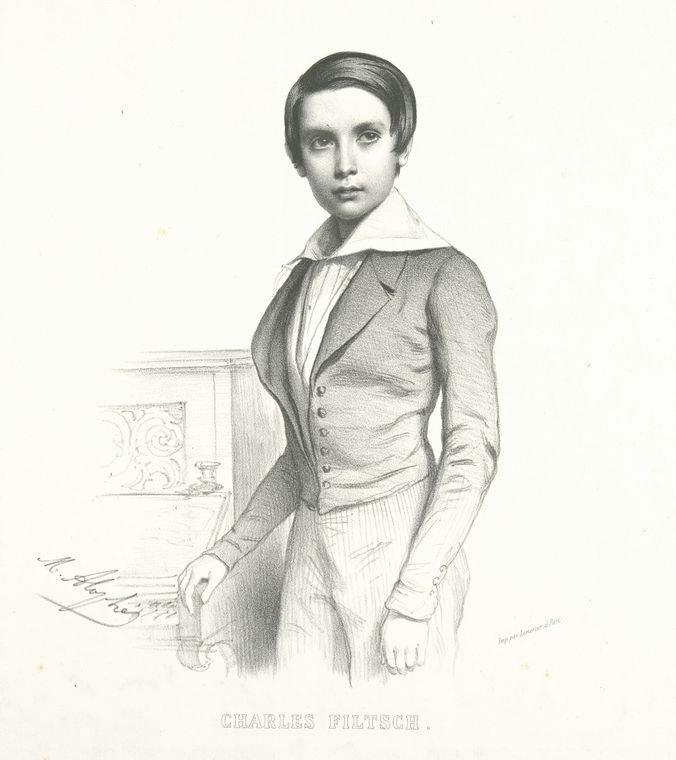
Joachim’s rendering of Beethoven’s concerto was astonishing. Not only was it astonishing as coming from a comparative child, but astonishing as a violin performance, no matter from whom proceeding. The greatest violinists hold this concerto in awe. It is, we must own, not adapted to display advantageously the powers of the instrument — though a composition of great distinction, the first movement being in Beethoven’s highest manner. Young Joachim, however, attacked it with the vigour and determination of the most accomplished artist, and made every point tell. So well did he play, that we forgot how entirely unadapted for display was the violin part. No master could have read it better, no finished artist could have better rendered it. Tone, execution, and reading, were alike admirable — and the two cadences introduced by the young player were not only tremendous executive feats, but ingeniously composed — consisting wholly of excellent and musician-like workings of phrases and passages from the concerto. The reception of Joachim was enthusiastic, and his success the most complete and triumphant that his warmest friends could have desired. What Charles Filtsch[1] is upon the piano, Joseph Joachim is upon the violin, and he is, in common with that prodigious little genius, remarkable for the most attractive manners, the most amiable disposition, and the most intelligent and charming modesty. We wonder not that he should be such a favourite with Mendelssohn, who is ever the first to acknowledge and to nurture rising genius.
[Probably by J. W. Davison]
[1] Charles Filtsch (1830-1845) was Chopin’s most gifted pupil, about whom Franz Liszt is reported to have said “When that boy begins to travel, I will close shop.” He died, tragically young, in Venice.
Source:
14 Friday Jun 2013
14 Friday Jun 2013
Posted in Concert Reviews & Criticism, Pages
≈ Enter your password to view comments.
13 Thursday Jun 2013
Posted in Concert Reviews & Criticism, Pages
Translation © Robert W. Eshbach 2013
__________
AMZ Vol. 47, No. 4 (January, 1845) p. 61:
Of great interest was the playing of the young, 15 year-old Joseph Joachim. The local public knows already from earlier appearances the beautiful, full tone, which he knows how to elicit from the violin, as well as his great dexterity and security, and has always applauded and encouraged these virtues, the more remarkable in one so young. What Mr. Joachim offered us this time, however, was doubly surprising, for he not only gave evidence of the significant advance he has made in technical skill, but he also showed that he is already mature enough to grasp the intellectual and spiritual meaning of a work of the highest artistic importance. The manner in which he performed the difficult and brilliant concerto of Beethoven leaves no doubt as to his true vocation for the musical profession, and now sets him above the mere virtuosi in the ranks of artists. In this connection, we take notice of the two free cadenzas, which he introduced into the first and last movements of the concerto, ingeniously and interestingly made up of the principal themes of the work. Mr. Joachim’s playing is so true and secure, his tone so large and resonant, and always so pure in intonation, even in the highest and most difficult passages, the execution so natural and yet so independent, that only by looking at his juvenile form can one convince oneself of his youthful age. May the young man who last year celebrated triumphs in England long preserve his childlike, modest nature, and neither through the great praise which his accomplishments have always found, this time not excepted, nor through the opinion that he may have already arrived at the peak of perfection, lead him astray and keep him from untiringly striving forward. He has a great and honored future before him, and will certainly be numbered amongst the great artists.
_________
Von grossem Interesse war das Spiel des jungen 15järigen Joseph Joachim. Das hiesige Publicum kennt bereits aus früheren öffentlichen Productionen den schönen, vollen Ton, den derselbe der Violine zu entlocken weiss, so wie seine grosse Fertigkeit und Sicherheit, und hat diese in so frühem Alter um so bemerkenswertheren Vorzüge stets beifällig und aufmunternd anerkannt. Was jedoch Herr Joachim dieses Mal bot, war doppelt überraschend, da er dadurch nicht nur sehr bedeutende Fortschritte in seiner technischen Ausbildung documentirte, sondern auch zeigte, dass er der geistige Erfassung eines künstlerisch höchst bedeutenden Werkes bereits gewachsen ist. Die Art und Weise, wie er das schwierige und geniale Concert Beethoven’s vortrug, bannt jeden Zweifel an seinem wirklichen Berufe zum Musiker, und stellt ihn schon jetzt über die blosen Virtuosen in die Reihen der Künstler. In dieser Beziehung ist noch der beiden freien Cadenzen zu gedenken, welche er im ersten und letzten Satze des Concertes einschaltete und die geistvoll und interressant den Hauptmotiven des Werkes sich anschlossen. Herrn Joachim’s Spiel ist so rund und sicher, sein Ton so gross und klangvoll und selbst in den höchsten und schwierigsten Lagen stets so rein, der Vortrag so natürlich und doch so selbständig, dass man nur durch den Anblick seiner jugendlichen Gestalt von seinem frühen Alter sich überzeugen lässt. Möge dem jungen Manne, der berreits im vorigen Jahre in England Triumphe feierte, sein kindlicher bescheidener Sinn noch lange erhalten werden und er weder durch den grossen Beifall, den seine Leistungen stets, und auch dieses Mal gefunden haben, noch durch die Meinung, dass er schon jetzt auf dem Gipfel der Vollendung angelangt sei, sich irre machen lassen in unermüdlichem Vorwärtsstreben; er hat eine grosse ehrenvolle Zukunft vor sich und wird dann sicherlich unter den Künstlern voll zählen.
13 Thursday Jun 2013
13 Thursday Jun 2013
Posted in Concert Reviews & Criticism, Pages
Signale für die Musikalische Welt, Vol. 3, No 50 (December 1845), p. 394
[English translation below]
Von großem Interesse waren in diesem Concert noch die Violin-Vorträge des Hrn. Joachim, dieses so jungen vielversprechenden Geigers, der sich schon öfters mit entschiedenem Beifall öffentlich hören ließ. Er spielte mit großer Anerkennung ein von ihm componirtes Adagio und Rondo und später eine Caprice von Ernst über ein Thema aus dem Piraten, mit einer Sicherheit, Ausdauer und Geschmack, daß man, ohne hinzusehen, einen Künstler reiferen Alters vor sich zu haben glaubte. Finden wir den jungen Joachim, seit wir ihn zum letzten Male hörten, wieder weiter fortgeschritten und entdecken auch an ihm Compositionstalent, so meinen wir nicht unwahr zu reden, wenn wir behaupten, daß er einst einer der bedeutendsten Geigenkünstler werde, dem, wenn er so fortsudiert, eine glückliche Zukunft vorherzusagen sein dürfte.
H. S.
Of great interest in this concert were also the violin performances of Mr. Joachim, this young and promising violinist who has already been heard in public on several occasions with resounding applause. He played with great recognition an Adagio and Rondo composed by himself, and later a Caprice by Ernst on a theme from “The Pirates,” with such skill, endurance, and taste that one would believe, without looking, to be in the presence of a more mature artist. Seeing the young Joachim, since the last time we heard him, further advanced and also discovering compositional talent in him, we do not speak untruthfully when we claim that he will one day become one of the most significant violinists, to whom, if he continues his studies in this way, a prosperous future can be predicted.
H. S.
13 Thursday Jun 2013
Posted in Pages, Reminiscences & Encomia
