Baroness von Zedlitz, “A Chat With Dr. Joachim,” The Woman at Home, London (1894), pp. 227-234.


When quoting this article, please acknowledge the source: http://www.JosephJoachim.com
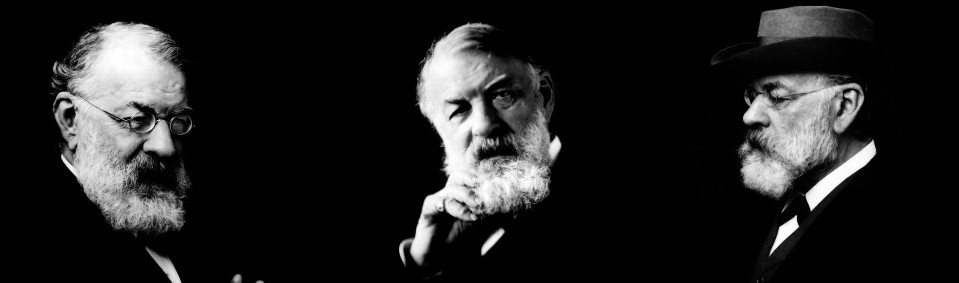
06 Sunday Mar 2016
Posted in Miscellaneous Articles, Reminiscences & Encomia
Baroness von Zedlitz, “A Chat With Dr. Joachim,” The Woman at Home, London (1894), pp. 227-234.
When quoting this article, please acknowledge the source: http://www.JosephJoachim.com
28 Thursday Jan 2016
Posted in Miscellaneous Articles
From Donald Francis Tovey, “Performance and Personality,” London: The Musical Gazette (March, 1900) pp. 17-21; (July, 1900), pp. 33-37; p. 43 (letter).


Donald Francis Tovey
Portrait by Philip Alexius de László (1913)
© The University of Edinburgh Fine Art Collection
Supplied by the Public Catalogue Foundation
II
[…] We have all heard with feelings of great disappointment that Dr. Joachim is not to visit us this spring; and it is with far deeper feelings than disappointment that we learn that it is the state of his health that deters him. While we anxiously wait in the hope of learning that his appearance here is perhaps only delayed until the summer’s warmth and brightness bring him back to us in May or June, our duty to him, to ourselves, and to all whom we may influence is as plain as ever. We must try to realise what it is that we miss during this spring concert-season, and we must use that realisation as a touchstone by which to criticise other players and performances, not so much by revealing their shortcomings as by trying to find out how often and how far they have a share in that greatness which we call to memory. And when he returns to us after this delay we must welcome him with an admiration and sincerity so much the deeper as it is more definite; we must cease to be content with the vague and lofty phrases about “breadth” and “tradition” and “intellectuality,” and other beautiful but indefinite terms which we are so apt to join without sense of incongruity to such frigid and patronising encomiums as “masterly,” “well-nigh faultless,” &c. The gravest defect of our present-day musical criticism is surely the vagueness of our praise, a vagueness from which the lightest word of blame stands out with startling blackness, and makes whole columns of unimpressive superlatives read almost like sarcasm. Let us try to use this somewhat melancholy opportunity that is now open to us — the opportunity of searching our memories for an impression dim enough for us to analyse, while the dazzling reality that dims our vision and paralyses our utterance is absent.
That Dr. Joachim was in my mind last December when I tried to describe the ideal great veteran, has long ago been obvious to every reader. That being so, let us proceed to add further details to the portrait. One of the first questions that suggest themselves when we try to estimate the greatness of a player is: What is the range of his sympathies? Can he enter into the spirit of all the great music in which he can possibly take part; and if not, what are his limitations? In answering these questions we must bear in mind the important fact that it is one thing to live through the whole growth and rage of a stormy artistic controversy, and a very different thing to grow up in a period when that controversy has almost entirely died out. And when such a controversy lies very largely outside one’s one special sphere of activity, and when it is as clear as noon that during the height of the controversy to take the “progressive” side means utter distraction and ruin to one’s own work, while to continue aloof working on the old footing means a sure growth in mastery, sympathy and ideality with no less certainty of becoming quite as unpopular and beyond the ordinary intelligence of critics as the most violent partisans of the “new school;” why, then, this latter course is surely the only courageous and sensible one for a great artist to take. We surely do not regret that he has not thrown his energies into work which would only swamp them without gaining from them anything like what they will yield us if allowed to develope in their own way. Still less dare we imagine that he might have shewn broader sympathies by taking a course of vague compromise. An artist is not great if the discovery that certain tendencies are fatal to his work does not thoroughly estrange him from those tendencies; and he is not honest if, when asked his opinion, he does not boldly proclaim his estrangement.
These considerations should help us to understand that Dr. Joachim’s uncompromising repugnance to the art of Wagner is a matter for which apology would be an impertinence. Whether we hold with Wagner or not (I for my part write as a Wagnerian, if a sound appreciation of Brahms and older classics is not a disqualification), we cannot reflect on the mental and artistic wreckage caused by the rabid Wagnerianisms and Anti-Wagnerianisms of the past without deepening our reverence for the great violinist who, in the height of the storm and while yet at a time of life when violent enthusiasms are apt to hurry the mind away to lose itself in one or the other extreme of barren pedantry, boldly chose to concentrate his energies on a progress none the less rapid that it was not the progress of the Music Drama or the Latter-Day Programme Music. Let us sum up the problem (such as it is) of Dr. Joachim’s attitude to Wagner by stating once for all that those whose admiration for Wagner is inconsistent with a deep reverence for Dr. Joachim’s artistic aims and achievements are precisely as foolish as a man who professes a great insight into the highest forms of drama, while he sneers at the entire range of art covered by painting, sculpture and architecture.
Having brushed away this cobweb (which some people seem to take as quite a formidable obstacle), it is difficult to trump up anything else that one can regard as a limit to Dr. Joachim’s insight. True, I once heard an interesting young man charge him with being able to play “nothing but Bach, Beethoven and Brahms,” which at first seemed to me a compliment — though a very badly expressed one — and under that impression I elicited from him the admission that he had forgotten to mention Schumann, Schubert, Mendelssohn, the old Italians, Spohr and a few other miscellaneous writers, after which I began dimly to realise that the interesting young man had meant to make strictures on Dr. Joachim’s range of expression, while the interesting young man began dimly to realise that he had made a fool of himself. The reader will probably ask in wonder: “Why quote such foolish opinions? Are they not so insignificant that to notice them at all is like a confession of weakness?” It would be so if our object in writing and reading this article were to compliment and apologise for Dr. Joachim — but it is devoutly to be hoped that no musical person in the civilised world is so impudently stupid as to conceive any such idea. Our object is simply to bring before ourselves some dim notion of the actual differences between a great artist and the ordinary run of experts, amateurs, and Philistines, and for this purpose it is really important to meet the tomfooleries of “the man in the street,” with something more definite and more argumentative than the bare assertion : “You, an ordinary man, are talking nonsense about a great man.” The best compliment we can pay the great man is to shew that we differ from more foolish members of the crowd in our appreciation of his work — not merely in the orthodoxy of our catch-words.
The range of Dr. Joachim’s power as an interpreter is (when we give the matter a moment’s thought) obviously co-extensive with all that is called “classical” music together with the so-called “Romantic” schools of Germany, and the “neo-classical” work of Brahms — a range of art which we may challenge any actor or opera singer to represent in their respective spheres. And there is not one single thing within that vast range which Dr. Joachim does not make his own; nor one single point in which his sympathies are not in full touch with the most exhaustive musical scholarship. As it is grievously disappointing that the title of an article should contain the word “personality” while the article itself contains not one word of gossip, I beg leave to illustrate the last observation by certain details of Dr. Joachim’s intellectual and artistic feats as shewn casually in private. These details have been communicated to me by a friend in whose veracity I have absolute confidence, but whose name I, unfortunately, am not at liberty to divulge. I am told that on one occasion Brahms copied out an interesting movement from a very early manuscript symphony of Haydn and sent it to Dr. Joachim as being some thing he could not possibly know—only to find that Dr. Joachim had known it before him. Again, my friend informs me that on his asking Dr. Joachim whether Brahms’ B flat major concerto was not the only one on classical lines that contained a scherzo, Dr. Joachim replied : “Of course — oh, I forgot! I think there is one by Litolff.” Many other little anecdotes of this kind may be vouched for; trivial, you will say, in themselves, but so thoroughly exhausting the whole ground of instrumental and choral music, and pointing to such absolute accuracy and certainty that from them alone we might form a picture of wide and deep musical scholarship in its highest form.
To turn now to the more important factor of quick sympathetic insight. My friend mentioned above furnished me with another piece of gossip which, perhaps, may not at once strike the reader as being so astonishing as it really is. Not long ago Dr. Joachim was playing in private a manuscript violin sonata with its composer, an ambitious student who wrote a handwriting which was an object of scorn and wrath to all who tried to read it. Neither the obscurities of the manuscript nor those of the composition seemed to have the slightest effect on Dr. Joachim, who, according to the account the composer afterwards gave, brought out every nuance, written or unwritten, exactly as it had been in the composer’s mind at the time of writing, including minute felicities of interpretation felt while the work was being planned, but forgotten as soon as it was written. To complete the picture, it appears that Dr. Joachim began his criticism by saying that “of course one hearing was not enough for such a difficult work” — not in any sarcastic spirit, for that seems almost unknown and completely unnatural to him, but in simple good faith as a piece of scientific caution! In order to appreciate this story we must bear in mind that students’ compositions and other dull works are not, as is sometimes supposed, easier to interpret than great classics. On the contrary, dull and ambitious works are vastly more difficult than the most complex of classics, because the dull work is always vague, partly in intention and partly in execution, producing irrelevant complexities by methods at once inadequate and redundant, whereas the complexity of a great classic, though often far more alarming, is the logical outcome of many consistent and supremely simple and intelligible principles, and long before it is unravelled wins the sympathy of the interpreter and gives his activities the right direction. The intellectual feat just described is by far the greatest tour de force I have ever read or heard of any player; and if ever a time comes when names may be revealed my readers will find that it is one of the best authenticated.
Some people will remember another extraordinary feat of intellectual sympathy publicly performed by Dr. Joachim in London a good many years ago. He was playing a violin sonata (I believe I am correct in saying that it was a work he did not like) by an extremely successful composer — who was playing the pianoforte part himself. The extremely successful composer came to the most beautiful theme in his work, really a very happily turned phrase. He threw it off carelessly as one might say “a poor thing, sir, but mine own.” Dr. Joachim took it up and it sounded as it might to the imagination of its composer in the first thrill of creative impulse. Some people have argued that the composer showed a charming modesty in playing it superficially himself. He showed nothing of the kind. The man who does not take himself and his work seriously must be either very conceited or in the lowest depths of despair. When we accuse a man of “taking himself too seriously” we mean that he expects others to take him more seriously than he or they take the rest of mankind: and our inaccurate language sometimes saddles us with the awful responsibility of having caused clever young people to sink into permanent nincompoopery because they have taken our shallow advice seriously and ceased to take themselves so. If the modest artist ever says “a poor thing, sir, but mine own,” there is much weight in the “but.” “A poor thing, sir, to you: but half the world to me when I found it was mine.” The modesty lies in cheerfully assuming that half one’s own world is a drop in the ocean of a great man’s thoughts. The great man never fails to take everything as seriously as it can be taken, jokes included. That is to say, if it is seasonable for him to make a joke he will simply and straightforwardly make the best joke in the world, just as a good athlete will simply and straightforwardly play the best possible game. To hear and see Dr. Joachim over a Haydn quartet is a lesson which should drive the superciliousness and precosity out of the most hardened of prigs, old or young. Haydn’s numberless jokes and drolleries tumble out helter-skelter with the absolute spontaneity and grace one sees in a kitten running after its tail; while throughout the most light-hearted tomfoolery one is carried away by the grand spirit and life of Haydn’s immensely broad and terse melodic and structural organisation. There is no tone of patronising acknowledgment that “old Papa Haydn” is “wonderfully clever for the time in which he lived”; if one wants a parallel for such a hideously inartistic attitude, those who have the happiness of knowing what it means to be a good athlete may realise some sort of parallel by trying to imagine their resentment if their fellow-players played frivolously during an exciting match.
Dr. Joachim’s treatment of Haydn is altogether in line with his treatment of Beethoven, Schumann, Brahms, and everything else that he has to do, from teaching to making a speech. While playing Haydn’s most extravagant frolics with precisely that simple thoroughness with which Haydn wrote them, it is no effort to Dr. Joachim to go with Haydn in his sudden plunges into the sublime and mysterious; nor is it an unexpected change for him to turn from the last note of the Haydn quartet to Beethoven’s quartet in A minor — one of the two or three most profound and mysteriously emotional utterances in all art. The epigrammatic and thoughtful genius of Schumann has influenced him with the influence of a personal friend, and would have influenced him hardly the less if, like the influence of Haydn and Beethoven, it had been merely that of works and not direct and mutual from man to man. The mutual influence between him and Brahms is now no less historic, and it is deeply thrilling to note that it has been the mutual influence of two composers. The subject of Dr. Joachim’s compositions is a large one, and I hazard the guess that its importance will grow as the century proceeds. At present we are too much occupied with the latest fashions of musical cleverness to appreciate the real originality and power of a scanty collection of works whose brilliance is not that of the clever young man, and whose intellectual difficulty is not that of the latest application of Wagnerian Leit-Motif to the symphony; but when time shews the difference between the clever and the great men of the present day, then the nobility of style and firmness of aim which characterize Dr. Joachim’s works will reveal their vitality and secure them their place among the works of the last classical period in musical history. Those who are curious for further details as to Dr. Joachim’s influence on Brahms cannot do better than read Herr Andreas Moser’s deeply interesting work “Joseph Joachim Ein Lebensbild” (Berlin, 1898), wherein will also be found an account of his relations with Wagner and Liszt, which cannot fail to inspire the most violent and one-sided enthusiasts to a deeper respect, or rather reverence, for both Dr. Joachim and Liszt. One word more, suggested by the above work, which was prepared for Dr. Joachim’s “Diamond Jubilee” in Berlin. We still have in its freshness the recollection of that little ceremony performed at the London Philharmonic, when Dr. Joachim was presented with a golden wreath and congratulatory speeches were made; and many felt compelled to regret that the inevitable references to Dr. Joachim’s increasing age were not tinged with something more of a note of triumph. Critics who detect a slight increase in frequency of slips of intonation which show that the great violinist is a man and not a machine, have been known to assign this increase (doubtless a fact, but not an important one) to “failing powers.” Such critics have absolutely no business to exist, and are mentioned here merely because they mistake a dignified silence for a respectful fear of their opinions. Dr. Joachim retains to the full his unsurpassable power of presenting great musical compositions as wholes, and preserving the vitality and purport of their every detail in the light of the vividly presented whole. His tone can be overpowered only by coarse playing on the part of others; it remains absolutely pure and clear in pianissimos so light that the ordinary player’s pianissimos sound elephantine in comparison; and in fortissimos there is neither strain nor thinness. It is absolutely impossible to detect any sign of obscurity or uncertainty in his execution of such monstrously difficult works as Bach’s C major solo violin sonata, or his own splendid Hungarian Concerto. And no one has ever dreamt of hinting that there is any diminution in that unrivalled intellectual vigour which he has used for more than sixty years in the service of Beethoven, Schumann, and Brahms. No note of sadness, then, in speaking of his age! Rather let us remind ourselves of the triumphant philosophy of Browning’s “Rabbi ben Ezra” and let the thought of Dr. Joachim’s age only make us long to have been born to “grow old along with him” — to have heard with our own ears his whole life-work in the art of music, and now to have reached with him that “best which is yet to be” —
“The last of life for which the first was made”
Tamino.
III
The generalities of the two former articles make it possible for us now to enter into more definite details as to the qualities that make a performance at once faithful, individual, and great; and I propose, accordingly, to attempt a very cursory description of a few scattered salient points in Dr. Joachim’s playing. To those who have read my former articles such points will, I hope, seem to arrange themselves into their places in the great whole I have attempted faintly to illustrate; while for those who have not read the former articles, these points may at least help to stimulate thought.
The keystone to Dr. Joachim’s interpretation is, as we have already been led to believe, his grasp and presentation of musical compositions as wholes. To illustrate this directly would necessitate an exhaustive aesthetic analysis of some complete composition; and such an analysis would cover more than twice the bulk of the present three articles before it was finished in sufficient detail for comparison with the main features of an “ideal” (or real) rendering of the work. I propose, instead, to take a few typical cases of the great player’s treatment of one of his main means of expression, showing how he appreciates the essential aesthetic principles it involves. After that I shall conclude with a description of Dr. Joachim’s playing of a difficult episode in Beethoven’s Violin Concerto.
Let us consider Rhythm. Everybody feels that rhythm must not be expressed stiffly and mechanically; but few except very great players know how to make their rhythm free without making it weak and vague. These are platitudes; but their weakness as such arises mainly from our taking for granted that we know exactly what we mean by “stiff and mechanical rhythm.” We usually take it to mean rhythm that is mathematically exact, or that fits in with the tick of a metronome. If we try a few experiments in the way of doing what so few people have the remotest notion of doing, viz., listening accurately to our own or another’s unfinished playing, we shall probably find that the rhythm which strikes us as “stiff” is really very inaccurate indeed. And a moment’s reflection ought to convince us that, however infallible a metronome may be as to the position of the beats to which it is set, it has absolutely no control over what happens between the beats. Practising with metronome may be very good for an instrumental student, if it is not regarded as relieving one of responsibility for listening to one’s own rhythm; but in nine cases out of ten it simply means that one sinks into a blissful feeling of industry, and a coincidence of every fourth note with a tick of the metronome. Meanwhile one is playing a scale like this (if the printer will kindly so space the notes that the imaginative reader may take the gaps and commas as representing the facts of the rhythm so played): —

Every group begins on the beat, but no group properly fills out the beat. If the reader will accept a dogmatic statement which time and space prevent me from supporting by logical evidence, I will sum up all I need to say on this point by saying that “stiff rhythm” is always smaller than its own main beats; — infinitesimally so, of course, or all “stiff” players would discover and correct it at once. The reader must not imagine that these and the following observations will enable every player with a feeble rhythm to become great and vigorous by learning to drag.
Take an ordinary “intelligent” musician, of the kind that thinks Mozart an interesting but superseded precursor of Beethoven, and make him play you the following theme from the Andante of Mozart’s C major sonata for four hands: —

In a tolerably good case it is just possible that all the beats may be equal to one another ; but it is far more likely that the third beat in the first bar will come too soon; and if the demisemiquavers in that beat do not arrive with some touch of haste after the dotted notes, and if they do not descend with a prosaic little click that should indicate a more rapid movement than the player’s own tempo warrants, and if the final turn does not sound a little like an irrelevant remark in six grace notes without rhythmic ictus and without connexion from the long note before them: if none of these petty slovenlinesses occur, why then either your player is a remarkable man and you wrong him in taking him for the ordinary intelligent musician, or at least he is a wide awake person who listens to his own playing. In any case I believe that few who have not habitually thought of rhythm in this way or listened systematically to their playing and practising, will fail to be struck by the unexpected largeness of the above theme if they play it at an almost too flowing Andante tempo (about  = 116) and carefully put not only the main beats into their places but also the demisemiquavers.
If “stiff rhythm” is smaller than its own beats, then true artistic rhythm must be at least equal to its own beats. But as true artistic rhythm is as rare as any other true art, it follows that to us, who are so much more accustomed to stiff rhythm, and therefore take it as normal, true artistic rhythm always seems unexpectedly large for its pace. Taking players of real rhythmic power, it is astonishing to notice how, when they follow Dr. Joachim’s reading of a work (as players of real greatness and personality may well submit to do), they are forced to play actually slower than he does in order to produce an analogous impression of breadth and detail. If they tried to play at his pace their expression would become breathless and coarse. Among those who do not play much it is firmly and widely believed that Dr. Joachim’s tempi are unusually slow; because few people are sufficiently cool during his playing to observe such prosaic facts as the contrast between the actual rapid pace, and the breadth and detail of expression. But those who have had the thrilling experience of accompanying him have testified that while he can play extraordinarily slowly without losing swing and coherence, his quicker tempi are really unusually fast. Obviously a lively movement gains immensely in directness and vigour of expression, if while played with this extraordinary breadth it is also really very rapid, so that its changes and climaxes surprise one, no less by their swift onrush than by their strength and dignity; and obviously the player who cannot attain the breadth without losing the rapidity must be far inferior to the greatest in those most essential qualities of vividness and thrill, — but surely it is equally obvious that a player so limited is immensely superior to the man who attains rapidity and brilliance at the cost of breadth.
This largeness of rhythm must be looked for in the interpretation of all classical music however small or light-hearted it may seem. The giving of full measure is a primary quality in all great art, both productive and reproductive, and in all great personality. The finale of Haydn’s quartet in E flat, Op. 64, No.6: —

both shows it and demands it in performance, and exposes the littleness of a little player’s personality as mercilessly as does the finale of Beethoven’s A minor quartet.
So far we have been assuming no more than if true artistic rhythm were mathematically exact. The question will be eagerly asked, “Where does it diverge from strict time?” From the above considerations it might at first seem as if true rhythm could differ from exact rhythm only in being larger than its main beats; but this is obviously an unsatisfactory answer, because if some part of the rhythm is to be larger the remainder must clearly be smaller, so that the distinction we have made so much of between true and stiff rhythm would become valueless or at all events extremely difficult.
One part of the probable solution is that here another rhythmic principle is involved, viz., accent. Where true rhythm is free it expresses in accent all that it obscures in proportion (or quantity, as a student of prosody would say), and vice versa. There is an enormous amount of accent in Dr. Joachim’s playing; but we are not too much aware of it because, as with the length of the smallest notes, so with the least accented notes, full measure is given. But the amount of accent that there is normally on the beats is a thing that few realise who have not either accompanied him or screwed themselves up (or, rather, down) to listen to him with a prosaic and statistical mind. The passage in the first movement of Brahms’ B flat string quartet beginning —

and ending —

is played by Dr. Joachim and his Berlin colleagues with the utmost smoothness and in an intense pianissimo; yet the accents, unimaginably delicate and unobtrusive as they are, are so strong that after all that rhythmic swing, there is no mistaking the fact that the tied notes at the end are on the sixth, and not the first beat of the bar. I have met with a friend who detected this from the Berlin quartet’s performance before he saw the score.
What with accent and breadth, we may say, as before, that true rhythm always expresses the main rhythmic facts, without slurring over the less salient features. For instance, if there is a cross accent, true rhythm will show that it is not an ordinary accent; the ordinary accent will be felt in some way, while the cross accent is unmistakeably overriding it. Or if there is a phrase the point of which lies in its being rhythmically and expressively broader than its surroundings, true rhythm may make it larger than the main beats of its context, without making the context sound perfunctory, and without anything resembling a change of tempo such as the composer could indicate by a verbal instruction.
Of course the danger always is that ordinary imitators will find out “how these things are done,” and reproduce them in a stiff and coarse travesty. Herr Wirth, in the Berlin quartet, plays a certain group in the second variation of the finale of Beethoven’s E flat quartet, Op.74, thus (if the printer and reader will again take spacing as a representation of those rhythmic subtleties that transcend notation)—

Every note is large, but the pause on the upper D is quite extraordinary in length; yet the passage does not, in Herr Wirth’s hands, suggest another rhythm than Beethoven’s. But just now every young viola player of average intelligence and superior attitude plays it “as they do in the Berlin quartet,”

And the effect is vulgar beyond words. The actual prosaic difference between it and Herr Wirth’s enormous swing and suspense is, that the vulgar imitation suggests a different and coarser group than Beethoven’s, and reels drunkenly over the least emphasized note of the group instead of giving it its place in the bar as a thing delayed but not curtailed. True rhythm is far too delicate a thing to be attained by imitation.
To take another point (though we have only touched on the outskirts of the subject of rhythm) — that of the portamento or slide from one note to another. A device so natural to the violin and the voice cannot be condemned off-hand as inartistic; but the great principle involved in its proper use is this, that it must not detract from either of the notes between which it is made. Dr. Joachim, like all violinists, will make a portamento in the following phrase in the recapitulation of the first movement of Beethoven’s Violin Concerto

but whereas the ordinary player will begin caterwauling down long before one can possibly take that highest note for a minim, the supremely great player will hold it for two good beats, and then swoop deliberately but swiftly down the great drop on to the equally large lower note. The mathematical result may be that that bar is a little larger than the normal; but that will be reconciled with the context by imperceptible gradation and swing.
Turning to more protracted freedoms of tempo we shall find the same principles at work. If the composer does not intend a movement to be broken into sections at different tempi, no increase of breadth or of swing or onrush will in Dr. Joachim’s hands sound as if it were a thing possible to measure by metronome, even though actual metronome measurement should, as a fact, show a difference of double tempo between the extremes. How this is done is beyond analysis; it is a subtle question of accent, probably — accent by which the feeling of rhythmic ictus is kept at the same level through all variations of breadth and flow: much as the Meiningen orchestra contrives to make Brahms’s Tragic Overture sound as in bars of two beats, though it is playing it no faster than the great choral theme of Beethoven’s Ninth Symphony where the beats are unmistakably four.
Of nuance there is neither space nor other possibility of saying much. A large part of the ground is already covered by the great principle we have observed as to rhythm — the expression of broad and salient features without loss of accuracy and largeness in subordinate places — while much of the rest is contained in the obvious inferences to be drawn from the extraordinary definiteness and delicacy of Dr. Joachim’s accent, as illustrated by such passages as the one above quoted from Brahms. Obviously such feats of rhythmic expression imply the most amazing range and gradation of tone; and it is not thinkable that such gradation should not serve other noble purposes as well as rhythmic ones. However, to discuss these would lead us into endless detail, and I must pass on with one brief remark to a shorts ketch of one of Dr. Joachim’s best-known passages of interpretation (if one may be pardoned for hastily coining such an absurd phrase), by way of conclusion. The reader may find out most of what I would wish to say of nuance by reading the above remarks on rhythm once more, mutatis mutandis. I will only pause to observe that, like rhythm and everything else, nuance organises whole phrases and whole works, not merely one note after another. I have heard a violinist of excellent intelligence and culture give out the theme of the slow movement of Mendelssohn’s Violin Concerto, thus—

Every note was pure in tone and thrilling in expression, but the deadly dulness of the result simply passed belief. (This error is worth special mention, as there is no precise parallel for it in the case of rhythm.) Nuance must cover large surfaces, as well as details, if it is to mean anything.
Let us fly off at a tangent from this point to our final illustration of the effect and purport of truly great playing. Let us first imagine that we have heard a performance of Beethoven’s violin concerto, in which the orchestra has played the opening tutti simply and straightforwardly, but the soloist has devoted his entire self to the delivery of every phrase singly in the most dignified imaginable way. Let us imagine that the soloist (whose name I do not intend to mention) manages this by playing obviously much slower than the orchestra, and that when he comes to the latter part of the development the orchestra has to subside almost to inaudibility and entirely to rhythmic stagnation while he delivers each phrase as beautifully as a single phrase can be delivered (one in particular will always remain in my mind as a living embodiment of true rhythm and nuance, as far as such truth can be found in isolated phrases)—

Yet the whole episode remains a mystery. What on earth have these beautiful pieces of non-thematic declamation to do with the rest of the movement, and why does the orchestra suddenly romp in with the opening theme fortissimo in the ordinary tempo of the tutti? The man dominates the orchestra, but he does not make us understand either himself or it.
Now let us hear Dr. Joachim’s interpretation. On his entry the rhythm becomes as much more free as the phrases become more declamatory; but still he is evidently not playing in a different tempo from the tutti. Page after page he takes the theme from the orchestra, and transfigures but never obscures it, and when we come to the wonderful declamatory episode at the end of the development, what do we hear? First, the horns with that all-pervading rhythm  with which the movement began. The violin, with its pathetic and entirely independent melody, rules the harmonic structure, while this rhythm persists, always clear, always recognisable as in something like the general tempo of the movement. The violin’s melody moves from G minor to E flat, and at once the full round tone of the horn gives place to the hollow, reedy moan of bassoons. The significant rhythm still persists. The violin’s declamation reads the tonic E flat as flattened supertonic of l) (the main key of the work), and at once on the dominant of that key solemn trumpets and drums take up the momentous rhythm, and continue it in a quiet, steady tread while the violin’s phrases (amongst them that quoted just above) become at once more flowing, shorter and tranquil.
Suddenly there is a feeling of life newly astir, the violin rises in a short passage of confident matter-of-fact activity— an almost instantaneous crescendo, and the opening tutti theme (so long anticipated by the rhythm in horns, bassoons, trumpets, &c., and at the last moment, pizzicato hints on the strings)— the opening tutti theme bursts forth as simply and inevitably as the sun at day break. Who has dominated the orchestra most— Dr. Joachim or the other player described above? Dr. Joachim has not only dominated but permeated the orchestra from beginning to end. He has made all its doings his own, as the great man always absorbs and employs his environment. By the way in which he has played that wonderful independent declamation in the development, he has made us feel that he himself is in those horn-notes; at Joachim’s call the horn tone changes with the tonality to the more mysterious bassoon-tone; Joachim is playing those trumpets that breathe anticipation, such as Milton sings when—
“—kings sate still with awful eye,
As if they surely knew their Sovran Lord was by.”
It is often said (with less truth in the case of the greatest than one is apt to imagine) that the art of the actor and the player perish with the individual life. The world will not let the compositions of Joachim die; but, even without these, a man who has his share of the Götterfunken, and is such a power in others’ lives, might be content to be forgotten. The preservation of names is the only means by which the greatness of an age can formally acknowledge its debt to the greatness of the past; but that debt remains as real and tremendous a fact whether the names are preserved or not; and it is the fact, and not the name, for which the great men work.
TAMINO.
To the Editor of the “Musical Gazette.”
Dear Sir, — Much as I agree with your contributor, “Tamino,” I cannot say that he has been very lucky in his anecdotes of Dr. Joachim’s “musical scholarship.” I venture to send you the subjoined specimen as an addition to “Tamino’s” article, as I believe it may convey to some musical students that definite impression that “Tamino’s” anecdotes seem to me to lack.
In Bach’s A minor sonata for unaccompanied violin there is a difference of reading as to the second note: —

Some authorities read G sharp, which at first sight seems obviously right. But G natural really makes a much better sense as a step in a downward scale (A G F E D), the descend being disturbed into the upper octave by the limited downward compass of the violin.
I happened a few years ago to mention to Dr. Joachim that I had been looking at an arrangement by Bach himself of this sonata for Clavier, transposed to D minor, a little-known though interesting piece of work, then recently published or reprinted, and only known to me by the merest accident. I hardly had time to mention it before Dr. Joachim said, “And was the second note in the bass natural?” and then explained to me why he asked the question.
It may be said that this was a violin composition constantly on his repertoire; but how many actors are there, or how many have there ever been, who could show such an absolutely ready familiarity with varied readings in, say, “Hamlet”? It is the scholarly attitude of mind that is so significant in this case; and it would seem still more significant to one who could have observed the startling promptness of Dr. Joachim’s question. —
Yours truly, D. F. Tovey.
13 Wednesday Jan 2016
Posted in Miscellaneous Articles, Uncategorized
William Henry Hadow: “In a Hungarian Coffee-House,” The Musical Gazette, (December, 1899), pp. 10-13.

William Henry Hadow
IN A HUNGARIAN COFFEE-HOUSE
 LONG, low, irregular room, the walls painted a dull green, the vaulted ceiling rudely frescoed with skies and flying birds. On either hand are ranged the little white tables, which one never sees except in a coffee-house; each surrounded by a circle of guests, each bearing an appropriate array of glasses and a match-box with an economic receptacle for cigar ends. The whole place is full of men: officers from the garrison, employes of commerce or the law, casual visitors on a voyage of discovery: there must be over a hundred in all, and the only woman among them is Madame, dark-haired, buxom, and affable, directing her noiseless army of waiters from the counter.
To the Hungarian middle-class the coffee house is generally the centre of social life. Men use it for making appointments, for paying calls, for all the commonplace of daily intercourse: and the abundant evening’s leisure is spent pleasantly enough in talk that alternates with the click of the billiard balls, and the rustle of innumerable journals. Tonight, however, there is better entertainment than the most artistic cannon or the most eloquent denunciation of British policy: and talk itself is hushed, as the musicians at the far end of the room take up their instruments and prepare to begin. A few more rapid orders are given, a few silent figures flit across with beer or slivovitz or tumblers of strange coloured “grog,” and then everyone turns comfortably in his chair and settles himself to listen.
The band consists of some eight or nine performers: a few violins, a ‘cello, a doublebass, a clarinet, and, of course, the cimbal. Its leader, — here as always, a violin player, — stands in the middle: the rest sit watching him, ready to follow every change of tone or tempo that he may choose to prescribe. Now and again, one catches a short sharp word of command, some injunction as to speed or expression, but for the most part a look is amply sufficient, and the players pass from phrase to phrase, and even from melody to melody, as though they were improvising in concert. They are, indeed, the Rhapsodists of musical art, drawing for inspiration upon the rich store of national ballad, and trusting for method to a free tradition, or an impulse of the moment. Very few of them can read; none of them play from note; the whole character of their music is direct, natural, spontaneous, giving voice to a feeling that speaks because it cannot keep silence. They start very softly, so softly that one can hardly catch the opening sounds, and then of a sudden the music swells and rises with a passionate intensity that strikes to the heart like a cry of pain. It is some ballad of past suffering and oppression, some echo of “old unhappy far-off things,” so expressive, so poignant, that in a moment the tragedy has become intimate and personal. There is no stranger experience than to hear one of these preludes for the first time. The effect is totally unlike that of other music: there is little sense of metre, little even of rhythm ; the long wailing notes have become words, the quivering scale-passages have become gesture, and one can no more appraise or criticise than one can think of style when some orator at white-heat of revolution is calling men to the barricades. Here is some thing which never stops to consider whether it is artistic, which pays no heed to our aesthetic canons and laws, a pure outburst of emotion as irrepressible as a river in flood. Even our cold Western natures are stirred almost beyond control, and it is easy to imagine what answer would rise to the appeal when the time is big with crisis and men’s hearts are burning with the memory of wrong.
The prelude ends on a throbbing minor cadence, and the music passes into a plaintive, caressing melody, sad, like so many Hungarian tunes, but without despair, without defiance, crying not for vengeance but for redress. The form is of the simplest; a plain melodic stanza, free of ornament, perfect in curve and shape, and strongly marked by two characteristic features of Magyar idiom, the sharpened intervals of the scale, and the graceful rhythmic figure that flutters and poises through every bar.
There is an astonishing charm about these folk-songs: something strange and exotic in the phrase, yet something beneath the phrase which touches us on the side of our common humanity. No other nation could express itself precisely in this manner, for every land has its own language in music as it has its own language in speech, but the joys and sorrows of mankind are much the same, and they have usually found their simplest utterance in national melody. And so in hearing the tunes of another people we gain a double pleasure — a pleasure which is only lost if the language be too remote for our comprehension. Fully to enjoy Hungarian music demands no doubt a sympathy which can pass a little beyond our western limits — we must prepare ourselves for a new phrase and for idioms that are not our own — but, that once conceded, there is no national art in Europe which has more power to move and to delight.
Again, the music draws to an end, leaving us soothed and quieted after the storm of passion from which it emerged. The leader stands for a moment with his bow on the strings; his forces turn to him in ready expectation; there is a hasty word of direction, a look of intelligence, and off they plunge into a wild dance-measure that whirls and eddies in a very rapture of unrestraint. The hammers skim across the cimbal like swallows over a stream, the violins are racing the wind, faster and faster they fly, faster again and faster yet, until one grows breathless and exhausted by the bare effort of listening. Surely no one, even in Hungary, can dance to a tune like this; no muse of the many-twinkling feet could press so unruly a following into her service. And yet if it were not for the sheer physical impossibility, the call is simply irresistible; a bright vivid melody with a flicker of semiquavers across the cadence, clear and strong in accent, entrancing in rhythm, a melody to quicken the pulse and set the blood leaping in the veins. One has no time to wonder at the dash and brilliance of the playing, at the precision of attack, at the tone that never loses its quality; one is conscious only of swift movement and tingling nerves, until at last the music flashes to its close, there are three triumphant chords, and all is over.
After a short pause for recovery, one of our party who has a little Hungarian, goes up and asks permission to inspect the cimbal. A courteous gesture invites us to follow him and in another moment we are all examining the queer trapezoid-shaped box, with its strings of steel wire twisted in and out like basket-work, and its padded hammer notched in the shaft to fit the performer’s finger. They say that it is an easy instrument to learn, but this seems hardly credible; the strings look bewilderingly alike, and the higher octaves are tuned to a scale that has no name and no classification. In any case it must take a good deal of sedulous practice to attain the dexterity of those swift runs and arpeggios. Struck lightly the strings have something of a pianoforte quality; a harder blow brings out a resonant metallic clang which is admirably suited for filling a chord, and giving it body and substance. It is for this reason that the cimbal has allotted to it the lion’s share of the accompaniment. The clarinet and half the violins play in unison with the leader, the second violins add such harmonies as lie within their compass, and all the rest is an arrangement of “Basso e Cembalo” like that of the old Italian concerti.
The chief defect of the cimbal is the heavy strain which renders the strings constantly liable to slip and flatten. In this matter it is as bad as the lute, “which,” says Matheson, “if a man possessed it for eighty years he would have spent sixty in tuning.” And though enterprising makers have enriched the instrument with borrowed luxuries — pedals, dampers — I have even seen one with the indignity of a key-board — yet nothing has yet been invented which can obviate its characteristic fault. A single performance is sufficient to set it out of pitch, and then the music must needs stop while the player wrests the pins and taps gently on the offending notes and gradually coaxes the strings back into compliance. Yet after all the defect has something human about it: a scene of a quarrel and reconciliation, a moment of bad temper passing away into fresh sympathy and agreement. These men look upon their box of wires with a feeling as personal as that of a violinist for his Stradivarius, and a relation so close is lightly purchased at the cost of a few vagaries.
Our curiosity satisfied, we turn back and find the waiter hovering by our table, evidently anxious to converse with the strangers. His first question: “Are we German or Hungarian?” is a little startling, and we notice a look of suspicion on the part of our friend who has been endeavouring with modest success to act as interpreter. We answer that we are English, and the statement, passed audibly through the room, at once draws upon us an embarrassing amount of attention. Even Madame leaves her calculations for the moment to bend a look of enquiry on the remote foreigners, and we find ourselves surrounded by something like an audience as the waiter again returns to the charge. “England we suppose is a very long way off from here?” “Yes.” — Though our conjecture of twelve hundred miles is received with polite incredulity. — “And what language, now, is habitually spoken in England? Hungarian?” Another look of suspicion, but there is no trace of irony in the tone. “Not Hungarian? German then?” “Not that either?” “Indeed, only English?” And it is evident that we have sunk a little in his estimation. On this question of language the oddest views seem to prevail. I remember an old country curé who once sat next me at Budapest and informed me that Englishmen spoke a dialect of French — a dialect, he added, which he found some difficulty in understanding. Yet it may be rejoined that we are little better. We have grown out of our forefathers’ belief that all Continental nations would understand English if you spoke it loud enough; but we should be hard put to it if we were asked to enumerate the languages of Hungary and still more if we were required to tell them apart.
Our profession of nationality has aroused the interest of the band. The cimbal is once more in tune, the violins are lifted from the table where they have been lying among cigars and glasses of Pilsener, and, with a friendly nod to our interpreter, the leader marshals his force and begins afresh. Our feelings may be imagined when, in place of another rhapsody, we hear Yankee Doodle, followed by a couple of music-hall songs, that have floated on some ill wind to Ronacher;[1] and thence, through the streets of Vienna, into Hungary itself. The worst is that the musicians are evidently conscious of offering us a special pleasure, they turn furtive glances in our direction, they watch for our expression of acknowledgment and
delight. Nothing is further from their thoughts than the idea that we should prefer Hungarian poetry to English doggrel; and they heroically do violence to their own principles in order to give us an appropriate welcome. It may be stated at once that the whole fault of this lies with foreign tourists. For a decade past they have been overrunning the country and demanding that the bands should play not only German and English music, which is a crime, but bad German and English music, which is an enormity. For the Hungarian melodies and the Hungarian musicians have grown up together; they are part of the same stock; they are of one family and one kindred. The quick, eager, nervous playing is absolutely unsuited to German thought or bluff English manhood: it is wedded to a style of its own from which no divorce should be sanctioned. And when it is added that the Hungarian music is magnificent, while the foreign music comes at best from the ball-room and at worst from the off-scourings of the streets, it will be seen that a heavy responsibility rests with visitors who are not only denationalising the art, but vulgarising it in the process.
Yet the process goes on unashamed. I possess a copy of a “Sentimental Journey” in Hungary by an Austrian gentleman called Woenig, who expresses the tourist’s point of view with extreme candour. Nothing seems to have moved him so deeply as the performance, by a native band, of a song from Von
Suppe’s “Boccaccio.” “Ein deutsches Lied im fremden Lande!” he cries, “Ich sprang freudig überrascht empor dem schwarzhaarigen braunen Zauberer die Hande zu driicken” — and so forth. We mock at the English traveller who demands a beefsteak and the “Times” in an Italian village, but, at least, he is not doing any harm, only inuring himself to disappointment. But these men get what they want, and get it at a sacrifice which in another generation’s time may be irreparable. At Budapest the case is still worse. There the most famous bands play at restaurants during dinner: a fact which, if once realized, requires no further comment. Even their truest and most genuine musicans, men like Berkecs, Rádics Béla, and Bánda Marciz, have submitted in some degree to the prevailing influence, while others, not less gifted, have deliberately degraded their talents and have descended from the level of the artist to that of the street conjuror. There is, however, one consolation left. With scarcely an exception these men still play their own music in their own unapproachable fashion — their visits to Spindler and Waldteufel are episode, forgotten as soon as they are over—and then once more the sallow faces light up and the dark eyes glow, and the great tragic strain rises as though the impertinences of Art had no existence. The two styles, in short, are kept entirely separate, and the taint of the one has not yet infected the other. The tawdry music annoys for the few moments of its duration, but the few moments are soon past and one returns again to the gold and the jewels.
For see, the musicians are once more in readiness, and the opening notes strike true and passionate as at first. It is surely some sorrow of disappointed love that the strings are uttering : some overwhelming disaster that has swept across a life and left it desolate. Now they rise into a cry of denunciation, now they fall to a low broken murmer, now they surge onward in an impetuous torrent of reproach. And when the storm has burst, and the sad tender melody follows, the leader comes slowly down, playing the while, until he stands at our side and sets the music floating round us like an atmosphere. It is not music but enchantment; the violin pleads and whispers and entreats, the air is full of voices, the melody surrounds and penetrates us until it is breath of our breath and lip of our lip. We are oblivious of all except the charm, the strange potent influence that is binding us to its will: every tone and cadence finds an echo in our own thought, every note has a summons which we cannot choose but obey. At last it recedes again, softer and more remote, fading back into the land of dreams from whence it came; there is a moment of spell-bound silence; and we start from a trance to hear the Csardas leap into sound and scatter our visions with its joyous dance-measure. And so the evening wanes, and the company begins to disperse, and we, rather shamefaced as Englishmen who have been betrayed into unwonted emotion, pass out to sober ourselves under the cool night and the quiet stars.
W. H. Hadow
William Henry Hadow (*1859 — †1937) was a leading British musicologist, composer, and educational administrator. From the Oxford Dictionary of National Biography: Hadow’s “two small volumes of Studies in Modern Music (1893–5) opened a new era in English music criticism, and while they evince certain Victorian prejudices they remain interesting reading at the end of the twentieth century. For the second volume, Hadow was able to visit both Brahms and Dvořák when compiling his biographical material. By setting music against a background of general culture, he made music criticism more accessible and helped to give music its rightful place in a liberal education. Sonata Form (1896, 2nd edn 1912) is ostensibly a textbook, but it is presented in simple terms and in flowing prose typical of Hadow. In 1897 came A Croatian Composer, in which the Slavonic origin of Joseph Haydn is asserted (this allegation was also included in his revision of Pohl’s article in the second edition of Grove’s Dictionary, 1904–10). His conclusions were later disproved, but the value of his work on Haydn’s melodic style remains. One of his most acclaimed works, The Viennese Period (vol. 5 of the Oxford History of Music, of which he was general editor from 1896), was published in 1904 (2nd edn 1931). Between 1906 and 1908 he joined with his sister Grace Eleanor Hadow in producing the three volumes of the Oxford Treasury of English Literature. As part of his desire to improve the repertory of songs, and in particular national or folk-songs in schools, his Songs of the British Islands appeared in 1903, the choice of the English material foreshadowing Stanford’s The National Song Book (1906). In 1906 he published A Course of Lectures on the History of Instrumental Forms, and in later years he published short books on Music (1924), Church Music (1926), English Music (1931), and Richard Wagner (1934) as well as a volume of Collected Essays (1928). He was an enthusiastic admirer of the Tudor music brought to light by Dr Edmund Horace Fellowes and others. ‘They call William Byrd the English Palestrina; I shall not rest until Palestrina is called the Italian Byrd!’, he once remarked.”
[1] The Viennese Theater.
03 Sunday Jan 2016
Posted in Miscellaneous Articles
Ferdinand Pfohl, “Joseph Joachim und Richard Wagner,” Die Musik, Vol 20, No. 9 (June, 1928), pp. 645-652.
This article is reproduced here for historical interest. The strongly ad hominem opinions expressed are those of a partisan Wagnerian, and belong clearly to the period in which this piece was written.

Ferdinand Pfohl (1862-1949)
Joseph Joachim und Richard Wagner
Zur Geschichte einer Freundschaft
Die umfangreichen Sammlungen von Musikerbriefen, die seit den neunziger Jahren in der Öffentlichkeit erschienen und seitdem einen sehr wesentlichen Platz in der Literatur, im Buchhandel und nicht minder in der Gunst des gebildeten Publikums sich erobert haben, erfreuen sich mit Recht als wichtigste biographische Quellenwerke und ebenso als menschliche Dokumente und Bekenntnisse besonderer Wertschätzung. Erst seit die Briefe Mozarts und Beethovens, Webers und Mendelssohns, die Briefe von Robert Schumann, Johannes Brahms und Hans v. Bülow, dann aber vor allem die unvergleichlichen Briefe Wagners den gebildeten Kreisen zugänglich gemacht wurden und in den allgemeinen Bildungsbesitz übergingen, besitzen wir diese Meister ganz: als Künstler und als Menschen. Seit geraumer Zeit liegt nun auch als nicht unwichtige Ergänzung zu den brieflichen Mitteilungen aus dem Schumannschen Kreis das Briefwerk Joseph Joachims abgeschlossen vor. Drei starke Bände enthalten (auf ungefähr 1500 Seiten Text) die Briefe, die Joachim an vertraute Freunde, an Kunst- und Gesinnungsgenossen, an Familienangehörige und an Männer gerichtet hat, mit denen ihn Beruf, Leben, Neigung und Zufall zusammengeführt. Dort, wo Zusammenhang und Verständnis es notwendig machten, wurden in den Text auch die Antwortschreiben der brieflich sich mitteilenden Freunde aufgenommen: soweit sie durch Inhalt, Form und Ursprung Anspruch auf Bedeutung im Rahmen dieser Briefsammlung erheben können. Diese Briefe sind das einzige, was von Joseph Joachim, dem Virtuosen und dem Meister einer vergänglichen Kunst, dem musikalischen Mimen, übrigbleiben und einen Persönlichkeitsklang von ihm zu künftigen Geschlechtern weitertragen wird, wenn ihm auch schon seine Freundschaft mit Johannes Brahms einen Platz am Sockel dieses Großen und eine blassere Unsterblichkeit des Namens verbürgt. Die imposante Briefsammlung darf mit ihren Quaderbänden als ein literarisches Denkmal gelten, das die über das Grab hindauernde Verehrung der Freunde dem Menschen und dem mit der Kunst seiner Zeit in Liebe und Haß tief verwurzelten Musiker Joachim errichten will.
Joachims Aufstieg, der junge Ruhm und die Blütezeit seiner Kunst fällt in die äußerlich stürmische und von einem großartigen Entwicklungstrieb geschwellte Periode der deutschen Tonkunst, über der das Gestirn Richard Wagners leuchtet, jenes gewaltigen, schöpferischen Genies, dem das deutsche Volk sein nationales, aus uralt heiligen Kulturquellen getränktes Musikdrama in alle Ewigkeit zu danken hat. Wie alle Musiker, wie alle Künstler im weiteren Sinn des Wortes, und wie alle bedeutenden Menschen jener zukunftsschweren Epoche, in der Altes zum Neuen ward, in der die theoretischen Lehrsätze Wagners von der großen Mehrheit der Zeitgenossen als Ketzerei, seine von der Höhe einer hellsichtigen Erkenntnis, einer wundervoll reichen Natur gesehenen Opern als Kriegserklärung an den Geist der Musik verdächtigt und befehdet wurden, konnte sich auch Joachim der Wirkung, die von Wagners Kunst und Persönlichkeit ausging, nicht entziehen. Ein Künstler wie er, schwungvoll, ideal gerichtet, mußte von der Erscheinung Wagners sich gefesselt und endlich auch gedrängt fühlen, über sein inneres und äußeres Verhältnis zu ihr ins klare zu kommen. Es sind nun gerade die Briefe Joachims, die, ein ganzes, langes Leben widerspiegelnd, auf die Beziehungen Joachims zu Wagner, die künstlerischen und die persönlichen, helles Licht werfen. Ihren Verlauf kennzeichnet eine Linie der Abkehr: Was im Anfang freundschaftliches Nahesein, Aufblick voll Bewunderung und Ehrfurcht war, wendet sich im Lauf weniger Jahre zur Gegnerschaft, die leider nicht immer rein sachlich sich äußert, nicht überall gelassen sich formt, oder mit ritterlicher Waffe kämpft, sondern in Widerwillen und Abneigung umschlägt, ja, zu Gehässigkeit und Spott sich erniedrigt.
Joachim hatte Richard Wagner in Zürich besucht und war auf das freundlichste von dem aus der deutschen Heimat Verbannten aufgenommen worden. Die Briefe aus jener Zeit halten den tiefen Eindruck fest, den Joachim von der Persönlichkeit Wagners und nicht minder von der Kunst dieses Großen empfangen. »Ich sehne mich unbeschreiblich nach Wagnersehen Klängen« gesteht er in einem Briefe vom 2. März I853. Und in demselben Jahre spricht er mit freudiger Bewunderung von Richard Wagner: »… Auch Du hättest an dem Richard Wagner (ein rechtes Löwenherz!) Deine innige Freude gehabt. Wenn man so wie wir in Karlsruhe auf eine Menge kahler, fahler Sandbänke (Schindelmeißer, Guhr und Konsorten) gestoßen war, die in dem Ozean der Musik sich breitmachen, sehnt man sich nach einem ordentlichen harten, zackigen Felsen, der seine Kanten ordentlich gegen Himmel streckt, an dem man sich, wenn’s Wasser gar zu mächtig wird, doch wenigstens vor dem Verkommen im Wassertone retten kann. Wagner ist einer von den wenigen Menschen, die handeln, wie sie handeln, weil ihre innere Wahrheit (oder wenigstens, was sie dafür halten) sie nicht zu etwas anderem kommen lassen kann; das weißt Du auch, ohne ihn gesehen zu haben; aber nicht, daß jede äußere Bewegung, jeder Ton seiner Stimme Gesandter seiner Seele ist, ihre Ganzheit und Echtheit zu verkünden. Man muß ihn seinen Siegfried lesen hören, um, was seine Schriften in oft greller Weise sagen, mit einem Male, abgelöst von störenden Ansätzen zu Labyrinthen, vor uns als reinsten Künstlerenthusiasmus zu sehen, der keine Gewohnheit, nur Empfindung kennt. Auch ihm ist … alles Gerede, von gewissen Seiten her viel peinlicher als ein Ignorieren sein müsste … Er hat bloß aus Notwehr manches geschrieben, worauf man als auf Grundpfeilern weiter bauen zu müssen glaubt.« Wagner, der den um achtzehn Jahre Jüngeren in den Kreis der vertrauten Freunde aufnahm, die mit dem brüderlichen Du ausgezeichnet wurden, schreibt ihm (aus Zürich, 16. Januar 1854) zwei Briefe: einen »zum Vorzeigen«, in dem er den Hannoverschen Konzertmeister und Kammervirtuosen mit »Sie « anredet; und dieser im »Sie-Stil« hochachtungsvoll abgefaßte Brief soll Joachim Gelegenheit geben, auf den schwierigen Intendanten des Hoftheaters günstig im Sinn einer von Joachim gewünschten Lohengrin Aufführung einzuwirken. Und gleichzeitig mit dem diplomatisch zweckbewußten geht an Joachim ein anderes, herzlich freundschaftliches Schreiben ab, in dem Wagner wieder das »Du« gebraucht und mit den Worten schließt: »herzlich freue ich mich, Dich wiederzusehen, den ich liebe, ohne ihn noch geigen gehört zu haben … «
Die Harfe dieser Freundschaft gab in jener Zeit ihre vollsten und reinsten Klänge. Noch unverstimmt, aber doch schon mit deutlichem Ausweichen nach einer fremden Tonart, klingt sie auch noch in den nächsten Jahren. Im Januar 1855 schreibt Joachim wiederum aus Hannover an Woldemar Bargiel: »Sonntag wird hier zum erstenmal der Tannhäuser aufgeführt, ich bin sehr gespannt auf den Eindruck, den er auf mich nach zwei Jahren (so lang ist’s her, daß ich ihn in Weimar hörte) macht. Mein Geschmack hat seit der Zeit sich sehr geändert … « Und 1856 äußert er sich gegen Herman Grimm: »Neulich hörte ich einen großen Teil des Lohengrin auf der Hannoverschen Bühne, nicht den ganzen, weil ich vor dem Schluß ermüdete. Es ist doch ein großer Fortschritt im Vergleich zum Tannhäuser: auch in der Musik spricht es sich aus, daß der Enthusiasmus Wagners immer mehr einem Ideal zustrebt; die ganze Kraft eines auf einen Punkt hin konzentrierten Ehrgeizes liegt in ihm —«. Und wenn er 1857 (im Mai) bekennt: »Es ist mir drum zu tun, den Fliegenden Holländer hier zu hören … « so schwingt auch in diesen Worten noch ein sachliches und ein persönliches Interesse an dem Werk und seinem Urheber.
Aber schon die nächste Zukunft bringt den Umschwung, die dauernde Verstimmung und den Abfall. Freundschaft wandelt sich in Auflehnung, Zuneigung in kaltes, feindliches Gefühl; ein harter, abweisender und hochmütiger Zug tritt überall zutage, wo Joachim von Wagner spricht und schreibt. Kein Zweifel: Wagner hatte diesen Freund für immer verloren; freilich aus ganz anderen Gründen, als es jene waren, die ihm zwanzig Jahre später den herben und schmerzlicheren Verlust eines Friedrich Nietzsche zu tragen auferlegten. Verletzt von dem Abfall Joachims, pflegte Wagner dann mit einer Geste der Verachtung Joachim als den »jüdischen Geiger« abzutun.
Sucht man nach erklärenden Gründen für diesen Abfall, so dürfte vielleicht neben dem »veränderten Geschmack« einer neuen Bildungs- und Übergangsperiode noch eine andere, tief in die Charakterentwicklung Joachims und sein künstlerisches Glaubensbekenntnis eingreifende Tatsache als treibende Kraft anzuführen sein: einmal, seine ihn ganz ausfüllende Freundschaft mit dem jungen Johannes Brahms; und dann, der innige Anschluß an den alternden und tragisch erlöschenden Robert Schumann, den die beiden suchten und fanden. Joachim war Kammermusiker und Virtuose; er wurzelte in der absoluten Musik. Was hatte ihm die Oper, was Richard Wagner zu geben? Auch Brahms war Virtuose; und vor allem: dieser junge Meister kam von der absoluten Musik und befriedigte zugleich den Kammermusiker wie den Virtuosen; aber nicht minder auch den Menschen in Joachim. Und dann Schumann! Er, dem sie ja auch innerlich und musikalisch sich nahe verwandt fühlen, ist ihnen vom ersten Augenblick an der »hochverehrte Meister«, Orakel und höchste Autorität in allen Fragen der Kunst. Nun weiß man aber aus unanfechtbaren Zeugnissen, wie wenig freundlich und wohlwollend Schumann gegen Wagner gesinnt war, wie die Erfolge der ersten Opern Wagners Schumann zu schmerzhaftem Widerstand gegen dieses kühne, dramatische Genie aufreizten. Ohne Zweifel: Schumann, der selbst Opernpläne schmiedete, aber von Wagner sich weit überflügelt sah, verfiel der Todsünde des Neides, die seine reine Künstlerseele auf das häßlichste befleckte. Schumann war es ja auch, der als erster den üblen und hinfälligen Vorwurf des »Dilettantismus« gegen Wagner schleuderte, jenen Vorwurf, den er schriftlich in einem Brief über den Tannhäuser festlegte und den er vermutlich auch in mündlich mit den jungen Freunden über Wagner geführte Gespräche dürfte einfließen gelassen haben. So würde es leicht zu verstehen sein, daß der gleiche gegen Wagner gerichtete Vorwurf des Dilettantischen als feststehendes Leitmotiv bei so vielen Kundgebungen aus der Gruppe derer um Schumann immer von neuem wiederkehrt. Auf die jungen Musiker und ihre Sympathie für Wagner mußte gerade dieses Wort verheerend wirken. Und Joachim konnte sich von der Giftwirkung dieses Wortes nie wieder befreien, — im Gegensatz zu Johannes Brahms, der als schaffender Künstler von wirklicher Größe und Echtheit auch das Große und Echte in Wagner, vor allem die technische Meisterschaft des Musikers Wagner zu erkennen und zu würdigen befähigt und geneigt war. Brahms bleibt denn auch in diesem parteiischen Kreis, dessen Mitglieder später zu einer nach dem Grundsatz der Gegenseitigkeit errichteten Art Versicherungsgesellschaft, zu einer »G. m. b. H.« und zu einem Trutzbund gegen Wagner sich zusammenschlossen, sozusagen der einzige Wagnerianer. Joachim schlich endlich völlig in das gegnerische Lager hinüber. Schon 1860 war er mit Wagner innerlich fertig. Da berichtet und schmeichelt er Frau Schumann, der »Heiligen« des ganzen Kreises, mit der »unholden Faust-Ouvertüre« und versinkt von nun an in Gereiztheit und Ungerechtigkeit.
Joachims starre Gegnerschaft, der alles Ritterliche und vor allem die Achtung des Gegners abhanden gekommen, erhebt sich 1870 zu einer fast grotesken Höhe. Damals lehnte Joachim eine an ihn ergangene Einladung zur Mitwirkung an der Beethoven-Jahrhundertfeier in Wien ab, weil Wagner und Liszt — die Häupter der neudeutschen Schule — mit der Leitung der Festkonzerte betraut worden waren, durch die ihm persönlich das Bild von der »einfachen hehren Größe Beethovens gestört wird, die sich in schlichter, sittlicher Majestät nach und nach den Erdkreis untertan gemacht hat«. Also: das Persönliche, seine Abneigung und Feindschaft gegen Wagner und Liszt, stand Joachim höher als die heilige Sache, als der Dienst an Beethoven! Und bei dieser schroffen Haltung gegen Wagner und Wagnersche Musik, nach deren Klängen er sich einst gesehnt, verharrt J oachim Zeit seines Lebens. Durch Hetzer und fanatische Feinde Wagners aus dem Lager der Berliner »Hochschule für Musik« wurde die Glut dieser unsinnigen Feindschaft, wenn sie im Laufe der Zeit zu erlöschen oder gar versöhnlicheren Stimmungen zu weichen drohte, immer von neuem angeblasen. Als Bälgetreter an der Orgel des aufmerksam angefachten Hasses ragt hier namentlich Ernst Rudorff unrühmlich hervor. Joachim hat sich an der von ihm geleiteten Hochschule für Musik nur mit Freunden und Gesinnungsgenossen umgeben und er mußte die Wahrheit des Goetheschen Wortes am eigenen Leibe erfahren, wie wir am Ende von Kreaturen abhängen, die wir machten.
Bereits 1868 hatte Joachim eine boshafte Bemerkung, durchaus unwürdig eines lauteren Charakters, in einem Brief an Bernhard Scholz einfließen lassen. Dort sagt er von der ersten Meistersinger-Aufführung in München, an der Richard Wagner als Gast des Königs Ludwig zusammen mit diesem in der königlichen Loge teilnahm … »Wie könnte man sich über den Erfolg freuen, wenn ein Joseph II. und Mozart, und nicht ein paar Komödianten dabei im Spiele wären … « Der junge Bayernkönig und Richard Wagner: ein paar Komödianten! Welch perfide Wendung! Der Geist der Feindseligkeit und leider auch jener der Verunglimpfung hatte Joachim in seinen Bann geschlagen und stört grausam die schöne Harmonie dieser Künstlerseele und ihrer lichten Eigenschaften, sobald Gedanke und Gefühl sich Wagner und Wagnerseher Kunst zuwendet. Aus München schreibt Joachim 1870 … »Das Rheingold hat mich keine neue Seite Wagners kennen lehren; es ist eigentlich fast langweilig, mit seiner ewig schauerlichen Dekorationsmusik. Selbst Brahms mußte mit einstimmen, obwohl er gerne bewundernd von Wagner sich vernehmen läßt. Ich werde auf die Walküre vertröstet … « Und 1876 (September) platzt Joachim heraus … »Bis auf die Instrumentation ist viel Dilettantisches und übermäßig Maniriertes darin (in der Wagnerschen Musik), das muß dem ›Meister‹ unter die Nase gerieben werden … « Hier schlägt denn mit einemmal die Schumannsche Erbschaft durch: eben die törichte Anklage des Dilettantismus mit ihrer Herabwürdigung des Angeklagten. Und auf welch einen niedrigen menschlichen Standpunkt stellt sich ein Musiker von dem Rang Joachims, ein Künstler von seiner Bildung, seiner Kultur, seinem Geschmack, mit den letzten, höhnisch beleidigenden Worten: »Das muß dem ›Meister‹ unter die Nase gerieben werden«. Von Meyerbeers Dinorah — einer heute einfach unmöglichen Oper — schreibt er 1882: »Im ganzen sehe ich doch eine solche Oper lieber als den Tristan, der einen an Körper und Seele schlägt … « Nun ja, noch andere spielen lieber Skat, als daß sie den Tristan hören. Im Jahre 1889 war Joachim in Bayreuth, wo er Parsifal hörte. Er schreibt darüber einer Freundin: »Die Aufführung hat durch die sorgsame Vorbereitung und den großen Ernst sowie durch die Art der Orchester- und Bühneneinrichtungen einen ganz bedeutenden Eindruck auf mich gemacht. Einzelne Szenen wirkten geradezu erhebend, und wenn ich auch durch den größten Teil der Musik in dem, was ich für schön halte, gekränkt und beleidigt wurde, so habe ich doch vor der Tatkraft des Mannes, der sich das geschaffen hat, in rücksichtslosem Nachgehen der idealen Ziele, großen Respekt. Die Erscheinung läßt sich nicht ignorieren … « Hier regt sich der Künstler unter der lebendigen Kraftausströmung des Kunstwerks und seiner vollendeten Darstellung. »Die Erscheinung läßt sich nicht ignorieren,« sagt Joachim. Aber gleichwohl: sie mußte bekämpft und angefeindet werden, damit sich ihre Überlegenheit, ihre Lebenskraft, ihre sittliche Energie, ihre Größe aus sich selbst beweise.
Auch die Meistersinger hörte Joachim in Bayreuth. In verwandter Melodie klingt es zu Philipp Spitta hinüber: »…Trotz der vortrefflichen Orchesterleistung und der prächtigen Inszenierung des Ganzen habe ich doch auch diesmal mehr Ermüdung als Genuß gehabt, die breite Redseligkeit in Ernst und Scherz, die Verschwommenheit der Melodiebildung und Harmonienfolgen verderben mir das Totalbild, obwohl ich manches hinreißend Geniale bewundern muß und mich so gern dem energischen Geist hingäbe, der im Ganzen waltet. Unmöglich!« Durchaus ablehnend berichtet Joachim über ein Wagner-Konzert, das er (Januar 1888) in Amsterdam hörte, »…nie hat mich die Langeweile nervenquälender gepackt als beim Parsifal … Wann wird diese Krankheit, die überall grassiert, weichen? Man möchte verzweifeln, daß sie so viele gute Organismen zum Teil gepackt hat … « Aber hat mit dieser Meinungsäußerung Joachim so ganz unrecht? Ist der Parsifal im Konzertsaal nicht immer ein Unding, ein Verbrechen gegen den heiligen Geist und ein helles Unrecht an Natur und Seele dieses einer Mysterienbühne vorbehaltenen Kunstwerks gewesen?
Über Richard Wagner als Dirigenten läßt sich Joachim in einem Brief aus Berlin (Mai 1871) vernehmen. ) »… Der Wagner-Kult hier in Berlin ist lange nicht so groß, wie z. B. in Wien. Enthusiasmus war in keiner Weise beim großen Publikum für ihn zu spüren. Daß man aber einen so hervorragend großen Mann nicht ignoriert, finde ich in der Ordnung… Dem Schlendrian der hiesigen Dirigenten gegenüber tat das Wagnersche sorgfältige Einstudieren einer Beethovenschen Sinfonie ordentlich wohl, und das ist’s, was hauptsächlich bei seinem Hiersein Wirkung machte. Der Kerl empfindet doch ein Musikstück lebendig, und hat die Dirigentengabe, das dem Orchester mitzuteilen, an dessen Spitze er ein ganzer Mann ist. Wäre er so bescheiden, wie er in mancher Beziehung tüchtig ist, es wäre schon ganz recht. Leider ist es allerdings nicht der Fall … « Das klingt nun freilich im Ton nicht gerade respektvoll; als widerwillige und polternde Anerkennung der künstlerischen Natur Wagners gewinnt aber ein Lob aus dem Munde des »jüdischen Geigers« einen besonderen Wert, so gewunden und unlogisch auch die seltsame Epistel in ihrer Schlußkadenz Bescheidenheit und Tüchtigkeit zu Zwillingsschwestern machen will. Wer verlangt von einem Genie Bescheidenheit? Wer darf überhaupt einem genialen Menschen seine Eigenschaften vorschreiben? Und was heißt denn in diesem Zusammenhang überhaupt »Bescheidenheit«? Etwa gar Unterordnung unter »Geringere «? Wird nicht ein Genie schon durch die Vereinsamung, die jeder genialen Natur auferlegt ward, zur Bescheidenheit gezwungen? Muß es ja doch in Verzicht auf seinesgleichen aus seiner Höhe niedersteigen zu Schwächeren und Kleineren. Hatte Wagner Joachim einmal nicht sogar geduzt? Konnte Wagner bescheidener sein?
Der künstlerischen Arbeitsleistungen Bayreuths gedenkt Joachim mit bedingungsloser Anerkennung; zumal er es erleben muß, daß seine eigene Tochter als junge Opernsängerin 1893 nach Bayreuth reist, um mit Frau Cosima »einige Rollen zu studieren; denn wie alle Bühnensängerinnen ist sie unter dem Zauber der Wagnerschen Gestalten — dagegen läßt sich nun einmal in unserer Zeit nichts machen, und ich muß es ertragen, mich damit tröstend, daß wenigstens ein großer künstlerischer Ernst dort vorhanden ist … «
Es wäre töricht, Joachim als Verbrechen anrechnen zu wollen, was jedem andern erlaubt sein muß: nämlich, die Zwanglosigkeit, sich zu entscheiden, seines Kopfes und seines Herzens Herr zu bleiben, seinen Sympathien und Antipathien nach freier Wahl zu folgen. Nicht, daß J oachim den Schöpfungen Wagners kühl und ablehnend gegenübersteht, daß er nicht einmal ihre nationale Bedeutung und ihre historische Stellung in der Geschichte der deutschen Oper zu erkennen sich bemüht, sei ihm zum Vorwurf gemacht. Er entschied sich aus den Bedingungen seiner Natur und seiner Begabung gegen das Wagnersche Kunstwerk. Er konnte scheinbar nicht anders: um sich treu zu bleiben, mußte er Wagner untreu werden. Aber doch auch wieder nur scheinbar. Hermann Levi hat in einem wunderschönen Brief an das Geheimnis dieses hartnäckigen Widerstandes gegen die Kunst Wagners in der Brust Joachims gerührt, wenn er, selbst ein begeisterter Johannes Brahms-Anhänger, seinem lieben Joachim im Juli 1879 schreibt: » … Du fragst, ob ich immer noch Wagnerianer bin? « und er gibt ihm die Antwort, daß er den Tag segnet, an dem ihm (zuerst ahnungsweise bei den Meistersingern, dann bestimmt und entscheidend im Tristan) die Augen aufgegangen sind, und daß eine Rückkehr unmöglich … » … Für mich,« fährt Levi fort, »sind Tristan und Meistersinger und Nibelungen, wenn auch im Stile gründlich verschieden, doch gleichwertige Emanationen desselben großen Genius! So ist auch Parsifal wieder etwas ganz Neues noch nie Dageweseries; aber so wenig ein Fortschritt nach Tristan zu nennen, als die c-moll (Beethovens) einer ist gegenüber der Eroika, oder die Wahlverwandtschaften gegenüber dem Werther … Doch über Wagner läßt sich so wenig disputieren wie über Religion. Sehe jeder, wie er’s treibe. Aber freuen sollte ich mich, wenn auch Dir einmal eine ähnliche — Wandlung ›beschieden‹ würde; (ich sage absichtlich ›beschieden‹, denn es kommt ganz von selbst, man braucht nur stillzuhalten, sich nicht geflissentlich dagegen zu stemmen). Dann scheue nicht die leisen und inneren Kämpfe zur Zeit des Überganges: sie sind schnell vergessen über die Wonne des Besitzes … « Sich nicht geflissentlich dagegen stemmen; stillhalten: mit diesen Entschleierungen dringt Levi bis auf den eigentlichen Kern der Joachimschen Wagner-Feindschaft vor. Aber, die warme Stimme dieses Freundes fand nicht den Weg zum Herzen Joachims. Er wollte einfach nicht; aus Trotz, aus einseitigem Treueenthusiasmus gegen Brahms, aus mancherlei anderen Scheingründen. Der Druck dieser seelischen Verstopftheit quälte ihn, machte ihn unfroh, mürrisch, reizbar, nahm ihm Unbefangenheit und guten Willen. Und so mußte Joseph Joachim bleiben, was er war: Ein Musiker, der sich den prachtvollen Quell des Schönen und Hohen seligen Erlebens künstlich verschüttet hielt; der verneinte, wo er eigentlich bejahen mußte; der sich das Große verkleinerte, um andere Größe zu vergrößern; der sich Wagner zertrümmerte, um in der Brahmsschen Ganzheit zu schwelgen; der das Recht der Individualität für sich in Anspruch nahm, um die Individualität zu steinigen.
Und der, im Grunde genommen, eine phraseologische Feindschaft zwischen sich und Wagner aufrichtete, für die ihm die zureichenden Gründe fehlten. Der also mit einem Selbstbetrug behaftet durch das Leben ging.
Ferdinand Pfohl (1862-1949) was a popular and powerful music critic and sometime composer. Pfohl studied law in Prague and music in Leipzig. Early in his career, he wrote music criticism for the Leipzig Tageblatt, and the Königlich-Leipziger Zeitung. From 1892-1931 he was music critic for the Hamburger Nachrichten. From 1913-1934 he also co-directed the Vogt Conservatory in Hamburg. He wrote widely-circulated biographies of the conductor Arthur Nikisch and of Richard Wagner.
25 Friday Dec 2015
Posted in Miscellaneous Articles
Ferdinand Peter Graf Laurencin D’Armond (*1819 — †1890), “Josef Joachim und seine Stellung zum Musikleben der Gegenwart,” Anregungen für Kunst, Leben und Wissenschaft (Franz Brendel and Richard Pohl, eds.), vol. 6 (1861), Leipzig: Heinrich Matthes, 1861, pp. 167-172.
Josef Joachim und seine Stellung zum Musikleben der Gegenwart.
Die Virtuosität, als vereinzelte Erscheinung tonkünstlerischer Thätigkeit, hat vollständig ausgelebt. Die einst so mächtige Zugkraft der musikalischen Spieltechnik als solcher, ist in einem weit höheren Sein des Darstellens aufgegangen. Dies höhere heißt nach einer Seite Poesie der Technik; nach der anderen ist es der Charakter, der ganze Mensch. Diesem letzteren ist, nach dem Willen unserer und aller kommenden Zeit, die Aufgabe einer durchgreifenden Lebensbethätigung in Sachen der Kunst gestellt. Der Begriff “Kunst” ist hier nach allen seinen Beziehungen aufzufassen. Das eben erwähnte, nach zwei Hauptrichtungen auseinandergehende Ziel aller künstlerischer Thätigkeit bezieht sich demnach sowol auf deren schöpferische, als auf die bereits Geschaffenes darstellende Seite. Es gilt nun, über jene beiden kategorischen Imperative der Zeit an die Kunst und an deren Organe klar zu sehen. Diese Forderungen des Zeitgeistes an Kunst und Künstler scheinen zwar einer oberflächlichen Betrachtung ebenso augenfällig, als leicht erfüllbar. Doch ebenso hart stoßen sich die Dinge, sobald es sich um eine wirkliche Bethätigung dieser Machtsprüche des Zeitgeistes an die darstellende Seite der Tonkunst handelt. Man trifft hier auf grobe Mißverständnisse. Diese entspringen aus zwei Quellen. Eine derselben heißt Voreingenommenheit gegen den entschieden auftretenden Zeitwillen. Die andere wäre kurz als Affenliebe für längst eingewurzelte Gepflogenheiten der künstlerischen Anschauungsweise und Praxis zu bezeichnen. Jene verhält sich zu dieser, wie die Folge zum Grunde. Man mag den alten Menschen nicht ausziehen. Er kleidet ja so bequem. Jede Reform liefert reichhaltigen Denkstoff. Die Kunst aber will genossen, sie will Antidosis gegen Langeweile sein. Fort denn mit allen Neugestaltungsversuchen! So lautet beiläufig das allezeit fertige Philosophem der Reactionäre unter den darstellenden Musikern. Die Kritik muß aber solchen Leuten standhaft entgegentreten. Man schelte sie dann doctrinär oder wie sonst beliebig. Sie hat ihrer vom Geiste her überkommenen Sendung zu willfahren, mögen die Dinge von außen her nun wie immer kommen und gehen.
Welchen Sinn hat denn nun jene an die Stelle der einseitigen Virtuosität früherer Zeiten in neueren Tagen getretene Forderung an den Tonkünstler, welche in den Worten “Poesie der Technik” ausgesprochen liegt? Sie erledigt sich in dem zur durchgreifenden That gereiften Gedanken der stoffligen wie geistigen Vollherrschaft des darstellenden Künstlers über seine Aufgabe, das Darzustellende. Dies letztere ist einziger Kern und Selbstzweck, alles Andere nur Mittel und Beiwerk. Die Wiedergabe eines musikalischen Kunstwerkes muß — nach neuestem Ermessen — den Eindruck einer freien Schöpfung hervorbringen. Die Kluft zwischen Schaffen und Nachschaffen muß zu Null verschwinden. Dieses hat jenem an Freiheit ganz gleichzukommen. Das Element freier Durchgestaltung schließt selbstverständlich das virtuosenhafte Wesen engeren Sinnes nicht aus, sondern ein. Nur darf letzteres nicht mehr in einseitiger Stellung hervortreten. Es muß sich als ein, in dieser sogenannten Poesie der Technik vollständig Aufgegangenes erweisen. Nur unter dieser Voraussetzung vermag es zu wirken.
Eine zweite, von der eben erwähnten untrennbare Prämisse, ist für den jetzigen Standpunct der reproductiven Kunst, wie oben bemerkt, ein hochsittlicher, reinmenschlich beseiteter Charakter. Ohne feste ethische Grundlage ist in der Kunst durchaus nicht mehr fortzukommen. Jede Art von Zugeständnissen an die hörlustige Masse erweist sich als unstichhaltig. Ja, sie hat für den zum Durchbruche gekommenen Zeitgeist sogar etwas entschieden Sündhaftes. Der Künstler hat nur dem im Kunstwerke reifgewordenen Gedanken, sonst aber keinem anderen Herrn zu dienen. Freiheit und Nothwendigkeit müssen hier als ein urbildlich in einander Verwachsenes sich darstellen. Freiheit, und zwar eine völlig unumschränkte, bezieht sich auf das Verhältniß des darstellenden Künstlers zum Publicum. Nothwendig hingegen ist das Grundgesetz jener Stellung, welche der künstlerisch Reproducirende zu dem seiner nachschaffenden Kraft überantworteten Stoffe, zum Kunstwerke nämlich, einzunehmen hat. Was nun das Verhältniß des Virtuosen zu seinem Publicum betrifft, so muß er, wie oben angedeutet, eine völlig ungebundene Stellung zu demselben einnehmen. Er muß es je für das Verständniß seines Standpunctes und seiner Leistungen heranbilden. Infolge dieser wesentlich übergeordneten Stellung des reproductive Künstlers zu seiner Hörerschaft darf denn auch nicht einmal entfernt die Rede sein von Zugeständnissen an die Launen des Publicums. Der Künstler hat nur im Ramen des Kunstwerkes und — eingedenk der engen Verkettung des darzustellenden Wesens mit dem Innersten des Darstellers — auch selbstverständlich in eigener Sache zu wirken. Nimmermehr aber darf er einem ihm von außenher aufgedrängten Wesen dienen. All diesem gegenüber ist das Verhältniß des Künstlers zu seinem Publicum entschieden übergeordneter Art. Nach und nach fügt sich auch die trotz allen scheinbaren Eigensinnes doch gründlich lenksame Masse solchem im Vollblute der Zeit ruhenden Gesetze. Anfangs widerwillig, geht sie die Stufen des Befremdetseins über solch stählerne Kraft des Künstlerwillens hindurch. Sie dringt weiter zur Achtung, endlich ganz unvermerkt sogar zur Liebe für solches Gebahren des Künstlergeistes vor. Ist nun aber einmal dieser Punct gewonnen, dann ist auch der Sieg eines solchen, auf voller Zeithöhe stehenden Künstlers, unumstößliche Thatsache der Geschichte und des Lebens. Wenigen gelingt die Wanderschaft auf so mühsamem Pfade. Einer aus der kleinen Zahl Auserwählter, welche den eben gezeichneten Weg bis jetzt mit vollständigem Siegesglücke gegangen, ist ohne Frage Josef Joachim, der größte Geiger, und gewiß einer der gewiegtesten musikalischen Darsteller der Gegenwart.
Betrachten wir Joachim vor Allem als Spieler! Sehen wir uns diese Künstlererscheinung zuerst ohne Rücksicht auf ihr Programm an! Hier fällt nun eine aus durchgreifender Sachkenntniß bevorgegangene Praxis in allen möglichen Stricharten auf. Joachim beherrscht die Geige bis in die verhülltesten Phasen ihrer Tongebungsfähigkeit. Jede Strichart, gleichviel ob der Geschichte oder dem gegenwärtigen Leben seines Instrumentes angehörig, gelingt diesem Künstler. Ein solches Gelingen ist nicht etwa im Sinne des Zufalls, sondern in jenem vollbewußter Meisterschaft gemeint. Dies gilt sowol von Joachim’s Wiedergabe jeder Strichart als Einzelnheit, wie auch von der diesem Künstler eigenen Gabe einer unmerklichen, und dennoch scharf begrenzten Verschmelzung mehrerer Stricharten in einer fortlaufenden musikalischen Periode. Wer z. B. Tartinis “Teufelssonate” von Joachim spielen gehört, der hat ein Bild von jener seltenen Feinheit und Strenge der Logik, sowie von jener urbildlich poetischen Technik, kraft welcher dieser Künstler die gegensätzlichsten Stricharten, unbeschadet ihrer höchstpersönlichen Geltung, in der Dauer eines Augenblickes mit einander zu einem schlagend wirkungsvollen Bilde zu vermitteln weiß. Ebenso verhält es sich mit der Art der Passagendurchführung, welche diesem Künstlergeiger eigen ist. Jeder dieser einzelnen Züge verwächst in Joachim’s Darstellungsweise mit seinen Vorausgängern und Nachfolgern ebenso innerlich nothwendig, wie mit dem ganzen abzuspiegelnden Kunstwerke. Jede gesonderte Spielwendung bildet bei Joachim’s Vortrage eben so sehr ein geschlossenes Ganze, wie einen zu immer höherer Totalität strebenden Punct. Joachim’s Ton ist von einer Plastik und Fülle, die ihresgleichen schwer finden dürfte. Es liegt auch hierin etwas durch und durch Mannhaftes, Selbstgewisses, in seinem Stoffe charaktervoll Aufgegangenes und Aufgelebtes. Auch hier giebt sich eine Kraft der künstlerischen Ueberzeugung kund, die im Hörer eben auch nur gleichartige, vollauf bestimmte Eindrücke wachzurufen vermag. Was Joachim spielt, ist eben sein innerstes Wissen, Können, Fühlen und Wollen, kurz der ganze Mensch. Das bin Ich, sagt Joachim durch seine Technik. Er kündet aber durch dieselbe auch zugleich das volle Wesen desjenigen Werkes an, was er eben darstellt. Er ist in jedem Zuge Herr seines Stoffes, in welchem er andererseits zugleich aufgeht. Darum glaubt man aber auch seiner Technik bis in deren letzten Nerv hinein. Man macht ein so denkkräftiges und willensfestes Darstellen sich leicht zu eigen, wenn man eben nur denselben Sinn für Wahrheit, dichterische Technik und sittliche Kraft zum Hören mitbringt, wie Joachim zum Spielen.
Eben dieselbe Durchgeistigung, welche schon Joachim’s Technik kennzeichnet, läßt sein Spiel auch gerecht werden dem Kerne alles Dessen, was er darstellt. Wo er seiner vollends deutschen, gesunden Künstlernatur Gleichartiges vorfindet, da weiß Joachim sich selbst und sein Publicum vom großen Ganzen bis in jeden Einzelnzug des Dargestellten vollständig zu versenken. Da giebt er nicht mehr, nicht weniger, als das Werk mit allen seinen gegenständlichen und höchstpersönlichen Erscheinungsformen. Dieser charakteristische Zug schließt jedoch keineswegs eine lebhafte Mitbetheiligung der Person Joachim’s an seiner Aufgabe aus. Im Gegentheile lebt unser Künstler ganz auf im Glauben an das, aus deutschem Bewußtsein hervorgegangene Werk seiner Darstellung. Es läßt sich daher, wenn Joachim Werke von Bach, Beethoven, Spohr, Mendelssohn und Schumann spielt, mit eben derselben Bestimmtheit sagen: er spiegle sich selbst, wie den seiner Darstellung anvertrauten Tondichter und dessen That, mit urbildlicher Treue wieder. Greift aber Joachim nach solchen Stoffen, welche deutscher Anschauung ferne liegen, wie u. A. nach Tartini, so tritt an seiner Wiedergabe dieses ihm, wie seinem angeflammten Künstlerbewußtsein fremdartigen, ein nach zwei Seiten auseinandergehendes Merkmal der Meisterschaft zu Tage. Nach erster, am meisten auffälliger Richtung, wird das dem deutschen Geiste in seiner ursprünglichen Erscheinung fremdartige, ja widerstrebende Kunstwerk unter dem Schilde der Darstellungsweise Joachim’s zu einem solchen Tongedichte wiedergeboren, dem deutscher Ernst und Adel nicht etwa im Sinne der Verbildung, sondern vielmehr in jenem der Verklärung eingelebt wird. Auf andere Seite bleiben durch die Darstellungsweise dieses Künstlers einem derartigen Werke aus nichtdeutscher Fremde jene Bedingungen vollkommen gewahrt, die es als That eines anders besaiteten Volks- und Künstlergeistes schon von vornherein in sich schließt. Es bleiben daher die dem nichtgermanischen Genius ureigenthümlichen Merkmale, kraft solcher Darstellung, eben so unversehrt wie andererseits der über ihren Inhalt verbreitete Hauch deutscher Art und Weise ihnen das Gepräge einer völlig neuen, und um dieser Neuheit willen ungewöhnlich anregenden Schöpfung aufdrückt.
Joachim, der Componist, zeigt genau dieselben jetzt auseinandersgesetzten Eigenschaften. Was er nach dieser Richtung giebt, ist ebenso unveräußerliches Eigenthum seiner selbst, wie des großen Völkerstammes dem dieser Künstler angehört. Deutsche Erfindungs- und Gestaltungskraft ist bis in das letzte Glied hinein der Puls seines schöpferischen Wirkens. Man kann Joachim, den componisten, nicht wohl als Epigonen einer bestimmten deutschen Schöpferkraft bezeichnen. Er ist vielmehr der vollberechtigte Erbe all jener Errungenschaften, welche der deutsche Geist von Bach angefangen bis einschließlich auf Schumann sein eigen nennt. Innerhalb dieser Sphäre wirkt Joachim mit allem oben näher erklärten Rüstzeuge vergeistigter Meisterschaft und würdevoller Charakterstärke. Es waltet hierin mit eben dem Schwunge des Geistes, welcher den auserwählten Fahnenträgern des deutschen Tongeistes vom ersten bis zum anderen der oben genau bezeichneten Enden eigen gewesen. Diese Merkmale stellen denn Joachim ebenso unzweifelhaft als Meister, wie als in seiner Art und Richtung tief durchgebildeten Künstlercharakter hin, dessen Sendung eben so schön im Keime, wie bedeutend in dem Ganzen und allen Einzelnheiten seiner Entwickelung sich ergiebt, und ihm eine bleibende Stelle in der Geschichte wie im Leben der Kunst nach deren ganzem Umfange verbürgt.
Dr. F. P. Laurencin.
— ❧ —
Josef Joachim and His Position in the Musical Life of the Present
Virtuosity, as an isolated phenomenon of musical activity, has completely outlived itself. The once so powerful drawing power of musical performing technique as such has been absorbed into a far higher mode of performance. This higher thing is called, on the one hand, the poetry of technique; on the other, it is character, the whole human being. To the latter, by the will of our own and of all coming time, is assigned the task of thoroughgoing active engagement in matters of art. The concept “art” is to be understood here in all its relations. The goal of all artistic activity just mentioned, diverging in two principal directions, therefore relates as much to its creative side as to the side that performs what has already been created. The task now is to see clearly concerning those two categorical imperatives that the age addresses to art and to its organs. To a superficial observer, these demands of the spirit of the age upon art and artist seem as obvious as they are easy to fulfill. Yet things collide just as harshly as soon as it is a question of actually putting these decrees of the Zeitgeist into practice on the performing side of music. Here one encounters gross misunderstandings. These spring from two sources. One of them is called prejudice against the decisively emerging will of the age. The other might briefly be described as a doting fondness for long-rooted habits of artistic outlook and practice. The former stands to the latter as consequence to cause. People do not wish to put off the old man. He fits so comfortably, after all. Every reform supplies abundant matter for thought. Art, however, wants to be enjoyed; it wants to be an antidote to boredom. Away, then, with all attempts at reform! Such, roughly, runs the ever-ready philosopheme of the reactionaries among performing musicians. Criticism, however, must stand firmly against such people. Let them call it doctrinaire, or whatever else they please. It must fulfill the mission it has received from the spirit, however things may come and go from without.
What, then, is the meaning of that demand upon the musician, expressed in the words “poetry of technique,” which in more recent days has taken the place of the one-sided virtuosity of earlier times? It is fulfilled in the idea, now ripened into decisive action, of the performing artist’s complete mastery, material as well as spiritual, over his task—that which is to be performed. The latter is the sole core and an end in itself; everything else is merely means and accessory. The rendering of a musical work of art must—according to the most recent judgment—produce the impression of a free creation. The gulf between creating and re-creating must vanish to nothing. The latter must equal the former entirely in freedom. The element of free shaping naturally does not exclude virtuosity in the narrower sense, but includes it. Only the latter may no longer come forward in a one-sided position. It must prove itself to be something wholly absorbed into this so-called poetry of technique. Only on this condition can it be effective.
A second premise, inseparable from the one just mentioned, is, for the present standpoint of reproductive art, as remarked above, a character of high morality and purely human sensibility. Without a firm ethical foundation it is no longer possible to make any headway in art. Every kind of concession to the pleasure-seeking crowd proves untenable. Indeed, for the spirit of the age that has now broken through, it has something decidedly sinful about it. The artist has to serve only the idea that has come to maturity in the work of art, and no other master. Freedom and necessity must present themselves here as archetypally grown into one another. Freedom—and indeed a wholly unrestricted freedom—concerns the performing artist’s relation to the public. Necessary, on the other hand, is the fundamental law of the position that the reproducing artist must take toward the material entrusted to his re-creative power, namely the work of art. As for the relation of the virtuoso to his public, he must, as indicated above, take a completely independent position toward it. He must educate it to an understanding of his standpoint and his achievements. In consequence of this essentially superior position of the reproductive artist in relation to his audience, there can be not even the remotest question of concessions to the caprices of the public. The artist has to act only in the name of the work of art and—mindful of the close linkage between the essence to be performed and the innermost being of the performer—naturally also on his own behalf. Never, however, may he serve something forced upon him from outside. In view of all this, the relation of the artist to his public is decidedly one of superiority. Little by little the mass—which, despite all its apparent obstinacy, is thoroughly tractable—submits to such a law, which rests in the full lifeblood of the age. At first unwilling, it passes through the stages of bewilderment at such steely strength of artistic will. It advances further to respect, and finally, quite imperceptibly, even to love for such conduct of the artistic spirit. Once this point has been gained, however, the victory of such an artist, standing at the full height of his time, is an irrefutable fact of history and of life. Few succeed in the journey along so arduous a path. One of the small number of the elect who have thus far travelled the path just described with complete and victorious success is without question Josef Joachim, the greatest violinist, and certainly one of the most accomplished musical performers of the present day.
Let us consider Joachim above all as a player! Let us look at this artistic phenomenon first without regard to his program! What strikes one here is a command of every possible kind of bowing, proceeding from thoroughgoing expertise. Joachim masters the violin into the most hidden phases of its capacity for tone production. Every kind of bow stroke, whether it belongs to the history or to the present life of his instrument, succeeds for this artist. Such success is meant not in the sense of chance, but in that of fully conscious mastery. This holds as much for Joachim’s rendering of each bow stroke individually as for this artist’s peculiar gift of an imperceptible yet sharply defined fusion of several bow strokes within a continuous musical period. Whoever has heard Joachim play Tartini’s “Devil’s Sonata,” for example, has an image of that rare refinement and rigor of logic, and of that archetypally poetic technique, by virtue of which this artist knows how to reconcile the most contrasting bowings with one another, without prejudice to their wholly individual validity, in the space of a moment, into a strikingly effective picture. The same is true of the manner of executing passagework that is peculiar to this artist-violinist. Each of these individual features grows together, in Joachim’s manner of performance, with what precedes and follows it as inwardly and necessarily as with the whole work of art to be reflected. In Joachim’s delivery each separate turn of playing forms as much a self-contained whole as a point striving toward an ever higher totality. Joachim’s tone has a plasticity and fullness that would be hard to equal. Here, too, there is something thoroughly manly and self-assured, something that has been absorbed into its material and brought to life there with strength of character. Here, too, a power of artistic conviction makes itself known that can awaken in the listener only impressions of the same kind, fully determinate. What Joachim plays is precisely his innermost knowing, ability, feeling, and will—in short, the whole man. “That is I,” Joachim says through his technique. But through it he at the same time proclaims the full essence of the work he is performing. In every stroke he is master of his material, in which, on the other hand, he is at the same time absorbed. For that very reason one believes in his technique down to its last nerve. One easily makes so thoughtful and resolute a performance one’s own, if only one brings to listening the same sense of truth, poetic technique, and moral strength that Joachim brings to playing.
The very same spiritualization that already marks Joachim’s technique also allows his playing to do justice to the core of everything he performs. Where he finds something kindred to his thoroughly German, healthy artistic nature, Joachim knows how to immerse himself and his audience completely in what is performed, from the great whole down to every single detail. There he gives neither more nor less than the work, with all its objective and wholly individual forms of appearance. This characteristic trait, however, by no means excludes a lively personal participation of Joachim in his task. On the contrary, our artist comes fully alive in his faith in the work he is performing, a work born of German consciousness. When Joachim plays works by Bach, Beethoven, Spohr, Mendelssohn, and Schumann, it may therefore be said with equal certainty that he reflects himself, as well as the composer entrusted to his performance and that composer’s deed, with archetypal fidelity. But when Joachim takes up material remote from the German outlook—Tartini, for instance—then in his rendering of what is foreign to him and to his ardent artistic consciousness there comes to light a hallmark of mastery that diverges in two directions. In the first and most conspicuous direction, the work of art that in its original appearance is foreign, even repugnant, to the German spirit is reborn, under the shield of Joachim’s manner of performance, as a tone poem into which German earnestness and nobility are infused, not in the sense of distortion, but rather in that of transfiguration. On the other side, this artist’s manner of performance fully preserves in such a work from non-German lands those conditions which, as the deed of a differently attuned national and artistic spirit, it contains within itself from the outset. Thus the features peculiar to the non-Germanic genius remain, by virtue of such performance, just as intact, while on the other hand the breath of German character diffused over their content stamps them with the character of a wholly new creation, unusually stimulating precisely because of this novelty.
Joachim the composer shows exactly the same qualities now set forth. What he gives in this direction is as much the inalienable property of himself as of the great family of peoples to which this artist belongs. German power of invention and formation is, down to the last member, the pulse of his creative work. Joachim the composer can hardly be described as an epigone of any particular German creative power. He is, rather, the fully entitled heir of all those achievements that the German spirit, beginning with Bach and up to and including Schumann, calls its own. Within this sphere Joachim works with all the equipment, explained more closely above, of spiritualized mastery and dignified strength of character. Here the same soaring spirit prevails that belonged to the chosen standard-bearers of the German musical spirit from the one to the other of the limits precisely designated above. These features, then, present Joachim unquestionably as a master, and as an artistic character deeply cultivated in his kind and direction, whose mission proves as beautiful in its germ as it is significant in the whole and in all the particulars of its development, and which guarantees him a lasting place in the history as well as in the life of art in its entire compass.
Dr. F. P. Laurencin
14 Saturday Nov 2015
Posted in Iconography, Joachim Quartet, Miscellaneous Articles

Musikalisches Wochenblatt, Vol. 16, Nos. 1,2, and 3 (December 27, 1884 — January 8, 1885), p. 4; 9; 18-20; 31.

Das Joachim’sche Streichquartett

Robert Hausmann
Heinrich de Ahna Emanuel Wirth
Joseph Joachim
Biographisches.
Das Joachim’sche Streichquartett.
In der Pflege der Musik für Streichquartett hat sich äusserlich ein starker Wandel vollzogen. Wurde vordem das Quartettspiel mehr zur häuslichen Erbauung cultivirt und war der Genuss an dieser Musikgattung fast durchweg nur für intime Kreise berechnet, während öffentliche Productionen auf diesem Gebiete zu den Seltenheiten gehörten, so liegen die Verhältnisse jetzt umgekehrt. In der häuslichen Musikpflege dominirt das Clavier, dasselbe hat das umständlicher zu beschaffende Streichquartett fast vollständig verdrängt. Dagegen hat sich das Letztere auf dem Concertpodium heimisch fühlen gelernt und in jeder Stadt, die nur einigermaassen Etwas auf ihre musikalische Reputation hält, gibt es regelmässige Veranstaltungen von Streichquartettvorträgen, sei es durch einheimische oder auswärtige Künstler. Die Quartettvereine, welche die Schätze dieses Feldes der Musiklitteratur einem grösseren Publicum zu gute kommen lassen, sind bereits Legion, aber trotzdem in der Anzahl noch nicht abgeschlossen. Unter ihnen nimmt das Quartett der HH. Joachim, de Ahna, Wirth und Hausmann in Berlin wohl unbestritten den vordersten Rang ein, und wir erfüllen nur eine Ehrenpflicht, wenn wir unseren Lesern diese vier Quartettmeister in gelungener Portraitirung vorführen und derselben einige biographische Mittheilungen folgen lassen.
____
Hierin mit dem genialen Führer des illustren Quartettes beginnend, können wir im Wesentlichen die Lebensskizze reproduciren, mit welcher wir vor dreizehn Jahren das Einzelportrait des grossen Geigers begleiteten.
Joseph Joachim wurde am 15. Juli 1831 [sic] [1] in dem ungarischen Marktflecken Kittsee, unweit Pressburg, geboren und kam, von dem Pester Concertmeister Szervaczinski tüchtig vorbereitet, bereits 1838 in die ausgezeichneten Hände des Wiener Violinprofessors Jos. Böhm. In die Oeffentlichkeit trat er hier erstmalig im Jahre 1840, gelegentlich einer Ausführung des Maurer’schen Concertes für vier Violinen, an welcher sich ausser ihm auch die Brüder Hellmesberger betheiligten. Von weit grösserer Tragweite für seine weitere Künstlerlaufbahn gestaltete sich sein erstes Auftreten in den damals noch sehr gefürchteten Räumen des Leipziger Gewandhauses. Dasselbe ging im August 1843 vor sich, in einem Concert der Sängerin Frau Viardot-Garcia, und als Probestück für seine Leistungsfähigkeit diente dem jugendlichen Virtuosen ein brillantes Rondo von Ch. de Bériot. Trotz äusserlicher Beeinflussungen (man erzählt von einem am Concertabend entstandenen Feuer und einer während des Vortrages unseres jungen Debutanten zerrissenen Saite) war dieses erste Leipziger Auftreten von glücklichstem Erfolg begleitet: das Publicum geizte nicht mit Beifallsbezeugungen, und die Kritik fand in dem jungen Virtuosen “eine höchst interessante Erscheinung, nicht nur in Rücksicht auf das ausgezeichnete Talent, das sich in seinen Leistungen ausspricht, sondern auch der trefflichen Schule und Bildung wegen, von denen sein Spiel unverkennbar Zeugnis gibt”, und rechnet es dem Lehrer zur Ehre an, “ein schönes Talent so geleitet und frühzeitig schon so weit gebracht zu haben, dass baldige Erreichung hoher Meisterschaft kaum bezweifelt werden” könne. Die Referenten der “Allgem. Mus. Ztg.” und der “N. Z. F. M.” meinen einstimmig, gegründete Hoffnung auf eine ganz bedeutende künstlerische Zukunft Joachim’s haben zu dürfen. — Ernst um seine Kunst war es dem Knaben auch fernerhin, und in Leipzig fand er in dieser Beziehung die beste Unterstützung. Vorzüglich warn es hier M. Hauptmann und Ferd. David, die seinem unermüdlichen Weiterstreben in liebevollster Weise Vorschub leisteten, wie auch Mendelssohn dem angesprochenen musikalischen Talent Joseph’s hohes Interesse abgewann. So konnte der junge Virtuos schon im nächsten Jahre den ersten grösseren Ausflug wagen, und das eigensinnige, durch die besten ausführenden Künstler verwöhnte Publicum der Londoner Philharmonischen Concert führte aus seinen Reihen dem Ausserordentlichstes versprechenden Knaben die ersten ausländischen Bewunderer zu. Bei dieser Gelegenheit war es aber bereits eine ganz andere Aufgabe, welche sich Joachim gestellt hatte. Hier spielte er zum ersten Male öffenltich das Concert von Beethoven, das Werk, durch dessen Vortrag er seitdem Tausend entzückt und in diessen Wiedergabe, was tiefinnerliche und stilvolle Auffassung betrifft, er noch immer ohne Vergleich dasteht. In London gab er gleichzeitig auch Proben seiner Befähigung zum Quartettspielen und glänzte als Interpret Bach’scher Musik. Vom Jahre 1845 erwähnen wir als besonders bemerkenswerth die Gewandhausconcerte des 16. Januar und 4. December. In Ersterem führte Joachim sich mit dem Beethoven’schen Concert in der deutschen Kunstwelt ein, und das Decemberauftreten hatte insofern doppelte Bedeutung für ihn, als er sich an diesem Abend zum ersten Mal in einer eigenen grösseren Composition, einem Adagio und Rondeau mit Orchester, producirte. Leipzig blieb auch noch für die folgenden Jahre Joachim’s Heimath; sein Verkehr fand befruchtendste Ausdehnung auf Persönlichkeiten wie das einzige Ehepaar Schumann, Hiller, Gade u. A., seine Kunst erhielt amtliche Bestätigung durch Ausstellung als Lehrer am Conservatorium und Mitglied des Grossen Orchesters daselbst. Im Jahre 1850 wusste ihn jedoch Franz Liszt als Concertmeister für die unter seiner Direction stehende Hofcapelle in Weimar zu gewinnen, welche Stellung sich in Folge des vielfachen Verkehrs mit Liszt von entschiedenstem Einfluss auf Joachim’s künstlerische Weiterbildung gestaltete. Drei Jahre später vertauschte Joachim Weimar mit Hannover, wo man für ihn die Stelle eines Concertdirectors der königl. Hofcapelle unter contractlich zugestandenen ausgedehnten und auch zu fleissigen Concertreisen benutzten Ferien eingerichtet hatte. Diese Stellung fand 1866, infolge der politischen Vorgänge, ihren Abschluss. 1868 im Herbst eröffnete sich Joachim unter Verleihung des Titels eines königl. Professors die ehrenvolle Stellung des Directors der neugegründeten königl. Hochschule der Musik in Berlin, wo er für die hohen Zwecke seiner von ihm heilig gehaltenen Kunst auch als Capellmeister der königl. Akademie der Künste wirkt.
Joseph Joachim hat dem Publicum und der musikalischen Presse mit seinen wiederholten Triumphzügen durch europäische Concertsäle vielfachste Gelegenheit zur Beurtheilung seiner Künstlerindividualität gegeben, und dieselbe ist in so ausgedehntem Maasse wahrgenommen worden, dass es nur Altes wiederholten hiesse, wollten wir neue Ausdrücke für den echt künstlerischen Eindruck, den Joachim’s Reproductionen sowohl im Solo- wie im Quartettspiel auch auf uns stets hervorbringen, aussinnen. Besonders als Interpret der Werke Bach’s, Mozart’s und Beethoven’s wird er im Einzelnen kaum von Einem, im Ganzen wohl von Keinem seiner zeitgenössischen Rivalen erreicht; seine Wiedergabe weniger bedeutender Compositionen hebt diese scheinbar über ihren eigentlichen Werth hinauf. Wirklich musikalisch werthlose Stücke spielt Joachim überhaupt schon lange nicht mehr. Von modernen Componisten erfreut sich vor Allen Johannes Brahms der Anwaltschaft des Künstlers. — Joseph Joachim wird auch in Zukunft noch lange jedem deutschen Violinspieler als Ideal vorschweben.
Liegt die Bedeutung Joachim’s in erster Reihe in dessen Violinspiel, so wäre es trotzdem ungerecht, wollten wir die anderen Seiten dieser Künstlererscheinung unerwähnt lassen: die Compositions-, Directions- und pädagogische Thätigkeit des grossen Violinmeisters. Ist Joachm in ersterer Beziehung auch nur mit wenigen Werken in die Oeffentlichkeit getreten, so hat er doch auch hierbei stets sein Bestes eingesetzt. Als glücklichste Frucht dieser Thätigkeit darf wohl sein Concert in ungarischer Weise bezeichnet werden, eine Composition voller Frische und Noblesse der Erfindung bei geistvoller Wahrung des im Titel bezeichneten Charakters, die vielleicht nur der seltenen Bescheidenheit des einziges Künstlers ihre seltenere Vorfürung verdankt. Als Dirigent wird Joachim in Berlin jetzt fast mehr genannt, denn als Violinist, und zumal seit dem Bestehen der Philharmonischen Gesellschaft ist eine Thätigkeit auf diesem Gebiete eine viel, oft aber auch sehr heftig besprochene. In keiner seiner musikalischen Functionen stösst Joachim auf eine Opposition, wie gerade mit seiner Direction. Während aber die Einen ihn kaum gelten lassen möchten, heben Andere ihn auf ihren Schild und preisen ihn als Dirigenten ebensostark, als ihn die Anderen verkleineren. Objectivere Beurtheilung in diesem Beruf als in der Reichshauptstadt hat Joachim jedenfalls auswärts erfahren, namentlich gelegentlich von ihm geleiteter Niederrheinischer Musikfeste, sowie der im vorigen Herbst stattgehabten Eisenacher Bach-Feier. Nach den Berichten über diese Feste, welche allerdings in der Hauptsache auf classischem Boden standen, macht der Künstler auch auf diesem Felde seinem berühmten Name Ehre. Rückhaltslos wie seine Meisterschft auf der Violine wird das Lehrtalent Joachim’s anerkannt, und zahlreiche, zum Theil schon zu angesehenen Stellungen in der Musikwelt gelangte Schüler verbreiten den Ruhm ihres Meisters in alle Richtungen.
____
Das älteste Mitglied des Joachim’schen Quartettes, seit Beginn ihm angehörend, ist der Vertreter der 2. Violine, der kgl. Concertmeister Heinrich de Ahna. Heinrich de Ahna ist, wie Joachim, ein Oesterreicher von Geburt. Seine Wiege stand in Wien, wo er am 22. Juni 1834 geboren wurde. Er erhielt schon von seinem 7. Lebensjahre ab Violinunterricht. Mit 10 Jahren wurde er Schüler von Mayseder, später genoss er noch den Unterricht Mildner’s in Prag. Sein erstes öffentliches Auftreten als Solist, im Jahre 1846 im Wiener Opernhaus, fiel glänzend aus. Die daran sich schliessenden, in Begleitung des Vaters unternommenen Concertreisen durch Deutschland und England waren nicht minder ruhmvoll für den jugendlichen Künstler, welchem 1849 der Herzog von Coburg-Gotha den Titel eines Kammervirtuosen verlieh. 1851 trat de Ahna in die österreichische Armee ein, wurde bald zum Officier befördert und machte 1859 als Oberlieutenant den Feldzug in Italien mit. Der Schluss des Letzteren war gleichzeitig der Schluss seiner militärischen Carrière. 1862, nach erfolgreichen Kunstreisen durch Deutschland und Holland, nahm de Ahna Stellung als Mitglied der k. Capelle zu Berlin und wurde 1869, nach Pensionirung Hubert Ries’, 1. Concertmeister dieses Kunstinstitutes. Neben dieser Stellung bekleidet er auch noch eine Violinprofessur an der k. Hochschule für Musik. Heinrich de Ahna ist einer der allerbesten Violinisten der Jetztzeit, ebenso ausgezeichnet durch blühenden, gemüthgesättigten Ton, vollendete, nie versagende Technik und haarscharfe Intonation, wie durch künstlerisch-nobele und stilvolle Auffassung. Dass er die Person der Sache unterordnet, beweist am deutlichsten seine Position als Quartettspieler: Nirgends sass oder sitzt ein Künstler seines Ranges am 2. Pult eines ständigen Quartettes, nirgends wird man aber auch die 2. Violine in einem ständigen Quartett ein zweites Mal in so idealer Vollkommenheit, wie in dem Joachim’schen Quartett, wiederfinden.
Der Bratschist des Berliner Meisterquartetts, Emanuel Wirth, ist gleichfalls Oesterreicher, Luditz in Böhmen ist sein Geburtsort, der 18. October 1842 sein Geburtstag. Seine musikalische Ausbildung erhielt er 1854 bis 1861 im Prager Musikconservatorium unter Kittl und Mildner, seine erste Anstellung 1861 als 1. Geiger und Solist in Baden-Baden. 1864 bis 1877 domicilirte er in Rotterdam und war als Violinlehrer des dortigen Conservatoriums und als Concertmeister der Deutschen Oper und der Concerte der Maatschappij tot bevorderung der Toonkunst in Action, wiederholte Kunstreisen von hier aus nach Deutschland und Oesterreich verschafften ihm den Ruhm eines vortrefflichen, temperamentvollen Geigers. Als 1877 durch E. Rappoldi’s Weggang nach Dresden die Violastimme des Joachim’schen Quartetts vacant wurde, war es Wirth, auf welchen als würdigen Remplaçanten Joachim’s Blick fiel. Wirth nahm die ehrenvolle Berufung an und hat sich derselben vollständig werth erwiesen. Ebenso geniesst er als Violinlehrer an der k. Hochschule die allgemeinste Anerkennung. Gelegentliche Concertausflüge als Violinsolist mehren nach dieser Seite den Ruhm des vortrefflichen Künstlers.
Der jüngste unserer Quartettgenossen, dem Alter und dem Beitritt nach, ist Robert Hausmann am Violoncellpult. Am 13. August 1852 in Rottleberode bei Stollberg am Harz geboren, erhielt er seinen ersten Musik-, speciell Violoncellunterricht von Theodor Müller in Braunschweig, dem Violoncellisten des älteren Gebrüder Müller’-schen Quartetts. Seine Studien setzte er 1869-1871 als Schüler der k. Hochschule zu Berlin und dann bei Piatti in London fort. 1872-1876 war er Mitglied des Hochberg’schen Streichquartetts. Bald nach Auflösung dieses Vereins erhielt er Anstellung als Lehrer der soeben erst genannten Berliner Musikbildungsanstalt, seit 1879 gehört er — als Wilh. Müller’s Nachfolger — dem Joachim’schen Quartett an. Robert Hausmann zählt mit Recht zu den ersten Meistern seines Instrumentes, und zahlreiche Reisen im In- und Auslande haben dieses Renommée erweitert und befestigt. Als Quartettspieler hat Hausmann kaum Concurrenz, Prof. Joachim hätte keinen besseren Genossen zu finden vermocht, als ihn.
Die HH. de Ahna, Wirth und Hausmann führen den Titel k. Professoren der Musik.
[1] Joachim’s birthday is currently given as June 28, 1831 — RWE
28 Friday Nov 2014
Posted in Miscellaneous Articles
Wilhelm Joseph von Wasielewski, Die Violine und ihre Meister (4th ed.). Leipzig: Breitkopf und Härtel, 1904, pp. 502-525.


Wilhelm Joseph von Wasielewski
Joseph Joachim und die neue Berliner Schule


05 Monday May 2014
Musikalisches Wochenblatt 27 (16 April 1896): 216–17.

Joachim on the New Music
Im preussischen Abgeordnetenhause war vor einiger Zeit der Wunsch ausgesprochen worden, der Volksvertretung einmal Gelegenheit zu bieten, in einem Concerte die Leistungen der Akademischen Hochschule für Musik zu Berlin, die so bedeutende Subvention vom Staate erhält, aus eigener Anschauung kennen zu lernen, welchem sehr natürlichen Begehren Ausgang v. M. entsprochen wurde. Interessanter als das in dieser Aufführung Gebotene war die Darlegung der Ziele der Akademie, welche Hr. Prof. Dr. Joachim vor Beginn des Concertes gab, weil durch sie in officieller Weise der hochconservative künstlerische Standpunct, den das Institut einnimmt, nun auch für solche, welche den umlaufenden bez. Gerüchten nicht Glauben schenken wollten, seine volle Bestätigung findet. Hr. Prof. Dr. Joachim hat nach dem “B. Tagebl.” also Folgendes gesprochen: “Es sei ein vollständig unberechtigter Vorwurf, dass die k. Akademie dem Fortschritt in der Musik abhold sei und am Alten klebe. Der beste Gegenbeweis wäre, dass die Compositionen von Klughardt, Bargiel u. A., also die Werke lebender Componisten, eifrig gepflegt würden. Aber es komme darauf an, was man unter ‘Fortschritt’ verstehe. Das sei in der Musik nicht anders, als in der Politik. Von jener pseudofortschrittlichen, in Wahrheit umstürzlerischen Richtung, die sich von Bayreuth und Weimar aus breit mache, wolle das königliche Institut allerdings Nichts wissen, und er halte es für seine Pflicht, die Zöglinge auch vor der Be-
217
kanntschaft mit Erzeugnissen dieser Richtung zu warnen. Denn das Gift schmecke den Unerfahrenen oft recht angenehm, und die Erkenntniss seiner Verderblichkeit käme den Bethörten erst, wenn es zu spät sei. Dass die Akademie die denkbar besten Früchte zu Reifen bringe, davon würden die folgenden musikalischen Vorträge hoffentlich die HH. Abgeordneten überzeugen.” — Zur Beleuchtung der Schlussbemerkung fügen wir noch hinzu, dass, um den erhofften Beweis zu erbringen, drei frühere Schüler Joachim’s, die HH. Burmester, Gregorowitsch und Markees, zur Mitwirkung mit herangezogen worden waren, statt für den unmittelbaren Einfluss des Unterrichts ausschliesslich gegenwärtige Eleven der Akademie Zeugniss ablegen zu lassen. Die kurz vorher in der “N. Bad. Landeszeit.” von einem Collegen des Hrn Prof. Dr. Joachim (Hrn. W. Bopp, dem Vicedirector des Mannheimer Conservatoriums) mit vollem Recht gegeisselte “chinesische Mauer”, durch welche früher die Conservatorien gegen die modern Production abschlossen waren, steht also in der k. Hochschule noch fest und sicher.
English Translation
Some time ago, in the Prussian House of Deputies, a wish was expressed that the popular representatives should once be given an opportunity, in a concert, to gain first‑hand acquaintance with the achievements of the Berlin Academic Hochschule für Musik, which receives such a considerable subsidy from the State — a very natural desire to which v. M. accordingly gave effect. More interesting than what was offered in this performance was the exposition of the Academy’s aims which Prof. Dr. Joachim delivered before the beginning of the concert, because through it the highly conservative artistic standpoint adopted by the institution now finds its full confirmation, in official form, even for those who did not wish to credit the relevant rumors in circulation. According to the B. Tagebl. Prof. Dr. Joachim spoke as follows: “It is a completely unfounded reproach that the Royal Academy is hostile to progress in music and clings to the old. The best counter‑evidence is that the compositions of Klughardt, Bargiel and others — that is, the works of living composers — are diligently cultivated. But everything depends on what one understands by ‘progress.’ In music it is no different than in politics.
Of that pseudo‑progressive, in truth revolutionary tendency which is spreading from Bayreuth and Weimar, the royal institute certainly wishes to know nothing, and he considered it his duty to warn the pupils even against becoming acquainted with the products of this tendency. For to the inexperienced the poison often tastes quite pleasant, and recognition of its perniciousness comes to the duped only when it is already too late. That the Academy is bringing the best conceivable fruits to ripeness is something, he hoped, the musical performances to follow would convince the gentlemen deputies of.” — By way of throwing light on this concluding remark we may add that, in order to furnish the proof he hoped for, three former pupils of Joachim—Messrs. Burmester, Gregorowitsch and Markees — were recruited to assist, instead of having current students of the Academy alone bear witness to the immediate influence of its teaching. The “Chinese wall” by which the conservatories used formerly to seal themselves off from modern production, and which a colleague of Prof. Dr. Joachim (Prof. W. Bopp, Vice‑Director of the Mannheim Conservatorium) had, with full justification, scourged shortly before in the N. Bad. Landeszeit., thus still stands firmly and securely in the Royal Hochschule.
21 Tuesday Jan 2014
Posted in Biographical Sketches, Miscellaneous Articles, Pages
The South Australian Advertiser, (Adelaide, SA, Monday, October 31, 1859), p. 3.
The following is one of the earliest published biographical sketches of Joseph Joachim — a translation from the German language Jewish Chronicle and Hebrew Observer, excerpted from Beth-El by Ignaz Reich. It is clearly based on information that could only have come from Joachim’s family, and is therefore likely reliable, if not exactly dispassionate. It is confusing, however, concerning the date of Joachim’s first trip to England, which was in 1844, not 1843, as reported here. This discrepancy is at present unexplainable.
HERR JOACHIM. — A BIOGRAPHICAL SKETCH.
[From the Jewish Chronicle and Hebrew Observer]
[The following biography has been forwarded by a respected correspondent, with request for publication]
Herr Joachim, the celebrated violinist and composer, has, in a shorter time than any other artist, achieved a European reputation. Young as he is, he deservedly ranks among the highest in the musical world. He is just now again exciting the admiration and receiving the applause of the English metropolis. A sketch of the life, therefore, of this Paganini resuscitated, belonging as he does to the Jewish community, may not be out of place. We condense it from a German publication “Beth-El,” by Ignaz Reich, published at Pest, in 1856, containing the lives of several Jewish Hungarian worthies.
Joseph Joachim is a native of Kitsee, in Hungary. When he was yet a child his parents settled at Pest. Here the musical talent of the child, scarcely five years old, soon showed itself, and had opportunities for development. His sisters receiving instruction in music, the sounds seemed to have had a magical effect upon the boy, and he listened to them with intense and unwearied attention. Soon he begged his father to be permitted to take lessons in music like his sisters. The violin was the instrument chosen for him. The progress which he made in the first month disclosed at once his extraordinary talent. More and more skilful masters had to be engaged for him, and a ray of intellectual satisfaction was often seen to light up his countenance, when, after conquering some extraordinary difficulty, a smile or an applauding nod of his teachers, to whom he clung with filial attachment, rewarded his perseverance, and encouraged him to further efforts. At the age of six, after a study of about one year, he executed in public, before the gentry and nobility of Pest, the variations of Pechatsek; the applause was immense. At the age of eight he was sent to Vienna, where he for three years continued his studies under the greatest musicians. During this period he but rarely played in public; but when he did he excelled all other competitors. The leading papers of the day, in speaking of his performance on January 31, 1842, said, “The palm of the evening is due to a boy of ten years old, Joachim, a pupil of Professor Böhm, who played the variations of Ernst with astonishing excellence. On hearing the playing of this boy, the marvellous skill, the depth of feeling, the plaintive notes, as it were the sorrow of the instrument, and the musically expressed grief, one is led to believe that the whole is a delusion — some charming dream. In this boy we see the ripest fruit of bloom; in him we perceive the accomplished deep-feeling artist.
Towards the end of 1842, at the age of eleven, he went to Leipsic, in order to enter the musical academy. There he played at a private concert, in the house of Mendelssohn Bartholdy. The greatest masters of the art listened in deep emotion to the boy; for a long time the enrapturing sounds of his instrument alone were heard. When he had finished, Mendelssohn solemnly walked up to the violinist, and impressing a kiss on his forehead, enthusiastically called out, “I, myself, was once such a child.” More was not requisite. Joachim’s artistic position was now marked out. Henceforth Mendelssohn proved his most faithful patron, his warmest friend. House and heart of the great master were now alike open to the child. It was Mendelssohn who opposed his entering the musical academy, declaring that he had outgrown this institution, and that he would find there no equal. Mendelssohn himself, as well as David and Hauptmann, gave him private instruction.
In 1843 Herr Joachim undertook his first journey to London. He was provided with influential letters of recommendation, especially on the part of his teacher and friend Mendelssohn. In consequence thereof the boy, of thirteen years old, had the honor of playing at Windsor before the Queen, the Emperor of Russia, the King of Saxony, the Duke of Wellington, and a number of the highest statesmen. The Queen, as a token of her approbation, presented him with a gold watch and chain.
The following is a translation of the letter of introduction which Joachim brought from Mendelssohn to Moscheles: — “Dear Friend — By these lines I present to you a boy who, during the nine months that I have known him, has become truly dear to me, has entwined himself round my heart, and of whom I have conceived such a high opinion (hochachtung), as I entertain but for few with whom I have latterly been in contact. It is Joachim, of Pest, in Hungary, a boy 13 years old, who intends to pay a visit to his uncle residing in London. I cannot sufficiently describe to you his extraordinary marvellous talent in handling the violin. You must hear him yourself to be able to judge of the manner in which he plays all existing solos, and of the ease with which he deciphers everything in notes, how he discerns and knows music — to be able to form an estimate of the results awaiting him in the art, and whereby I am justified to assign him the high rank in which I place him.
“At the same time you will find in him an excellent, sound, well-educated, honourable, and shrewd lad, most intelligent and upright.
“Be therefore attentive to him, and befriend him in this great metropolis of the world. Present him to such of our acquaintances as know how to appreciate such a bright phenomenon, and who on their part may afford him assistance and stimulate his development. In this I principally bear in mind our friend Horsley. Introduce him also, if convenient, to Chaliers. In general, whatever you do for the boy you do for myself. Expecting to see you soon, God willing, I am, &c.,
“MENDELSSOHN.”
Moscheles endeavoured with all his heart to comply with the wish of his friend. Through him Joachim soon became acquainted with all the musical celebrities of London. Here he made the acquaintance of Ernst, Sivori, Lablache, and also, if we are not mistaken, of Schuhmann [sic], with whom he soon became befriended. After a sojourn of three months in London, he returned to his quiet Liepsic [sic] as an artist of note. Here again he devoted himself with the greatest zeal to his studies, as though he had never quitted that town. How little he was spoiled by the extraordinary applause which his performances met in the great English metropolis is evident from the following extract from the letter which the feeling lad, soon after his return, addressed to his parents: — “I continue my lessons with Herr Hauptmann. My German master believes that he will in a fortnight be able to instruct me again. I hope in the course of this winter to make considerable progress in music and other branches of study. I rise every day at six o’clock in the morning, when I study Latin, classics, or some other useful work, until breakfast. The whole forenoon afterwards I devote exclusively to music, the violin in particular, composition, and the necessary practice in thorough bass. At half-past two in the afternoon I recommence working, writing till four o’clock: from then till eight I play pianoforte; then, having taken a walk and supped, I again study music until nine o’clock. Sometimes I commit to memory passages from our splendid Schiller, whilst also composing a concert and diligently practicing music.”
For a whole year he now devoted himself to study, before he appeared the second time before the public. In 1844 he went again to London, where he played at one of the Philharmonic concerts, although by the rules of the society no artist under 20 was admitted to any performance there. The leading papers were loud in their praise of the young violinist. In 1847 he went to Paris. The reception with which he was met by the French musical world was not less enthusiastic than that accorded to him in England. He then returned to England, and on the invitation of the principal provincial towns, visited them. He now returned to his quiet Leipsic, where he, for seven consecutive years, incessantly applied himself to the cultivation of art and science. He had the gratification of being appointed professor in that very academy which a few years before he was to enter as a pupil. But now an event happened which for a time seemed entirely to prostrate him. On the 5th November, 1847, the following letter was received from him in Pest: —
“Dearest and Good Parents — Prepare yourself to hear from me something unspeakingly sad and terrible. God Almighty yesterday visited me with a great calamity. All my joy, all my hopes, all, all was blighted — yesterday, at nine o’clock in the evening — Mendelssohn is dead! A world of grief lies in these three words. Alas, it is but too true — dead, dead, dead! It is impossible for me to think of anything else, or to listen to a sound of music. Mendelssohn had been unwell for some time; yesterday a week he got worse, and a fit of apoplexy supervened. There was, nevertheless, hope until the day before yesterday, when at two o’clock he had a renewed severe fit, and he became worse. Last evening a rattling in the throat commenced, gradually his strength failed him, and at a few minutes after nine o’clock he passed over into a better world, calm like an angel.
“the thoughts of you and other dear persons at Pest is the only thing that keeps me up; but I am very unhappy, and shall never be cheerful again. You may easily imagine, my dear parents, how pleased I should be with a few lines from you, and I fervently trust that I shall see your handwriting.— Yours, disconsolate,
“JOSEPH.
This melancholy occurrence had indeed produced a deep and lasting impression upon Joachim’s mind. The sounds which he henceforth elicited from his instrument became more solemn, more august; a profound melancholy pervaded them. It is as though we heard in them the whispers of blissful departed spirits. Henceforth his youthfulness quickly matured into manly earnest, and composing now became his favourite occupation.
In 1851, induced by Lisst [sic], he resigned his teachership at Leipsic, and accepted the office of court concert-master from the Grand Duke of Weimar. Lisst, in writing to a friend, alludes in the following terms to his meeting with Joachim: “I lately had a very agreeable visit, which contributed not a little to restore my health. The visitor was Joachim, whom you probably remember. You know that I succeeded in carrying him off from Leipsic, and to draw him to Weimar, where he officiates as concert-master. He is an artist through and through, his execution is vigorous and splendid, and I believe I am not mistaken when I add that in four or five years — he is not yet 20 year old — he will excel all violinists in Europe. To form an idea of his consummate mastery one must hear him play Bach, Beethoven, or Paganini. The full vigorous sound, the depth of his style, the tenderness in the details, the fire, life, and soul of music — everything is blended there on a large scale to perfection; yet more, he exhibits the character of a true, loyal, and exceedingly modest artist.”
However, he only remained one year at Weimar; in 1852 he accepted a similar appointment from the King of Hanover.
Among his principal works we notice his “Hebraeische Lieder,” to which Lord Byron’s “Hebrew Songs” had given him the impulse. Herr Joachim is at this moment in London; and we all known [sic] how the musical world has received his performance.
10 Friday Jan 2014
Posted in Miscellaneous Articles, Reminiscences & Encomia
Archiv für Musikwissenschaft, 2. Jahrgang, Heft 3 (July, 1920), pp. 411-416.
This article, written in 1907, was published in 1920.
[English translation below]
__________
Joseph Joachim (1907)
By Hermann Kretzschmar, Berlin

Hermann Kretzschmar (1848–1924)
Wenn unser Archiv das Gedächtnis Joseph Joachim’s hiermit auffrischt, erfüllt es eine Pflicht der Liebe und Dankbarkeit, zugleich nimmt es aber damit auch Stellung zu einer für die Musik wichtigen Frage: der Frage nach dem Wert der Virtuosität. Denn vor allem bewundert die musikalische Welt in Joseph Joachim den großen, unersetzlichen Virtuosen.
Ist der Virtuose wirklich der bloße, der Kränze der Nachwelt unwerte Eintagsarbeiter, ist seine Tätigkeit bedingungslos der des Komponisten unterzuordnen? Die ältere Geschichte bleibt darauf die Antwort schuldig, den sie kannte nur eine von Dufay bis auf Mozart fast ununterbrochne Personalunion zwischen schaffendem und ausübendem Musiker. Anders die neuere. Sie bescheinigt nicht bloß das uralte Vorrecht des Virtuosen, mit der Elementarmacht der Töne Wunder zu wirken, sie beweist auch seine entscheidende Bedeutung für die höhere musikalische Kultur mit zahlreichen Beispielen. Grade im neunzehnten Jahrhundert hat es sich immer wieder ereignet, daß beste Komposition brachlag, weil es an Interpreten fehlte, hat sich gezeigt, daß zu Zeiten ein Stab ausgezeichneter Virtuosen und Dirigenten wichtiger sein kann als der ganze Komponistennachwuchs. Franz Habeneck und die Beethovensche Sinfonie in Frankreich, Franz Liszt und das Musikdrama Richard Wagner’s, Johann Herbeck und das Schicksal der Schubertschen Werke — wem wären diese Fälle unbekannt? Es bedarf keines Hinweises, daß in diese Reihe großer, für die Weiterentwicklung der Tonkunst bestimmend gewordene Nothelfer Joseph Joachim mit an die erste Stelle gehört. Er war nach jeder Richtung ein vorbildlicher Virtuose im höchsten Sinne des Wortes, ein Künstler, mit dessen Entwicklung und Wirksamkeit auch spätere Geschlechter vertraut bleiben müssen. Darum darf man auch heute wieder auf das Wesen von Joachim’s Vorbildlichkeit einen Blick werfen. Denn wenn wir in einem Wunsch einig sind, so ist es der, daß es auch in Zukunft der deutschen Musik nicht an Männern Joachim’schen Geistes fehlen möge!
Freilich kann nur das Lehrbare, nur der Teil von Joachim’s Künstlertum, der durch Studium und Lebenserfahrung erworben wurde, Nachfolgern als Muster dienen. Das Beste am Menschen und Musiker ist angeboren, und im letzten Grund verehren wir einen Künstler als den auserlesenen Träger göttlicher Gaben und Gnaden. Nach dieser unerforschlichen Seite hin war Joachim besonders reich gesegnet, und auch die freundliche Lebensbegleiterin, die wir Glück nennen, ist nur selten von seiner Seite gewichen.
Wir haben Ursache, dem Geschick schon für das Elternhaus und für die Kindheit zu danken, die Joachim beschert waren. Neunjährig kommt er in die Lehre eines der bedutendsten Violinpädagogen des 19. Jahrhunderts, der den Knaben väterlich liebevoll nicht bloß zu einem fertigen Geiger macht, sondern auch seine musikalische Seele über die damalige Wiener Leichtfertigkeit hinweg auf Beethoven weist. Schon hier bei Joseph Böhm, dem einzigen, der sie noch spielte, hat Joachim die Beethoven’schen Quartette kennen gelernt. Auf Böhm folgt Mendelssohn. Im Gepräge des Wunderbaren, das Joachim’s Lebensgang bis dahin trägt, fehlen selbst die kleinen Zufälle nicht, die in die Entwicklung des Auserwählten entscheidend einzugreifen pflegen. Der erste Wiener Lehrer, ein Hellmesberger, erklärt den Knaben auf die steife Bogenführung hin für talentlos, der Künstlerberuf soll aufgegeben werden. Da trifft der berühmte Ernst ein und führt den kleinen Joachim zu Böhm. Böhm weist seinen Schüler aufs Pariser Konservatorium, die vormärzliche Münze musikalischen Weltruhms. Da verheiratet sich eine Tante [sic] Joachim’s nach Leipzig, und der Neffe [sic] zieht ihr nach. Dieser zufälligen Fügung verdanken wir, daß Joachim der deutschen Musik mehr geworden ist, als etwa ein zweiter Vieuxtemps. Er selbst hat es immer als das größte Glück seines Lebens bezeichnet, unter Mendelssohn’s Hand gekommen zu sein. Nun, ein gutes Stück dieses Glücks ist für jede Musikerziehung erreichbar. Es bestand in der Sorge, die Mendelssohn, kühn den weitern Violinunterricht streichend, die Übungen auf ein Minimum reduzierend, aber Naturwissenschaften, alte und neue Sprachen aufs Tagespensum setzend, der Erweckung von Mißbegierde und geistigen Interessen in seinem Schützling widmete, darin, daß er das bestaunte Geigergenie in den breiten und reichen Kulturboden einpflanzte, ohne den auch die beste künstlerische Fachbegabung so leicht im Handwerk stecken bleibt.
Auch der Charakter Joachim’s erhält durch das Beispiel Mendelssohn’s, der nicht umsonst Schiller’s “Festgesang an die Künstler” komponiert hat, seine Gestalt. Wie der Knabe die ersten großen Londoner Triumphe dankbar aber gelassen hinnimmt, so hat er sich auch im späteren Leben nie durch äußere Ehren und Erfolge bestimmen lassen. Daß aus seiner naiven eine große Natur wurde, daß Joachim seinen Beruf priesterlich auffaßte und führte, daß ihm alles, was auf die Kehrseite des Virtuosentums gehört, fremd blieb, daß ihm die Sache alles bedeutete, daß er als Mensch und Künstler die Schlichtheit selbst war, daß er bei aller Bescheidenheit nach dem Höchsten strebte — da waren die Ergebnisse von Mendelssohn’s Charktererziehung.
Aber drittens und endlich verdankte Joachim den bei Mendelssohn verbrachten Lehrjahren auch eine Reihe spezifisch musikalischer Vorzüge. Die immer und immer wieder gerühmte Stileinheit seiner Vorträge, die Kunst, jedem Meister gerecht zu werden, die Unmittelbarkeit, mit der aus seinem Spiel die Musik gewissermaßen leibhaftig vor den Hörer trat — das alles war Mendelssohn’sches Vermächtnis, war die Frucht der alten “Affektenlehre” des 18. Jahrhunderts, in der Mendelssohn aufgewachsen war, nach der er zu allererst auf klarste Ausprägung des Charakters jedes ganzen Satzes und jeder einzelnen Stelle drang. Neben dieser Reinheit und Sicherheit des Stils haben eindringendere Analytiker immer wieder die unaufdringliche Elastizität der Tempoführung als eine Joachim’sche Spezialität erkannt. Wenn man ihm darüber gelegentlich ein Wort der Bewunderung aussprach, wehrte er mit der Bemerkung ab: “Das habe ich von Mendelssohn.” Diese Tatsache festzustellen ist heute nicht überflüssig, den die junge Welt hat, irregeleitet durch R. Wagner’s im übrigen höchst bedeutendes Pamphlet “Über das Dirigieren,” sich angewöhnt, Mendelssohn als Schulbeispiel eines oberflächlich eleganten Dirigenten zu betrachten.
Ohne Zweifel sind auch Joachim’s Weimarer Jahre noch auf der Seite des Glücks zu buchen. Die Bekanntschaft mit Bettina von Arnim und ihrem Kreis hat da den Dichter in Joachim ebenso angespornt, wie der plötzliche Ansturm allermodernster Kunstideen ihn zu kritischer Klärung zwang; vor allem aber ist er in Weimar durch Liszt’s plastische Art, Musik anzufassen, durch seine wunderbare Akzentuierungskunst, durch seinen Enthusiasmus für den letzten Beethoven musikalisch noch reicher geworden.
Bis dahin ist Joachim’s Lebensgang lediglich beneidenswert. Von Hannover ab wird er dadurch vorbildlich, daß die Eigenschaften in den Vordergrund treten, mit denen jeder Künstler die angeborene Begabung zu höherem Wert steigern kann: ein edler, energisch auf Weiterschreiten gerichteter Wille und ein planvoller unablässiger Bildungseifer. Der berühmte junge Hofkonzertmeister, der nicht bloß die Gleichaltrigen seit langem überragt, dem eine glänzende Zukunft sicher ist, setzt sich nochmals auf die Schulbank, läßt sich zeitweilig in Göttingen immatrikulieren, besucht in Heidelberg Vorlesungen und nimmt in der Musik die unter Moritz Hauptmann schon befriedigend abgeschlossenen theoretischen Studien nochmals mit heißem Eifer und von den schwierigsten Seiten her in Angriff. Wir wissen heute, daß Joachim damit auf große, bleibende Leistungen in der Komposition lossteuerte. Auf diesem Gebiet hat er die nötige Anerkennung nicht gefunden, und das ist ein tragischer Punkt in Joachim’s scheinbar ungetrübtem Künstlerglück. Er ist darüber hinweg zur inneren Ruhe und Resignation gekommen, er konnte sogar später seine Bestrebungen und Leistungen als schaffender Künstler mit Ironie behandeln. So erzählte er ganz vergnüglich, wie bei einem seiner letzten Londoner Konzerte seine Kompositionen von “Ich hab’ im Traum geweinet” und eines andern von Schumann vertonten Gedichts auf dem Programm durch einen Druckerspuk als “Leider” von Joachim vermerkt waren. Aber es muß ihm seiner Zeit einen schweren Kampf gekostet haben, als Komponist zu verzichten, und völlig hat er diesen Fehlschlag nicht überwunden. Zu Andreas Moser, seinem vortrefflichen Biographen, äußerte er noch in den neunziger Jahren: “Wer weiß, was aus mir geworden ware, wenn ich Mendelssohn nicht so früh verloren hätte!” Auch bei Gelegenheit seines fünfzigjährigen Künstlerjubiläums im Jahre 1889, wo er mit der Aufführung von mehreren dieser Jugendkompositionen überrascht wurde, konnte man sehen, wie es ihm schwer war, der Rührung und der wogenden Gefühle Herr zu werden. In der Tat sind auch die Joachim’schen Kompositionen ungerecht behandelt worden, insbesondere die schönen, durch große Konzeption und Stilfeinheiten ausgezeichneten Ouverturen. Sie stehen in der Gewähltheit der Gedanken und in der Ausgeglichenheit der Arbeit noch höher als das bekannte “Ungarische Konzert,” obwohl auch dieses, wenn man bedenkt, das es mitten in die Spohr’sche Zeit hereintrat, als Zeugnis einer wirklich eigenen höhern Begabung volle Gültigkeit hat. Ganz ohne Echo sind Joachim’s Kompositionen denn auch nicht geblieben. Schumann erkannte ihre Bedeutung, und der junge Brahms beklagt in seinen jüngst veröffentlichten Briefen an Jul. Otto Grimm, daß Joachim, “der einzige Poet, den die deutsche Musik zur Zeit aufzuweisen habe,” sich mit Konzertieren in England abnützt.
Aber Joachim richtete überall, auch in bildender Kunst und Poesie, nach dem höchsten Maßstab und am strengsten die eigenen Leistungen. Da glaubte er den nach zehnjähriger, scharfer Beobachtung hinter dem jungen Johannes Brahms zurücktreten zu müssen. Der Briefwechsel zwischen Joachim und Brahms gewährt uns einen genaueren Einblick in die gemeinsamen Studien der beiden Freunde und legt allgemein klar, daß Joachim der früh gereifte und feine Praktiker dabei in der ersten Zeit viel mehr gegeben als empfangen hat. Wir müssen es nehmen, wie es gekommen ist, und brauchen nicht zu klagen. Im Gegenteil: Joachim hat als ausübender Künstler die deutsche Musik tiefgreifend und für die nächsten Menschenalter so entscheidend gefördert, wie das unter den Komponisten nur ganz wenigen Ausnahmen erreichbar ist.
Das namentlich von dem Augenblick ab, wo er nach Berlin, an die Spitze der neuen Königlichen Hochschule für Musik berufen wurde. Hier wuchs er sich bald zu einem der hervorragendsten künstlerischen Palladine des Neuen Reichs aus. Für das Thema: Joachim als Lehrer und als Haupt des geigenden Jungdeutschland kann da auf den guten Aufsatz verwiesen werden, den Arnold Schering, einer seiner Schüler, im Septemberheft des Jahrganges 1907 der Zeitschrift der J. M. G. veröffentlicht hat. Auch der Solist Joachim ist im wesentlichen und glücklicherweise derselbe geblieben, der er schon in Leipzig, Weimar und Hannover war. Anders steht es schon mit dem Dirigenten. Als solcher gab er, Arm in Arm mit seinen Freunden Friedrich Chrysander und Philipp Spitta die Parole aus: mehr historische Bildung! Später hat er seine Schütz-Aufführungen wieder fallen lassen und sein tiefes Interesse für alte Musik, das er schon in der hannöverschen Zeit durch die Herausgabe der Corelli’schen Konzerte bekundet hatte, öffentlich weniger betätigt. Aber es blieb ihm Herzenssache, die mit der stilgerechten Belebung alter Meister auf die Erweiterung des musikalischen Horizontes zielende Arbeit der Musikwissenschaft zu verfolgen. Ohne ihr anzugehören, hat er bis an sein Ende allen Sitzungen der vom Preußischen Kultusministerium eingesetzten musikgeschichtlichen Kommisson beigewohnt, schon schwer leidend führt er Bogen und Taktstock zum letzten Mal zum Ruhme seines geliebten Sebastian Bach; eine Gruppenleitung bei der begonnenen Gesamtausgabe der Werke Joseph Haydn’s beschließt die lange Reihe der ihm amtlich überkommenen Aufträge. Dieses Verständnis für die Wichtigkeit geschichtlicher Aufklärung der Musiker war bei Joachim schon in Leipzig, wenn auch durch die nur mangelhaften Versuche Ferd. David’s, geweckt worden; mit der Zeit hatte er darin eine Höhe erreicht, auf der er unter den namhaften praktischen Musikern nur wenige wie Fétis, Gevaert, Wüllner über sich hatte. Auch hier ist bis jetzt in der jüngeren Generation kein Ersatz für ihn zu finden.
Den bedeutendsten Platz nimmt aber in Joachim’s Berliner Arbeit die Gründung und Führung des nach ihm benannten Streichquartetts ein. Das Quartettspiel stand ihm schon in Weimar hoch und von ihm ließ er auch dann nicht, als er das Solospiel in weiser Berücksichtigung seiner Kräfte aufgegeben hatte. So klar war ihm die Wichtigkeit der Kammermusik, insbesondere die Wichtigkeit, die sie für unser naturwissenschaftliches, auch in der Musik zum Kultus des bloßen Rohmaterials neigendes Zeitalter haben muß. Hier galt es gegen eine in Primitive zurückfallende Kunst neuer Klänge und Tonfarben, die der höchsten Kultur entsprungene Gedankenkunst durchzusetzen. Das wird noch einen langen Streit geben, aber wir dürfen zufrieden sein, daß die Joachim’sche Partei im letzten Menschenalter festen Boden gewonnen hat. Es ist geradezu erstaunlich, wie sich überall, nicht bloß in Deutschland, die Zahl der Vereinigungen für Kammermusik vermehrt hat, wie besondere Arten, die abgestorben scheinen, wieder aufleben. Statistisch steht es fest, daß dieser Aufschwung von Joachim’s Berliner Quartet ausgeht. Man darf deshalb dem geschichtlichen Urteil schon heute mit der Behauptung vorgreifen: Das Hauptverdienst Joachim’s ist: eine neue Blüte der Kammermusik herbeigeführt zu haben, ein Verdienst reich an Ergebnissen und noch reicher an Hoffnungen. Noch bleibt viel zu tun, vor allem gilt es, daß das Ensemblespiel in der Weise alter Zeit wieder in die Hausmusik eingebürgert wird. Noch fehlt es für die Zukunft der Kammermusik an einem zweiten Brahms, an einer Brahms’schen Schule. Aber vergessen wir nicht, daß die Komposition als letzte Frucht guter Organisation reift. Diese Organisation aber ist da, und der Bonner Verein Beethovenhaus ist als ihre Spitze, ihr Leitstern gedacht.
Die Tatsache, das Joachim gewissermaßen zum Hausherrn dieses Vereins geworden ist, führt uns vor eine weitere Leistung, durch die sein Virtuosentum ebenfalls geschichtlich bedeutend geworden ist, vor Joachim als Beethovenapostel.
Die heute so beliebte, in erster Linie auf die Taubheit des Komponisten und auf das sogenannte Heiligenstädter Testament gestützte Behauptung, daß Beethoven’s Wirken ein Martyrium gewesen sei, bleibt, wenn ihr auch noch so viele Klinger und Lamprechte beitreten, eine sentimentale Geschichtsfälschung. Wahr ist nur, daß einzelne Werke Beethoven’s der Willigkeit seiner Zeitgenossen doch zuviel zumuteten. Darunter gehören vor allem die letzten Quartette. Sie sind nach den ersten Wiener Anläufen total aus der Praxis verschwunden und, wie die bekannten Äußerungen Spohr’s und Moritz Hauptmann’s ergeben, auch bei den Besten unverstanden geblieben. Nur R. Schumann erklärt schon in den dreißiger Jahren Beethoven’s letzte Quartette für die volkstümlichste Musik, die es gibt. Aber Schumann hat mit diesem hellseherischen Satz auf die Praxis keinen Einfluß geübt, sondern diese hat sich auf vereinzelte schwache Versuche beschränkt, unter denen die des älteren Müllerquartetts und die des Florentiner Quartetts äußerlich hervorzuheben sind. Erst durch Joachim’s Ausdauer, Intelligenz und Interpretationskunst hat sich für diese eigensten Schätze Beethoven’s eine feste, hoffentlich immer mehr wachsende Gemeinde gebildet. Das bestimmte die Bonner Männer, die sich im Febr. 1889 entschlossen, das Geburtshaus Beethoven’s zu einem Denkmal pietätvoller und lehrreicher Erinnerung umzugestalten, Joachim an seinem fünfigjährigen Künstlerjubiläum die Ehrenpräsidentschaft des zu bildenden Vereins anzubieten. Joachim nahm hocherfreut an, taufte den jungen Verein auf den Namen Beethovenhaus und trat sofort für ihn in seiner still aktiven Weise in Tätigkeit. Schon am 3. Mai hat er Johannes Brahms, Clara Schumann und Hans v. Bülow als Ehrenmitglieder gewonnen, noch vor Ende des Monats meldete er Fürst Bismarck und Graf Moltke als außerordentliche Ehrenmitglieder an. Der Sammlung übermittelte er kostbarer Geschenke, den Beethoven’schen Brief an Simrock vom Oktober 1804, die mit Beethoven’s eigenhändigen Zusätzen versehenen Abschriften des B-dur- und A-moll-Quartetts, eine Haarlocke des Komponisten, Beethoven’s Streichinstrumente, das Originalporträt Schimon’s, die Gehörinstrumente Beethoven’s. Zu wiederholten Malen nimmt Joachim an den Sitzungen der Vereins teil und ist stets über dessen Angelegenheiten bis ins Kleinste unterrichtet. Noch im Gründungsjahre wurden bekanntlich große mehrtägige Kammermusikfeste beantragt. Darin sah Joachim zunächst eine zu gewagte Kraftprobe, bald aber ließ er seine Bedenken fallen und hat dann nicht bloß durch die regelmäßige Mitwirkung seines Berliner Quartetts, sondern noch viel mehr mit dem Einfluß, den er auf die Programme übte, es dahin gebracht, daß Bonn durch diese Feste der Vorort und das Mekka der Kammermusik und zugleich ein glänzender Beleg für die auch fernere Möglichkeit der ehemaligen Dezentralisation der deutschen Musik werden kann. Man sieht aus diesen Programmen allein schon den ganzen Joachim, auch den herrlichen, gütigen Menschen mit seiner über alle Kleinlichkeit und allen Egoismus erhabenen Kollegialität, die nur die Förderung der Sache kannte. Seinen Rang als Musiker bezeugen diese Bonner Feste in den Proben geschichtlichen Sinns, die sich in den Vortragslisten dieser Konzerte finden und durch die Einstellung von Werken lebender Komponisten. Zum Teil waren sie die Resultate von durch Joachim veranlaßten Preisausschreiben. Die Idee, sowohl rückschauend wie vorausschauend das Wohl der Gattung zu fördern, muß als ein Hauptpunkt in dem Testament gelten, das Joachim für Bonn und die Kammermusik, wir dürfen sagen für die Musik überhaupt hinterlassen hat. Auch wenn die, die ihn persönlich gekannt, die unter dem Zauber seines Spiels gestanden haben, längst ruhen, wird der Segen seines Wirkens fortdauern und als Sporn und Beweis für eine höhere Mission des Virtuosen dienen.
English Translation
If our archive herewith refreshes the memory of Joseph Joachim, it fulfills a duty of love and gratitude; at the same time, however, it also takes a position on a question important for music: the question of the value of virtuosity. For above all, the musical world admires in Joseph Joachim the great, irreplaceable virtuoso.
Is the virtuoso truly nothing more than a mere day-laborer, unworthy of the laurels of posterity? Is his activity unconditionally subordinate to that of the composer? Earlier history gives no answer to this, for it knew, from Dufay to Mozart, an almost uninterrupted union of composer and performer in one person. The modern era is different. It not only attests the virtuoso’s ancient privilege of working wonders with the elemental power of sound, it also proves his decisive importance for higher musical culture with numerous examples. Precisely in the nineteenth century it repeatedly occurred that the finest compositions lay fallow for lack of interpreters; it has been shown that at times a corps of distinguished virtuosi and conductors can be more important than an entire generation of composers. Franz Habeneck and the Beethoven symphony in France, Franz Liszt and the music drama of Richard Wagner, Johann Herbeck and the fate of Schubert’s works—who would be unfamiliar with these cases? It scarcely needs to be said that Joseph Joachim belongs in the foremost rank of these great helpers in times of need, who proved decisive for the further development of musical art. In every respect he was an exemplary virtuoso in the highest sense of the word, an artist whose development and activity must remain familiar to later generations. For that reason it is fitting once again today to cast a glance at the essence of Joachim’s exemplary character. For if we are united in one wish, it is this: that German music may never lack men of Joachim’s spirit in the future.
Naturally, only what can be taught—that part of Joachim’s artistry acquired through study and life experience—can serve as a model for successors. The best in the human being and in the musician is innate, and at the deepest level we revere an artist as the chosen bearer of divine gifts and graces. In this inscrutable respect Joachim was especially richly endowed, and even the kindly companion of life that we call fortune seldom left his side.
We have reason to be grateful to fate already for the parental home and childhood that were granted to Joachim. At the age of nine he enters the instruction of one of the most significant violin pedagogues of the nineteenth century, who, with fatherly affection, not only makes the boy into a finished violinist but also guides his musical soul beyond the frivolity of contemporary Vienna toward Beethoven. Already here, with Joseph Böhm—the only one who still played them—Joachim became acquainted with Beethoven’s quartets. Böhm is followed by Mendelssohn. In the stamp of the marvelous that characterizes Joachim’s life up to that point, even those small accidents are not lacking that often decisively shape the development of the chosen individual. His first Viennese teacher, a Hellmesberger, declares the boy talentless on account of his stiff bowing and advises abandoning an artistic career. Then the famous Ernst intervenes and brings the young Joachim to Böhm. Böhm directs his pupil toward the Paris Conservatoire, the pre-March mint of musical world fame. But an aunt of Joachim marries in Leipzig, and the nephew follows her there. To this chance circumstance we owe that Joachim became something more for German music than, for example, a second Vieuxtemps. He himself always described it as the greatest good fortune of his life to have come under Mendelssohn’s hand. Indeed, a good portion of this good fortune is attainable for every musical education: it lay in the care Mendelssohn devoted to awakening intellectual curiosity and broad interests in his pupil—boldly eliminating further violin instruction, reducing technical exercises to a minimum, and instead placing natural sciences and ancient and modern languages on the daily schedule—thus planting the admired violin genius in the broad and fertile soil of culture without which even the finest artistic aptitude so easily remains mere craftsmanship.
Joachim’s character, too, takes shape through Mendelssohn’s example—Mendelssohn, who not without reason set Schiller’s “Festgesang an die Künstler” to music. Just as the boy receives his first great London triumphs gratefully yet calmly, so later in life he never allowed himself to be determined by external honors and successes. That from his naïveté there grew a great nature; that Joachim understood and practiced his vocation in a priestly spirit; that everything belonging to the reverse side of virtuosity remained foreign to him; that the cause meant everything to him; that as a human being and artist he was simplicity itself; that with all modesty he strove for the highest—these were the results of Mendelssohn’s moral education.
Finally, Joachim also owed to his years of study with Mendelssohn a series of specifically musical advantages. The unity of style in his performances so often and so highly praised, the art of doing justice to every master, the immediacy with which the music seemed to stand bodily before the listener through his playing—all this was Mendelssohn’s legacy, the fruit of the eighteenth-century doctrine of the affections in which Mendelssohn had been raised, according to which he insisted above all on the clearest possible characterization of each movement as a whole and of every individual passage. Alongside this purity and certainty of style, more penetrating analysts repeatedly recognized as a Joachim specialty the unobtrusive elasticity of tempo. When one occasionally expressed admiration for this, he would ward it off with the remark: “I learned that from Mendelssohn.” It is not superfluous to establish this today, for the younger generation, misled by Wagner’s otherwise highly significant pamphlet “On Conducting,” has grown accustomed to regarding Mendelssohn as a textbook example of a superficially elegant conductor.
There is no doubt that Joachim’s Weimar years also belong on the side of good fortune. His acquaintance with Bettina von Arnim and her circle stimulated the poet within him, just as the sudden onrush of the most modern artistic ideas compelled him to critical clarification; above all, however, in Weimar he became musically richer through Liszt’s plastic way of handling music, his marvelous art of accentuation, and his enthusiasm for the late Beethoven.
Up to this point Joachim’s life path is merely enviable. From Hanover onward it becomes exemplary in that the qualities come to the fore by which every artist can raise innate talent to higher value: a noble will, energetically directed toward continual progress, and a systematic, tireless zeal for self-cultivation. The famous young court concertmaster, who has long surpassed his contemporaries and whose brilliant future is assured, returns to the school bench, enrolls temporarily in Göttingen, attends lectures in Heidelberg, and in music takes up again, with passionate zeal and from the most difficult angles, the theoretical studies he had already satisfactorily completed under Moritz Hauptmann. We know today that Joachim was thereby steering toward great and lasting achievements in composition. In this field he did not receive the recognition he deserved, and this is a tragic point in his seemingly unclouded artistic fortune. He attained inner calm and resignation over it and could later even treat his efforts as a creative artist with irony. Thus he told, quite amused, how at one of his last London concerts his compositions of “Ich hab’ im Traum geweinet” and another poem set by Schumann appeared on the program through a printer’s error as “Leider” by Joachim. Yet it must have cost him a hard struggle at the time to renounce composition, and he never entirely overcame this disappointment. Even in the 1890s he remarked to Andreas Moser, his excellent biographer: “Who knows what would have become of me had I not lost Mendelssohn so early!” On the occasion of his fiftieth artistic jubilee in 1889, when he was surprised with performances of several of these youthful compositions, one could see how difficult it was for him to master his emotion. Indeed, Joachim’s compositions have been unjustly treated, especially the beautiful overtures distinguished by grandeur of conception and unity of style. In the refinement of their ideas and the balance of their workmanship they stand even higher than the well-known “Hungarian Concerto,” although this too, if one considers that it emerged in the midst of the Spohr era, bears full witness to a genuinely independent higher talent. Nor did Joachim’s compositions go entirely without echo: Schumann recognized their significance, and the young Brahms laments in his recently published letters to Julius Otto Grimm that Joachim, “the only poet whom German music currently possesses,” is wearing himself out with concertizing in England.
Yet Joachim judged everywhere, even in the visual arts and poetry, by the highest standards and most strictly of all his own work. In this spirit, after ten years of keen observation, he believed he must yield to the young Johannes Brahms. The correspondence between Joachim and Brahms offers us a closer insight into their shared studies and makes clear that Joachim, the precociously mature and refined practitioner, initially gave far more than he received. We must accept things as they came and need not complain. On the contrary: as a performing artist Joachim advanced German music profoundly and decisively for the generations immediately following, in a way that among composers is achieved only by very few exceptions.
This is especially true from the moment he was called to Berlin to head the new Royal Academy of Music. There he soon grew into one of the most outstanding artistic champions of the new German Reich. For the topic of Joachim as teacher and as head of violin-playing “Young Germany,” one may refer to the excellent article published by his pupil Arnold Schering in the September issue of the 1907 volume of the Journal of the International Music Society. As a soloist Joachim essentially and fortunately remained the same as he had been in Leipzig, Weimar, and Hanover. It is somewhat different with the conductor. In this role, arm in arm with his friends Friedrich Chrysander and Philipp Spitta, he issued the watchword: more historical education. Later he abandoned his performances of Schütz and made less public display of his deep interest in early music, which he had already demonstrated in his Hanover years through the publication of Corelli’s concertos. Yet it remained a matter close to his heart to follow the work of musicology aimed at broadening the musical horizon through historically informed revivals of older masters. Without belonging to it, he attended until the end all sessions of the music-historical commission established by the Prussian Ministry of Culture; already gravely ill, he took up bow and baton for the last time in honor of his beloved Sebastian Bach; and his leadership of a section in the begun complete edition of Joseph Haydn’s works closes the long series of official duties entrusted to him. This understanding of the importance of historical knowledge for musicians had already been awakened in Leipzig, albeit through the imperfect attempts of Ferdinand David; over time he attained in this respect a level at which among prominent practical musicians only a few—such as Fétis, Gevaert, and Wüllner—surpassed him. Here too, no equivalent has yet been found among the younger generation.
The most significant place in Joachim’s Berlin work, however, is occupied by the founding and leadership of the string quartet named after him. He had already valued quartet playing highly in Weimar and never abandoned it, even after he had prudently given up solo playing in consideration of his strength. So clear to him was the importance of chamber music, especially for our scientific age, which even in music tends toward a cult of mere raw material. Here it was necessary to assert, against an art reverting to the primitive in new sounds and tone colors, the art of ideas that springs from the highest culture. This will remain a long struggle, but we may be satisfied that Joachim’s party has gained firm ground in the last generation. It is truly astonishing how everywhere, not only in Germany, the number of chamber music societies has increased and how particular genres that seemed extinct have come back to life. Statistics show that this upswing originates with Joachim’s Berlin quartet. One may therefore anticipate the judgment of history already today with the assertion: Joachim’s principal merit is that he brought about a new flowering of chamber music—a merit rich in results and even richer in promise. Much remains to be done; above all, ensemble playing must once again be established in domestic music-making in the manner of earlier times. For the future of chamber music, a second Brahms, a Brahmsian school, is still lacking. But we should not forget that composition ripens as the final fruit of good organization. That organization, however, exists, and the Beethoven-Haus Association in Bonn is conceived as its summit and guiding star.
The fact that Joachim in a sense became the host of this association leads us to another achievement by which his virtuosity also became historically significant: Joachim as an apostle of Beethoven.
The now popular assertion, based primarily on the composer’s deafness and the so-called Heiligenstadt Testament, that Beethoven’s activity was a martyrdom, remains—however many supporters such as Klinger and Lamprecht may join it—a sentimental falsification of history. It is true only that certain works of Beethoven demanded too much of the willingness of his contemporaries. Above all, this applies to the late quartets. After initial Viennese attempts they disappeared entirely from practice and, as the well-known statements of Spohr and Moritz Hauptmann show, remained misunderstood even by the best musicians. Only Robert Schumann already in the 1830s declared Beethoven’s last quartets to be the most popular music that exists. Yet this visionary statement had no influence on practice, which limited itself to isolated and weak attempts, among which those of the older Müller Quartet and the Florentine Quartet stand out externally. Only through Joachim’s perseverance, intelligence, and interpretive art did a stable—and, one hopes, ever-growing—community arise for these most personal treasures of Beethoven. This prompted the men in Bonn who in February 1889 resolved to transform Beethoven’s birthplace into a monument of reverent and instructive remembrance to offer Joachim, on the occasion of his fiftieth artistic jubilee, the honorary presidency of the association to be founded. Joachim accepted with great delight, christened the young association “Beethoven-Haus,” and immediately set to work for it in his quiet, active way. As early as May 3 he had secured Johannes Brahms, Clara Schumann, and Hans von Bülow as honorary members; before the end of the month he added Prince Bismarck and Count Moltke as extraordinary honorary members. He enriched the collection with valuable gifts: Beethoven’s letter to Simrock of October 1804, copies of the B-flat major and A minor quartets annotated in Beethoven’s own hand, a lock of the composer’s hair, Beethoven’s string instruments, the original portrait by Schimon, and Beethoven’s hearing devices. Joachim repeatedly took part in the association’s meetings and was always informed of its affairs down to the smallest detail. Already in the founding year, as is well known, large multi-day chamber music festivals were proposed. At first Joachim saw in this too bold a test of strength, but soon he set aside his reservations and then, not only through the regular participation of his Berlin quartet but even more through the influence he exerted on the programs, brought it about that Bonn, through these festivals, could become the capital and Mecca of chamber music and at the same time a brilliant demonstration of the continued possibility of the former decentralization of German music. These programs alone reveal the whole Joachim, including the noble and kindly human being with his collegiality, elevated above all pettiness and egoism, which knew only the advancement of the cause. His rank as a musician is attested by the historical awareness evident in the programming of these concerts and by the inclusion of works by living composers, some of them the results of competitions he initiated. The idea of promoting the welfare of the genre both retrospectively and prospectively must be regarded as a central point in the testament Joachim left for Bonn and for chamber music—indeed, for music as a whole. Even when those who knew him personally and stood under the spell of his playing have long since passed away, the blessing of his work will endure and will serve as both stimulus and proof of a higher mission of the virtuoso.